Translations
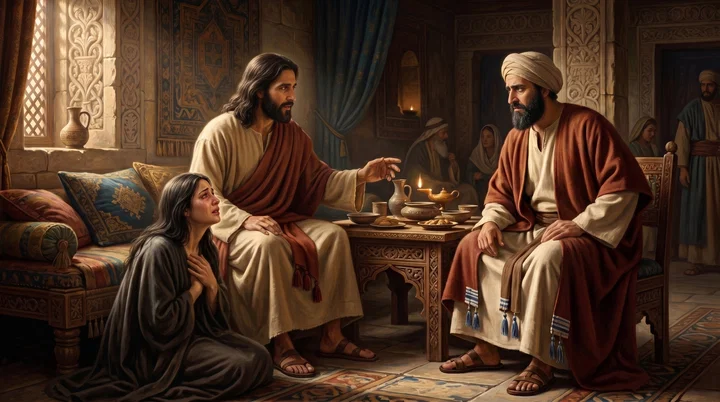
And he said to her, Your sins are forgiven.
King James Version, KJV Cambridge Paragraph Bible, Revised Version, American Standard Version
And he said unto her, Thy sins are forgiven.
Webster Bible, Darby Translation
And he said to her, Thy sins are forgiven.
And he said to her, 'Thy sins have been forgiven;'
And he said unto her—Thy sins have been forgiven.
Berean Standard Bible, Majority Standard Bible
Then Jesus said to her, “ Your sins are forgiven.”
He said to her, “ Your sins are forgiven.”
And he said to her, You have forgiveness for your sins.
And he saide vnto her, Thy sinnes are forgiuen thee.
Douay-Rheims (Challoner revision)
And he said to her: Thy sins are forgiven thee.
Pictures
Cross-references 20 of 29
- John 8:11
She said, No man, Lord. And Jesus said unto her, Neither do I condemn thee: go, and sin no more.
Jesus withholds condemnation and tells her to leave sin behind.
- Luke 7:41-43
There was a certain creditor which had two debtors: the one owed five hundred pence, and the other fifty.
The forgiven debtors illustrate how greater forgiveness brings greater love.
- Mark 2:5
When Jesus saw their faith, he said unto the sick of the palsy, Son, thy sins be forgiven thee.
Jesus tells the paralyzed man that his sins are forgiven.
- Luke 7:39
Now when the Pharisee which had bidden him saw it, he spake within himself, saying, This man, if he were a prophet, would have known who and what manner of woman this is that toucheth him: for she is a sinner.
Simon sees her only as a sinner, and Jesus answers his doubt with pardon.
- John 12:3-8
Then took Mary a pound of ointment of spikenard, very costly, and anointed the feet of Jesus, and wiped his feet with her hair: and the house was filled with the odour of the ointment.
Mary anoints Jesus’ feet, and he responds to her act.
- Matthew 9:2
And, behold, they brought to him a man sick of the palsy, lying on a bed: and Jesus seeing their faith said unto the sick of the palsy; Son, be of good cheer; thy sins be forgiven thee.
Jesus gives the same assurance of forgiveness to a sinner.
- Ephesians 4:32
And be ye kind one to another, tenderhearted, forgiving one another, even as God for Christ’s sake hath forgiven you.
Both teach forgiveness.
- Matthew 26:6-13
Now when Jesus was in Bethany, in the house of Simon the leper,
A parallel account associated with the feast at Simon’s house.
- Mark 14:3-11
And being in Bethany in the house of Simon the leper, as he sat at meat, there came a woman having an alabaster box of ointment of spikenard very precious; and she brake the box, and poured it on his head.
A parallel account associated with the feast at Simon’s house.
- Colossians 3:13
Forbearing one another, and forgiving one another, if any man have a quarrel against any: even as Christ forgave you, so also do ye.
Both teach forgiveness.
- Mark 11:25
And when ye stand praying, forgive, if ye have ought against any: that your Father also which is in heaven may forgive you your trespasses.
Both teach forgiveness and forgiving one another.
- Matthew 6:12
And forgive us our debts, as we forgive our debtors.
Both teach forgiveness, including forgiving one another.
- Luke 5:20
And when he saw their faith, he said unto him, Man, thy sins are forgiven thee.
Jesus tells the paralytic his sins are forgiven.
- Mark 2:7
Why doth this man thus speak blasphemies? who can forgive sins but God only?
Both texts concern the authority to forgive sins, which belongs to God.
- Matthew 9:3
And, behold, certain of the scribes said within themselves, This man blasphemeth.
The scribes question Jesus’ authority to forgive sins.
- Hebrews 8:12
For I will be merciful to their unrighteousness, and their sins and their iniquities will I remember no more.
God promises not to remember sins.
- Luke 7:44
And he turned to the woman, and said unto Simon, Seest thou this woman? I entered into thine house, thou gavest me no water for my feet: but she hath washed my feet with tears, and wiped them with the hairs of her head.
Jesus contrasts Simon’s failure to provide water with the woman’s washing his feet.
- Psalms 103:12
As far as the east is from the west, so far hath he removed our transgressions from us.
God removes transgressions far away.
- Isaiah 55:7
Let the wicked forsake his way, and the unrighteous man his thoughts: and let him return unto the LORD, and he will have mercy upon him; and to our God, for he will abundantly pardon.
God abundantly pardons the returning sinner.
- Colossians 2:13
And you, being dead in your sins and the uncircumcision of your flesh, hath he quickened together with him, having forgiven you all trespasses;
God forgives all trespasses.
Commentary
Each commentary is drawn from primary sources: the writings of Ellen G. White and Adventist pioneers and periodicals. Each commentary is separate. Its own words are not a quotation; follow the references to read the source passages.
Ellen G. White
30 sources
Jesus spoke these words as a direct personal assurance to Mary, whose sins had been many and grievous, while He was a guest at supper in the house of Simon the Pharisee.2SP 380.1–22SP 375.1STMH 24.2MYP 406.2 Her pardon was granted through faith in Him, not earned by her loving devotion, which was gratitude for mercy already received.DA 557.3–558.12SP 381.1 Because she recognized how much she had been forgiven, she loved much, while Simon showed little love because he underestimated his own need of pardon.PP 754.22SP 380.1–2Ms 24, 1891, par. 88 Any sinner, however sinful, who comes to Him with penitential confession may receive the same forgiveness by faith, bringing joy, praise and peace.GC 75.1GC88 74.2–75.2 That forgiveness heals the soul, which is more important than healing the body, and it calls the forgiven one to go in peace, leave sin behind and stop sinning.7T 96.1CH 274.1STB 123.1STB 99.1LSEGW 399.2
Setting and Pardon Spoken
The words were spoken while Jesus was a guest at a supper in the house of Simon the Pharisee, having accepted the invitation to the meal.MH 24.2MYP 406.2 He entered in that way into the lives of the rich and cultured in order to reach their hearts, to reveal imperishable riches, and to teach those present.MH 24.2MYP 406.2 His generous mercy and presence on that occasion drew criticism from Pharisees, and His conduct and teaching there revealed His kind character in contrast to their self-righteous ideas about salvation.15MR 132.2–3
The woman He addressed was Mary, also called Mary Magdalene, whose sins had been many and grievous.2SP 380.1–22SP 375.1STST Aug 20, 1902 In pardoning her He revealed pitying kindness and mercy toward her.2SP 380.1–22SP 375.1STST Aug 20, 1902 Her pardon, like His forgiveness toward Simon, called for gratitude and love, and her awareness of her need for mercy made her deeply grateful.2SP 380.1–22SP 375.1
He gave her a direct personal assurance that her sins were forgiven after she humbly expressed love and gratitude.DA 557.3–558.12SP 381.1 That assurance was spoken to her as a penitent, and it personally assures a penitent sinner that pardon is given.DA 557.3–558.12SP 381.1GC88 74.2–75.2 Her loving devotion was gratitude for mercy already received.DA 557.3–558.12SP 381.1
Forgiveness Through Repentant Faith
Pardon is granted through faith in Jesus, not earned by actions, and loving devotion is gratitude for mercy already received, not payment for forgiveness.DA 557.3–558.12SP 381.1 Both the woman and Simon depended on the Saviour's pardon, but she prized that mercy and responded with greater love because she recognized her need, while Simon underestimated his own need and showed little gratitude.2SP 381.12SP 380.1–2 Forgiveness of great sin awakens deep love, so the one forgiven much loves much.PP 754.2Ms 24, 1891, par. 8819MR 259.1–3 Simon himself recognized this truth that the one forgiven more would love more, and David likewise loved much because he had been forgiven much through deep repentance and strong faith.PP 754.2Ms 24, 1891, par. 8819MR 259.1–3
Any sinner, however sinful and unholy, who comes to Him as they are with penitential prayer and confession may receive this forgiveness by faith.GC 75.1GC88 74.2–75.2 It does not require long pilgrimages or journeys to holy shrines, and it brings joy and praise and peace.GC 75.1GC88 74.2–75.2 Children who recognize their sin, seek the Lord, and desire to follow Christ may be assured He accepts them, and some experience that assurance of forgiveness as peace in troubled hearts.Ms 9, 1862, par. 3–6 When a daughter surrenders will, way, and affections to Jesus and seeks God with the whole heart, her sins are forgiven, turning away God's anger and bringing comfort that prompts praise.Lt 9, 1889, par. 12
Christ speaks forgiveness to the repentant, believing soul, and it is accompanied by conversion whose sincerity appears in good works and a changed life.6MR 157.2 Profession of faith alone does not prove a saving connection with Christ; that connection is shown by conformity to God's will in words, conduct, and character through reliance on Jesus for support and strength in doing one's own duties.6MR 157.2 He taught Simon with tact and patient, pitying kindness, sparing him open rebuke before the guests and touching the heart rather than forcing belief.2SP 382.34RED 115.1Ms 24, 1891, par. 8819MR 259.1–3 Stern denunciation would have closed Simon's heart against repentance, but patient admonition opened his eyes to his neglect and unbelief, convinced him of his error and of the magnitude of the debt he owed his Lord, and won his heart to repentance, humility, and self-sacrifice.2SP 382.34RED 115.1
Healing Soul and Changed Life
Forgiveness belongs to the way of salvation to be held out to the sick and suffering who come for care, and those who repent may receive pardon for their sins.7T 96.1CH 274.1STB 123.1Ms 41, 1902, par. 27–2817MR 356.2 Healing of the soul is more important than healing of the body, so forgiveness of sins is part of that deeper healing.7T 96.1CH 274.1STB 123.1Ms 41, 1902, par. 27–2817MR 356.2 Those who come are to be shown the way of salvation and led to repentance, that they may receive Christ's personal assurance of forgiveness with peace and a changed life.7T 96.1CH 274.1LSEGW 399.2Ms 41, 1902, par. 27–2817MR 356.2 They are to repent, receive forgiveness, go in peace, and turn away from sin.STB 123.1Ms 41, 1902, par. 27–2817MR 356.2
The words of forgiveness bring peace to those who come to Christ confessing their sins.STB 99.1LSEGW 399.2Ms 109, 1901, par. 12 That peace is joined to a call to leave sin behind and to stop sinning.STB 99.1LSEGW 399.2Ms 109, 1901, par. 12 Forgiveness spoken as a personal assurance is therefore applied to those who repent and are shown the way of salvation.STB 99.1LSEGW 399.2Ms 109, 1901, par. 12
Those who have received this gracious assurance to a sinner must not hold themselves apart from people living in darkness and hardship.SW 30.1STMW9 8.2–3 Every person is valued by God and purchased by Christ.SW 30.1 The light and love awakened by forgiveness should be kept alive by helping people who need help, for when truth is not practiced and people become self-righteous, proud, and absorbed in their knowledge, faith grows dim and those they could have helped are left discouraged and despairing.SW 30.1STMW9 8.2–3
Mary's sins had been forgiven by the Saviour, and her costly anointing of Jesus' feet was an appreciative response to His work for her.Lt 189, 1909, par. 2–3 That pardoning of Mary Magdalene proves sympathy with every mother in her work.ST Aug 20, 1902 Earnest prayer is heard, and help is ready for any woman in need who trusts, as woman's best friend.ST Aug 20, 1902
Sources
Pioneers and periodicals
63 sources
He spoke these words at a feast in Simon the Pharisee's house to a woman regarded as a notorious sinner, who came behind him weeping and anointed his feet with tears, kisses and very precious ointment while Simon judged her and neglected to honor him himself.ST Oct 11, 1899RH Dec 3, 1867RH Dec 22, 1904 She was Mary Magdalene, whose many grievous sins and bondage to Satan drew her to him in hope of pardon, and he defended and honored her loving act.ST Jul 29, 1889ST Aug 13, 1902 The words were his personal, direct assurance that her sins were forgiven, spoken after her loving acts and joined to her faith that saved her and sent her away in peace.ST May 17, 1899ST Apr 9, 1894ST May 17, 1899 That forgiveness reaches even many sins and however low one has fallen, full and free to all who come in sincere repentance, humility, confession and faith, bringing new life, cleansing, healing and a changed heart.ST Dec 3, 1894ST Sep 2, 1897ST Dec 19, 1900ST Nov 22, 1899ST Apr 9, 1894 Being forgiven much produces much love, shown in costly gratitude and humble service, in contrast to Simon who loved little and failed to realize how much had been done for him.ST Oct 9, 1879ST Apr 9, 1894ST Jul 29, 1889RH Dec 3, 1867ST Dec 10, 1894
Setting and Anointing Event
The words were spoken at a feast in Simon the Pharisee's house to a woman the community regarded as a notorious sinner, who came with her shameful past and broken pride and showed devotion by anointing Jesus with precious ointment while Simon judged her as unfit to approach Him and regarded her touch as disgraceful.ST Oct 11, 1899RH Dec 22, 1904 Her tears, kisses, and anointing expressed the great love of one forgiven much and her appreciation for a Savior treated with neglect, for her tears supplied the water for His feet when others had failed to honor Him in that way.RH Dec 3, 1867 Though others might have called her loving act foolish or useless, it reached His heart and was remembered with honor, for He did not spurn her touch as Simon thought a true prophet must do but accepted her outward touch and rewarded it with His inward touch of pardon that bound up her broken heart and gave joy for mourning. He met the weeping, shamed sinner at the Pharisee's dinner and welcomed her rather than turning away, present with the outcast and sorrowful to claim them as His own.ST Apr 10, 1907
The woman was Mary Magdalene, whose sins were many and grievous, and she had been controlled by demons and by Satan and lived offensive in impurity until hope of pardon drew her to Jesus.STST Jul 29, 1889ST Oct 10, 1878 She had once been an innocent babe, a laughing child, and a youthful maiden treading with light feet and speaking pure words, a pure and gentle maiden, but the tempter stung the fairest fruit and harmed her so that she strayed for a while outside the fold into a lost life of sin.ST Aug 13, 1902ST Jun 2, 1909 Then glad tidings of great joy broke upon her life, tidings of One who would bring sweet peace into each life, and that hope of pardon drew her to come to Him in repentance and faith.ST Aug 13, 1902ST Oct 10, 1878
Her act was a token of love, not an act of ordinary hospitality, because guests customarily received water to wash their own feet rather than having someone else wash them.ST Aug 5, 1886 With tears, kisses, long hair, and a treasured alabaster box of very precious ointment she washed and anointed His feet, weeping tears of gratitude upon them, reverently kissing them, and wiping them with her long flowing hair until the perfume filled the room.RH Dec 10, 1901RH Sep 22, 1874 Her act was no low design nor reason to condemn her, for Jesus knew her heart and gave her the encouragement she needed and deserved, defending her conduct and approving it.ST Dec 10, 1894RH Sep 22, 1874 The anointing of His feet in Luke does not contradict the anointing of His head in Matthew, because both happened, Mary anointing both His feet and His head, and together the anointing carried the deeper meaning of preparing His body for burial.ST Feb 24, 1914ST May 12, 1914
By a different understanding, the anointing in Luke 7 need not be the same event as the anointing described in Matthew 26:6-16, for similar events can be placed together in Scripture even when they occurred at different times, as with the destruction of Jerusalem and Christ's second coming in Matthew 24.ST Sep 20, 1899 Jesus entered Simon's house not to partake of a great feast but for the opportunity to teach, knowing beforehand what would take place.ST Dec 10, 1894 He had already shown wonderful mercy in forgiving the woman's great sins before she came to Simon's house, and that forgiveness moved her to love and gratitude.RH Dec 10, 1901 She stole timidly and unobserved behind Him as He reclined at meat, having heard rumors that He might soon be taken away and fearing she might have no other opportunity, and hastened to show her love and gratitude while He was alive.RH Dec 10, 1901
Jesus dined humbly at Simon's house, also called Simon the sinner's house, and befriended sinners because He was seeking lost souls and wanted to save them. His dealings with her show that He worked to save people regarded as degraded and did not favor one class over another, but labored for both high and low, rich and poor.RH Jan 8, 1914
Forgiveness Declared and Received
The words are a personal, direct assurance spoken by Jesus himself to the weeping, penitent woman that her sins are forgiven, given after her acts of love toward him and bound up with her faith that has saved her.ST May 17, 1899ST Apr 9, 1894ST May 17, 1899ST Jun 9, 1881ST Apr 9, 1894 The declaration confirms to her individually what his teaching to Simon had already explained, that her great love reflects the forgiveness she has received, and it stands in contrast to Simon's lack of love while raising the question of how she was saved.ST Apr 9, 1894ST Jun 9, 1881ST Apr 9, 1894 His personal authority to speak such forgiveness causes those present to ask who he is that he can do this.ST May 17, 1899
Forgiveness comes through faith, which saves and brings peace, for he tells her that her faith has saved her and sends her away in peace, penitent and relieved.ST Sep 2, 1897RH Mar 31, 1903RH Apr 23, 1867 It is a present promise that the anxious sinner may trust and receive at once, bringing peace instead of fear.RH Dec 14, 1869RH Dec 15, 1859 When sinners come to him their sins are forgiven immediately, no longer held against them but met with love, so that the forgiven sinner is reconciled to God and can have peace, deep joy, and relief from guilt, sorrow, and sadness.RH Dec 15, 1859 The same power joins forgiveness and healing, for the same word means both saved and made whole, so that what was true physically when the woman with the issue of blood was made whole by touching his garment through faith is true spiritually here.RH Mar 31, 1903
That forgiveness is saving power that speaks new life into the heart by divine power.ST Dec 3, 1894 It cleansed her from all that dragged her down, saved her from sin and keeps from sin as long as faith is exercised, and it is full and free for everyone who needs forgiveness.ST Dec 19, 1900 Coming to him in humility and love, the sin-stricken woman found comfort and the healing of her wounds, her tears and humble service meeting the Saviour whose life brought forgiveness and dried her tears.ST Aug 13, 1902ST Jul 28, 1898 His grace reaches even hardness of heart and transforms it, removing malice, wickedness, and envy, giving a heart receptive to his law, and replacing hostility toward his precepts with love for them.
Forgiveness reaches even many sins and reaches anyone however low they have fallen.ST Nov 22, 1899ST Jul 4, 1900 It meets a heart laid bare as corrupt and rebellious, not a heart made worthy by good works, prayers, or repentance, and it is full and free for all who come as they are.ST Nov 22, 1899RH Apr 12, 1864 Her need for forgiveness was no reason to stay away, for pressing closer to him and abiding with him drives sin away, washing away reproach in his precious blood and renewing the soul to stand pure and white in holiness, humble and teachable as a child looking to the Father, with a glad new spirit rising in fragrance to God as Saviour, Restorer, and Friend.ST Apr 9, 1894ST Jul 4, 1900 What was done for the destroyed can be done for the destroyer who seeks cleansing with a broken and contrite heart like David, and his voice still calls sinners to come as they are with assurance of mercy, for he remains able and willing to forgive sinners still.ST Jul 4, 1900RH Apr 12, 1864RH Apr 28, 1859 His gracious favor rested on one whose sins were many.ST Aug 5, 1886
He gives repeated chances and forgives even the same sin again and again, for knowing how often he had already lifted her up, he welcomed the guilty woman expressing silent love through tears and did not join those condemning her when their condemnation could have broken her heart.RH Aug 27, 1914RH Sep 4, 1855 He forgave Simon as well as Mary, for Simon too had been cleansed from sin and leprosy.ST Oct 9, 1879 Simon's pride kept him from recognizing how much mercy he had received or responding with due love and respect, yet recognition of his own debt would bring him to humility, and Jesus' patient kindness was meant to convince him of guilt and win his heart rather than close it against repentance.ST Oct 9, 1879ST Oct 9, 1879
Love Repentance and Faith
The woman's great love flowed from the forgiveness she had received, for to be forgiven much is to love much.ST Apr 9, 1894RH Dec 3, 1867ST Jun 9, 1881ST Apr 9, 1894 Her sins were many and grievous, yet she realized both how great a sinner she had been and how great the blessing of pardon was, and therefore her heart was filled with gratitude and love that knew no bounds.ST Apr 9, 1894ST Jul 29, 1889ST Jun 9, 1881 Appreciation of Christ grows in proportion to the sense of past sinfulness and of pardon received, so because she had been forgiven most she loved most.ST Jul 29, 1889 Her tears, kisses and anointing expressed that great love and her appreciation for a Savior whom others treated with neglect.ST Apr 9, 1894RH Dec 3, 1867 That love, honored by being made the first human witness of the risen Saviour, was joined to the faith that saved her.ST Jun 9, 1881ST Apr 9, 1894
Her love and gratitude were shown in a costly, lavish gift of ointment and in humble service, coming as one the community regarded as a notorious sinner to anoint Him at the feast in Simon the Pharisee's house.ST Oct 11, 1899ST Dec 10, 1894ST Oct 5, 1904 The manner of bestowing the gift flowed from grateful love for pardon, breaking the alabaster box upon His feet even while others criticized the act.ST Oct 11, 1899ST Dec 10, 1894ST Oct 5, 1904 A gift is measured by the love that prompts it, whether much or little, for people see the outward display but Christ sees the heart and will reward accordingly.ST Dec 10, 1894 Jesus approved her conduct and tenderly expressed appreciation for it by assuring her that her many sins were forgiven because she loved much, revealing appreciation as a beautiful heavenly virtue and His own hunger for human love and appreciation.ST Dec 10, 1894ST Oct 5, 1904
Pardon follows sincere repentance with humility, weeping, confession and serving Him, as seen when she came humbly, weeping and serving, and was forgiven and sent away in peace.ST Sep 2, 1897ST Jun 9, 1881RH Feb 24, 1859 Christ forgives the penitent who believes and pleads with Him, drawing the weeping outcast to His loving heart with the gift of pardon and a new heart.RH Feb 24, 1859RH Jan 1, 1861 His promise of forgiveness remains certain for anyone who comes to God in the same moral condition of faith, penitence, humility, confession, restitution, earnest prayer and steady purpose to do God's whole will. Repentance and faith in Christ are taught here in the straightforward story of a sinful human heart turning to the Redeemer, displaying human sinfulness and the dark destiny of sin beside the bright destiny of virtue, telling its simple story plainly to old and young, ignorant and poor.ST Oct 10, 1878 That repentance is made real in fruitful acts of obedience, answering the sinner's cry for mercy.RH Feb 24, 1859RH Jan 1, 1861
Sorrow for sin and resolve to change are necessary, but sorrow is meant to lead to escape from sin rather than to be pursued for its own sake, with forgiveness shown by a soul responding to Christ with love and longing to serve Him.ST Sep 8, 1898 Christ's tender forgiveness reaches a heart laid bare as corrupt and rebellious, not one made worthy by good works, prayers or repentance, and it brings new birth and a changed life.ST Nov 22, 1899 The forgiven person knows the reality of that change through experience, receiving pardon and a new heart as gifts from God through Jesus.ST Nov 22, 1899RH Jan 1, 1861
Her love stands in contrast with Simon, who loved Christ and appreciated healing only to a limited extent and never realized how much had been done for him in forgiving his sins.ST Oct 9, 1879ST Jul 29, 1889 Though himself a pardoned sinner cleansed from sin and leprosy, his pride kept him from recognizing the mercy received or responding with due love and respect, exposing itself in vexation, jealousy, criticism and lack of love.ST Oct 9, 1879ST Oct 9, 1879ST Dec 10, 1894 His greater light and his accusation of the weeping, repentant woman marked greater guilt on his part.RH Jul 28, 1910 Yet Jesus' patient kindness was meant to convince him of guilt, bring him to humility and win his heart rather than close it against repentance.ST Oct 9, 1879
Christ's Character and Mission
Jesus welcomes the penitent whom others dismiss as an outcast, drawing the weeping sinner to his loving heart instead of turning away from her shame at the Pharisee's dinner.ST Jun 9, 1881RH Sep 4, 1855ST Apr 10, 1907 His words and respect restore her hope and self-respect, awakening grateful trust that she can be lifted from degradation and return to a pure life.ST Jun 9, 1881 Unlike Simon, who assumed a true prophet would spurn her touch once he knew what manner of woman she was, he accepts her outward touch of tears and love and rewards it with the inward touch of pardon that binds up the broken heart and turns mourning into joy.RH Sep 4, 1855 Her need for forgiveness is no reason to stay away from him, for she presses closer to him, and abiding with him drives sin away.ST Apr 9, 1894
He is present with the outcast and sorrowful to claim them as his own, and his personal declaration of forgiveness to one sinful woman, giving her hope of life, shows the great value God places on each soul.ST Apr 10, 1907ST Jul 8, 1886 His gentleness and tenderness toward the penitent woman reveal the character of God, and his patient kindness is meant to convince the guilty of sin, bring humility, and win the heart rather than close it against repentance.ST Oct 9, 1879ST Feb 25, 1897 The pardon of Mary Magdalene proves he is woman's best friend today, ready to aid women in all the relations of life.STST Sep 9, 1886 He sympathizes with every mother in her work and hears earnest prayer and meets every need when trusted in him.ST Aug 20, 1902
The scene of the sinful woman bathing his feet with her tears and wiping them with her hair is presented as a picture of heaven.RH Mar 9, 1916 Heaven is like receiving the sinful woman from the street in that humble devotion and hearing his forgiveness of her sins, which is peace, joy, victory, triumph, life, love, and tireless faithful unselfish service going on forever.RH Oct 28, 1915 Following him today, tomorrow, and the day after through prayer and right living brings that heavenly life.RH Oct 28, 1915 When the Burden-Bearer comes, the burden of sin and its shame is lifted, bringing consolation and hope.RH Feb 25, 1875
His love looked beyond what was bad in her and saw what was good, giving an example of forgiving others and valuing the good in them.RH Jun 2, 1904 Her tears and humble service met the Saviour, and his life cleansed her sins, bringing forgiveness and drying her tears.ST Jul 28, 1898
Connections and Present Application
The saying belongs to the parable of the two debtors in Luke 7:35-50, which teaches the forgiving spirit and illustrates divine forgiveness parallel to the forgiveness taught in Matthew 18:21-35, showing that forgiveness received from God requires forgiving a brother from the heart.ST Apr 7, 1898 It teaches how to forgive one another and to forgive even enemies, with forgiveness aimed at the deliverance of both forgiver and forgiven from sin.ST Apr 7, 1898 Keeping revenge, hate, and anger from the heart gives victory over self and influences others to repent and forsake sin, because hate inflames hate but love kindles love.ST Apr 7, 1898 The publicans and harlots who believed John are shown in Luke 7:47-50 to have repented and received forgiveness, unlike the religious leaders who refused to believe and repent.ST Oct 11, 1899
Forgiveness of sins is joined to the saving power of faith, for the same Greek word means both saved and made whole, showing that forgiveness and bodily healing come through the same power.ST Dec 19, 1900RH Mar 31, 1903 As the woman with the issue of blood was made whole through faith in touching Christ's garment, what was true physically in healing is true spiritually here, where faith saves, cleanses from all that drags down, saves from sin and keeps from sin while faith is exercised, and brings peace as full and free forgiveness for everyone who needs it.ST Dec 19, 1900RH Mar 31, 1903 The story illustrates God's love for sinners and their obligation to love Him in return.ST Oct 10, 1878ST Jun 1, 1882 Repentance and faith in Christ are taught in a straightforward story of a sinful human heart turning to the Redeemer, displaying human sinfulness and divineness and the dark destiny of sin and the bright destiny of virtue called hell and heaven, living in the Gospels with a charm and power to which learning can add nothing, sweeter and more impressive than any abstract doctrine or confession, telling its simple story plainly to the multitude, old and young, ignorant and poor, as a mother talks to her child.ST Oct 10, 1878ST Jun 1, 1882
That forgiveness can reach anyone however low they have fallen, washing away reproach in the precious blood of Christ and renewing the soul to stand pure and white in the sight of God in the beauty of holiness.ST Jul 4, 1900 It makes the forgiven person humble and teachable as a child looking to the Father for instruction and help in everything, with a glad new spirit going up in rich fragrance to God as Saviour, Restorer, and Friend.ST Jul 4, 1900 What was done for the destroyed can also be done for the destroyer who seeks forgiveness and cleansing with a broken and contrite heart like David, calling for resolve and prayer for a life of purity and holiness.ST Jul 4, 1900 The devotion was offered while Jesus was present, teaching that love and comfort should be shown to people while they are still alive, for praise and precious gifts offered after death come too late when the dead can no longer hear them.RH Jul 3, 1913
Her story warns against scorning people cast out as evil, for she had been treated as an outcast.ST Oct 5, 1904RH Aug 17, 1911 Appreciation is a beautiful heavenly virtue, tenderly expressed in assuring her that her many sins are forgiven because she loved much, though others criticized her action in breaking the alabaster box of ointment on His feet out of love, revealing a hunger for human love and appreciation and rewarding according to the heart.ST Oct 5, 1904RH Aug 17, 1911 His words speak mercy and assurance to the repentant sinner, bringing encouragement to those who believe, comfort to those who fear, and love and hope to one who needed saving.RH Apr 23, 1867RH Oct 20, 1863ST Oct 2, 1893 A brief word of truth, when applied from above, can convert the soul, sending the sinful woman away penitent and relieved.RH Apr 23, 1867RH Oct 20, 1863 The forgiven person's calm, reverent face reflects a life strengthened at the Saviour's feet and shaped by prayer, praise, and Christian love, and following Christ through prayer and right living brings that heavenly life.ST Oct 2, 1893
Sources