John 8:11
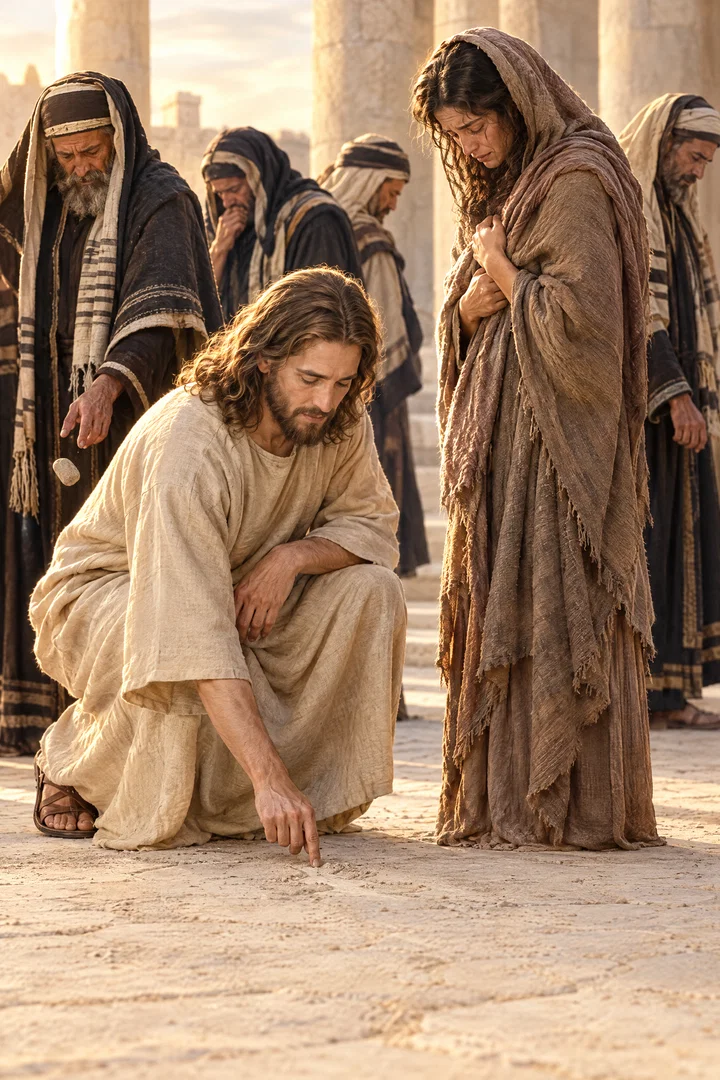
She said, No man, Lord. And Jesus said unto her, Neither do I condemn thee: go, and sin no more.
Translations
She said, No man, Lord. And Jesus said to her, Neither do I condemn you: go, and sin no more.
King James Version, KJV Cambridge Paragraph Bible
She said, No man, Lord. And Jesus said unto her, Neither do I condemn thee: go, and sin no more.
She said, No man, Lord. And Jesus said to her, Neither do I condemn thee: go, and sin no more.
Revised Version, American Standard Version
And she said, No man, Lord. And Jesus said, Neither do I condemn thee: go thy way; from henceforth sin no more.]
and she said, 'No one, Sir;' and Jesus said to her, 'Neither do I pass sentence on thee; be going on, and no more sin.'
And she said, No one, sir. And Jesus said to her, Neither do I condemn thee: go, and sin no more.
And, she, said—No one, Sir! And Jesus said—Neither do, I, condemn thee,—be going thy way: Henceforth, be sinning, no more.]]
“ No one, Lord,” she answered.“ Then neither do I condemn you,” Jesus declared. “ Now go and sin no more.”
“ No one, Lord,” she answered. “ Then neither do I condemn you,” Jesus declared. “ Go and sin no more.”
She said, “ No one, Lord.”Jesus said, “ Neither do I condemn you. Go your way. From now on, sin no more.”
And she said, No man, Lord. And Jesus said, And I do not give a decision against you: go, and never do wrong again.]
She said, No man, Lord. And Iesus said, Neither do I condemne thee: go and sinne no more.
Douay-Rheims (Challoner revision)
Who said: No man, Lord. And Jesus said: Neither will I condemn thee. Go, and now sin no more.
Pictures







Cross-references 20 of 45
- John 8:7
So when they continued asking him, he lifted up himself, and said unto them, He that is without sin among you, let him first cast a stone at her.
Jesus challenges the accusers to recognize their own sin before condemning her.
- Luke 7:48-50
And he said unto her, Thy sins are forgiven.
Jesus forgives the woman’s sins and sends her away in peace.
- John 3:17
For God sent not his Son into the world to condemn the world; but that the world through him might be saved.
Jesus came to save rather than condemn.
- John 5:14
Afterward Jesus findeth him in the temple, and said unto him, Behold, thou art made whole: sin no more, lest a worse thing come unto thee.
Jesus tells both people to sin no more.
- Exodus 20:14
Thou shalt not commit adultery.
The woman is accused of violating the seventh commandment.
- Romans 6:1-2
What shall we say then? Shall we continue in sin, that grace may abound?
Jesus’ pardon calls the woman to stop sinning; grace is no license to continue in sin.
- Deuteronomy 22:22
If a man be found lying with a woman married to an husband, then they shall both of them die, both the man that lay with the woman, and the woman: so shalt thou put away evil from Israel.
The accusers invoke the law prescribing death for adultery.
- John 12:47
And if any man hear my words, and believe not, I judge him not: for I came not to judge the world, but to save the world.
Christ came to save rather than condemn.
- John 8:5
Now Moses in the law commanded us, that such should be stoned: but what sayest thou?
The accusers invoke Moses’ command to stone the woman, setting up Jesus’ response.
- Leviticus 20:10
And the man that committeth adultery with another man’s wife, even he that committeth adultery with his neighbour’s wife, the adulterer and the adulteress shall surely be put to death.
The law prescribed death for adultery, the charge brought against the woman.
- Matthew 7:1-5
Judge not, that ye be not judged.
Jesus warns against condemning others while overlooking one’s own sin.
- Romans 2:1
Therefore thou art inexcusable, O man, whosoever thou art that judgest: for wherein thou judgest another, thou condemnest thyself; for thou that judgest doest the same things.
Those who condemn others are themselves guilty of sin.
- 1 John 2:1
My little children, these things write I unto you, that ye sin not. And if any man sin, we have an advocate with the Father, Jesus Christ the righteous:
Christ advocates for sinners, while calling them to sin no more.
- Galatians 6:1
Brethren, if a man be overtaken in a fault, ye which are spiritual, restore such an one in the spirit of meekness; considering thyself, lest thou also be tempted.
Both call for responding to wrongdoing with gentleness and restoration.
- 1 Timothy 1:15
This is a faithful saying, and worthy of all acceptation, that Christ Jesus came into the world to save sinners; of whom I am chief.
Christ came into the world to save sinners.
- Deuteronomy 17:7
The hands of the witnesses shall be first upon him to put him to death, and afterward the hands of all the people. So thou shalt put the evil away from among you.
Witnesses had to cast the first stones.
- 2 Corinthians 3:7-9
But if the ministration of death, written and engraven in stones, was glorious, so that the children of Israel could not stedfastly behold the face of Moses for the glory of his countenance; which glory was to be done away:
Contrasts condemnation under the old ministration with the Spirit’s ministration of pardon.
- Matthew 6:14-15
For if ye forgive men their trespasses, your heavenly Father will also forgive you:
Connects receiving mercy with forgiving others.
- Luke 5:32
I came not to call the righteous, but sinners to repentance.
Jesus calls sinners to repentance.
- Micah 7:18
Who is a God like unto thee, that pardoneth iniquity, and passeth by the transgression of the remnant of his heritage? he retaineth not his anger for ever, because he delighteth in mercy.
Both show God delights in mercy.
Commentary
Each commentary is drawn from primary sources: the writings of Ellen G. White and Adventist pioneers and periodicals. Each commentary is separate. Its own words are not a quotation; follow the references to read the source passages.
Ellen G. White
48 sources
Left alone with the guilty woman waiting for death, He asks where her accusers are and on her answer frees her from condemnation and commands her to leave sin behind.MH 88.4–6LC1 97.3LC1 97.1RH Sep 6, 1906
His pardon is mercy to a guilty and penitent sinner, forgiving her without excusing her sin or making guilt seem smaller.MH 88.4–6Lt 48, 1894, par. 24–25Lt 13, 1905, par. 1–313MR 277.1–2
He refuses to condemn because His mission is to save rather than to condemn, hating sin while loving the sinner with pitying compassion.LC1 99.12SP 353.1LC1 97.21RED 99.3DA 462.3–4
His compassion melts her heart to penitential grief and gratitude, raising her to a new life of purity, peace and steadfast devotion.MH 88.4–62SP 351.1–352.2LC1 97.3MH 89.1–2DA 461.4–462.2
His dealing is the model for helping the erring, to reform and restore rather than to condemn and drive away, for healing of the soul is greater than healing of the body.Lt 13, 1905, par. 1–3MH 89.1–2DA 461.4–462.2DA 462.3–4Lt 115, 1902, par. 22–28
Scene and Setting
Early the following morning the words are spoken in the temple, where all the people came to Jesus and He sat down and taught them.2SP 349.2 The woman stands before Him guilty of violating the seventh commandment, taken in adultery.RH Nov 25, 1902 She stands conscience-stricken and trembling with shame, with drooping eyes, stricken with shame and unable to look upon His holy face as she waits for sentence.LC1 97.3LC1 97.1 She waits for sentence and death.LC1 97.3
A tumultuous crowd stands ready to stone and kill her as the trembling victim waits for death.LC1 99.12SP 353.11RED 99.1 She is a trembling, cowering penitent who knows her life hangs in the balance and that one word from Him could turn the crowd to stone her to death.LC1 97.2 While self-righteous accusers condemn her, the crowd threatens to stone her as she waits for death.2SP 353.1
Left alone with her after her accusers are gone, Jesus rises and looks upon her.LC1 97.1RH Sep 6, 1906 He asks where her accusers are and whether anyone has condemned her.LC1 97.1RH Sep 6, 1906 On her answer, No man, Lord, He declares that He also does not condemn her and commands her to go and stop sinning.RH Nov 25, 1902LC1 97.1RH Sep 6, 1906 This is spoken with mournful solemnity, with mercy and authority.LC1 97.3RH Sep 6, 1906
Accusers Exposed and Dismissed
The scribes, Pharisees, rabbis, rulers and Sadducees who dragged the woman forward had laid a net to trap Him, hoping He would pronounce judgment so they could accuse Him of taking judgment into His own hands and so find occasion for condemning Him.Ms 79, 1897, par. 7–8RH Nov 25, 1902RH Sep 6, 1906 They had themselves led her into sin in order to spring that trap, while posing as guardians of justice.RH Nov 25, 1902DA 460.5–461.1 They were in fact far more guilty than she, guilty of many secret sins and hypocrisy, of rejection of light and spiritual blindness, and of cherishing maxims and traditions above obedience to God.Ms 79, 1897, par. 7–8RH Sep 6, 1906ST Apr 21, 1898 He read their hearts and discerned their plot and arrogance, knew the hidden secrets of their lives, and delayed answering.Ms 79, 1897, par. 7–8DA 460.5–461.1RH Sep 6, 1906 Then He wrote on the ground and on the sand the record of their own sins, tracing their sins until their curiosity gave way.Ms 79, 1897, par. 7–8DA 460.5–461.1RH Sep 6, 1906
Convicted that He knew their lives and expecting to be singled out and exposed before the crowd, they left His presence one by one in guilty consternation.Ms 79, 1897, par. 7–8LC1 97.1RH Sep 6, 1906 They went away without casting a stone, though themselves worthy of condemnation and punishment.RH Sep 6, 1906 He looked upon them with anger and grief at the hardness of their hearts and rebuked their great sin with scathing words.Ms 79, 1897, par. 7–8
The episode teaches that those who are forward to accuse others, quick to detect wrong, and zealous to bring others to justice are often guiltier in their own lives than those they accuse.LC1 99.31RED 99.32SP 353.3 It sets their unrelenting, merciless spirit against His pardoning compassion toward the guilty.LC1 99.3
Pardon Joined to Command
Neither do I condemn thee is pardon spoken to one who is guilty and penitent, freeing her from her accusers and giving her hope instead of condemnation.MH 88.4–6Lt 48, 1894, par. 24–25Lt 13, 1905, par. 1–3Lt 206, 1906, par. 28–31Ms 95, 1906, par. 65–77 It is spoken with pity and with tenderest compassion by One who knows fully the character of her sin, yet forgives her.MH 88.4–6Lt 13, 1905, par. 1–3Lt 206, 1906, par. 28–31Ms 79, 1897, par. 7–8Ms 95, 1906, par. 65–77 His mercy does not excuse the sin, diminish the crime, make guilt seem smaller, or tolerate wrong.Ms 113, 1902, par. 31–342SP 351.1–352.2DA 461.4–462.2LC1 97.2DA 462.3–4 Pardon is joined to authoritative command, that she go and leave sin behind, reform the life, and live better.MH 88.4–6Lt 48, 1894, par. 24–2513MR 277.1–2Ms 113, 1902, par. 31–342SP 351.1–352.2 That mercy gives opportunity to turn from wrongdoing and to begin a new life of purity and peace.MH 88.4–613MR 277.1–2Ms 113, 1902, par. 31–342SP 351.1–352.2DA 461.4–462.2
His refusal to condemn reveals a mission to save rather than to condemn the guilty.LC1 97.21RED 99.3DA 462.3–42SP 353.3 He seeks to lead the repentant sinner toward peace and security, toward holiness and eternal life, offering comfort and hope and help.LC1 97.21RED 99.3DA 462.3–42SP 353.3 The forgiven person receives peace and is sent forward to live differently, with the past left behind.STB 123.117MR 356.2Ms 37, 1902, par. 23–26Ms 15, 1894, par. 23–24 Forgiveness is thus connected with repentance and a changed life in the words go in peace and sin no more.STB 123.117MR 356.2Ms 37, 1902, par. 23–26Ms 15, 1894, par. 23–24
Christ Revealed in Mercy
The verse shows perfect righteousness in the beauty of holiness, for the One who speaks it is Himself without any taint of sin, pure and holy and free from sin.LC1 99.12SP 353.11RED 99.1 His refusal to condemn does not excuse sin, diminish the crime, or make guilt seem smaller, for He hates sin while He loves the sinner.DA 462.3–4 In pardoning the fallen woman and urging her to live a better life and leave sin behind, His character shines in contrast to self-righteous accusers who denounce her and a tumultuous crowd ready to stone her.LC1 99.12SP 353.11RED 99.1
He is the pitying Saviour and Redeemer and Friend of sinners, who pities the weakness of the erring where the world gives only contempt and scorn and slighting.LC1 99.12SP 353.1ST Jul 14, 1914LC1 97.2 Though pure and holy, He stoops to speak comfort to the trembling, cowering penitent and reaches to her a helping hand.LC1 99.12SP 353.11RED 99.1LC1 97.2 His pardoning compassion leads the repentant sinner into peace and security, in contrast to the unrelenting, merciless spirit of hypocritical denouncers.LC1 99.3 His work is to reach into the deepest human misery and degradation to lift up the debased and sinful, and with His own life and power He comes to pardon transgressions, forgive sin, give peace, and heal every difficulty and wound.LC1 97.2Ms 71, 1907, par. 39–46
He knows the circumstances of every soul and knows fully the character of sin, yet He is drawn most to the guiltiest and most hopelessly entangled in the enemy's snares.ST Jul 14, 1914 By His own blood He signs freedom for the race.ST Jul 14, 1914 As the risen Saviour who broke the fetters of the tomb and came forth in triumphant victory over death and the grave, He still speaks these same words to all who come to Him confessing their sins.Ms 109, 1901, par. 12Lt 141, 1901, par. 4–5 To them He gives forgiveness and peace and sends them away in peace with the charge to sin no more.Ms 109, 1901, par. 12Lt 141, 1901, par. 4–5
Sinner Melted and Renewed
The pardon astonishes the guilty woman and delivers her from her accusers, and its comfort and hope coming after terror melt her heart with penitential grief and gratitude toward her Deliverer, bringing her to bow at His feet sobbing and confess her sins with bitter tears.LC1 97.3MH 89.1–2DA 461.4–462.2ST Jul 14, 1914 His compassion and words of comfort encourage the penitent woman to begin a new life of purity, peace, and service and devotion to God, raising her to virtue.MH 88.4–62SP 351.1–352.2MH 89.1–2DA 461.4–462.21RED 97.1–98.1 That new life is purity and peace devoted to the service of God, entered as the past is left behind and lived forward in reform.MH 88.4–61RED 97.1–98.1LC1 98.1
His forgiving mercy produces grateful, self-sacrificing love and steadfast devotion, and she becomes one of His firmest friends and followers, repaying His forgiveness and compassion with worship and showing the effect of His mercy.2SP 351.1–352.2MH 89.1–2DA 461.4–462.2ST Jul 14, 1914LC1 98.1 Afterward she understands at the cross that His death bore the cost of her sin and made her forgiveness possible.2SP 351.1–352.2LC1 98.1 Standing sorrow-stricken and pierced afresh by the dying agony on her Lord's face and His bitter cry, she knows the sacrifice is on account of sin and that her deep guilt helped bring the anguish of the Son of God: the pangs piercing His frame are for her, the blood flowing from His wounds blots out her record of sin, and the groans from His dying lips are caused by her transgression, filling her heart with sorrow past expression and the sense that a life of self-denying devotion would poorly repay the gift of life purchased for her at infinite price.LC1 98.1
Receiving Christ through faith in His death gives such a new beginning to every believer: the past life is left behind, and the believer is to live God's life and glory.Ms 15, 1894, par. 23–24
Ministry to Sick and Erring
In forgiving and lifting the guilty woman instead of condemning her, pardon becomes healing of a spiritual sickness that leads to everlasting death, and that cure is a greater miracle than healing even the most grievous bodily disease.MH 89.1–2DA 461.4–462.2ST Jul 14, 1914LC1 98.1 Mercy meets the penitent with hope after terror, calls her to leave sin behind, and begins a new life of purity, peace, and devotion to God.MH 89.1–2DA 461.4–462.2ST Jul 14, 1914LC1 98.1 The forgiven heart melts into confession with bitter tears at the Deliverer's feet, and grateful, self-sacrificing love and steadfast devotion show the effect of forgiving mercy.MH 89.1–2DA 461.4–462.2ST Jul 14, 1914LC1 98.1 The sinless One thus pities human weakness where the world gives only contempt and scorn, knows the circumstances of every soul, is drawn most to the guiltiest and most hopelessly entangled, and signs freedom by His own blood.ST Jul 14, 1914
Healing of the soul matters more than healing of the body, so those who seek care for the body are to be shown the way of salvation and led to repentance and salvation.7T 96.1STB 99.1LSEGW 399.217MR 356.2Ms 41, 1902, par. 27–28 They are to be offered forgiveness of sins, peace, and a new life of obedience, with repentance joined to the charge to leave sin behind.STB 123.17T 96.1STB 99.1LSEGW 399.2Ms 41, 1902, par. 27–28 The same words are applied directly to patients: they should repent, receive forgiveness, be assured their sins are forgiven, and be urged to go in peace and sin no more.7T 96.1CH 274.1LSEGW 399.217MR 356.2 Bodily recovery has its place, but the work of healing the sick must aim above all at this spiritual restoration.7T 96.1CH 274.1Ms 41, 1902, par. 27–28
His way with the erring woman is the pattern for dealing with cases of wrongdoing.Lt 13, 1905, par. 1–3DA 462.3–4Lt 115, 1902, par. 22–28 Following Him means being ready to forgive, encourage, and help the erring turn from sin and live a better life, rather than condemning unjustly or driving the person away.Lt 13, 1905, par. 1–3DA 462.3–4Lt 115, 1902, par. 22–28 Forgiving love does not excuse sin or make guilt seem smaller, but seeks to reform and restore the sinner with comfort, hope, and help toward holiness.DA 462.3–4Lt 115, 1902, par. 22–28 Pardon forgives transgression, gives peace, and heals every difficulty and wound.Ms 71, 1907, par. 39–46 It is given to broken, confessed hearts where self has died and Christ takes possession, clearing the way for true light and united fellowship and fitting souls for everlasting life at the judgment.Ms 71, 1907, par. 39–46
That spiritual healing and full assurance of remission come to the one who earnestly asks and pleads on the knees even when sincerity is tested.Lt 10, 1887, par. 6 The assurance of forgiveness and the command to leave sin are just as full and plain in the Word as if spoken by a voice from heaven or by Christ in person.Lt 10, 1887, par. 6 Received in this way, they bring joy, tears, and great gratitude.Lt 10, 1887, par. 6
Faithful Obedience in Health
Christ's healing joined to the command to sin no more gives no permission to return to sinful habits.9T 164.3Ms 37, 1909, par. 40RH Feb 10, 1916 Healing is not freedom to eat and drink as one pleases, nor liberty to join the self-indulgent practices of the world.CH 138.3Ms 113, 1898, par. 9–10Ms 37, 1909, par. 40 His mercy after healing calls the healed person to leave sin behind rather than to continue in self-indulgence.9T 164.3CH 138.3RH Feb 10, 1916
Those whom God has graciously healed must stop sinning and must not return to self-indulgent practices.CH 138.3Ms 113, 1898, par. 9–10Ms 37, 1909, par. 40 That includes selfish gratification of appetite, overeating, and eating and drinking without restraint.CH 138.3Ms 113, 1898, par. 9–10Ms 37, 1909, par. 40 Appetite must not be made a god.9T 164.3CH 138.3Ms 113, 1898, par. 9–10Ms 37, 1909, par. 40RH Feb 10, 1916
Appetite must not rule a person's life, but life must be lived with self-control.9T 164.3CH 138.3RH Feb 10, 1916 Continued health requires restricting the diet, reforming, living in obedience, and strictly obeying all God's requirements.CH 138.3Ms 113, 1898, par. 9–10Ms 37, 1909, par. 40RH Feb 10, 1916 Refusal to restrict diet and to refuse appetite as god leaves the person soon needing God's restoring power again in body and soul.Ms 113, 1898, par. 9–10Ms 37, 1909, par. 40
Sources
Pioneers and periodicals
102 sources
Jesus spoke these words in the temple courts to a woman taken in adultery and dragged before Him by scribes and Pharisees seeking to trap Him over Moses' command to stone her, and after her accusers were convicted and left one by one He alone remained with her to release her from condemnation and charge her to leave her life of sin.RH Apr 14, 1910RH Aug 27, 1914ST Aug 19, 1897RH Feb 6, 1900RH Dec 3, 1914 His refusal to condemn was pardon and release to peace, not approval or lessening of her sin, which He still called sin and treated as transgression of the binding moral law including the seventh commandment.ST Sep 17, 1885RH Apr 14, 1910ST Nov 26, 1896RH Jan 8, 1861ST Sep 29, 1909 He did not act as civil magistrate to try and execute judgment, but with the witnesses gone declared no condemnation, holding the Mosaic penalty of stoning in abeyance without abolishing the law whose death penalty remains for the final judgment.RH Apr 17, 1879ST Oct 9, 1907RH Nov 1, 1864ST Jan 24, 1884ST Mar 19, 1896 Forgiveness was joined to a command that both requires and enables a new life without sin, for His word carries power by the Holy Spirit to break sin's dominion, cleanse by His blood, engrave the law on the heart, and bring the pardoned to obedience and perfection.ST Sep 26, 1911RH Dec 7, 1916RH Jan 2, 1913ST Mar 19, 1885RH Aug 27, 1914 What He said to her He says to every guilty sinner, and it teaches believers not to condemn while harboring sin themselves but to approach the fallen with pitying love that abhors sin, lifts the sinner, and leads wanderers back to holiness.RH Jul 31, 1900ST Aug 1, 1911ST Mar 18, 1889ST Apr 18, 1911ST Sep 23, 1908
Scene and Dialogue
The words were spoken in the temple courts at Jerusalem to a woman taken in adultery, a capital offense proved by positive evidence, who had been dragged exposed and ashamed, horrified and humiliated into His presence by scribes and Pharisees to trap Him over Moses' command to stone such a person.RH Nov 25, 1902RH Aug 27, 1914ST Aug 19, 1897RH Dec 3, 1914 They pressed Him for a decision hoping to accuse Him either way, that if He ordered stoning He would risk a Roman charge of inciting murder and taking judgment into His own hands, and if He let her go He would seem to reject the law and pronounce against its enforcement.RH Nov 25, 1902RH Sep 6, 1906RH Aug 27, 1914ST Oct 9, 1907 The outcome of that trap redounded to His glory as the Friend of sinners who pardons and heals all whose hearts ask pardon and healing.ST Aug 19, 1897
When pressed He delayed answering, stooped down and wrote on the ground in legible characters the sins of the accusers, beginning with the eldest even unto the last, so that each saw his own sins staring him in the face.RH Sep 6, 1906RH Aug 27, 1914RH Mar 7, 1912ST Jan 22, 1894 He read their hearts and discerned their plot and arrogance, required the sinless to cast the first stone, and exposed them so the light of eternal truth and righteousness shone deep into the dark chambers of their own vile hearts, exposing sins whose wickedness the adulteress had never dreamed.RH Sep 6, 1906ST Sep 2, 1897ST Aug 19, 1897 Convicted by conscience and knowing He knew their lives, though themselves worthy of condemnation and punishment, they went out one by one without casting a stone, leaving Him alone with the woman.RH Sep 6, 1906RH Aug 27, 1914RH Mar 7, 1912ST Jan 22, 1894ST Aug 19, 1897
What He wrote was temporary writing in sand or dust, quickly erased by rain and wind.ST Feb 17, 1914RH Jan 6, 1910ST Apr 29, 1875 What was written is not told by John and is not disclosed, remaining unknown until the great judgment.RH Mar 7, 1912ST Feb 17, 1914 Its erasure in sand for the rain to erase shows sin will not remain forever in God's universe, for He can obliterate sins.RH Jan 6, 1910ST Apr 29, 1875
Left alone with her He looked up and asked where her accusers were and whether no one had condemned her, establishing that no human accuser remained and the witness-box was empty.RH Nov 25, 1902ST Sep 29, 1909ST Jan 22, 1894 She answered, No man, Lord, calling Him Lord.ST Sep 29, 1909ST Aug 19, 1897 He then answered with mercy and authority that neither did He condemn her, with the charge to go and sin no more, regarding her with pity, and she alone went away in peace.RH Nov 25, 1902RH Sep 6, 1906RH Apr 14, 1910RH Feb 6, 1900ST Jan 22, 1894
She was a poor trembling woman dragged in by censuring accusers when justice could have condemned her.RH Feb 1, 1912 She is identified as Mary Magdalene.RH Feb 1, 1912RH Feb 1, 1912 Her later weeping over His feet, washing them with tears, wiping them with her hair, kissing them and anointing them with costly ointment in the Pharisee's house, met with His pardon and peace, proves He does not scorn humble repentant love and service.ST Sep 2, 1897 Her gratitude and grief deepened as she later saw Jesus die, understanding His sacrifice was for sin including her own and that His blood would blot out her record, and no lifetime of devotion could repay the life He purchased for her, showing a transformed life of purity, peace, service, loyalty, devotion and self-sacrificing love and worship.ST Oct 23, 1879ST Sep 17, 1885RH Feb 1, 1912RH Feb 1, 1912
The setting follows the pattern of a church trial He did not call and did not purposely attend, but that was brought to Him while He was sitting, when He at once acted as chairman amid sickening details and painful recitals of charges, criminations and recriminations.ST Jan 22, 1894 A woman was set in the midst with a distinct and fearful charge of actual adultery vehemently presented by prominent male members promptly on hand who were worse than she is, guilty of like or greater secret sins, implicated in the adultery and having themselves led her into sin.RH Nov 25, 1902RH Sep 6, 1906ST Jan 22, 1894RH May 17, 1864 She bowed her head in repentance as He saw her sorrow and the dark circumstances of her life with compassion, not with the cruel condemnation the accusers sought.ST Mar 18, 1889 The story's omission from some manuscripts is explained by its having been avoided in public Gospel readings because people feared His words might seem to approve women guilty of adultery, though He did not excuse adultery but called it sin.ST Nov 24, 1881
Mercy Without Condemnation
Neither does He condemn the guilty, fearful woman awaiting death, but pardons and forgives her, releases her from her accusers and from condemnation, refuses to speak the death sentence her unworthiness deserved, and sends her away in peace, she alone going away in peace after they flee.RH Apr 14, 1910ST Nov 26, 1896ST Sep 29, 1909RH Feb 6, 1900RH Aug 27, 1914 He extends mercy to the humbled, repentant sinner accused of adultery, and His mercy forgives without excusing or minimizing its seriousness, calling her to stop sinning and to leave her sinful life behind.ST Nov 26, 1896ST Sep 29, 1909ST Sep 29, 1909 His response reveals a mission to save sinners rather than condemn them, calling her to leave sin and live a sinless life.ST Sep 29, 1909RH Aug 27, 1914
His refusal to condemn does not excuse, lessen, minimize, or approve her sin, which He calls sin and adultery and defines even more strictly, for sin is transgression of God's law including the seventh commandment.ST Sep 17, 1885RH Jan 8, 1861ST Sep 29, 1909ST Jan 8, 1902RH Jul 25, 1854 He speaks to comfort her and to encourage her to reform her life, and His kindness helps convict sinners and lead them to repentance.ST Sep 17, 1885ST Jan 8, 1902 He was without sin and did not come to destroy the law but to fulfill it, joining mercy with a call to change while maintaining hatred of iniquity together with pitying love.RH Jan 8, 1861ST Sep 29, 1909
He does not act as a magistrate or civil judge, take part in judging the affairs of this life, or condemn her without witnesses, trial, and judgment by the legal authorities.RH Apr 17, 1879ST Oct 9, 1907ST Mar 19, 1896ST Nov 24, 1881 With the witness-box empty and no witness to accuse, He as Judge declares no condemnation, where the righteousness that judges is the sinner's own righteousness in Him.ST Nov 24, 1881RH Mar 31, 1874 He suspends the penalties imposed by human magistrates for this dispensation, holding execution in abeyance without setting aside the law's penalty, which will still be inflicted at God's judgment when He leaves the mediatorial throne.ST Aug 13, 1902RH Mar 17, 1863 The Gospel thus brings forgiveness and freedom to choose a righteous life, not civil enforcement of religious law.RH Apr 17, 1879ST Oct 9, 1907
His response reveals His mission and character as the Friend of sinners who came to save lives, not destroy them, who never spurns sinners but pardons and heals all whose hearts ask pardon and healing, blesses the poor and sinful, and kindles hope where dark despair reigned.ST Aug 19, 1897RH Aug 27, 1914RH Jul 31, 1900 Though sinless and infinite in holiness, He pities human weakness, reads every heart, knows the circumstances of every soul, and offers help, joining mercy with a clear call to a better life.ST Sep 17, 1885ST Aug 19, 1897RH Aug 27, 1914 He is drawn most to the guiltiest entangled in the enemy's snares, meets the sin-sick soul where there is sinning, and by His own blood signs freedom for the race, saving adulterers, Sabbath-breakers, and sinners of every class rather than destroying lives.ST Aug 13, 1902RH Aug 27, 1914 His long-suffering delays the execution of vengeance to give time for repentance, and bearers of the gospel are therefore saviors and not executioners.RH Jul 31, 1900ST Aug 13, 1902
His tender words of hope and pity melt the heart into penitence and love, awakening sorrow for sin, bitter tears, confession, gratitude, and rest, and become a lasting message that strengthens when sin assails.ST Jan 22, 1894ST Mar 18, 1889 His forgiveness and encouragement begin a new life of purity, peace, devotion, service to God, and steadfast self-sacrificing love, healing the soul and helping the pardoned walk in holiness.ST Mar 10, 1909ST Jan 22, 1894ST Nov 5, 1896 This is a spiritual healing greater than healing physical disease because it cures the sickness leading to eternal death, lifting the fallen toward eternal life.ST Oct 23, 1879ST Mar 10, 1909ST Nov 5, 1896 Her gratitude and grief deepened as she later saw Him die, understanding that His sacrifice was for sin, including her own, and from that time forth she was transformed into a pure and devoted disciple.ST Oct 23, 1879ST Jan 22, 1894
Condemnation and continual censure with cold loveless words would blight and wither the soul, bind it as with fetters, and seal its doom instead of leading to liberty.RH Jul 31, 1900RH Feb 1, 1912 His words come in glorious contrast to such censure, setting its victim free rather than binding her, admitting her sin without excusing it at all yet giving assurance great with hope.RH Feb 1, 1912RH Jul 31, 1900 His mercy therefore contrasts with His woes against the Pharisees, whose condemnation fell not simply because they had sinned but because they hid inward corruption while pretending to serve God and led others to ruin.RH Jul 31, 1900ST Nov 1, 1899
Call to Sin No More
Pardon is joined to a command to go and leave a life of sin, in agreement with 1 John 3:9 which calls the forgiven not to practice sin.ST Sep 26, 1911RH Jan 2, 1913ST Mar 19, 1885 Justification is not given so that a person may continue in sin, and grace meeting the sinner in the very place of sin gives no license to disobey or to treat adultery as innocent.RH Mar 12, 1872RH Sep 19, 1871ST Aug 1, 1911 Genuine repentance turns away in willing obedience rather than merely feeling sorry while continuing as before, and forgiveness invites resistance to surrounding evil influences instead of remaining passive.ST Mar 19, 1885RH Mar 12, 1872 The same mercy appears in the warning to the healed man to stop sinning, showing that mercy does not approve continued sin.ST Mar 15, 1899
The command proves it is possible for the pardoned person to accept pardon and live without further sinning.RH Dec 7, 1916RH Dec 3, 1914 God never intended His children to live with minds continually depressed by consciousness of condemnation, but every believer may have guilt removed and be made free.RH Dec 3, 1914 Helpless men are put in touch with power from the Creator by the new birth necessary for entering the kingdom, renewing strength to mount up with wings as eagles and run without weariness and walk without fainting.ST Apr 18, 1911
His word to go carries its own enabling power to keep from sin, just as His command enabled the impotent man to rise and walk.ST Aug 19, 1897ST Sep 29, 1909 Received by faith, His words channel the omnipotent power of the Holy Spirit, and His grace gives victory to those who choose to break from sin's power.RH Dec 7, 1916ST Apr 18, 1911 His spotless robe of righteousness replaces filthy garments, forgiven sins are removed completely and will not be remembered against the sinner, and He imparts the purity of His own sinless and infinitely holy life.RH Jan 14, 1902RH Aug 11, 1910 By divine love He obliterates sins written in sand while engraving and implanting God's law in human hearts.ST Sep 29, 1909
Sinning no more is the Christian aim and target to steer toward, meaning a sinless life.ST Apr 18, 1911RH Aug 27, 1914 It means perfection even as the Father in heaven is perfect, partaking of His holiness without which no one will see the Lord, purifying self even as He is pure in hope of seeing Him as He is, and having the righteousness of the law fulfilled within.ST Apr 18, 1911 Received by faith, this word of pardon and its aim keeps a person from becoming a hypocrite, while mistakes of inexperienced Christians learning like novices do not make them knowing deceivers like a wolf in sheepskin.ST Apr 18, 1911 Like a babe learning to sit, stand, walk, and run who wobbles and falls into the mother's outstretched arms yet gets up and tries again until strong, the obedient one keeps rising after falls because the eternal God is refuge with everlasting arms underneath, pitying as a father pities his children and strengthening, helping, and upholding with the right hand of His righteousness so that with Him there is no failure, loss, impossibility, or defeat.ST Apr 18, 1911
To sin no more means to do and teach the Ten Commandments and to keep the moral law.RH Jun 24, 1852ST Feb 5, 1885 Christ's liberty releases from sin, not to sin, and must not be used to serve the flesh or defy the law lest one return to bondage, but should lead to serving others by love.ST Apr 12, 1899 Salvation both cures past transgression by pardon and prevents future sin by removing the sinful disposition and bringing the person into obedience.RH Oct 6, 1863RH Dec 28, 1869ST Jun 19, 1879 The law reveals sin, condemns wrongdoing, and provides the standard of judgment but does not forgive, while Jesus alone justifies and grants forgiveness to those in danger under transgression.RH Dec 28, 1869 After remission of sins that are past through faith, the forgiven must go forward endeavoring to obey, crying again and again to the Lord who abides as a very present help to help them believe, obey, and exercise every Christian grace, though He will not do their duty for them if they abandon their part.ST Feb 5, 1885
What He said to her He says to every sinner, respectable accuser or common outcast, hypocrite or open sinner, backslider, and every wrongdoer seeking pardon and healing.ST Aug 1, 1911ST Apr 18, 1911RH Nov 25, 1909 Even repeated sin does not place a person beyond forgiveness when they come in simple faith, for with Him is mercy and plenteous redemption and it is His nature and good pleasure to blot out sin rather than keep it recorded for condemnation.ST Sep 23, 1908ST Oct 2, 1893 Ongoing cleansing through the virtues of His blood aims at a life apart from sin, so the fallen must not brood in melancholy and despondency but come at once in true repentance and belief.ST Oct 2, 1893ST Oct 25, 1910
Law Forgiveness and Salvation
Jesus did not condemn the woman to the punishment her accusers expected, but He told her to stop sinning, for sin is transgression of God's law including the seventh commandment, and He who was without sin came not to destroy the law but to fulfill it.RH Jan 8, 1861RH Jul 25, 1854RH Feb 3, 1852 His command to leave sin behind upheld that moral precept as binding and sacred, and His mercy was consistent with the law rather than a relaxation, abolition, or license to violate it.RH Nov 1, 1864RH Jul 25, 1854RH Feb 3, 1852 His refusal to condemn her to stoning showed He did not teach the law's penal requirement of stoning as a present rule, yet the law against adultery remained in full force with death as its true penalty.RH Nov 1, 1864ST Aug 13, 1902RH Mar 21, 1865 A penalty can be modified, postponed, or held in abeyance without abolishing the law, and stoning was a figure of the real penalty for sin still to be inflicted.RH Mar 21, 1865RH Mar 17, 1863 The same principle applies to every commandment including the fourth.RH Mar 21, 1865
He acknowledged the force of the law but did not carry out the Mosaic death penalty against the woman caught in adultery.RH Nov 1, 1864ST Jan 24, 1884ST Aug 13, 1902 He permitted her execution under that law yet disqualified her sinful accusers as executors by requiring the sinless to cast the first stone.ST Aug 13, 1902 His refusal to condemn did not condone adultery, which He defined even more strictly, but expressed His mission to save the lost, including adulterers, Sabbath-breakers, and sinners of every class, rather than to destroy lives.ST Aug 13, 1902 His long-suffering delays the execution of vengeance to give time for repentance, and even He will not execute the ungodly until He leaves the mediatorial throne, so bearers of the gospel are saviors and not executioners.ST Aug 13, 1902 Jesus suspended the penalties imposed by human magistrates for this dispensation, and this decision did not set aside the law's penalty, which will still be inflicted.RH Nov 1, 1864RH Mar 21, 1865RH Mar 17, 1863
Removal of condemnation comes by pardoning her, not by abolishing the law, for He told her to leave her sin behind.ST Feb 15, 1899RH Jul 25, 1854ST Dec 27, 1905 The verse supports the distinction between obeying God's law while receiving forgiveness through faith and seeking justification by keeping the law.RH Jul 25, 1854 Jesus alone can justify the sinner and grant forgiveness, while the law does not forgive sins but reveals sin, condemns wrongdoing, and provides the standard by which people are judged.ST Feb 15, 1899RH Jul 25, 1854RH Dec 28, 1869 Sin is transgression of the law, so those who break it remain in danger of judgment.RH Jan 8, 1861RH Dec 28, 1869 Forgiveness does not remove the obligation to obey God's law, and transgressions are to be blotted out through Christ's blood as He ministers before the ark in the heavenly sanctuary, with forgiveness and cleansing through the blood of the Lamb joined to strength to live obediently.ST Feb 15, 1899ST Dec 27, 1905RH Mar 2, 1852
Saving work both cures sin by forgiving past transgression and prevents sin by removing the sinful disposition and bringing the person into obedience to God.RH Oct 6, 1863ST Jun 19, 1879RH May 5, 1874 The New Covenant brings sinners back to obedience, for Jesus does not condemn the woman and commands her to stop sinning.RH Apr 12, 1860RH Oct 6, 1863ST Jun 19, 1879 His command can be obeyed in His strength, while His spotless robe of righteousness takes the place of filthy garments.RH Jan 14, 1902 Forgiven sins are removed completely and will not be remembered against the sinner.RH Jan 14, 1902 Through Christ, the Spirit gives pardon and peace as well as power to obey and overcome evil habits, so that those reconciled through His death and redeemed by His blood are saved not only from sin's consequences but from sin itself, with her pardon raising her from the soul's deadly sickness to a new life of purity, peace, devotion, self-sacrificing love and worship, understanding at the cross that His blood would blot out her record and that her transgression contributed to His anguish.ST Sep 17, 1885ST Feb 15, 1899RH May 5, 1874
Instant restoration does not remove future responsibility, but requires continued sowing for health and for right living, for a person restored to spiritual or physical health must stop sinning and maintain right conditions afterward.ST Oct 10, 1900 Movements that promise healing or blessing without this obedience lead people astray by wonderful works and outward demonstrations, while obedience to this command means living by principle.ST Oct 10, 1900 Sickness signals broken law, and continued health requires obedience to nature's laws as well as God's moral laws, so those who have been healed must not treat appetite as their god but must reform appetite and habits and live in obedience.RH Feb 10, 1916ST Oct 10, 1900RH Oct 29, 1914 His mercy did not give permission for self-indulgence, and those seeking relief from physical and spiritual suffering need forgiveness of sin first and must learn to leave sin behind.RH Feb 10, 1916RH Oct 29, 1914 Pardon is a greater miracle than healing the worst physical disease because it cures the spiritual sickness that leads to eternal death, just as sin being removed is like leprosy cured through divine power received by faith.ST Jul 14, 1914
Example for Believers
The story forbids taking the judge's seat to pour unsparing condemnation on fellow sinners while harboring sin oneself.ST Mar 8, 1905RH Nov 2, 1869ST Aug 19, 1897 No one standing in the searching light of God's Word can go on condemning others for failing to follow his own interpretation of law or speak his shibboleth, and a professedly Christian society led by immoral men cannot sit in judgment on ruined women.ST Aug 19, 1897RH Apr 17, 1866 The attempt to expose another's wrongdoing while failing to overcome one's own hatred, jealousy, lust, and like or greater secret sins is presumption, seeking mercy for oneself while refusing to forgive others.ST Jun 10, 1886RH Apr 17, 1866 The right beginning is to resist evil in one's own heart and life, to face and remove one's own failures first, and then to pray and reveal the Saviour to those in need.ST Mar 18, 1889RH Nov 2, 1869ST Jun 10, 1886 All such accusers need to see their own hearts in the presence of the pure Jesus and go out convicted by their own consciences.ST Aug 19, 1897
Gospel workers are to come to the fallen as servants of salvation, not as judges.ST Sep 17, 1885ST Mar 10, 1909RH Jul 31, 1900 They are to meet the guilty and penitent with tenderness, forbearance, delicacy, and tact rather than with eloquent discourse on purity or stern picturing of sin, abhorring sin while loving and seeking to help the sinner whatever the standing.ST Mar 10, 1909RH Jul 31, 1900ST Jan 29, 1902 They are to be slow to condemn and ready to recognize repentance, to forgive as they hope to be forgiven, to encourage and pray, and to aim to lead wanderers back to virtue and onto the way of holiness.ST Sep 17, 1885RH Jul 31, 1900ST Mar 18, 1889 Christ treats the convicted sinner as a friend and offers hope instead of despair, placing himself between the sinner and destruction, bearing the punishment, and drawing the sinner to himself and to love of God's law without making peace with sin.RH Jul 31, 1900RH Jul 31, 1900 His forgiveness and encouragement begin a new life of purity, peace, devotion, and service to God, healing the soul and helping it walk in holiness.ST Sep 17, 1885ST Mar 10, 1909
His refusal to condemn while calling to leave sin lifts women as a class from disregard and abuse to stand beside men as created together and joined as one flesh, to be loved and valued.RH Aug 27, 1914 It opens to afflicted and disadvantaged people a just and righteous opportunity to enter life's race with hope, proving no class too depraved for Christ's power to uplift through compassionate, active care that reaches out to the fallen.RH Jan 6, 1910RH Aug 27, 1914ST Aug 13, 1885 The same mercy stands by those assailed by malicious or vengeful slander and by people targeted by gossip, meeting them not with condemnation but with restoration of dignity, hope, and purity.ST Aug 3, 1915RH Jan 6, 1910ST Apr 29, 1875 Though guilt is not disputed, sin is written in sand for rain and wind to erase, so that it will not remain forever, and mercy saves rather than letting intolerance destroy.RH Jan 6, 1910ST Apr 29, 1875
The command is applied to reclaim those who have wandered and restore the lost to a reformed life free from further sin rather than delighting in a brother's fall with never-forgiving malice or repeating the tale of woe.RH Feb 22, 1912RH Apr 8, 1858 Forgiveness is given together with the command to leave sin behind, and with that turning comes life, teaching the forgiven to forgive others as they desire to be forgiven.RH Feb 22, 1912RH Jul 10, 1856ST May 8, 1879 It is applied to stop slander, whose hurtful words spread like feathers in the wind and cannot be called back, to comfort a guilty conscience relieved through confession and reconciliation with assurance of divine forgiveness after wrongdoing is acknowledged and repaired, and to refuse any excuse for breaking the Sabbath for the sake of earning a living.ST Jul 5, 1910RH Jul 10, 1856ST May 8, 1879ST Mar 13, 1879 The same charge sends workers to follow the risen Jesus into streets, prisons, and mountains of destruction to seek torn and wounded sheep, and it reaches even to giving up harmful overeating before bed that damages health and sleep.RH Feb 22, 1912RH Apr 8, 1858
These words bring comfort, hope, and sustaining strength to every contrite sinner even when others condemn.ST Sep 29, 1909ST Sep 23, 1908ST Aug 19, 1897 They meet without upbraiding, scorn, terror, or enmity those who have fallen before temptation, those who have fallen by their own desire or through another's power, and those frightened at the thought of meeting God, forgiving without excusing or minimizing sin and its terrible consequences.ST Sep 23, 1908ST Aug 19, 1897RH Apr 7, 1910 Even repeated sin does not place a person beyond forgiveness when coming in simple faith, for God does not abandon the sinner but stoops to lift with everlasting arms into sunshine, giving victory instead of censure.ST Sep 23, 1908RH Apr 7, 1910 The religion of Jesus thus keeps the door of hope open to fallen women instead of closing it forever with wholesale condemnation, revealing the Father's mercy and the heart of God longing to heal the broken-hearted and win them to fellowship.ST Sep 29, 1909ST Mar 18, 1889ST May 4, 1904 Received with penitence, the compassionate words give rest, become a lasting message that strengthens when sin assails, and resolve the saved to follow His example.ST Mar 18, 1889
Sources