Luke 9:53
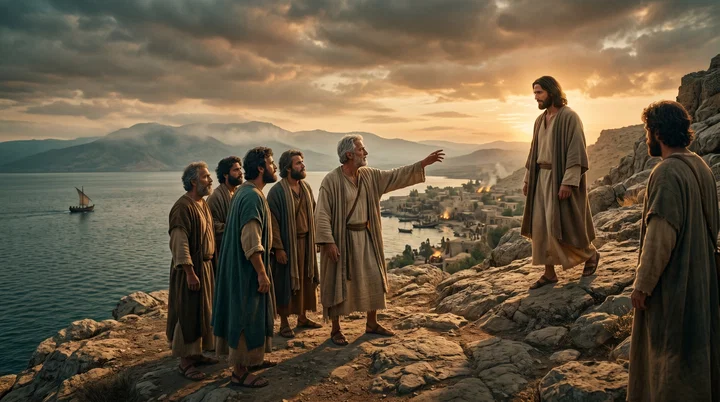
And they did not receive him, because his face was as though he would go to Jerusalem.
Translations
American King James Version, King James Version, KJV Cambridge Paragraph Bible, Webster Bible
And they did not receive him, because his face was as though he would go to Jerusalem.
Revised Version, American Standard Version
And they did not receive him, because his face was as though he were going to Jerusalem.
and they did not receive him, because his face was going on to Jerusalem.
And they did not receive him, because his face was [turned as] going to Jerusalem.
And they welcomed him not, because, his face, was for journeying unto Jerusalem.
Berean Standard Bible, Majority Standard Bible
But the people there refused to welcome Him, because He was heading for Jerusalem.
They didn’ t receive him, because he was traveling with his face set toward Jerusalem.
But they would not have him there, because he was clearly going to Jerusalem.
But they woulde not receiue him, because his behauiour was, as though he would go to Hierusalem.
Douay-Rheims (Challoner revision)
And they received him not, because his face was of one going to Jerusalem.
Pictures
Cross-references
- John 4:20-21
Our fathers worshipped in this mountain; and ye say, that in Jerusalem is the place where men ought to worship.
Samaritan worship and the rival claims about Jerusalem and Gerizim.
- 2 Kings 1:10-12
And Elijah answered and said to the captain of fifty, If I be a man of God, then let fire come down from heaven, and consume thee and thy fifty. And there came down fire from heaven, and consumed him and his fifty.
James and John invoke Elijah’s fire against the Samaritans.
- Isaiah 53:3
He is despised and rejected of men; a man of sorrows, and acquainted with grief: and we hid as it were our faces from him; he was despised, and we esteemed him not.
Jesus’ rejection reflects the prophecy that he would be despised and rejected.
- Acts 8:14
Now when the apostles which were at Jerusalem heard that Samaria had received the word of God, they sent unto them Peter and John:
The Samaritans later received the word of God.
- John 4:9
Then saith the woman of Samaria unto him, How is it that thou, being a Jew, askest drink of me, which am a woman of Samaria? for the Jews have no dealings with the Samaritans.
Describes the hostility between the two peoples.
- Luke 10:1
After these things the Lord appointed other seventy also, and sent them two and two before his face into every city and place, whither he himself would come.
Jesus sends the seventy to preach in the Samaritan region.
Commentary
Each commentary is drawn from primary sources: the writings of Ellen G. White and Adventist pioneers and periodicals. Each commentary is separate. Its own words are not a quotation; follow the references to read the source passages.
Ellen G. White
9 sources
This belongs to the final, public journey toward Jerusalem, unlike an earlier hidden journey to the city.Ms 72, 1911, par. 1–5DA 485.1–3 The destination was the place of great sacrifice where crucifixion would be faced.Ms 72, 1911, par. 1–5DA 485.1–3 The journey was made to direct people's attention to Jesus as the source of salvation.DA 485.1–3 It was also made to help His followers remember His teaching and to prepare them to follow Him through coming trials and persecution.Ms 72, 1911, par. 1–5
The Samaritans did not receive or welcome Him because His face and direction showed He was traveling toward and continuing on to Jerusalem.ST Nov 2, 1882DA 487.12T 566.1–2BS 49.2–50.1Ms 99, 1894, par. 2–3 Their refusal sprang from prejudice, bigotry, hostility toward Jerusalem, and jealousy.ST Nov 2, 1882DA 487.1BS 49.2–50.1AA 540.1–541.1 They took His destination as a sign that He favored the Jews whom they bitterly hated.DA 487.1 They would have received Him had He come to restore worship on Mount Gerizim.DA 487.1
They withheld ordinary hospitality and the courtesy they would have shown an ordinary traveler and did not invite Him to stay, even though He was weary and night was near.ST Nov 2, 18822T 566.1–2BS 49.2–50.1AA 540.1–541.1 By doing so they rejected the opportunity to receive Him and missed and lost the blessing His presence and the gifts He wished to give would have brought.ST Nov 2, 1882DA 487.1BS 49.2–50.1AA 540.1–541.1 He sought their welcome so He could draw near and bless them, repaying every favor shown to Him with greater grace.DA 487.1 Jesus did not force His way into Samaria, force His presence on them, or resent their disrespect, but continued on to bless those willing to receive Him.ST Nov 2, 1882Ms 99, 1894, par. 2–3AA 540.1–541.1
Their rejection gave the disciples no reason to retaliate.2T 566.1–2 Their anger and desire to call down fire was rebuked, because He came to show mercy, not judgment.2T 566.1–2 The passage with its surrounding verses establishes that ministers of Christ are not to compel people in matters of belief, but to persuade and appeal to them.DA 838.1–2 The verse illustrates how people may neglect to welcome Jesus into their hearts and homes even though He is ready to give love, grace, and blessing and does not force His presence on them.ST Nov 2, 1882
Sources
Pioneers and periodicals
39 sources
The villagers would not welcome him with lodging and hospitality because his face plainly showed he was traveling toward Jerusalem, and that direction stirred their bitter rivalry with the Jews over whether God should be worshiped at Jerusalem or at Mount Gerizim.RH Jan 6, 1910ST May 14, 1894ST May 26, 1898ST Dec 14, 1915 When James and John saw the insult they wanted to command fire from heaven to consume the village as Elijah did, but he turned and rebuked them for not knowing what spirit they were of, declaring that he came not to destroy lives but to save them.ST Aug 21, 1893RH Jan 6, 1910ST May 26, 1898 Instead of forcing acceptance he bore the rude refusal with calm love and simply left with his disciples to go to another village and continue his work.ST May 26, 1898RH Jan 27, 1863ST Jun 25, 1894 His refusal to retaliate shows that rejection of him gives no warrant for censure, coercion, punishment or persecution, for God made man a free moral agent whom he draws only by love and never forces, and his kingdom is not advanced by human power.RH Jan 6, 1910ST May 26, 1898ST Jul 24, 1893RH Mar 26, 1914ST Jun 25, 1894 His followers are therefore to lay aside the judging spirit that would call down vengeance and crush conscience, and to copy his meekness that endures rejection, forgives, and keeps laboring to do good to all, even to enemies and strangers.RH Mar 4, 1915RH Jan 27, 1863RH Mar 14, 1871ST Oct 3, 1878
Words and Setting
The Samaritan villagers would not receive or welcome Jesus, give him hospitality or lodging, or make ready for him, because his face showed he was plainly traveling toward Jerusalem rather than away from it.ST May 14, 1894ST May 26, 1898ST Jul 24, 1893ST Nov 3, 1881 His set direction toward Jerusalem was seen and known, and on that ground alone they refused him.RH Mar 26, 1914ST Nov 3, 1881ST Nov 17, 1881
The refusal was rooted in bitter rivalry and hatred between Jews and Samaritans, amounting almost to deadly hatred, expressed as national and class prejudice over where people should worship.RH Jan 6, 1910ST Nov 25, 1886ST Jun 12, 1907ST May 24, 1910 Jews held that worship belonged in Jerusalem, while Samaritans favored Mount Gerizim and hated Jerusalem.ST Dec 14, 1915ST Jun 12, 1907ST May 24, 1910 The Samaritans expected the Messiah to honor their temple on Mount Gerizim and to restore it, rather than go to Jerusalem to a feast, and his traveling toward Jerusalem was enough to provoke their bitterness.ST Nov 3, 1881ST Nov 3, 1881 The Jews were chiefly responsible for the enmity, considering themselves far superior to the Samaritans, regarding them with contempt and treating them as dogs.ST Nov 25, 1886
The refusal was jealous, rude, and ungracious, withholding ordinary courtesy and hospitality, even what would have been shown an ordinary traveler.ST Nov 2, 1882ST Oct 16, 1884ST Nov 17, 1881 By refusing they missed and lost the blessing of his presence as their host, because they did not invite him to stay.ST Nov 2, 1882ST Oct 16, 1884 The verse belongs to the account of the relapsing demoniac, which is against the Jews and proves they have no peculiar blessings in reserve for them.RH Sep 9, 1858
Christ's Response to Rejection
When James and John saw the village refuse lodging because he was plainly traveling toward Jerusalem, they treated the slight as an insult to be avenged and asked to command fire to come down from heaven to consume the people even as Elijah did.ST Aug 21, 1893RH Jan 6, 1910ST May 26, 1898 Their proposal was in effect to inflict the death penalty by fire and to destroy the whole village because the people did not come out and receive him according to their ideas.RH Jan 6, 1910RH Mar 4, 1915ST Jan 7, 1897 As servants of an earthly king naturally would, they were incensed by the bitter refusal and wanted to crush the inhospitable rejecters.ST Aug 21, 1893RH Jan 6, 1910ST Mar 18, 1897 The refusal did not justify destroying them.ST Nov 21, 1906
Jesus turned and rebuked both disciples and the intolerant, judging spirit that would crush conscience, declaring they knew not what manner of spirit they were of.ST Aug 21, 1893RH Jan 6, 1910ST May 26, 1898RH Mar 4, 1915 He taught that the Son of Man came not to destroy men's lives but to save them.ST Aug 21, 1893ST May 26, 1898ST Nov 21, 1906RH Mar 4, 1915 His mission was to save people, not to destroy their lives, and not to judge or condemn the world but to save it.ST Nov 21, 1906ST Mar 18, 1897ST Jun 11, 1912 It is not his Spirit that moves men to call down curses upon the heads of those who commit or seem to commit sin.ST Aug 21, 1893
Instead of retaliating against those who rejected him or forcing acceptance, he forbore to retaliate and displayed meekness.ST May 26, 1898RH Jan 27, 1863ST Jun 25, 1894 He stayed calm and loving under bad treatment, was not apt to be angry and did not soon take offense, and would do nothing to destroy them.RH Mar 14, 1871ST Oct 3, 1878 He simply left with his disciples and went to another village, and still labored on to do good to others and continued his work.ST May 26, 1898ST Jun 25, 1894RH Mar 14, 1871ST Oct 3, 1878 A meek spirit is not stopped by rejection but endures, forgives, and keeps working.ST Oct 3, 1878
Elijah's act of calling down fire was not a pattern for them to imitate, for they were to copy deeds of mercy, not retribution.ST Jul 13, 1904 The destruction by fire that was proper in Elijah's circumstances was improper in theirs.ST Jul 13, 1904
Judgment and destruction of those who reject him belong to the Lord himself and are delayed, but remain certain and are chiefly reserved for the future.ST Jul 13, 1904ST Oct 13, 1898 In the Christian era his work is to save, not to condemn or destroy his enemies.ST Oct 13, 1898 Those who reject him and receive not his words will be judged by his word in the last day at his return, when he comes not to judge the world but to save it having left judgment to that day.ST Oct 13, 1898ST Jun 11, 1912
Religious Liberty Taught
Rejection gives no warrant for censure, coercion, punishment, retaliation, religious prosecution or persecution, for force is not a gospel agency.RH Jan 6, 1910ST May 26, 1898ST Jul 24, 1893ST Feb 6, 1896RH Aug 4, 1910 The villagers refused reception because the traveler's face was turned toward Jerusalem, a refusal rooted in bitter rivalry and hatred over worship, and that refusal incensed two disciples to propose inflicting the death penalty by fire from heaven as Elijah did.RH Jan 6, 1910ST May 26, 1898ST Jan 7, 1897 He turned and rebuked them and the intolerant spirit that would crush conscience, declaring that they knew not what manner of spirit they were of and that the Son of man came not to destroy men's lives but to save them.RH Jan 6, 1910ST May 26, 1898ST Jul 24, 1893 Instead of retaliating against those who rejected him he simply left with his disciples and went to another village, showing that rejection must be met not with force and destruction but with saving mercy.ST May 26, 1898ST Jul 24, 1893ST Jun 25, 1894 His mission did not rely on coercion but respected freedom, for he did not force people to receive him but came to save and minister rather than to condemn or compel.ST May 26, 1898RH Aug 4, 1910ST Oct 16, 1893
The church's purpose and authority therefore do not include coercing or punishing people for rejecting him.RH Mar 26, 1914ST Feb 6, 1896ST Apr 23, 1912 Ministers of the gospel are not ministers of law to compel belief or punish rejection, for his kingdom is not of this world.RH Mar 26, 1914ST Apr 23, 1912 His work is accomplished by God's Spirit, not by human power or force, and the refusal to use force to advance his mission establishes that principle.ST Apr 23, 1912ST Jul 1, 1908
Killing people judged to be heretics is a greater wrong than their heresy.ST Jul 4, 1911ST Nov 26, 1896 His words oppose putting even a heretic to death for beliefs.ST Jul 4, 1911ST Nov 26, 1896
The Lord does not send Christians to bear the sword against enemies, and no retaliation against persecution belongs to him.RH Oct 16, 1856ST Jan 7, 1897 Professed Christians who call for the use of the sword or of civil law stand rebuked by his example, because civil law is the same thing as the sword since civil law rests on physical force.ST Jan 7, 1897ST Feb 20, 1893 That rebuke applies to using civil force to compel observance of a religious institution or Sunday closing.ST Oct 16, 1893ST Jan 7, 1897ST Feb 20, 1893 His followers should likewise refuse to use carnal weapons or take part in wholesale killing, since he came to save lives, not destroy them.RH Oct 16, 1856ST Jan 7, 1897
Followers must not cherish the desire to be instruments of God's vengeance against wicked or inhospitable people, but must desire to be instruments of his mercy.ST Mar 18, 1897 The vengeful desire charges God with laxness for letting the wicked live and gets ahead of the Lord by making people both judge and executioner.ST Mar 18, 1897
God created man a free moral agent to choose or refuse offered grace and abide the consequences.ST Jun 25, 1894 He works only by moral suasion through the drawings of infinite love, never forcing conscience nor saving by arbitrary power against the will.ST Jun 25, 1894 All use of force in religion partakes of a satanic spirit.ST Jun 25, 1894
Example and Application
The refusal brings out the meekness of Jesus, for he did not resent being turned away for appearing to travel toward Jerusalem and he forbore all retaliation.RH Jan 27, 1863RH Mar 14, 1871ST Oct 3, 1878 He stayed calm under bad treatment, was not apt to be angry and did not soon take offense, and would do nothing to destroy the rejecters even when fire from heaven was proposed.RH Mar 14, 1871ST Oct 3, 1878 If one village would not receive him he went to another that would and still labored on to do good to others, showing that a meek spirit is not stopped by rejection but endures, forgives, and keeps working.RH Mar 14, 1871ST Oct 3, 1878
John had taken the refusal as ground to call down fire from heaven to destroy the whole village because the people did not come out and receive Christ according to his ideas, but Christ rebuked that judging spirit by declaring that the Son of man came not to destroy men's lives but to save them.RH Mar 4, 1915ST Jun 12, 1907 By bearing with John day after day in kindness and patience and teaching him by precept and example, he transformed that spirit that would crush conscience into love.RH Mar 4, 1915 Until at last John became the beloved disciple of love who wrote of the Father's love making us sons of God and of dwelling in God who is love.RH Mar 4, 1915
The episode proves he belonged to no exclusive guild, union, or class organization, but kept his heart open to all people, including foreigners and enemies.ST Jun 12, 1907 His practice was to associate freely with Samaritans and bring them salvation, so that enmity toward them was contrary to God's purpose, and he remains the same yesterday, today, and forever.ST Jun 12, 1907ST May 24, 1910 His noble spirit appears in that a short time after this ungracious rejection he made a Samaritan the hero of the parable of the good Samaritan, which required great moral courage to exalt a Samaritan before Jews who despised them. He remained calm and loving under the rude refusal, rebuked the angry and revengeful response of James and John, and answered rejection with good by sending the seventy to preach the kingdom throughout Samaria.ST Nov 17, 1881 His kindness afterward won the hearts of the Samaritans who had refused him even a night's lodging, so that they became ready to hear the message about the Messiah.RH May 2, 1907
Their hostility in withholding ordinary hospitality made them miss the blessing of his presence because they did not invite him to stay, and the same illustrates how people may neglect to welcome Jesus into their hearts and homes even though he is ready to give love, grace, and blessing and does not force his presence on them.ST Nov 2, 1882 Disciples can still wrongly stand between people and him, trying to control access to his grace and arrogating to themselves the right to guard Christ and his gifts.ST Apr 16, 1896 His mission was to save lives, not destroy them, and rejection of him is not to be answered with force or destruction, for those who reject him and receive not his words are left to be judged by his word in the last day.ST Jun 11, 1912ST Nov 19, 1896 His followers are therefore to do to others as they would have others do to them, showing a spirit like his rather than one unlike his.ST Jun 11, 1912ST Nov 19, 1896
Sources