Mark 1:6
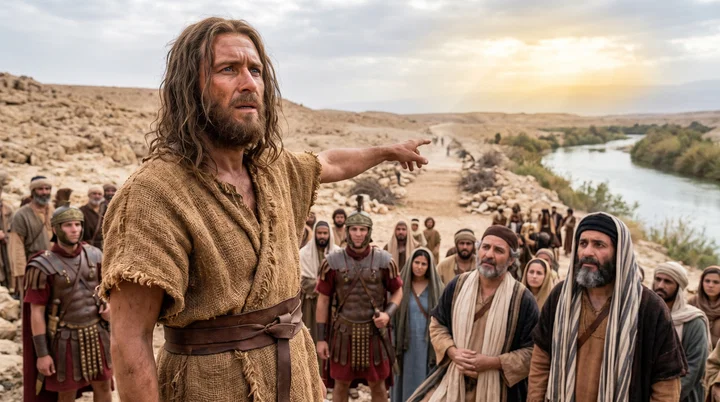
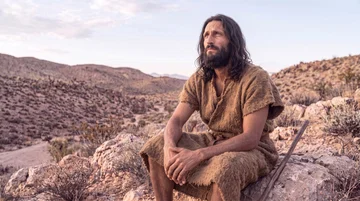
And John was clothed with camel’s hair, and with a girdle of a skin about his loins; and he did eat locusts and wild honey;
Translations
American King James Version, King James Version, KJV Cambridge Paragraph Bible
And John was clothed with camel’s hair, and with a girdle of a skin about his loins; and he did eat locusts and wild honey;
And John was clothed with camels hair, and with a girdle of a skin about his loins; and he ate locusts and wild honey;
Revised Version, American Standard Version
And John was clothed with camel’s hair, and had a leathern girdle about his loins, and did eat locusts and wild honey.
And John was clothed with camel's hair, and a girdle of skin around his loins, and eating locusts and honey of the field,
And John was clothed in camel's hair, and a leathern girdle about his loins, and ate locusts and wild honey.
and John was clothed with camel’s-hair and a leathern girdle about his loins, and was eating locusts and wild honey;
Berean Standard Bible, Majority Standard Bible
John was clothed in camel’s hair, with a leather belt around his waist. His food was locusts and wild honey.
John was clothed with camel’s hair and a leather belt around his waist. He ate locusts and wild honey.
And John was clothed in camel's hair, with a leather band about him; and his food was locusts and honey.
Nowe Iohn was clothed with camels heare, and with a girdle of a skinne about his loynes: and he did eate Locusts and wilde hony,
Douay-Rheims (Challoner revision)
And John was clothed with camel’s hair, and a leathern girdle about his loins; and he ate locusts and wild honey.
Pictures
Cross-references
- Matthew 3:4
And the same John had his raiment of camel’s hair, and a leathern girdle about his loins; and his meat was locusts and wild honey.
Describes John’s clothing and food.
- 2 Kings 1:8
And they answered him, He was an hairy man, and girt with a girdle of leather about his loins. And he said, It is Elijah the Tishbite.
John’s coarse clothing and leather belt resemble Elijah’s.
- Leviticus 11:22
Even these of them ye may eat; the locust after his kind, and the bald locust after his kind, and the beetle after his kind, and the grasshopper after his kind.
The law permits eating locusts as clean insects.
- Malachi 4:5-6
Behold, I will send you Elijah the prophet before the coming of the great and dreadful day of the LORD:
John came in Elijah’s spirit as the prophesied forerunner preparing people for Christ’s coming.
- Isaiah 40:3
The voice of him that crieth in the wilderness, Prepare ye the way of the LORD, make straight in the desert a highway for our God.
John’s wilderness ministry prepares the way for the Lord’s coming.
- Luke 3:1-18
Now in the fifteenth year of the reign of Tiberius Cæsar, Pontius Pilate being governor of Judæa, and Herod being tetrarch of Galilee, and his brother Philip tetrarch of Ituraea and of the region of Trachonitis, and Lysanias the tetrarch of Abilene,
Both describe John’s ministry and his role preparing the way for Christ.
- Luke 1:15
For he shall be great in the sight of the Lord, and shall drink neither wine nor strong drink; and he shall be filled with the Holy Ghost, even from his mother’s womb.
John was set apart from birth and would drink neither wine nor strong drink.
- Luke 1:57-80
Now Elisabeth’s full time came that she should be delivered; and she brought forth a son.
This cited account continues the story of John’s birth and calling.
- Revelation 9:3
And there came out of the smoke locusts upon the earth: and unto them was given power, as the scorpions of the earth have power.
Uses the same Greek word for locusts, as symbols of a destructive power.
Commentary
Each commentary is drawn from primary sources: the writings of Ellen G. White and Adventist pioneers and periodicals. Each commentary is separate. Its own words are not a quotation; follow the references to read the source passages.
Ellen G. White
12 sources
Mark 1:6 belongs to the beginning of the gospel of Jesus Christ.Lt 66, 1906, par. 1–5 It stands within John's wilderness work of baptizing and preaching the baptism of repentance for the remission of sins.Lt 66, 1906, par. 1–5 It stands where all the land of Judea and those of Jerusalem came confessing sins and were baptized by him in the Jordan, and before his preaching of the mightier One to come after him.Lt 66, 1906, par. 1–5 In the setting of Mark 1:5-8, already-received baptism is not to be rested upon as sufficient, and the Holy Ghost is needed just as much now.Ms 189, 1905, par. 1–6
John wore a coarse garment of camel's hair, a hair-cloth garment, fastened about him with a leather girdle or belt.DA 102.1CH 72.32SP 45.3–47.22SP 75.2–3CTBH 38.3–39.1 He ate locusts and wild honey found and supplied in the wilderness.DA 102.1CH 72.32SP 75.2–3CTBH 38.3–39.1RH Mar 11, 1873 That food was plain and simple, described as purely vegetable food, and with it he drank water from the hills, the pure water of the wilderness.DA 102.1STBk 135.4CH 72.32SP 45.3–47.22SP 75.2–3
His dress and food expressed the simplicity and self-denial of an ancient prophet.DA 102.1 They were part of a life-long consecration to God, in which he made his birth dedication as a Nazarite his own, separated from ordinary comforts.DA 102.1STBk 135.4 His clothing and diet resembled those of Elijah, wearing coarse garments like Elijah.2SP 75.2–3RH Mar 11, 1873 He lived in the wilderness away from the cities because no school on earth could have fitted him for his great appointed work.Ms 131, 1901, par. 3 His study books were the Old Testament Scriptures, God, and the nature God had created, while the customs and practices of men were not to be his education and worldly engrossment was to have no part in forming his character.Ms 131, 1901, par. 3
That austere wilderness life was deliberate self-denial to control appetite, to avoid society's temptations, luxuries, and corrupting influences, and to prepare his physical, mental, and moral powers for his work of calling people to repentance and fitting him for preparing the way of the Lord.2SP 45.3–47.2ST Oct 11, 1877Ms 131, 1901, par. 3RH Jan 7, 1873 His coarse clothing and simple diet had no outward display to attract admiration.2SP 75.2–3RH Mar 11, 1873 His dress rebuked the extravagance and display of his generation, especially the priests and the people.CH 72.3CTBH 38.3–39.1 His plain diet rebuked indulgence of appetite and widespread gluttony.CH 72.3CTBH 38.3–39.1 His disciplined, temperate life prepared him for his work as a reformer and shows the temperance expected of those who prepare people for Christ's coming.CTBH 38.3–39.1
Sources
Pioneers and periodicals
21 sources
Mark 1:6 describes John clothed in coarse camel's-hair cloth fastened about his loins with a leather belt, with no outward display to attract admiration.ST Oct 11, 1877ST Mar 8, 1883RH May 5, 1859 His food of locusts and wild honey was the plain fare afforded by the wilderness, the locusts being edible insects permitted as clean food and likely the best he could obtain, though some held they were instead the sweet pods of the carob tree and the honey a kind of gum.ST May 24, 1905ST Feb 12, 1885ST Jun 19, 1907RH Mar 4, 1875ST Apr 8, 1875 In this dress like Elijah's he stands marked as unlike ordinary people, altogether in the spirit of Elijah as the forerunner preaching the coming Messiah.ST Mar 8, 1883RH Mar 11, 1873RH Nov 18, 1862RH Oct 23, 1866ST Jun 7, 1910 His deliberate self-denial in the wilderness, avoiding luxury and controlling appetite, prepared him to call people to repentance, and his humble circumstances did not lessen his God-given message.ST Oct 11, 1877RH Jan 7, 1873RH May 5, 1859RH Jul 22, 1909 His plain clothing and simple diet remain a model of temperance and humble living, calling ministers especially to reject worldly policy, feed on God's word, and stand girded and steadfast in proclaiming the Lord's message.ST May 16, 1911RH Jun 6, 1907RH Jun 30, 1874
Clothing and Diet Described
John was clothed with coarse camel's-hair cloth, a garment of haircloth fastened about his loins with a leather belt of skin at the waist.ST Oct 11, 1877RH Jan 7, 1873RH May 5, 1859ST Jun 7, 1910 There was no outward display in his dress to attract admiration or to awaken admiration.ST Mar 8, 1883RH Mar 11, 1873 His coarse clothing was like Elijah's, and his appearance is compared with that of Elijah.ST Mar 8, 1883RH Mar 11, 1873ST Jun 7, 1910 That plain clothing and austere manner marked him as unlike ordinary people.RH May 5, 1859
The locusts he ate were edible insects, denoted by the same Greek word used for locusts elsewhere in the New Testament.ST Feb 12, 1885 They were a kind of animal food permitted by the law of clean and unclean foods in Leviticus 11 and Deuteronomy 14, and likely the best food he could obtain.ST May 24, 1905ST Feb 12, 1885ST Jun 19, 1907 They were still eaten in the East, including as dried food sold in Bagdad.ST Feb 12, 1885 By another explanation, locusts may instead mean the sweet pods of the carob tree, also called St. John's bread, or a bean-like fruit pod like the husk eaten by the prodigal son, or the top of a plant, while wild honey may mean a kind of gum, presenting his food as possibly plant-based rather than insects.ST Jun 19, 1907RH Mar 4, 1875ST Apr 8, 1875 Against that explanation, the locusts were not locust beans or St. John's bread, the pods with seeds separated by fleshy pulp and sweet mucilage that are used as food for animals and exported as stock feed.ST Nov 11, 1897 His plain food of locusts and wild honey was afforded and supplied by the wilderness, with pure water flowing from the hills to drink.ST Mar 8, 1883RH Mar 11, 1873
Forerunner Role and Timing
John was the forerunner of Christ, altogether in the spirit of Elijah, fulfilling the prophecy that the forerunner of the Messiah was to be Elijah himself or one in the spirit of Elijah.RH Nov 18, 1862 He preached the coming Messiah in that forerunner office, with his distinctive clothing and simple food marking him in the role.RH Oct 23, 1866 His account belongs to the report of Jesus and John in Mark 1:1-11, to be kept in its place in the whole scheme of the life of Christ.ST Dec 16, 1897 That life is of the eternal Son of God by whom the worlds were created, who came from heaven to reveal the Father, to express infinite love, to bring forgiveness and hope, and to give His life in atonement to redeem the world from sin to holiness and heaven, with Jesus born in the latter part of the Jewish year B.C. 5.ST Dec 16, 1897
The verse stands in the account of Jesus' baptism by John in the Jordan, which came in the autumn of A.D. 27 at the end of the 483 years from the decree to restore Jerusalem. John is the one who baptized Jesus in Jordan, and that baptism marks the point when Jesus began preaching and declared that the time was fulfilled.ST May 6, 1880 People gathered on the riverbanks to hear John each Sabbath as he preached the coming Messiah.RH Oct 23, 1866 He was a humble man who performed no miracles, and his simple appearance underscores the modest means by which he prepared the way for Christ's first advent.RH Feb 6, 1855
His clothing and food do not make him a type of the last-day remnant, since the locusts were probably animal food permitted by the law and likely the best food he could obtain.ST May 24, 1905 The likeness lies instead in his character and in the nature and purpose of his reform work.ST May 24, 1905
Simplicity as Moral Example
John lived simply in the wilderness in deliberate self-denial, wearing a garment of haircloth fastened with a leather belt and eating plain food.ST Oct 11, 1877RH Jan 7, 1873 His austere clothing and diet belonged to that wilderness life, by which he avoided society's temptations and luxuries and controlled his appetite.ST Oct 11, 1877RH Jan 7, 1873 In this self-denial he prepared himself for his work of calling people to repentance.ST Oct 11, 1877RH Jan 7, 1873
His plain dress of coarse camel's-hair cloth and leather belt and his austere diet of locusts and wild honey marked him as unlike ordinary people.RH May 5, 1859RH Jul 22, 1909 He had neither riches nor earthly position or recognition, and his humble circumstances did not keep him from carrying out his mission and proclaiming his message.RH May 5, 1859RH Jul 22, 1909 That lowliness did not make his God-given message illegitimate nor lessen its importance.RH May 5, 1859RH Jul 22, 1909
His simple diet of locusts and wild honey is a model of temperance in eating that can safely be imitated. His simple wilderness dress is likewise an example of living without fine garments, luxury, or possessions.ST May 16, 1911RH Jun 6, 1907 It teaches acceptance of humble dress and furnishings rather than sacrificing the deeper value of a loving home for outward elegance.ST May 16, 1911RH Jun 6, 1907
His plain clothing and simple food are also a model for ministers to reject worldly policy and human-made teachings and to take spiritual nourishment from God's word.RH Jun 30, 1874 His girded loins call them to be ready and steadfast as they proclaim the Lord's message in spiritual decline.RH Jun 30, 1874 They are strengthened in that steadfastness by the promise of Christ's coming.RH Jun 30, 1874
Sources