Matthew 3:4
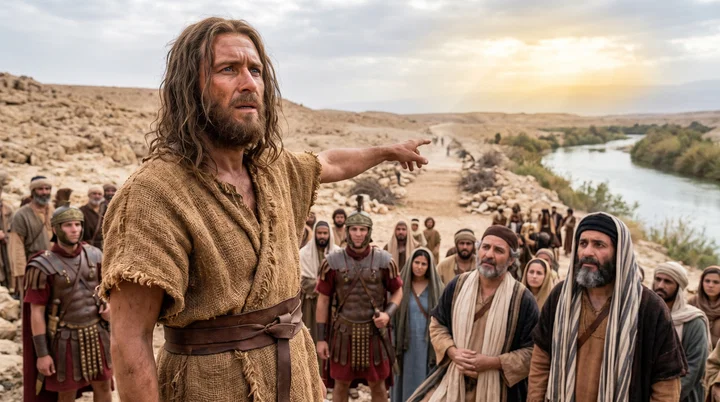
And the same John had his raiment of camel’s hair, and a leathern girdle about his loins; and his meat was locusts and wild honey.
Translations
And the same John had his raiment of camel’s hair, and a leather girdle about his loins; and his meat was locusts and wild honey.
King James Version, KJV Cambridge Paragraph Bible
And the same John had his raiment of camel’s hair, and a leathern girdle about his loins; and his meat was locusts and wild honey.
And the same John had his raiment of camel's hair, and a leathern girdle about his loins; and his food was locusts and wild honey.
Revised Version, American Standard Version
Now John himself had his raiment of camel’ s hair, and a leathern girdle about his loins; and his food was locusts and wild honey.
And this John had his clothing of camel's hair, and a girdle of skin round his loins, and his nourishment was locusts and honey of the field.
And John himself had his garment of camel's hair, and a leathern girdle about his loins, and his nourishment was locusts and wild honey.
But John, himself, had his raiment of camel’s hair, and a leathern girdle about his loins,—while, his food, was locusts and wild honey.
John wore a garment of camel’ s hair, with a leather belt around his waist. His food was locusts and wild honey.
John wore a garment of camel’ s hair and a leather belt around his waist. His food was locusts and wild honey.
Now John himself wore clothing made of camel’ s hair with a leather belt around his waist. His food was locusts and wild honey.
Now John was clothed in camel's hair, with a leather band about him; and his food was locusts and honey.
And this Iohn had his garment of camels heare, and a girdle of a skinne about his loynes: his meate was also locusts and wilde hony.
Douay-Rheims (Challoner revision)
And the same John had his garment of camels’ hair, and a leathern girdle about his loins: and his meat was locusts and wild honey.
Pictures
Cross-references 20 of 37
- Isaiah 40:3
The voice of him that crieth in the wilderness, Prepare ye the way of the LORD, make straight in the desert a highway for our God.
John fulfills the prophecy of the wilderness voice preparing the Lord’s way.
- 2 Kings 1:8
And they answered him, He was an hairy man, and girt with a girdle of leather about his loins. And he said, It is Elijah the Tishbite.
Elijah’s hairy garment and leather belt resemble John’s clothing.
- Luke 1:15
For he shall be great in the sight of the Lord, and shall drink neither wine nor strong drink; and he shall be filled with the Holy Ghost, even from his mother’s womb.
John’s restrained life reflects the command that he abstain from wine and strong drink.
- Malachi 4:5-6
Behold, I will send you Elijah the prophet before the coming of the great and dreadful day of the LORD:
John’s Elijah-like work prepares people for the Lord’s coming.
- Mark 1:6
And John was clothed with camel’s hair, and with a girdle of a skin about his loins; and he did eat locusts and wild honey;
John’s clothing and food are described in both accounts.
- Luke 3:1-18
Now in the fifteenth year of the reign of Tiberius Cæsar, Pontius Pilate being governor of Judæa, and Herod being tetrarch of Galilee, and his brother Philip tetrarch of Ituraea and of the region of Trachonitis, and Lysanias the tetrarch of Abilene,
A parallel account of John’s preaching and baptism ministry.
- Luke 1:17
And he shall go before him in the spirit and power of Elias, to turn the hearts of the fathers to the children, and the disobedient to the wisdom of the just; to make ready a people prepared for the Lord.
John’s ministry is described as coming in Elijah’s spirit and power.
- Matthew 3:13-17
Then cometh Jesus from Galilee to Jordan unto John, to be baptized of him.
John’s account continues with Jesus coming to him for baptism.
- Leviticus 11:22
Even these of them ye may eat; the locust after his kind, and the bald locust after his kind, and the beetle after his kind, and the grasshopper after his kind.
Names locusts among the creatures permitted for food.
- Matthew 14:3-4
For Herod had laid hold on John, and bound him, and put him in prison for Herodias’ sake, his brother Philip’s wife.
John’s rebuke of Herod’s unlawful marriage led to his imprisonment and death.
- Matthew 11:14
And if ye will receive it, this is Elias, which was for to come.
Jesus identifies John as the promised Elijah.
- Matthew 11:7-8
And as they departed, Jesus began to say unto the multitudes concerning John, What went ye out into the wilderness to see? A reed shaken with the wind?
Jesus contrasts John’s plain clothing with royal finery.
- Luke 1:80
And the child grew, and waxed strong in spirit, and was in the deserts till the day of his shewing unto Israel.
John lived in the wilderness before appearing publicly to Israel.
- Matthew 17:12
But I say unto you, That Elias is come already, and they knew him not, but have done unto him whatsoever they listed. Likewise shall also the Son of man suffer of them.
Jesus identifies John the Baptist with the promised Elijah.
- Luke 7:29-30
And all the people that heard him, and the publicans, justified God, being baptized with the baptism of John.
People accepted John’s baptism, while the Pharisees and lawyers rejected God’s counsel.
- Malachi 3:1
Behold, I will send my messenger, and he shall prepare the way before me: and the Lord, whom ye seek, shall suddenly come to his temple, even the messenger of the covenant, whom ye delight in: behold, he shall come, saith the LORD of hosts.
John is the messenger preparing the way for Christ.
- Matthew 11:11
Verily I say unto you, Among them that are born of women there hath not risen a greater than John the Baptist: notwithstanding he that is least in the kingdom of heaven is greater than he.
Jesus declares John the Baptist greater than any prophet born of women.
- John 1:19-28
And this is the record of John, when the Jews sent priests and Levites from Jerusalem to ask him, Who art thou?
John’s appearance and way of life help explain why the leaders questioned him.
- John 1:29
The next day John seeth Jesus coming unto him, and saith, Behold the Lamb of God, which taketh away the sin of the world.
John identifies Jesus as the Lamb who takes away sin and proclaims him as the Promised One.
- Acts 19:4
Then said Paul, John verily baptized with the baptism of repentance, saying unto the people, that they should believe on him which should come after him, that is, on Christ Jesus.
John called people to repentance and faith in the one coming after him.
Commentary
Each commentary is drawn from primary sources: the writings of Ellen G. White and Adventist pioneers and periodicals. Each commentary is separate. Its own words are not a quotation; follow the references to read the source passages.
Ellen G. White
36 sources
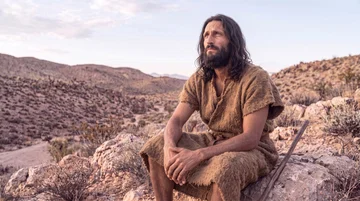
John lived alone in the wilderness apart from cities and comforts, clothed in a coarse plain garment of camel's hair bound with a leather belt and living on locusts and wild honey with water from the hills.CTBH 189.3–190.2Lt 145, 1904, par. 1–4Ms 115, 1909, par. 2–3DA 102.12SP 75.2–3 The locusts were the insect still eaten in that land, though some understood them to be a bean-like pod or plant top similar to the carob husk.CTBH 189.3–190.2 His dress was that of the ancient prophets, resembling Elijah in particular, with no beauty or display to attract admiration.DA 102.12SP 47.3–48.12SP 75.2–3 As Christ's forerunner he preached repentance and the nearness of heaven's kingdom to prepare the way of the Lord, baptizing in the Jordan those who confessed their sins and pointing to the Coming One who would baptize with the Holy Spirit.Ms 147, 1906, par. 16–20Ms 115, 1909, par. 2–3Lt 160, 1910, par. 3–62SP 126.2–127.2 His preaching was plain, pointed and startling, rebuking sin by its right name and convicting even the self-righteous, and his self-denying simplicity in dress and diet was a standing rebuke to extravagance, indulgence and gluttony that represents the reform needed to prepare people for Christ's second coming.Ms 142, 1906, par. 8–11CH 72.33T 61.3–62.1TCBMP 84.3–86.1STB 55.4
Dress, Diet, and Wilderness
John's raiment was a plain, rough, coarse garment of camel's hair, a haircloth fastened about the waist with a leather girdle.CTBH 189.3–190.2Lt 145, 1904, par. 1–4Ms 115, 1909, par. 2–32SP 45.3–47.2ST Oct 11, 1877 It had no beauty and no showy display, serving only clothing's practical purpose rather than adornment.2SP 45.3–47.2ST Oct 11, 1877ST Nov 1, 1877 His meat was locusts and wild honey found in and afforded by the wilderness, with pure water drunk from the hills.Ms 115, 1909, par. 2–3DA 102.12SP 75.2–3ST Mar 8, 1883RH Mar 11, 1873 The water is described as flowing from the eternal hills.RH Mar 11, 1873
The locusts named as his food may have been the insect still eaten in Judea, or the top of a plant.CTBH 189.3–190.2 It is also explained as a bean-like fruit or pod similar to the carob husk.CTBH 189.3–190.2 His diet is described as purely vegetable, subsisted upon apart from the luxuries of life.STBk 135.43T 61.3–62.1STA 135.3TCBMP 84.3–86.1
His camel-hair garment and leather belt were the dress of the ancient prophets and resembled Elijah in particular.DA 102.12SP 75.2–3ST Mar 8, 1883RH Mar 11, 1873 His unusual, simple clothing was like the description of ancient seers, so that people thought one of the prophets had risen from the dead.2SP 47.3–48.1 There was no outward display to attract or awaken admiration.2SP 75.2–3ST Mar 8, 1883RH Mar 11, 1873
He lived separated from friends and kindred, from ordinary comforts and luxuries, and from depraved society, alone in the wilderness.STBk 135.4STA 135.3RH Jan 7, 1873 He withdrew from where pride, envy, jealousy, and corrupt passions controlled men, making his home away from cities, customs, teachings, and schools.STE 50.2–3Ms 131, 1901, par. 3RH Jan 7, 1873 No earthly school could fit him for his work or connect with his appointed work.Ms 131, 1901, par. 3RH Jan 7, 1873
In that unobstructed communion with God his study books were the Old Testament Scriptures, God, and created nature, God's great book of nature.STE 50.2–3Ms 131, 1901, par. 3RH Jan 7, 1873 His plain diet belonged with separation from the customs and practices of men, so that worldly engrossment would have no part in forming his character and his character would not be molded by prevailing customs.Ms 131, 1901, par. 3RH Jan 7, 1873 His wilderness life lived out a lifelong consecration to God, making his own the solemn dedication made by his parents from his birth, begun under their solemn dedication of him to God.DA 102.1RH Jan 7, 1873
Forerunner's Preaching and Baptizing
John was the forerunner of Christ whose rough clothing and simple wilderness food belonged to his work preaching repentance in the wilderness of Judea.Ms 147, 1906, par. 16–20Ms 115, 1909, par. 2–3 He proclaimed the nearness of heaven's kingdom to turn Israel to God and to prepare the way of the Lord and a people for the Lord.Lt 160, 1910, par. 3–6RH Jan 7, 18732SP 43.1–2 Many came confessing their sins and were baptized by him in the Jordan as evidence of repentance, thereby identifying with Christ and accepting the requirements for an inheritance in that kingdom.Ms 115, 1909, par. 2–3Lt 160, 1910, par. 3–6RH Jan 7, 1873 His ministry also pointed to the coming One who would baptize with the Holy Spirit.Ms 115, 1909, par. 2–32SP 126.2–127.2
His preaching was plain, startling, pointed, direct and convincing, spoken with no whispering voice and no smooth message, and with no fanciful teaching designed to attract crowds.Ms 142, 1906, par. 8–11RH Jan 7, 1873Lt 48, 1902, par. 3 He rebuked sin by its right name, denounced the corruptions of the Jews and reproved their prevailing sins, cut to the hearts of his hearers, and convicted even those who considered themselves righteous.Lt 160, 1910, par. 3–6GW92 89.4–90.1RH Jan 7, 1873Lt 48, 1902, par. 3 That pointed message became more and more pointed and he bore it even at the cost of his life, and such pointed warning serves to keep people from being deceived.STB 55.4MOPP 14.3–4
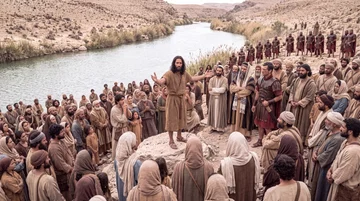
Jews widely dispersed in all civilized lands, coming to Jerusalem for the annual feasts, went out to hear him at the banks of the Jordan, heard his proclamation of Christ as the Promised One, and on their return home carried those tidings to all parts of the world.ST Apr 3, 1884 In this way Providence prepared the way for the labors of the apostles in missionary fields like Corinth and Ephesus.ST Apr 3, 1884 Many were convicted by the plain truths he uttered, but those who rejected that light became enshrouded in deeper darkness and were fully prepared to turn away from the evidences that Jesus was the true Messiah.RH Jan 7, 1873
Reform Message for Today
John's plain dress and simple food belonged to an abstemious, self-denying life set apart from luxury and corrupting influence.2SP 45.3–47.2ST Oct 11, 18772SP 43.1–2 That separation and self-denial brought appetite under control and disciplined his physical, mental, and moral powers to a high and noble type for calling people to repentance and righteous living.2SP 45.3–47.2ST Oct 11, 1877RH Jan 7, 18732SP 43.1–2 Those who prepare for Christ's work in the last days must likewise deny self, control desire, and turn from baseness and worldly ambition.Lt 36, 1888, par. 14 Circumstances and appetites are not to rule a person but to be brought under God's authority.STMW9 56.1–2
By a secluded life of hardship and privation he kept his mind undistracted in meditation and prayer, preserved a sense of the sinfulness of sin, learned from nature, and discerned and resisted Satan.RH Jan 7, 1873 Those privations formed an unbiased character of firmness and integrity, so that he stood among men as unmoved as the rocks and mountains of the wilderness.RH Jan 7, 1873 He could therefore read the characters of men, adapt instruction to them, enlighten them, give a new direction to their thoughts, and bring them up to the standard of divine perfection and to a higher and holier life.RH Jan 7, 1873
The simplicity of his dress was a standing rebuke to extravagance and display.CH 72.33T 61.3–62.1TCBMP 84.3–86.1CTBH 38.3–39.1 It stood in contrast especially to the rich, soft, gorgeous robes and breastplates of the Jewish priests and elders and of the people generally, serving clothing's practical purpose with no beauty or showy display.CH 72.33T 61.3–62.1ST Nov 1, 1877ST Mar 1, 1883 That contrast exposed seeking admiration and reverence through outward appearance instead of purity of character, holiness of life, and a life approved by God.ST Nov 1, 1877ST Mar 1, 1883 His diet of locusts and wild honey, purely vegetable, was a rebuke to indulgence of appetite and to the gluttony prevailing everywhere.CH 72.33T 61.3–62.1TCBMP 84.3–86.1CTBH 38.3–39.1
His self-denial, humility, and temperance belonged to a reforming work that prepared the way for Christ's first coming and represents the reform needed to prepare people for his second coming.3T 61.3–62.1TCBMP 84.3–86.1 He is the representative of those living in the last days who present sacred truths to prepare the way for the second coming, and his wilderness life of preparation is the model for a work of repentance and warning to be done in the present day.Lt 145, 1904, par. 1–4TCBMP 84.3–86.1 His self-denial, humility, and temperance are to be presented in contrast to the extravagant, health-destroying habits of this degenerate age, to turn God's people from idolatry, gluttony, and extravagance in dress and other things.TCBMP 84.3–86.1
The same kind of plain truth-telling message is to be borne now, with no whispering voice and no smooth message, but telling the truth of the situation as John did.Lt 145, 1904, par. 1–4Ms 142, 1906, par. 8–11 That work takes the Word and plainly states present truth, calling people to the life they must live in this world to prepare for future life, to serve God with full purpose of a renewed heart sanctified and made holy by cleansing blood.TCBMP 84.3–86.121MR 421.3–5 It holds minds to the true issues for this time and carries warnings to those who need the truth and have not exchanged the evidences of truth for fallacies and scientific presentations of satanic origin, without drawing souls to Battle Creek, while being on guard against men who would divert the mind from those issues.Ms 61a, 1906, par. 30
Sources
Pioneers and periodicals
87 sources
John lived a plain and austere life in the wilderness, clothed in a coarse garment of camel's hair bound with a leather belt and feeding on locusts and wild honey apart from luxury and display.ST Jan 18, 1899ST Jun 12, 1907RH Jan 6, 1910ST Jul 23, 1894ST Feb 21, 1906 His dress marks him as the promised forerunner in the spirit and character of Elijah, fulfilling Isaiah's voice crying in the wilderness and Malachi's messenger to prepare the Lord's way for Christ's first advent.ST Mar 8, 1883ST Jan 18, 1899ST Mar 13, 1907ST Mar 11, 1886ST Jan 9, 1879 He preached repentance because the kingdom of heaven was approaching, turning men to God's law and to faith in the coming Christ, and his baptism expressed faith for forgiveness through the coming Saviour and prepared believers to receive Him.ST Dec 11, 1879ST Mar 11, 1886ST Jun 21, 1883ST Mar 16, 1904ST Mar 11, 1886 The locusts were living edible insects permitted as food by Leviticus and eaten in the East, wholesome though humble fare, while those who held otherwise taught they were the sweet pods of the locust or carob tree and that the verse does not settle whether he ate insects or plants.RH Jun 25, 1901RH Nov 19, 1901ST Jun 27, 1911ST Feb 12, 1885RH Sep 1, 1868 His simplicity in dress and diet rebuked priestly extravagance, indulgence of appetite, and love of display, disciplined his powers for an unmoved testimony, and stands as the example of temperance and self-denial for those who in Elijah's spirit prepare the way for Christ's second coming.RH Nov 19, 1901RH Jan 9, 1908RH Jan 21, 1909RH Oct 5, 1869
Words, Clothing, Food, Setting
Matthew 3:4 portrays John wearing a garment of camel's hair fastened about his waist with a leather belt and eating locusts and wild honey in a plain and austere manner of life.ST Jan 18, 1899ST Jul 23, 1894ST Feb 21, 1906ST Jul 20, 1904 His wilderness life and simple clothing set him apart from princely halls and learned institutions as he came from the wilderness of Judea to prepare the way for the Coming One, and his appearance and preaching recalled a herald delivering a warning message.ST Feb 21, 1906ST Jul 20, 1904 His clothing is identified with the dress of Elijah, marking him as the promised forerunner of Christ.ST Jan 18, 1899
The locusts were living edible insects, the same kind denoted by the Greek word used for locusts in Revelation 9.RH Jun 25, 1901ST Feb 12, 1885 They were permitted as food by Leviticus, wholesome though not among the best foods, eaten in the East and by poor nomadic desert tribes.ST Jun 27, 1911ST Feb 12, 1885ST They were eaten in ancient times, including dried and ground into nutritious meal, and dried locusts were also sold and eaten as food in the East, following the customary convenient food of the time.RH Jun 25, 1901ST Feb 12, 1885 The idea that they were the pods of the caper plant, sometimes called locust beans or St. John's bread, is an error.ST Nov 11, 1897 Those who held the other view taught that locusts may mean the long sweet succulent pods of the locust or carob tree, called locust bran or St. John's bread, whose pulp tastes much like dates and which were used as food for animals and sometimes eaten by man, or the top of a plant.ST Jun 19, 1907RH Sep 1, 1868RH Mar 4, 1875 On this view the verse and the word's definitions do not establish whether John ate locust insects or the edible pods of the locust tree, both of which were used as food in the East, and do not establish that he was a vegetarian.RH Nov 19, 1901RH Sep 1, 1868 Meat in the verse means food generally, not necessarily animal flesh, and the wild honey may have been a kind of gum.RH Mar 4, 1875ST Apr 8, 1875
John found his locusts and wild honey in the wilderness where he lived apart, and he drank pure water from the hills and the river.ST Mar 8, 1883RH Mar 11, 1873ST Mar 9, 1915 He deliberately separated himself from friends and kindred to make his home in the wilderness, denying ordinary comforts and luxuries, and he preached on the banks of the Jordan where great concourses gathered, with Jews dispersed in all civilized lands hearing him at the feasts and carrying the tidings home.RH Jan 7, 1873ST Apr 3, 1884RH Oct 23, 1866 The wilderness is understood as a barren desert of sand and rocks rather than a forest.ST Mar 9, 1915 His coarse clothing resembled Elijah's and his simple food came from the wilderness with no outward display to attract admiration.ST Mar 8, 1883RH Mar 11, 1873
The title the Baptist means the Immerser and is associated with baptism by immersion.ST Nov 13, 1879 His rough distinctive camel-hair garment, fastened at the waist with a wide girdle of leather as Elijah the prophet of God wore, suited his large muscular form.ST Jun 7, 1910 The report that he dressed barbarously and was of savage and ferocious aspect is false, spread by priests and Pharisees angered by his rebuke, though Herodias used that rough distinctive clothing to mock him and portray him as contemptible.ST Aug 2, 1910ST Jun 7, 1910 John lived during the ceremonial-law era, and he and those he baptized kept that law.RH Jan 24, 1856
John as Forerunner Prophet
John's garment of camel's hair with a leather belt about his waist is the dress of Elijah and marks him as the promised forerunner of Christ.ST Mar 8, 1883RH Mar 11, 1873ST Jan 18, 1899ST Mar 13, 1907 He came from the wilderness in the garb of an ancient prophet, striking and severe in appearance and suited to his prophetic mission, living plainly on what the wilderness afforded — locusts and wild honey — and drinking pure water, with no outward display to attract admiration.ST Mar 8, 1883RH Mar 11, 1873ST Jan 18, 1899ST Mar 13, 1907 It was his character and mission, rather than his person, that reproduced Elijah's service and prepared people for Christ's coming.ST Aug 7, 1901
He is the messenger and the voice crying in the wilderness to prepare the Lord's way spoken of by Isaiah and Malachi.ST Mar 11, 1886ST Jan 9, 1879RH Nov 18, 1862ST Jan 8, 1880RH Jan 11, 1870 He professed himself sent to prepare the Jews for the advent of Christ and to prepare the minds of the people for His coming by preaching in the wilderness of Judea, calling them to repentance because the kingdom of heaven was at hand and warning of judgment to come.ST Mar 11, 1886RH Nov 18, 1862 He knew the work he had to do, knew the time had come for the fulfillment of the prophecies, and knew his work was that fulfillment, as the one of whom Malachi had spoken and the one of whom Isaiah had spoken, himself with his message the living evidence that the Messiah was at hand.ST Mar 11, 1886 While he was preaching, the Messiah came and was baptized by him.ST Mar 11, 1886
His appearing in the wilderness of Judea and his baptizing of people from Judea and Jerusalem and the Jordan region was a public sign of the Messiah's first advent.ST Jan 9, 1879ST Jan 8, 1880RH Jan 11, 1870RH Apr 17, 1855RH Aug 11, 1853 Judea and Jerusalem saw this sign when they went out to him to be baptized, fulfilling Isaiah's prophecy of a voice preparing the Lord's way.ST Jan 9, 1879ST Jan 8, 1880RH Jan 11, 1870RH Apr 17, 1855RH Mar 17, 1859 His coming as forerunner was thus evidence that Jesus was the true Messiah.RH Apr 17, 1855RH Mar 17, 1859
He was raised by special providence to go before Christ with a solemn message announcing His immediate coming.ST Mar 8, 1883 He is one of the men God has always raised up both in the church and in the world to fill certain important places in His work and great plan, a man of the hour specially called and fitted for the particular occasion.RH Oct 19, 1916 Though the son of a high priest who could have been extensively useful if he had labored in the regular legitimate way, his dress and manner of life were unlike other people and were condemned as injuring his influence, yet God gave him an important message for mankind.RH May 5, 1859 Though young and lacking long experience or official recognition, and living without riches or position in the wilderness on camel's-hair clothing and locusts and wild honey, these circumstances did not prevent him from carrying out his mission and proclaiming his message.RH Jul 22, 1909 He stood as a humble teacher sent when Judah had fallen into dead formalism, standing on the banks of a gently flowing river in picturesque garments and preaching the coming Messiah with a deep earnest voice that arrested old and young, rich and poor, so that every Sabbath a great concourse assembled on the river banks to hear him.RH Oct 23, 1866 As the desert prophet in a coat of camel's hair he marks the messenger of Jesus' first coming, in contrast with Christ's greater coming in glory and in contrast with the extensive modern evidence for the Second Advent.RH Feb 11, 1873
Message, Ministry and Baptism
John preached in the wilderness of Judea that men should repent because the kingdom of heaven was at hand, meaning approaching rather than immediately near or impending, and his appeal pointed to an event connected with Christ's coming.ST Mar 11, 1886ST Jun 21, 1883ST Mar 16, 1904 He knew the work he had to do, knew the time had come for fulfillment of the prophecies spoken by Malachi and Isaiah, and knew his work was that fulfillment, so that he and his message were living evidence that the Messiah was at hand, and while he was preaching the Messiah came and was baptized by him.ST Mar 11, 1886ST Mar 16, 1904 His mission was to prepare hearts for the reception of the Messiah at His first advent, and his message stirred the people throughout Jerusalem, Judea and the Jordan region as present truth preached from his time onward.ST Mar 16, 1904ST Sep 20, 1899RH Aug 11, 1903 His work turned people to God's law, to faith in the coming Christ, and away from trust in man, preparing a people for the Lord by restoring clear previously downtrodden gospel truth for his time, presenting the everlasting gospel amid apostasy and impending judgment and pointing to Jesus present among them as Deliverer.ST Mar 11, 1886ST Aug 28, 1901
Their baptism by him expressed faith in the coming Saviour and forgiveness of sins through Him, represented Christ's death and burial and resurrection and the believer's death to sin and new life, and thereby prepared those who accepted it to accept the Messiah, just as accepting God's final message now prepares people to meet Christ in peace at His second coming and be gathered as wheat rather than left as chaff.ST Dec 11, 1879ST Mar 11, 1886 Jews widely dispersed in all civilized lands, coming to Jerusalem for the annual feasts, went out to hear him at the banks of the Jordan, heard his proclamation of Christ as the Promised One, and on returning home carried those tidings to all parts of the world, so that Providence prepared the way for the labors of the apostles in missionary fields like Corinth and Ephesus.ST Apr 3, 1884 Many were brought to repentance and were baptized by him in Jordan as evidence of repentance in preparatory work for Christ's ministry, but many convicted by his plain truths rejected that light, became enshrouded in deeper darkness, turned away from evidences that Jesus was the true Messiah, and were unprepared to meet Him or prepared for death in the scriptural sense.RH Jan 7, 1873RH Apr 29, 1875
He came in the way of righteousness so that publicans and harlots believed him, while the priests and elders, though seeing it, did not afterward repent and believe, showing why publicans and harlots enter the kingdom before them.ST Oct 11, 1899 His message and baptism were God's work and heaven-sent timely warning for his generation that had to be received then, would not have applied long before or a century after, and proved that God always warns before judgment to give righteous and wicked a chance to prepare; those who truly loved God recognized and obeyed it, while rejecting or neglecting it meant losing God's favor, standing with the warnings of Noah and Jonah and the work of the Reformers as proof that God sends such special saving truths for each generation.ST Nov 4, 1880RH Jul 7, 1874RH Jan 1, 1867ST Mar 11, 1903 As God's reformer raised up before Christ's first advent as Noah was before the flood, his preaching of repentance was a loud call for reform directed first against the crimes of the professed church and those in high places, with sharpest reproof for hypocrites sitting in Moses' seat, expounders of the law, scribes, Pharisees, priests and Levites whitewashed with apparent sanctity.ST Sep 20, 1883ST Nov 5, 1885
He called the leaders of the Jewish church a generation of vipers to great offense, lifted his voice against the sins of the very leaders when they were wrong, rebuked King Herod, and his faithful dealing cost him his life after Herod's drunken guests failed to speak against his execution, though he was innocent.ST Sep 20, 1883ST Nov 5, 1885ST Dec 15, 1887 His work follows the rule of the ancient prophets to begin with elevated sinners when the church departs from purity and becomes corrupt, showing that the few must labor against the majority even when the professed church will not hear, and when such reproof is rejected the judgments of God follow, with the offensive word repent becoming the stone over which corrupt churches, false prophets, lying teachers, thoughtless nations and reckless rulers stumble and fall.ST Sep 20, 1883ST Nov 5, 1885 His surprising appearance and manner of life helped attract attention and make his case important to the Jewish leaders, and his singular message was such that in modern times people might dismiss him as a backwoods orator.RH Apr 21, 1868RH Nov 7, 1865
Made strong by studying God instead of men, he came unbidden from the deserts of Jordan with a living message even to Herod's court, without pretensions of the schools or soft raiment and polished manners of courts, yet swayed multitudes by God's power because he knew God and therefore knew men in God's light, seeing their weakness and viper-like character and leading them to see God, know themselves and hide in God's strength.ST Oct 29, 1902 Though his circumstances in the solitary wilderness seemed unfavorable with little prospect of an audience, his words were so full of power and his spirit of labor so strong that thousands came and all Jerusalem and Judea came to hear him.ST Oct 29, 1902ST Oct 13, 1881RH Aug 5, 1873 The fire that burns up the chaff in Matthew 3 burns up unprincipled people brought into the church, not people's sins in purgatory, to the loss of the gospel worker's labor.RH May 26, 1874 His clothing and food were as wild and austere as the wilderness where he lived, and that ascetic secluded life was fitting for him and his herald work, standing in contrast to Jesus, who accepted ordinary customs and sanctified them through God's word and prayer in a healthful simple natural life rather than an ascetic secluded one.RH Sep 2, 1902
Simplicity, Temperance and Rebuke
John lived simply and abstemiously in voluntary poverty, with plain coarse clothing of camel's hair confined by a leather belt and the most simple diet of locusts and wild honey, in keeping with the angel's direction to his parents that he should drink neither wine nor strong drink.ST Jun 12, 1907RH Jan 6, 1910ST Nov 1, 1905ST Jul 23, 1894ST Mar 26, 1896 His plain austere manner of life was self-denying and secluded, and its privations and hardships prepared him to stand firm among the people and carry out his work.ST Jul 23, 1894ST Mar 26, 1896RH Jan 9, 1908 His simple manner of life also shows that those called by the Spirit to serve God must be holy.ST Nov 1, 1905
His plain dress and separation from life's luxuries rebuked the extravagance, display, superfluity and vanity of the Jewish priests and people, and his plain diet rebuked indulgence of appetite and gluttony and the prizing of outward adornment and perverted appetites.RH Nov 19, 1901RH Jan 21, 1909RH Oct 5, 1869 His eating and apparel are a pattern of moderation for believers in the last days, who should be content and thankful with poor and common blessings of food and raiment, retrench expenses in eating, drinking and apparel, and let moderation be known to all men, which also provides means for meeting the expenses of traveling messengers, while avoiding careless neglect of taste and order.RH Oct 5, 1869RH Feb 10, 1859 His coarse rough garment had no showy beauty but served clothing's practical purpose, and his food from what the wilderness afforded, with pure water from the hills, had no outward display to attract or awaken admiration.ST Mar 8, 1883ST Nov 1, 1877RH Mar 11, 1873ST Mar 1, 1883 Its simplicity resembled Elijah's and contrasted with the rich soft garments of royal and religious officials and with the priests' costly robes, breastplates and gorgeous apparel.ST Mar 8, 1883ST Nov 1, 1877RH Mar 11, 1873ST Mar 1, 1883 The contrast exposed their concern for admiration and reverence through outward appearance instead of purity of character, holiness of life, and a life approved by God.ST Nov 1, 1877ST Mar 1, 1883
His separation, self-denial, solitude and hardship helped him control appetite, avoid corrupting society and prevailing customs, keep mind undistracted for meditation and prayer, learn from nature, discern and resist Satan, and discipline his physical, mental and moral powers to firm unbiased integrity.ST Oct 11, 1877RH Jan 7, 1873RH Jan 9, 1908ST Nov 21, 1892 By deliberately separating from friends and kindred to make his home in the wilderness, denying ordinary comforts and luxuries and withdrawing from depraved society where pride, envy, jealousy and corrupt passions controlled men, under his parents' solemn dedication of him to God from birth, he avoided having his character molded by prevailing customs and preserved a sense of the sinfulness of sin.ST Oct 11, 1877RH Jan 7, 1873 Going apart into the wilderness to be alone thus prepared him for his life's work, as solitude prepares a person for life's great moments, forming him to stand among men as unmoved as the rocks and mountains of the wilderness, read the characters of men, adapt instruction to them, enlighten them, give a new direction to their thoughts, bring them up to the standard of divine perfection, and call them to repentance and to a higher and holier life.RH Jan 7, 1873RH Jan 9, 1908ST Nov 21, 1892
His simple manner of life rebuked the excesses of his time and gave a lesson in temperance, and his habits impressed the lesson that the conflict over man's fall and recovery turns on appetite.ST Nov 1, 1905RH Mar 24, 1903 He lived out the principles of natural health laws and true health and temperance in his daily manner of life, giving practical instruction that can be applied daily to prolong life and to live twice as long and twice as well, producing a long, happy and useful life, and his simple diet of locusts and wild honey stands as a model of temperance in eating that may safely be imitated.RH Jun 25, 1908 His simple food was part of his revival call for reforms in eating and drinking.RH Jun 25, 1908RH Mar 24, 1903ST Oct 31, 1911 His plain appearance did not indicate absence of the Holy Spirit, for he was filled with the Spirit and preached in the spirit and power of Elijah, his simplicity was consistent with his calling, and he was declared to be no lesser prophet than the greatest arisen.ST Jun 8, 1904
Pattern for Later Believers
John's plain clothing of camel's hair with a leather belt and his food of locusts and wild honey rebuked extravagance and display in dress and indulgence of perverted appetite and gluttony, and stand as the example of simplicity of dress and living for those who in the spirit and power of Elijah herald Christ's second advent.RH Jan 21, 1909RH Oct 5, 1869 That example calls for sharing the same spirit that animated him in preparing the way for Christ's first coming, resisting pride and show and superfluity and vanity while avoiding careless neglect of taste and order.RH Jan 21, 1909RH Oct 5, 1869 Together with Elijah he represents those who rightly prepare for Christ's second coming, and his eating and apparel are a pattern of moderation for believers in the last days to be content and thankful with poor and common blessings of food and raiment, to retrench expenses in eating, drinking and apparel, and to let moderation be known to all men.RH Oct 5, 1869RH Feb 10, 1859 Such retrenchment also provides means for meeting the expenses of traveling messengers.RH Feb 10, 1859
His locusts and wild honey are the model for ministers to put away every trapping of worldly policy and Satan's party-colored robes and trappings, to refuse man's poisonous dishes, and to take simple God-given nourishment with prophetic simplicity.RH Dec 16, 1862RH Dec 6, 1853ST Jun 11, 1874RH Jun 30, 1874 His leathern girdle means strengthening the loins with the promise of Christ's coming and the hope of the glorious appearing of the great God and Saviour.RH Dec 16, 1862RH Dec 6, 1853RH Jun 30, 1874 So girded and so nourished, they become the pattern for a united voice of one crying in the midst of the wilderness of apostasy, blasphemy, ignorance, pollution and sin, crying Prepare the way of the Lord and sounding the warning to prepare the Lord's way.RH Dec 16, 1862RH Dec 6, 1853ST Jun 11, 1874 Living like men waiting for their Lord, when He comes and finds them thus watching He will gird Himself and make them sit down to meat and serve them.RH Dec 16, 1862
His distinctive non-conforming clothing and manner had God's approval because he was called to herald the King, but were not a style he recommended for others to imitate. Wearing that dress, associated with Elijah, does not give anyone Elijah's or John's spiritual power, for God's power rather than outward imitation or copying past methods is what is needed.ST Jun 14, 1910 Dressing simply after his fashion in the wilderness, with camel's hair and leather belt and locusts and wild honey, shows that fine clothing, costly houses and furniture, and outward elegance and display matter less than hearty domestic love and a real home within.ST May 16, 1911ST Aug 17, 1882RH Jun 6, 1907 Outward beauty of garment, house and furniture cannot make a home, and living plainly after his manner is better than spending oneself on fine outward things and leaving the inside hollow.ST May 16, 1911ST Aug 17, 1882RH Jun 6, 1907
Sources