2 Kings 1:8
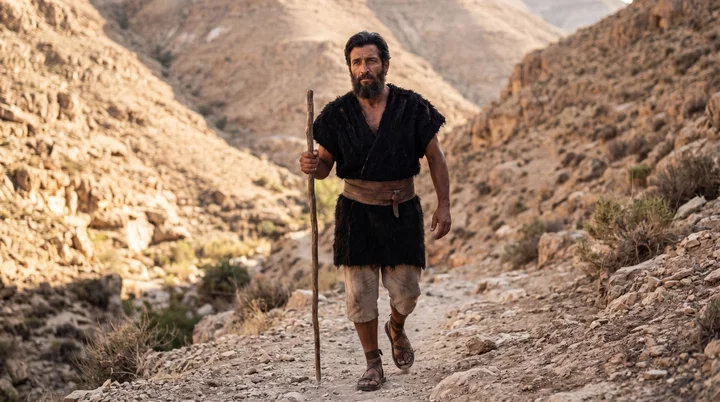
And they answered him, He was an hairy man, and girt with a girdle of leather about his loins. And he said, It is Elijah the Tishbite.
Translations
American King James Version, King James Version, Revised Version
And they answered him, He was an hairy man, and girt with a girdle of leather about his loins. And he said, It is Elijah the Tishbite.
KJV Cambridge Paragraph Bible, Webster Bible, American Standard Version
And they answered him, He was a hairy man, and girt with a girdle of leather about his loins. And he said, It is Elijah the Tishbite.
And they say unto him, 'A man — hairy, and a girdle of skin girt about his loins;' and he saith, 'He [is] Elijah the Tishbite.'
And they said to him, He was a man in a hairy [garment], and girt with a girdle of leather about his loins. And he said, It is Elijah the Tishbite.
And they said unto him—A hairy man, with a leathern girdle girt about his loins. And he said—Elijah the Tishbite, it was.
Berean Standard Bible, Majority Standard Bible
“ He was a hairy man,” they answered, “ with a leather belt around his waist.”“ It was Elijah the Tishbite,” said the king.
They answered him, “ He was a hairy man, and wearing a leather belt around his waist.”He said, “ It’s Elijah the Tishbite.”
And they said in answer, He was a man clothed in a coat of hair, with a leather band about his body. Then he said, It is Elijah the Tishbite.
And they said vnto him, He was an hearie man, and girded with a girdle of lether about his loynes. Then sayde he, It is Eliiah the Tishbite.
Douay-Rheims (Challoner revision)
But they said: A hairy man with a girdle of leather about his loins. And he said: It is Elias the Thesbite.
Pictures
Cross-references
- Matthew 3:4
And the same John had his raiment of camel’s hair, and a leathern girdle about his loins; and his meat was locusts and wild honey.
John’s hair garment and leather girdle recall Elijah’s distinctive clothing.
- Mark 1:6
And John was clothed with camel’s hair, and with a girdle of a skin about his loins; and he did eat locusts and wild honey;
John’s coarse clothing and wilderness diet recall Elijah’s appearance.
- 2 Kings 1:2-4
And Ahaziah fell down through a lattice in his upper chamber that was in Samaria, and was sick: and he sent messengers, and said unto them, Go, enquire of Baal-zebub the god of Ekron whether I shall recover of this disease.
Ahaziah seeks Baal-zebub’s oracle, and Elijah announces God’s judgment.
- Matthew 11:14
And if ye will receive it, this is Elias, which was for to come.
Identifies John with the promised coming of Elijah.
- Luke 1:17
And he shall go before him in the spirit and power of Elias, to turn the hearts of the fathers to the children, and the disobedient to the wisdom of the just; to make ready a people prepared for the Lord.
John’s preparatory work is described as being in Elijah’s spirit and power.
- 2 Kings 2:11
And it came to pass, as they still went on, and talked, that, behold, there appeared a chariot of fire, and horses of fire, and parted them both asunder; and Elijah went up by a whirlwind into heaven.
Continues Elijah’s account with his ascent to heaven.
- 1 Kings 18:27
And it came to pass at noon, that Elijah mocked them, and said, Cry aloud: for he is a god; either he is talking, or he is pursuing, or he is in a journey, or peradventure he sleepeth, and must be awaked.
Elijah mocks Baal’s priests in rebuke of idolatry.
- 2 Kings 1:16-17
And he said unto him, Thus saith the LORD, Forasmuch as thou hast sent messengers to enquire of Baal-zebub the god of Ekron, is it not because there is no God in Israel to enquire of his word? therefore thou shalt not come down off that bed on which thou art gone up, but shalt surely die.
Elijah announces the judgment on Ahaziah, which comes to pass.
- Luke 9:54
And when his disciples James and John saw this, they said, Lord, wilt thou that we command fire to come down from heaven, and consume them, even as Elias did?
James and John invoke Elijah’s heavenly fire with passionate zeal.
- Matthew 17:12
But I say unto you, That Elias is come already, and they knew him not, but have done unto him whatsoever they listed. Likewise shall also the Son of man suffer of them.
John’s work is linked to Elijah’s coming.
- 1 Kings 21:17-29
And the word of the LORD came to Elijah the Tishbite, saying,
Elijah announces judgment on Ahab’s house, setting up Jehu’s later commission.
Commentary
Each commentary is drawn from primary sources: the writings of Ellen G. White and Adventist pioneers and periodicals. Each commentary is separate. Its own words are not a quotation; follow the references to read the source passages.
Ellen G. White
8 sources
The verse describes a hairy man girt with a girdle of leather about his loins, meaning coarse apparel with no outward display to attract admiration.RH Jan 15, 1914PK 224.1–2DA 104.3–42SP 75.2–3RH Mar 11, 1873 By that description of hairy appearance and leather belt, Ahaziah recognized the messenger who had delivered God's message to him as Elijah.PK 208.2RH Jan 15, 1914PK 224.1–2 The verse identifies Elijah the Tishbite as still a prophet in Israel during the reign of Ahab at the time Ahab set his heart on possessing Naboth's vineyard near his palace.PK 204.3
In this episode, Elijah's message protested the king's turning from God to Baal-zebub.PK 224.1–2 Ahaziah knew that if the messenger was Elijah, the announced judgment would surely come to pass, so he sent for the prophet in an attempt to avert it.PK 208.2RH Jan 15, 1914 The account of Ahaziah's sin and punishment to which the verse belongs serves as a warning against turning from God to heathen worship and deceptive supernatural counsel.5T 192.3 Ahab's dominant trait of selfish covetousness, revealed in taking Naboth's vineyard, disastrously influenced the fortunes of the kingdom under his successors.PK 204.3
John the Baptist resembled Elijah in dress and manner and in coarseness of apparel, recalling the ancient prophet to those who heard John preach.DA 104.3–42SP 75.2–3RH Mar 11, 1873 John also resembled Elijah in plain and simple diet, eating locusts and wild honey from the wilderness with pure water.2SP 75.2–3RH Mar 11, 1873
Sources
Pioneers and periodicals
12 sources
He was recognized as Elijah the Tishbite by his hairy garment and leather girdle about his loins when Ahaziah was sick after his fall.ST May 13, 1908ST Mar 13, 1907ST Jan 18, 1899 John the Baptist, Christ's forerunner, came in the same coarse dress and plain wilderness manner with the fearful bearing of Elijah.ST Mar 8, 1883ST Mar 13, 1907ST Jan 18, 1899 Together Elijah and John represent those who prepare the way for Christ's second coming.RH Oct 5, 1869 His rough clothing with no outward display teaches plainness of dress and rebukes superfluity and vanity, and ministers are to follow his faithful plain warning of sin rather than seek worldly influence.RH Mar 11, 1873ST Aug 14, 1884RH Oct 5, 1869ST Jun 7, 1910 Yet merely wearing the dress of Elijah or of John does not give their spiritual power, for God's power comes from above and not from copying outward forms.ST Jun 14, 1910
Setting and Identification
The account belongs to Elijah's ministry during the reign of Ahaziah, when God's great prophet was still active on the stage of events.ST May 27, 1913 It comes after his return from Arabia, about ten years before his translation, when his old courage and faith were restored. He was then brought over the same ground to be tested again on the very point where he had failed.
Ahaziah was reigning in place of his father Ahab when he fell down through a lattice in his upper chamber and became very sick. The messengers described the man who met them as hairy in appearance and girt with a girdle of leather about his loins, and by that description the king recognized him as Elijah the Tishbite.RH Jan 15, 1914ST May 13, 1908ST Mar 13, 1907ST Jan 18, 1899 From that identification Ahaziah knew that the announced judgment of death would come to pass.RH Jan 15, 1914
So he sent for Elijah in an attempt to avert it, and to do him harm when he learned that Elijah was in the country and had prophesied that he should surely die.RH Jan 15, 1914 Appearing before Ahaziah, the son of the still-living Jezebel, involved as much danger as on the former occasion. Yet Elijah boldly went down with the messenger through a crowded capital into the palace of his foes and announced to the king his doom. As he neared his reward he no longer feared the wrath of man, for he was once more standing before his God and dwelling in the secret place of the Most High.
His command for fire in this setting was not driven by revenge.RH Oct 29, 1861 It was driven by a desire to convince a wicked king and an idolatrous people that the Lord is the true God to be called on in trouble.RH Oct 29, 1861
Prophetic Garb and Lesson
The verse gives the picture of an ancient prophet's garb, a coarse, hairy garment of camel's hair fastened at the waist with a wide girdle of leather about the loins.RH Mar 11, 1873ST Jun 7, 1910 It was worn with no outward display to attract admiration, and its appearance is not barbarous or savage and ferocious.RH Mar 11, 1873ST Jun 7, 1910 John the Baptist, Christ's forerunner, came from the wilderness dressed in that same manner and appeared with the fearful, forceful bearing of Elijah.ST Mar 13, 1907ST Jan 18, 1899ST Jun 7, 1910 He resembled Elijah in coarseness of apparel and in plain and simple wilderness diet of locusts and wild honey with pure water.ST Mar 8, 1883RH Mar 11, 1873
Together Elijah and John represent those who prepare for Christ's second coming.RH Oct 5, 1869 The rough, plain clothing illustrates readiness to live plainly while faithfully warning people of sin.ST Aug 14, 1884 Their example teaches plainness of dress and rebukes the superfluity and vanity common in apparel.RH Oct 5, 1869 Ministers should follow that example rather than seek worldly influence or entertain their hearers.ST Aug 14, 1884 Yet wearing the dress of Elijah — or of John the Baptist — does not give anyone their spiritual power, for God's power comes from above and not from copying outward forms.ST Jun 14, 1910
Sources