Mark 10:18
And Jesus said unto him, Why callest thou me good? there is none good but one, that is, God.
Translations
And Jesus said to him, Why call you me good? there is none good but one, that is, God.
King James Version, KJV Cambridge Paragraph Bible
And Jesus said unto him, Why callest thou me good? there is none good but one, that is, God.
And Jesus said to him, Why callest thou me good? there is none good, but one, that is God.
Revised Version, American Standard Version
And Jesus said unto him, Why callest thou me good? none is good save one, even God.
And Jesus said to him, 'Why me dost thou call good? no one [is] good except One — God;
But Jesus said to him, Why callest thou me good? no one is good but one, [ that is] God.
And, Jesus, said unto him—Why callest thou me, good? None, is good, save one—God.
Berean Standard Bible, Majority Standard Bible
“ Why do you call Me good?” Jesus replied. “ No one is good except God alone.
Jesus said to him, “ Why do you call me good? No one is good except one— God.
And Jesus said to him, Why do you say I am good? no one is good but one, and that is God.
Iesus sayde to him, Why callest thou me good? there is none good but one, euen God.
Douay-Rheims (Challoner revision)
And Jesus said to him, Why callest thou me good? None is good but one, that is God.
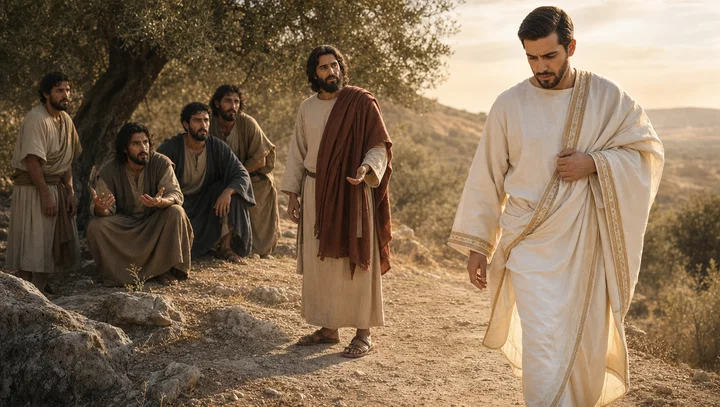
Pictures

Cross-references
- Matthew 19:16-17
And, behold, one came and said unto him, Good Master, what good thing shall I do, that I may have eternal life?
Jesus questions the ruler’s address of him as good and directs him toward God and the commandments.
- Luke 18:18-19
And a certain ruler asked him, saying, Good Master, what shall I do to inherit eternal life?
Jesus questions the ruler’s use of “good” and identifies God as the one who is good.
- Mark 10:22
And he was sad at that saying, and went away grieved: for he had great possessions.
The ruler leaves grieved because he has great possessions.
- Exodus 20:3
Thou shalt have no other gods before me.
The rich man’s attachment to wealth exposes divided devotion to God.
- Psalms 14:3
They are all gone aside, they are all together become filthy: there is none that doeth good, no, not one.
Both deny that anyone does good of himself.
- Colossians 2:9
For in him dwelleth all the fulness of the Godhead bodily.
Christ embodies the fullness of the Godhead.
- Psalms 53:1-3
The fool hath said in his heart, There is no God. Corrupt are they, and have done abominable iniquity: there is none that doeth good.
Repeats that no one does good.
- Psalms 86:5
For thou, Lord, art good, and ready to forgive; and plenteous in mercy unto all them that call upon thee.
experience testifies God is good
- Romans 7:18
For I know that in me ( that is, in my flesh,) dwelleth no good thing: for to will is present with me; but how to perform that which is good I find not.
no good thing dwells in us
- Psalms 31:19
Oh how great is thy goodness, which thou hast laid up for them that fear thee; which thou hast wrought for them that trust in thee before the sons of men!
God has wrought goodness for those who trust in him.
- Exodus 33:19
And he said, I will make all my goodness pass before thee, and I will proclaim the name of the LORD before thee; and will be gracious to whom I will be gracious, and will shew mercy on whom I will shew mercy.
God identifies his goodness as part of the glory he reveals.
- Romans 3:23
For all have sinned, and come short of the glory of God;
Both texts affirm that human goodness falls short before God.
- Romans 2:4
Or despisest thou the riches of his goodness and forbearance and longsuffering; not knowing that the goodness of God leadeth thee to repentance?
God’s goodness leads people to repentance.
- John 10:11
I am the good shepherd: the good shepherd giveth his life for the sheep.
God alone is good, underscoring Jesus’ claim as the Good Shepherd.
- Exodus 20:12-16
Honour thy father and thy mother: that thy days may be long upon the land which the LORD thy God giveth thee.
Jesus quotes commandments about duty to other people.
- John 6:29
Jesus answered and said unto them, This is the work of God, that ye believe on him whom he hath sent.
God’s work is believing in the one he sent.
- Philippians 2:13
For it is God which worketh in you both to will and to do of his good pleasure.
God works good in people.
Commentary
Each commentary is drawn from primary sources: the writings of Ellen G. White and Adventist pioneers and periodicals. Each commentary is separate. Its own words are not a quotation; follow the references to read the source passages.
Ellen G. White
32 sources
On the way a young ruler of great possessions ran to Jesus, kneeled before Him, addressed Him as Good Master, and asked in sincerity what to do to inherit eternal life.DA 518.1–3Ms 141, 1909, par. 9–124T 49.3–50.1
There is none truly good but God, for goodness belongs fully to Him as its source and is not independent of Him in any human being.Lt 63, 1893, par. 22–25Lt 3, 1897, par. 6–10COL 390.1
By asking why he called Him good, Jesus tested the ruler's sincerity and challenged on what ground he used the word and whether he understood that the One speaking to him was the Son of God.DA 518.4ST Oct 28, 1908RH Jan 12, 1905
The ruler saw Him only as an honored rabbi, yet if he recognized Him as good in the sense that only God is good, he must receive Him as God's Son and representative.COL 390.1COL 390.2–391.1COL 392.1
Though he claimed to have kept the commandments from his youth, his claim was false, for selfishness and love of worldly gain ruled his heart and he had failed to love his neighbor as himself, so Jesus told him to sell what he had, give to the poor, take up the cross and follow Him.2T 679.1–680.1ST Mar 11, 1889ST Mar 30, 1876
The Ruler's Approach
Mark 10:18 belongs to a meeting on the way when a young ruler of great possessions and responsible position ran to Jesus, kneeled before Him, addressed Him as Good Master, and asked with sincerity and earnestness what he should do to inherit eternal life.DA 518.1–3Ms 141, 1909, par. 9–124T 49.3–50.1 He had watched Jesus tenderly receive little children and take them in His arms, his heart was kindled with love for Jesus, he desired to be His disciple, and he hoped to be blessed and satisfied as the children were.DA 518.1–3 His question is the important question for his own soul and for the soul of every human being, and he represents some whom the Lord is calling to engage in His service.DA 518.1–3Ms 141, 1909, par. 9–12
He came with a high estimate of his own righteousness, supposing himself defective in nothing, and yet he was not altogether satisfied but felt the want of something he did not possess.DA 518.52T 679.1–680.1ST Mar 11, 1889 He thought himself very wise and with self-complacency and offended dignity assured Christ that he had kept the commandments from his youth up.2T 679.1–680.1ST Mar 11, 1889ST Oct 29, 1912 His outward obedience did not supply the heart devotion and Christian goodness he lacked, and he needed a humble, contrite heart, supreme love for God, and the perfection found in Christ.DA 519.2
He was self-deceived and knew nothing of truly keeping God's commandments.ST Oct 29, 1912ST Oct 22, 1894 He was ignorant of the first and last principles of the law, knew nothing of the character of God portrayed in the law, and had no comprehension of the depth and significance of its precepts.ST Oct 29, 1912 His claim to have kept the commandments from his youth did not reflect a true understanding of their depth and significance, which is revealed in a willingness to obey Christ.ST Oct 29, 1912ST Oct 22, 1894
Why Call Me Good
God alone is truly good, and the question turns the young man's attention to God as the source of goodness.Lt 3, 1897, par. 6–10COL 390.1ST Oct 28, 1908COL 392.1 Goodness in human beings is not independent of God, but belongs fully and ultimately to God and is bound to God.Lt 63, 1893, par. 22–25Lt 3, 1897, par. 6–10COL 392.1 In the exchange Jesus names commandments and then calls the man to sell his possessions, give to the poor, and follow Him, and this exposes the selfishness and covetousness beneath the man's claim to have kept the commandments and his question about eternal life.Lt 63, 1893, par. 22–25COL 392.1
By asking why the ruler called Him good, Jesus tested the ruler's sincerity and sought to draw out what he truly believed about Him and how he regarded Him.DA 518.4ST Oct 28, 1908RH Jan 12, 1905 The question challenged on what ground the ruler used the word and whether he understood that the One speaking to him was the Son of God.DA 518.4ST Oct 28, 1908RH Jan 12, 1905 It points to God as the one who is good.DA 518.4RH Jan 12, 1905
The ruler saw Jesus only as an honored rabbi, giving a merely respectful greeting, and did not discern Him as the Son of God.COL 390.1COL 390.2–391.1COL 392.1 If the ruler recognized Jesus as good in the sense that only God is good, he must receive Him as God's Son and representative rather than merely as an honored rabbi.COL 390.1COL 390.2–391.1 Jesus declines the title good when it is applied to a human being apart from God, yet being equal with the Father He identifies Himself with the Father and claims perfect righteousness.Lt 3, 1897, par. 6–1017MR 337.1–2 His sinless purity remained complete even while He was tempted and surrounded by corruption.17MR 337.1–2
Obedience and Surrender
To the direct question what to do to inherit eternal life, Jesus gave a direct positive answer that referred the seeker to His Father's commandments and taught that obedience to them is necessary for salvation and life and requires giving all one's powers to God.2T 679.1–680.1ST Mar 11, 1889ST Mar 30, 1876ST Oct 28, 1908Ms 84, 1886, par. 24
Jesus used the encounter to expose the ruler's failure to recognize the goodness and love required by God's law, for though he claimed to have kept the commandments from his youth, his claim was false.Lt 63, 1893, par. 22–252T 679.1–680.1ST Mar 11, 1889ST Oct 28, 1908COL 392.1 Selfishness, covetousness, and love of worldly gain ruled his heart, he had failed to keep them from the heart and to love his neighbor as himself, and loving God's gifts more than the Giver and choosing worldly standing and possessions over Christ is incompatible with keeping the commandments and receiving eternal life.Lt 63, 1893, par. 22–252T 679.1–680.1ST Oct 28, 1908COL 392.14T 49.3–50.1
Jesus set before him His own self-denying, cross-bearing life and told him to sell whatsoever he had and give to the poor, even to the suffering poor, and to come take up the cross and follow the Lord of Life, with the promise of treasure in heaven.2T 679.1–680.14T 49.3–50.1ST Mar 30, 18761T 207.2Lt 354, 1905, par. 27 The conditions seemed severe and demanding but were wise and were his only hope of salvation, for he had to obey rather than let position and possessions take God's place, since attachment to worldly things weakens moral strength and can absorb the heart.2T 679.1–680.1DA 520.2Lt 354, 1905, par. 27
That requirement is an object lesson that obedience is more than outward rule-keeping and must enter the life and be shown in the character.DA 523.2DA 519.2DA 523.4 Following Christ requires offering Him all that one has and is, including using entrusted means in His work, giving up whatever would corrupt the whole person, and attaining a humble contrite heart, supreme love for God, and the perfection found in Christ.DA 523.2DA 519.2DA 523.4 It presents the same love and self-sacrifice that is the great test at the final judgment and the touchstone of character.Ms 58, 1896, par. 20
The ruler had to choose between giving up his possessions and following Christ or keeping them and losing eternal life.2T 679.1–680.1CET 164.34T 50.2 He valued earthly wealth above the heavenly inheritance, his love for earthly treasure was stronger than his love for his fellow men and the immortal inheritance, and the demand chilled his desire.2T 679.1–680.1CET 164.3ST Mar 11, 1889CET 166.2 Though very sorrowful he would not transfer his treasure to heaven by withdrawing his affections from them and doing good with them, blessing the widow and the fatherless, and becoming rich in good works, but made his riches his idol, turned sorrowfully from the cross and the heavenly inheritance, chose to retain wealth, and renounced immortal life for money, power, and the world because he wanted both worlds.2T 679.1–680.1ST Mar 11, 18894T 50.21T 207.2CET 166.2
His question tests professed followers of Christ, for when the way is pointed out and the cost is counted they show they love riches more than neighbor and God and decide heaven costs too much.ST Mar 11, 1889 The greater the earthly treasures the harder it is to realize they are not one's own but lent to use for God's glory.ST Mar 11, 1889 The meeting exposes a close and covetous spirit that is exact in small duties and tithes mint and rue yet neglects weightier matters, stretches economy into meanness, and lacks the true spirit of sacrifice acceptable to God.1T 207.2 It shows that those who teach that the binding claims of God's law are abolished and think they know all about the commandments while living in disobedience manifest their ignorance by life and example, for the ruler with self-complacency and offended dignity assured Christ he had kept them all, yet was self-deceived and knew nothing of truly keeping them.ST Oct 29, 1912
Sources
Pioneers and periodicals
63 sources
Jesus met an earnest rich young ruler who ran and knelt to ask what he must do to inherit eternal life, and challenged his calling him good by declaring that perfect and absolute goodness belongs to God alone.ST Sep 26, 1906ST Feb 10, 1898ST Aug 24, 1904ST Aug 18, 1887 God alone is supremely, originally and essentially good, himself goodness and its source and standard, while no human is good in himself and all goodness in others is given or borrowed from him.ST Feb 10, 1898RH Apr 9, 1908ST Oct 17, 1900 The question tested what the ruler believed about Jesus, for since God alone is good and all others have sinned, Jesus is either a sinner like other teachers or he is God with us, as his works as Messiah confirm.ST Oct 28, 1908RH Jan 12, 1905ST Aug 18, 1887ST Feb 10, 1898 The ruler was young, wealthy, powerful and outwardly blameless in keeping the commandments from his youth, yet self-confident and self-deceived about the depth of the law, and the call to sell, give to the poor, take up the cross and follow exposed that his love for possessions was stronger than love for God, neighbor and eternal life.ST Oct 29, 1912ST Oct 22, 1894ST Jan 22, 1880RH Sep 4, 1866ST Apr 15, 1880 Goodness like righteousness is not abstract but God's living character of love, so only God's own doing is acceptable when he dwells in human flesh and lives out his life through faith.ST Mar 20, 1893ST Jul 23, 1896ST Mar 20, 1893ST Nov 7, 1895
Encounter and Setting
The saying belongs to the meeting of Jesus with a rich young ruler who came earnestly concerned about salvation, running to him and kneeling before him in the dust to ask what he must do to inherit eternal life and assure immortality.ST Sep 26, 1906ST Aug 24, 1904ST Aug 18, 1887RH Dec 31, 1908 The meeting was face to face between Jesus, the gracious Ruler of the universe, and a youthful man of wealth and power seeking eternal life, with holy angels hovering between and a universe watching in mercy's hour.RH Dec 31, 1908 His question about gaining eternal life was answered by regard for and full observance of God's laws.RH Dec 31, 1908
The seeker was young, wealthy, powerful and outwardly upright, morally blameless and observant of the commandments from his youth as far as he understood them.ST Jan 22, 1880RH Sep 4, 1866RH Jul 31, 1856 He was in many respects lovely and promising, uncorrupted by many of the leading sins of his age, amiable in character, with a sincere desire to be saved, yet self-confident in his own goodness and obedience.RH Sep 4, 1866ST Apr 15, 1880RH May 18, 1876 Even such a young and good person must offer his wealth to God and use his estate to relieve distressed people, not for vain indulgence and worldly pleasure, for outward goodness and usefulness are not themselves salvation and still leave lacking the one thing needful.RH Jul 31, 1856RH May 18, 1876 The practical test that followed revealed his selfish heart and lack of wholehearted devotion, which outweighed his outward virtues and imperiled his hope of divine favor.ST Apr 15, 1880
Jesus loved the young man when he saw him, gazing on him with much love and yearning to break mammon's powerful snare.RH Sep 4, 1866RH Dec 31, 1908RH Jul 3, 1856RH Jan 18, 1870 That love did not save him because his own love was fixed on his possessions.RH Jan 18, 1870 His virtuous conduct and eager desire for eternal life did not exempt him from the duty required, for renouncing worldly self-enjoyment and setting the affections on heaven was an excellent temper necessary for Christianity, not a special hardship imposed only on him, but required because of the duty's own value and applying to Christians in every age.RH Jul 3, 1856 He believed he had done all he could and asked what more to do, but was sent away sorrowful because he lacked one thing, obedience to the requirement placed before him, showing that commendable conduct in other matters does not make up for failure to obey.RH Aug 15, 1871
The Jesus who answers is himself a young man and ruler whose sovereignty as King of kings and Lord of lords is veiled in humility though more than ten legions of angels wait on his bidding.ST Aug 18, 1887 He is rich as owner of all the gold and silver and the cattle upon a thousand hills yet became poor that through his poverty the poor might become rich and have the gospel preached to them, so his words in answer carry weight of wealth to be studied profoundly as hidden treasure.ST Aug 18, 1887 At the meeting he appeared as a friendless young man whose cause seemed to need wealth and influence, yet he turned the ruler away from discipleship because he lacked one thing and would not give up all for Christ.ST Dec 22, 1887 Following him requires leaving all and taking up the cross, giving him all and the best or nothing, for he makes no compromise with any soul, and holding the world with one hand and heaven with the other is little better than no service.ST Dec 22, 1887
The surrounding exchange directs the seeker of eternal life to his Father's commandments and says obedience to them is necessary for salvation.ST Mar 11, 1889ST Mar 30, 1876ST Oct 28, 1908 The young man claims to have kept them from his youth, but Jesus identifies his attachment to wealth as the defect that keeps him from following him.ST Mar 11, 1889ST Mar 30, 1876 Christ showed him the cross he was unwilling to bear, the sacrifice required of him in the call to sell, give to the poor, take up the cross and follow, and he went away sorrowful and grieved because he would not accept that particular cost of discipleship.RH Jul 18, 1865
God Alone Is Good
Jesus questioned the ruler's calling him good to challenge what the word meant and to declare that perfect, absolute and pure goodness belongs ultimately to God alone.ST Feb 10, 1898 He is the one who is good, goodness itself, and the source and standard of goodness.ST Feb 10, 1898ST Mar 10, 1887 The question exposed the ruler's mistaken focus on doing some good deed to earn eternal life and turned him toward God as the one from whom goodness comes.ST Feb 10, 1898 To know God before the fall was to know good, so that if knowing good had been forbidden, knowing God would have been forbidden.ST Mar 10, 1887 The encounter is thus set forth as an example for counteracting selfishness and keeping it out of the church, for Jesus tested the man's claim to keep the commandments by exposing the selfish attachment to possessions that stood between him and eternal life.
God alone is supremely, originally, essentially and absolutely good.RH Dec 2, 1873RH Dec 2, 1873RH Nov 14, 1854 Christ and angels are good and perfect within their respective spheres, but the Father alone is supremely and absolutely good.RH Nov 14, 1854 He alone is absolutely immortal and self-existent, and every other being depends on him for life and existence.RH Nov 14, 1854 The challenge to the use of good was spoken because the young man regarded Jesus only as a prophet and divinely commissioned teacher, supposing him to be merely a man and not divine.RH Dec 2, 1873RH Dec 2, 1873
No human being is good in himself, and no one does good on his own, since all have sinned and fallen short of God's glory.RH Apr 9, 1908ST Feb 10, 1898 All goodness in others is given or borrowed from God, the inexhaustible source of goodness, and every good impulse and desire comes from God working in people to will and to do what pleases him.ST Oct 17, 1900ST Jan 28, 1897ST Feb 10, 1898 No man has divinity or goodness or God dwelling within himself by nature, so the claim that the human self is divine and shares all the attributes of the Infinite is false and is contradicted by the declaration that only One is good, even God.RH Apr 9, 1908 Any goodness people have is received from him and not their own, to whom they owe everything.ST Feb 10, 1898 Jesus was not denying his own goodness in asking what the title implied, for because God alone is inherently and essentially good, his goodness means that he is God, God with us.ST Feb 10, 1898
Goodness, like righteousness, is not an abstract quality or merely a name, but belongs essentially to God's living character of love.ST Jul 23, 1896ST Feb 27, 1901 Therefore wherever true righteousness exists, God is present.ST Jul 23, 1896 Righteousness cannot exist apart from God's life, for righteousness is God's right doing, and his written law describes that life and character.ST Nov 7, 1895 Jesus reveals God's life and character, with God's law in his heart.ST Nov 7, 1895
Perfect goodness resides in God alone, so the good works acceptable to God must be God's own righteousness and God's own doing.ST Mar 20, 1893 No man can present good works equal to God, for only God can do the works of God.ST Mar 20, 1893 Those works appear in men when God himself dwells in human flesh and lives out his own life in them through faith, received simply by trusting him and believing on him whom he sent.ST Mar 20, 1893 No good thing lives in human beings, so people are nothing and weakness while God is everything and power, with power to manifest himself in flesh today as eighteen hundred years ago for all who let him.ST Mar 20, 1893 Exaltation comes only through self-abasement, and Christian activity comes only through passive submission to God like clay in the hands of the potter, submitting to God's righteousness and giving all glory not to self but to his name for his mercy and truth.ST Mar 20, 1893
God's works are good: he created humanity upright and pronounced creation very good.ST Feb 27, 1901 His greatness as Father lies in his goodness and love, and he is great because he is good, though his power could fill eternity.ST Feb 27, 1901ST Sep 29, 1898 Evil and sin are not his creations but perversions of good, for righteousness gives blessings to others while sin turns blessings inward toward self.ST Feb 27, 1901
Question About Christ Himself
The question tests sincerity and draws out what the ruler believed about the one he addressed, asking why he used the word good.ST Oct 28, 1908RH Jan 12, 1905 It presses whether he recognized that he was speaking to the Son of God, since goodness belongs ultimately to God alone.ST Oct 28, 1908RH Jan 12, 1905 The ruler regarded Jesus only as a merely human prophet and divinely commissioned teacher, not as divine.RH Dec 2, 1873ST Nov 15, 1883RH Apr 4, 1871RH Dec 2, 1873 He supposed that human teachers could point out good deeds and that human hands could do them to merit eternal life, while not believing that Jesus is God.ST Nov 15, 1883RH Apr 4, 1871
The answer is spoken on the man's own assumption of mere humanity, declaring that absolute and pure goodness belongs to God alone.ST Nov 15, 1883RH Apr 4, 1871 In that form it neither asserts nor denies Jesus' own goodness and divinity.ST Nov 15, 1883RH Apr 4, 1871 That declaration gives weighty significance to Jesus calling himself the good Shepherd in John 10.ST Nov 15, 1883RH Apr 4, 1871 Since God alone is good and all other people are sinners, Jesus must be either a sinner like other teachers or he is God.ST Aug 18, 1887 His works as Messiah confirm that he is the Christ.ST Aug 18, 1887
Read in the light of the cross, the words claim his absolute Godhead, so that knowing him rightly is eternal life.ST Aug 18, 1887 He was not denying his own goodness, because only God is inherently and essentially good, and therefore his goodness means that he is God with us.ST Feb 10, 1898 Any goodness in people is received from God and not their own, since all have sinned and no one does good on his own.ST Feb 10, 1898 Yet the instruction given to the man did not make recognizing his deity a condition.ST Nov 23, 1915
Law and Eternal Life
When asked what must be done to have eternal life, Jesus enforced commandments the young man already knew, not a new law.RH Oct 10, 1865 He named enough of the Ten Commandments to identify the law he meant, doubtless highlighting the precepts the ruler was especially transgressing.RH Oct 26, 1911 His not naming the Sabbath or other commandments does not show they are no longer binding, and his not naming the first four does not give permission to break them or imply they had been abolished.RH Oct 26, 1911ST Feb 27, 1912
The answer directs the inquirer to keep the commandments, distinguishing the moral commandments from ceremonial laws and human traditions, the question “Which?” being understood as referring to more than one class.ST Feb 14, 1878 Those commandments remain binding for all time because God’s law is true and never needs alteration.ST May 27, 1908 That direction applies to the whole moral law including the seventh-day Sabbath, summed in “Thou knowest the commandments,” and a heart cannot be right with God while knowingly neglecting any of his commands.ST May 30, 1878
With self-complacency and offended dignity the ruler assured Christ when bidden to keep the commandments that he had kept them all from his youth up.ST Oct 29, 1912 He was self-deceived and knew nothing of keeping them, being ignorant of the first and last principles of the law, of the character of God portrayed in it, and of the depth and significance of its precepts.ST Oct 29, 1912ST Oct 22, 1894 Jesus exposed his confidence in his own goodness and obedience, and the practical test that followed revealed his selfish heart and lack of wholehearted devotion to God, which outweighed his outward virtues and imperiled his hope of divine favor.ST Apr 15, 1880
Keeping its precepts was not enough while he refused the required self-sacrifice of giving up his possessions and following Jesus.RH Jul 6, 1916 Though Jesus loved him, he sent him away sorrowful because he lacked one thing: obedience to the requirement placed before him, and commendable conduct in other matters does not make up for failure to obey.RH Aug 15, 1871 His confidence in his own commandment-keeping did not meet God’s standard; he still lacked what Christ called him to, and must accept Christ and the righteousness that comes by faith.RH Nov 6, 1900 Amiable character and outwardly blameless life did not make him a Christian, for he still lacked the one thing needful and remained lost, showing that outward goodness and usefulness are not themselves salvation.RH May 18, 1876
Obedience to God’s commandments matters in seeking eternal life.RH Jul 10, 1860 Those who teach that the binding claims of the law of God are abolished, and think they know all about the commandments while living in disobedience, make their ignorance manifest by their life and example.ST Oct 29, 1912
Riches and Following Christ
Jesus first directed the seeker to keep the commandments, and when he claimed to have kept them from youth, told him the one thing he still lacked was to sell what he had, give to the poor, lay up treasure in heaven, take up the cross and follow, which meant renouncing ownership for stewardship and forsaking all.ST Aug 24, 1904RH Mar 25, 1915RH Jul 29, 1909 The test proved that loving neighbor as self requires using wealth to relieve need, blessing the widow and fatherless and becoming rich in good works, for riches are a trust to be used as God directs.ST Mar 11, 1889 Money spent as he directs brings its reward, while wanting to do as one pleases with money and still claim to have given oneself to the Lord forfeits hope of salvation.ST Feb 14, 1884
He went away grieved because he had great possessions, which showed he was an idolater at heart breaking the very first commandment by placing wealth before and above God.ST Aug 24, 1904 Though a nominal keeper who paid tithe, gave offerings, kept the Sabbath and was regarded as ideal, his sorrowful departure proved covetousness was his ruling trait and brought his eternal ruin.RH Mar 25, 1915 He lost heaven through covetousness despite having kept the rest from youth.RH Mar 25, 1915ST Jul 22, 1880
The principle lies in the word trust, for it is not having riches but trusting in them that makes one an idolater, since whatever is supreme in the affections is his god and no one can trust in gold and in God at the same time.ST Aug 24, 1904 Attachment, not riches themselves, shuts out salvation, and the rich can be saved when they recognize the worthlessness of earthly things and place wealth at God's service.ST Aug 24, 1904ST Sep 16, 1889 His love for earthly treasure was stronger than love for fellow men and the immortal inheritance, loving riches more than neighbor and God and deciding heaven cost too much.ST Mar 11, 1889 He loved his riches more than Christ and the reward to come, putting riches before Christ and proving his claim to keep God's law false by loving God's gifts more than the Giver and choosing worldly standing and possessions over the call to follow.ST Oct 28, 1908RH Jul 29, 1909
Though very sorrowful and wanting both worlds, he sacrificed the heavenly for the earthly, unwilling to transfer treasure to heaven by withdrawing affection from it and doing good with it.ST Mar 11, 1889 He declined the blessing offered for a judicious investment of his means as the Lord directed, and would not give up all for Christ.ST Oct 28, 1908ST Feb 14, 1884 Jesus discerned that attachment to property stood between him and eternal life, and because he loved him told him to give up what was needed to overcome that failing, in this case all his property.
Renouncing worldly self-enjoyment and setting affections on heaven was required because of the duty's own value, not as a special hardship imposed only on him, and the same duty applies to Christians in every age.RH Jul 3, 1856 Wealth did not exempt him from hearing the plain demands of the gospel, and Jesus would not accept discipleship on the terms of keeping the money while following.ST Mar 24, 1881RH Feb 3, 1910 Holding the world with one hand and heaven with the other and giving God only odds and ends is little better than no service, for following Christ requires leaving all and taking up the cross, giving him all and the best or nothing, with no compromise.ST Dec 22, 1887
From this Jesus taught how hard it is for those with riches to enter the kingdom of God, to the astonishment of the disciples.ST Aug 24, 1904RH Mar 25, 1915 Covetousness bars the way to life and is not confined to the rich but dwells by nature in every heart from least to greatest.RH Mar 25, 1915 The encounter stands as an example for counteracting selfishness and keeping it out of the church, since riches became a stumbling block rather than a source of deliverance.ST Aug 24, 1904
Humble Trust in Goodness
God alone is good, so no one has any ground to claim preeminence over another or to sit in judgment, and the fitting response is trust rather than judgment.RH Jul 30, 1914ST Jun 7, 1899 Since no human is good in himself, no one may exalt himself above another, and this bears directly on speech about neighbors, forbidding the repeating of evil reports in an I-am-better-than-thou spirit and requiring careful, humble words that do not wound others.RH Jul 30, 1914ST Jun 7, 1899 Goodness belongs to God pre-eminently, so to cry out Goodness as a casual byword turns what is properly an attribute of God into a mere expression.ST Nov 28, 1911
God is good and only good, as those who know Him most intimately testify from experience, and His goodness is not proved by favorable outward circumstances of life.RH Feb 18, 1904 It is demonstrated once for all in the all-inclusive gift of His only begotten Son so that believers will not perish but have eternal life, with the assurance that with Him He will freely give all things.RH Feb 18, 1904 When trouble or grief tempts to question His goodness, remembering that unspeakable gift silences the question, and the one who does not forget that God is good and only good is kept in perfect peace amid thwarted plans and disappointed hopes, knowing that to them that love God all things work together for good.RH Feb 18, 1904 God is great because He is good; His power could fill eternity, but what makes Him great and a Father is His goodness and love.ST Sep 29, 1898 So true human greatness is measured only by goodness, found not in earthly power, fame, or honor in church or state, but in lowliness, meekness, and humble submission at the feet of Jesus and God, where humble souls receive a joy unknown to those who seek heavenly joy in earthly renown.ST Sep 29, 1898
Sources