Mark 10:17
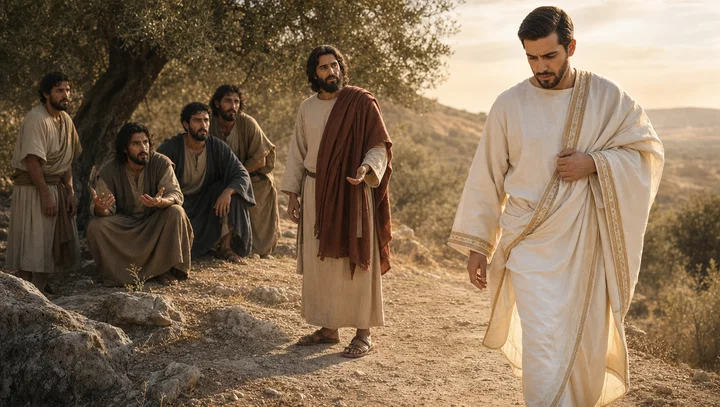
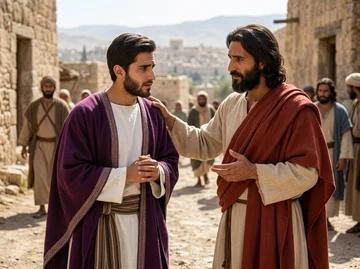
And when he was gone forth into the way, there came one running, and kneeled to him, and asked him, Good Master, what shall I do that I may inherit eternal life?
Translations
American King James Version, King James Version, KJV Cambridge Paragraph Bible
And when he was gone forth into the way, there came one running, and kneeled to him, and asked him, Good Master, what shall I do that I may inherit eternal life?
And when he had gone forth into the way, there came one running, and kneeled to him, and asked him, Good Master, what shall I do that I may inherit eternal life?
And as he was going forth into the way, there ran one to him, and kneeled to him, and asked him, Good Master, what shall I do that I may inherit eternal life?
And as he was going forth into the way, there ran one to him, and kneeled to him, and asked him, Good Teacher, what shall I do that I may inherit eternal life?
And as he is going forth into the way, one having run and having kneeled to him, was questioning him, 'Good teacher, what may I do, that life age-during I may inherit?'
And as he went forth into the way, a person ran up to [ him], and kneeling to him asked him, Good Teacher, what shall I do that I may inherit eternal life?
And, as he was going forth into a road, one, running, and kneeling before him, was questioning him—Good Teacher! what shall I do that, life age—abiding, I may inherit?
Berean Standard Bible, Majority Standard Bible
As Jesus started on His way, a man ran up and knelt before Him. “ Good Teacher,” he asked, “ what must I do to inherit eternal life?”
As he was going out into the way, one ran to him, knelt before him, and asked him, “ Good Teacher, what shall I do that I may inherit eternal life?”
And while he was going out into the way, a man came running to him, and went down on his knees, saying, Good Master, what have I to do so that I may have eternal life?
And when hee was gone out on the way, there came one running, and kneeled to him, and asked him, Good Master, what shall I doe, that I may possesse eternall life?
Douay-Rheims (Challoner revision)
And when he was gone forth into the way, a certain man running up and kneeling before him, asked him, Good Master, what shall I do that I may receive life everlasting?
Pictures
Cross-references 20 of 32
- Matthew 19:16-22
And, behold, one came and said unto him, Good Master, what good thing shall I do, that I may have eternal life?
Parallel account of the ruler’s question and Jesus’ call to sell his possessions and follow him.
- Luke 18:18-23
And a certain ruler asked him, saying, Good Master, what shall I do to inherit eternal life?
The ruler asks about eternal life, and Jesus’ call leaves him sorrowful over his possessions.
- Mark 10:21
Then Jesus beholding him loved him, and said unto him, One thing thou lackest: go thy way, sell whatsoever thou hast, and give to the poor, and thou shalt have treasure in heaven: and come, take up the cross, and follow me.
Jesus calls the man to give to the poor and follow him, exposing his attachment to wealth.
- Mark 10:23-27
And Jesus looked round about, and saith unto his disciples, How hardly shall they that have riches enter into the kingdom of God!
Jesus explains the difficulty riches pose for entering God’s kingdom and God’s power to save.
- Mark 10:22
And he was sad at that saying, and went away grieved: for he had great possessions.
The rich man leaves grieving because he has great possessions.
- Exodus 20:12-17
Honour thy father and thy mother: that thy days may be long upon the land which the LORD thy God giveth thee.
Jesus answers the ruler by directing him to commandments in the moral law.
- Luke 14:33
So likewise, whosoever he be of you that forsaketh not all that he hath, he cannot be my disciple.
Both require forsaking all to follow Christ.
- Leviticus 19:18
Thou shalt not avenge, nor bear any grudge against the children of thy people, but thou shalt love thy neighbour as thyself: I am the LORD.
Jesus includes loving one’s neighbor as oneself.
- Matthew 19:21
Jesus said unto him, If thou wilt be perfect, go and sell that thou hast, and give to the poor, and thou shalt have treasure in heaven: and come and follow me.
Jesus instructs the rich ruler to sell, give to the poor, and follow Him.
- John 3:36
He that believeth on the Son hath everlasting life: and he that believeth not the Son shall not see life; but the wrath of God abideth on him.
Believing in the Son is linked to everlasting life.
- Matthew 22:37-40
Jesus said unto him, Thou shalt love the Lord thy God with all thy heart, and with all thy soul, and with all thy mind.
Love for God and neighbor is the law’s essential principle.
- John 6:33
For the bread of God is he which cometh down from heaven, and giveth life unto the world.
Christ gives life to the world.
- Matthew 6:24
No man can serve two masters: for either he will hate the one, and love the other; or else he will hold to the one, and despise the other. Ye cannot serve God and mammon.
Serving wealth prevents a person from serving God.
- Matthew 19:17
And he said unto him, Why callest thou me good? there is none good but one, that is, God: but if thou wilt enter into life, keep the commandments.
Entering life is connected with keeping the commandments.
- Luke 10:25-28
And, behold, a certain lawyer stood up, and tempted him, saying, Master, what shall I do to inherit eternal life?
shares same question and answer
- Mark 10:23-24
And Jesus looked round about, and saith unto his disciples, How hardly shall they that have riches enter into the kingdom of God!
Jesus explains the danger of trusting in wealth.
- John 3:16
For God so loved the world, that he gave his only begotten Son, that whosoever believeth in him should not perish, but have everlasting life.
Believers in Christ receive everlasting life.
- Romans 3:12
They are all gone out of the way, they are together become unprofitable; there is none that doeth good, no, not one.
God alone is good; none doeth good, no, not one.
- John 6:40
And this is the will of him that sent me, that every one which seeth the Son, and believeth on him, may have everlasting life: and I will raise him up at the last day.
Believing in the Son brings everlasting life and resurrection.
- Matthew 19:23
Then said Jesus unto his disciples, Verily I say unto you, That a rich man shall hardly enter into the kingdom of heaven.
Jesus teaches about the difficulty of entering the kingdom after the young man's refusal.
Commentary
Each commentary is drawn from primary sources: the writings of Ellen G. White and Adventist pioneers and periodicals. Each commentary is separate. Its own words are not a quotation; follow the references to read the source passages.
Ellen G. White
47 sources
As Jesus had gone forth into the way, a wealthy young ruler with position and great possessions came running to Him, knelt in reverent salute, and sincerely asked how he might inherit eternal life.DA 518.1–3Ms 141, 1909, par. 9–12COL 390.2–391.1 In calling Him Good Master he addressed Him merely as an honored rabbi, and Jesus answered that none is good but God, testing whether he discerned in Him the Son of God.COL 390.2–391.1DA 518.4 Entering life is by keeping the commandments from the heart, for God's character is expressed in His law, and to the ruler this meant to be perfect by selling what he had, giving to the poor, and taking up the cross to follow Christ.COL 390.2–391.1DA 518.62T 679.1–680.1ST Mar 11, 1889 His riches were his idol, for he loved God's gifts more than the Giver and valued possessions and honor more than Christ's fellowship, so the demand cooled his desire and he went away very sorrowful, choosing earthly treasure above the immortal inheritance.2T 679.1–680.1CET 164.3ST Oct 28, 1908ST Mar 11, 1889 The question of what must be done to inherit eternal life is a life-and-death matter that each person must settle for eternity without delay, leaving rebellion under Satan and taking position on the side of Christ as Saviour and Leader.Lt 81, 1901, par. 3–4Ms 84, 1901, par. 11–12Ms 130, 1903, par. 22–26
The Seeker and Setting
As He had gone forth into the way and was walking along, one came running to Him and kneeled before Him with reverent salute to ask how to inherit eternal life.DA 518.1–3Ms 141, 1909, par. 9–12COL 390.2–391.1DA 518.4ST Oct 28, 1908 He is described as a young ruler, a wealthy man with great possessions and a position of responsibility, and in one telling as a deceived young lawyer with a lingering desire for the heavenly inheritance.DA 518.1–3Ms 141, 1909, par. 9–12ST Oct 28, 19082T 679.1–680.1 His running and kneeling showed urgency and reverence as he addressed Him as Good Master and asked what he must do to receive eternal life.Ms 141, 1909, par. 9–12COL 390.2–391.1DA 518.42T 679.1–680.1
He was moved by Jesus' tender welcome and kindness to the little children, and seeing that tenderness stirred love and a sincere and earnest desire to become His disciple.DA 518.1–3ST Oct 28, 1908RH Jan 12, 1905RH Jan 12, 1905 He wanted Jesus to bless him as He had blessed the children and to satisfy the want he felt in his soul, for though he had a high opinion of his own righteousness it did not satisfy his felt need.DA 518.1–3DA 518.5ST Oct 28, 1908 His question expresses that longing of soul and is a question important to every person.ST Oct 28, 1908RH Jan 12, 1905RH Jan 12, 1905
The inquirer represents some whom the Lord is calling to engage in His service.Ms 141, 1909, par. 9–12 He pictures a soul convicted of danger at a time when Satan was present stirring priests and rulers against Christ to hinder His saving work.RH Aug 11, 1903Lt 292, 1906, par. 4 Those who in this way come with longing to receive true knowledge when the decided message for this time is proclaimed with a certain sound are distinct from those who come only out of curiosity to hear a strange message.Lt 140, 1903, par. 8–10RH Aug 11, 1903
The Question's Wording
The address of Good Master treated Him merely as an honored rabbi, without discerning in Him the Son of God.COL 390.2–391.1 Jesus met that title with the truth that none is good but God, so to call Him good on that ground means receiving Him as God's Son and representative.COL 390.2–391.1 His reply tested whether the speaker understood who He is and truly regarded Him as good, and whether the profession was sincere.DA 518.4RH Jan 12, 1905
The question of what shall be done to inherit eternal life sought eternal life by doing, by what good thing may be done to have it.COL 390.2–391.1 It was a direct, positive question, and it received a direct, positive answer.Ms 84, 1886, par. 24 That answer requires giving all powers and all strength to God in His service.Ms 84, 1886, par. 24 Giving all strength to God in this way does not unfit a person for life on earth, but gives a right hold on heaven to represent the love of Christ to the perishing sinner and to be a blessing to others through intelligent knowledge of Jesus Christ and His religion and prayer in faith to God.Ms 84, 1886, par. 24
The encounter thus opened the way to correct the idea that God's favor and the reward of the righteous can be earned by works.COL 390.1 In its place it taught the right principles of God's free grace.COL 390.1
What Inheriting Life Requires
Entering life is by keeping the commandments, for God's character is expressed in His law and being in harmony with Him requires its principles to be the spring of every action.COL 390.2–391.1DA 518.6 Jesus answered the question by pointing to the Father's commandments, naming those that define duty to fellow men.COL 390.2–391.1DA 518.6ST Oct 28, 1908 Obeying them from the heart is necessary for salvation and brings life.2T 679.1–680.1ST Mar 11, 1889ST Oct 28, 1908
The confident claim to have kept them all from youth exposed the defect, for the claim did not mean possession of their inner principle and the law had not been kept from the heart.2T 679.1–680.1COL 392.1 Jesus looked on the inquirer with pity and love and exposed what he still lacked.2T 679.1–680.14T 49.3–50.1 He bade him be perfect: sell what he has, give to the poor and suffering, bless the widow and fatherless, be rich in good works, transfer treasure to heaven, take up the cross and follow Him.2T 679.1–680.1ST Mar 11, 1889RH Jan 12, 1905ST Mar 11, 1889ST Oct 28, 1908 Entrusted means are to be used in His work, and accepting that service and obeying His words is the only hope of salvation.RH Jan 12, 1905DA 523.2 The bread of life is found in such sacrifice, after the example of a self-denying, cross-bearing life that left everything for the salvation of men.2T 679.1–680.1RH Jan 12, 1905
What is required is true love for God and other people, wholehearted devotion and Christian goodness, with humble and contrite reliance on Christ's perfection rather than one's own goodness.COL 392.1ST Oct 28, 19084T 49.3–50.1DA 519.2 Discipleship means giving self unreservedly to God in unselfish love, which alone is life, and surrendering whatever competes with Him.RH Jan 12, 1905ST Oct 28, 1908COL 392.2–393.2 Jesus saw the talented young man could become a preacher of righteousness and a successful worker, and offered him companionship and the privilege of following.COL 392.2–393.2 He required nothing more than He Himself experienced when He left riches and glory and became poor that men through His poverty might be made rich.4T 49.3–50.1COL 392.2–393.2
The plain word of God answers what must be done to inherit eternal life, and the gospel dispels difficulties and enlarges understanding.Ms 62, 1905, par. 10 Its answer is bound up with the Holy Spirit's work of grace and with Jesus Christ the Lord our righteousness.Ms 62, 1905, par. 10 Telling the rich young man to sell, give to the poor and follow presents the great test used at the final judgment, proving the spirit of love and self-sacrifice is the touchstone of character that decides eternal life.Ms 58, 1896, par. 20
The Ruler's Heart Exposed
He had a high estimate of his own righteousness and to all appearances was righteous, sincerely declaring he had kept the commandments from his youth, yet he was not altogether satisfied and felt the want of something he did not possess.Lt 63, 1893, par. 22–25DA 518.5DA 519.2 He lacked discernment of his need for wholehearted devotion to God and Christian goodness, and needed to become humble and contrite and to rely on Christ's perfection rather than his own goodness.DA 518.5DA 519.2 His claim to have kept the commandments did not mean he possessed their inner principle of true love for God and other people, for his selfishness and love of worldly gain left him out of harmony with heaven.COL 392.1DA 519.2 His outward claim exposed self-deception, for disobedient lives reveal ignorance of the law's depth and significance, whose commands reach the heart and reveal God's character.ST Oct 29, 1912ST Oct 22, 1894
He came in a spirit of self-righteousness, the same spirit in which Judas came, with a heart whose plague-spot was selfishness and covetousness, and he did not respond to divine enlightenment.Lt 63, 1893, par. 22–252T 679.1–680.1 He had failed to keep the law from the heart, for he did not love his neighbor as himself, a defect that if not removed would bar him from heaven because affections resting on worldly treasure are withdrawn from God.2T 679.1–680.14T 49.3–50.1 Outward commandment-keeping is not enough while the heart is close and covetous, showing economy stretched into meanness, tithing mint and rue while neglecting weightier matters, watching others and refusing to help unless they follow the same rigid course.4T 49.3–50.11T 207.2 Such a spirit lacks the true spirit of sacrifice acceptable to God, and the soul withers under that error.1T 207.2
His riches were his idol eclipsing the value of the eternal inheritance, for he loved God's gifts more than the Giver and could not put God first while the world held first place in his affections.2T 679.1–680.1ST Oct 28, 1908ST Mar 11, 1889 Christ offered him fellowship and called him to follow, but he valued reputation and possessions, riches as honor and power, more than that offer.ST Oct 28, 19084T 49.3–50.1 With his heart set on great possessions he could not consent to withdraw affection from riches and do good with them in blessing the widow and fatherless and transferring treasure to heaven.2T 679.1–680.1ST Mar 11, 1889 The greater the treasures laid up on earth, the more difficult it is to realize they are not one's own but lent to be used to God's glory, and the more he gains the harder generosity becomes until diminishing wealth feels like parting with life.ST Mar 11, 18894T 49.3–50.1
The demand cooled his desire and he went away very sorrowful, turning from the cross and refusing Christ as leader rather than surrender what he treasured.2T 679.1–680.1CET 164.3CET 166.2 Loving earthly treasure more than fellow men and the immortal inheritance, he wanted both worlds but after a struggle deliberately chose to retain and increase earthly possessions by plotting and striving for self.2T 679.1–680.1ST Mar 11, 1889 He sacrificed heaven with all its attractive glory for the treasures of the world, renouncing immortal life for the love of money and power, a miserable exchange.2T 679.1–680.1ST Mar 30, 18764T 50.2 Desiring heaven is not enough if a person refuses Christ's conditions, for obedience to God's law must enter the life and shape the character, and those who belong to God's kingdom surrender themselves and all they have to Christ.DA 523.2DA 520.2 Complete obedience and self-surrender, cutting away anything held onto that would corrupt the whole person, is the rule for all who would be disciples and not only for people with high positions or great possessions, whose cherished things subtly harm character by taking God's place and weakening moral strength and usefulness.DA 520.2DA 523.4
His question pictures many who profess to follow Christ yet are unprepared for heaven and whose works testify they love riches more than neighbor and God.ST Mar 11, 18894T 50.22T 680.2 When the way is pointed out and the cost estimated they are convinced they must sacrifice earthly riches and become rich in good works, then turn away when they learn following requires sacrifice and decide heaven costs too much.ST Mar 11, 18892T 680.2 The same danger faces all who profess to keep all God's commandments while loving and clinging to earthly treasure, for to cling to wealth is to return God's love poorly and to lose heaven for earth.ST Mar 11, 18894T 50.2
Asking the Question Today
What must be done to inherit eternal life is a life-and-death matter that each person must settle for eternity and keep constantly before him.Lt 81, 1901, par. 3–4Ms 84, 1901, par. 11–12 It directs attention to the great truths of salvation rather than to minor or distracting subjects.Lt 81, 1901, par. 3–4 It is the question every reasoning person should begin to ask, and it is to be decided at once without needing a moment's delay.Ms 84, 1901, par. 11–12Ms 130, 1903, par. 22–26 To ask it is to leave the black banner of rebellion under Satan, who rebelled in heaven and crucified Christ, and to take position on the side of Christ, Prince Emmanuel, the side of Omnipotence, acknowledging Him as Saviour and Leader and following His example of self-denial.Ms 130, 1903, par. 22–26
Everyone is called to gain knowledge of that future life.Lt 21, 1899, par. 3 The need is especially urgent for those whose riches hinder character building and keep them from seeing that without Christ they need everything.Lt 21, 1899, par. 3
It is an earnest inquiry for searching the Bible, with the answer to do everything, in word and deed, in the name of the Lord Jesus and for God's glory, giving thanks to God through Christ.Lt 29, 1902, par. 12–13 Learning how to answer it requires progressing step by step in the simplicity of true godliness, beginning with the first, lowest step and going upward, since advanced instruction has little value before readiness.Ms 57, 1910, par. 22–23 The Bible is the book that teaches how eternal life is gained, making it the most valuable book to place in the hands of students.CT 453.2 Its Bible history is to be kept before youth in schools so that those who have no love for God and no interest in spiritual things may become interested and learn to love the word.CT 453.2 Parents must understand God's plan of salvation rightly in order to show their children the way to eternal life and lead their household to Him.Ms 81, 1912, par. 4
Christian workers are to devote their abilities to this urgent concern rather than spend their time teaching about the new earth or pursuing foolish ideas born of curiosity.Lt 115, 1904, par. 18–19 The same question each person should prayerfully ask bears on the careful study and treatment of the human body, where choices about habits, appetite, and health belong to responsibility before God and have bearing on eternal life.Ms 46, 1901, par. 2
Sources
Pioneers and periodicals
58 sources
A young ruler of wealth and upright standing runs to Jesus and kneels before Him to ask in earnest what he must do to gain eternal life.ST Sep 26, 1906ST Feb 10, 1898ST Aug 24, 1904ST Jan 22, 1880RH Mar 25, 1915 He calls Him Good Master as a divinely sent teacher, yet without recognizing Him as the Son of God, and assumes life is inherited by performing some good work of his own.ST Feb 10, 1898RH Dec 2, 1873ST Feb 10, 1898 Goodness belongs to God alone, so righteousness and eternal life come from God through Christ and not from human beings.RH Jan 31, 1854ST Feb 27, 1893 Jesus directs him to the commandments he already knows, to the enduring moral law of duty to God and to others summed up in love to God and neighbor.RH Oct 10, 1865RH Oct 26, 1911RH Jun 24, 1852ST May 27, 1908ST Dec 6, 1883 Though outwardly obedient from youth, his covetous love of great possessions stands between him and life, so he is bidden to sell, give to the poor and follow Christ, but he goes away sorrowful, choosing earthly treasure above heaven.ST Mar 11, 1889RH Jul 6, 1916ST Aug 24, 1904RH Sep 4, 1866 No claimed keeping can supply what he lacks, for eternal life is received only by surrendering all that competes with Christ, repenting, believing His promises, and being renewed and accepted by grace through faith.RH Jan 12, 1905RH Sep 23, 1858RH Nov 6, 1900RH May 18, 1876
The Man Who Came
The one who came was a young, rich, wealthy and influential ruler of power, station and influence, with worldly honor and time before him.ST Aug 18, 1887ST Oct 19, 1888 He was regarded as morally upright, worthy, ideal and promising, one Jesus loved, who had kept the letter of the commandments from his youth.ST Jan 22, 1880RH Mar 25, 1915ST Aug 18, 1887 Yet he had carefully cultivated his moral character without satisfaction, and remained inwardly dissatisfied, anxious, uneasy and unsure of eternal life, deeply concerned for his soul's salvation and sensing that something more and a further step were needed for assurance.ST Sep 26, 1906ST Feb 10, 1898ST Oct 19, 1888
He came with urgency, earnestness, humility and reverence, running to Jesus in the way and kneeling before Him in the road to ask what he must do to inherit eternal life.ST Feb 10, 1898ST Aug 24, 1904RH Oct 10, 1865RH Dec 2, 1873 His eagerness and humility show that wealth and position did not keep him from seeking Jesus, and that his question was serious, earnest and important, not a passing interest.ST Sep 26, 1906ST Aug 18, 1887 His conduct stands against the tendency of the rich to consider such an inquiry beneath them and of the young to put it off.RH Dec 2, 1873
He was moved to run by seeing Jesus' tenderness, kindness and welcome toward children, which stirred love for Him.ST Oct 28, 1908RH Jan 12, 1905 He came sincerely desiring to follow Him and to become His disciple, hoping He could bless him and meet the longing of his soul, though his high opinion of his own righteousness did not satisfy his felt lack.ST Oct 28, 1908 His question of how to inherit eternal life is one that matters and is important to every person.ST Oct 28, 1908RH Jan 12, 1905
He held a high position among the Jews, believed in a future life that could be inherited, and wanted it more than present enjoyment.RH Dec 2, 1873 At the same time he wanted eternal life as an addition to the life and possessions he already enjoyed, from selfish ambition. The account belongs to the first ten chapters of Mark, where Jesus is presented as a King whose power is joined with love, humility and benevolence, whose spotless character is marked by care for people of every rank and by freedom from selfish ambition.RH Oct 30, 1860
Words of His Question
He asks what he must do to inherit eternal life, what good thing he must do to gain it, and his question sets the issue answered by the commands and the one thing he lacked.RH Jul 3, 1856ST Sep 26, 1906RH Jul 6, 1916ST Feb 10, 1898RH Sep 4, 1866 He comes deeply concerned about the salvation of his soul, eagerly and earnestly seeking to learn, with his question shown to be earnest and important rather than a passing interest.ST Sep 26, 1906RH Sep 4, 1866RH Dec 2, 1873 He senses a lack in his heart that leaves him unsure of eternal life, longs to live forever, and comes with a sincere desire to be saved and a longing for true knowledge.RH Aug 11, 1903ST Feb 10, 1898RH Sep 4, 1866 He was in many respects lovely and promising and uncorrupted by many leading sins of his age, had tried to keep the commandments as far as he understood them, yet the test proved he had not kept them all, since true keeping would mean loving God supremely and neighbor as self, imparting substance to the needy to have treasure in heaven, and following when asked.RH Sep 4, 1866 Eternal life is not secured by keeping the commandments while refusing the renunciation of possessions and devotion to God required of him, for his sorrowful departure because of great wealth shows unwillingness to meet the condition of selling and following, whereas willingness could have made him a joint heir with Christ receiving glory, honor, immortality, and eternal life.RH Jul 3, 1856RH Jul 6, 1916
His question assumes he himself must perform a good work to gain life.ST Feb 10, 1898RH Dec 2, 1873ST Feb 10, 1898 It reveals confidence in his own willingness and righteousness, humility and teachability and belief in a future life with stronger desire for eternal life than present enjoyment, yet regarding Jesus as only a divinely commissioned teacher and a man.ST Feb 10, 1898RH Dec 2, 1873 It reflects the Pharisaic principle that eternal life is earned by his own doing, even while through the Spirit of God he felt his heart lacked what could assure him of eternal life.ST Feb 10, 1898
The question of inheriting eternal life is urgent and personal: something must be done soon, and each person must receive and accept the salvation God has provided.RH Sep 23, 1858 Thinking, feeling, intending, or resolving is not enough; a person must do what God directs.RH Sep 23, 1858
Calling Him Good Master
He came with urgency and reverence, running and kneeling to ask what he must do to inherit eternal life, sensing a lack in his heart that left him unsure of living forever and longing for it.ST Feb 10, 1898RH Dec 2, 1873 His kneeling and question showed humility, teachability, belief in a future life, and a stronger desire for eternal life than for present enjoyment.RH Dec 2, 1873 He addressed Jesus as a great and divinely commissioned teacher, yet regarded Him as only a man and did not yet recognize Him as the Son of God.ST Feb 10, 1898RH Dec 2, 1873 His asking what he himself must perform assumed that a good work of his own doing would gain life, revealing confidence in his own willingness and righteousness.ST Feb 10, 1898RH Dec 2, 1873
He was a wealthy ruler, moved by Jesus' kindness to children and sincerely desiring to follow Him and have his soul's longing met, though highly regarding his own righteousness while feeling something still lacking.RH Jan 12, 1905 His question expressed desire to become Jesus' disciple, but Jesus first answered about being called good in order to test his sincerity.RH Jan 12, 1905 That test probed whether he understood who Jesus is and recognized Him as the Son of God.RH Jan 12, 1905 Jesus then directed him to keep the commandments and exposed attachment to wealth as the obstacle to be surrendered, with possessions to be used for the poor and suffering, showing that gaining eternal life requires following Christ and surrendering whatever competes with Him.RH Jan 12, 1905
God alone is good, so goodness and righteousness do not originate in human beings, and eternal life and righteousness come from God through Christ.ST Feb 27, 1893 Jesus refused the title Good Master because it belongs only to God, and for the same reason ministers and elders should refuse the title Reverend, which belongs only to God.RH Jan 31, 1854 At the same time, Jesus did not make recognizing His deity a condition He stated to the ruler for inheriting eternal life.ST Nov 23, 1915 What He stated was to keep the commandments and then to sell possessions, give to the poor, and follow Him.ST Nov 23, 1915
Keep the Commandments
To the question what must be done to inherit eternal life, the answer is to keep the commandments already known, which come from the former dispensation and are not a new law.RH Oct 10, 1865RH Jun 24, 1852RH Jul 10, 1860 Obedience to God's commandments is connected with entering into life and must be rendered in seeking salvation.RH Oct 10, 1865RH Jun 24, 1852RH Jul 10, 1860
Christ points the inquirer to the moral law as the rule of life, naming commandments concerning duty to others sufficient to identify the law He means, doubtless including precepts the ruler was especially transgressing.RH Oct 26, 1911ST May 27, 1908ST Feb 27, 1912 That command to keep God's law applies for all time because the law never needs alteration.RH Oct 26, 1911ST May 27, 1908
His not naming the Sabbath or the other commands of the first table does not mean duty to God is no longer binding, give freedom to break them, or show they were about to be abolished.RH Oct 26, 1911RH Feb 23, 1860ST Dec 6, 1883ST Feb 27, 1912 That duty including the Sabbath commandment was implied in the context, the whole law remains endorsed, and love to God and neighbor sums up all the law.RH Feb 23, 1860ST Dec 6, 1883ST Feb 27, 1912ST May 30, 1878 The same reasoning that would set aside the Sabbath for not being named would wrongly permit breaking those other omitted commandments too.RH Oct 26, 1911ST Feb 27, 1912
Keeping the outward letter from youth is not enough, for the law reaches the heart and its spirit, depth and significance.ST Oct 29, 1912ST Oct 28, 1908ST Oct 22, 1894RH Jan 8, 1867 True keeping means wholehearted love for God and humble dependence on Christ, loving God supremely and neighbor as self, being willing to impart of substance to those in need to have treasure in heaven and to follow when called.ST Oct 28, 1908ST Oct 22, 1894RH Sep 4, 1866 Outward claims of obedience do not prove understanding or keeping of God's law, and disobedient lives reveal self-deception and ignorance of its depth and of God's character.ST Oct 29, 1912ST Oct 28, 1908ST Oct 22, 1894 Even children rigorously taught and trained to obey would have worthless observance and be lost if they obeyed only outwardly and did not receive the Spirit.RH Jan 8, 1867
Covetousness kept him from life though he had kept the other commandments from youth, for a single violation or one apparently small lack can shut heaven against a person.RH Jan 8, 1867ST Jul 22, 1880 No command is optional, and the heart cannot be right with God while neglecting even one known requirement, though outwardly right acts alone do not prove the heart is right.RH Jan 8, 1867ST Jul 22, 1880ST May 30, 1878
Wealth Between Him and Life
Jesus loved the young man because in many respects he was lovely and promising, uncorrupted by many of the leading sins of his age and sincere in his desire to be saved and to become a disciple.RH Jan 12, 1905RH Sep 4, 1866RH Jul 29, 1909ST Apr 15, 1880 His selfishness and attachment to wealth stood between him and eternal life, and the lack of self-devotion to God's glory undermined his other virtues and his confidence in God's favor.ST Mar 11, 1889ST Apr 15, 1880 Jesus exposed that obstacle by testing whether he loved God supremely and his neighbor as himself, telling him to sell what he owned, give to the poor to have treasure in heaven, take up the cross and follow in a self-denying life.ST Mar 11, 1889RH Jan 12, 1905RH Sep 4, 1866RH Jul 29, 1909 His possessions belonged to God and were to be used to help the poor and suffering and to do good, with a reward to come.RH Jan 12, 1905RH Jul 29, 1909
Though he claimed to have kept the commandments from his youth and was regarded as morally ideal, he was covetous and unwilling to forsake all, placing wealth above God.ST Mar 30, 1876ST Aug 24, 1904RH Mar 25, 1915RH Dec 2, 1873 He was nominally a commandment keeper who paid tithe, gave offerings and kept the Sabbath, yet he loved God's gifts more than the Giver and could not put God first while the world held first place in his affections.ST Oct 28, 1908RH Mar 25, 1915 He valued possessions, social position, reputation and the praise they brought more than fellowship with Jesus and life with Him, and his kneeling and question revealed confidence in his own willingness and righteousness.ST Oct 28, 1908ST Mar 30, 1876ST Sep 26, 1906RH Dec 2, 1873 For him selling his possessions and giving to the poor was necessary to free his affections from them.RH Dec 2, 1873
He went away sad, sorrowful and grieved because he had great possessions, refusing eternal life and choosing the world.ST Oct 28, 1908ST Mar 30, 1876ST Aug 24, 1904RH Mar 25, 1915ST Sep 26, 1906 He wanted both worlds but sacrificed the heavenly for the earthly, for his love for earthly treasure was stronger than his love for his fellow men and the immortal inheritance.ST Mar 11, 1889 His heart was set on his riches, and he would not consent to transfer his treasure to heaven by withdrawing his affections from riches and doing good with them in blessing the widow and the fatherless.ST Mar 11, 1889 His going away proved covetousness to be his eternal ruin, showing that riches trusted, served and loved more than God and neighbor become a stumbling block and instrument of ruin that can neither save nor satisfy.ST Oct 28, 1908ST Mar 11, 1889RH Mar 25, 1915 Had he been willing to meet the condition of self-sacrifice, he could have become a joint heir with Christ and received glory, honor, immortality and eternal life.RH Jul 6, 1916
The instruction to renounce attachment to worldly wealth and set affections on heaven was not a special demand imposed only on him, but a duty grounded in a Christian temper required of all Christians.RH Jul 3, 1856RH Jul 3, 1856 Even those who have kept God's commandments from youth must offer their wealth to God and use their estates to relieve distressed people, not to support vain indulgence and luxury.RH Jul 31, 1856 Eternal life is not secured by keeping the commandments while refusing the renunciation of possessions and devotion to God that was required of him.RH Jul 3, 1856 Christ demands renunciation of ownership for stewardship, placing time, energy, money, talents and life itself at His service.RH Mar 25, 1915 The rich are not excluded by wealth itself, but they shut themselves out when they cling to riches; those who are saved recognize the worthlessness of earthly things and place their wealth at God's service.ST Sep 16, 1889
Jesus would not lower the demand or make compromise to keep the man's influence and wealth, though His cause seemed in desperate need of them, for He asks all and best or nothing.ST Dec 22, 1887 To follow Him a person must leave all and take up the cross, and cannot choose only the religious duties that suit him or do many commendable things instead of heeding what God requires.ST Dec 22, 1887RH Jul 18, 1865RH Aug 15, 1871 Giving God only the odds and ends of life is little better than no service and is not counted as discipleship, for he wanted to grasp the world with one hand and keep hold of heaven with the other.ST Dec 22, 1887 His love being fixed on his possessions, Jesus' love for him did not save him nor lessen the demand for obedience.RH Jan 18, 1870RH Aug 15, 1871 Tithes, offerings, Sabbathkeeping, usefulness to the church and support of its ministry cannot cover covetousness or secure life, Christ does not encourage the covetous to join Him, and wanting to do as one pleases with money while having the credit of giving oneself to the Lord brings only loss.RH Mar 25, 1915ST Feb 14, 1884
The same plea now presses upon rich rulers of the modern world to choose today in mercy's lingering hour and not let base mammon hold sway over their lives.RH Dec 31, 1908 They are called to transfer treasure to heaven by withdrawing affections from riches and doing good with what is lent to God's glory, blessing the widow and fatherless and using proceeds to do good and support God's work.ST Mar 11, 1889RH Jul 29, 1909 The greater the treasures laid up on earth, the more difficult it is to realize they are not one's own but lent to use to God's glory.ST Mar 11, 1889 Clinging to possessions rather than supporting God's work can cost the great reward of glory, honor, immortality, joint heirship with Christ and eternal life.RH Jul 6, 1916RH Jul 29, 1909
The disciples' amazement at Jesus' words about the rich shows they regarded wealth as a sign of heaven's favor.ST Mar 5, 1902RH Mar 25, 1915 The account teaches that riches make entrance into the kingdom hard.RH Mar 25, 1915 Making God's kingdom first and trusting God for this life can require surrendering earthly wealth.ST Jan 22, 1880
How Eternal Life Is Gained
Gaining eternal life requires following Christ and surrendering whatever competes with Him.RH Jan 12, 1905RH Sep 23, 1858 It is received by accepting Christ as Savior, repenting by turning from evil and resolving to obey God, believing and trusting His words and promises, and surrendering self to Him.RH Jan 12, 1905RH Sep 23, 1858 Obedience means sincerely, promptly, consistently, and prayerfully doing His will throughout life, relying on the Holy Spirit for strength and God's grace for acceptance.RH Sep 23, 1858 Through grace sins are forgiven, the heart is renewed, and those deserving death inherit eternal life.RH Sep 23, 1858 The man running to Jesus and kneeling to ask what he must do expresses desire to become His disciple, and Jesus first tests whether he understands who He is by asking why he calls Him good, then directs him to keep the commandments and exposes attachment to wealth as the obstacle to be surrendered, since possessions belong to God and should be used to help the poor and suffering.RH Jan 12, 1905
Claimed keeping of the commandments, even of those of the second table concerning duty to others, cannot make a person righteous before God or supply what is lacking, for a man's own estimate of his obedience is not God's standard.RH Nov 6, 1900 What is still lacking is Christ's justifying blood, Christ's sanctifying obedience, and the faith of Jesus, and the full measure of moral character is reached only by accepting Christ and receiving God's righteousness by faith.RH Nov 6, 1900 Though amiable and outwardly morally blameless, the ruler is still lost without the one thing needful of accepting Christ's salvation.RH May 18, 1876 Usefulness to the church and support of its ministry do not make a person a Christian or secure eternal life.RH May 18, 1876
His inquiry pictures many who profess to follow Christ yet love riches more than God and neighbor and are unprepared for heaven.ST Mar 11, 1889ST Mar 24, 1881 He wanted eternal life and wished to become a disciple while keeping his money, but discipleship is not accepted on those terms.ST Mar 11, 1889ST Mar 24, 1881 When the way is pointed out and the cost is estimated, they are convinced they must sacrifice earthly riches and become rich in good works, and they decide heaven costs too much.ST Mar 11, 1889 He could not consent to transfer his treasure to heaven by withdrawing his affections from riches and doing good with them in blessing the widow and the fatherless, for his love for earthly treasure was stronger than his love for his fellow men and the immortal inheritance.ST Mar 11, 1889 He rejected Christ's offer of treasure in heaven because he would not comply with the conditions, and being very sorrowful he wanted both worlds but sacrificed the heavenly for the earthly, so that heaven with all its glory was sacrificed for the treasures of the world.ST Mar 11, 1889ST Mar 24, 1881 The greater the treasures laid up on earth, the more difficult it is to realize they are not one's own but lent to be used to God's glory.ST Mar 11, 1889
Sources