Matthew 19:16
And, behold, one came and said unto him, Good Master, what good thing shall I do, that I may have eternal life?
Translations
And, behold, one came and said to him, Good Master, what good thing shall I do, that I may have eternal life?
And, behold, one came and said unto him, Good Master, what good thing shall I do, that I may have eternal life?
And behold, one came and said unto him, Good Master, what good thing shall I do, that I may have eternal life?
And behold, one came and said to him, Good Master, what good thing shall I do that I may have eternal life?
And behold, one came to him and said, Master, what good thing shall I do, that I may have eternal life?
And behold, one came to him and said, Teacher, what good thing shall I do, that I may have eternal life?
And lo, one having come near, said to him, 'Good teacher, what good thing shall I do, that I may have life age-during?'
And lo, one coming up said to him, Teacher, what good thing shall I do that I may have life eternal?
And lo! one coming near unto him, said, Teacher! what good thing shall I do, that I may have life age-abiding?
Just then a man came up to Jesus and inquired, “ Teacher, what good thing must I do to obtain eternal life?”
Just then a man came up to Jesus and inquired, “ Good Teacher, what good thing must I do to obtain eternal life?”
Behold, one came to him and said, “ Good teacher, what good thing shall I do, that I may have eternal life?”
And one came to him and said, Master, what good thing have I to do, so that I may have eternal life?
And beholde, one came and sayd vnto him, Good Master, what good thing shall I doe, that I may haue eternall life?
Douay-Rheims (Challoner revision)
And behold one came and said to him: Good master, what good shall I do that I may have life everlasting?
Pictures
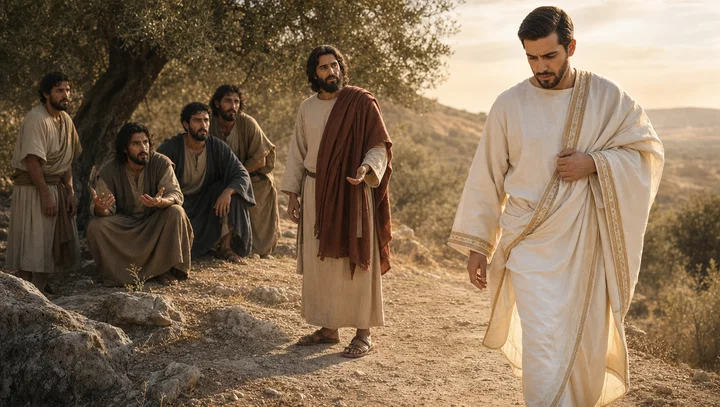
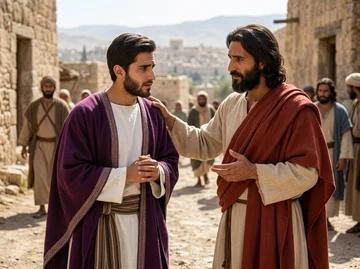
Cross-references 20 of 75
- Matthew 19:21
Jesus said unto him, If thou wilt be perfect, go and sell that thou hast, and give to the poor, and thou shalt have treasure in heaven: and come and follow me.
Jesus commands the ruler to give to the poor and follow him.
- Mark 10:17-22
And when he was gone forth into the way, there came one running, and kneeled to him, and asked him, Good Master, what shall I do that I may inherit eternal life?
The rich ruler asks Jesus how to inherit eternal life and is tested about his possessions.
- Luke 18:18-23
And a certain ruler asked him, saying, Good Master, what shall I do to inherit eternal life?
Parallel account of the ruler’s question, Jesus’ answer, and his sorrow over wealth.
- Exodus 20:12-16
Honour thy father and thy mother: that thy days may be long upon the land which the LORD thy God giveth thee.
Christ answers the question about eternal life by citing commandments from the law’s second table.
- Revelation 22:14
Blessed are they that do his commandments, that they may have right to the tree of life, and may enter in through the gates into the city.
Keeping God’s commandments is linked to access to the tree of life and the city.
- Matthew 22:37-40
Jesus said unto him, Thou shalt love the Lord thy God with all thy heart, and with all thy soul, and with all thy mind.
Jesus summarizes the law as love for God and neighbor, exposing the rich man’s failure to love his neighbor.
- Matthew 5:19
Whosoever therefore shall break one of these least commandments, and shall teach men so, he shall be called the least in the kingdom of heaven: but whosoever shall do and teach them, the same shall be called great in the kingdom of heaven.
Both connect keeping God’s commandments with entering life.
- Luke 10:25-28
And, behold, a certain lawyer stood up, and tempted him, saying, Master, what shall I do to inherit eternal life?
A question about eternal life is answered by love for God and neighbor and obedience.
- Leviticus 19:18
Thou shalt not avenge, nor bear any grudge against the children of thy people, but thou shalt love thy neighbour as thyself: I am the LORD.
Jesus includes loving one’s neighbor as oneself among the commandments.
- James 2:10
For whosoever shall keep the whole law, and yet offend in one point, he is guilty of all.
Both address obedience to God’s law; James says breaking one command makes a person guilty of the whole law.
- Matthew 19:23-26
Then said Jesus unto his disciples, Verily I say unto you, That a rich man shall hardly enter into the kingdom of heaven.
Jesus warns that riches hinder entry into the kingdom, but God makes salvation possible.
- Matthew 19:22
But when the young man heard that saying, he went away sorrowful: for he had great possessions.
The young man sorrowfully refuses eternal life, choosing his great possessions.
- Romans 6:23
For the wages of sin is death; but the gift of God is eternal life through Jesus Christ our Lord.
Contrasts sin’s wages of death with eternal life as God’s gift through Christ.
- Mark 10:21-22
Then Jesus beholding him loved him, and said unto him, One thing thou lackest: go thy way, sell whatsoever thou hast, and give to the poor, and thou shalt have treasure in heaven: and come, take up the cross, and follow me.
Jesus calls the ruler to give to the poor and follow him, but the ruler turns away, grieved by his possessions.
- John 15:10
If ye keep my commandments, ye shall abide in my love; even as I have kept my Father’s commandments, and abide in his love.
Jesus kept his Father’s commandments.
- Ecclesiastes 12:13-14
Let us hear the conclusion of the whole matter: Fear God, and keep his commandments: for this is the whole duty of man.
Keeping God’s commandments is humanity’s duty, and every deed comes under judgment.
- Luke 18:22-23
Now when Jesus heard these things, he said unto him, Yet lackest thou one thing: sell all that thou hast, and distribute unto the poor, and thou shalt have treasure in heaven: and come, follow me.
The ruler’s attachment to wealth leads him to reject Jesus’ call to follow him.
- Acts 16:30-31
And brought them out, and said, Sirs, what must I do to be saved?
The jailer asks how to be saved and is told to believe in Jesus.
- John 3:16
For God so loved the world, that he gave his only begotten Son, that whosoever believeth in him should not perish, but have everlasting life.
Belief in God’s Son brings everlasting life.
- 1 John 5:3
For this is the love of God, that we keep his commandments: and his commandments are not grievous.
Love for God is shown by keeping his commandments.
Commentary
Each commentary is drawn from primary sources: the writings of Ellen G. White and Adventist pioneers and periodicals. Each commentary is separate. Its own words are not a quotation; follow the references to read the source passages.
Ellen G. White
92 sources
A wealthy young ruler with standing and outward piety comes to Jesus asking what good deed he must do to secure eternal life.RH Sep 11, 1900DA 518.1–3Lt 195, 1903, par. 8–10Lt 354, 1907, par. 13–15Ms 40, 1905, par. 3–5 Jesus points him to God’s goodness and to keeping the moral law of the ten commandments as the condition of entering life.Lt 195, 1903, par. 8–10Ms 23, 1885, par. 25–27Ms 39, 1886, par. 1–3Lt 3, 1897, par. 2–3Lt 8, 1895, par. 22–25 He then exposes the man’s lack by calling him to sell what he has, give to the poor, and follow Him, revealing that riches are his idol loved more than God and neighbor.Lt 195, 1903, par. 8–10Lt 118, 1897, par. 21–25Lt 160, 1899, par. 2–34T 219.3STB 573.3–574.1 Outward rule-keeping without wholehearted love and self-surrender cannot qualify anyone for heaven, and acceptable obedience comes only through faith in Christ’s righteousness and power, not by human merit.Ms 1, 1889, par. 35–40DA 518.6COL 392.1ST Oct 28, 1908ST Jun 18, 1894 The man refuses the cost and goes away sorrowful, showing that wanting eternal life is not enough when a person clings to earthly treasure instead of yielding all to God.Lt 160, 1899, par. 2–3Lt 63, 1893, par. 22–25STB 573.3–574.1DA 523.2DA 520.2
Asker and Setting
The one who asks is a rich young ruler in Israel, a wealthy man with responsibilities and standing whose tastes and desires were favorable rather than offensive to spirituality.RH Sep 11, 1900DA 518.1–3Ms 40, 1905, par. 3–5 Having seen Jesus blessing the little children, he was touched by His tender love, by His compassion for the poor and ignorant, and by His meekness and lowliness of heart.RH Sep 11, 1900DA 518.1–3Ms 40, 1905, par. 3–5RH Jan 12, 1905 He was convinced Jesus was good and one with whom he could live in perfect harmony, he was moved and drawn to become His disciple, and so he ran after Him, hastened to Him, and knelt before Him.RH Sep 11, 1900DA 518.1–3RH Jan 12, 1905
His question is sincere and earnest, coming from high motives and real desire for future life with God, and it is important to every human being.DA 518.1–3Ms 40, 1905, par. 3–5Lt 345, 1904, par. 2–6RH Jan 12, 1905 Yet he is not perfect in understanding, for while he considers himself righteous and thinks he lacks nothing, he feels dissatisfied and unmet need.Ms 40, 1905, par. 3–5Lt 345, 1904, par. 2–6DA 518.5 He wonders if Jesus can bless him and satisfy him as He blessed the children, and what further action will secure what his own life lacks.Lt 345, 1904, par. 2–6DA 518.5DA 518.4
He addresses Jesus as Good Master as an honored rabbi without recognizing Him as the Son of God.COL 390.2–391.1DA 518.4 Jesus uses the address to test whether he recognizes Him as God's Son and representative and understands that God alone is truly good and the source of goodness.COL 390.2–391.1DA 518.4RH Jan 12, 1905
He is a man of prepossessing appearance and much outward piety, fully desiring to be as Christ was, attracted and charmed by Christ's life and manner of teaching, and realizing the importance of gaining future eternal life as a wonderful reward for living eternally with God.DA 519.3STB 572.6–573.2 He is not ignorant of the service man owes to God, is fully convinced a place of happiness is prepared for all who in this life obey the commands of God, realizes he must work out a perfect character to gain a place in the abodes of bliss, and thinks himself an honest seeker, yet his possessions are his idol.STB 572.6–573.2 He has high capabilities that under Christ's guidance could have made him a powerful co-worker for good and for salvation, reflecting God's likeness with sanctified character, and his possible connection with believers was seen as support for Christ's cause.DA 519.3DA 719.3 Christ loved him, love for Christ was awakening in him, and choosing to give himself to Christ would have changed his future.DA 519.3
His high position and cherished possessions subtly harm character because, if cherished, they take God's place in the affections and absorb the heart however uncertain or unworthy, and holding back anything from God weakens moral strength and usefulness.DA 520.2 His later choice shows he weighs Christ against the world and turns away, refusing Christ as his leader.DA 523.1
Sense of Question
The question asks what single good deed must be performed in order to have or inherit eternal life, treating eternal life as something to be secured by doing and calling for a definite answer about the way to life.Lt 195, 1903, par. 8–10Lt 354, 1907, par. 13–15Ms 150, 1899, par. 22–27Ms 84, 1886, par. 24 It shows confidence that personal good conduct could secure life by a human measure of righteousness rather than by God's standard.Lt 195, 1903, par. 8–10Lt 354, 1907, par. 13–15Ms 150, 1899, par. 22–27 It also thinks the needed thing can be done while still retaining earthly advantages.Lt 345, 1904, par. 2–6Ms 123, 1908, par. 35–42 In this it reflects the self-righteous spirit with which Judas also came to Christ, outwardly counted among disciples yet selfish, covetous, and a thief at heart.Lt 63, 1893, par. 22–25
The asker considers himself righteous, claims to have kept the commandments from his youth, thinks he lacks nothing, and honestly regards himself as perfect and blameless regarding the law.DA 518.5ST Oct 29, 1912ST Oct 22, 1894Lt 202, 1899, par. 3–4 Yet he is deceived about what keeping them means, does not grasp the depth of the commandments or God's character expressed in them, and lacks discernment of his need for wholehearted devotion and Christian goodness.ST Oct 29, 1912ST Oct 22, 1894DA 519.2 His confidence did not mean he understood or truly kept them, for when told to sell possessions, give to the poor, and follow, he went away sorrowful.ST Oct 29, 1912ST Oct 22, 1894Lt 202, 1899, par. 3–4
At the same time the question reveals a desire for further assurance and for what his own life lacks, with a sense of dissatisfaction and unmet need and a wondering whether he can be blessed and satisfied.DA 518.5DA 518.4COL 392.1 It expresses that present and future eternal interests depend on the answer.Lt 3, 1897, par. 2–3 It belongs to a setting in which God's favor and the righteous person's reward were treated as earned by works, an error from which even the disciples were not entirely free, and the event provides the occasion for teaching right principles about favor and reward.COL 390.1COL 392.1
Answer Keeps Commandments
To the question what good deed secures eternal life, the answer points first to God alone as good and then to keeping His commandments.Lt 195, 1903, par. 8–10Lt 3, 1897, par. 2–3STB 572.2–5 Entering life requires keeping the commandments, and those commandments are the moral law, the ten holy precepts, not a different or abolished law.Ms 23, 1885, par. 25–2713MR 21.1–3 The question treats eternal life as something to be gained by a deed and as depending on present and future eternal interests, and it is answered in the context of obedience to God.Lt 195, 1903, par. 8–10Lt 3, 1897, par. 2–3
Keeping the commandments is laid down as the whole duty and the condition of entering into life and receiving eternal life.Ms 39, 1886, par. 1–3Lt 8, 1895, par. 22–255MR 260.1Lt 44, 1893, par. 8–9Ms 57, 1900, par. 17–19 Strict obedience to them is connected with salvation, while entering life involves conditions and not merely a claim that works do not matter.Ms 39, 1886, par. 1–3Lt 44, 1893, par. 8–9 What was lost through Adam by disobedience must be brought back and restored through obedience.5MR 260.1Ms 38, 1886, par. 9–12 That obedience supports peace, love, and harmony, whereas disregard brings division, ruin, and wrath.
This obedience is owed in response to God's love and Christ's saving sacrifice, which makes salvation possible and helps people overcome.Ms 38, 1886, par. 9–12 The obedience God accepts is the kind Christ offered to the Father in doing God's will, not self-sufficiency or mere knowledge or self-pleasing, and true faith leads to such obedience.Ms 38, 1886, par. 9–12Ms 166, 1905, par. 4
The commandments require supreme love for God in the first four and love for neighbor as self in the last six, the same answer given to the lawyer that to love the Lord with all heart, soul, strength, and mind and neighbor as self is to live.5MR 260.1Ms 62, 1894, par. 11–1213MR 21.1–3 Love is the basis of godliness, and wholehearted love for God leads to life like Christ's love.Ms 62, 1894, par. 11–12Ms 35, 1889, par. 3 Such love is shown in unselfish care for others, especially those in danger or need, and in building up fellow believers rather than discouraging them.Ms 62, 1894, par. 11–12Ms 35, 1889, par. 3 What the ruler still lacked was exactly what the law plainly specified, to love God supremely and neighbor as himself, for with him self-love was supreme.13MR 21.1–3
Jesus cites the commandments about duties to other people and then exposes the ruler's claim to have kept them from his youth as false and outward only.DA 518.6ST Oct 28, 1908ST Oct 22, 1894ST Oct 28, 1908 His confidence did not mean he understood or truly kept them, and his attachment to possessions showed he had not kept them as he supposed.Ms 23, 1885, par. 25–27ST Oct 22, 189413MR 21.1–3 Outward obedience without unselfish love for God and others lacks the spirit of the law and cannot qualify a person for heaven.COL 392.1 It does not grasp the depth of God's commandments or the character of God expressed in them.ST Oct 22, 1894
Wealth Exposes Heart
Jesus exposed the gap between outward obedience and wholehearted devotion by telling him he still lacked one thing: sell what he had, give to the poor and suffering, gain treasure in heaven, take up the cross, and follow Him.Lt 195, 1903, par. 8–10Lt 118, 1897, par. 21–25Lt 160, 1899, par. 2–3STB 573.3–574.11T 207.2 Though he claimed to have kept the commandments, his love of wealth showed he did not love his neighbor as himself or put God first, and surrendering possessions to serve others was his only hope of following Christ and receiving eternal life.Lt 195, 1903, par. 8–10Lt 118, 1897, par. 21–251T 207.2 His reply to sell, give to the poor, and follow presents love and self-sacrifice as the test of character at the final judgment.Ms 58, 1896, par. 201T 207.2 When asked what he still lacked, he was tested in regard to worldly possessions, for they were his idol and stood in the way of gaining eternal life.Lt 160, 1899, par. 2–3STB 573.3–574.1 Jesus loved him and invited him to follow but did not compel him, leaving him free to choose whether to obey.Lt 160, 1899, par. 2–3
The demand reflects Christ's own example of leaving heavenly riches and becoming poor, calling the man to give up earthly possessions so they would not draw his affections from God.ST Jan 27, 1876 His selfish love of riches was his deficiency, for his claim to have kept the commandments did not include loving his neighbor as himself.ST Jan 27, 1876 Using entrusted means as He directs is part of the way He saves and makes co-workers with Him, for those who belong to God's kingdom place all they have and are at His disposal for His work, and refusing to surrender these gifts is refusing Christ's offer to share in that work.DA 523.2 His riches were his idol and supreme love; he loved possessions more than God, truth, fellow people, and the souls of others, did not love God with whole heart or neighbor as himself, put riches and standing before God, and loved God's gifts more than the Giver.Lt 118, 1897, par. 21–25STB 573.3–574.1SG2 240.2–241.1ST Oct 28, 19084T 49.3–50.1 Outward commandment-keeping is not enough when love of earthly treasure rules the heart, and true sacrifice and care for others matter more than outwardly keeping rules while clinging to wealth.4T 49.3–50.11T 207.2
He had to choose between parting with possessions and following Christ or keeping them and losing eternal life.SG4 265.54T 219.3CET 164.3 He wanted heaven and the heavenly treasure but also wanted temporal advantages, visible earthly treasure, money, and power, seeking both worlds, counting it too great a risk to give up earthly treasure that was seen for heavenly treasure that was unseen.STB 573.3–574.14T 50.2ST Mar 11, 1889 Obedience to Christ's requirements would have brought him treasure in heaven and made him rich in good works by using riches to help others, but his love of wealth was stronger than his love for neighbors and the heavenly inheritance.4T 50.2ST Mar 11, 1889 The requirement chilled his desire, for he valued earthly riches more than the heavenly treasure and eternal reward, proving by refusing to give them up for Christ that he loved them more than God and was unworthy of a place in the Master's service.PK 221.1–2SG4 265.5RH May 20, 18624T 219.3CET 164.3 Though willing to keep the commandments, he lacked willingness to surrender wealth, and love of earthly riches prevented him from choosing eternal life.RH May 20, 18624T 219.3
He went away sorrowful and grieved because he had great possessions, refused the offer of eternal life and renounced immortal life, and ever after the world received his worship.Lt 63, 1893, par. 22–25STB 573.3–574.1ST Jan 27, 1876 His sorrow and refusal show how attachment to wealth can lead someone to renounce eternal life for money and power.ST Jan 27, 1876 His question reflected a self-righteous spirit, and outward righteousness did not remove the heart's defect, for Jesus exposed his selfishness and covetousness and love of worldly gain.Lt 63, 1893, par. 22–25COL 392.1 His high position and cherished possessions subtly harmed character and weakened moral strength and usefulness because, if cherished, they take God's place in the affections and absorb the heart however uncertain or unworthy.DA 520.2 Holding back anything from God left him lacking, his deficiency spoiled his virtues, and outward obedience without unselfish love for God and others lacks the law's spirit and cannot qualify a person for heaven.COL 392.1ST Feb 14, 1878DA 520.2
Desiring eternal life requires accepting Christ's conditions and yielding all to God as the only hope of salvation and way to perfect Christian character.DA 523.2DA 520.2Lt 118, 1897, par. 37–40 Obedience to God's law is more than outward rule-keeping: it must enter the life and shape the character.DA 523.2 Self-surrender is central to Christ's teaching and may require cutting away anything that corrupts, because nothing less than obedience can be accepted.DA 523.4 Wanting the gift is not enough when a person refuses its cost, and wanting heaven is not enough when a person will not surrender what God requires, for those who cling to earthly possessions rather than use them to help others and support God's cause are unwilling to make the sacrifice required of them.4T 219.3CET 165.2–3 Complete surrender to God is necessary rather than choosing one's own course.Lt 118, 1897, par. 37–40
Faith Obedience Doctrine
The question about what must be done to have eternal life was asked by one who claimed to have kept the commandments yet did not recognize his heart's need for Jesus as Saviour and for His righteousness.Ms 1, 1889, par. 35–40 That righteousness is received by faith and not earned by human effort, and no one can keep the commandments acceptably by human merit alone, for the believer depends on Christ's righteousness and merit.Ms 1, 1889, par. 35–40ST Jun 18, 1894 Christ's sacrifice provides remission of sin and is the only ground of the sinner's title to eternal life.ST Jun 18, 1894 This salvation does not leave a person free to remain in sin or to set aside God's law, but makes obedience acceptable through faith, and faith never excuses breaking God's law.Ms 1, 1889, par. 35–40ST Jun 18, 1894
Through Christ's merits and divine power joined with human effort believers can keep the commandments, while apart from Christ all attempts to produce their own righteousness fail.Ms 1, 1889, par. 35–40 What was needed was a humble, contrite heart giving God supreme love and trusting in Christ's perfection to cover personal lack.Ms 1, 1889, par. 35–40DA 519.2
Outwardly proper conduct and claimed belief in the truth are not enough when the test to deny self and follow Christ is refused.RH Sep 11, 1900 The law must reach the conscience and reveal sin, and when obeyed in spirit and in truth, as Paul discovered, it exposes the sinful heart and brings self to death, thereby opening the way to lay hold of eternal life.RH Sep 11, 1900Ms 150, 1899, par. 28–29 That life requires purity of character and the putting away of sin, close companionship with Christ unto conformity with the divine likeness, and completeness in Christ, for purity of character is the only safeguard in character formation and without it no one will see God.Lt 10, 1899, par. 33
Present Application Call
His question and condition picture the condition of many Sabbath-keepers who seek eternal life while failing to keep God's law and needing to recognize what stands between them and life.SG2 239.1–240.11T 170.4–171.3 The question leads to a test of whether a person will obey when duty is made clear, and the same test applies when people are shown the duty to keep the Sabbath and see it as a cross because they are unwilling to bear the cross and deny self.Ms 39, 1886, par. 1–33MR 66.2–67.2 Strict obedience to the commandments is connected with receiving eternal life, yet the young man thought he kept them while his wealth kept him from loving God wholeheartedly and following Christ in self-denial, and his sorrow exposed that failure.Ms 39, 1886, par. 1–33MR 66.2–67.2 He represents many held back from obeying God by earthly treasures who, when duty is brought to bear on them, see a cross to be lifted.Ms 39, 1886, par. 9–103MR 69.1–3
Attachment to wealth can keep people from sacrificing for God's work, supporting messengers, feeding hungry sheep with present truth, and laying up treasure in heaven.ST2 46.1STM2 30.1CET 106.1–2STA 104.4–106.1 Those who profess faith yet withhold their means when God's work needs support repeat his sorrowful response when called to give up possessions, for they are attached to earthly goods and unwilling to sacrifice.STBk 105.1ExVEGW 29.3–30.1CET 106.1–2 Earthly goods may soon be swept away by the overflowing scourge, leaving it too late to sacrifice them and lay up treasure in heaven.STBk 105.1ExVEGW 29.3–30.1STA 104.4–106.1 Love of earthly riches can prevent choosing eternal life, for Jesus made clear the man had to choose between keeping his possessions and gaining eternal life by giving his treasures to the poor, yet though willing to keep the commandments he lacked willingness to surrender wealth and went away sorrowful valuing possessions more than heavenly treasure.RH May 20, 1862ST Nov 5, 1894
Greater wealth can make it harder to recognize that possessions are lent by God for His glory to be used as stewardship for the needy and His work, and the way of life requires giving up earthly riches and becoming rich in good works.ST Nov 5, 18942T 680.2 Those who prize riches above God, truth, and others may surrender truth rather than part with wealth, choosing worldly possessions over eternal life, and those who value earthly things above eternal things will lose both.1T 172.1–3Lt 202, 1899, par. 3–4 Wealth held as an idol keeps a person from eternal life, and true sacrifice and care for others matter more than outwardly keeping rules while clinging to wealth.1T 207.2SG2 242.1–3 But God can make it possible for the rich to enter the kingdom: the Spirit's truth displaces love of riches, turns the heart to God, and leads to faithful use of possessions for the needy and God's work.1T 172.1–3SG2 242.1–3
Eternal life is secured by searching the Scriptures to discharge duty aright, perfecting Christian character, being channels of true light that must be imparted and not kept, faithfully using entrusted sacred truths and talents until the Master reckons, putting light on a candlestick rather than under a bushel, and doing God's work as co-workers with Christ through faithful service and witness.Ms 39, 1886, par. 9–103MR 69.1–3 The question can guide young people who gather to read and understand Scripture together, place themselves on the side of truth, and seek the answer, inviting the blessing of Jesus into their hearts.MYP 391.2RH Jul 19, 1906 Every soul must truly understand the answer and make no mistake about it by keeping in view the infinite sacrifice, being careful in the home and in speech to children so as not to misrepresent salvation, laboring intelligently for families, training parents and children, and preparing for the great crisis just before us.Ms 81, 1912, par. 47MR 22.2–3 Hygienic restaurants were meant to help people understand it as workers befriend patrons, speak a word of truth in season, continue conversing outside, and aim at conversion.Ms 150, 1905, par. 17–18
This condition applies to husband, wife, and children urged to obey God's Word and seek Him wholeheartedly, with keeping God's commandments given as the condition for entering into life.Lt 317a, 1904, par. 14–17 It is met not by merely professed or inactive faith but by serving with the Spirit of God and carrying light to those in darkness.ST May 13, 1889 His failure to seek and understand important truth left him in spiritual darkness, in contrast to Abraham's willingness to offer his son, which shows readiness to obey that many lack even when asked only to surrender earthly wealth to help others and support God's cause.CET 166.2CET 165.2–3 The gift of making these sacrifices is the bread of life: Christ must be the circulating current of life in the soul.Lt 354, 1905, par. 27 For the one who receives this truth, obedience to God's commandments as the condition of salvation leads to eternal life.Ms 57, 1900, par. 17–19 How difficult it is for one with great possessions to turn affections from earthly treasure even when eternal life is offered shows how attachment to worldly wealth can keep a person from following Christ.2T 689.1–690.2
Sources
Pioneers and periodicals
123 sources
A wealthy young ruler of high position comes running to Jesus, kneels reverently before Him, and asks what good deed he must perform to gain eternal life for himself.RH Sep 11, 1900RH Nov 26, 1857RH Feb 26, 1901ST Nov 14, 1900 His wording treats endless life as something to be earned or purchased by doing, while it is in truth God's gift through Jesus Christ, received by repentance, faith, baptism, and a prayerful life of obedience by the Spirit's help.ST Mar 5, 1902ST Sep 26, 1906ST Nov 14, 1900ST Feb 3, 1909RH Sep 23, 1858 Jesus answers that entering life requires keeping God's Ten Commandments given at Sinai, kept wholly and inwardly from love to God and neighbor, including the seventh-day Sabbath, and not abolished under the gospel.RH Aug 20, 1857RH Aug 15, 1854RH May 16, 1871RH Aug 19, 1852ST May 30, 1878 The further call to sell possessions, give to the poor, and follow Him tests that obedience and exposes his attachment to wealth as covetousness and idolatry, so that professing to have kept the law from youth he proves false and goes away sorrowful, valuing possessions above heavenly treasure.ST Nov 24, 1881RH Feb 26, 1901RH Nov 12, 1857RHRH Oct 19, 1916 Addressing Jesus as good Master affirms that Christ is truly God, since God alone is properly good and the source of all goodness.RH Jan 7, 1902ST Nov 20, 1884ST Nov 17, 1898ST Aug 29, 1911
Questioner and His Coming
The one who comes is a rich young man, a Jewish ruler in a high position of wealth and influence, at times called a lawyer.RH Sep 11, 1900RH Feb 26, 1901ST Nov 14, 1900ST Feb 10, 1898ST Feb 3, 1909 He asks what good deed he must do to receive eternal life, and the question introduces a test of whether he values eternal life above his possessions.RH Sep 11, 1900RH Nov 26, 1857RH Feb 26, 1901 He seeks salvation through his own actions and believes he has met the moral requirements, without understanding their full heart-searching demands.RH Feb 26, 1901ST Feb 3, 1909 His attachment to wealth stands in the way of loving and serving others, showing that keeping the commandments is not merely outward observance or a passport to the world to come.RH Feb 26, 1901ST Feb 3, 1909
He comes eagerly and reverently, running to Jesus, hastening, kneeling before Him, looking up into His face, having gone forth into the way.RH Sep 11, 1900ST Sep 26, 1906ST Nov 14, 1900ST Feb 10, 1898ST Oct 19, 1888 He is zealous enough to come running and kneel, and he is representative of the respectable wealth-loving of every age and land.ST Nov 14, 1900ST Feb 10, 1898 His earnest concern reflects the mistaken idea that eternal life can be earned by good works, whereas it is God's gift through Jesus Christ.ST Sep 26, 1906ST Oct 19, 1888 His question reveals that moral conduct alone has not given him assurance and that he seeks a further step toward eternal life, a concern shared by every human being.RH Jan 12, 1905ST Oct 19, 1888
The occasion follows Jesus blessing the little children, whose tender welcome moves the ruler and convinces him Jesus must be a good man with whom he could live in perfect harmony.RH Sep 11, 1900RH Jan 12, 1905 He comes with a great burden on his mind and a troubled desire to live in harmony with Him.RH Sep 11, 1900RH Jan 12, 1905 The incident contains practical lessons for every age, with especial importance for days of peril, and Christ's words in answer present eternal truth.ST Feb 10, 1898 His tastes and desires are not offensive but favorable to the growth of spirituality.RH Sep 11, 1900
Outwardly he is morally disciplined, amiable, respectable, and of strict integrity rendering everyone his due and wronging no one, yet he lacks benevolence, magnanimity, and extensive philanthropy toward the needy and suffering.RH Sep 11, 1900ST Mar 22, 1883ST Nov 25, 1886ST Oct 19, 1888 He feels no responsibility for them and remains a stranger to disinterested benevolence, while inwardly he is anxious, uneasy, burdened, unsatisfied with his attainments, and lacking assurance of eternal life.ST Mar 22, 1883ST Oct 19, 1888RH Jun 12, 1900 Outwardly keeping the commandments and practicing religion is not enough when the heart remains selfish and lacks self-devotion to God's glory, which undermines all other virtues and confidence in God's favor.ST Apr 15, 1880RH Jun 12, 1900 His inward longing and unrest continue despite outward keeping, and his hidden idol keeps him from the peace he seeks.ST Apr 15, 1880RH Jun 12, 1900
He is self-deceived and self-righteous about his condition, trusting outwardly blameless conduct while ignorant of selfishness in his heart.RH Oct 19, 1916RH Feb 23, 1905ST Feb 10, 1898 His character is built on Pharisaic principles, holding that eternal life must come by a good work and that he himself must do that good work.RH Oct 19, 1916ST Feb 10, 1898 Though he has noble principles, he does not recognize that wealth has become his god, that he values himself and earthly things above the Creator, or that he fails to prize spiritual things above natural ones.RH Oct 19, 1916RH Feb 23, 1905 He thinks he is on the way to eternal life, but outward confidence can hide attachment to the world, so each person must examine whether he is truly dead to the world and alive to God.RH Dec 10, 1857ST Dec 16, 1908 Even one cherished sin can keep a morally upright person from heaven, and the question of eternal life must be applied personally since each faces eternity of life or death.RH Dec 10, 1857ST Dec 16, 1908
The account parallels the lawyer's question about inheriting eternal life and is also recorded in Mark 10 and Luke 18. It leads into the conversation about the cost of following Jesus and the parable of the laborers.ST Dec 2, 1886 The account is presented as an example of how Jesus addressed selfishness.ST Dec 2, 1886
Meaning of the Question
He asks what good thing he must do to have eternal life, to gain it, to inherit it, to enter into life, and the question is general for every person and not for himself alone.RH Nov 26, 1857RH Jun 20, 1865RH Aug 20, 1857ST Dec 27, 1905 He asks because he is troubled about how to gain it, and his asking opens the answer that entering life requires keeping the commandments as its condition.RH Aug 20, 1857ST Dec 27, 1905 The inquiry concerns the most important human need, life without end, worth far more than temporary life and happiness, and it is the question of all who anxiously seek salvation.ST Jun 19, 1884RH Sep 23, 1858RH Feb 23, 1905 His further asking which commandments must be kept and what he still lacks leads to the direction to sell possessions, give to the poor, and follow, and to what must be done to be perfect.RH Jun 20, 1865RH Apr 23, 1901 The answer given to him fits his circumstances and does not conflict with the different answer given to the jailer under different circumstances.ST Dec 27, 1905
The question expresses earnest, sincere, urgent concern for salvation, coming, running, kneeling to ask, with eternal life as deepest concern and the most important question a person can ask.RH Jan 12, 1905ST Sep 26, 1906RH Dec 31, 1908RH Feb 23, 1905 Moved by the tender welcome given to the children, he sincerely asks what he must do to inherit eternal life, and that concern is shared by every human being.RH Jan 12, 1905ST Jun 19, 1884 Eternal life is presented as an urgent, essential need, and the needed response is personal, to receive what God has provided as a gift and actually to do what He directs, since without that doing a person will perish.RH Sep 23, 1858 Mere thought, feeling, intention, or resolve is not enough, and the verse frames the choice between seeking eternal life and the costly surrender of wealth later required.RH Sep 23, 1858RH Dec 31, 1908
Its wording frames life as earned by doing a good deed, as purchased or obtained by works, obedience, or superfluous wealth, but eternal life cannot be earned and is God's gift through Jesus Christ.ST Sep 26, 1906ST Nov 14, 1900ST Apr 2, 1902 He seeks salvation through his own actions and believes he has met the moral requirements, despite moral conduct and outward observance of the law, without understanding the full heart-searching demands of the commandments.ST Nov 14, 1900ST Feb 3, 1909ST Apr 2, 1902 Jesus directs him to God's goodness and the commandments, then when he asks what he still lacks exposes his attachment to wealth and his failure to love his neighbor as himself, showing that outward keeping does not remove the need for wholehearted devotion and following.ST Nov 14, 1900 Riches have no purchasing power before God, and selfish attachment to wealth kept him from receiving eternal life though he was loved, since love for Jesus is shown by keeping His commandments.
He knows the Scriptures teach that life comes only through a coming Saviour and that Scripture contains more than one code of law, and he asks in terms of inheritance what good thing he should do to obtain and continue life.RH Feb 23, 1905RH Feb 23, 1905 He wants eternal life in order to enjoy the honor and wealth he already possesses and to extend brief earthly life forever, seeking it as an addition to his possessions rather than seeking a life of service to God and others. Though of noble principles, he is self-deceived, not recognizing that wealth has become his god, that he values himself and earthly things above the Creator, and that he fails to prize spiritual things above natural ones.RH Feb 23, 1905 Obedience would bring a fullness of happiness making earthly goods seem of little value, but he does not yet see this.RH Feb 23, 1905
His further questions introduce the test of whether he values eternal life above his possessions and the direction toward perfection.RH Nov 26, 1857RH Jun 20, 1865ST Nov 14, 1900 Perfection in commandment-keeping is identified with selling what he owns, giving to the poor, and following, so that giving all to advance God's cause becomes the supreme test and the perfection of commandment-keeping.RH Apr 23, 1901
Christ's Commandment Answer
To the inquiry what good deed secures eternal life, Jesus answers that entering life requires keeping the commandments, and faithful observance is set forth as its condition, rule of action, and way to life.RH Aug 20, 1857RH May 16, 1871ST Dec 27, 1905RH May 3, 1860ST Apr 13, 1904 The question arises because humanity has lost life and glory through sin, which separates from God and brings the law's condemnation from which the sinner cannot free himself, while God's Son bore the penalty to make forgiveness and redemption possible for all.RH May 16, 1871 Receiving that offered life means coming to Him, denying self, bearing the cross, and following Him, and commandment keeping in the gospel is possible only through Jesus Christ and the power of His Spirit.RH May 16, 1871 The answer fits the young man's circumstances and does not conflict with Paul's answer to the jailer, since the two questions arose in different circumstances.ST Dec 27, 1905
The commandments meant are God's Ten Commandments, the Father's existing moral law given at Sinai and written by His finger on two tables of stone as recorded in Exodus 20, the embodiment of love.RH Aug 19, 1852RH Oct 10, 1854RH Nov 8, 1870RH Jun 24, 1852RH Jun 10, 1852 Commandment and law are the same thing, and Jesus enforces the same law by teaching that all the law and the prophets hang on supreme love to God with all heart, soul, and mind and love of neighbor as self, confirmed again when He points the seeker for life to what is written in the law.RH Dec 1850RH Jun 24, 1852 Christ did not frame a code of His own or make these precepts rest on His own authority, but transmitted the Father's law, distinct from the ceremonial law and from precepts given through Moses, so the ten moral precepts are not done away to be replaced by a different law of Christ.RH Oct 10, 1854RH Nov 8, 1870 Entering life therefore requires keeping the Father's commandments, the same commandments spoken of in Matthew, Luke, John, and Revelation, by which those who do them gain right to the tree of life and entrance through the gates into the city, with the fourth Sabbath commandment by no means excluded.RH Aug 19, 1852RH Jun 24, 1852RH Jun 10, 1852
Jesus names enough commandments to identify the law He means, quoting five precepts — the sixth, seventh, eighth, ninth, and fifth, with thou shalt love thy neighbor as thyself — and those concerning duty to neighbor because the young man was specially deficient there.RH Aug 15, 1854RH Feb 26, 1901RH Feb 17, 1859RH Oct 26, 1911RH Apr 13, 1869 The list focuses on duties toward other people, especially the last six, and is the shortest selection, leaving unmentioned idolatry, images, profanity, Sabbath-breaking, and coveting, yet it is not a complete inventory and does not teach that the rest is abolished.RH Aug 15, 1854RH Feb 26, 1901RH Oct 26, 1911RH Apr 13, 1869ST Oct 18, 1877 His instruction therefore includes all of them, including those defining duty to God, and His not mentioning the Sabbath at that time no more proves it nonbinding than it would permit idolatry, image worship, or misuse of God's name.RH Aug 15, 1854RH Oct 26, 1911RH Apr 13, 1869 Even allowing the claim to have kept all these from youth, those holding one view teach He declared one further lack that is no part of the law: to sell all, give to the poor, gain treasure in heaven, and come follow Him.RH Feb 17, 1859
Obedience must be whole and inward, not mere outward observance or a passport to the world to come, for perfect commandment-keeping reaches beyond outward acts to giving up possessions for the poor and following Christ.RH Feb 26, 1901RH Sep 4, 1900ST Nov 14, 1900RHRH Aug 20, 1914 Deliberately breaking even one commandment is incompatible with entering God's kingdom, and a single cherished sin can shut heaven.RH Aug 15, 1854 The young man's claim to have kept them was false and self-deceived, since unwillingness to part with excess while the needy suffer proves he had not kept them in spirit and truth; had he truly loved his neighbor as himself he would have sold and given cheerfully.RH Feb 26, 1901RH Keeping the ten commandments is thus to be lived through love rather than as mere formal observance.RH Aug 20, 1914
The answer upholds the law rather than abolishing or changing it, giving no indication that it has been abolished and enforcing its continued authority under the gospel dispensation.RH Apr 13, 1869RH May 13, 1875RH Jul 15, 1858RH Mar 19, 1872RH Mar 17, 1859 Christ enforced the commandments and incorporated them into the new constitution before the time set for the supposed abolition of the law, so that if the ten were afterward done away the new constitution made from them would be done away as well.RH Mar 17, 1859 The moral law remains binding under the gospel and under the new covenant, which writes the same law on mind and heart.RH Nov 8, 1870RH Mar 19, 1872 Commandment keeping as the good works belonging to eternal life stands on the works side of believing in the lifted-up Son of man for eternal life, furnishing an abundance of good works, and it can be done only through faith.ST Aug 22, 1916ST Dec 27, 1905ST Aug 6, 1896ST Oct 21, 1886 Entering life requires personal obedience done through faith in the personal Christ who died to save each person, not to give license to continue in disobedience but to give grace to obey every divine precept, unto entering life, entering the city, and right to the tree of life, for at last each will give account of himself before God.ST Aug 22, 1916ST Dec 27, 1905 Even sincere outward keeping falls short of God's measure, and full moral character and righteousness require Christ's justifying blood and the sanctifying power of His perfect obedience received by faith, joining keeping God's commandments with faith in Jesus, who forgives sin and writes the law on the heart.ST Oct 21, 1886ST Nov 14, 1900
In this ministry Jesus was laying down keeping of the commandments as the condition of eternal life and giving the law of God its just place, in a public announcement of the principles of the new covenant.ST Feb 22, 1883 His ministry was the introductory work of establishing the new covenant, begun at the close of Daniel's sixty-ninth week to confirm the covenant with many in the seventieth week.ST Feb 22, 1883 The law to be kept for eternal life is a perfect, holy law containing the whole duty of humanity, resting on supreme love for God and impartial, unselfish love for others, so that obedience to it accords with God's will and is precious to the Father.ST Aug 19, 1875
Unmentioned Commandments and Sabbath
Jesus named only part of the law when He answered, making no direct mention of the first, second, third, fourth, or tenth commandments, and that silence does not release them from obligation.RH Oct 11, 1906RH Oct 26, 1911RH Apr 13, 1869ST Oct 18, 1877RH Jun 10, 1852 He quoted enough precepts to identify which law He meant, naming the shortest commandments and those concerning duty to neighbor because the questioner was specially deficient in love to others, while leaving unmentioned the commands against idolatry, image worship, profanity, Sabbath-breaking, and coveting.RH Oct 11, 1906RH Oct 26, 1911ST Oct 18, 1877RH Jun 10, 1852 To argue that the unmentioned Sabbath is abolished would by the same reasoning permit idolatry, image worship, misuse of God's name, and coveting, and would break the law presented as a whole in which eternal life cannot be gained by keeping only some part.RH Oct 11, 1906RH Oct 26, 1911RH Apr 13, 1869ST Oct 18, 1877 The omission exposed formal religion and selfishness, showing lack of the love for others essential to keeping God's commandments and thereby revealing the true attitude toward God.RH Oct 11, 1906RH Apr 13, 1869
The commandments to be kept are the whole Ten Commandments, including the fourth commandment to keep the Sabbath, and obedience to them is set forth as necessary to enter into life.RH Aug 19, 1852ST May 30, 1878ST Aug 26, 1897RH Jun 24, 1852RH Jun 10, 1852 That Sabbath is the seventh-day Sabbath, the Creation Sabbath that continues, so that keeping the commandments includes keeping the seventh day, while first-day observance has no divine authority.RH Aug 19, 1852ST May 30, 1878ST Aug 26, 1897RH Jun 24, 1852RH Jun 10, 1852 The heart cannot be right with God while knowingly neglecting any known requirement, and another Gospel account notes the questioner already knew the commandments.RH Aug 19, 1852ST May 30, 1878ST Aug 26, 1897 Commandment and law are synonymous terms, all the law hangs on love to God and love to neighbor, the fourth Sabbath commandment cannot by any means be excluded, and those who do His commandments have right to the tree of life and may enter through the gates into the city.RH Aug 19, 1852RH Jun 24, 1852RH Jun 10, 1852
The follow-up question uses the plural Which, showing knowledge of distinct classes of commandments and asking which class is meant, not which single precept.RH Jan 15, 1861ST Feb 14, 1878RH Oct 10, 1854 Jesus' quotation of five precepts from the Father's existing law proves He cites the moral Decalogue given at Sinai and recorded in Exodus 20, written by the finger of God on two tables of stone, rather than framing a new code of His own or resting them on His own authority.RH Jan 15, 1861ST Feb 14, 1878RH Oct 10, 1854RH Nov 8, 1870ST Aug 28, 1879 That Decalogue is the embodiment of love, summed up in love to God and neighbor and lived through love rather than mere formal observance, and is distinct from the ceremonial law.ST Feb 14, 1878RH Nov 8, 1870RH Aug 20, 1914ST Aug 28, 1879 By naming five commandments He made clear He meant the commandments themselves, not an undefined good deed, and obedience to them is required for entering life.RH Jan 15, 1861RH Aug 20, 1914ST Aug 28, 1879
Keeping the commandments issues in entering life as inheritance beyond the judgment, in the world to come and in God's city and kingdom, rather than as a possession bestowed in this life.ST Jul 8, 1875RH Mar 20, 1856RH Sep 4, 1855 That entering takes place at the final judgment when heaven and earth flee away and the dead stand before God and are judged out of the books according to their works, after mercy's offer of pardon through the death of God's Son has ended and stern justice vindicates the broken law.ST Jul 8, 1875ST Sep 22, 1881RH Feb 17, 1852 Then those who keep the commandments enter into life, while sin, which is transgression of the law, brings its wage of death, the second death and everlasting death opposite to eternal life.RH Sep 4, 1855ST Jan 31, 1906ST Sep 22, 1881RH Feb 17, 1852 Life is found in righteousness and obedience and death is inherent in disobedience, not imposed as revenge, and eternal life itself is life received through Christ including pardon for sin.RH Sep 4, 1855ST Jan 31, 1906ST Sep 22, 1881
Wealth Exposes Disobedience
Jesus' direction to sell possessions, give to the poor, gain treasure in heaven, and follow Him applied the principle of loving neighbor as self to a man with great possessions surrounded by needy people, and his failure under that test showed he lacked the spirit of the commands concerning his neighbor despite his sincere profession of having kept them.ST Nov 24, 1881RH Feb 26, 1901RH Nov 12, 1857ST Jun 14, 1899RH Sep 4, 1866 The call exposed that his attachment to wealth stood in the way of loving and serving others, proving covetousness, selfishness, and idolatry rather than mere outward observance that could serve as a passport to the world to come.RH Feb 26, 1901RH Nov 12, 1857ST Sep 17, 1912RH Oct 25, 1906RH Oct 19, 1916 His wealth had become an idol that divided loyalty between God and gold, which cannot be served together, and kept him from valuing heavenly treasure above earthly riches and from following the One who gave up heaven's glory to help fallen humanity.ST Nov 24, 1881RH Nov 12, 1857ST Sep 17, 1912RH Sep 4, 1866RH Oct 25, 1906 Entering life and becoming perfect therefore requires obeying Christ's words and surrendering whatever competes with loyalty to God.RH Nov 12, 1857RH Oct 19, 1916
His claim to have kept the commandments from youth was false and self-deceived, for one who truly loved his neighbor as himself would have parted cheerfully with excess to help those in need.ST Oct 28, 1908ST Nov 24, 1881RHRH Oct 19, 1916ST Apr 15, 1880 He trusted outwardly blameless conduct while ignorant of selfishness in his heart, lacking the self-devotion to God's glory essential to true religion, which undermined his other virtues and his confidence in God's favor.ST Oct 28, 1908RH Oct 19, 1916ST Apr 15, 1880 By putting riches and standing in the world before God and loving God's gifts more than the Giver, he proved he had not kept the law in spirit and truth but had chosen the world over Christ.ST Oct 28, 1908RH Oct 19, 1916
He went away sorrowful because he valued great possessions, standing, and temporal gain above heavenly treasure, thereby rejecting the conditions of following Jesus and refusing eternal life.RH May 20, 1862ST Oct 28, 1908ST Nov 24, 1881RH Nov 12, 1857ST Sep 17, 1912 Though willing to keep the commandments in general, he lacked willingness to surrender his wealth when required to give his treasures to the poor, showing his trust was in riches rather than God.RH May 20, 1862RH Oct 25, 1906RH Aug 25, 1904 As far as is known he did not return, leaving his question unanswered in his own experience by unwillingness to be freed from the hold of greed.RH May 20, 1862RH Oct 25, 1906RH Aug 25, 1904
Riches themselves are not wrong in themselves, but trust in them enslaves, making a person a slave to greed when money controls him.RH Oct 25, 1906RH Oct 30, 1856RH Aug 25, 1904 Such attachment divides loyalty, chokes the word, and makes entrance into the kingdom hard, for covetousness is idolatry and an idolater cannot enter God's kingdom.ST Sep 17, 1912RH Oct 25, 1906RH Oct 30, 1856 The rich are thus the most handicapped spiritually, while poverty is no hindrance to spiritual growth and unwillingness to share the lot of the poor is a barrier to following Christ.ST Sep 22, 1914RH Oct 30, 1856RH Aug 25, 1904 Jesus rebukes the possessor of riches only when riches hinder the growth of noble character, and His unsparing prescription to sell and give was not hatred of the young capitalist nor opposition to the system by which he gained his possessions, but love to save him from the love of money, which is the root of all evil, knowing deliverance would be worth the price.ST Sep 22, 1914
The command to sell all was specific to his idolatrous attachment, since keeping the commandments was not enough to follow Jesus rightly while the heart remained attached to wealth, and each person must give up whatever competes in the heart with following Him.RH Dec 8, 1874ST Mar 24, 1881 The extent of sacrifice was fitted to the severity of the case, and in his case safety required giving up all his property as the necessary remedy for deep-seated selfishness.RH Dec 8, 1874 Yet the demand was not an unusually hard condition for that man alone but teaches a universal temper required of Christians: renunciation of worldly self-interest, self-denial, cross-bearing, and a clear line of separation between God's service and the world.RH Jul 3, 1856RH Jul 31, 1856RH Sep 16, 1902 Even those who have kept God's commandments from youth must offer wealth to God and use estates to relieve distressed brethren rather than to support vain indulgence, luxury, and worldly pleasure, leaving riches and business behind to become laborers with Jesus.RH Jul 3, 1856RH Jul 31, 1856RH Sep 16, 1902
Grace, Faith, and Obedience
Eternal life cannot be purchased by wealth or earned by good works, for it is God's gift through Jesus Christ, and the question about what good thing must be done to have it rests on the mistaken idea that life can be earned.ST Mar 5, 1902ST Sep 26, 1906 It must be received personally from God as a gift, by coming to Christ, running to Him and kneeling before Him in earnest concern for salvation, accepting Him as Saviour, repenting by turning from evil and grieving over sin, believing what He has said and trusting His promises, and giving oneself to Him in a sincere, immediate, steady, prayerful life of obedience, relying on the Holy Spirit for strength and God's grace for acceptance.ST Sep 26, 1906RH Sep 23, 1858RH Sep 23, 1858 Mere thought, feeling, intention, or resolve is not enough, for what God directs must actually be done, and without that response a person will perish.RH Sep 23, 1858RH Sep 23, 1858 Jesus' answer to keep the commandments belongs with repentance, belief in Jesus, and baptism as instruction for receiving salvation, with commandment keeping carried out by the Lord's help.RH Sep 23, 1858ST Jul 11, 1916 His direction exposed the rich man's failure to love his neighbor as himself, for he would not part with his riches to help the poor, and though Jesus loved him his selfish attachment kept him from receiving life, showing that riches have no purchasing power before God and that love for Jesus is shown by keeping His commandments.ST Mar 5, 1902
Sin separated humanity from God, bringing loss of life and glory, condemnation and death, for sin is transgression of the law and its wage is death, the opposite of eternal life.RH May 16, 1871RH Sep 4, 1855ST Jan 31, 1906 The law condemns the sinner, who cannot free himself from sin, but God's Son bore the penalty for sin to make forgiveness, renewal, restoration, and redemption possible.RH May 16, 1871RH Sep 23, 1858 Eternal life is therefore not an unavoidable possession of every person nor merely a name for happiness, but life received through Christ including pardon for sin, offered to all through Him.RH May 16, 1871RH Sep 4, 1855 Life is found in righteousness and obedience while death is the consequence of disobedience and sin, not because God imposes death as revenge but because death is inherent in disobedience.ST Jan 31, 1906 Receiving the gift means coming to Christ, denying self, bearing the cross, following Him, and doing the Father's will, for sin pays death while eternal life is God's gift through Jesus Christ.RH May 16, 1871RH Sep 23, 1858RH Feb 18, 1873
Good works do not save a person, yet salvation cannot be received without them, for keeping God's commandments is essential to entering eternal life and eternal life is not gained by breaking them.ST Mar 1, 1877RH Feb 24, 1874 Repentance is necessary, and repentance means turning from disobedience to obedience.RH Sep 23, 1858RH Feb 24, 1874 The exchange with the young man alone cannot fairly prove salvation by works apart from Christ's whole teaching, for commandment-keeping is the good works belonging to eternal life, standing as the works side of believing in the lifted-up Son of man for eternal life.ST Aug 6, 1896 Those commandments give an abundance of good works, and they can be done only through faith, by the Lord's help, with the Holy Spirit giving the forgiven sinner power to keep them.ST Aug 6, 1896ST Jul 11, 1916ST Aug 20, 1912 A moral life, family affection, and outward morality alone are not enough to obtain eternal life; a life shaped by the moral law through the aid of the Spirit, following Christ as the law's perfect pattern, bears the Spirit's fruits. His example also warns against worldly-mindedness and calls readers to examine whether they are trying to keep all the commandments, including the fourth, for belief in Christ does not replace obedience, the law is an existing standard of sin and righteousness and not a new test introduced by Jesus, and the Ten Commandments are God's summary of all His requirements.ST Mar 1, 1877ST Aug 20, 1912
To live by the moral law as the law of life, a person would have to be born pure and keep it personally, perfectly, and continually throughout life, but no fallen human being has done so, because all are born in sin and cannot obey the law in its spiritual depth.RH Sep 18, 1900 Since sin brings death, the law's curse falls on sinners who cannot meet its demands, and outward observance does not mean understanding its spiritual meaning.RH Sep 18, 1900RH Sep 18, 1900 Christ is therefore necessary: He kept the law perfectly for humanity, died to redeem people from its penalty, serves as their substitute, and becomes their wisdom, righteousness, sanctification, and redemption.RH Sep 18, 1900 Keeping the commandments even as sincerely and carefully as the young man believed he did does not by itself give eternal life or meet God's standard of righteousness, for the gospel reveals the need for salvation by grace through faith in Jesus Christ.RH Nov 6, 1900RH Sep 18, 1900
A person's own estimate of obedience is not God's standard, for even sincere, outward commandment-keeping falls short of God's measure, and people come short when judged by it.ST Oct 21, 1886RH Nov 6, 1900 Jesus' call to sell possessions, give to the poor, and follow Him exposed what the young man still lacked: justifying blood, Christ's perfect obedience and sanctifying power, and faith in Jesus.ST Oct 21, 1886RH Nov 6, 1900 Full moral character and righteousness come only by accepting Christ and receiving the righteousness of God by faith, requiring Christ's justifying blood and the sanctifying power of His perfect obedience received by faith, with discipleship joining keeping God's commandments with faith in Jesus.ST Oct 21, 1886RH Nov 6, 1900 No one can keep them acceptably by human merit alone, but the believer depends on Christ's righteousness and merit, whose sacrifice provides remission of sin and the only ground for the sinner's title to eternal life, making obedience acceptable through faith without permitting a person to remain in sin or set aside God's law.ST Jun 18, 1894 Truly keeping the Ten Commandments is the same as loving God with all the heart and loving neighbor as self, not two different ways to life; no one is pardoned for sin except through faith in Christ, but obedience is the way back to life and to the tree of life.ST Mar 6, 1884 Outwardly proper conduct and claimed belief in the truth are not enough when tested by refusal to deny self, take up the cross, and follow Christ, for the law must reach the conscience and reveal sin, and when obeyed in spirit and truth it exposes the sinful heart and brings self to death, making the way to lay hold of eternal life.ST Jun 18, 1894RH Sep 11, 1900
Christ Called Good Master
God alone is properly good, and all goodness in the universe flows from Him as its source.ST Nov 17, 1898 When He was addressed as Good Master, Jesus did not reject the title and did not say He was not good, but asked why it was used.RH Jan 7, 1902ST Nov 20, 1884ST Aug 29, 1911 The words had evidently been spoken as a mere form, and His reply was meant to lead the questioner to think more deeply about what he was saying and whether he recognized Jesus as the Son of God.RH Jan 12, 1905RH Jan 7, 1902ST Aug 29, 1911 Since only God can properly and consistently be called good, to call Jesus good puts Him in the same category with God and calls Him God, which He is, so the address rightly done affirms that Christ is truly God.RH Jan 7, 1902ST Nov 20, 1884ST Aug 29, 1911 In that conversation He plainly showed His right to be called God, confirming the absolute and perfect union of Father and Son in thought, purpose, and will, and that in Christ all the fullness of the Godhead dwells, while also showing His knowledge of the young man's heart by pointing out his duty before God.ST Nov 20, 1884ST Aug 29, 1911
He tested whether the ruler understood that He was truly good before directing him to keep the commandments.RH Jan 12, 1905 Yet He did not make a living, personal knowledge of His deity a condition in His answer to how to have eternal life.ST Nov 23, 1915
Discipleship and Present Application
The test of discipleship is whether earthly goods are placed at God's disposal and used to advance salvation, to support missions, to relieve the poor and perishing without spiritual truth, and to lay up treasure in heaven, for attachment to possessions keeps a person from following Christ and from sacrifice.RH Aug 25, 1904RH Nov 19, 1908RH Apr 9, 1901RH Jul 29, 1909 What is withheld now will ultimately be lost, and afterward it will be too late to secure the heavenly reward, since the one who loved possessions more than Christ gave up the promised future reward rather than part with them.RH Nov 19, 1908RH Jul 29, 1909 Love of riches and of the world exposes covetousness and keeps a person from a self-denying life of doing good, while honoring God with possessions bears fruit unto eternal life.RH Apr 9, 1901RH Jul 29, 1909 The danger is that love of earthly wealth prevents valuing eternal life rightly and giving means to God's work.RH Nov 30, 1911
The young man's condition pictures the condition of many professed Sabbath-keepers and believers whose outward confidence and moral respectability hide an idol in the heart and attachment to the world.RH Nov 26, 1857RH Nov 30, 1911RH Dec 10, 1857 Outward religion is not enough, for a person may think he is on the way to eternal life while supreme love of riches makes it impossible to love God with all heart, soul, and mind and to love neighbor as self and to keep all the commandments.RH Nov 26, 1857RH Dec 10, 1857 Each person must therefore examine whether he is truly dead to the world and alive to God, must apply the question of eternal life personally as a matter of life or death for eternity, and must decide whether anything cherished is being allowed to keep him from the kingdom, since even one cherished sin can shut heaven.RH Dec 10, 1857ST Dec 16, 1908 True readiness requires acting on Christ's call rather than merely saying Lord, Lord, for conviction of duty stifled and obedience deferred does no good when sorrow is not the right kind of sorrow.RH Oct 15, 1857ST Aug 21, 1884 Such conviction is the drawing of the Father by the Spirit, without which no one can come to Christ because the carnal mind is enmity against God, and to disregard it is dangerous in the extreme because the Spirit will not always strive, an account must be rendered for every opportunity and mercy, and truth rejected becomes a savor of death unto death as with Felix who trembled and Agrippa who was almost persuaded, with another sorrow still to come.ST Aug 21, 1884
His call was a call to enter the ministry as a herald and evangelist carrying Christ's message to the world, to become a laborer with Jesus and even an apostle in the place Judas would leave as a traitor.ST Jan 28, 1913RH Sep 16, 1902 That sacred responsibility could be entrusted only after evidence of love shown by sacrifice like Christ's sacrifice in leaving heaven and giving position, life, and all He had, requiring the young man to leave riches and business behind and not take them along.RH Sep 16, 1902 He outwardly showed strong desire, even kneeling before Jesus, yet went away sorrowful because the price cost too much, revealing that he was selfish without knowing it and could not trust the Lord enough to venture all upon His word.
The incident contains practical lessons and eternal truth for every age and land, with especial importance for days of peril, since the man represents the respectable wealth-loving of every age.ST Feb 10, 1898 Youth should study and understand Scripture together, ask what must be done to receive eternal life, unite on the side of truth, and receive blessing on the heart, receiving kind counsel and warning and forbearance even when turning sorrowfully from cross-bearing counsel.RH Jul 19, 1906RH Dec 2, 1873 Those guiding others should speak kindly, agree where they can, and show people what they still lack without withholding truth, for good done to the poor and needy servants of God is done to God Himself, whom no one can feed or clothe directly.ST Feb 14, 1878 The plain requirements of the gospel are not to be spared even for the wealthy and generous.RH Feb 3, 1910
Knowing or observing truth in theory is not enough; it must be lived out in practical obedience, for the young man felt satisfied with moral attainments from youth yet went away sorrowful when tested.RH Jul 10, 1856 Following Christ requires giving up possessions for the poor when they stand in the way, with the wealthy willing to become poor by direct obedience about disposing of worldly goods, as part of what disciples must do to have eternal life together with keeping the Old Testament commandments.RH Feb 19, 1867ST Jun 17, 1886 Because earthly life is brief and uncertain, giving up perishable treasure to gain an eternal inheritance is a wise investment worth more than temporary wealth, though profession of belief in eternal life is vain without valuing the opportunity enough to part with earthly riches. The reward for having left everything is given by grace and not earned by works, as the sequel about the laborers in the vineyard shows.ST Mar 5, 1902 Christ's direction was not a program of voting or political action to establish a Christian social order, but His own program for advancing His kingdom.RH Jul 29, 1909
The same question echoes whenever hearers under teaching of God's law ask what to do to please God, including the question whether polygamy pleases God as one the Holy Spirit may be prompting.RH Apr 22, 1915
Sources