Mark 10:19
Thou knowest the commandments, Do not commit adultery, Do not kill, Do not steal, Do not bear false witness, Defraud not, Honour thy father and mother.
Translations
You know the commandments, Do not commit adultery, Do not kill, Do not steal, Do not bear false witness, Defraud not, Honor your father and mother.
King James Version, KJV Cambridge Paragraph Bible
Thou knowest the commandments, Do not commit adultery, Do not kill, Do not steal, Do not bear false witness, Defraud not, Honour thy father and mother.
Thou knowest the commandments, Do not commit adultery, Do not kill, Do not steal, Do not bear false witness, Defraud not, Honor thy father and mother.
Thou knowest the commandments, Do not kill, Do not commit adultery, Do not steal, Do not bear false witness, Do not defraud, Honour thy father and mother.
Thou knowest the commandments, Do not kill, Do not commit adultery, Do not steal, Do not bear false witness, Do not defraud, Honor thy father and mother.
the commands thou hast known: Thou mayest not commit adultery, Thou mayest do no murder, Thou mayest not steal, Thou mayest not bear false witness, Thou mayest not defraud, Honour thy father and mother.'
Thou knowest the commandments: Do not commit adultery, Do not kill, Do not steal, Do not bear false witness, Do not defraud, Honour thy father and mother.
The commandments, thou knowest,—Do not commit murder, Do not commit adultery, Do not steal; Do not bear false witness, Do not defraud, Honour thy father and mother.
You know the commandments: ‘ Do not murder, do not commit adultery, do not steal, do not bear false witness, do not cheat others, honor your father and mother.’”
You know the commandments: ‘ Do not commit adultery, do not murder, do not steal, do not bear false witness, do not cheat others, honor your father and mother.’”
You know the commandments: ‘ Do not murder,’ ‘ Do not commit adultery,’ ‘ Do not steal,’ ‘ Do not give false testimony,’ ‘ Do not defraud,’ ‘ Honor your father and mother.’”
You have knowledge of what is said in the law, Do not put any one to death, Do not be untrue in married life, Do not take what is not yours, Do not give false witness, Do not get money by deceit, Give honour to your father and mother.
Thou knowest the comandements, Thou shalt not commit adulterie. Thou shalt not kill. Thou shalt not steale. Thou shalt not beare false witnesse. Thou shalt hurt no man. Honour thy father and mother.
Douay-Rheims (Challoner revision)
Thou knowest the commandments: Do not commit adultery, do not kill, do not steal, bear not false witness, do no fraud, honour thy father and mother.
Pictures
Cross-references 20 of 31
- Matthew 19:16-19
And, behold, one came and said unto him, Good Master, what good thing shall I do, that I may have eternal life?
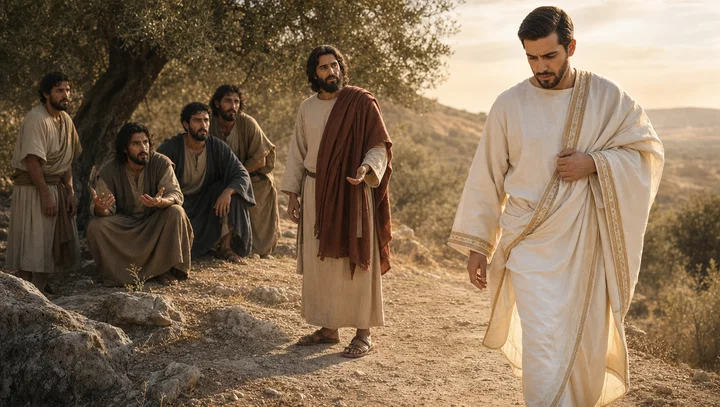
Jesus directs the rich inquirer to keep the commandments, including those listed here.
- Luke 18:20
Thou knowest the commandments, Do not commit adultery, Do not kill, Do not steal, Do not bear false witness, Honour thy father and thy mother.
Jesus names the commandments in the parallel encounter with the ruler.
- Exodus 20:12-16
Honour thy father and thy mother: that thy days may be long upon the land which the LORD thy God giveth thee.
Contains the commandments Jesus names to the young man.
- Romans 13:9
For this, Thou shalt not commit adultery, Thou shalt not kill, Thou shalt not steal, Thou shalt not bear false witness, Thou shalt not covet; and if there be any other commandment, it is briefly comprehended in this saying, namely, Thou shalt love thy neighbour as thyself.
Both texts quote commandments from the law, placing adultery before other commandments.
- James 2:10-11
For whosoever shall keep the whole law, and yet offend in one point, he is guilty of all.
Breaking one command makes a person a transgressor of the law.
- Matthew 19:21
Jesus said unto him, If thou wilt be perfect, go and sell that thou hast, and give to the poor, and thou shalt have treasure in heaven: and come and follow me.
Jesus tells him to sell, give to the poor, and follow him.
- Matthew 22:37-39
Jesus said unto him, Thou shalt love the Lord thy God with all thy heart, and with all thy soul, and with all thy mind.
keeping commandments means this love
- Exodus 20:8-11
Remember the sabbath day, to keep it holy.
This gives the Sabbath commandment within the moral code Jesus cites.
- Matthew 5:17
Think not that I am come to destroy the law, or the prophets: I am not come to destroy, but to fulfil.
Christ says he came not to destroy the law.
- Matthew 19:18-19
He saith unto him, Which? Jesus said, Thou shalt do no murder, Thou shalt not commit adultery, Thou shalt not steal, Thou shalt not bear false witness,
Jesus lists the same commandments to the young man.
- Deuteronomy 5:16-20
Honour thy father and thy mother, as the LORD thy God hath commanded thee; that thy days may be prolonged, and that it may go well with thee, in the land which the LORD thy God giveth thee.
These commandments parallel the ones Jesus cites.
- Matthew 19:17
And he said unto him, Why callest thou me good? there is none good but one, that is, God: but if thou wilt enter into life, keep the commandments.
The parallel account records Christ’s reply to the young man.
- Matthew 19:20
The young man saith unto him, All these things have I kept from my youth up: what lack I yet?
same spirit asking what is still lacking
- Leviticus 19:13
Thou shalt not defraud thy neighbour, neither rob him: the wages of him that is hired shall not abide with thee all night until the morning.
Both forbid defrauding others or withholding what is owed.
- Matthew 15:4
For God commanded, saying, Honour thy father and mother: and, He that curseth father or mother, let him die the death.
Both texts cite the command to honour father and mother.
- Mark 7:10
For Moses said, Honour thy father and thy mother; and, Whoso curseth father or mother, let him die the death:
Both texts cite the command to honour father and mother.
- Deuteronomy 4:13
And he declared unto you his covenant, which he commanded you to perform, even ten commandments; and he wrote them upon two tables of stone.
Identifies the commandments as ten.
- Matthew 5:21
Ye have heard that it was said by them of old time, Thou shalt not kill; and whosoever shall kill shall be in danger of the judgment:
Both texts cite the commandment against killing.
- Matthew 5:27
Ye have heard that it was said by them of old time, Thou shalt not commit adultery:
Both texts cite the commandment against adultery.
- Revelation 22:14
Blessed are they that do his commandments, that they may have right to the tree of life, and may enter in through the gates into the city.
Keeping the commandments is linked to the right to the tree of life.
Commentary
Each commentary is drawn from primary sources: the writings of Ellen G. White and Adventist pioneers and periodicals. Each commentary is separate. Its own words are not a quotation; follow the references to read the source passages.
Ellen G. White
34 sources
Christ spoke these words to a wealthy young ruler who came running and kneeling to ask what he must do to inherit eternal life, answering his question by pointing him to the commandments he already knew as the way to enter life.DA 518.1–3Ms 141, 1909, par. 9–12ST Mar 11, 1889ST Oct 28, 1908Ms 84, 1886, par. 24 The commandments named govern duty to others — faithfulness in marriage, respect for life and property, honesty without defrauding, and honor to parents — summed up as loving one's neighbor as oneself.DA 518.5DA 518.6RH Jan 12, 1905 Obedience to them is necessary for salvation because the law expresses God's character, yet knowing them means keeping them from the heart and not in outward observance only.COL 390.2–391.1DA 518.5DA 518.6ST Mar 11, 1889Ms 84, 1886, par. 24 The ruler's claim to have kept them from his youth was self-deceived, for outward keeping is not enough while covetous and selfish, and his plague-spot was love of riches more than God and neighbor.Lt 63, 1893, par. 22–252T 679.1–680.1ST Oct 28, 1908ST Oct 29, 1912COL 392.1 With pity Jesus exposed that lack by calling him to sell, give to the poor, take up the cross and follow Him, but he went away sorrowful, choosing earthly treasure over heavenly treasure and showing that many may desire heaven yet refuse its terms.Ms 58, 1896, par. 20CET 164.32T 679.1–680.1ST Oct 28, 1908ST Mar 11, 1889
The Ruler's Encounter
The verse belongs to the meeting with a wealthy young ruler who asks what he must do to inherit eternal life, wanting to become a disciple after being moved by loving welcome given to the children.DA 518.1–3Ms 141, 1909, par. 9–12ST Oct 28, 1908 He comes earnestly, running and kneeling with a sincere desire for eternal life.DA 518.1–3Ms 141, 1909, par. 9–12ST Oct 28, 1908 In that encounter he represents some whom the Lord is calling to engage in His service.Ms 141, 1909, par. 9–12
In another light he comes seeking eternal life in a spirit of self-righteousness and apparent righteousness, professing outward observance while his character remains unchanged.Lt 63, 1893, par. 22–25 His claim to have kept all from his youth is sincere yet outward only, covering a need for heart devotion, Christian goodness, and a humble and contrite heart.Lt 63, 1893, par. 22–25DA 519.2 Jesus answers his positive question with a positive answer, pointing him to his Father's commandments which he already knows as the requirement for entering life.Ms 141, 1909, par. 9–12ST Mar 11, 1889Ms 84, 1886, par. 24 Obedience to them is necessary for salvation, and keeping them gives life.ST Mar 11, 1889 Giving all human powers to God in this way does not unfit a person for this earth.Ms 84, 1886, par. 24
The commandments named govern duties to other people: faithfulness in marriage, respect for life and property, honesty and not defrauding, and honor for father and mother.DA 518.5DA 518.6RH Jan 12, 1905 They are summed up as love for neighbor as oneself.RH Jan 12, 1905 Christ's words test the ruler's sincerity and draw out how he regards Christ as good, whether he realizes he speaks to the Son of God, and what the true sentiment of his heart is.DA 518.4 The encounter is summed up as one thing thou lackest.DA 517.6
It opens the way to correct the idea that God's favor and reward can be earned by human works, exposing that even the disciples were not wholly free from a grasping, reward-seeking spirit.COL 390.1 Christ loved the young man, was drawn to him with longing, and saw ability and noble character that could have been devoted to saving souls as a preacher of righteousness.DA 519.2COL 392.2–393.2 The call offered companionship with Himself on the same complete consecration as the other disciples who had left all, requiring nothing greater than His own self-giving.COL 392.2–393.2 Judas came to Christ in that same self-righteous spirit, outwardly numbered with the disciples while selfish, covetous, and unpracticing in character.Lt 63, 1893, par. 22–25
Obedience That Gives Life
Obedience to the commandments is necessary for salvation and for entering eternal life, and keeping them gives life.DA 518.5DA 518.6ST Mar 11, 18892T 679.1–680.1ST Oct 28, 1908 The law expresses God's character, so its principles are to guide every action and bring the person into harmony with God.COL 390.2–391.1 Giving all human powers to God in obedience does not unfit a person for this earth, but gives a right hold on heaven to represent Christ's love, to pray in faith for those in need, and to be a blessing to others through intelligent knowledge of Him and His religion.Ms 84, 1886, par. 24
Knowing the commandments means keeping them from the heart and not in outward observance only.2T 679.1–680.1 A life of disobedience cannot truly comprehend their depth and significance.ST Oct 29, 1912ST Oct 22, 1894 The ruler's confident claim to have kept them all from his youth was self-deceived and did not mean he understood or truly kept God's law.Lt 63, 1893, par. 22–252T 679.1–680.1ST Oct 29, 1912ST Oct 22, 1894Lt 354, 1905, par. 27
Outward and merely legal keeping is not enough while close and covetous, tithing small things but neglecting weightier matters.COL 392.1ST Oct 28, 1908DA 523.21T 207.2DA 519.2 Obedience must enter the life and appear in the character, including true love for God and others, heart devotion, Christian goodness, and a humble and contrite heart conscious of the supreme love to be given to God and hiding its lack in the perfection of Christ.COL 392.1ST Oct 28, 1908DA 523.21T 207.2DA 519.2 True obedience requires economy without stretching economy into meanness, with the true spirit of sacrifice, generosity to the poor, and freedom from a rigid, watching spirit toward others.1T 207.2 The ruler lacked the very spirit and life of the commandments, and his need for deeper discernment drew longing to create it in him.COL 392.1ST Oct 28, 1908DA 519.2
The defect exposed was selfishness and covetousness as the plague-spot and inward idol of the heart.Lt 63, 1893, par. 22–25COL 392.1 He loved God's gifts more than the Giver, loved self and worldly gain, and his self-love and devotion to worldly gain were themselves transgressions of the law.ST Oct 28, 1908COL 392.1 His deficiency was failure to love his neighbor as himself, because selfish love of riches with plotting and striving for self and hoarding wealth would debar him from heaven.4T 49.3–50.1 Without unselfish love he was out of harmony with heaven and lacked what is needed to enter its kingdom.COL 392.1
Keeping the commandments from the heart therefore requires withdrawing affection from riches and transferring treasure to heaven by doing good with entrusted possessions, blessing the widow and fatherless, distributing to the needs of the poor, and being rich in good works, choosing the heavenly inheritance over the earthly.2T 679.1–680.1RH Jan 12, 1905ST Mar 11, 18894T 49.3–50.1 True keeping would have kept his possessions from growing so great, since loving God with all heart and mind and strength and loving neighbor as self cannot go with selfish accumulation.RH Jan 12, 19054T 49.3–50.1 Such distribution brings greater happiness and greater heavenly treasure with less earthly affection, and requires surrendering whatever competes with God to love and serve the needy as the commandments require.RH Jan 12, 1905ST Mar 11, 18894T 49.3–50.1
Surrender Tested and Refused
With pity and love the defect in his character was exposed by calling him to sell all he had and give to the poor and suffering, to take up the cross and follow a self-denying, cross-bearing life given for the salvation of men, with the promise of treasure in heaven and companionship with Himself.Ms 58, 1896, par. 202T 679.1–680.11T 207.2Lt 354, 1905, par. 27 Keeping the commandments did not excuse him from surrendering what stood between him and following Christ, for outward keeping while close and covetous is not enough.CET 164.3ST Mar 30, 18761T 207.2 True obedience requires economy without stretching economy into meanness, with the true spirit of sacrifice, generosity to the poor, and freedom from a rigid, fanatical, watching spirit toward others.1T 207.2
The terms given him were wise, though they seemed severe, and accepting and obeying them was his only hope of salvation.DA 520.2 His high position and possessions exerted a harmful influence on his character, and if cherished they would take God's place in his affections.DA 520.2 Withholding anything from God would weaken moral strength and effectiveness, because cherished worldly things become all-absorbing.DA 520.2
The further requirement to sell, give to the poor, and follow asked nothing more than had already been experienced in leaving riches and glory to become poor so that man through poverty might be made rich.4T 49.3–50.1 As the other disciples had left all to follow, the same complete consecration was required of him.COL 392.2–393.2 The call to follow offered companionship with the Saviour, not a sacrifice greater than self-giving itself.COL 392.2–393.2
The required sacrifice and care for the poor were the test of his obedience.Ms 58, 1896, par. 20Lt 354, 1905, par. 27 That final command to sell what he had and give to the poor and come follow presents in advance the great test applied at the final judgment, because the spirit of love and self-sacrifice is the touchstone of character that decides eternal life.Ms 58, 1896, par. 20 The command tests all professed followers and exposes whether they love riches more than God and neighbor and whether they are prepared for heaven.2T 680.2
In making that surrender he could receive the bread of life.Lt 354, 1905, par. 27 Eating flesh and drinking blood means having Christ as the life-giving current within the soul.Lt 354, 1905, par. 27
He went away very sorrowful because he had great possessions, choosing earthly treasure over heaven.CET 164.3ST Mar 11, 18894T 50.2 He valued his riches more than the heavenly treasure, loved earthly riches more than fellow men and the immortal inheritance, and loved gifts more than the Giver.CET 164.32T 679.1–680.1ST Oct 28, 1908 His wealth was to have been transferred to heaven by using it to bless others and do good, but he could not accept that condition.ST Mar 11, 1889 Claiming to keep the commandments is false when the world and its riches come before God, and choosing possessions meant refusing eternal life and giving the world his worship.ST Oct 28, 1908 He wanted heaven yet wanted to keep his wealth, and so renounced immortal life for the love of money and power, a miserable exchange.ST Mar 30, 18764T 50.2
His refusal shows that a person may desire heaven yet reject its conditions.DA 523.2 Outwardly keeping the commandments is not enough while lacking their very spirit and life, true love for God and others, for self-love and devotion to worldly gain are transgressions of the law exposing selfishness and the inward idol of the heart.COL 392.1 Without unselfish love he was out of harmony with heaven and lacked what was needed to enter its kingdom.COL 392.1COL 392.2–393.2 Knowing the commandments is not enough: obedience must enter the life and shape the character, including willingness to give all one has and is and to follow.DA 523.2DA 523.1
Following therefore calls for complete self-surrender, with nothing short of obedience acceptable, and whatever is cherished at the cost of moral integrity must be cut away.DA 523.2DA 523.4 What God has entrusted is to be used in His work, giving full strength to His service, which does not unfit a person for this earth but gives a right hold on heaven to represent love to the perishing, to offer prayer in faith for those in need, and to be a blessing to others through intelligent knowledge of Christ and His religion.DA 523.2Ms 84, 1886, par. 24
Many who profess to keep all the commandments do the same, holding wealth while claiming obedience, poorly returning love, and in danger of losing heaven without realizing it.4T 50.2 When the way is pointed out and the cost is counted, those who must sacrifice earthly riches and become rich in good works but refuse show by their works that they judge heaven to cost too much.2T 680.2 The greater the treasure laid up on earth, the harder it is to realize it is not one's own but only lent to be used for God's glory.2T 680.2
Sources
Pioneers and periodicals
58 sources
Jesus answered a earnest young ruler seeking eternal life by pointing him to the commandments he already knew, naming the duties toward others of the second table of the Ten Commandments.ST Mar 11, 1889ST Oct 28, 1908ST Feb 10, 1898RH Oct 10, 1865 Those named precepts are the existing moral law spoken at Sinai, still binding as a whole, so leaving the Sabbath and the first-table commands unnamed does not repeal or excuse them.RH Oct 10, 1865RH Jan 28, 1873ST Feb 27, 1912ST Dec 6, 1883 Obedience to that law is the way of life and necessary for entering life, yet it does not earn life as a prize but lives it in righteousness through childlike faith, for outward keeping in the letter alone cannot justify or sanctify.ST Mar 11, 1889RH Jul 29, 1909ST Sep 26, 1906RH Nov 6, 1900 The ruler claimed outward keeping from his youth and was morally upright, but he did not grasp the depth of the law, for his refusal to part with wealth proved covetousness and love of riches that put wealth before God as idolatry.ST Oct 28, 1908ST Aug 24, 1904ST Jan 22, 1880RH Mar 25, 1915 Keeping the commands toward others therefore still requires self-sacrificing discipleship in selling, giving to the poor, and following Christ with wealth held as a trust for good, since divided service grasping the world and heaven together Christ will not accept.RH Jul 6, 1916RH Mar 25, 1915ST Mar 24, 1881
Encounter Setting and Wording
The setting is Jesus' encounter with the rich young ruler who earnestly sought eternal life and assurance of immortality and wanted to become His disciple.ST Mar 5, 1902ST Oct 28, 1908ST Sep 26, 1906ST Aug 18, 1887 He came running to Jesus and kneeling before Him, sincerely concerned for his soul and eager to approach Christ.ST Sep 26, 1906ST Aug 18, 1887 He had been moved in part by Jesus' loving welcome of the children.ST Oct 28, 1908
In answer to what he must do to inherit eternal life, Jesus reminded him that he already knew the commandments and directed him to them.ST Mar 11, 1889ST Feb 10, 1898RH Oct 10, 1865RH Jul 10, 1860 He was told to keep God's commandments, His Father's commandments from the former dispensation, as necessary for salvation and entering into life.ST Mar 11, 1889RH Oct 10, 1865RH Jul 10, 1860 The account then continues with Jesus telling him to sell what he had, give to the poor, and follow Him.ST Mar 5, 1902
The commandments Jesus named are duties toward other people: not committing adultery, not killing, not stealing, not bearing false witness, not defrauding, and honoring father and mother.ST Feb 10, 1898 Faithfulness in marriage, respect for life and property, honesty, and honor for parents are included, with love of neighbor as self included in the reckoning.RH Jan 12, 1905ST Feb 10, 1898 In brief form the verse cites five commandments, the fifth through the ninth, that is the second table of the Ten Commandments.RH Nov 6, 1900ST May 30, 1878
The verse places the prohibition of adultery before killing and stealing, following the Septuagint arrangement, which explains why New Testament quotations do not always use the usual enumeration.ST Oct 24, 1895 In the first ten chapters of Mark the passage presents Jesus as a King whose character combines justice, love, humility, and respect for the rights of others.RH Oct 30, 1860 By pointing to the command not to commit adultery, the verse upholds the inviolable sanctity of marriage, with the histories of Abraham, Jacob, David, and Solomon standing as living chart lessons of the sorrow, disunion, jealousy, strife, and ruin that come from plural and mercenary unions and from every union not made holy by true unselfish love.ST Oct 27, 1898 The requirements Jesus gives the ruler in this account do not make explicit belief in Christ's deity a condition.ST Nov 23, 1915
Obedience and Eternal Life
Obedience to God's commandments, His Father's commandments, is necessary for salvation and for entering into life, for they are the standard of right and the way of life to which Jesus directed the young ruler when he asked what to do to inherit eternal life.ST Mar 11, 1889ST Oct 28, 1908RH Jul 6, 1916RH Jul 29, 1909 The commandments named are duties toward other people — faithfulness in marriage, respect for life and property, honesty, honor for father and mother — with love of neighbor as self included in the reckoning.RH Jan 12, 1905ST Oct 28, 1908 The ruler claimed to have kept these from his youth, but his keeping had not met the further condition Jesus required, to sell his possessions, give to the poor, use entrusted wealth to help others, and follow Him.RH Jan 12, 1905RH Jul 6, 1916RH Jul 29, 1909 His attachment to wealth kept him from loving and serving the needy as the commandments required, showing that commandment keeping calls for more than outward observance and requires surrendering whatever competes with God and deeper heart devotion and Christian goodness.RH Jan 12, 1905ST Oct 28, 1908
The commandments Jesus names come from the former dispensation and are the Ten Commandments, distinct from ceremonial laws; they are not a new law or a newly enacted code but the existing moral law already known that must be obeyed.RH Oct 10, 1865RH Jan 28, 1873RH Feb 1851 Jesus upheld these commandments as His Father's commandments and treated God's law as still binding, showing that the law of ten commandments had not been repealed and did not need to be re-enacted.RH Jun 24, 1852RH Oct 14, 1873 Keeping the commandments does not earn life as a prize at the end; life is present in the way of righteousness, with God's life flowing through the channel of His law, while outside that way human life is perverted.ST Sep 26, 1906 True obedience is possible only through childlike, submissive faith in God and His means of salvation, for without faith in Christ obedience remains outward, selfish, and self-righteous.ST Sep 26, 1906
Even claimed keeping cannot supply the justifying blood or the sanctifying power of Christ's perfect obedience, and without the faith of Jesus and the righteousness of God received by faith a person comes short of God's standard and cannot reach the full stature of moral character in God's sight.ST Sep 26, 1906RH Nov 6, 1900 Jesus' answer to keep God's commandments applies for all time because God's law is unchanging and never needs alteration.ST May 27, 1908 Keeping all the commandments from youth in the outward letter does not insure the kingdom of heaven, for the law must be kept in spirit and not in letter only, with the Spirit sought.RH Jan 8, 1867 The keeper who keeps in the letter only still lacks one thing, and that one small lacking thing is enough to deprive of a seat in the kingdom, for the most rigorous teaching, example, and outward observance is otherwise as sounding brass or tinkling cymbal, whereas children taken away before they learned to sin are surer of heaven because the one thing needful will not be found lacking in them.RH Jan 8, 1867
The verse's commandments belong to God's binding moral law, and violating even one makes a person guilty before that law and brings its penalty.ST Jul 22, 1880 The young man's outward obedience did not make his remaining sin unimportant, for his covetousness shut heaven against him, showing that a covetousness or other sin that causes less harm than another is still enough to shut heaven against the soul and exclude it.ST Jul 22, 1880
Law Remains Fully Binding
Jesus quoted enough of the commandments to identify the law He meant, directing the inquirer to the moral law, the Ten Commandments spoken at Sinai and recorded in Exodus 20, as the rule for life.RH Oct 26, 1911ST Feb 14, 1878ST Feb 27, 1912 His omission of the Sabbath commandment does not show it is no longer binding or set aside, just as His omission of commands against idolatry, images, and taking God's name in vain does not show those commands are no longer binding.RH Oct 26, 1911ST Feb 27, 1912 Omitting the first four would no more authorize idolatry or blasphemy than silence about the Sabbath gives permission to break it or means it is abolished.RH Oct 26, 1911ST Feb 27, 1912
Leaving out the fourth commandment does not mean the Sabbath was repealed or excluded, for the law remained in force as a whole and Jesus endorsed it as a whole.RH Oct 26, 1911ST Feb 27, 1912ST Dec 6, 1883 His call to follow Him cannot be used to exclude the Sabbath commandment.ST Dec 6, 1883 The parallel words, Thou knowest the commandments, emphasize that God's moral law is known and must be obeyed.ST May 30, 1878 That same law includes keeping the seventh day holy, so a heart cannot be right with God while knowingly neglecting any requirement.ST May 30, 1878
The young man's question about which commandments, being plural, shows he knew of distinct classes of commandments, so directing him to keep the commandments includes the moral code including the Sabbath.ST Feb 14, 1878 Keeping them means keeping them as a whole and not merely a part for eternal life.ST Feb 14, 1878 Jesus likely named precepts the ruler was especially transgressing, and the ruler's failure to love his neighbor exposed covetousness, a command Christ did not quote, showing that omission of a command does not make it optional.RH Oct 26, 1911
Ruler's Outward Keeping Exposed
The ruler answered that he had kept these commandments from his youth, and as far as he understood them he had tried to keep them.ST Jan 22, 1880RH Sep 4, 1866RH Dec 2, 1873 He had observed their letter and was morally upright, nominally a keeper who paid honest tithe, gave offerings, kept the Sabbath, and was regarded as ideal.ST Jan 22, 1880RH Mar 25, 1915 His claim revealed confidence in his own righteousness.RH Dec 2, 1873
That claim did not mean he understood or truly kept God's law or that his heart was right.ST Oct 29, 1912ST Oct 22, 1894ST Apr 15, 1880 He was self-deceived and did not grasp the depth and significance of the commandments, which a life of disobedience cannot truly comprehend.ST Oct 29, 1912ST Oct 22, 1894ST Aug 24, 1904 The test Jesus gave next revealed that he lacked self-devotion to God's glory and was ruled by selfishness, a deficiency that outweighed his outwardly good qualities and undermined his confidence in God's favor.ST Apr 15, 1880
Outward keeping had not freed him from attachment to wealth and status or overcome selfishness.ST Sep 26, 1906 His possessions stood between him and eternal life, and keeping the commandments outwardly, including honesty and honoring parents, did not mean he had overcome selfishness. His love of gain bound him more strongly than his desire for life, for he was unwilling to choose God and serve others above earthly riches.ST Sep 26, 1906
The test Jesus put him to showed he had not kept all the commandments, because to keep them is to love the Lord supremely and the neighbor as self.RH Sep 4, 1866 To keep them is to be willing to give goods to those in need, have treasure in heaven, and follow Jesus.RH Sep 4, 1866 Commandment keeping therefore calls for more than outward observance of faithfulness in marriage, respect for life and property, honesty, honor for parents, and love for neighbor as self; it requires surrendering whatever competes with God and using entrusted possessions to help others, sharing substance with those in need as wealth held in trust to be used as God directs.RH Jan 12, 1905
His refusal to sell, give to the poor, and follow Christ proved he was wedded to money and systematically breaking the very first commandment by placing wealth before and above God.ST Aug 24, 1904 Whatever is supreme in affection is god, and trusting in riches rather than God is idolatry that makes entering the kingdom hard.ST Aug 24, 1904 Claiming to keep God's commandments is false when the world and its riches come before God, for loving God's gifts more than the Giver exposes covetousness as ruling sin; choosing possessions over Christ meant refusing eternal life, giving the world worship, and proving eternal ruin.ST Oct 28, 1908RH Mar 25, 1915
Jesus loved him when He saw him, but that love did not save him or lead Jesus to overlook what he lacked, because his affection was centered on his possessions.RH Sep 4, 1866RH Jan 18, 1870RH Aug 15, 1871 Choosing earthly treasure over heavenly treasure meant refusing eternal life and giving the world his worship.ST Oct 28, 1908 Obedience to God's law cannot be excused by otherwise commendable conduct, for hearkening to God is better than sacrifice.RH Aug 15, 1871
Riches do not themselves exclude a person from salvation, but attachment to them does.ST Sep 16, 1889 A rich person must recognize the worthlessness of earthly things in comparison with God and place wealth at God's service.ST Sep 16, 1889 His riches became a stumbling block barring him from eternal life, and wealth could not deliver him in the day of divine wrath.ST Aug 24, 1904 A person may have an amiable character and appear to keep the commandments yet still lack what is needful and remain lost, for moral blamelessness and usefulness to the church do not by themselves make a person a Christian.RH May 18, 1876
Costly Discipleship Today
Keeping the duties toward others does not remove the further condition required for eternal life, for self-sacrifice remains: selling possessions, giving to the poor, taking up the cross, renouncing ownership for stewardship, and following Christ, which for this man was an absolute duty to loosen his affections from wealth.ST Mar 30, 1876RH Jul 6, 1916RH Jul 3, 1856RH Mar 25, 1915RH Dec 2, 1873 Outward keeping of those commandments is not enough, since God demands more than tithes, offerings, and Sabbathkeeping, and even one regarded as ideal, paying an honest tithe, giving to missions, and keeping the Sabbath, was still covetous at heart and proved eternally ruined by sadness and refusal.ST Mar 30, 1876RH Mar 25, 1915RH Dec 2, 1873 His claim to have kept them from youth revealed confidence in his own righteousness, but attachment to wealth kept him from giving himself fully to God, and he chose his possessions over the conditions for entering into life.ST Mar 30, 1876RH Jul 6, 1916RH Dec 2, 1873
Jesus, who loved him, prescribed what was necessary to overcome that failing, namely surrendering his property, all of it because his case required it. The listed commandments had not revealed his hidden selfishness, although he thought he had kept them, for covetousness stood between him and eternal life. That duty was not a private or unusually harsh exception for that young man, but a lasting Christian temper of renouncing attachment to the world and directing the heart toward heaven.RH Jul 3, 1856 It is therefore a duty for Christians generally, and a more agreeable demand cannot be chosen instead, for Christ gives a cross suited to the need and the one who will not bear it leaves sorrowful.RH Jul 3, 1856RH Jul 18, 1865
The same word still pleads in love, with heaven watching, with rich rulers and men of rank, station, wealth, and power today to regard God's laws, observe and do the whole, break mammon's snare, and not let mammon hold sway.RH Dec 31, 1908 Holy angels hover between as Christ stands face to face with the inquirer, yearning to draw him to follow in mercy's hour when a waiting universe watches the decision.RH Dec 31, 1908 Jesus would not accept discipleship on the ruler's terms of keeping his money while following, nor a divided aim of grasping the world with one hand and heaven with the other.ST Mar 24, 1881ST Dec 22, 1887 Half service of odds and ends and broken fragments is little better than no service and does not count as discipleship, for Christ demands leaving all and taking up the cross, asking all and best or nothing and making no compromise, even when influence and wealth are desperately needed.ST Dec 22, 1887
Wealth is a trust to be used as God directs to bless others and do good, transferring riches to heaven, and keeping the command to love neighbor as self would lead to sharing substance with those in need.ST Mar 11, 1889RH Jul 31, 1856 Riches are to serve those in need, not support luxury, vain indulgence, or worldly pleasure, and money spent as the Lord directs brings its reward.RH Jul 31, 1856ST Feb 14, 1884 Wanting to do as one pleases with money yet claim to give self to the Lord brings only shame and contempt, for estimating God's favors by the intrinsic value of offerings ends in loss of all hope of salvation through refusal of a judicious, unselfish investment of means.ST Feb 14, 1884 Clinging to earthly wealth can keep a person from heavenly treasure and leave that person among the lost instead of receiving eternal blessedness, illustrating how hardly the rich enter the kingdom, which astonished the disciples.RH Mar 25, 1915RH Dec 2, 1873
The command not to defraud condemns withholding other people's property, including shutting them out of property in which they have an investment, which professed religious holiness does not excuse.RH May 20, 1858 The commandments are part of a plain gospel that must reach the heart, including the hearts of wealthy church members who give liberally, since Jesus addressed a wealthy man directly.RH Feb 3, 1910 Otherwise commendable conduct does not excuse disobedience to God's law, for hearkening to God is better than sacrifice.RH Jul 31, 1856RH Aug 15, 1871 Inheriting eternal life requires more than outward keeping, even when one believes he has done all he could, for love does not overlook what is lacked and life must be devoted to God.RH Jul 31, 1856RH Aug 15, 1871
Sources