Mark 10:21
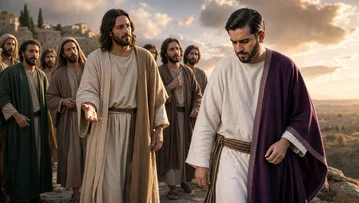
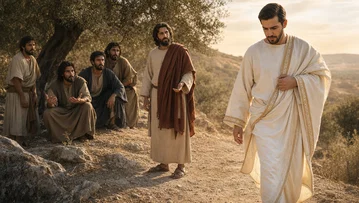
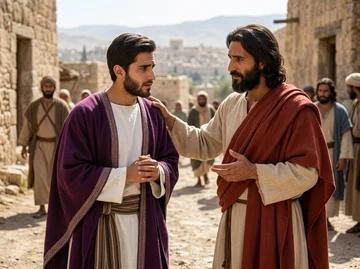
Then Jesus beholding him loved him, and said unto him, One thing thou lackest: go thy way, sell whatsoever thou hast, and give to the poor, and thou shalt have treasure in heaven: and come, take up the cross, and follow me.
Translations
Then Jesus beholding him loved him, and said to him, One thing you lack: go your way, sell whatever you have, and give to the poor, and you shall have treasure in heaven: and come, take up the cross, and follow me.
King James Version, KJV Cambridge Paragraph Bible
Then Jesus beholding him loved him, and said unto him, One thing thou lackest: go thy way, sell whatsoever thou hast, and give to the poor, and thou shalt have treasure in heaven: and come, take up the cross, and follow me.
Then Jesus beholding him loved him, and said to him, One thing thou lackest: go, sell whatever thou hast, and give to the poor, and thou shalt have treasure in heaven; and come, take up the cross, and follow me.
Revised Version, American Standard Version
And Jesus looking upon him loved him, and said unto him, One thing thou lackest: go, sell whatsoever thou hast, and give to the poor, and thou shalt have treasure in heaven: and come, follow me.
And Jesus having looked upon him, did love him, and said to him, 'One thing thou dost lack; go away, whatever thou hast — sell, and give to the poor, and thou shalt have treasure in heaven, and come, be following me, having taken up the cross.'
And Jesus looking upon him loved him, and said to him, One thing lackest thou: go, sell whatever thou hast and give to the poor, and thou shalt have treasure in heaven; and come, follow me, [taking up the cross].
And, Jesus, looking at him, loved him, and said unto him—One thing, unto thee, is wanting;—Withdraw! whatsoever thou hast, sell, and give unto [the] destitute,—and thou shalt have treasure in heaven; and come! be following me.
Jesus looked at him, loved him, and said to him, “ There is one thing you lack: Go, sell everything you own and give to the poor, and you will have treasure in heaven. Then come, follow Me.”
Jesus looked at him, loved him, and said to him, “ There is one thing you lack: Go, sell everything you own and give to the poor, and you will have treasure in heaven. Then come, take up the cross, and follow Me.”
Jesus looking at him loved him, and said to him, “ One thing you lack. Go, sell whatever you have and give to the poor, and you will have treasure in heaven; and come, follow me, taking up the cross.”
And Jesus, looking on him and loving him, said, There is one thing needed: go, get money for your goods, and give it to the poor, and you will have wealth in heaven: and come with me.
And Iesus looked vpon him, and loued him, and sayde vnto him, One thing is lacking vnto thee. Go and sell all that thou hast, and giue to the poore, and thou shalt haue treasure in heauen, and come, follow me, and take vp the crosse.
Douay-Rheims (Challoner revision)
And Jesus looking on him, loved him, and said to him: One thing is wanting unto thee: go, sell whatsoever thou hast, and give to the poor, and thou shalt have treasure in heaven; and come, follow me.
Pictures
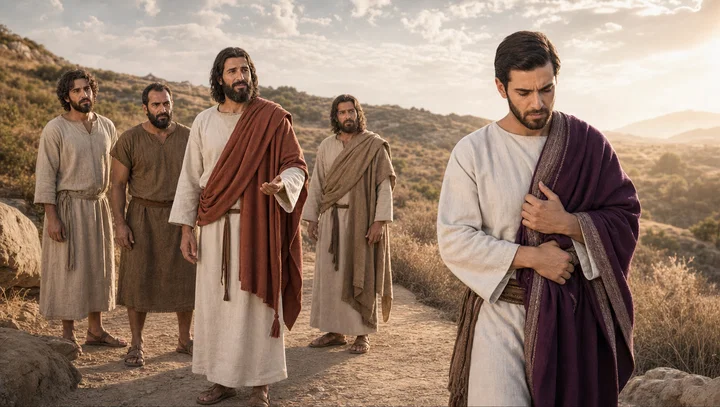
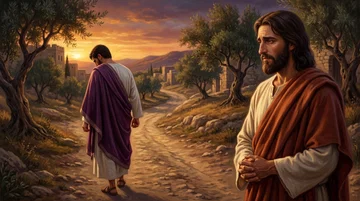
Cross-references 20 of 35
- Matthew 19:16-22
And, behold, one came and said unto him, Good Master, what good thing shall I do, that I may have eternal life?
Parallel account of Jesus’ command to give up riches and follow him.
- Luke 18:22-23
Now when Jesus heard these things, he said unto him, Yet lackest thou one thing: sell all that thou hast, and distribute unto the poor, and thou shalt have treasure in heaven: and come, follow me.
The parallel encounter records Jesus’ call to give to the poor and the ruler’s sorrowful response.
- Matthew 6:19-21
Lay not up for yourselves treasures upon earth, where moth and rust doth corrupt, and where thieves break through and steal:
Jesus calls the ruler to choose heavenly treasure over earthly possessions and turn his heart from wealth.
- Luke 12:15
And he said unto them, Take heed, and beware of covetousness: for a man’s life consisteth not in the abundance of the things which he possesseth.
Both warn against covetousness and valuing possessions over God.
- 2 Corinthians 8:9
For ye know the grace of our Lord Jesus Christ, that, though he was rich, yet for your sakes he became poor, that ye through his poverty might be rich.
Christ became poor for others, exemplifying the ruler’s surrender.
- Luke 14:33
So likewise, whosoever he be of you that forsaketh not all that he hath, he cannot be my disciple.
Both make forsaking all possessions a condition of following Christ.
- Matthew 16:24
Then said Jesus unto his disciples, If any man will come after me, let him deny himself, and take up his cross, and follow me.
Following Jesus requires self-denial and taking up the cross.
- Matthew 19:16-20
And, behold, one came and said unto him, Good Master, what good thing shall I do, that I may have eternal life?
The young man asks about eternal life and what he still lacks.
- Luke 18:23
And when he heard this, he was very sorrowful: for he was very rich.
The ruler’s sorrow reveals his attachment to wealth.
- Exodus 20:12-17
Honour thy father and thy mother: that thy days may be long upon the land which the LORD thy God giveth thee.
Jesus directs the man to the commandments he says he has kept.
- Hebrews 12:2
Looking unto Jesus the author and finisher of our faith; who for the joy that was set before him endured the cross, despising the shame, and is set down at the right hand of the throne of God.
Following Christ means accepting the cross in hope of the joy set before us.
- 1 Timothy 6:9-10
But they that will be rich fall into temptation and a snare, and into many foolish and hurtful lusts, which drown men in destruction and perdition.
The desire for riches ensnares people and leads them away from faith toward ruin.
- Mark 8:34
And when he had called the people unto him with his disciples also, he said unto them, Whosoever will come after me, let him deny himself, and take up his cross, and follow me.
Both connect following Christ with taking up the cross.
- Matthew 19:23-24
Then said Jesus unto his disciples, Verily I say unto you, That a rich man shall hardly enter into the kingdom of heaven.
Jesus warns that riches make entering the kingdom difficult.
- Luke 9:23
And he said to them all, If any man will come after me, let him deny himself, and take up his cross daily, and follow me.
Following Jesus entails self-denial and taking up the cross.
- Galatians 6:14
But God forbid that I should glory, save in the cross of our Lord Jesus Christ, by whom the world is crucified unto me, and I unto the world.
Taking up the cross entails being dead to worldly riches.
- 1 Timothy 6:18-19
That they do good, that they be rich in good works, ready to distribute, willing to communicate;
Generous giving lays up treasure for the life to come.
- Matthew 6:24
No man can serve two masters: for either he will hate the one, and love the other; or else he will hold to the one, and despise the other. Ye cannot serve God and mammon.
Serving wealth conflicts with serving God.
- Luke 5:28
And he left all, rose up, and followed him.
Both describe leaving everything to follow Jesus.
- Luke 12:33
Sell that ye have, and give alms; provide yourselves bags which wax not old, a treasure in the heavens that faileth not, where no thief approacheth, neither moth corrupteth.
Both texts call for selling possessions, giving to the poor, and gaining heavenly treasure.
Commentary
Each commentary is drawn from primary sources: the writings of Ellen G. White and Adventist pioneers and periodicals. Each commentary is separate. Its own words are not a quotation; follow the references to read the source passages.
Ellen G. White
47 sources
Jesus looked with love on the wealthy ruler who came sincerely seeking eternal life yet trusting his own righteousness, and told him he lacked one thing and must sell all he had, give to the poor, take up the cross and follow Him to have treasure in heaven.DA 518.1–3Ms 141, 1909, par. 9–12DA 518.6DA 518.5ST Oct 28, 1908 That one lack was wholehearted love for God and for his neighbor, for his affections were fixed on riches that had become his idol and god, so that outward keeping of the commandments was false and incomplete without their spirit and life.Lt 3, 1897, par. 6–10ST Mar 11, 1889DA 519.4COL 392.1 The command was a loving test reaching the heart to loosen his hold on earthly treasure and transfer it to heaven, calling him to surrender self and all to God and walk Christ's self-denying path as His companion and coworker in saving others.Lt 63, 1893, par. 22–25ST Mar 11, 1889COL 392.1DA 523.2 He went away sad and grieved because he loved wealth, standing and the seen world more than Christ and eternal life, choosing to keep his possessions rather than risk all for the unseen.Lt 63, 1893, par. 22–25CET 164.3ST Oct 28, 19084T 50.24T 49.3–50.1 The same call tests every soul who would be a disciple, requiring removal of whatever cherished thing takes God's place and using entrusted means for the poor and God's work, since love expressed in self-sacrifice is the touchstone of character and obedience is the only hope of salvation.Ms 141, 1909, par. 9–12Ms 58, 1896, par. 20CET 26.2–3LSEGW 34.3–4
Encounter Setting and Context
The saying belongs to Jesus' meeting with a ruler of great possessions and heavy responsibility who was drawn to Him and sincerely desired to become His disciple and inherit eternal life.DA 518.1–3ST Oct 28, 1908 He thought highly of his own righteousness yet remained unsatisfied and conscious that he lacked something.DA 518.5ST Oct 28, 1908 He hoped Jesus would bless him and meet his deep need as He had blessed the little children, and seeing that tenderness toward the children had stirred his love for the Saviour.DA 518.5ST Oct 28, 1908
The meeting includes Jesus' question about being called good, which tested whether the ruler recognized Him as the Son of God and laid bare his true view of Him.DA 518.4 He had addressed Jesus only as an honored teacher, without recognizing Him as the Son of God.DA 518.4COL 390.2–391.1 Goodness belongs to God alone, so to acknowledge Jesus as good is to receive Him as God's Son and representative.COL 390.2–391.1 His direction to keep the commandments sets harmony with God's law as the condition of eternal life, whose principles must guide every action.COL 390.2–391.1
The encounter stands just before the parable of the laborers, which sets forth God's free grace against the idea that divine favor must be earned.COL 390.1 In that setting it exposes and corrects the grasping, mercenary spirit that seeks the reward of the righteous by one's own works.COL 390.1 That spirit was found in Jewish worship and was not yet removed from the disciples, and it is confronted in order to establish right principles of grace.COL 390.1
Jesus Love and Insight
Jesus looked into the ruler's face as if reading his life and searching his character and heart, and beholding him loved him even while faithfully exposing the lack that kept him from discipleship.Lt 63, 1893, par. 22–25DA 518.6DA 519.1ST Oct 28, 19084T 49.3–50.1 That searching love named the defect, the cherished idol and plague-spot of selfishness and covetousness that threatened his hope of heaven.Lt 63, 1893, par. 22–25DA 519.1DA 519.4ST Oct 28, 19084T 49.3–50.1 The call to sell what he had and give to the poor and take up the cross and follow was given because attachment to wealth stood in the way of wholehearted discipleship.DA 518.6DA 519.4ST Oct 28, 1908
That demanding word was itself an act of love, hungering to give him peace and grace and joy that would materially change his character.DA 519.1 What was to be supplied was humble and contrite acknowledgment of lack, dependence on Christ's perfection, and the humility and goodness needed for transformation, with wholehearted devotion putting God first.ST Oct 28, 1908DA 519.2 Outward keeping of the commandments could not replace that inward devotion and Christian goodness.DA 519.2
Jesus wanted him to become a coworker in the work of salvation, reflecting God's likeness and growing in Christ's presence under Christ's guidance through surrender of self.DA 519.3 United with Christ his abilities could make him a power for good, with character developed and set apart for God's service.DA 519.3 He was even seen as one who could become a preacher of righteousness if he gave himself wholly to God, and giving himself to Christ would have changed the course of his future, for Christ's love was awakening love in his heart.COL 392.2–393.2DA 519.3 In place of possessions he was offered the joy of companionship and service with Christ.COL 392.2–393.2
Christ longed to draw him back after he chose earthly riches over heavenly treasure and made possessions his god.Lt 3, 1897, par. 14–16 Yet He would not accept an unwilling sacrifice, since following Him requires the heart's full consecration and obedience to God's will, accepting self-denial rather than keeping wealth while claiming to follow.Lt 3, 1897, par. 14–16
The Vital Lack Exposed
The one vital lack was love for God in the soul, a want that would prove fatal unless supplied.DA 519.4ST Oct 28, 1908 Supreme love of self had to be surrendered, for indulged selfishness would strengthen until it corrupted the whole nature.DA 519.4ST Oct 28, 1908 What was missing was wholehearted devotion to God, a humble and contrite heart putting God first.ST Oct 28, 1908 The command exposed that riches and worldly standing were loved more than God, so the claim to keep the law was false, and eternal life was desired without accepting its cost, choosing visible earthly advantage over heavenly treasure.
That same lack was love for neighbor expressed in action, the missing link that left all other virtues incomplete.Lt 3, 1897, par. 6–10 He did not love his neighbor as himself, and he lacked the love for God and for people that is the spirit and life of the commandments.COL 392.14T 49.3–50.1 Self-love and worldly gain left him out of harmony with heaven and without what is needed to enter God's kingdom.COL 392.1 His selfish love of riches, if not removed, would debar him from heaven.4T 49.3–50.1
His possessions had become an idol and his god.Lt 3, 1897, par. 6–10ST Mar 11, 18892T 679.1–680.1 His affections were fixed on worldly treasure and thereby withdrawn from God.4T 49.3–50.1 He loved riches and worldly standing and God's gifts more than their Giver, putting the world first in his affections so that the world became the object of his worship.ST Oct 28, 1908 He could not truly keep the commandments in spirit while the world held first place, and he chose love of riches over his neighbor and the eternal inheritance.2T 679.1–680.1ST Oct 28, 1908
His claim to have kept the commandments from his youth was made in self-righteousness and self-deception and was false.Lt 63, 1893, par. 22–25 Outward keeping still leaves a covetous heart, and he did not understand or truly keep them in their spirit and depth.ST Oct 29, 1912ST Oct 22, 18941T 207.2 His sorrowful departure revealed that his life did not reflect the depth and significance of the law.ST Oct 29, 1912ST Oct 22, 1894 Respectable moral character and outward goodness could coexist with this decisive lack, and could not make up for failing to answer God's claims and neglecting salvation.4T 505.1
The words were a test reaching into life and character, not merely outward or legal compliance.DA 523.2 The requirement touched the plague-spot of the heart, which was selfishness and covetousness hidden beneath outward keeping.Lt 63, 1893, par. 22–25COL 392.1 It presented the choice between heavenly treasure and worldly greatness, promising holiness and sonship with God if self were yielded and the will given into Christ's control.DA 519.5 Those who would belong to God's kingdom must give themselves and what they possess to God, and turning away from these conditions is saying no to Christ.DA 523.2
Meaning of the Command
Jesus told him to go his way, sell whatever he had, give to the poor, receive treasure in heaven, take up the cross, and follow Him.Ms 141, 1909, par. 9–12Lt 3, 1897, par. 6–10DA 518.6 The call required loosening his hold on riches, transferring his affections from earthly to heavenly treasure, and valuing the eternal inheritance above visible earthly advantages.Ms 141, 1909, par. 9–12Lt 3, 1897, par. 6–10 Unless that transfer took place his riches would overcome him and corrupt what was good in him, for his wealth had become an idol standing in the way of wholehearted discipleship.Lt 3, 1897, par. 6–10DA 518.6
Earthly possessions belong to God, who lends means and talents to people and entrusts wealth to them to use for His glory.Lt 3, 1897, par. 11–13ST Mar 11, 1889RH Jan 12, 19052T 680.2 They are entrusted to help the poor, relieve suffering, and advance His kingdom, so giving to the needy is no more than returning what is His.Lt 3, 1897, par. 11–13RH Jan 12, 1905 Withdrawing the affections from riches to do good and become rich in good works gathers imperishable treasure secure with God.Lt 3, 1897, par. 11–13ST Mar 11, 18892T 680.2 That distribution to the necessities of the poor would have brought greater happiness, greater heavenly treasure, and less earth on which to place the affections.4T 49.3–50.1
The command did not specify every detail, and he could have asked for further counsel about how to carry it out.Lt 3, 1897, par. 11–13 True keeping of the commandments would not have left such great hoarded wealth while plotting and striving for self, since that cannot stand with loving God with all heart and mind and strength and neighbor as self.4T 49.3–50.1 True economy is not meanness, and tithing small details like mint and rue while neglecting weightier matters is not the true spirit of sacrifice acceptable to God.1T 207.2 That spirit gives freely instead of withering under a rigid, fanatical, fault-watching course imposed on others.1T 207.2
Taking up the cross and following means imitating Jesus' self-denying, cross-bearing life and walking the path of self-denial.ST Mar 11, 1889ST Mar 11, 1889DA 519.5 It means yielding self and giving the will into Christ's control and guidance.DA 523.2DA 519.5 Surrendering riches was not greater than Christ's own self-emptying in leaving riches and glory to become poor that through His poverty people might be made rich, for He had left everything for humanity's salvation and gave His riches and life to accomplish it.ST Mar 11, 18894T 49.3–50.1COL 392.2–393.2 It was the same consecration as the disciples who left everything to follow Him.COL 392.2–393.2
In place of possessions Jesus offered fellowship and companionship and service with Him, with the joy of seeing people saved.COL 392.2–393.2 He offered holiness and the privilege of becoming a son of God and coheir with Christ and heir with Him, and of living by Christ within the soul as its circulating current of life, the bread of life.Lt 3, 1897, par. 11–13ST Oct 28, 1908DA 519.5 Obeying was his only hope of salvation and the only course toward a perfected Christian character, for his high position and possessions were drawing his affections away from God.DA 520.2ST Oct 28, 1908 Holding onto anything, much or little, that competes with God and takes His place in the affections weakens moral strength and effectiveness and corrupts the whole person.DA 520.2ST Oct 28, 1908
The demand was a test of obedience reaching into life and character, not merely outward or legal compliance.DA 523.2 Those who would belong to God's kingdom must give themselves and what they possess to God, accepting Christ's work and using their means to advance it, and turning away from these conditions is saying no to Christ.DA 523.2DA 523.4 All that is possessed should be consecrated to God in response to immeasurable love and sacrifice as seen from Calvary, and clinging to worldly treasure instead is selfishness and refusal to sacrifice for His work.4T 119.3–120.1 Self-surrender is essential, because anything held onto that would corrupt the whole person must be removed, and nothing less than obedience is acceptable.DA 523.2DA 523.4
Response and Universal Application
When the lack was exposed the ruler became sad and went away grieved and sorrowful because he had great possessions to which he was closely attached.Lt 63, 1893, par. 22–25CET 164.3ST Sep 2, 1886ST Mar 30, 1876DA 520.4 He refused the offer of fellowship and eternal life rather than give up earthly treasure for heavenly treasure, choosing wealth, money and power, social standing and the world with its visible advantages over Christ as leader.Lt 63, 1893, par. 22–25ST Oct 28, 1908ST Sep 2, 18864T 50.2DA 520.4 He valued his riches and standing among people more than the heavenly treasure and more than truth and eternal life, loving worldly wealth more than Christ and lacking the spirit of sacrifice required for eternal life.CET 164.3ST Oct 28, 1908ST Sep 2, 1886ST Mar 30, 1876 Giving up visible earthly wealth for unseen treasure in heaven seemed too great a risk, so giving up the seen for the unseen chilled his desire.CET 164.3ST Mar 30, 1876DA 520.4
He wanted heaven but chose to keep his wealth, renouncing immortal life for money and power.4T 50.24T 49.3–50.1 Riches were honor and power to him so such disposal seemed an impossibility, which warns that attachment to riches can turn people away from Christ's call even when they profess to keep God's commandments.4T 50.24T 49.3–50.1 The danger to the avaricious is that the more he gains the harder generosity becomes until diminishing wealth feels like parting with life, and the immortal reward is turned from to retain and increase earthly possessions.4T 49.3–50.1
Judas was displeased with this condition of discipleship, thinking the ruler should have been welcomed among believers because his wealth could support the cause.DA 719.3 He believed that as a counselor the ruler could offer plans to benefit the church, though his principles and methods differed from Christ's.DA 719.3
The command presents the great test used at the final judgment, that the spirit of love and self-sacrifice toward the needy is the touchstone of character because no one can love God without loving his brother.Ms 58, 1896, par. 20 Following Christ requires more than outward obedience, for God's law must shape life and character beyond outward keeping, and a person must surrender all they have and are to God.Ms 58, 1896, par. 20 Those who give back to the Lord what is His store up heavenly treasure, and their reward includes the joy of seeing people saved, while refusing that surrender means turning away from His offer.
The call applies to all who would become disciples and to every soul, for they must obey and surrender whatever would keep them from following Him.Ms 141, 1909, par. 9–12CET 26.2–3DA 523.4 The young man stands for some now whom the Lord is calling to engage in His service, and seeing Jesus requires a wholehearted response of surrendering everything to come to Him.Ms 141, 1909, par. 9–12CET 26.2–3LSEGW 34.3–4 Self-surrender is essential because anything cherished that would take God's place and corrupt the whole person must be removed, and nothing less than obedience is acceptable, since the ruler's only hope was to follow the remedy of surrendering what stood between him and faithful discipleship.DA 523.4Ms 43, 1900, par. 48 The same danger applies to people who use their means in God's cause only on their own terms, for wealth and self-will can keep them from the life that is with God, while investing means where the Lord's blessing can make them fruitful is an opportunity to do good and a share in God's work and the use of means to advance it.Ms 43, 1900, par. 49
Sources
Pioneers and periodicals
85 sources
Jesus meets an earnest rich young ruler who runs to Him, kneels, and asks what he must do to inherit eternal life, still lacking assurance despite outward commandment-keeping.ST Oct 28, 1908ST Sep 26, 1906ST Aug 18, 1887 Beholding him with love, compassion, and disinterested benevolence, He tells him the one thing he still lacks is to sell all he has, give to the poor, receive treasure in heaven, take up the cross, and follow Him.RH Jul 3, 1856RH Oct 30, 1860ST Feb 10, 1898ST Jan 22, 1880RH Jul 15, 1858 That one lack is wholehearted love for God, humble contrite devotion, inward obedience from the heart, and abiding fellowship that turns from self-seeking to freely giving.RH Sep 2, 1902ST Apr 15, 1880RH Jan 8, 1867 The command exposed that his wealth had become an idol standing between him and eternal life, showing he trusted riches rather than God and had failed to love his neighbor as himself by relieving the poor with goods entrusted to him for God's glory.ST Aug 24, 1904RH Jan 12, 1864 Selling everything was the particular form of the test for him rather than a literal rule that every Christian must sell all, yet it still presses the same entire consecration on all, requiring surrender of cherished self-enjoyment and unwilling crosses, laying up secure heavenly treasure by generous self-sacrificing giving, and following Jesus in His self-denying life.RH Jul 24, 1856RH Jul 10, 1856RH Jul 24, 1856RH Jul 31, 1856RH Jul 10, 1856
Encounter and Its Setting
Mark 10:21 belongs to the account of a rich young ruler deeply concerned about salvation and eternal life, who earnestly comes to Jesus, runs to Him, kneels, and asks what good thing he must do to receive and inherit eternal life.ST Sep 26, 1906ST Aug 18, 1887 He sincerely wanted to become Jesus' disciple, yet though he prized his own righteousness and was a worthy man of high moral attainments, he was not satisfied and felt he lacked something and needed a further step to have assurance.ST Oct 28, 1908ST Aug 18, 1887 Seeing Jesus' tenderness toward the children had stirred his love for the Saviour and his recognition of spiritual need that led him to seek what he must do.ST Oct 28, 1908 The encounter occurs on Jesus' final journey to Jerusalem, after which He tells His disciples about the future that they fail to grasp.ST Apr 23, 1896
Jesus' beholding gaze upon the man expresses love, compassion, and disinterested benevolence rather than selfish ambition.RH Oct 30, 1860RH Jul 15, 1858 It presents Him as a perfect King whose power is joined with love and whose respect extends to the least as well as the greatest, with a love that reaches the young and supports bringing children to Him.RH Oct 30, 1860ST His attentive look after hearing the ruler's favorable account of himself and observing his manner was an expression of care.RH Jul 15, 1858 He loved the man because he was lovely and promising, free from many leading sins of his age and sincere in wanting to be saved, as shown by his own words.RH Sep 4, 1866
The moment is a drama in which holy angels hover between and ministering angels lend influence while Christ Himself pleads, gazing with much love and yearning to break the powerful snare of base mammon and draw the ruler by His touch.RH Dec 31, 1908 A universe awaits the turn as He commands him to sell his possessions and come follow Him, with the promise that then all is well.RH Dec 31, 1908 Yet the ruler turns away sad, finding the price desired yet too great to pay.RH Dec 31, 1908
Love and the One Lack
Jesus looked on the man with love while telling him that keeping the commandments had not removed what he still lacked, and he called him to sell his possessions, give to the poor, gain treasure in heaven, take up the cross, and follow him.ST Mar 5, 1902RH Jul 3, 1856ST Feb 10, 1898ST Jan 22, 1880RH Feb 3, 1910 That call made sacrifice for Christ part of discipleship and inheriting eternal life, not an optional path to exceptional perfection, and it did not spare even the wealthy from the gospel's demands.ST Mar 5, 1902RH Jul 3, 1856RH Feb 3, 1910 It was a severe test that exposed attachment to wealth and called him to put love of God and neighbor above possessions, trusting God rather than relying on riches.ST Feb 10, 1898ST Jan 22, 1880 Obedience here is response of surrender rather than a way to earn eternal life, directing the man from earthly wealth to heavenly treasure.ST Mar 5, 1902ST Feb 10, 1898 The same demand presses rich people in every age to renounce self-enjoyment of wealth, whose difficulty of entering God's kingdom can be overcome only through God's grace.RH Jul 3, 1856
The words about the one lack expose spiritual need, blindness, and self-righteousness, bringing contrition for sin, confession, and faith in Christ when truth reaches the conscience.ST Sep 30, 1880ST Sep 30, 1880ST Mar 4, 1889 That exposure can move the heart to recognize sin and turn to Christ, serving as warning that hearers lack what matters for their souls.ST Sep 30, 1880ST Sep 30, 1880 When confronted lovingly with what is still lacking, a person may become sorrowful rather than pleased.ST Mar 4, 1889
The one thing lacking is not a little thing to be turned carelessly away from, for it profits nothing to gain the whole world if one loses his own soul.RH Jun 4, 1867 Even to be honored highly by men, with brow laden with laurels and all the world proclaiming praise, avails nothing without it.RH Jun 4, 1867 Such honors, like those who bestow them, quickly pass down to a forgotten grave, and he who wears them will not linger, for the form so noble and proud today may tomorrow be given to the earth-worm for a banquet.RH Jun 4, 1867
The vital lack was love for God in the heart, wholehearted devotion, a humble and contrite heart, and self-devotion to God which is the essence of true religion.ST Oct 28, 1908ST Apr 15, 1880 Supreme love of self had to be surrendered, otherwise selfishness would grow and corrupt character and make other virtues insufficient and undermine confidence in God's favor.ST Apr 15, 1880 Jesus wanted to give peace, grace, and joy that would change character, calling the man to surrender self, place himself under Christ's guidance, become a coworker in salvation, reflect God's likeness, and become a power for good united with Christ. His command to give up possessions and follow exposed that the ruler loved riches and worldly standing more than God, so his claim to keep God's law was false, for he wanted eternal life but would not accept its cost, choosing visible earthly advantages over heavenly treasure and turning away from Christ. Obeying would have meant choosing heavenly treasure, yielding the will to Christ, and receiving God's love with the humility and goodness needed for a changed character.ST Oct 28, 1908
The lack was more than failure in a particular act of charity; it was lack of abiding fellowship with God, which turns a person from self-seeking toward freely giving to others.RH Sep 2, 1902 Life in communion with God gives itself for others, so treating gifts and possessions as private property rather than as entrusted means of service shows that this life has not taken hold.RH Sep 2, 1902 The command to sell and give exposed the inward, possessive way of life and called him to take up the cross and follow Christ.RH Sep 2, 1902
The missing thing was obedience from the heart, with the Spirit, for the man had kept the law in its letter but not its spirit.RH Jan 8, 1867 Without inward obedience, even strict religious practice and outward keeping of the commandments leave a person lacking what is essential and cannot secure a place in God's kingdom.RH Jan 8, 1867 Jesus loved the inquirer who asked about the way of life, but that love did not save him because his own love was centered on his possessions.RH Jan 18, 1870
Meaning of the Command
The command lays down unwilling sacrifice to be surrendered — sell whatever is held, give to the poor, receive treasure in heaven, take up the cross and follow — as the condition of discipleship and eternal life, not as an optional path to exceptional perfection.RH Jul 6, 1916RH Jul 3, 1856RH Jul 3, 1856 Attachment to great possessions keeps the seeker from meeting that condition, while willing self-sacrifice would open a share in glory and eternal life.RH Jul 6, 1916 The promise of heavenly treasure shows earthly riches to be of little worth beside it and expresses true devotion to God, so refusal now is as unreasonable as the sorrowful refusal then.RH Jul 3, 1856 The demand was given for the excellence of the duty itself, not merely to display authority or to impose unusually hard terms.RH Jul 3, 1856
Selling everything was the particular form required of that man, not a literal rule that every Christian must sell all.RH Jul 24, 1856RH Jul 10, 1856RH Jul 31, 1856 The abiding duty is to surrender the self-enjoyment of wealth and to practice heavenly affection, devotion to God, and disregard of worldly riches, using means for God's purposes especially in charity and relief of need.RH Jul 24, 1856RH Jul 10, 1856 That renunciation rises higher than merely giving up an estate when keeping it would require dishonesty or compromise.RH Jul 10, 1856 Wealth is therefore not to be spent on self-indulgence or worldly pride but renounced in following Christ, with all directed to help the poor.RH Jul 24, 1856RH Jul 31, 1856
The demand was no new commandment requiring everyone to become poor in order to gain eternal life; it exposed that wealth had taken God's place and that the ruler could not give up his false god even after his danger was revealed.ST Aug 18, 1887 It stands as a common condition of entering Christianity for every age, not a special demand limited to that man or to the first Christians.RH Jul 3, 1856RH Jul 24, 1856RH Jul 10, 1856 It still presses on rich people now, on rulers and people of rank, station, wealth and power, calling present disciples to have no more to do with worldly enjoyments than those chosen on earth and to show the same devotion and heavenly affection.RH Jul 24, 1856RH Jul 10, 1856 A life whose main actions cannot rightly be commended to God or carried out with the help of His Holy Spirit is unholy.RH Jul 24, 1856
Treasure in heaven is the promised reward for generosity to the needy, worth more than earthly wealth.ST Sep 26, 1906RH Nov 14, 1854 Worldly wealth offers only brief uncertain life, but using it in God's cause lays up secure treasure joined with eternal life. The call offered relief from possessions that could not satisfy, the blessing of helping the needy, secure heavenly treasure, and companionship with Jesus, yet the ruler valued wealth, social position and the praise they brought more than eternal life and turned away sorrowful with his heart bound.ST Sep 26, 1906 His sadness and departure show the choice: give up possessions, care for the poor, take up the cross and follow, or trade away priceless heavenly treasure under temptation.RH Nov 14, 1854
Taking up the cross and following means imitating a self-denying, cross-bearing life in which everything was left for salvation.ST Mar 11, 1889 It calls for surrender of self, turning affections from earthly riches to choose the eternal inheritance, placing oneself under guidance to become a coworker in salvation, reflect the divine likeness, and use abilities as a power for good.ST Mar 11, 1889 For that man selling all and giving to the poor was absolute duty to free his affections from earthly things and gain heavenly treasure, and following meant joining as a constant companion even at the cost of life.RH Dec 2, 1873 The look of love sought to give peace, grace and joy that would change character through wholehearted devotion, a humble and contrite heart, and love putting God first. Following cannot be limited to agreeable religious work or easy sacrifices of one's own choosing.RH Jul 18, 1865 The ruler was given his particular unwilling cross, the sacrifice he was unwilling to make, and went away sorrowful because he wanted to choose what to give up; discipleship requires surrendering cherished sins and obeying where self-pleasing resists.RH Jul 18, 1865
Obedience to the command is response of surrender, not a way to earn eternal life. The money itself was not wanted, for wealth cannot purchase the gift, and selfish attachment showing failure to love neighbor as self blocks receiving eternal life as gift, with love for earthly riches standing in the way of accepting it. A living personal knowledge of deity was not made the condition for the ruler; he was called instead to give possessions to the poor, receive treasure in heaven, take up the cross and follow.ST Nov 23, 1915
Exposure of Covetous Heart
The command laid bare a heart devoted to wealth, for riches stood between the ruler and eternal life and held first place before God.ST Aug 24, 1904ST Aug 24, 1904 His possessions had become an idol holding his trust, loyalty and affections, and his grief at being told to sell, give to the poor, gain treasure in heaven, take up the cross and follow showed that attachment kept him from answering the call.ST Aug 24, 1904RH Jan 12, 1864ST Aug 24, 1904 Having riches does not itself make a person an idolater, but trusting in riches does, because the heart cannot make both wealth and God its supreme security and love, and riches shut no one out except as they are clung to.ST Aug 24, 1904ST Sep 16, 1889 The test therefore reveals whether a person loves God or riches most and whether trust rests in God or in wealth, and willingness to place possessions at Christ's disposal shows where that trust lies.ST Aug 18, 1887ST Jul 7, 1887ST Sep 16, 1889 His great sorrow matched his great riches, proving his confidence was in wealth above God, whereas had he been poor like the fishermen of Galilee or Matthew the publican he would have followed at once.ST Aug 18, 1887ST Jul 7, 1887
The same command exposed covetousness and failure to love neighbor as self, for if he had so loved he would have relieved the poor, shared his wealth, and treated riches as a trust from God to be used as the Giver directs. Though he wanted heavenly treasure he would not release earthly riches, and attachment to them stood in the way of eternal life. That covetousness alone kept him from heaven even though he had obeyed the rest from youth, for violating one command makes a person guilty before God and keeping only some cannot gain eternal life.ST Jul 22, 1880 Possessions were lent and entrusted by God to be used for His glory to help the poor and relieve suffering, and by withdrawing affections from them, becoming rich in good works and doing good a person lays up treasure in heaven.ST Mar 11, 1889RH Jan 12, 1905
He valued wealth, social position, standing among people and their praise more than Christ and eternal life, choosing visible earthly advantages and turning away sorrowful from the offer of fellowship with Jesus.ST Oct 28, 1908ST Mar 30, 1876RH Jul 29, 1909 His riches had become an idol so that the world held first place in his affections, and he refused eternal life rather than exchange earthly treasure for heavenly treasure.ST Oct 28, 1908ST Mar 30, 1876 He was diverted but not converted, turned aside from sin for a time under pressure of truth but not turned away from it, and could hardly be called a follower.ST Nov 24, 1887 With one eye on the world and one on the cross he found little pleasure in either, trying to hold Christ with one hand and sin with the other, loving the world too well to be turned quite away from it.ST Nov 24, 1887 In such an extreme case overcoming selfishness required removing all obstructing wealth, for a partial sacrifice would not have been enough and the full sacrifice was necessary for him.
Law Righteousness and Sabbath
The claim to have kept the commandments from youth did not mean they were understood or truly kept, for the direction to sell possessions, give to the poor, and follow exposed self-deception and lack of depth in obedience.ST Oct 29, 1912ST Oct 22, 1894 The sorrowful departure proved the life did not reflect the significance of God's law, since keeping the commandments means loving God supremely and neighbor as self.ST Oct 29, 1912ST Oct 22, 1894 Sincere estimates of obedience cannot establish righteousness before God, for all fall short of His standard.RH Nov 6, 1900
Keeping the commandments by itself could not make the inquirer perfect or bring him to God's standard, because he lacked faith in Jesus.RH Nov 6, 1900ST Oct 21, 1886 What was missing was reliance on justifying blood and the sanctifying power of Christ's perfect obedience, received by faith.RH Nov 6, 1900ST Oct 21, 1886 Full stature of moral character before God is reached only in Christ, by receiving God's righteousness by faith rather than by one's own righteousness.RH Nov 6, 1900ST Oct 21, 1886 In this sense the commandments as given are called imperfect, because keeping them alone cannot make a person complete or equip for every good work, even when observed from youth while one thing is still lacking.RH May 6, 1873RH Mar 4, 1873
Naming only some commandments to identify the law meant, including precepts especially transgressed, does not make the unmentioned ones nonbinding.RH Oct 26, 1911 By that reasoning the other unlisted precepts would also have to be treated as abolished, whereas the law must be treated as a whole and eternal life is not gained by keeping only some of them.RH Oct 26, 1911 The command to give goods to the poor exposed love of wealth as failure to love neighbor and as covetousness. The six commands listed cover the two divisions of the law as love to God and love to man, and the closing call to follow sums up love to God belonging to the first table and does not exclude the Sabbath.ST Dec 6, 1883 The whole law hangs on love to God and love to neighbor, and following Him who kept His Father's commandments including the fourth proclaimed at Sinai includes keeping the Sabbath.ST Dec 6, 1883
Commendable conduct in many areas does not make up for failure in a decisive matter, for obedience is better than sacrifice and heeding God is better than offering costly gifts.RH Mar 25, 1915RH Aug 15, 1871 Paying honest tithe, giving weekly offerings to missions, and keeping the Sabbath do not remove covetousness.RH Mar 25, 1915 Even a nominal commandment keeper considered ideal by others is lost if unwilling to surrender everything and forsake all, renouncing ownership for stewardship, giving to the poor and taking up the cross.RH Mar 25, 1915 The amiable and morally blameless ruler still lacked the one thing needful, was not a Christian, and remained lost however useful to the church.RH May 18, 1876
Costly Discipleship Today
The way to eternal life costs real sacrifice that lessens what is held in this world, for the call is to give up worldly possessions and share them with the poor in order to gain treasure in heaven instead.RH Mar 14, 1907RH Mar 25, 1915 Taking up the cross and following means accepting that cost, not retaining wealth or using it to pursue further worldly gain even for a religious cause.RH Mar 14, 1907RH Mar 25, 1915 Following requires forsaking all, renouncing ownership for stewardship, giving to the poor and taking up the cross.RH Mar 14, 1907RH Mar 25, 1915 Paying an honest tithe, giving weekly offerings to missions, and keeping the Sabbath do not remove covetousness, and even one regarded as an ideal keeper of the commandments is lost if unwilling to surrender everything.RH Mar 25, 1915 Refusal to obey proves eternal ruin, showing how hard it is for those with riches to enter the kingdom, and the demand presses rich and poor alike because covetousness dwells by nature in every heart.RH Mar 25, 1915
All and best is asked with no compromise, so that whoever would follow must leave all and take up the cross.ST Dec 22, 1887ST Nov 11, 1889ST Jul 17, 1884 Trying to grasp the world with one hand while holding heaven with the other, giving only odds and ends and seeking no stars or sheaves, is little better than no service and does not count as discipleship.ST Dec 22, 1887ST Jul 17, 1884 Discipleship cannot be bargained into a comfortable, self-indulgent path, but requires self-denial and surrender of whatever rules the heart.ST Dec 22, 1887ST Nov 11, 1889ST Jul 17, 1884 Entire consecration and out-and-out following with the whole heart is required or nothing is accepted, and followers are sifted by such severe tests until only the steady who wholly follow remain.ST Dec 22, 1887ST Nov 11, 1889ST Jul 17, 1884
The loving answer is the remedy for selfishness: give wealth to the poor, lay down self-interest, and follow, storing treasure in heaven rather than relying on possessions.RH Jan 15, 1914 Overcoming selfishness comes through generosity joined to discipleship.RH Jan 15, 1914 The same call urges following the spiritual light revealed through Jesus.RH Jan 15, 1914
God may at times require giving up all possessions, giving the proceeds to the poor and following, with treasure in heaven as promised reward.ST Aug 12, 1889 In this it is shown that He may require more than a set proportion of wealth.ST Aug 12, 1889
Giving stands among the first obligations of the Christian, taught with strong force by the command to sell and give to the poor.RH Jan 27, 1863 Giving must reach self-sacrifice rather than come only from surplus, and must include personal sympathy and interest. Wealth carries immense responsibility to relieve those in need even to the point of selling and giving, and what matters is not simply how much is given but how much comfort and ease is given up.RH Jan 27, 1863 One who could relieve another's suffering by self-denial yet leaves him in want commits a wrong that will not be overlooked.RH Jan 27, 1863
Money spent as the Lord directs for the poor is a judicious unselfish investment bringing blessing and reward in heaven.ST Feb 14, 1884 Wanting to do as one pleases with money while still claiming the credit of giving oneself to the Lord forfeits all hope of salvation.ST Feb 14, 1884 Estimating God's favors by the intrinsic value of offerings brings only shame, contempt, and disaster, showing how rarely gold and silver blend with spiritual things without clashing.ST Feb 14, 1884
The sorrowful turning away is the example of unwillingness to devote means to the cause of present truth, leaving each to choose whom to serve.RH Apr 23, 1861ST Apr 3, 1884 One who gives freely to missions does so in order not to be in that young man's company.RH Apr 23, 1861ST Apr 3, 1884 Costly devotion that freely gives all in labor for souls lays up treasure in heaven.RH Apr 23, 1861RH May 26, 1853
Attachment to wealth and business cares can deaden the sense of duty, so the command calls for obedience without delay.RH Jun 6, 1907 Wealth loved more than the saving word becomes an idol, and giving possessions greater place than obedience turns one away from following.RH Jun 6, 1907ST Jan 22, 1880 Few are willing to obey such a command to give to the poor and seek heavenly treasure.ST Jan 22, 1880 Those who lay aside that burden and obey can follow joyfully.RH Jun 6, 1907 For those who love God above earthly things, self-denial in giving means paying what is owed to His cause promptly and in advance rather than on credit, without shaming His servants by compelling repeated requests.RH Apr 23, 1867
The lack of wholehearted response is applied to the spiritual poverty of those who do not know Christ and to the duty of helping them through service and giving.RH Nov 10, 1904 Following requires more than outward obedience, for the law must shape life and character and all that one has and is must be surrendered to God. Christ offers a share in the divine work and the use of means to advance it, and refusing that surrender is turning away from His offer. Those who give back to the Lord what is His store up heavenly treasure, with the reward of joy in seeing souls saved.
Possessions are to serve the relief of the distressed, not foolish indulgence, luxury, ease, worldly pleasure, or pride.RH Aug 7, 1856RH Jul 31, 1856 Love shaped by Christ does not seek to make loved ones rich and comfortable in worldly display, but calls them away from riches used for self-indulgence toward the poor and a life free from worldly attachment.RH Aug 7, 1856RH Jul 31, 1856 A life whose main actions cannot be commended to God or done with the Spirit's help is unholy, and wealth treated as permission to live for gratification is not the earnest work of salvation.RH Aug 7, 1856RH Jul 31, 1856 In poetry the wealthy man is shown rejecting the warning and choosing earthly pleasure and human praise instead of willingness to give up riches and follow.ST Mar 3, 1898
The one vital lack is wholehearted devotion to God, and holding to earthly wealth leaves one sad and grieved.ST Oct 28, 1908ST Jul 24, 1901ST Mar 24, 1881 No one is accepted as a disciple on terms that keep wealth while withholding the heart, but the call is to give to the poor, take up the cross, and follow.ST Sep 2, 1886ST Mar 24, 1881 Sorrowful departure reveals love of worldly wealth more than truth and lack of the spirit of sacrifice required for eternal life.ST Sep 2, 1886RH Dec 2, 1873 Attachment to possessions bars from heavenly treasure and leaves one among the lost rather than sharing eternal blessedness.ST Sep 2, 1886RH Dec 2, 1873 Obeying means choosing heavenly treasure, yielding the will to Christ, and receiving the love of God with the humility, holiness, and goodness needed for a changed character, becoming a son of God and coheir with Christ.ST Oct 28, 1908ST Oct 28, 1908 The command meets the particular attachment to wealth and ambition, for keeping anything back from God weakens moral strength because cherished worldly things take God's place in the affections, and obeying is the only hope of salvation and the way to perfected character.ST Oct 28, 1908ST Oct 28, 1908
Sources