Translations
American King James Version, King James Version, KJV Cambridge Paragraph Bible, Webster Bible
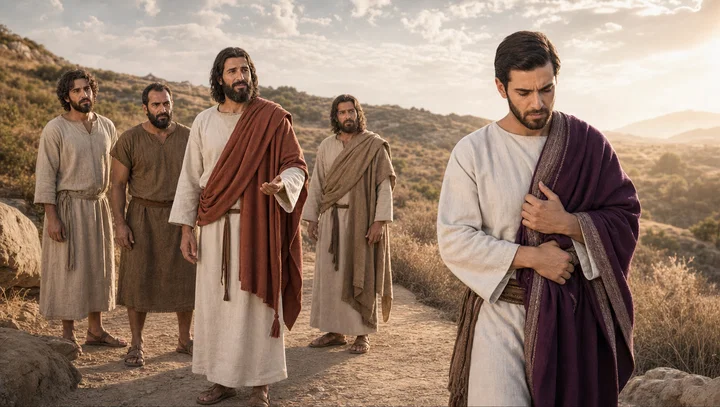
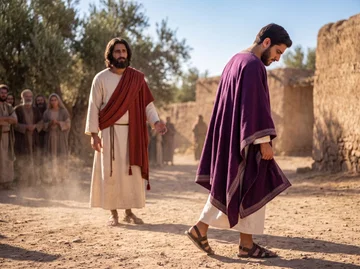
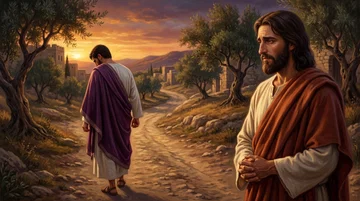
And when he heard this, he was very sorrowful: for he was very rich.
Revised Version, American Standard Version
But when he heard these things, he became exceeding sorrowful; for he was very rich.
and he, having heard these things, became very sorrowful, for he was exceeding rich.
But when he heard this he became very sorrowful, for he was very rich.
But, he, hearing these things, became, encompassed with grief; for he was rich exceedingly.
Berean Standard Bible, Majority Standard Bible
But when the ruler heard this, he became very sad, because he was extremely wealthy.
But when he heard these things, he became very sad, for he was very rich.
But at these words he became very sad, for he had great wealth.
But when he heard those things, he was very heauie: for he was marueilous riche.
Douay-Rheims (Challoner revision)
He having heard these things, became sorrowful; for he was very rich.
Pictures

Cross-references 20 of 30
- Matthew 19:21-22
Jesus said unto him, If thou wilt be perfect, go and sell that thou hast, and give to the poor, and thou shalt have treasure in heaven: and come and follow me.
The ruler is told to give up his possessions and follow Jesus, then goes away sorrowful.
- Mark 10:21-22
Then Jesus beholding him loved him, and said unto him, One thing thou lackest: go thy way, sell whatsoever thou hast, and give to the poor, and thou shalt have treasure in heaven: and come, take up the cross, and follow me.
The ruler grieves and turns away because of his great possessions.
- 2 Corinthians 8:9
For ye know the grace of our Lord Jesus Christ, that, though he was rich, yet for your sakes he became poor, that ye through his poverty might be rich.
Christ became poor so that others might become rich through him.
- 1 Timothy 6:9-10
But they that will be rich fall into temptation and a snare, and into many foolish and hurtful lusts, which drown men in destruction and perdition.
Attachment to riches brings temptation, destruction, and sorrow.
- Luke 12:15-21
And he said unto them, Take heed, and beware of covetousness: for a man’s life consisteth not in the abundance of the things which he possesseth.
Both warn against earthly treasure over riches toward God.
- Matthew 6:19-21
Lay not up for yourselves treasures upon earth, where moth and rust doth corrupt, and where thieves break through and steal:
The ruler chose visible earthly wealth over treasure in heaven.
- Matthew 6:24
No man can serve two masters: for either he will hate the one, and love the other; or else he will hold to the one, and despise the other. Ye cannot serve God and mammon.
The ruler’s sorrow over his wealth shows his devotion to mammon rather than God.
- Colossians 3:5
Mortify therefore your members which are upon the earth; fornication, uncleanness, inordinate affection, evil concupiscence, and covetousness, which is idolatry:
Covetousness is identified as idolatry, exposing the danger of trusting wealth.
- Mark 10:22
And he was sad at that saying, and went away grieved: for he had great possessions.
The ruler leaves sorrowful because he has great possessions.
- Matthew 19:22
But when the young man heard that saying, he went away sorrowful: for he had great possessions.
The young man goes away sorrowful because he has great possessions.
- Matthew 19:16-20
And, behold, one came and said unto him, Good Master, what good thing shall I do, that I may have eternal life?
Parallel account of Jesus’ answer to the ruler about entering life.
- 1 Timothy 6:17
Charge them that are rich in this world, that they be not highminded, nor trust in uncertain riches, but in the living God, who giveth us richly all things to enjoy;
It warns against trusting uncertain riches and directs trust to God.
- Mark 4:19
And the cares of this world, and the deceitfulness of riches, and the lusts of other things entering in, choke the word, and it becometh unfruitful.
Worldly cares and riches choke the word and make it unfruitful.
- Luke 14:33
So likewise, whosoever he be of you that forsaketh not all that he hath, he cannot be my disciple.
Following Christ requires giving up all one has.
- Mark 10:24-25
And the disciples were astonished at his words. But Jesus answereth again, and saith unto them, Children, how hard is it for them that trust in riches to enter into the kingdom of God!
Trusting in riches makes entry into God’s kingdom difficult.
- Matthew 13:22
He also that received seed among the thorns is he that heareth the word; and the care of this world, and the deceitfulness of riches, choke the word, and he becometh unfruitful.
The deceitfulness of riches chokes the word and makes its hearer unfruitful.
- Proverbs 11:28
He that trusteth in his riches shall fall: but the righteous shall flourish as a branch.
Trusting in riches leads to a fall, while the righteous flourish.
- Luke 12:33
Sell that ye have, and give alms; provide yourselves bags which wax not old, a treasure in the heavens that faileth not, where no thief approacheth, neither moth corrupteth.
Giving possessions to the poor is connected with treasure in heaven.
- 1 Timothy 6:10
For the love of money is the root of all evil: which while some coveted after, they have erred from the faith, and pierced themselves through with many sorrows.
Connects love of riches with spiritual ruin.
- 1 John 3:17
But whoso hath this world’s good, and seeth his brother have need, and shutteth up his bowels of compassion from him, how dwelleth the love of God in him?
The rich ruler’s refusal to part with his wealth contrasts with compassion for the needy.
Commentary
Each commentary is drawn from primary sources: the writings of Ellen G. White and Adventist pioneers and periodicals. Each commentary is separate. Its own words are not a quotation; follow the references to read the source passages.
Ellen G. White
32 sources
The verse tells of a young ruler of great possessions who ran to Jesus, kneeled before Him, and earnestly asked what he must do to inherit eternal life.DA 518.1–3 He understood that he was asked to give up all he had, but because he wanted to keep his temporal riches as well as gain heavenly treasure, the cost seemed too great and he turned away very sorrowful.DA 520.3ST Oct 28, 1908 His sorrow showed that his wealth was an idol cherished above Christ, for he loved riches and standing among men more than the Lord and his fellow beings and lacked the self-sacrificing love of the commandments.Lt 90, 1895, par. 7–10COL 392.1RH Jan 12, 1905 His refusal exposed his claim to have kept the commandments as self-deceived, because he loved God's gifts more than God and put the world first.ST Oct 29, 1912ST Oct 22, 1894DA 520.4 Giving his possessions to the poor was made the condition of following Christ and having eternal life and heavenly treasure, and that demand to surrender all that stands in the way applies to all who would be His disciples.CET 164.3CET 166.2DA 523.4Ms 87, 1897, par. 18
The Ruler and His Sorrow
Luke 18:23 concerns a young ruler of great possessions and responsible position.DA 518.1–3 He had watched tender love as children were brought, received, and taken up into arms, and his heart was kindled with love and desire to be a disciple.DA 518.1–3 So deeply moved, he ran after Christ on the way and kneeled at His feet, asking with sincerity and earnestness what he should do to inherit eternal life.DA 518.1–3 That question was vital to his own soul and to the soul of every human being.DA 518.1–3
Despite a high opinion of his own righteousness, he was not fully satisfied and felt he lacked something for his soul that Jesus might supply.DA 518.5 He was sincere and had outwardly kept the commandments from youth, yet he lacked humble, contrite devotion and supreme love for God.DA 519.2 He needed to recognize that lack and to find in Christ the perfection he did not possess.DA 519.2
He came addressing Jesus as an honored rabbi without recognizing Him as the Son of God.COL 390.2–391.1 The account tests his sincerity by drawing out how he regarded Jesus as good.DA 518.4 That testing turns on whether he discerned Him as the Son of God.DA 518.4
The event stands in contrast to the children of whom it is true that of such is the kingdom of God.DA 517.6 It occurred just before the parable of the laborers.COL 390.1 It gave occasion for teaching right principles about God's free grace and the reward of the righteous.COL 390.1
He understood what Christ's words required of him, that he must give up all he had.DA 520.3ST Oct 28, 1908 Yet because he was very rich, he wanted both heavenly treasure and his temporal riches and advantages.DA 520.3ST Oct 28, 1908 He wanted eternal life but was unwilling to give up the advantages his great wealth brought, valuing his possessions and future prospects too much to make the sacrifice and follow.DA 520.3ST Oct 28, 1908 The cost seemed too great, and he became very sorrowful in refusing the offer.DA 520.3ST Oct 28, 1908
He had abilities that could have made him a powerful force for good under Christ's guidance.DA 519.3 Christ loved him and longed for him to become a co-worker, to reflect God's character, and to use his gifts in God's service.DA 519.3 Choosing Christ would have changed his future.DA 519.3
Wealth Exposed as Idolatry
His sorrow showed his possessions had become an idol cherished above Christ, for his love for them outweighed his willingness to follow Him.Lt 90, 1895, par. 7–10COL 392.1 The test exposed the selfishness of his heart, revealing he cherished wealth as an idol and valued worldly gain above Christ, lacking true love for God and others, the spirit of the commandments, and the self-sacrificing love needed for the kingdom of heaven.COL 392.1 He went away sorrowful because unwilling to give up great possessions, valuing his possessions and standing among people more than the Saviour, so that wealth stood between him and eternal life and became the object of his worship in rejecting the offer.RH Jan 12, 1905 He wanted eternal life and the heavenly inheritance yet would not give up earthly treasure to help the poor and follow Jesus, his love of riches outweighing his love for other people and for the life to come, so he chose earthly wealth at the cost of heaven.2T 679.1–680.1
His sorrow on being told to sell, give to the poor, and follow revealed that despite claiming to have kept the commandments he was self-deceived and did not understand their depth.ST Oct 29, 1912ST Oct 22, 1894 He was deceived about his obedience and did not grasp the depth and significance of God's law.ST Oct 29, 1912ST Oct 22, 1894 His attachment exposed his claim as false, because he loved God's gifts more than God and put the world first, valuing possessions and standing more than fellowship with Christ and promised eternal life.DA 520.4 His riches and exalted position stood in the way of following Christ, for if cherished they would take God's place in his affections.DA 520.2 Keeping back from God anything, whether much or little, would weaken moral strength and usefulness because worldly things could become all-absorbing, so obeying Christ's terms was his only hope of salvation and of becoming a complete Christian.DA 520.2
To him riches were honor and power, and their great amount made giving them up seem impossible, so he was not rejoiced at the offer of heavenly treasure but very sorrowful because he had great possessions.4T 49.3–50.1 His sorrow reveals a selfish love of riches that, if not removed, would debar him from heaven, with affections fixed on worldly treasure and withdrawn from God and failure to love his neighbor as himself.4T 49.3–50.1 It shows the danger to the avaricious man that the more he gains the harder generosity becomes, that to diminish wealth feels like parting with life, and that he turns from the immortal reward to retain and increase earthly possessions, wanting heaven yet renouncing immortal life for money and power.4T 49.3–50.1 Had he truly kept the commandments his possessions would not have been so great, for plotting and striving for self cannot stand with loving God with all heart, mind and strength and loving neighbor as self.4T 49.3–50.1 He valued what he could see over heavenly treasure he could not see, choosing standing and possessions more than fellowship with Christ, and his choice left the world as the object of his worship.ST Oct 28, 1908DA 520.4 He stands as an example of people who weigh Christ against the world and turn away, and like him many weigh Christ against the world and choose the world, refusing Christ as leader.ST Oct 28, 1908DA 523.1 Many who profess to keep all of God's commandments still repeat his miserable exchange of renouncing immortal life for the love of money and power in place of the promised treasure in heaven.4T 50.2
Call to Surrender and Stewardship
Jesus made giving his possessions to the poor the condition for following Him and for having eternal life and heavenly treasure, but in sorrow the ruler chose to keep his riches rather than accept that condition.CET 164.3CET 166.2 Though he was willing to keep the commandments, he lacked willingness to give up what stood between him and the heavenly inheritance, and his choice shows how attachment to earthly riches can keep a person from following truth and receiving eternal life.CET 164.3CET 166.2 His property had been entrusted to him by God to be used in service to others and to relieve human need, and he could choose whether to use it in that service and receive heavenly treasure or to keep earthly riches and refuse the way of self-denial.Lt 116, 1896, par. 14–17RH Feb 18, 1902 By refusing to entrust his abundance to God's service and follow Christ he proved an unfaithful steward and forfeited the treasure in heaven promised to followers.Lt 116, 1896, par. 14–17RH Feb 18, 1902 His course shows how wealth makes it difficult to recognize possessions as entrusted for God's service and to become rich in good works, so that a person may give up the heavenly inheritance rather than care for others.RH Feb 18, 19022T 680.2
The demand to surrender what stands in the way of following Christ applies to all who would be His disciples, not only to people with great wealth, for obedience and self-surrender are essential.DA 523.4Ms 87, 1897, par. 18 Harmful attachments must be cut away because they would damage the whole person and obstruct salvation.DA 523.4 Those who want heaven's riches and eternal life must be willing to surrender all, including possessions and family ties, and count even life as nothing beside faithfulness to Christ, not clinging to earthly treasures instead of seeking the crown of life.DA 523.4Ms 87, 1897, par. 18 A right estimate of the value of the soul and power to turn from the attractions of the world and fix the eyes on heaven comes only by studying and striving to understand the great plan of redemption.Ms 10, 1885, par. 4 Those who realize something of the cost of Christ's sacrifice to uplift and ennoble the human race will count no sacrifice too great to fulfill His purpose of love to save them from perishing unto eternal life, will lay at His feet all that they are and all that they possess, and will make it their highest aim to be doers of His Word.Ms 10, 1885, par. 4
His response is an object lesson that obedience to God's law must shape life and character and that those who enter God's kingdom must willingly give Christ all they are and have.DA 523.2 It warns that a person may desire heaven yet turn away when its conditions require surrender.DA 523.2 Christ offers to use people and the means entrusted to them in His work, and such willing service is part of how He saves them.DA 523.2 Distributing to the poor would have made him happier, with greater heavenly treasure and less earth on which to set affection.DA 523.2 His attachment to wealth kept him from the sacrifice Jesus required when called to sell what he owned and give to the poor, and the verse applies to one whose economy has become meanness and who lacks the spirit of sacrifice, showing that strict attention to small matters cannot replace the weightier duties of a faithful life.1T 207.2
Sources
Pioneers and periodicals
47 sources
When he was told to sell all he owned, give to the poor, and follow, he turned away grieving because his possessions were great.RH Feb 23, 1905ST Nov 23, 1915 His sorrow showed that his riches held his heart and stood between him and the course set before him, for he wanted to follow while keeping his money.ST Mar 24, 1881ST Nov 11, 1889ST Aug 18, 1887RH Feb 23, 1905 He valued what he could see over unseen heavenly treasure, loving his wealth and standing more than God and rejecting eternal life for temporal gain.RH Jan 12, 1905ST Oct 28, 1908ST Oct 28, 1908ST Sep 26, 1906ST Nov 14, 1900 His clinging exposed a covetous heart beneath an outwardly blameless life, which is idolatry and transgression of the law, proving he had not kept the commandments with wholehearted love to God and neighbor.RH Feb 17, 1859ST Apr 15, 1880ST Mar 4, 1889RH Sep 4, 1900 The same temper of renouncing the world and valuing heaven is required of Christians in every age, for attachment to riches makes entering God's kingdom impossible to man though possible with God.ST Sep 3, 1894ST Feb 10, 1898RH Jul 3, 1856
Narrative Context and Outcome
The verse belongs to the account of a rich young ruler who, concerned about salvation, eagerly came to Jesus to ask how to receive eternal life, and his question was earnest and deeply important.ST Sep 26, 1906 The same encounter is also told in Matthew and Mark, where Jesus named enough commandments to identify the law He meant, doubtless naming the precepts the ruler was especially transgressing, and His not naming the Sabbath or other commandments does not show that they are no longer binding.RH Oct 26, 1911 When he heard the call to sell what he owned, give to the poor, and follow Christ, he became very sorrowful because he was very rich and had great possessions.RH Feb 23, 1905ST Nov 23, 1915
His response was part of the event that led Peter to ask what the disciples would receive for leaving everything to follow Jesus.ST Mar 5, 1902 Jesus loved him but did not overlook what he lacked or spare him the plain demands of the gospel, even though he gave liberally, because the truth had to reach his heart.RH Feb 3, 1910RH Aug 15, 1871 Despite his eagerness to follow Jesus and his belief that he had done what he could, he still lacked one thing, which shows that obedience to God matters more than outward religious acts and that those who already do much can obey in this as well.RH Aug 15, 1871 His amiable character did not make him a Christian, for he lacked the one thing needful and remained lost despite being useful.RH May 18, 1876
What became of him afterward is not known, for he drops out of sight like a stone in the midst of the ocean.RH Nov 4, 1873 He is like a bird with a string tied round its leg that can fly only so far but cannot cut the string when told to do so, turning back from Christ for covetous love of this world when told he lacks one thing and must sell all and give to the poor and follow Christ.RH Nov 4, 1873 His name is not found among the saints of God and the fellowship of the apostles and prophets, with no crown or throne for him in the kingdom where the apostles shall reign, because he went away sorrowful for his great possessions.RH Nov 4, 1873
Riches Blocking Discipleship
His great wealth stood directly between him and the course he was asked to take, holding his heart so that he could not give it up and follow when called to give to the poor and follow.ST Aug 18, 1887RH Feb 23, 1905 He wanted to become a disciple while keeping his money, but discipleship on those terms would not be accepted.ST Mar 24, 1881ST Nov 11, 1889 Discipleship cannot be bargained into a comfortable, self-indulgent journey to heaven, for a person must be willing to give up whatever rules the heart.ST Mar 24, 1881ST Nov 11, 1889
He understood what was required yet was unwilling to give up the temporal advantages of his wealth and the future prospects it promised.ST Oct 28, 1908ST Oct 28, 1908 He wanted eternal life and heaven's treasure, but he wanted more his own great possessions and the position and praise of men that wealth brings.ST Oct 28, 1908ST Sep 26, 1906 The lust of gold and gain had wound its tendrils about his heart till it bound him fast, so he valued what he could see over unseen heavenly treasure and fellowship with Christ.ST Oct 28, 1908ST Sep 26, 1906
His wealth had become his idol and the object of his worship, with the world holding first place in his affections.RH Jan 12, 1905ST Oct 28, 1908 He valued his possessions and standing among people more than the Saviour and more than fellowship with Christ, and in refusing to give up his earthly treasure he rejected the offer of eternal life.RH Jan 12, 1905ST Oct 28, 1908 His sorrow revealed selfishness and self-interest, that he loved his wealth more than God and Christ and more than God's cause and kingdom and the eternal reward.RH Nov 12, 1914RH Jul 29, 1909ST Jul 15, 1880 Despite desiring eternal life he was unwilling to use his means for God's kingdom, to sell his property, help others, and follow in a self-denying life.RH Nov 12, 1914RH Jul 29, 1909
The test exposed a selfish heart beneath an outwardly blameless life, lacking wholehearted devotion and self-devotion to God's glory.ST Apr 15, 1880ST Mar 4, 1889 That deficiency outweighed his other virtues and undermined his confidence in God's favor, making the teaching painful to accept because of his great wealth.ST Apr 15, 1880ST Mar 4, 1889 In this extreme case, because great possessions stood between him and eternal life, the necessary remedy was to give up all his property and follow.RH Dec 2, 1873 Giving up only part would not have removed the obstacle, and only by literally parting with earthly things could he be saved from undue esteem and affection for them, for he was not willing to have salvation at so high a price.RH Dec 2, 1873
The demand exposed his failure to love God with all his heart and keep the first commandment, rather than laying voluntary poverty on everyone.ST Jul 15, 1880ST Aug 18, 1887 Wealth and other advantages need not be abandoned when used to advance God's kingdom, but they must be surrendered if a person lives for them or for self-aggrandizement while serving mammon.ST Jul 15, 1880ST Aug 18, 1887 He chose perishable, temporal gain and character over eternal life, remaining bound to this world and facing ruin with the goods he chose.ST Sep 26, 1906ST Oct 12, 1904 The selfish possession of wealth is a positive bar to the portals of the everlasting kingdom.ST Aug 27, 1902ST Oct 12, 1904
His sorrow illustrates the sorrow of refusing obedience when attachment to possessions weighs more heavily than the Lord's command, while freedom from that burden allows joyful obedience.RH Jun 6, 1907ST Nov 14, 1900 His attachment had become part of his life, so surrendering it felt like self-crucifixion.RH Jun 6, 1907ST Nov 14, 1900 He was diverted from his old life for a time but not converted, trying to hold Christ and sin at once with attention divided between the world and the cross, so his wealth and love of the world kept him from fully turning.ST Nov 24, 1887 The greater his wealth the greater his sorrow at the call, revealing that his trust and love were fixed on riches rather than God.ST Mar 24, 1887ST Jul 7, 1887ST Aug 18, 1887 The verse tests whether a person loves God or possessions most and does not condemn merely being rich, for the sin is loving, trusting in, rejoicing in, or taking pride in wealth, and covetousness and desire to keep treasure for self caused him to lose eternal life.ST Mar 24, 1887ST Aug 18, 1887
Covetousness and the Law
His sorrow proves he had not kept all the commandments, for Jesus neither said nor implied that he had kept them.RH Feb 17, 1859 Despite his claim to have kept the commandments, his sorrow when told to sell his possessions, give to the poor, and follow revealed that he was self-deceived and did not understand their depth and significance or God's standard of obedience.ST Oct 29, 1912ST Oct 22, 1894 His unwillingness to give up his possessions and follow exposed his true character as covetous, and covetousness is idolatry and a violation and transgression of the law.
His clinging to riches shows love of the world and slavery to mammon, so the love of the Father was not in him and he was not a servant of God.RH Feb 17, 1859 Since all the law hangs on love to God and neighbor, and obedience is the only test of love, one destitute of love to God cannot keep the first four commandments.RH Feb 17, 1859 His covetous and avaricious disposition was idolatry, and his shutting up compassion and using his property for himself while neglecting the poor proved he lacked love to God and fellow man and had failed to keep the commandments, making his declaration of obedience worthless.RH Feb 17, 1859RH Sep 4, 1900
He lost heaven because of covetousness even though he had kept the rest of the law from his youth, for failure on this one point was enough to make him guilty under God's law.ST Jul 22, 1880 Outward or merely legal obedience is not enough without obedience reaching the heart and shaping the character in yielding all one has and is to God.ST Nov 14, 1900 His attachment to wealth had become part of his life, so that surrendering it felt like self-crucifixion.ST Nov 14, 1900
Stewardship of Entrusted Wealth
His possessions had been lent to him by God to be used in service to others, and he stood before a choice between spending them in self-denial to gain treasure in heaven and clinging to earthly goods, and he chose the earthly goods and lost the eternal reward, showing how wealth tests whether a person can be trusted as a steward of what God entrusts.RH Feb 18, 1902 He turned down the blessing promised for a wise investment of his means because he wanted to keep control of his money to use as he pleased while still receiving credit for giving himself to the Lord, yet money laid out as the Lord directs brings its reward whereas measuring God's favors by the cash value of offerings brings only shame and contempt.ST Feb 14, 1884 Even one who has kept the commandments from youth must still yield wealth to God and employ estates to relieve distressed brethren rather than spending them on vain indulgence and luxury and worldly pleasure.RH Jul 31, 1856
His sorrowful turning away shows how possessions test whom a person will serve and whether he will give liberally to support God's work and the cause of present truth, for he loved riches more than Christ and the eternal reward and refused to sell his property and help others and follow Christ in a self-denying life.RH Jul 29, 1909RH Apr 23, 1861 That refusal stands in contrast to those who give generously to the cause.ST Apr 3, 1884 Becoming very rich brings the danger of riches as a burden added to the cares of the world, and this is averted by practical watchfulness that is ready to distribute to the poor who are always present and to sow bountifully, handling God's property as God's children must.ST Mar 9, 1882 Such giving keeps the heart warm and the exercise of doing good keeps the believer awake, with the eye first on Jesus who for our sakes became poor and then on fellow men in need to relieve suffering anywhere and everywhere.ST Mar 9, 1882 The call set before him contrasts gaining riches with receiving a life like God's by serving Him and laying up treasure in heaven.RH Dec 16, 1909
Warning for Believers Today
The call to give up riches was not a special burden laid on one man alone, but the necessary temper of Christian life, renouncing the world and worldly tempers and valuing heaven, required of Christians in every age.RH Jul 3, 1856 His going away sorrowful showed unwillingness to accept that duty, not the imposition of something he alone was asked to bear.RH Jul 3, 1856
He was told to sell what he had and give to the poor in order to have treasure in heaven and to come follow Christ, and at that saying he became sad and went away grieved because he had great possessions.ST Feb 10, 1898 In that sorrowful departure he stands as representative of the respectable wealth-loving of every age and land.ST Feb 10, 1898 The incident therefore contains practical lessons for every age, with especial importance for days of peril, and the words Christ spoke in the encounter present eternal truth.ST Feb 10, 1898
His attachment to worldly wealth stood in the way of following Jesus, and to enter God's kingdom while clinging to riches is impossible for human beings, though God can make it possible.ST Sep 3, 1894 He became deeply sorrowful because he was very rich.ST Sep 3, 1894 The rich person who submits to God becomes rich in faith and can enter the kingdom.ST Sep 3, 1894
His turning away in sorrow because he was very rich and could not bear the cost of surrendering his possessions and following warns people of wealth, rank, and power not to let money rule their lives when Christ calls them to follow him.RH Dec 31, 1908 He loved his riches and would not give them up when told to sell his possessions and distribute the money to the poor, choosing perishable wealth over the riches of heaven.ST Oct 12, 1904 Remaining bound to this world, he faces ruin with the goods he chose, illustrating how attachment to riches makes it difficult to enter the kingdom of God.RH Dec 31, 1908ST Oct 12, 1904
People can still see and admit that the seventh-day Sabbath is truth yet turn away sorrowful when they look at their great possessions.RH Aug 14, 1860 Those possessions include human honor, worldly riches, and donations.RH Aug 14, 1860 Those who turn away for those reasons can become great enemies of the truth.RH Aug 14, 1860
Sources