Mark 10:20
And he answered and said unto him, Master, all these have I observed from my youth.
Translations
American King James Version, Webster Bible
And he answered and said to him, Master, all these have I observed from my youth.
King James Version, KJV Cambridge Paragraph Bible
And he answered and said unto him, Master, all these have I observed from my youth.
And he said unto him, Master, all these things have I observed from my youth.
And he said unto him, Teacher, all these things have I observed from my youth.
And he answering said to him, 'Teacher, all these did I keep from my youth.'
And he answering said to him, Teacher, all these things have I kept from my youth.
And, he, said unto him—Teacher! all these things, have I kept, from my youth.
Berean Standard Bible, Majority Standard Bible
“ Teacher,” he replied, “ all these I have kept from my youth.”
He said to him, “ Teacher, I have observed all these things from my youth.”
And he said to him, Master, all these laws I have kept from the time when I was young.
Then he answered, and said to him, Master, all these things I haue obserued from my youth.
Douay-Rheims (Challoner revision)
But he answering, said to him: Master, all these things I have observed from my youth.
Pictures
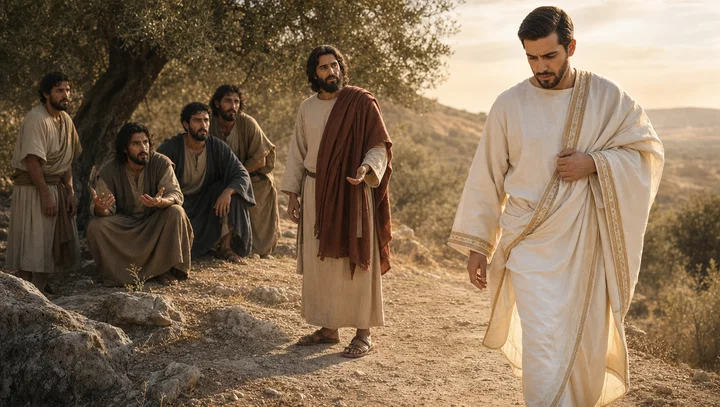

Cross-references
- Matthew 19:20
The young man saith unto him, All these things have I kept from my youth up: what lack I yet?
Matthew records the young man’s claim to have kept the commandments from youth.
- Luke 18:18-23
And a certain ruler asked him, saying, Good Master, what shall I do to inherit eternal life?
parallel account of same encounter
- Exodus 20:12-16
Honour thy father and thy mother: that thy days may be long upon the land which the LORD thy God giveth thee.
Jesus directs the man to commandments from the second table of the law.
- Luke 14:33
So likewise, whosoever he be of you that forsaketh not all that he hath, he cannot be my disciple.
Jesus teaches that disciples must forsake all they have.
- Matthew 19:21
Jesus said unto him, If thou wilt be perfect, go and sell that thou hast, and give to the poor, and thou shalt have treasure in heaven: and come and follow me.
Christ tests the rich young man by calling him to give to the poor and follow him.
- Matthew 19:16
And, behold, one came and said unto him, Good Master, what good thing shall I do, that I may have eternal life?
Both ask what must be done to inherit eternal life.
- Matthew 22:37-39
Jesus said unto him, Thou shalt love the Lord thy God with all thy heart, and with all thy soul, and with all thy mind.
True keeping means supreme love to God and neighbor.
- Leviticus 19:18
Thou shalt not avenge, nor bear any grudge against the children of thy people, but thou shalt love thy neighbour as thyself: I am the LORD.
Christ sums up the named commandments with love for one’s neighbor.
- Matthew 19:23-24
Then said Jesus unto his disciples, Verily I say unto you, That a rich man shall hardly enter into the kingdom of heaven.
Jesus teaches that wealth makes entering the kingdom difficult.
- Mark 10:24
And the disciples were astonished at his words. But Jesus answereth again, and saith unto them, Children, how hard is it for them that trust in riches to enter into the kingdom of God!
Trusting in riches makes entering God’s kingdom difficult.
- Titus 3:5
Not by works of righteousness which we have done, but according to his mercy he saved us, by the washing of regeneration, and renewing of the Holy Ghost;
Contrasts salvation by mercy with reliance on personal obedience.
- Exodus 20:3
Thou shalt have no other gods before me.
Putting wealth above God breaks the command to have no other gods.
Commentary
Each commentary is drawn from primary sources: the writings of Ellen G. White and Adventist pioneers and periodicals. Each commentary is separate. Its own words are not a quotation; follow the references to read the source passages.
Ellen G. White
32 sources
The verse records the rich young ruler's sincere answer to Jesus about inheriting eternal life, declaring that he had kept all the commandments Jesus named from his youth and childhood.ST Mar 11, 1889DA 518.1–3Ms 141, 1909, par. 9–12 His claim was earnest yet joined with a felt lack, for while he prized his own righteousness he was not satisfied and sensed something was still missing in his soul.DA 518.5ST Oct 28, 1908RH Jan 12, 1905 That confident claim concealed self-deception, for he had kept the commandments outwardly but not from the heart, without understanding their depth and spiritual demand.2T 679.1–680.1ST Oct 29, 1912ST Oct 28, 1908 His defect was love for his great earthly possessions, which were his idol and proved stronger than his love for God and his neighbor, showing he could not truly keep the commandments while the world came first.ST Mar 11, 1889ST Oct 28, 1908DA 520.2 With pity and love Jesus pointed directly to that defect and called him to sell all, give to the poor, take up the cross and follow Him unto treasure in heaven, but he weighed Christ against the world and went away sorrowful because he valued visible treasure more than eternal life.Lt 63, 1893, par. 22–25ST Mar 11, 18892T 679.1–680.1
Setting and Claim
The answer in Mark 10:20 is the rich young ruler's reply when he sincerely and earnestly asked Jesus how to inherit eternal life.ST Mar 11, 1889DA 518.1–3CET 164.3 After Jesus taught that obedience to the Father's commandments is necessary for salvation and eternal life, the man declared that he had observed all the commandments Jesus named from his youth and childhood.ST Mar 11, 1889Ms 141, 1909, par. 9–12DA 518.6ST Mar 11, 1889 His claim did not remove the choice set before him to give up his possessions and give to the poor to follow Christ or keep his riches and lose eternal life.ST Mar 11, 1889CET 164.3ST Mar 11, 1889
The verse belongs to the encounter summarized as one thing thou lackest in Mark 10:17-22, with parallels in Matthew 19:16-22 and Luke 18:18-23, coming immediately after Jesus blessed the children and declared of such is the kingdom of God.DA 517.6DA 518.4 It also stands in Christ's testing of the ruler's sincerity when the ruler called Him good, drawing out what he meant by good, whether he realized he spoke to the Son of God, and what was truly in his heart.DA 517.6DA 518.4 The young man represents some people the Lord is calling to engage in His service.Ms 141, 1909, par. 9–12
His claim was sincere and earnest, yet joined with a felt lack.DA 518.5ST Oct 28, 1908 He prized his own righteousness and believed he lacked no essential good, but he was not satisfied, sensed something was still lacking, and wanted Jesus to meet an unmet need in his soul.DA 518.5ST Oct 28, 1908ST Oct 28, 1908 His confident claim that he had kept the commandments from his youth did not mean his heart was fully devoted to God or ready to follow Christ.RH Jan 12, 1905ST Mar 30, 1876ST Oct 28, 1908
That confident claim concealed self-righteousness, self-deception, and failure to understand the depth and significance of the commandments.2T 679.1–680.1ST Oct 29, 1912ST Oct 22, 1894 He had kept them outwardly but not from the heart, remaining close and covetous, tithing mint and rue while neglecting the weightier matters, so his sorrowful departure proved he was not truly keeping them.2T 679.1–680.1ST Oct 29, 1912ST Oct 22, 18941T 207.2 Because the world and his possessions came first in his affections and his riches were his idol, he loved God's gifts more than God and could not truly keep the commandments while the world came first.2T 679.1–680.1ST Oct 28, 1908
The claim looked righteous but revealed the same self-righteous spirit in which Judas came to Christ, with both appearing righteous outwardly while cultivating selfishness and covetousness as the plague-spot of the heart.Lt 63, 1893, par. 22–25 Judas was also a thief who resisted truth, neglected his own soul, and strengthened evil traits by accusing and condemning others until hardened enough to sell his Lord for thirty pieces of silver.Lt 63, 1893, par. 22–25 He believed he had obeyed the commandments Christ named, but he had not recognized their deeper demand.COL 390.2–391.1COL 390.1COL 392.1 God's character is expressed in His law, the law must guide every action as the source of every action, and keeping its principles brings a person into harmony with God; his outward, incomplete obedience concealed selfishness and lack of love for God and others, the principle that gives the commandments spirit and life, and such loving of self was itself a transgression.COL 390.2–391.1COL 390.1COL 392.1
Lack Exposed and Answered
His lack was love for his great earthly possessions, money, and power.ST Mar 11, 1889ST Oct 28, 19084T 50.2 His riches, position, and visible earthly treasure were his idol, eclipsing the value of the eternal inheritance.ST Mar 11, 1889ST Oct 28, 19084T 50.2 They subtly drew his affections from God, coming first in his heart so that he loved God's gifts more than God Himself.ST Oct 28, 1908DA 520.2 That love proved stronger than his love for his fellow men and for the immortal inheritance, showing he did not love his neighbor as himself.2T 679.1–680.1ST Mar 11, 18894T 49.3–50.1 While the world came first he could not truly keep the commandments, and his outward obedience did not reveal this attachment of heart until Jesus showed him the sacrifice required.ST Mar 11, 1889ST Oct 28, 19084T 49.3–50.1
With pity and love Jesus met the claim by pointing directly to the defect in his character.ST Mar 11, 18892T 679.1–680.1 He called him to self-denying, cross-bearing discipleship after His own example of leaving everything for the salvation of man.ST Mar 11, 18892T 679.1–680.1 The call was to sell all he had, give to the poor and suffering, and do good with his means in blessing the widow and fatherless.Lt 63, 1893, par. 22–25ST Mar 11, 18892T 679.1–680.1Lt 354, 1905, par. 27 In return He promised treasure in heaven, bidding him take up the cross and follow Him in order to enter into life and have eternal life.ST Mar 11, 18892T 679.1–680.1ST Mar 30, 1876 That demand exposed his attachment to wealth and tested whether his heart was ready to follow and whether obedience would enter the life.ST Mar 30, 1876Lt 354, 1905, par. 27
Selling, giving, and following shows the heart and whether love and self-sacrifice govern the character.Ms 58, 1896, par. 20Lt 354, 1905, par. 272T 680.2 The test of sacrifice reveals whether love for riches is stronger than love for God and neighbor.Ms 58, 1896, par. 202T 680.2 Those qualities matter at the final judgment, where profession of obedience is proved by works.Ms 58, 1896, par. 202T 680.2 Giving in this way is also a means of receiving the bread of life, for eating Christ's flesh and drinking His blood means having Christ as the life-giving current within the soul.Lt 354, 1905, par. 27
Though he had a lingering desire for the heavenly inheritance, he wanted both worlds.ST Mar 11, 18892T 679.1–680.1 He weighed Christ against the world, struggling over the choice, and his earthly treasures eclipsed the eternal inheritance.ST Mar 11, 18892T 679.1–680.1ST Oct 28, 1908 The demand chilled his desire, and he turned from the cross and the self-sacrificing life of the Redeemer back to this world.CET 164.3ST Mar 11, 18892T 679.1–680.1 He went away sad, sorrowful, and grieved because he had great possessions, valuing riches and visible treasure more than heavenly treasure and fellowship with Christ.CET 164.3ST Oct 28, 1908ST Mar 30, 18764T 50.2 He renounced immortal life for the love of money and power, sacrificing heaven with all its glory for the treasures of the world, a miserable exchange.2T 679.1–680.1ST Oct 28, 19084T 50.2
What he still needed in order to perfect a Christian character was heart devotion.DA 520.2ST Oct 28, 1908DA 523.2 He needed a humble and contrite spirit, supreme love for God, and the goodness found in Christ, hiding his lack in Christ's perfection, which Christ longed to create in him.ST Oct 28, 1908DA 519.2 Obedience must enter the life and shape the character, and keeping anything back from God weakens moral strength and efficiency.DA 520.2DA 523.2 Accepting and obeying Christ's words was his only hope of salvation.DA 520.2
The case stands therefore as an object lesson that following Christ requires obedience and self-surrender, including giving up anything that would harm the whole being.DA 523.2DA 523.4 Those who would be acknowledged as God's children must become His co-workers and place all they are and have at His service.DA 523.2 Many who profess to keep all God's commandments are doing as he did, choosing earthly wealth over eternal life and standing in danger of losing heaven.4T 50.22T 680.2 By refusal to sacrifice earthly riches and become rich in good works they show by their works that they are unprepared for heaven and decide that heaven costs too much, while remaining close and covetous and withering in heart under meanness, watching others and holding a rigid course.1T 207.22T 680.2 The greater the treasures laid up on earth, the more difficult it is to realize that they are not owned but only lent to be used for God's glory.2T 680.2
Sources
Pioneers and periodicals
44 sources
The verse records the reply of the youthful rich ruler to Jesus, that he had kept all the commandments named to him from his childhood.ST Mar 11, 1889RH Oct 30, 1860ST Sep 26, 1906RH Sep 4, 1866RH Dec 31, 1908
He made the claim in sincere confidence that he was outwardly upright and virtuous in the letter, yet it was self-deception, for he did not understand their depth and had not truly kept them.ST Oct 29, 1912ST Feb 10, 1898ST Aug 24, 1904ST Jan 22, 1880RH Mar 25, 1915
Jesus met the claim by pointing to the defect in his character and calling him to sell all, give to the poor and follow, which proved his riches were his idol loved more than God and neighbor.ST Mar 11, 1889ST Mar 11, 1889RH Jul 6, 1916RH Jul 3, 1856RH Sep 4, 1866
He could not give up his great possessions for the heavenly inheritance, but turned back to the world and went away sorrowful.RH Jul 6, 1916ST Aug 24, 1904RH Mar 25, 1915
Outward keeping of the letter is not enough, for the law requires obedience in spirit and supreme love, and his own estimate could not make him righteous without faith in Christ and His justifying and sanctifying power.ST Sep 26, 1906ST Apr 15, 1880RH Jan 8, 1867RH Nov 6, 1900ST Sep 26, 1906
Setting and Speaker
The reply belongs to the rich young ruler, a youthful man of wealth and power who came to Jesus earnestly concerned about salvation to learn what good thing he must do to inherit eternal life.ST Sep 26, 1906RH Sep 4, 1866RH Dec 31, 1908RH Jul 18, 1865ST Feb 14, 1884 He came running to Jesus with the burden of eternal life on his youthful soul and with a sincere desire to be saved.RH Sep 4, 1866RH Dec 31, 1908ST Aug 24, 1904 His question raised how eternal life is received, and his answer expressed the belief that it could be gained by doing good.ST Sep 26, 1906RH Sep 4, 1866ST Feb 14, 1884
In Mark this exchange belongs to the portrait of Jesus as a perfect model of character combining justice, love and benevolence.RH Oct 30, 1860 It follows Jesus' teaching and direction that obedience to the Father's commandments and doing the whole of God's laws is necessary to enter into life and win eternal life.ST Mar 11, 1889ST Mar 11, 1889RH Dec 31, 1908 The young man's claim that he had kept them from childhood was given as his answer to that teaching.ST Mar 11, 1889ST Mar 11, 1889
The meeting was a momentous face-to-face encounter, with holy angels hovering between the two.RH Dec 31, 1908 His claim drew sympathy, drawing Jesus' gaze and great love, with yearning to break base mammon's powerful snare over him and draw him by His touch.RH Dec 31, 1908RH Jul 29, 1909 After Jesus told him to sell what he had, give to the poor and follow Him, the disciples wondered what those who had left everything to follow Jesus would receive, and the parable of the laborers teaches that their reward comes by grace, not by works.ST Mar 5, 1902
On that occasion Jesus quoted enough commandments to show which law He meant, naming six.RH Oct 26, 1911ST Dec 6, 1883 He doubtless named precepts the ruler was especially transgressing.RH Oct 26, 1911 Those named covered the two leaves of the decalogue, love to God and love to man, with Follow me summing the first table.ST Dec 6, 1883
Meaning of His Claim
The reply is his answer that he had observed all these commandments from his youth, that is from childhood.ST Mar 11, 1889RH Oct 30, 1860RH Jul 6, 1916RH Jul 3, 1856ST Jan 22, 1880 The commandments in view are those just listed to him, and his word is that he had kept them from his youth up.ST Mar 11, 1889RH Oct 30, 1860RH Jul 6, 1916RH Jul 3, 1856
His word was spoken in sincere confidence in outward obedience, for he thought he had kept them as far as he understood them.ST Feb 10, 1898RH Sep 4, 1866 He was morally upright and had observed their letter.ST Jan 22, 1880 He lived as a virtuous and eager, amiable, lovely and promising nominal keeper, who paid an honest tithe, gave offerings, kept the Sabbath, and was counted ideal, yet he still asked what he lacked.ST Feb 10, 1898RH Mar 25, 1915RH Sep 4, 1866RH Jul 3, 1856
His claim expressed a high estimate of his own righteousness and wisdom, believing he lacked no essential good and could gain eternal life by doing good.ST Oct 28, 1908RH Jan 12, 1905ST Sep 26, 1906 Yet he remained dissatisfied, without assurance or relief, feeling he needed something he did not possess and that his obedience had not met the need of his heart.ST Oct 28, 1908RH Jan 12, 1905ST Feb 10, 1898ST Sep 26, 1906
His claim was self-deception and false, concealing a failure to understand the depth and significance of the commandments.ST Oct 29, 1912ST Oct 22, 1894ST Sep 26, 1906 He had not kept them but was systematically trampling them, and especially the very first, by placing wealth before and above God.ST Aug 24, 1904 His confidence rested on outward obedience and concealed a selfish heart, so that his righteousness was superficial, self-centered, apart from faith in Christ, and lacking the one essential quality of true religion, which is supreme love for God with humble contrite devotion and self-devotion to Him.ST Oct 28, 1908ST Sep 26, 1906ST Apr 15, 1880
Defect Exposed by Christ
Jesus met the claim by pointing directly to the defect in his character and calling him to self-denying, cross-bearing discipleship after his own example of leaving everything for the salvation of man, to sell all he had, give to the poor, take up the cross and follow, with the promise of treasure in heaven.ST Mar 11, 1889ST Mar 11, 1889RH Jul 3, 1856 His attachment to earthly wealth revealed that defect and kept him from accepting the call, showing that outward obedience did not mean he was ready to follow.ST Mar 11, 1889ST Mar 11, 1889RH Jan 12, 1905 He still lacked the self-sacrifice required, for he would not part with his possessions and went away sorrowful, and keeping the law's precepts did not excuse him from surrendering what stood between him and Christ.ST Mar 11, 1889RH Jul 6, 1916 Renouncing possessions was required of him as a condition of discipleship and entering life, not as an optional higher level of perfection.RH Jul 3, 1856
The test Christ then put him to proved he had not kept all the commandments, for true keeping would have meant loving God supremely and his neighbor as himself, being willing to give of his substance to those in need that he might have treasure in heaven, and to follow Christ when asked.ST Mar 11, 1889RH Sep 4, 1866 His earthly treasures were his idol and eclipsed the value of the eternal inheritance, for he loved God's gifts more than God, with the world and his possessions first in his affections, so he could not truly keep the commandments.ST Mar 11, 1889ST Oct 28, 1908 What he needed was humble, contrite devotion and supreme love for God, with heart devotion and the goodness found in Christ.ST Oct 28, 1908 Though he sincerely claimed to have kept them and still sensed something lacking, and though in many respects he was lovely and promising and had tried to keep them as far as he understood them, when Christ offered him fellowship and eternal life he would not give up his visible earthly treasure for heavenly treasure, and he turned away.ST Oct 28, 1908ST Oct 28, 1908RH Sep 4, 1866
His attachment revealed covetousness and a selfishness he did not recognize, with his possessions standing between him and eternal life, showing that outward commandment-keeping did not mean he had overcome covetousness.RH Mar 25, 1915 He was self-deceived, systematically trampling the very first commandment by placing wealth before God and above God, an unwitting idolater wedded to his money with his heart set on his treasures, and his supreme devotion to gold was proved when he went away grieved because he would not give it up to follow Christ.ST Aug 24, 1904 Even as a nominal commandment keeper who paid an honest tithe, gave offerings, kept the Sabbath, and was counted an ideal young man, he was covetous and unwilling to forsake all and place everything at Christ's service, and his refusal to sell what he had and give to the poor and take up the cross and follow proved his ruin, for those who have riches hardly enter the kingdom.RH Mar 25, 1915 His high opinion of his own righteousness was exposed, for his love of worldly possessions was the one sin that kept him from salvation, and obedience to the rest of the law did not excuse that one failure in duty to his neighbor.RH Jul 6, 1916RH Dec 2, 1873 True love for neighbor would have led him to share his wealth with those in need, since riches are a trust to be used as God directed, and his attachment required a thorough remedy which loving counsel addressed.
When Jesus showed him the sacrifice required, he could not give up his earthly riches for his neighbor or the heavenly inheritance.ST Mar 11, 1889ST Mar 11, 1889 Though he had a lingering desire for the heavenly inheritance and noble qualities that drew love, he must give up his property, use it to do good, and follow in a self-denying life to share in the reward to come, but he loved his possessions too much to give them up.ST Mar 11, 1889RH Jul 29, 1909 He struggled over the choice, turning from the cross and the self-sacrificing life of the Redeemer back to this world, and finally deciding to keep loving his earthly treasures.ST Mar 11, 1889 So he went away sorrowful, sad and grieved because he had great possessions.RH Jul 6, 1916ST Aug 24, 1904RH Mar 25, 1915RH Jul 29, 1909
Law Grace and Obedience
Keeping the commandments as a whole, not merely a selected part, is the condition Christ stated for entering life.RH Oct 26, 1911 He quoted enough commandments to show which law He meant, and named precepts the ruler was especially transgressing, so that the young man's question about which commandments brought out the part of the law he had failed to keep.RH Oct 26, 1911 Although He named six commandments covering the two leaves of the decalogue, love to God and love to man, with Follow me summing the first table, His not mentioning Remember the Sabbath day to keep it holy or the command against coveting on that occasion does not show they are no longer binding, and Follow me does not exclude the Sabbath.RH Oct 26, 1911ST Dec 6, 1883
The fourth commandment could not be excepted, for it was one of those proclaimed by Jehovah Himself on Mount Sinai, the original seventh-day Sabbath on which God rested at creation, the only Sabbath of the Lord thy God given in express terms in the Bible, which Jesus endorsed by keeping His Father's commandments.ST Dec 6, 1883
Outward obedience to the letter is not enough, for God's law requires more than outward morality.ST Sep 26, 1906ST Sep 26, 1906 The ruler's claim rested on outward obedience and concealed a selfish heart, showing he lacked obedience in spirit, supreme self-devotion to God, and the one essential quality of true religion, which undermined all his other virtues and his confidence in God's favor and left him without relief, satisfaction, or assurance of a place in the kingdom.ST Sep 26, 1906ST Apr 15, 1880RH Jan 8, 1867 Rigorous teaching and observance of the letter cannot replace the Spirit.RH Jan 8, 1867
His own sincere estimate did not meet God's standard and did not make him righteous or justified.RH Nov 6, 1900 He still lacked Christ's justifying blood, the sanctifying power of Christ's perfect obedience, and faith in Jesus, and until he accepted Christ and received God's righteousness by faith he remained short of God's glory and lacked what was needed for full stature of moral character, his obedience being superficial, self-centered and self-righteous because apart from faith in Christ.RH Nov 6, 1900ST Sep 26, 1906 Outward goodness, amiability, moral blamelessness and usefulness do not make one a Christian or save.RH May 18, 1876 A conscious belief in His deity was not made a stated condition in the encounter; the claim to have kept the commandments from youth was met with a further test of commitment.ST Nov 23, 1915
Wealth and Discipleship
The claim to have kept the commandments from youth did not mean nothing was lacking, for keeping the commandments while clinging to wealth was not enough to inherit eternal life.RH Jul 3, 1856 Jesus therefore told him to sell his possessions, give to the poor, and follow him, requiring renunciation of possessions as a condition of discipleship and entering life, not as an optional higher level of perfection.RH Jul 3, 1856 He wanted to become a disciple while keeping his wealth, but discipleship would not be accepted on those terms.ST Mar 24, 1881 Outward obedience and virtue do not remove the need for the unworldly, heavenly-minded temper required of Christians, which is why one who was virtuous and eager for eternal life was still told to give up his riches.RH Jul 3, 1856
To follow Christ requires leaving all and taking up the cross presented, giving him all and the best or nothing, with no compromise between the world and heaven.ST Dec 22, 1887 He claimed to have kept the commandments from youth, yet a cross was presented that he was unwilling to bear.RH Jul 18, 1865 Partial obedience and divided loyalty are little better than no service and are not counted as service at all.ST Dec 22, 1887 Outward obedience and commendable qualities did not remove the one thing still lacking, showing that obedience to God must not be compromised on a seemingly fine point.ST Dec 22, 1887RH Aug 15, 1871
Riches can become a barrier to salvation when clung to, barring attainment of eternal life.ST Sep 16, 1889ST Aug 24, 1904 His love was concentrated on his possessions, and his devotion to silver and gold stood between him and God.RH Jan 18, 1870ST Aug 24, 1904 He served mammon and so could not serve God, for his money was the stumbling-block of his iniquity.ST Aug 24, 1904 In the supreme crisis his idol failed him and became itself the instrument of his everlasting undoing, so that seeing his loss he casts it from him in agony of despair.ST Aug 24, 1904 Rich people are not excluded, but they must place their wealth at God's service and use it for his glory.ST Sep 16, 1889
Riches were a trust to be used as God directed, and true love for neighbor would lead to sharing wealth with those in need. The test of selling and giving to the poor showed the claim did not reach the commandment to love neighbor as self. Wealth must still be offered to God and estates used to relieve distressed fellow believers, rather than spent on vain indulgence and worldly pleasure.RH Jul 31, 1856 Money spent as the Lord directs brings its reward through a wise and unselfish investment of means.ST Feb 14, 1884 Wanting the credit of giving self to the Lord while doing as one pleases with money, and estimating God's favor by the value of offerings, brings only shame and contempt and loss of all hope of salvation.ST Feb 14, 1884
The claim of obedience from youth did not mean nothing stood between him and eternal life, for he did not recognize his selfishness and his attachment to possessions required a thorough remedy addressed by loving counsel. His later refusal to part with possessions shows he still lacked what was necessary to choose eternal life over earthly wealth.RH Dec 2, 1873 Obedience in outward conduct did not mean willingness to put the kingdom of God before wealth.ST Jan 22, 1880 The plain demands of the gospel were not spared because of wealth or generosity, nor was he turned away from discipleship less readily even though influence and wealth seemed needed by the cause.ST Dec 22, 1887RH Feb 3, 1910
Sources