Mark 12:17
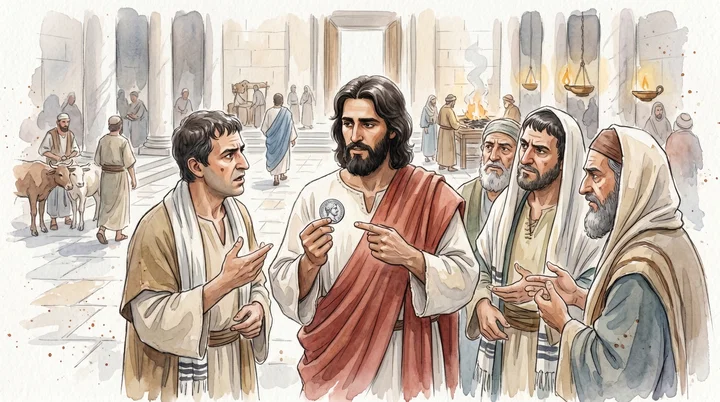
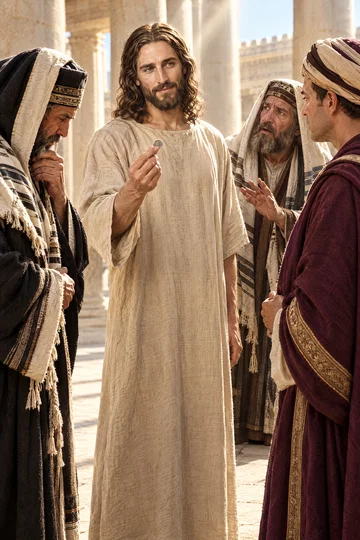
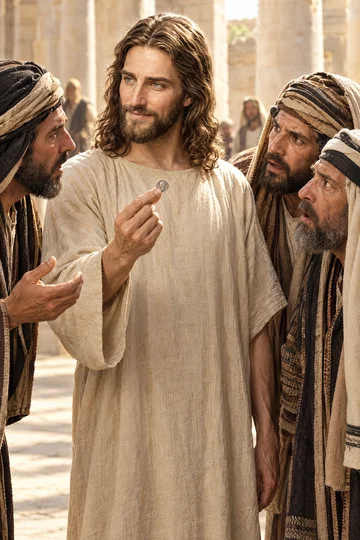
And Jesus answering said unto them, Render to Cæsar the things that are Cæsar’s, and to God the things that are God’s. And they marvelled at him.
Translations
And Jesus answering said to them, Render to Caesar the things that are Caesar’s, and to God the things that are God’s. And they marveled at him.
And Jesus answering said unto them, Render to Cæsar the things that are Cæsar’s, and to God the things that are God’s. And they marvelled at him.
And Jesus answering said unto them, Render to Cesar the things that are Cesar’s, and to God the things that are God’s. And they marvelled at him.
And Jesus answering, said to them, Render to Cesar the things that are Cesar's, and to God the things that are God's. And they wondered at him.
And Jesus said unto them, Render unto Caesar the things that are Caesar’s, and unto God the things that are God’s. And they marveled greatly at him.
And Jesus said unto them, Render unto Cæsar the things that are Cæsar’s, and unto God the things that are God’s. And they marvelled greatly at him.
and Jesus answering said to them, 'Give back the things of Caesar to Caesar, and the things of God to God;' and they did wonder at him.
And Jesus answering said to them, Pay what is Caesar's to Caesar, and what is God's to God. And they wondered at him.
And, Jesus, said—the things of Caesar, render, unto Caesar, and, the things of God, unto God. And they were marvelling at him.
Then Jesus told them, “ Give to Caesar what is Caesar’s, and to God what is God’s.”And they marveled at Him.
In response Jesus told them, “ Give to Caesar what is Caesar’s, and to God what is God’s.” And they marveled at Him.
Jesus answered them, “ Give to Caesar the things that are Caesar’s, and to God the things that are God’s.”They marveled greatly at him.
And Jesus said to them, Give to Caesar the things which are Caesar's, and to God the things which are God's. And they were full of wonder at him.
Then Iesus answered, and saide vnto them, Giue to Cesar the things that are Cesars, and to God, those that are Gods: and they marueiled at him.
Douay-Rheims (Challoner revision)
And Jesus answering, said to them: Render therefore to Caesar the things that are Caesar’s, and to God the things that are God’s. And they marvelled at him.
Pictures
Cross-references
- Matthew 22:21
They say unto him, Cæsar’s. Then saith he unto them, Render therefore unto Cæsar the things which are Cæsar’s; and unto God the things that are God’s.
Parallel account of Jesus distinguishing what is owed to Caesar and to God.
- Luke 20:25
And he said unto them, Render therefore unto Cæsar the things which be Cæsar’s, and unto God the things which be God’s.
Jesus distinguishes what is owed to Caesar from what is owed to God.
- Romans 13:7
Render therefore to all their dues: tribute to whom tribute is due; custom to whom custom; fear to whom fear; honour to whom honour.
Both define the duty owed to civil powers and distinguish it from duty to God.
- Acts 5:29
Then Peter and the other apostles answered and said, We ought to obey God rather than men.
God’s authority takes precedence when human authority conflicts with it.
- 1 Peter 2:13-17
Submit yourselves to every ordinance of man for the Lord’s sake: whether it be to the king, as supreme;
Urges submission to human ordinances and closes by calling people to fear God and honor the king.
- John 18:36
Jesus answered, My kingdom is not of this world: if my kingdom were of this world, then would my servants fight, that I should not be delivered to the Jews: but now is my kingdom not from hence.
Jesus distinguishes his kingdom from worldly political power.
- Acts 4:19
But Peter and John answered and said unto them, Whether it be right in the sight of God to hearken unto you more than unto God, judge ye.
Both texts distinguish human authority from what is owed to God.
- Matthew 22:20
And he saith unto them, Whose is this image and superscription?
The question about Caesar’s image helps identify what belongs to Caesar.
- Romans 13:5
Wherefore ye must needs be subject, not only for wrath, but also for conscience sake.
Teaches subjection to authority for conscience’s sake.
- Matthew 17:27
Notwithstanding, lest we should offend them, go thou to the sea, and cast an hook, and take up the fish that first cometh up; and when thou hast opened his mouth, thou shalt find a piece of money: that take, and give unto them for me and thee.
Jesus' own example of paying tribute
- Titus 3:1
Put them in mind to be subject to principalities and powers, to obey magistrates, to be ready to every good work,
Both teach obedience to civil authorities.
- Jeremiah 27:5-8
I have made the earth, the man and the beast that are upon the ground, by my great power and by my outstretched arm, and have given it unto whom it seemed meet unto me.
God assigns nations to Nebuchadnezzar’s rule, distinguishing earthly authority from God’s.
Commentary
Each commentary is drawn from primary sources: the writings of Ellen G. White and Adventist pioneers and periodicals. Each commentary is separate. Its own words are not a quotation; follow the references to read the source passages.
Ellen G. White
21 sources
Jesus answered a trap about paying tribute by distinguishing what belongs to civil rulers from what belongs to God, requiring each to be given its due.Ms 149, 1898, par. 63SP 42.2ST Feb 8, 1899ST Jun 29, 1882ST Apr 25, 1878 The coin bearing Caesar's image showed tribute was due to him, and those living under a government's protection should peaceably pay tribute and obey its laws so long as this does not conflict with higher duty to God, whose claims remain supreme.DA 601.1–602.5ST Feb 8, 18993SP 43.1ST Jun 29, 1882ST Apr 25, 1878 Jesus himself paid the tax and taught his followers to do so, giving advantage to neither side and proving he was no rebel.3SP 129.3–130.15RED 49.2–50.1ST Jul 4, 1878 Failure to give God His due brings foreign rule as its penalty, as seen when unfaithfulness left Jerusalem under Roman ensign, sentinel, and governor.DA 601.1–602.53SP 43.2ST Jun 29, 1882 Giving God what is His means meeting His first sacred claim on means through tithes and offerings, which debt, family provision, or prosperity never excuses withholding.1T 220.2SG4 210.11T 220.3RH Aug 2, 1870
Trap and Response
The question put to Jesus was a deliberate trap laid by the Pharisees together with the Herodians as witnesses, designed to force Him to offend either Jewish law or Roman authority.3SP 42.2ST Jun 29, 1882ST Apr 25, 1878 Though the Pharisees themselves chafed under Roman taxes and held tribute to be contrary to God's law, their spies came with flattery about His fearless truthfulness and asked whether it was lawful to give tribute to Caesar.ST Jun 29, 1882ST Apr 25, 1878 They expected a refusal to be reported as rebellion against Rome bringing arrest, and approval to be used to turn the Jews against Him as opposing God's law.3SP 42.2ST Jun 29, 1882ST Apr 25, 1878
When He exposed their hypocrisy He asked to see the tribute money, and they at once brought a coin bearing the image and superscription of the Roman ruler.ST Feb 8, 1899ST Jun 29, 1882ST Apr 25, 1878 When He asked whose image it bore they answered Caesar's, and that image and inscription identified it as Caesar's and showed why tribute was due.DA 601.1–602.5ST Feb 8, 1899ST Jun 29, 1882ST Apr 25, 1878 His answer was direct and candid, not evasive, giving plain intelligent words that settled the disputed question.ST Feb 8, 1899Ms 78, 1897, par. 17–18Ms 71, 1897, par. 27 Those words brought precious light to the people and sowed seeds of truth.Ms 78, 1897, par. 17–18Ms 71, 1897, par. 27
The reply exposed the questioners' hypocrisy, presumption and discernment of motive and displayed divine wisdom.Ms 149, 1898, par. 6DA 601.1–602.5ST Feb 8, 1899ST Jun 29, 1882Ms 78, 1897, par. 17–18 It left them with nothing further to say and made them marvel at Him.Ms 149, 1898, par. 6DA 601.1–602.53SP 42.2ST Feb 8, 1899 After marveling they hardened their hearts rather than accepting its evidence.ST Feb 8, 1899 They persisted in opposition and kept seeking another pretext against Him, though many recognized the principle and thereafter held to it even while some remained dissatisfied.ST Feb 8, 1899Ms 4, 1883, par. 63–64Ms 78, 1897, par. 17–18Ms 71, 1897, par. 27
The incident falls within illustrations and warnings about the result of rejecting the Son of God.DA 600.3 Those warnings apply in every age: those who refuse to receive Christ as Redeemer face the doom foreshadowed by the examples unless they repent.DA 600.3
Duties to Caesar and God
Render to civil rulers what properly belongs to them, and render to God what belongs to God, keeping the two claims distinct.Ms 149, 1898, par. 6ST Feb 8, 1899 The tribute question is answered by distinguishing the claim of Caesar from the claim of God, exposing hypocrisy and displaying wisdom that leaves the hearers marveling.Ms 149, 1898, par. 6ST Feb 8, 1899
Those living under civil government and under its protection should give that government the support it claims in tribute and remain peaceably subject to its laws and obey them.DA 601.1–602.53SP 43.1ST Apr 25, 1878ST Jun 29, 1882 This obedience holds only so far as it does not conflict with a higher duty to God, for first allegiance belongs to God.DA 601.1–602.53SP 43.1ST Jun 29, 1882 His claims remain supreme and must always be answered with obedience.DA 601.1–602.53SP 43.1ST Apr 25, 1878ST Jun 29, 1882 The coin's image and inscription show why tribute was due to Caesar, while duty to God sets a clear limit beside it.DA 601.1–602.5ST Feb 8, 1899
Giving God what is due means faithfully meeting His claims and fulfilling obligations to Him.3SP 43.2ST Jun 29, 1882ST Apr 25, 1878 That demand rebuked Israel, whose failure to meet God's claims produced apostasy and a broken national condition subject to a foreign power.3SP 43.2ST Jun 29, 1882ST Apr 25, 1878 Had the nation been faithful to God it would have been spared foreign rule and would not have become subject to Rome.DA 601.1–602.53SP 43.2 Roman rule over Jerusalem was the penalty for not giving God His due, seen in the Roman ensign over Jerusalem, the Roman sentinel at her gates, and the Roman governor within her walls.ST Apr 25, 1878
The duty to the reigning authority is to be fulfilled without giving advantage to either Roman or Jewish power.ST Apr 25, 1878 Jesus Himself paid the tax and taught His disciples to do so, showing obedience to the reigning power rather than leadership of sedition.3SP 129.3–130.15RED 49.2–50.1ST Jul 4, 1878 He directed the questioners to Caesar's image and inscription on the coin and told them to give Caesar what belonged to him, while also giving God what is due to Him.3SP 129.3–130.15RED 49.2–50.1 Therefore the charge that He forbade payment of tribute and stirred rebellion was false.3SP 129.3–130.15RED 49.2–50.1ST Jul 4, 1878
Giving God His Due
What belongs to human authorities and what belongs to God are distinct, and duty to the one does not cancel duty to the other.1T 220.2 Being in debt is no excuse for withholding an offering from God.1T 220.2 The one in debt should first set aside from what is possessed the amount owed to others, and then give God a suitable proportion of what remains.1T 220.2
God holds the first and sacred claim on a suitable proportion of a person's means, to be rendered through tithes and offerings.SG4 210.11T 220.3 Giving children a portion may itself be a duty, yet provision for children and other family claims must never withhold what belongs to God.SG4 210.11T 220.3 His offering is not to be taken from His altar nor used for their benefit.SG4 210.11T 220.3
In these last days God requires sacrifices and offerings no less than Israel gave.RH Aug 2, 1870 All whom He has blessed with means, including the widow and the fatherless, are to remember His blessings.RH Aug 2, 1870 Those He has especially prospered are to appear before Him with self-sacrifice and bring offerings measured by the blessings bestowed on them.RH Aug 2, 1870 To prosper and then withhold is base ingratitude, making His bounties into cords binding the heart to possessions.RH Aug 2, 1870 It lets worldly business take the affections and the whole being, neglects devotion and religious privileges, and even fails to come before God as much as once a year.RH Aug 2, 1870 So serving temporal interests instead of His requirements turns His blessings into a curse.RH Aug 2, 1870
Sources
Pioneers and periodicals
67 sources
Jesus answered those who tried to trap Him over paying tribute to Rome by calling for the tribute coin, pointing to Caesar's image and inscription upon it, and directing that what bears Caesar's stamp be given to Caesar and what bears God's stamp be given to God.ST Feb 8, 1899ST Jun 29, 1882ST Oct 10, 1906ST Jan 23, 1907ST Sep 30, 1886 What carries the image and superscription shows its owner, so the coin could rightly go to Caesar while God's distinct claim remained untouched.ST Oct 4, 1910ST Oct 31, 1895ST Oct 10, 1906 Civil government and God are thereby given entirely separate realms, with earthly rulers owed only what is temporal and civil, and God owed what belongs to religion and the duties of the soul, neither to control or unite with the other.ST Feb 21, 1906ST Jul 29, 1897 The Sabbath bears God's image and superscription and belongs to Him, so no civil power has authority over it, and to enforce Sunday observance by law is to give to Caesar what is God's.ST Jan 30, 1907ST Dec 12, 1911RH Jun 8, 1916 Believers are to honor rulers, obey just laws, and faithfully pay tribute even under unjust governments, but when human commands claim what belongs to God, God must be obeyed rather than men.ST Oct 30, 1901ST Oct 4, 1899ST Sep 2, 1889RH May 12, 1868ST Sep 30, 1886
Trap and Answer
The question was a deliberate trap laid by Pharisees bringing Herodians along as witnesses, who approached with flattery for fearless truthfulness and asked whether it was lawful for Jews as God's children, sons of Abraham, to pay tribute to the despised Gentile Caesar.ST Jun 29, 1882ST Apr 25, 1878ST Jan 23, 1907 Denial would bring accusation of sedition and rebellion before the Roman court and governor and arrest before Pilate, while affirmation would set Him against the dearest hopes of His nation, turn the Jews against Him as opposing divine law and favoring Gentile rule, and cut off His influence with His people.ST Jun 29, 1882ST Apr 25, 1878ST Jan 23, 1907ST Oct 25, 1910RH Mar 9, 1869 The tempting was instigated by Satan, and it stands as an example of a cornering question like those pressed about the Old Testament and the seventh day.ST Jun 29, 1882ST Apr 25, 1878ST Oct 25, 1910RH Mar 9, 1869 It belonged to the broader relation between religion and the state.
Jesus exposed their hypocrisy, called for the Roman denarius or penny used for tribute money, and asked whose image and superscription or inscription it bore, and they at once answered Caesar's, that of the Roman ruler.ST Jun 29, 1882ST Oct 10, 1906ST Jan 23, 1907ST Sep 30, 1886 His reasoning met even His questioners' own teaching that the king whose money circulates among a people is acknowledged by them as lord.RH Mar 9, 1869
His reply was direct and not evasive, distinguishing what is owed to Caesar from what is owed to God, and it avoided their attempt to use either answer against Him so that they were left unable to ensnare Him.ST Feb 8, 1899ST Oct 18, 1899ST Oct 10, 1906 It settled a disputed question, silenced the ensnarers, and rebuked their hypocrisy and presumption.ST Feb 8, 1899 It proved He did not forbid tribute and was not leading sedition, since He paid the Roman tribute Himself and taught His disciples to pay it in obedience to the reigning power, exposing as false the priests' later claim before Pilate that He opposed paying tribute to Caesar.ST Jul 4, 1878ST Sep 30, 1886ST Oct 26, 1882 They marveled at His wisdom and were astonished and amazed at the answer, yet hardened their hearts rather than accepting its evidence.ST Feb 8, 1899ST Oct 18, 1899ST Oct 10, 1906
Ownership by Image
The verse lays down ownership by image and superscription, that what bears a maker's signature and stamp belongs to that maker.ST Oct 4, 1910ST Oct 10, 1906ST Jan 23, 1907 The question to ask in deciding where any service or obligation belongs is whose it is, with civil dues belonging to earthly rulers while vows and tithes belong to the Lord.ST Oct 4, 1910ST Oct 31, 1895 When shrewd ensnarers asked whether it was lawful for Jews as God's children, sons of Abraham, to pay tribute to the despised Gentile Caesar, hoping denial would bring accusation of sedition and rebellion before the Roman court and affirmation would set Him against the dearest hopes of His nation and cut off His influence, He escaped by calling for the Roman denarius or penny used for tribute money and asking whose image and inscription it bore.ST Oct 10, 1906ST Jan 23, 1907 Since it was Caesar's, what bore Caesar's stamp could rightly be rendered to Caesar in that respect, while what bore God's stamp belonged to God and God's distinct claim remained.ST Feb 8, 1899ST Oct 4, 1910ST Oct 10, 1906ST Jan 23, 1907 His answer was direct and not evasive, settled a disputed question, rebuked hypocrisy and presumption, avoided any use of either answer against Him, and astonished the questioners with wisdom, though they marveled yet hardened their hearts rather than accepting its evidence.ST Feb 8, 1899ST Oct 10, 1906
Applied to the Sabbath question, the principle settles all church and state questions by asking whose stamp a thing bears.ST Jan 23, 1907 The Sabbath bears God's image and superscription because He gave it and it is holy unto the Lord, so it belongs to Him and must be rendered to Him, not to Caesar.ST Jan 30, 1907ST Jan 23, 1907 Sabbath observance belongs to God and not to civil government, since it is religious and grounded in God's law rather than civil law, so its observance must be rendered to God and does not require government support or enforcement.ST Dec 12, 1911RH Jun 8, 1916RH Oct 8, 1908 Civil authority therefore has no part in prescribing religious worship or duties between a person and God and has no authority over the Sabbath.ST Oct 4, 1910ST Jan 30, 1907 A civil law compelling men to observe a sabbath regardless of faith and regardless of belief makes men answerable to the state for a religious duty and makes them render to Caesar what belongs to God, which directly breaks the explicit instruction.ST Dec 12, 1911RH Jun 8, 1916
There is a line between what belongs to civil government and what belongs to God, and each must be given only its own, for keeping the commandments of God belongs to God. To compel all people in the United States by civil law to keep that which is not a command of God at all is to render to Caesar not only that which is Caesar's but also that which is God's. Enforcing Sunday, the first day, as the Lord's day and compelling its observance does the same, and the state should not compel religious observance or prescribe religion for minorities. God does not need civil enforcement to protect His Sabbath, and coercion produces hypocrites rather than Christians. By the same test of image and superscription, every person will bear either God's image and superscription and belong to the Lamb inside the city, or the beast's image and superscription and belong to the beast outside the city, so each must choose whose image and superscription he will bear.ST
Church and State Separate
The saying lays down the rule for religious liberty by dividing what is owed into two distinct realms, with earthly government owed only what properly belongs to it in temporal and civil matters and God owed what belongs to Him in religion and the duties of the soul to its Maker.ST Feb 21, 1906ST Jul 29, 1897ST Jul 3, 1907ST Jun 11, 1912 Caesar means civil authority, and its claim is limited to protecting individual civil rights with no authority over religious matters, while the church's authority is limited to religion with no authority in civil matters, each supreme in its own proper sphere and independent of the other.ST Feb 21, 1906ST Jul 29, 1897ST Jul 3, 1907ST Feb 16, 1915 These two duties can be fulfilled without conflict when government stays within its bounds, for Christ did not seek Caesar's help for His work and taught no union of church and state.ST Jul 29, 1897 Joining what God has separated violates the mandate and breaks the ancient Gospel order, producing trouble, confusion, and apostasy.ST Jul 3, 1907ST Feb 16, 1915ST Nov 7, 1895 To join civil authority and the church is an adulterous and unholy alliance that enthralls religion to the state.ST Nov 7, 1895ST Mar 20, 1907ST Oct 10, 1906
Such unholy alliances with human governments demoralize both church and state, promote hypocrisy, give the church arbitrary power through government, and bring back Roman supremacy with sorrowful persecution as in the Inquisition.ST Oct 10, 1906ST Apr 4, 1906ST Jul 9, 1894 The state deals with nature by law and compulsion while the church deals with grace by liberty and persuasion, so the Gospel is to be taught by disciples through persuasion and not by delegating any part of the church's work to the state to be done by compulsion.ST Oct 10, 1906ST Apr 4, 1906 The church must therefore do its God-appointed work without taking control of political and civic relations or of all matters affecting moral and social conditions, without depending on the state for support, money, or force, and without using worship or the state as machinery to carry out its own will or to compel unwilling subjects to obey church dogmas.ST Mar 20, 1907ST Apr 4, 1906ST Jul 9, 1894 True reformation succeeds without the cooperation of the state and without Sunday laws, by carrying petitions to the throne of God instead of to the halls of legislatures, for to seek state power to whip opposing elements into subjection by religious laws denies Christ's omnipotence and repeats the part of the Pharisees and Herodians.ST Mar 20, 1907ST Oct 10, 1906 A church that seeks state power will press for laws contrary to God's law, bringing those who obey God into conflict with civil law when it is enforced against conscience, and forming such a union to enforce religion digs the church's own grave and brings sure trouble that civil government should keep out of by separation.ST Mar 20, 1907ST Jul 9, 1894
Christ's kingdom is at present in this world as a spiritual power, yet He recognizes the physical government of men, so that duty to earthly rulers and duty to God both remain.ST Jul 29, 1897ST Oct 4, 1905 His kingdom is not a worldly political power ruled by force but a kingdom of loving choice, and He refused to be made a temporal king when the multitude sought it.ST Jul 29, 1897ST Oct 4, 1905 He did not undertake to reform or purify Caesar's political system, for His work was devoted to His Father's kingdom and not to forming or managing political parties, Christianizing a nation by voting, or being drawn into contentions of parties, office-seeking, and political creeds.ST Sep 28, 1882RH Sep 18, 1856ST Jan 24, 1900 Disciples must therefore give the state what is due to it even when its political power is pagan and idolatrous, without exalting morals above regeneration or cutting loose from repentance and faith and its fruits in a well-ordered life, but living for Christ, laboring for the conversion of sinners, and, as ministers, preaching Christ crucified and glorying only in the cross, imparting His power through His Spirit and not through the state.RH Sep 18, 1856ST Oct 10, 1906
Conscience Without Coercion
Civil government has no rightful authority over worship, belief, conscience, or the duties owed to God as Creator and Redeemer, including how, whether, and on what day people worship, and human authority is bounded by God's law so that kings as well as subjects owe obedience to God and are accountable for abusing power.ST Apr 4, 1906ST Aug 1, 1911ST Jun 25, 1912 What belongs to earthly rule is to be given in temporal and civil things such as tribute and honor, while worship and obedience in religion belong to God alone, and each person must remain free to worship or not worship and to practice or not practice religious teaching rather than having belief or duty imposed through civil law.ST Aug 1, 1911ST Jun 25, 1912ST Jul 30, 1912 True faith stands separate from the state and must not be imposed by state power or persecution, for religious duties such as Sabbath keeping, baptism, and the Lord's Supper belong to God rather than to Caesar and may not be compelled by government.ST Apr 4, 1906ST Jul 30, 1912
State enforcement of religious observance breaks the division by taking God's authority to Caesar and making people render to Caesar what belongs to God, whether by Sunday laws, Sabbath laws, Sunday-closing penalties, Sunday-aviation bans, or religious tests and establishments.ST Apr 4, 1906ST Dec 12, 1911RH Jun 8, 1916 Compelling observance of a sabbath regardless of faith and regardless of belief makes people answerable to the state for a religious duty, since the Sabbath is grounded in God's law and not in civil law and its observance does not require government support.ST Dec 12, 1911RH Jun 8, 1916RH Oct 8, 1908 To compel all people by civil law to keep what is not even a command of God, as in enforcing Sunday the first day as though it were the commanded Sabbath, both renders to Caesar what is Caesar's and also what is God's, punishes an act that is not a sin and what is not a crime, displeases God, and produces hypocrites rather than Christians.ST Mar 29, 1899 Sabbath laws defended merely as civil public-benefit measures are distinguished from commands founded on divine law, for only the latter claim religious obligation.ST Apr 4, 1906RH Oct 8, 1908
Outward civil duties between people, such as respecting others' rights and paying taxes, are to be obeyed even under unjust or pagan rulers, but when human commands claim what belongs to God, God must be obeyed rather than people.ST Oct 30, 1901ST Oct 4, 1899RH May 12, 1868 Respect for natural rights belongs to civil rule, while worship and service owed to God as Creator and Redeemer belong to God alone, so religion is not owed to civil governments and they have no rightful authority over religious matters.ST Jun 3, 1908ST Mar 29, 1899 The state may punish crimes but cannot rightly determine or punish sin nor force observance of a religious institution, and the first four commandments and other duties to God are forbidden ground for legislation, for giving to Caesar what belongs to God refuses to transfer God's authority to civil government.ST Oct 30, 1901ST Jun 3, 1908ST Mar 29, 1899 This was shown when Shadrach, Meshach, and Abednego still served God though the state exalted itself above Him, and in Rome where Caesar was presented and worshiped as divine the separate rendering denied Caesar any claim to divinity and affirmed that God, not Caesar, is God.ST Oct 30, 1901ST Oct 4, 1899
The same boundary forbids the church to direct government action, to petition as a church to control civil power for religious ends, to take public money for religious instruction, or to exalt the symbol of civil force while preaching love, for when the church seeks supremacy on civil ground it leaves its spiritual territory and becomes entangled with civil power.ST Jul 28, 1898RH Mar 16, 1905ST Oct 10, 1906 Believers pay for public institutions as citizens and support their own schools privately, keep patriotic loyalty as a civil duty distinct from religious duty, and leave education and religion free from state control for the good of both.ST Jul 28, 1898RH Mar 16, 1905 Christ's kingdom is not an earthly political power to be brought about by voting to Christianize a nation, by exalting morals above regeneration, or by joining worldly maxims and bitter party wrangling for office and political creeds, but by preaching Christ crucified, laboring for conversion, and teaching the Gospel by persuasion through the Spirit's power rather than delegating the church's work to the state to be done by compulsion.ST Jul 29, 1897ST Sep 28, 1882RH Sep 18, 1856ST Oct 10, 1906
Those who hold the minority use require obedience to civil Sunday requirements and deny protection to refusers, and this use is taught to prepare persecution of commandment-keepers.RH Mar 13, 1900 Those who hold the other minority use distinguish the state's authority over temporal matters from the church's authority over spiritual matters so that temporal rulers are supreme within their proper domain while the church claims no jurisdiction over purely temporal affairs, yet add that rulers remain answerable to the Roman pontiff for their good or bad use of power.RH Jul 9, 1908
Duty to Caesar
Paying tribute, a tax levied on all within a government's territory for its support, is lawful and right because government is ordained of God and needs officers and funds to maintain its laws.ST Sep 2, 1889ST Sep 30, 1886 What belongs to God is not to be rendered to Caesar, and what belongs to Caesar God requires only to be rendered to Caesar, so people are to give civil rulers what is properly due to them, including paying tribute, while giving God what belongs to God.ST Sep 2, 1889ST Sep 30, 1886ST Jul 12, 1905 Jesus pointed to Caesar's image on the tribute money, paid the Roman tribute himself and taught his disciples to do so, and his obedience to the reigning power showed he was not leading sedition and exposed as false the priests' claim and the charge before Pilate that he forbade paying tribute.ST Jul 4, 1878ST Sep 30, 1886ST Oct 26, 1882 His disciples must therefore give the state what is due to it even when its political power is pagan and idolatrous, and this recognizes civil authority without making Christ's kingdom a worldly power.ST Sep 30, 1886ST Oct 26, 1882 Honest payment extends to legitimate charges such as postage, and to paying rightful taxes for public institutions as fellow citizens do while keeping what belongs to God for God, without taking public money to support religious instruction, with believers who love God and His Word supporting their own denominational schools by private subscription where teaching consonant with the true Gospel of Christ is given.ST Sep 2, 1889ST Jul 12, 1905
Christians are to be subject to civil rulers and pay tribute and honor in civil things, but worship and obedience in religion belong to God alone, so civil government has no right to command worship.ST Oct 30, 1901ST Feb 13, 1907 Civil authority is ordained by God and must receive its due while what belongs to God must be given to God, and religious freedom is priceless and belongs to God alone so civil authority has no control over it.ST Oct 30, 1901ST Feb 13, 1907 Honoring its rightful authority is compatible with faithfulness to God and with defending civil and religious liberty, and Christ as King of kings and Lord of lords over it means honoring earthly rulers does not set aside loyalty to God.ST Feb 13, 1907ST Jun 14, 1905ST Jun 14, 1905 Christians therefore cheerfully meet their obligations to earthly government while keeping full allegiance to God, standing for civil and religious liberty and supporting what brings glory to God and peace and prosperity to the nation and the world, and giving honor to those to whom honor is due.ST Jun 14, 1905ST Jun 14, 1905ST Aug 10, 1882 Government may require outward duties between people, such as respecting others' rights and paying taxes, but its authority is limited to civil matters, and Christians should obey civil laws even under unjust rulers so long as obedience does not conflict with duty to God, for when human commands claim authority over duty belonging to the individual soul and its Maker, God must be obeyed rather than people.ST Oct 30, 1901ST Feb 13, 1907 Obedience to human laws in this sphere disciplines for obedience to divine laws.ST Oct 30, 1901ST Jun 14, 1905
Civil authority is limited to protecting individual civil rights and respect for people's natural rights, and to governing secular conduct, and has no authority over religious matters, just as church authority is limited to religion and has no authority in civil matters, and these duties can be fulfilled without conflict when government stays within its proper sphere.ST Jul 29, 1897ST Mar 29, 1899 Religion and worship and service owed to God as Creator and Redeemer are not owed to civil governments, so they have no rightful authority over religious matters and must not take the place of God or claim authority over religious duties.ST Jun 3, 1908ST May 15, 1901 The state may punish crimes but it cannot rightly determine or punish sin or force people to observe a religious institution, and giving to Caesar what belongs to God means refusing to transfer God's authority to civil government, attempts to do which have led to religious persecution including the Inquisition.ST Jun 3, 1908ST Mar 29, 1899ST May 15, 1901 Enforcing Sunday observance punishes an act that is not a sin, because Sunday is the first day of the week and not the Sabbath commanded by God, and the confusion between crimes and sins arises when civil authority crosses the boundary between what belongs to Caesar and what belongs to God.ST Jul 29, 1897ST Jun 3, 1908ST Mar 29, 1899 The king like the humblest subject owes obedience to God and is accountable to Him for abusing his power, for human authority is bounded by the law of nature and of God, not supreme, and Christ's kingdom is not a worldly political power ruled by force but a kingdom of loving choice.ST Jul 29, 1897ST Oct 30, 1901ST May 15, 1901
Duty to God
The verse calls for a well-balanced life that honestly meets both obligations without evading any just duty.RH Oct 27, 1910ST Oct 25, 1910 Love of God and love of neighbor are the two great commandments on which all the law and the prophets depend, embracing justice and mercy as reflected in the two tables of the Decalogue, love to God in the first and love to neighbor in the second.ST Apr 20, 1904 Duty is a debt owed because people belong to God, so they are not to live for self-pleasing or self-pampering, and their chief end is to do what is due to God rather than making their own culture or even their own salvation the chief aim. Respect for God's law means respecting the equal rights of others, since violating those rights also offends their Author and brings accountability before Him.ST Dec 24, 1912 The things that are God's call for personal concern, and the one who has concern for God's things receives God's care for himself and for all that is his.ST Nov 13, 1893
Rendering to God includes giving from worldly goods lent by Him to support His work.RH Jun 30, 1859 Paying what is owed to civil government does not excuse neglecting what is owed to God or replace giving what is owed to Him, for the Lord's claims are as just and deserving of regard as Caesar's, so systematic benevolence belongs alongside tax obligations and pledges for God's work must be promptly paid to provide the needed means.RH Jun 30, 1859RH Sep 4, 1866RH Jun 9, 1859 In these last days God requires sacrifices and offerings no less than Israel gave, with all whom He has blessed with means, including the widow and the fatherless, remembering His blessings and especially the prospered appearing before Him with self-sacrifice and offerings measured by the blessings bestowed.RH Aug 2, 1870 To prosper and then withhold is base ingratitude, making His bounties cords binding the heart to possessions, letting worldly business take the affections and the whole being, neglecting devotion and religious privileges and failing to come before God even once a year, thus turning blessings into a curse by serving temporal interests instead of His requirements.RH Aug 2, 1870
Failure to meet God's claims and faithfully fulfill obligations to Him led to apostasy and to subjection as a nation to foreign power.ST Jun 29, 1882ST Apr 25, 1878 The Roman ensign over Jerusalem, the Roman sentinel at her gates, and the Roman governor within her walls, with tribute paid under Rome's protection, were the penalty for turning away from God and not giving Him His due.ST Jun 29, 1882ST Apr 25, 1878
The teaching astonished hearers long shaped by the pagan idea that the state must administer religion, because it separates civil government from the administration of religion and enjoins rendering to Caesar only what is Caesar's, thereby vindicating religion for the conscience of the individual.RH Oct 26, 1911 Spoken by one human voice in Judea against all the wealth, education, influence, and power of the Roman Empire, it established a pure, spiritual, and universal religion and began a mighty contest between light and darkness and liberty and bondage. The grant of freedom to choose and practice religion in the Edict of Milan was a formal surrender by Rome to this principle upheld by Jesus' disciples against imperial suppression.RH May 15, 1900 Neither Jesus nor His apostles sought Caesar's financial or other support, and the church advanced while opposed by civil government, but later seeking state aid helped lead to the Dark Ages when Christianity united with the empire.ST Dec 23, 1903 Ignoring the division, by seizing municipal, state, or national public functions to add force and prestige to religious legislation, violates the true American idea of civil government and religion later incorporated into the Constitution, so such attacks by enemies of liberty strike at liberty itself and call for warning.ST Jun 6, 1906 When rulers and religious authorities use civil power to compel conformity and punish dissent and take worship according to conscience, the result is tyranny, bondage, oppression of true religion, and hypocrisy, as illustrated by the persecution of the Waldensians, Luther and his followers, the Puritans, and John Bunyan.RH Oct 26, 1911
Sources