Luke 20:24
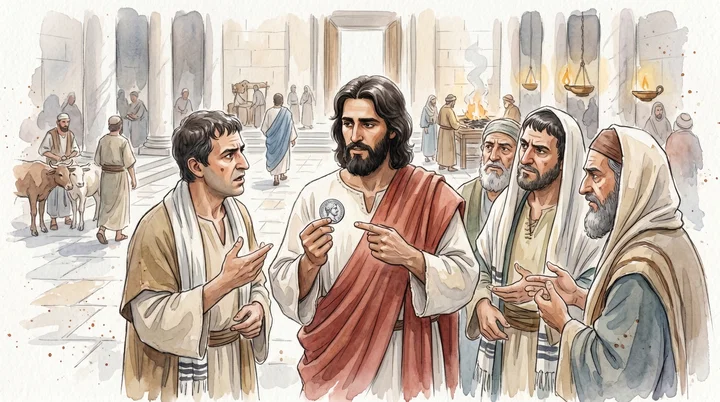
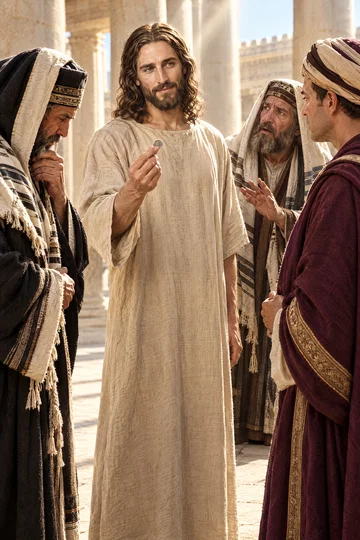
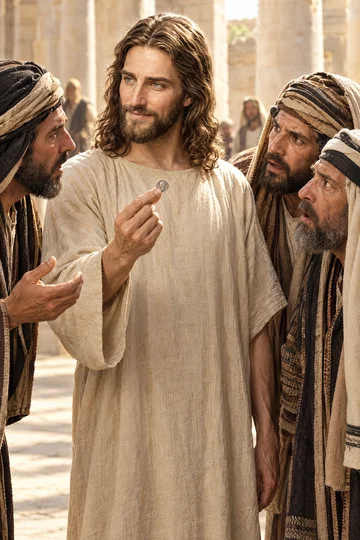
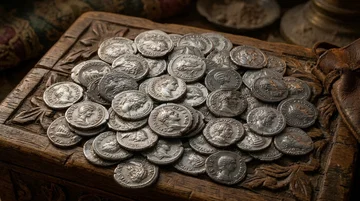
Shew me a penny. Whose image and superscription hath it? They answered and said, Cæsar’s.
Translations
Show me a penny. Whose image and superscription has it? They answered and said, Caesar’s.
Shew me a penny. Whose image and superscription hath it? They answered and said, Cæsar’s.
Shew me a penny. Whose image and superscription hath it? They answered and said, Cesar’s.
Show me a penny. Whose image and superscription hath it? They answered and said, Cesar's.
Shew me a penny. Whose image and superscription hath it? And they said, Caesar’ s.
Show me a denarius. Whose image and superscription hath it? And they said, Cæsar’ s.
shew me a denary; of whom hath it an image and superscription?' and they answering said, 'Of Caesar:'
Shew me a denarius. Whose image and superscription has it? And answering they said, Caesar's.
Shew me a denary. Of whom, hath it an image and inscription? And, they, said—Of Caesar.
“ Show Me a denarius. Whose image and inscription are on it?”“ Caesar’ s,” they answered.
Show Me a denarius. Whose image and inscription are on it?” “ Caesar’ s,” they answered.
Show me a denarius. Whose image and inscription are on it?”They answered, “ Caesar’ s.”
Let me see a penny. Whose image and name are on it? And they said, Caesar's.
Shew me a penie. Whose image and superscription hath it? They answered, and sayd, Cesars.
Douay-Rheims (Challoner revision)
Shew me a penny. Whose image and inscription hath it? They answering, said to him, Caesar’s.
Pictures
Cross-references
- Matthew 22:19-21
Shew me the tribute money. And they brought unto him a penny.
Parallel account of the coin and Jesus’ answer about rendering to Caesar and God.
- Mark 12:15-17
Shall we give, or shall we not give? But he, knowing their hypocrisy, said unto them, Why tempt ye me? bring me a penny, that I may see it.
The parallel account identifies Caesar’s coin and gives Jesus’ answer about rendering to Caesar and God.
- Romans 13:7
Render therefore to all their dues: tribute to whom tribute is due; custom to whom custom; fear to whom fear; honour to whom honour.
Both texts call for rendering to governing authorities what is owed.
- Matthew 22:15-17
Then went the Pharisees, and took counsel how they might entangle him in his talk.
gives the ensnaring tribute question that prompted it
- Mark 12:17
And Jesus answering said unto them, Render to Cæsar the things that are Cæsar’s, and to God the things that are God’s. And they marvelled at him.
Jesus distinguishes what is owed to Caesar from what is owed to God.
- Luke 23:2
And they began to accuse him, saying, We found this fellow perverting the nation, and forbidding to give tribute to Cæsar, saying that he himself is Christ a King.
The charge that he forbade tribute contradicts his teaching about paying Cæsar.
Commentary
Each commentary is drawn from primary sources: the writings of Ellen G. White and Adventist pioneers and periodicals. Each commentary is separate. Its own words are not a quotation; follow the references to read the source passages.
Ellen G. White
15 sources
Caught in a trap over paying tribute to Caesar, pressed by spies who hoped either answer would give grounds to accuse Him, Jesus met the question head-on.DA 725.3–63SP 42.2ST Jul 4, 1878 He called for a penny and asked whose image and inscription it bore, and the answer, Caesar's, marked the coin as belonging to Caesar and to Roman authority.Ms 78, 1897, par. 15–16ST Feb 8, 1899 By that image and inscription the coin showed its place within Caesar's sphere, so those living under Roman protection owed the civil government its rightful support in tribute and in peaceable submission and obedience to the laws of the land.DA 601.1–602.5ST Feb 8, 1899ST Jun 29, 1882ST Apr 25, 18783SP 129.3–130.1 That duty holds only so long as it does not conflict with the higher duty to God, for first allegiance belongs to God.Ms 78, 1897, par. 15–16DA 601.1–602.5 Jesus Himself paid the tribute and taught His disciples to do so, and His answer gave no ground for a charge of sedition against Rome.DA 725.3–63SP 129.3–130.1ST Jul 4, 18785RED 49.2–50.1
Trap and Coin's Meaning
The question whether tribute should be paid to Caesar was not an honest inquiry but a trap laid by spies sent to catch Jesus in His words.DA 725.3–63SP 42.2ST Jul 4, 1878 Pharisees, Herodians, and Sadducees pressed Him with it together, expecting that either a yes or a no would give them grounds to accuse Him.DA 725.3–63SP 42.2Ms 71, 1897, par. 27 He met the demand by asking for a penny to be shown to Him and by asking whose image and inscription it bore.ST Feb 8, 18993SP 42.2 The answer given was Caesar's, and that answer identified the coin as belonging to Caesar and to Roman authority.Ms 78, 1897, par. 15–16ST Feb 8, 18993SP 42.2ST Jun 29, 1882ST Apr 25, 1878 By that plain fact the dispute was marked out as one over Roman tribute and the civil power to which tribute was owed.ST Feb 8, 1899ST Jun 29, 1882
His use of the fact was candid and intelligent rather than evasive.Ms 71, 1897, par. 27Ms 78, 1897, par. 17–18 It exposed the hypocrisy and presumption of those who had laid the trap and demonstrated divine wisdom.DA 725.3–6Ms 78, 1897, par. 17–18 The plotters were left with nothing to say, and the Romans present saw that the plot had failed.DA 725.3–63SP 42.2 The principle He set forth settled the disputed question for many minds, bringing precious light and sowing seeds of truth, though some remained dissatisfied.3SP 42.2Ms 71, 1897, par. 27Ms 78, 1897, par. 17–18
Duty to Caesar and God
The image and inscription on the penny showed that it belonged to Caesar's sphere and identified the civil authority to which the tribute was owed.DA 601.1–602.5ST Feb 8, 18993SP 129.3–130.1 That mark on the coin supplied the basis for distinguishing what was owed to Caesar from what was owed to God.Ms 78, 1897, par. 15–16ST Feb 8, 18993SP 129.3–130.1 Because the people lived under Roman protection, they owed the civil government its rightful support.DA 601.1–602.5ST Jun 29, 1882ST Apr 25, 1878ST Jun 29, 1882 That support meant paying the tribute Rome claimed and peaceably submitting to and obeying the laws of the land and the reigning power.ST Jun 29, 1882ST Apr 25, 1878ST Jul 4, 1878ST Jun 29, 1882
Jesus himself paid the tribute and taught His disciples to do so, showing obedience to the reigning government.3SP 129.3–130.1ST Jul 4, 18785RED 49.2–50.1 That civil duty holds only so long as it does not conflict with the higher duty to God.DA 601.1–602.5ST Apr 25, 1878ST Jun 29, 1882 First allegiance remains to God, so what belongs to Caesar is to be given to Caesar and what belongs to God is to be given to God.Ms 78, 1897, par. 15–16DA 601.1–602.5ST Jun 29, 1882ST Apr 25, 1878 His answer therefore gave no ground for accusation of sedition against Rome.DA 725.3–6ST Jul 4, 18785RED 49.2–50.1 It exposes as false the later charge before Pilate that He perverted the nation, forbade tribute to Caesar, and acted against Roman rule, a charge made by priests who knew it was unfounded.DA 725.3–6ST Jul 4, 18785RED 49.2–50.1
Warning and Character Likeness
The questioning over the coin belongs among the warnings given against rejecting the Son of God, standing as part of the answer to those who came seeking to trap Him.DA 600.3 Those warnings reach beyond that moment to every age, so that all who refuse Christ as Redeemer stand under the doom foreshadowed by the examples He set forth unless they repent.DA 600.3 The image and inscription on the coin also show the principle that a person carries a likeness that declares whose representative he is.Lt 14, 1888, par. 6–7 The character in view bears an image more like the Lord’s enemies than the sanctified Spirit of Christ, and God cannot accept or use such a one until self-exaltation and self-righteousness are put away and Christ’s character is reflected.Lt 14, 1888, par. 6–7
Sources
Pioneers and periodicals
22 sources
Spies seeking to trap him in the temple asked Jesus whether tribute to Rome was lawful, hoping to turn either the people or the governor against him, and he exposed their hypocrisy by calling for the tribute coin and asking whose image and writing it carried, leaving them unable to answer him further.ST Oct 18, 1899ST Oct 28, 1913ST Oct 10, 1906 The image and writing stamped on the coin showed who owned it and whose rule its use acknowledged.ST Sep 24, 1894ST Jan 30, 1907ST Feb 22, 1910 What bears Caesar's stamp is to be given to Caesar, and what bears God's stamp to God, so taxes, obedience to law, and peaceable living belong to civil rule while worship and duty to God do not.ST Jun 29, 1882ST Sep 24, 1894ST Feb 22, 1910ST Jul 1, 1908ST Oct 30, 1901 Civil claims end where they conflict with God's claims, for no government may command conscience, dictate religion, or take what belongs to God.ST Sep 24, 1894ST Jul 1, 1908ST Oct 30, 1901 The Sabbath bears God's stamp of ownership and therefore belongs to him and not to Caesar, while Sunday observance bears the stamp of human and apostate authority rather than God's word.ST Jan 30, 1907ST Mar 5, 1894ST Jan 23, 1907ST Jan 11, 1899
Setting and Coin's Meaning
The questioning took place in the temple at Jerusalem, where the Pharisees with the Herodians, and the scribes and Pharisees, sought to ensnare Jesus in his talk by asking whether it was lawful to give tribute to Caesar.ST Oct 18, 1899ST Oct 28, 1913 He perceived their wickedness and rebuked them as hypocrites for tempting him, then demanded to see the tribute money.ST Oct 18, 1899 When a penny was brought, he asked whose image and superscription it bore, and they answered Caesar's, which prepared his command to render to Caesar what is Caesar's and to God what is God's.ST Oct 18, 1899 That answer left them marveling and unable to take hold of his saying before the people, so they held their peace and left him.ST Oct 18, 1899
The tribute question was a trap laid by spies to force him either to appear disloyal to Israel's hope of freedom and alienate the Jews, or to be accused before Pilate and the governor of sedition and disloyalty.ST Oct 10, 1906ST Oct 25, 1910RH Mar 9, 1869 He answered candidly and wisely by pointing to the money and its image and inscription, using that plain fact to expose the trap.ST Oct 10, 1906RH Mar 9, 1869 In this way he gave his opponents no grounds to accuse him of disloyalty before his own people or before the governor, leaving them confused and settling the question for many.ST Oct 10, 1906RH Mar 9, 1869
The coin's image and inscription are marks of ownership identifying it as belonging to Caesar, and money current in a king's realm acknowledged that king as its lord.ST Sep 24, 1894ST Jan 30, 1907ST Feb 22, 1910ST Jan 23, 1907RH Mar 9, 1869 Jesus used a penny familiar to his hearers as the concrete entry point for the lesson, asking whose image and inscription it bore in order to establish what belonged to Caesar and to prepare the distinction between what is owed to civil authority and what is owed to God.ST Sep 24, 1894ST Feb 22, 1910ST Jul 1, 1908ST Oct 30, 1901ST Jan 23, 1907
The exchange belongs among the captious questions put to Jesus by the Pharisees and Sadducees, coming after the parable of the husbandman and before the discourse on the destruction of Jerusalem and his second coming.ST Apr 21, 1909 It stands within the section from Luke 18:24 through Luke 21 that also includes the foretelling of his death, the healing of the blind man, the call of Zacchaeus, the parable of the pounds, the riding into Jerusalem, and the weeping over the city.ST Apr 21, 1909
Duties to Caesar and God
The penny bore Caesar's image and inscription, and that mark showed to whom it belonged, establishing that what belongs to Caesar is to be rendered to Caesar and what belongs to God to God.ST Feb 8, 1899ST Feb 22, 1910ST Jan 23, 1907 Service owed to civil authority is therefore distinct from service owed to God, with civil authority limited to outward matters between people such as taxes and protection, and also service and legal tender.ST Feb 22, 1910ST Jul 1, 1908ST Oct 30, 1901 The coin bearing Caesar's image represents the civil government's legitimate claim, while God's claims remain separate and must not be surrendered to human authority.ST Jul 1, 1908ST Oct 30, 1901
Those living under Rome's protection were to pay the tribute Rome claimed, render it the support it claimed, support Roman authority, obey the laws of the land, and live peaceably while submitting to civil rule.ST Jun 29, 1882ST Apr 25, 1878ST Jun 29, 1882ST Sep 24, 1894 This submission held only so long as it did not conflict with duty to God, for they were still to give God what is due to Him.ST Jun 29, 1882ST Apr 25, 1878ST Jun 29, 1882 Jesus himself paid tribute and taught his disciples to do so, showing obedience to the governing power rather than leadership of sedition.ST Jul 4, 1878ST Sep 30, 1886 His directing attention to Caesar's image and superscription on the tribute money taught obedience to the reigning power and the duty to pay tribute, and this proves false the priests' later charge before Pilate that he perverted the nation and forbade tribute to Caesar, since he gave no ground for accusation of sedition against Rome.ST Jul 4, 1878
When civil commands conflict with God's law, obeying them would withhold from God what belongs to Him, so obedience belongs to God rather than human authority.ST Sep 24, 1894 The State has no rightful authority over religion, and civil government must not enforce religious beliefs, dictate religious observance, interfere with what belongs to God, or command the conscience.ST Sep 24, 1894ST Jul 1, 1908ST Jan 11, 1899 Human ordinances are to be obeyed unless they are raised above their proper place and presume upon the conscience, and each person's duty to God belongs to the individual soul and personal freedom of conscience must not be surrendered to human authority.ST Jul 1, 1908ST Oct 30, 1901 By the same ownership rule, the Sabbath belongs to the Lord and not to Caesar, because God gave it and it bears His stamp and mark of ownership, so civil government has no authority over it and money bearing the world's stamp is due as tribute while what bears heaven's stamp is to be rendered to Him alone.ST Jan 30, 1907ST Jan 23, 1907ST Jan 11, 1899
The question of whose image and superscription a coin bears is applied to the Sunday sabbath to ask whose authority and character that observance represents.ST Mar 5, 1894 Sunday observance represents paganism, apostate church tradition, and human usurpation rather than God's word, and its keeping by good people does not make it genuine, while the seventh-day Sabbath represents God's word, Christ the Creator, and the sign of creation and redemption.ST Mar 5, 1894 The same idea that image and inscription identify whose coin it is frames allegiance by asking whether a person bears the Lamb's identity or the beast's.ST The Pharisees questioning Jesus about paying tribute, a civil matter, parallels religious leaders leaving the gospel's work to pursue laws on religious matters.ST
Sources