Translations
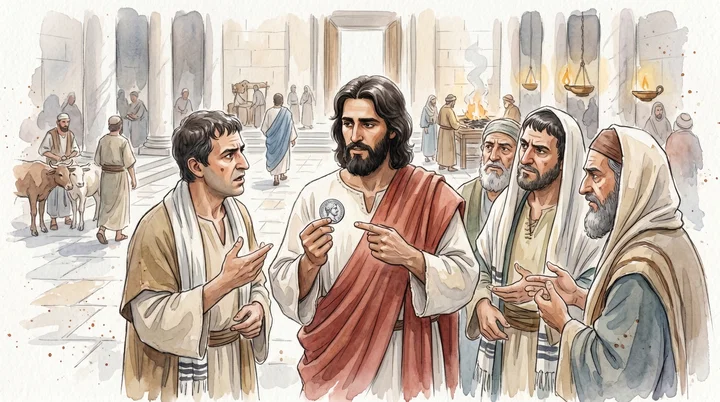
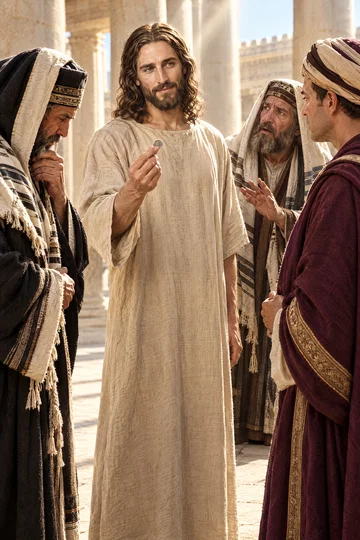
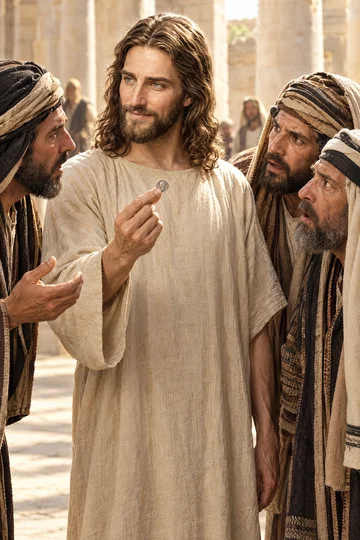
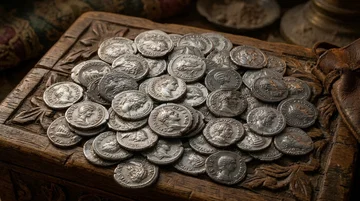
Show me the tribute money. And they brought to him a penny.
King James Version, KJV Cambridge Paragraph Bible, Revised Version
Shew me the tribute money. And they brought unto him a penny.
Show me the tribute-money. And they brought to him a penny.
Show me the tribute money. And they brought unto him a denarius.
show me the tribute-coin?' and they brought to him a denary;
Shew me the money of the tribute. And they presented to him a denarius.
Shew me the coin appointed for the tax. And, they, brought unto him a denary.
Berean Standard Bible, Majority Standard Bible
Show Me the coin used for the tax.”And they brought Him a denarius.
Show me the tax money.”They brought to him a denarius.
Let me see the tax money. And they gave him a penny.
Shewe me the tribute money. And they brought him a peny.
Douay-Rheims (Challoner revision)
Shew me the coin of the tribute. And they offered him a penny.
Pictures
Cross-references
- Luke 20:24-25
Shew me a penny. Whose image and superscription hath it? They answered and said, Cæsar’s.
Jesus identifies Caesar’s coin and distinguishes Caesar’s due from God’s.
- Mark 12:13-17
And they send unto him certain of the Pharisees and of the Herodians, to catch him in his words.
Jesus asks for the tribute coin and distinguishes Caesar’s claims from God’s.
- Romans 13:7
Render therefore to all their dues: tribute to whom tribute is due; custom to whom custom; fear to whom fear; honour to whom honour.
Both teach rendering tribute and other dues to those entitled to them.
- Luke 23:2
And they began to accuse him, saying, We found this fellow perverting the nation, and forbidding to give tribute to Cæsar, saying that he himself is Christ a King.
The false charge that Jesus forbade tribute is disproved by his teaching on tribute.
- Matthew 17:27
Notwithstanding, lest we should offend them, go thou to the sea, and cast an hook, and take up the fish that first cometh up; and when thou hast opened his mouth, thou shalt find a piece of money: that take, and give unto them for me and thee.
Both show Christ paying tribute money.
Commentary
Each commentary is drawn from primary sources: the writings of Ellen G. White and Adventist pioneers and periodicals. Each commentary is separate. Its own words are not a quotation; follow the references to read the source passages.
Ellen G. White
11 sources
The demand to see the tribute money comes when the Pharisees joined with the Herodians, spies sent by the priests, approach to entangle Jesus in His talk with the question whether paying tribute to Caesar and Rome is lawful, as one of a series of entangling questions put with flattering words commending Him as true and with pretended confidence and candor.Ms 10, 1906, par. 8–12ST Jun 29, 18823SP 42.25RED 49.2–50.1Ms 71, 1897, par. 27 The question is laid as a trap with two intended accusations, for if He says tribute should not be paid He can be reported to the Romans as an enemy to civil authority and as rebellion, and if He says it should be paid He can be accused to the elders of opposing the law of God, at a time when many Jews held that paying tribute to a foreign power violated Jewish law and Rome watched closely for sedition and revolt.Ms 10, 1906, par. 8–123SP 42.25RED 49.2–50.1 Jesus perceives their wickedness, reads their hearts and wicked purposes, calls them hypocrites, and is not deceived for a moment by their flattery.Ms 10, 1906, par. 8–12ST Jun 29, 1882 His unexpected demand to see the tribute money throws the questioners off guard and exposes and defeats the trap, and they immediately bring Him a penny.Ms 10, 1906, par. 8–12DA 601.1–602.5ST Jun 29, 1882ST Feb 8, 18993SP 42.1
The penny brought to Him is a Roman tribute coin bearing the image and inscription of Caesar, the Roman ruler.DA 601.1–602.5ST Jun 29, 1882ST Apr 25, 1878ST Feb 8, 18993SP 42.1 He uses the coin's image and inscription to identify Caesar's claim and to teach that what belongs to Caesar should be rendered to Caesar, distinct from what belongs to God, so that those living under Roman rule and protection should support its authority so long as doing so does not conflict with their higher duty and first allegiance to God.DA 601.1–602.5ST Apr 25, 1878ST Feb 8, 18993SP 42.13SP 129.3–130.1 His teaching and example prove He was always obedient to the reigning power, for He paid the tribute Himself and taught His disciples to do so, which proves false the priests' later charge before Pilate that He perverted the nation and forbade tribute to Caesar while claiming Himself Christ a king in order to make Him appear to stir up rebellion against Rome.3SP 129.3–130.15RED 49.2–50.1ST Jul 4, 1878 His answers to the entangling questions were plain and intelligent, brought precious light to the people, and sowed seeds of truth.Ms 71, 1897, par. 27 As He then understood character, Christ still understands the true character of every person and writes the true motives of all in His book whatever their profession, and no cover of pretentious righteousness can deceive Him.Ms 10, 1906, par. 8–12
Sources
Pioneers and periodicals
45 sources
Jesus asks His challengers to show Him the tribute money and they at once hand Him a Roman denarius, the legal coin owed to Caesar.ST Aug 22, 1911ST May 28, 1912ST Jan 30, 1907ST Jul 1, 1908 He was meeting a trap set by Pharisees and Herodians who hoped a yes or no on paying Rome would either turn the people against Him or expose Him to a charge of treason before Pilate.ST Jan 7, 1889ST Feb 12, 1902RH Mar 9, 1869ST Sep 30, 1886 Pointing to Caesar's image and inscription on the coin, He teaches that what belongs to Caesar is to be given to Caesar and what belongs to God is to be rendered to God.ST Jul 3, 1907ST Mar 19, 1896 Civil rule is a divinely ordained arrangement with its own limited sphere over outward matters such as taxes and tribute, yet it has no right to govern conscience or compel worship, and when it interferes with duty to God its demands are to be disregarded.ST Apr 25, 1878ST May 28, 1912ST Jan 23, 1907ST Jun 30, 1909ST Dec 12, 1895 By that same mark of ownership, the Sabbath bears God's mark as Creator and belongs to Him, not to the state, so church and state are to remain forever separate with neither directing the other in religious observance.ST Jul 3, 1907RH Oct 20, 1904ST Jan 30, 1907ST Jun 30, 1909RH Oct 29, 1914
Trap Over Tribute
The request for the tribute money belongs to Jesus' final day of teaching in the temple, when He answered the questions put to Him.RH Jan 29, 1914ST Mar 23, 1888 It took place in the temple on the same day as His other confrontations with the leaders.ST Mar 23, 1888
The question about tribute was a trap set to ensnare Him by the Pharisees and Herodians, with scribes and priests sending spies.ST Jun 29, 1882ST Apr 25, 1878ST Feb 12, 1902ST Sep 30, 1886ST Sep 12, 1911 Those spies came with pretended confidence and candor, flattering Him to entrap Him over tribute to Rome.ST Jun 29, 1882 One group sought to confound Him, and men sought to ensnare Him.ST Jan 7, 1889ST Sep 12, 1911
Tribute to Rome was politically dangerous because Jews opposed payment to a foreign power, and Judas of Galilee had led a revolt against the land tax declaring tribute to Caesar unlawful.ST Feb 12, 1902 The question was framed so that either a yes or a no would turn the nation and the people against Him or expose Him to a Roman treason charge.RH Mar 9, 1869ST Jun 3, 1908ST Oct 10, 1906 The priests and Pharisees sought to ruin Him by provoking a statement against paying tribute that could be used as an accusation before the Roman authorities and the people, before Pilate the governor and the authorities.RH Mar 9, 1869ST Sep 30, 1886ST Mar 23, 1888 A refusal would have handed Him over to the governor for refusing tribute and laid Him open to accusation as disloyal to Israel's hope of freedom and as stirring sedition.RH Mar 9, 1869ST Sep 30, 1886ST Jun 3, 1908
Jesus was not deceived for a moment by their flattery, but discerned their insincere motive and wicked device.ST Jun 29, 1882 He called them hypocrites and threw them off guard by His demand to see the money.ST Jun 29, 1882 His answer exposed their folly lest they be wise in their own conceit, answering a fool according to his folly in the right sense without answering according to his folly in the wrong sense by betraying the same evil temper and becoming like the questioner.RH Sep 17, 1861
The Penny Produced
When challenged over paying tax, He asked His challengers to bring and show Him the tribute money, and they immediately brought Him a penny.ST Jun 29, 1882ST Aug 22, 1911ST May 28, 1912ST Jan 23, 1907 That penny was the Roman denarius, the Roman tribute coin and the legal tender owed to Caesar.ST Jan 30, 1907ST Jul 1, 1908ST Jan 23, 1907 The coin brought bore the image and inscription or superscription of Caesar, the Roman ruler, which identified whose authority it represented and marked it as belonging to civil government.ST Apr 25, 1878ST Jul 3, 1907ST Jul 3, 1907ST Mar 19, 1896ST Jan 23, 1907
He used that piece of tribute money as a familiar object and object lesson, giving a starting point for the lesson that followed and making His teaching clearer through both hearing and seeing.ST May 28, 1912ST Mar 19, 1896ST Sep 17, 1885ST Mar 12, 1885 Their very use of coins bearing Caesar's image and inscription and circulating among them acknowledged Caesar's rule and lordship over them, according to their own teachers' rule that men acknowledge as lord the king whose money circulates among them.ST Sep 11, 1893ST Dec 12, 1895RH Mar 9, 1869 That showed their political power was subject to Rome and rebuked their claim to civil authority in God's name.ST Sep 11, 1893RH Mar 9, 1869
Render to Caesar and God
The request to produce the tribute coin brought a penny into His hand, and that coin let Him point to its likeness and inscription and ask whose it bore.ST Feb 8, 1899ST Jul 3, 1907ST Mar 19, 1896ST Jun 4, 1894 The image and superscription marked the piece as Caesar's, identifying whose authority it represented and whose claim it carried.ST Feb 8, 1899ST Mar 19, 1896ST Jun 4, 1894 From that starting point He distinguished what was due to Caesar from what was due to God, teaching that what belongs to Caesar is to be given to Caesar and what belongs to God is to be kept sacred and rendered to God, each receiving what belongs to him.ST Feb 8, 1899ST Jul 3, 1907ST Mar 19, 1896
Civil authority is a proper and divinely ordained arrangement, and people owe allegiance to the country where they live.ST Jan 23, 1907 Taxes and tribute belong to the civil sphere, and those living under Roman protection owed the civil power its due.ST Apr 25, 1878ST Dec 12, 1895ST Sep 2, 1889ST Mar 6, 1907 That duty held provided it did not conflict with obligations owed to God, marking the boundary between what governments can rightly require and what God requires.ST Apr 25, 1878ST Sep 2, 1889ST Mar 6, 1907
He was always obedient to the reigning power and did not hold payment of tribute to a foreign power to be against the law.ST Sep 30, 1886 He paid tribute Himself and taught His disciples to do so.ST Jul 4, 1878ST Sep 30, 1886
What belongs to God has the prior claim and must be rendered to Him, and the State has no right to intrude on a person's relationship with God.ST Oct 30, 1901RH Feb 3, 1910ST Sep 2, 1889 That claim covers the individual soul and its worship, while outward matters including taxes belong under civil government's authority.ST Dec 12, 1895ST Oct 30, 1901ST Mar 6, 1907 Religious observances such as the Lord's Supper, baptism, and the Sabbath bear God's authority and are outside the State's jurisdiction, so civil government must not interfere with or enforce religious observance.ST Jul 3, 1907ST Dec 12, 1895 Government-issued money is used to pay a State tax, and using the tribute coin acknowledged Caesar's authority, while by comparison paying tithe recognizes God's interest in every dollar a person receives.ST Jul 3, 1907RH Oct 19, 1916
The teaching in this chapter on the two great commandments does not repeal or cancel any duty in God's moral law but summarizes its requirements without changing them.ST Jun 7, 1877 The law remains in force as God's unchangeable statute, and Christ's death vindicates it rather than abolishing it.ST Jun 7, 1877 Through it people are saved from its penalty and given another opportunity for eternal life by keeping God's commandments and the faith of Jesus.ST Jun 7, 1877
Limits on Civil Power
The request to show the tribute money sets up the answer that civil authority has its own limited sphere, distinct from the obligations owed to God.ST Aug 22, 1911ST May 28, 1912 The coin with its image and inscription identifies what belongs to Caesar, distinguishing civil obligations such as tribute and taxes from worship and other allegiance owed directly to God.ST May 28, 1912ST Oct 30, 1901ST Mar 6, 1907 Civil government therefore has authority over outward matters including taxes, while the individual soul and its worship belong to God and not to Caesar.ST Oct 30, 1901ST Mar 6, 1907 That boundary gives civil power proper bounds and at the same time sets its limit.ST May 28, 1912
Civil authority has no right to govern matters of conscience or to compel religious worship.ST May 28, 1912 When it oversteps those bounds and interferes with duty to God, its requirements are to be disregarded. What bears God's mark belongs to Him, and the Sabbath belongs to God because its law identifies the seventh day as Jehovah's, the Creator's, over which Caesar has no authority.ST Jun 30, 1909 People are free to choose whether to observe it, and judgment is left to God at the last day.ST Jun 30, 1909 Christ taught this distinction with courtesy and respect, without compromising truth.
Pure Christianity requires keeping church and state forever separate.ST Jul 3, 1907RH Oct 29, 1914 The penny brought to Him bore Caesar's image and inscription, providing the basis for distinguishing what is owed to the State from what is owed to God.ST Jul 3, 1907 The same distinction denies the church divine authority to interfere in civil affairs or to direct the State through religious legislation.ST Nov 27, 1901 It marks the limits of the church's authority in relation to civil power.RH Mar 26, 1914 It contrasts the church's gospel mission with making laws for the nation, especially religious laws, and warns against turning to civil power to enforce religious observance or spiritual duties.ST Sep 13, 1905ST
Jesus refused to make civil and political affairs part of His work.ST Apr 25, 1900 He came to save sinners, not to regulate public or private affairs.ST Apr 25, 1900
Sabbath Belongs to God
By analogy with the coin, what bears Caesar's mark belongs to Caesar and what bears God's mark belongs to Him, and the Sabbath bears God's mark of ownership and therefore belongs to God to be rendered to God.RH Oct 20, 1904ST Jan 30, 1907ST Jun 30, 1909 Jesus asked for the tribute money and had it brought to Him as a Roman denarius, and the coin's image and inscription identified it as Caesar's and gave the starting point for distinguishing what belongs to civil government from what belongs to God.RH Oct 20, 1904ST Jan 30, 1907ST Jun 30, 1909 The Sabbath declares Him the Creator, and its commandment identifies the seventh day as the Lord's Sabbath.RH Oct 20, 1904ST Jun 30, 1909 Its law identifies the seventh day as Jehovah's, the Creator's.RH Oct 20, 1904ST Jun 30, 1909
The reverence due the Sabbath should therefore be given to God, not to the state.RH Oct 20, 1904ST Jan 30, 1907ST Jun 30, 1909 Caesar has no authority over it, and people are free to choose whether to observe it with judgment left to God at the last day.RH Oct 20, 1904ST Jan 30, 1907ST Jun 30, 1909 Civil dues belong to Caesar while what belongs to God is owed to Him, and this distinction does not authorize the church to use civil power to enforce spiritual duties.RH Oct 20, 1904ST Jan 30, 1907ST Sep 13, 1905ST Jun 30, 1909
The coin illustrates the distinction between obligations owed to the state and religious duties owed to God, with government-issued money used to pay a state tax and taxes belonging to the civil sphere.ST Jul 3, 1907ST Dec 12, 1895 Duties such as the Lord's Supper, baptism, and the Sabbath belong to God, bear God's authority, and are outside the state's authority and jurisdiction.ST Jul 3, 1907ST Dec 12, 1895 Civil government must not interfere with or enforce religious observance.ST Jul 3, 1907ST Dec 12, 1895
Vindication and Practical Lessons
When He called for the tribute coin and pointed to Caesar's image and superscription upon it, He plainly told the Jews to give Caesar all that was due to him.ST Jul 4, 1878ST May 25, 1904ST Sep 30, 1886 He was always obedient to the reigning power, did not hold payment of tribute to a foreign power to be against the law, but paid tribute Himself and taught His disciples to do so.ST Jul 4, 1878ST Sep 30, 1886 That answer exposes as false the later charge brought before Pilate that He was perverting the nation and forbidding tribute to Caesar while saying that He Himself is Christ a King.ST Jul 4, 1878ST May 25, 1904ST Sep 30, 1886 The priests raised that accusation hoping to make Him appear to be stirring up rebellion against Rome, amid Jewish opposition to tribute paid to a foreign power.ST Jul 4, 1878ST Sep 30, 1886
The reply given when scribes and Pharisees inquired of Him the lawfulness of giving tribute to Caesar shows answering a fool according to his folly in the right sense.RH Sep 17, 1861 That right sense is answering so as to expose his folly lest he be wise in his own conceit.RH Sep 17, 1861 It is not answering according to his folly in the wrong sense, betraying the same evil temper and becoming like him.RH Sep 17, 1861 Money marked with Caesar's image also pictures wealth bound up with worldly power and greed, warning against hoarding it.ST Nov 17, 1898
The calling for the coin belongs to Christ's answer to the Sadducees, which shows from Scripture that the dead will rise.ST Jun 15, 1882 Christ grounded the resurrection in God's word and power to fulfill it.ST Jun 15, 1882 The Sadducees erred because they did not know Scripture or God's power.ST Jun 15, 1882
Sources