Mark 14:7
For ye have the poor with you always, and whensoever ye will ye may do them good: but me ye have not always.
Translations
For you have the poor with you always, and whenever you will you may do them good: but me you have not always.
King James Version, KJV Cambridge Paragraph Bible
For ye have the poor with you always, and whensoever ye will ye may do them good: but me ye have not always.
For ye have the poor with you always, and whenever ye will ye may do them good: but me ye have not always.
Revised Version, American Standard Version
For ye have the poor always with you, and whensoever ye will ye can do them good: but me ye have not always.
for the poor always ye have with you, and whenever ye may will ye are able to do them good, but me ye have not always;
for ye have the poor always with you, and whenever ye would ye can do them good; but me ye have not always.
For, always, have ye, the destitute, with you, and whensoever ye please, ye can, unto them, [at any time] do well! But, me, not, always, have ye.
Berean Standard Bible, Majority Standard Bible
The poor you will always have with you, and you can help them whenever you want. But you will not always have Me.
For you always have the poor with you, and whenever you want to, you can do them good; but you will not always have me.
The poor you have ever with you, and whenever you have the desire you may do them good: but me you have not for ever.
For yee haue the poore with you alwaies, and when yee will yee may doe them good, but me yee shall not haue alwaies.
Douay-Rheims (Challoner revision)
For the poor you have always with you: and whensoever you will, you may do them good: but me you have not always.
Pictures

Cross-references
- Matthew 26:11
For ye have the poor always with you; but me ye have not always.
Jesus explains that the poor remain while his presence with the disciples is temporary.
- John 12:8
For the poor always ye have with you; but me ye have not always.
Jesus says the poor remain with them while he will not always be present.
- Deuteronomy 15:11
For the poor shall never cease out of the land: therefore I command thee, saying, Thou shalt open thine hand wide unto thy brother, to thy poor, and to thy needy, in thy land.
Both teach that the poor remain among the people and should receive practical help.
- Matthew 25:40
And the King shall answer and say unto them, Verily I say unto you, Inasmuch as ye have done it unto one of the least of these my brethren, ye have done it unto me.
Good done to the needy is counted as good done to Christ.
- John 12:5-6
Why was not this ointment sold for three hundred pence, and given to the poor?
Judas invokes the poor to object to the costly gift while concealing his greed.
- Luke 7:37-38
And, behold, a woman in the city, which was a sinner, when she knew that Jesus sat at meat in the Pharisee’s house, brought an alabaster box of ointment,
A woman honors Jesus with tears, kisses, and ointment.
- Mark 14:3
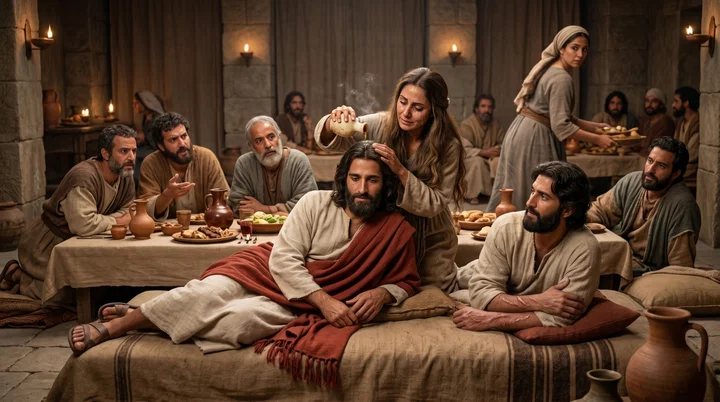
And being in Bethany in the house of Simon the leper, as he sat at meat, there came a woman having an alabaster box of ointment of spikenard very precious; and she brake the box, and poured it on his head.
A woman breaks an alabaster box and pours precious ointment on Jesus’ head.
- John 12:3
Then took Mary a pound of ointment of spikenard, very costly, and anointed the feet of Jesus, and wiped his feet with her hair: and the house was filled with the odour of the ointment.
Mary anointed Jesus with precious oil, filling the house with its fragrance.
- Matthew 26:8
But when his disciples saw it, they had indignation, saying, To what purpose is this waste?
The disciples object that the ointment could have been sold to help the poor.
- Luke 21:1-4
And he looked up, and saw the rich men casting their gifts into the treasury.
A poor widow gives all she has.
Commentary
Each commentary is drawn from primary sources: the writings of Ellen G. White and Adventist pioneers and periodicals. Each commentary is separate. Its own words are not a quotation; follow the references to read the source passages.
Ellen G. White
28 sources
It was spoken to defend Mary when she poured costly ointment upon Jesus at Simon's feast to honor him before his death, teaching that the poor remain present to be helped whenever anyone chooses while his own bodily presence was only for a little time.2SP 378.1–2DA 558.4–560.14RED 110.3ST Jul 22, 1886 Her act was a good work done from gratitude for forgiveness, anointing his body beforehand for burial when she was moved beyond her own understanding, and it need not be troubled as waste.CH 231.12SP 378.1–2DA 558.4–560.1RH Aug 7, 19004T 550.4 The complaint that it should have been sold for the poor was a cover for covetousness, especially in Judas, whose pride was wounded by the reproof until greed mastered him and he resolved to sell his Master.CH 231.12SP 377.1–2DA 720.1ST Mar 5, 19123SP 125.2 The continuing presence of the poor gives everyone a place to serve Christ, for God binds rich and poor together in sympathy and tests genuine love by personal care for the suffering, the sick, the hungry, the naked and the ignorant.MH 205.1–2PK 652.2Ms 98, 1893, par. 12–134T 552.1 Honoring Christ first with the best does not set aside that care, so the memory of the broken box still prompts deeds of love, and mission work and humble homes of healing for the poor and sick will always need support.CH 231.14T 550.46T 310.1–2ST Nov 30, 191521MR 362.4
Anointing and Its Meaning
At Simon's feast Mary anointed Jesus with costly ointment she had bought to anoint His body at His death, sacrificing greatly to honor Him even while ready to believe He would be made king and suffer rejection no longer.DA 558.4–560.14RED 110.3ST Jul 22, 1886 The poor would remain among the people and could be helped whenever anyone chose, while His own bodily presence would not remain, so helping the poor could continue afterward but this rare chance to honor Him before His death and burial must not be troubled.2SP 378.1–2DA 558.4–560.14RED 110.3 The disciples and especially Judas condemned the gift as waste and appealed to the poor, yet helping the poor, though good, did not make her act of devotion wrong.CH 231.12SP 378.1–22SP 377.1–2 Judas twisted a true gospel principle of care for the poor into an excuse for covetousness, using concern for the poor as a cover while he did not truly care for them, and his objection came from selfishness and greed that rebuked her gratitude.ST Mar 5, 1912EW 134.2SG1 181.1
Christ defended Mary when criticism and lowering glances for her extravagant anointing left her trembling, embarrassed and distressed and ready to shrink away fearing reproach even from her sister and the Master.RH Aug 7, 1900 Lifting His voice above the murmur He relieved her by calling her anointing a good work on Him that expressed her gratitude for forgiveness of sins.CH 231.1RH Aug 7, 1900EW 134.2 Mary herself could not answer her accusers or explain why she anointed Him then, moved by the Holy Spirit beyond her understanding, and Christ gave the meaning back to her, more than He received.RH Aug 7, 1900 Those who have received His saving love do not measure its worth as Judas did, but honor Him with the best of their substance and regret only that they could not offer more.CH 231.14T 550.44T 485.1
She had done what she could by anointing His body beforehand for burial.2SP 378.1–2DA 558.4–560.14RED 110.3 He was about to die with broken body and rise, so that when she came to the sepulcher she would find a living Christ needing no loving ministrations and the fragrance of His life would fill the earth.RH Aug 7, 1900 The saying was spoken as a reproof exposing the covetous disposition of Judas, whose nobler nature had been perverted by love of money, making him a fit agent for Satan to use.DA 720.13SP 125.2 The rebuke wounded his pride and stirred desire for revenge and broke down restraint so that greed long indulged took control of him.DA 720.1 Annoyed at it he yielded to the tempter and gave Satan easy access to his mind and decided to sell his Master to the murderous priests and rulers, expecting to secure the money to use for some purpose of his own while thinking Jesus would display divine power in delivering Himself from His enemies and leave the priests cheated of their bribe.DA 720.13SP 125.2
His fall shows what happens to everyone who persists in tampering with sin: elements of depravity that are not resisted and overcome respond to Satan's temptation until the soul is led captive at his will.DA 720.1 Mary's loving service in the broken alabaster box has lasting influence, its memory prompting deeds of love through the centuries and inspiring many others to serve.6T 310.1–2ST Nov 30, 1915 She will rejoice in the lasting good her act has brought when she sees its results in the day of God.6T 310.1–2
Duty to the Poor
The poor are continually present and may be done good to whenever anyone chooses, so their ongoing need leaves open a place where everyone can serve Christ.MH 205.1–2PK 652.26T 272.2 That presence calls for personal responsibility expressed in Christlike love and sympathy toward those in need, rather than shifting that care to others.MH 205.1–26T 272.2 Christ places the helpless poor among His professed followers as a test of genuine love for Him.MH 205.1–2 Caring for them demonstrates true discipleship, while neglecting them reveals false discipleship and estrangement from His love.MH 205.1–2
Through this diversity of human conditions character is tested and developed.4T 552.1CH 231.3–232.1 The continuing difference between rich and poor is not to be erased by making everyone equal in worldly possessions.4T 552.1CH 231.3–232.1 Rich and poor alike were purchased by Christ's blood, yet the poor among His followers often serve Him with undivided and single-minded purpose while the rich may cling to earthly wealth and treasures and forget Him.4T 552.1CH 231.3–232.1
God purposes the rich and the poor to be closely bound together by sympathy and helpfulness.Ms 98, 1893, par. 12–13 All entrusted with temporal blessings are appointed as stewards to interest themselves in every known case of suffering or need, for the want and wretchedness of the poor constantly appeal for compassion.Ms 98, 1893, par. 12–13Lt 16a, 1891, par. 13–15 This follows Christ, who was rich yet for men's sake became poor that through His poverty they might be rich.Ms 98, 1893, par. 12–13 Ministering to the sick, feeding the hungry, clothing the naked, and instructing the ignorant is the service most pleasing to Him.Ms 98, 1893, par. 12–13
Giving generously to the poor is a way to show gratitude for the mercy and redemption received from Christ.PK 652.2 That duty is practical and free from selfishness, as in paying a poor sickly woman for her work and in providing food and clothing for people in need.PK 652.23MR 136.33MR 411.5 Honoring Christ with the best of one's substance and putting His cause first does not set care for the poor against support for God's cause.CH 231.14T 550.4 Faithful stewards can support that cause without leaving the poor uncared for, even though the appeal to the poor was once used to criticize Mary's costly act which Jesus defended.CH 231.14T 550.4
Even though the temple with its costly offerings and sacrifices and priests has passed away, the occasion for giving continues while sinners need saving and the poor need help.Lt 39, 1874, par. 8–10 The standing command to feed the poor joins care for the poor to publishing the gospel to every creature and brings followers into close relationship with Christ.Lt 39, 1874, par. 8–10 It calls for acknowledging God's continual blessings through tithing as well as sin, trespass, and freewill offerings.Lt 39, 1874, par. 8–10 Beneficence under the gospel is not to be more stinted than under the old dispensation but more abundant as light and blessings are enlarged, for where much is given much is required.Lt 39, 1874, par. 8–10
Because the poor and the sick will always be present and will always need care, mission work in every field will continually need funds.21MR 362.4Lt 137, 1898, par. 32 Wholesome and cheerful hospitals and health homes should be established for them.21MR 362.4Lt 137, 1898, par. 32 They are to be built not in an expensive style but made wholesome and cheerful.21MR 362.4Lt 137, 1898, par. 32
Sources
Pioneers and periodicals
67 sources
The poor would always be present to be helped whenever anyone chose, but Jesus would not always remain bodily present with his followers.ST May 6, 1889RH Dec 10, 1867ST Sep 20, 1899 He was soon to be taken by crucifixion and buried, so they would no longer be able to show him love in person or minister to his body.RH Aug 7, 1900RH Dec 10, 1867ST Aug 31, 1915 Mary's costly anointing was therefore a fitting and timely good work before his burial, not waste and not something wrongly withheld from the poor, since direct service to him must not be hindered while care for the poor could continue on many other occasions.ST Sep 20, 1899RH Aug 28, 1913ST Jun 16, 1887 The plea to sell the ointment for the hungry and naked came from cold avarice rather than love, for Judas twisted care for the poor into an excuse for covetousness, and the same spirit still calls large gifts to God's cause foolishness.RH May 8, 1879ST Dec 10, 1894ST May 31, 1899 Care for the poor and needy remains an important and ever-open part of pure religion, and kindness and loving service shown to them is done to Christ himself, whose representatives they are after he was gone.RH Dec 10, 1867RH Dec 11, 1913RH Feb 19, 1857RH Nov 9, 1911
Words and Setting
The poor remain present at all times, and people may do them good whenever they choose, while Jesus would not always remain physically and bodily present with his followers.ST May 6, 1889ST May 6, 1889RH Dec 10, 1867ST Sep 20, 1899ST Dec 20, 1910 The contrast sets a continuing opportunity against a temporary one, distinguishing ongoing service to the poor from the limited presence of Jesus with his disciples.ST May 6, 1889ST Oct 9, 1879ST May 6, 1889ST Sep 20, 1899ST Dec 20, 1910 Care for the poor could be shown on many occasions, but the chance to honor him directly before his burial was immediate, so the woman's loving act toward him was fitting and was not to be troubled.ST Oct 9, 1879RH Aug 7, 1900RH Dec 10, 1867ST Sep 20, 1899 His own presence, unlike the ongoing opportunity to help the poor, was temporary, and Mary therefore did well to honor him while she could.ST Oct 9, 1879ST May 6, 1889ST Sep 20, 1899
The reason he would not always remain is that he was soon to be taken from his followers by crucifixion and buried.RH Aug 7, 1900RH Dec 10, 1867ST Aug 31, 1915RH Dec 3, 1867 They would then no longer be able to show him affection in person or minister to his body.RH Aug 7, 1900RH Dec 10, 1867ST Aug 31, 1915 Her costly ointment was given to an outcast and rejected Saviour just before he went to bear sins in his body on the tree, anointing him beforehand for burial and refreshing his spirit with her love.RH Aug 7, 1900RH Dec 3, 1867 When she would come to the sepulcher she would find a living Christ needing no loving ministrations, his broken body risen and the fragrance of his life filling the earth.RH Aug 7, 1900
The saying was spoken in a lowly home in Bethany where Jesus found safe retreat and sat at meat with Simon and his friends.RH May 8, 1879ST Jan 10, 1911 A humble woman came weeping without a word, broke an alabaster box of costly spikenard and poured it upon his head, and its perfume filled the room.RH May 8, 1879ST Jul 6, 1915 Friends who thought they loved him well did not applaud but looked with critic eye and murmured at waste, saying the precious ointment had better been sold and the money given to help the poor.RH May 8, 1879ST Jan 3, 1911 The chapter records these closing events of his earthly life. After the pouring Judas left the feast to betray him.ST Jan 10, 1911
The feast in Bethany where Mary anointed Jesus occurred six days before the Passover, not two days before.ST Oct 5, 1882 The next day he rode into Jerusalem, entered the temple and looked around and returned to Bethany.ST Oct 5, 1882 The following day he cursed the barren fig tree on the way and cleansed the temple and taught till evening before leaving the city, and the next morning the disciples saw the withered fig tree.ST Oct 5, 1882 This leaves three full days after the feast besides Thursday and one unaccounted day spent in retirement.ST Oct 5, 1882 Matthew and Mark set this anointing after the talk of betrayal to show the circumstances in which Satan took possession of Judas.ST Oct 5, 1882
Vindication of Mary's Gift
The poor remain continually present and may be helped whenever anyone chooses to do them good, but Jesus in bodily presence would not remain with the disciples much longer.ST Sep 20, 1899RH Aug 28, 1913RH Mar 24, 1910ST Jan 10, 1911ST Jan 3, 1911 Care for the poor therefore does not excuse neglecting a special opportunity to honor Him, and direct service to Him in that hour must not be troubled.RH Aug 7, 1900ST Sep 20, 1899 Mary's anointing was a fitting, timely good work of love before His burial, preparing His body for burial, and not waste nor an opportunity wrongly withheld from the poor.RH Aug 28, 1913ST Jun 16, 1887RH Mar 24, 1910ST Jan 10, 1911ST Jan 3, 1911 His defense of her and reproof of her critics illustrate the value of sacrifice springing from a heart subdued by grace and broken by love.ST Jun 16, 1887
The plea that the precious ointment should have been sold and the money given to the hungry and naked poor came from cold avarice, not love.RH May 8, 1879ST Jan 3, 1911 Judas twisted the gospel principle of care for the poor into an excuse for covetousness when he objected to the anointing.ST Mar 5, 1912ST Jan 3, 1911 When money rules, love's generous acts are restricted because they are judged too costly.ST May 31, 1899 The same Judas spirit still calls those who give much to help God's cause fools for not helping the poor instead.ST Dec 10, 1894
Mary and her family were poor, yet she had saved to buy the spikenard and kept her plan secret because she expected others to condemn the expense.RH Mar 24, 1910 She had bought it to anoint His body at His death and sacrificed greatly to honor Him, though she was ready to believe He would be made king and no longer suffer rejection.ST Jul 22, 1886 Her gift arose from a love for Jesus that was supreme and self-denying.RH Mar 24, 1910 Moved by the Holy Spirit beyond her own understanding, she could not answer her accusers or explain why she anointed Him then.RH Aug 7, 1900 Criticism and lowering glances for her extravagant anointing left her trembling, embarrassed and distressed and ready to shrink away fearing reproach even from her sister and the Master, until lifting His voice above the murmur He relieved her by calling her anointing a good work expressing gratitude for forgiveness of sins.RH Aug 7, 1900 Her loving act was a faithful response to the need before her, for she did what she could, and God asks for faithful action within one's ability with no right in anyone to demand more.ST Jul 18, 1911 Christ gave the meaning back to her, more than He received, that she had anointed His body beforehand for burial because He was about to die with broken body and rise so that when she came to the sepulcher she would find a living Christ needing no loving ministrations and the fragrance of His life would fill the earth.RH Aug 7, 1900
The gift is measured by the love that prompts it, be it much or little, not by financial calculation or human standards.RH Dec 3, 1867ST Dec 10, 1894ST Jan 10, 1906 Man sees the outward display but Christ sees the heart and rewards accordingly, and He accepts what one can do even when it poorly expresses gratitude, such as a loving tribute of flowers laid on a grave.ST Dec 10, 1894 Mary's costly gift honored an outcast and rejected Saviour just before He went to bear sins in His body on the tree; she anointed Him for burial and refreshed His spirit with her love, and like the widow's two mites it expressed all she could give, but with exceptional appreciation, pure love, and informed sympathy with His suffering.RH Dec 3, 1867 Her act exemplifies costly, heroic, self-denying service that breaks an exceedingly precious alabaster box rather than being content with small acts. Love and self-denial give an offering its value, shown in pouring out the precious ointment upon Him rather than keeping it to enjoy herself or saving it for a rainy day.ST Dec 10, 1894RH Nov 11, 1915 Love, not financial calculation, is the standard for judging her action, and right conclusions depend on viewing actions from the standpoint of love.ST Jan 10, 1906 Its lasting memorial shows that the spirit of love and self-denial matters more than the gift's monetary value.ST May 17, 1905 When she bestowed her gift in the house of Simon, his proud heart was vexed and jealous at the Master's approval, and Christ rebuked him to make him see himself in his true light as a pardoned sinner whose gratitude should have called forth generous expressions of praise and admiration like hers.ST Dec 10, 1894
What was called waste in losing and sacrificing the ointment would have had no mention and no telling over the world if she had left it kept in the unbroken vase.RH Jun 24, 1902 Broken and poured out it became a sacrifice whose perfume fills all the earth.RH Jun 24, 1902 It would evermore be told of her, for she had done what she could for Him and her act was right and good.RH May 8, 1879 The memory of the alabaster box has prompted deeds of love through the centuries.ST Nov 30, 1915 Her costly ointment poured out in loving service rather than kept became a lasting blessing remembered throughout the world. So a life carefully preserved from waste has no reward and no honor at the last, but a life emptied out in loving service becomes a lasting blessing to the world and is remembered forever.RH Jun 24, 1902
The deed of devotion, when the box was broken and its perfume filled the room, tested those who witnessed it.ST Jul 6, 1915 Their response showed whether they could recognize and value spiritual beauty, and those who failed to understand it were exposed as spiritually blind and hardhearted.ST Jul 6, 1915 The woman's act shows the importance of worship and devotion, for worship is the soul's life and service without it becomes lifeless. This lesson is especially needed by Christians who are intensely active.
Duty Toward the Poor
Care for the poor and needy is an important part of pure religion and service to Christ, an ever-open field for missionary work and Christian help work that never has a dull season when willing workers serve.RH Dec 11, 1913RHRH Mar 7, 1912ST Jan 20, 1898 Because the poor are always present and may be done good to whenever people choose, everyone can find a place to serve, with opportunities for people of every age and ability.RH Dec 11, 1913RH Mar 7, 1912ST Jan 20, 1898RH Oct 14, 1902 Caring for the sick and comforting the sorrowing is worthwhile Christian service and not work too humble to claim attention, since it also occupied His time and thought.RH Dec 11, 1913 Their continuing presence makes care for them an ever-present duty to improve their condition or encourage them to bear what cannot be changed.RH Oct 14, 1902
The poor so named are the oppressed, downtrodden, discouraged, hungry, naked, suffering, sick and afflicted.ST Jul 30, 1894RH Apr 23, 1908 Their poverty may result from sickness or affliction, or from poor management.RH Apr 23, 1908 Poverty continues in every age with opportunity to help always open, made clearer than ever by tens of thousands at home and millions abroad begging for bread, including winter hardship from short crops and dull trade in England and starvation in Italy.RH Feb 19, 1867 Prosperity and progress do not remove poverty but may accompany or deepen it, while He by contrast would not remain bodily with His disciples always.ST Jul 20, 1904
God permits the poor and sick to remain among His people and in the church so that members will care for them personally.RH Apr 23, 1908 This duty cannot be handed over to an organization or institution without harming both the members and the church.RH Apr 23, 1908 Their presence is a blessing that awakens sympathy and develops Christlike benevolence, helps overcome selfishness, marks righteousness, and brings spiritual growth and joy.RH Aug 1, 1912RH Apr 23, 1908 Unselfish care for the poor and afflicted is the example to follow.RH Aug 1, 1912
Provision had been made for the poor, and followers can give according to their means from what is entrusted to them as agents of providence.ST Jul 30, 1894RH Apr 11, 1912 The poor and needy will never cease out of the land and are to be looked after and provided for by those in condition to share with them.RH Mar 26, 1908 This calls for contributing of means entrusted to supply the worthy poor and orphans among them, in a liberal offering on the appointed first Sabbath in April.RH Mar 26, 1908 The rich are to use wealth and other gifts to help the poor, not merely to benefit other rich people.ST Jul 30, 1894
He was soon to be taken by crucifixion, so followers would no longer be able to show Him affection in person, but the poor would remain and could still be helped and comforted.RH Dec 10, 1867RH Oct 4, 1870 Kindness to the least is kindness to Christ, whose representatives the needy are, and loving service to them is service done to Him whose full value will be revealed at the final judgment.RH Dec 10, 1867RH Nov 9, 1911RH Aug 5, 1873 Giving to the poor after He was gone would be giving to Him, and the more people love Him and give to Him the more inclined they will be to help the poor.ST Apr 5, 1905 Those who cannot anoint Him for burial can still serve the living Christ by caring for those in need and doing good to His people, through practical help such as food, money, clothing, care for the sick, kindness to the burdened, encouragement to the fainthearted, and correction of those who err.RH Feb 19, 1857RH Oct 4, 1870 As His love grows poverty should lessen, and the increase of pauperism alongside growing wealth is evidence that His love is waning.ST Apr 5, 1905
Love Shown in Life
The anointing before burial shows that love, kindness and honor are to be given while people are alive to be comforted by them, and not held back until after death when praise, flowers and gestures can no longer reach them.STRH Jul 3, 1913ST Dec 20, 1905ST Feb 15, 1905RH Jun 15, 1916 The best that can be offered belongs to the living, since devotion is timely only when it can still bless the one who receives it.ST Dec 20, 1905ST Feb 15, 1905 Charity practiced in this life is a test of character, because the poor remain and the response to them reveals what a person is.STRH Nov 24, 1863
Those in need are always present to be helped whenever the choice is made to do them good, and they are to be sought out because their wants may be hidden even in a prosperous community.ST Dec 25, 1893ST Oct 2, 1879ST Oct 2, 1879 Help is to be practical, supplying actual necessities such as food, money, clothing, shelter and fuel.ST Dec 25, 1893ST Oct 2, 1879 When direct personal help is not possible, life's necessities are to be sent to them.ST May 8, 1901 This seeking and relieving work continues even when poverty or hardship is partly connected to a person's own choices.ST Oct 2, 1879
Praying for the poor is not enough while what could supply their wants is withheld.RH Dec 13, 1870 Their practical needs must be met by willing acts, and not by prayer alone.RH Dec 13, 1870RH Apr 25, 1871 By such willing giving, people themselves become the answer to prayers offered for the needy.RH Apr 25, 1871
Costly houses of worship with bought and hired pews that shut out poor residents, lest fine clothes and damask pews be soiled, stand condemned, since the poor are continually present as an ongoing duty to do them good.RH Aug 7, 1855ST Jan 30, 1879 Displaying extravagance in worship, even down to extravagant handkerchiefs, while the poor are left hungry, cold or excluded from comfortable seating gives the saying that the poor are always present a double force and shows lack of regard for Christ.RH Jan 9, 1872 Moral courage is required to take a poor man by the hand, bring him in to share good, improve his condition where it can be improved, or encourage him to bear what cannot be changed.RH Aug 7, 1855
Honoring God with what is possessed is never waste, while giving to the poor remains an ever-open opportunity to do good.RH Apr 3, 1855 Care for the poor is an ever-open field for missionary work for every age and ability, and caring for the sick and comforting the sorrowing is worthwhile Christian service and not work too humble to claim attention, since it also occupied the time and thought of Jesus.RH Dec 11, 1913 Costly offering poured out for Christ and for degraded souls is not wasted, even when missionary labor is spent upon those sunk in sin and ignorance and counted a waste of time, money and life, because even those far down in depravity can be lifted and made something of by the gospel.ST Jun 29, 1904
Sources