Translations
For you have the poor always with you; but me you have not always.
King James Version, KJV Cambridge Paragraph Bible, Webster Bible, Revised Version, American Standard Version
For ye have the poor always with you; but me ye have not always.
for the poor always ye have with you, and me ye have not always;
For ye have the poor always with you, but me ye have not always.
For, always, the destitute, have ye with you,—but, me, not always, have ye;
Berean Standard Bible, Majority Standard Bible
The poor you will always have with you, but you will not always have Me.
For you always have the poor with you, but you don’ t always have me.
For the poor you have ever with you, but me you have not for ever.
For yee haue the poore alwayes with you, but me shall yee not haue alwaies.
Douay-Rheims (Challoner revision)
For the poor you have always with you: but me you have not always.
Pictures

Cross-references
- John 12:7-8
Then said Jesus, Let her alone: against the day of my burying hath she kept this.
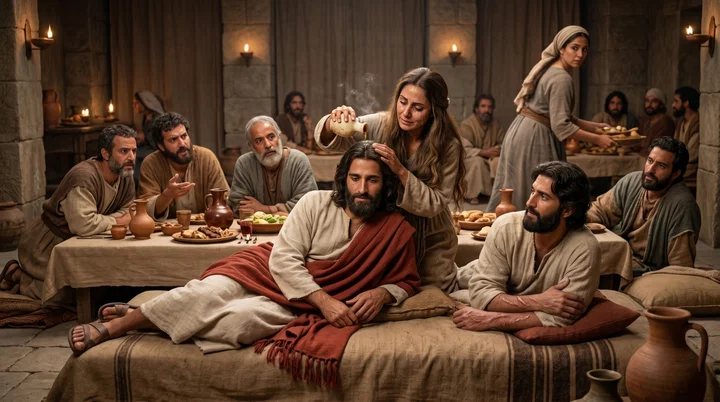
Jesus answers Judas’s objection by saying the poor are always with them, but he is not.
- Mark 14:7
For ye have the poor with you always, and whensoever ye will ye may do them good: but me ye have not always.
Jesus says the poor remain available to help while defending the woman’s anointing.
- Deuteronomy 15:11
For the poor shall never cease out of the land: therefore I command thee, saying, Thou shalt open thine hand wide unto thy brother, to thy poor, and to thy needy, in thy land.
It says the poor will remain in the land and commands generosity toward them.
- John 12:8
For the poor always ye have with you; but me ye have not always.
Records the same contrast between the poor’s continuing presence and Jesus’ absence.
- Matthew 25:40
And the King shall answer and say unto them, Verily I say unto you, Inasmuch as ye have done it unto one of the least of these my brethren, ye have done it unto me.
Care for people in need is counted as care for Christ.
- Luke 7:37-38
And, behold, a woman in the city, which was a sinner, when she knew that Jesus sat at meat in the Pharisee’s house, brought an alabaster box of ointment,
A woman anoints Jesus with ointment at a meal.
- Mark 14:5
For it might have been sold for more than three hundred pence, and have been given to the poor. And they murmured against her.
The ointment was said to have been sold for the poor.
- John 12:6
This he said, not that he cared for the poor; but because he was a thief, and had the bag, and bare what was put therein.
Judas was a thief who stole from the money entrusted to him.
- Mark 14:8
She hath done what she could: she is come aforehand to anoint my body to the burying.
Mary anoints Jesus’ body beforehand for burial.
- Deuteronomy 15:7-8
If there be among you a poor man of one of thy brethren within any of thy gates in thy land which the LORD thy God giveth thee, thou shalt not harden thine heart, nor shut thine hand from thy poor brother:
Both texts speak of the poor and the duty to help those in need.
- Matthew 25:35-36
For I was an hungred, and ye gave me meat: I was thirsty, and ye gave me drink: I was a stranger, and ye took me in:
Both describe caring for the poor through practical acts of service.
- Luke 14:13-14
But when thou makest a feast, call the poor, the maimed, the lame, the blind:
Jesus urges welcoming the poor and promises recompense at the resurrection.
Commentary
Each commentary is drawn from primary sources: the writings of Ellen G. White and Adventist pioneers and periodicals. Each commentary is separate. Its own words are not a quotation; follow the references to read the source passages.
Ellen G. White
44 sources
Spoken at the supper in Simon's house at Bethany where Mary anointed His head and feet with costly spikenard, the saying means the poor will always remain among people while Christ in bodily presence would soon be gone because His burial was near.Ms 28, 1897, par. 21–29Lt 70, 1910, par. 17–21Lt 4, 1899, par. 33–344RED 107.1–108.1Ms 120, 1897, par. 7–8 Judas led the complaint that the ointment should have been sold for the poor, but his concern was hollow pretense and covetousness, for he stole what was meant for their relief and measured generous love as waste.Lt 70, 1910, par. 17–214T 41.1–42.1SG1 181.1DA 563.2–564.1Ms 100, 1897, par. 6–7 Mary's breaking of the alabaster box was no waste but a good work prompted by love, gratitude, penitence and faith, which Jesus accepted as an anointing beforehand for His burial.Ms 28, 1897, par. 21–29Lt 70, 1910, par. 17–21Lt 4, 1899, par. 33–344T 550.42SP 377.1–2 Poverty is permitted to continue to test character and call out sympathy and benevolence, and Christ identifies Himself with suffering people so that kindness toward them is accepted as done to Him, leaving a continual responsibility for practical help with food, clothing, and care.4T 552.1CH 231.3–232.1PP 535.3ST Oct 2, 1879ST Apr 29, 1875 Yet the needs of the poor do not make it wrong to honor Christ with the best of one's possessions, and His cause and the work of preaching the gospel to every creature must come first and not be restricted under the plea of giving to the poor.Ms 4, 1899, par. 42–454T 550.4Lt 4, 1899, par. 38–40Lt 138, 1898, par. 24–25
Historical Setting
The words were spoken at Bethany in the closing days of the ministry, at the supper feast in Simon's house where Mary anointed the Saviour's head and feet with precious ointment.Lt 70, 1910, par. 17–214RED 107.1–108.1Ms 120, 1897, par. 7–8
The ointment was a box of spikenard worth three hundred pence.Ms 120, 1897, par. 7–8Ms 100, 1897, par. 6–7
Until this anointing Judas had made no open opposition and had seemed not to question the importance of Christ's lessons, though in heart he disagreed with all that was said to the disciples and under his influence the leaven of disaffection spread.Ms 120, 1897, par. 7–8
Judas led the criticism that the ointment should have been sold and given to the poor.Lt 70, 1910, par. 17–21Ms 100, 1897, par. 6–7
He counted the money it might have brought and treated its absence from the fund for the poor and the work as a loss, and presented saving as the great evidence of godliness.4T 41.1–42.1Ms 100, 1897, par. 6–7
The other disciples joined him in calling the offering unnecessary waste.Lt 70, 1910, par. 17–21Ms 100, 1897, par. 6–7
His concern for the poor was hollow pretense covering covetousness, for he did not truly care for the poor.SG1 181.1DA 563.2–564.1EW 134.2ST Mar 5, 1912
He was stealing money meant for their relief and using money entrusted for them for himself.DA 563.2–564.1EW 134.2
He prized Jesus only enough to sell Him for a little money, and from avarice and selfish greed he measured Mary's generous gift as waste.SG1 181.1EW 134.2ST Mar 5, 1912Ms 100, 1897, par. 6–7
The saying was an implied rebuke of Judas because of his covetous spirit, and the rebuke vexed and annoyed him.3SP 125.2Ms 120, 1897, par. 7–8Ms 100, 1897, par. 6–7
At the reproof his spirit turned to gall, and the greed long indulged held him in control and overpowered every other trait of his nature.Ms 120, 1897, par. 7–8
Annoyed, he yielded to the tempter and gave Satan easy access to his mind, deciding to sell his Master to the murderous priests and rulers.3SP 125.2Ms 120, 1897, par. 7–8
He had no thought that Jesus would permit Himself to be taken, but supposed the priests would be cheated of their bribe while he secured the money to use for some purpose of his own and Jesus would have a new opportunity to display His divine power in delivering Himself from His enemies.3SP 125.2
Meaning of Contrast
The poor will always remain among people, while Christ in bodily presence would soon be gone because His burial was near, so His time among the disciples was nearly over.Ms 28, 1897, par. 21–29Ms 4, 1899, par. 42–45Lt 4, 1899, par. 33–342SP 377.1–2 Mary therefore had a brief and unique opportunity to honor Him in person with her costly ointment as a gift of love and gratitude, which He accepted as an anointing beforehand for His burial and preparation of His body for death.Ms 28, 1897, par. 21–29Ms 4, 1899, par. 42–45Lt 4, 1899, par. 33–342SP 377.1–2 She broke the alabaster box of precious ointment upon His head and feet in no waste but a good work done in gratitude for her brother's restoration to life and in full faith in Christ as Saviour, though she believed He was about to take a throne in Jerusalem.Ms 4, 1899, par. 42–452SP 377.1–2 The disciples' appeal to help the poor was narrow-minded because they begrudged Jesus this token of love and did not recognize that they would soon be unable to offer Him such service.Ms 28, 1897, par. 21–29Ms 28, 1897, par. 35–37
Opportunities to care for the poor would continue, while the moment to honor Jesus in person was brief, unique, and limited.DA 557.1–2DA 558.4–560.1ST Jul 22, 1886Ms 28, 1897, par. 35–37 This distinction answers the complaint that the ointment should have been sold for the poor, for Jesus used the continuing presence of the poor to defend Mary's anointing as honoring Him before His death while opportunities to do good to them would remain.DA 558.4–560.1ST Jul 22, 1886 The verse does not make the poor less worthy of care, but shows that Mary's loving service to Christ was precious and that the disciples later regretted putting the poor ahead of honoring Him while He was present.Ms 28, 1897, par. 35–37
Selling the ointment for much might have bought bread and clothing and fed a small number of destitute persons for a short time without certainty they would be really benefited.Ms 4, 1899, par. 42–45Lt 4, 1899, par. 38–40 By contrast Mary's gift was a faint representation of Christ's boundless love, showing her love for her Saviour, immortalized wherever the gospel is preached, and bound up by Christ with His own sacrifice, the greatest the world has ever seen.Ms 4, 1899, par. 42–45 Her giving to Jesus was not waste but a timely act of ministry to her Lord expressing love, while selling it would have provided only brief help to a few destitute people.Ms 4, 1899, par. 42–45Lt 4, 1899, par. 38–40
Mary's Gift Vindicated
Mary's breaking of the alabaster box of precious ointment upon His head and feet was no waste but a good work done upon Him, given unqualified approval because He looked at the motive prompting the deed of the penitent woman.Ms 4, 1899, par. 42–45Lt 70, 1910, par. 17–21Lt 4, 1899, par. 33–344T 550.4Ms 28, 1897, par. 42 Honoring Him with the best of one's possessions is not made wrong by the needs of the poor.4T 550.4Ms 28, 1897, par. 42 Her gift was prompted by love, gratitude, penitence, and full faith in Christ as Saviour, pouring out love and devotion after rescue.Ms 28, 1897, par. 21–29Ms 4, 1899, par. 42–45DA 568.1–2 It expressed thanks for forgiveness and for her brother's restoration to life, washing His feet with her tears.Ms 4, 1899, par. 42–45EW 134.2DA 568.1–2 She also hoped He was about to take a throne in Jerusalem and be honored as king, and meant by the offering to honor Him.2SP 377.1–24RED 107.1–108.1 He accepted the costly offering as an anointing beforehand for His burial and preparation of His body for death.Ms 28, 1897, par. 21–29Lt 4, 1899, par. 33–342SP 377.1–2
Her act would be immortalized and remembered wherever the gospel is preached.Ms 4, 1899, par. 42–45Lt 4, 1899, par. 33–34 Through the centuries its memory has prompted countless deeds of love and inspired many others to loving service.6T 310.1–2ED 109.2–3 In the day of God she will see the good her gift brought about and rejoice.6T 310.1–2 Mary represents the church, so her timely act of ministry to her Lord teaches the church in all ages about giving to Jesus from love.Ms 4, 1899, par. 42–45Lt 4, 1899, par. 38–40
The disciples' appeal to help the poor was narrow-minded and faultfinding because they begrudged Jesus this token of love.Ms 28, 1897, par. 21–29Ms 28, 1897, par. 35–37 Costly offerings given from love to Him must not be troubled, questioned, and condemned as waste by inquiries about why money was not spent on some other worthy object.Lt 70, 1910, par. 17–21 The verse does not make the poor less worthy of care, but shows that Mary's loving service to Christ was precious.Ms 28, 1897, par. 35–37 The disciples later regretted putting the poor ahead of honoring Him.Ms 28, 1897, par. 35–37
Why Poverty Remains
Poverty was not meant to disappear from the world, for God did not intend the ranks of society to be equalized or everyone to have an equal share of worldly possessions.4T 552.1CH 231.3–232.1 Differences in circumstance remain as a means of testing and proving people and developing Christian character.4T 552.1CH 231.3–232.1ST Oct 2, 1879ST Apr 29, 1875 The sight of need placed among men calls out sympathy and love and benevolence.ST Oct 2, 1879ST Apr 29, 1875
Want and poverty will always continue no matter how high knowledge, morality, and civilization rise.Lt 83, 1902, par. 15–16 Their continuance is a display of the riches of grace and a standing memorial that the work is done not by might nor by power but by the Spirit of the Lord.Lt 83, 1902, par. 15–16 To remove poverty from the earth would not benefit Christianity, for it would close a door now open for the exercise of faith and for reaching afflicted hearts by the gospel of goodness.Lt 83, 1902, par. 15–16 The poor and the rich alike are redeemed by Christ, yet among professed followers the poor often serve Him with single-hearted and single-minded purpose.4T 552.1CH 231.3–232.1 The rich can become attached to earthly treasures and wealth and forget Christ, with worldly cares and greed obscuring the eternal world.4T 552.1CH 231.3–232.1
Christ joins His concern to that of the poor, identifying Himself with suffering people and making their needs His own.PP 535.3ST Oct 2, 1879ST Apr 29, 1875 He regards them as His representatives on earth, placed among men to awaken love for the suffering and oppressed.PP 535.3ST Apr 29, 1875 Kindness and generosity toward them are accepted as kindness shown to Him, while cruelty or neglect toward them is treated as done to Him.PP 535.3
Caring for the Poor
The continual presence of people in need leaves ongoing opportunities and responsibilities to show mercy rather than merely wishing them well.ST Sep 12, 1895ST May 13, 1903Lt 139, 1895, par. 2 Because the poor are always present, everyone has something to do for Christ, so no one need feel there is no place to labor for Him.ST May 13, 1903 Love and mercy and provision are entrusted to people as stewards and distributors to supply necessities.ST Sep 12, 1895Lt 16, 1891, par. 8 Varied abilities and means are entrusted talents to be increased by constant use in this service, with no turning aside from the duty and no robbing of God by withholding tithes and offerings from His treasury.Lt 16, 1891, par. 8
Care is practical, in kind words and practical help, food and clothing and personal help for destitute and suffering people, support for widows and orphans and families in need.Lt 31b, 1895, par. 10Lt 139, 1895, par. 23MR 411.5 Without such help the poor will be left distressed and homeless.Ms 85, 1897, par. 6–8 Helping a poor, sick person is duty, and selfishness is to be put away.3MR 136.3 Poor members are to remain among the church's members, and their presence gives each church member personal responsibility to show them the love and sympathy Christ would show rather than shifting that duty to others, and doing so disciplines believers to serve in Christ's way.6T 272.2
The poor should hear the gospel and may be helped by being taught to help themselves, yet the verse does not require giving all available time, strength, and money to them.Ms 6, 1900, par. 29–31Lt 83, 1902, par. 15–16 Duty to them must continue with care that those helped are not led to depend on unearned gifts, while overwillingness to relieve the needy is a sin very few commit and one that should be freely forgiven.Lt 83, 1902, par. 15–16 It lays a most solemn obligation to do for millions of souls ready to perish in ignorance and sin all that one would desire if conditions were reversed.ST May 13, 1903 By Christian liberality souls are reached that could be reached in no other way, as the helping hand of the gospel.Lt 83, 1902, par. 15–16
The sick and poor will always be present needing care, so mission agencies in every field continually need funds for that continuing work.21MR 362.4Lt 137, 1898, par. 32 Hospitals and health homes are to be established for the sick and poor, not in expensive style but made wholesome and cheerful.21MR 362.4Lt 137, 1898, par. 32 Money coming at the right time for this work is from the Lord and calls for thankfulness.21MR 362.4
Honoring Christ and Mission
The continuing need of the poor does not make it wrong to honor Christ with the best of one's possessions, for the costly gift was a good work done for Jesus.4T 550.4 Faithful stewards can provide for both the poor and God's cause, yet Christ's cause should come first.4T 550.4 It must not be neglected in the name of helping the poor.4T 550.4
Not all available time, strength, money, labor, and gifts are to be bestowed upon the poor or bound up in rescuing outcasts, and the work for them, though constant, must not be made all-absorbing.Ms 6, 1900, par. 29–31Lt 4, 1899, par. 38–40Lt 138, 1898, par. 24–25 The poor should hear the gospel and may be helped by being taught to help themselves, rather than by devoting all effort to those who require constant help while willing people who can respond to the gospel are neglected.Ms 6, 1900, par. 29–31Lt 4, 1899, par. 38–40 Selling the ointment would have provided only brief help to a few destitute persons, buying bread and clothing and feeding a small number for a short time without certainty they would be really benefited, whereas giving to Jesus was not waste but a timely act of ministry to the Lord expressing love.Ms 4, 1899, par. 42–45Lt 4, 1899, par. 38–40 Mary's breaking of the alabaster box upon His head and feet was no waste but a good work done in gratitude for her brother's restoration to life and in full faith in Christ as Saviour, a faint representation of His boundless love bound up with His own sacrifice, the greatest the world has ever seen, and immortalized wherever the gospel is preached.Ms 4, 1899, par. 42–45
Mary represents the church, so the church in all ages is taught that the special work for this time is not to be restricted under the plea of giving to the poor.Ms 4, 1899, par. 42–45 The means given by the churches is needed to support those fulfilling His commission to go into all the world and preach the gospel to every creature, to establish the work in new fields and untouched vineyards, and to present truth in the highways, ministering to all classes and proclaiming the glad tidings to every nation, tongue, and people.Ms 4, 1899, par. 42–45Lt 4, 1899, par. 38–40Lt 138, 1898, par. 24–25 Churches are not to be pressed now to sustain the rescue work for outcasts, for the means to sustain that work will come largely from those not of the faith.Lt 138, 1898, par. 24–25 Love for Christ and gratitude for salvation lead a person to give generously, while covetousness measures the gift's value, and Jesus, though continually serving others, doing good to the poor and comforting the oppressed, approved Mary's costly anointing as an expression of her love and not a waste.4T 485.1Ms 28, 1897, par. 42
Sources
Pioneers and periodicals
66 sources
The saying means the poor would remain present and could be helped whenever people choose, while Jesus in bodily presence would soon no longer remain with the disciples, so the costly anointing was a fitting and unique honoring of him before his death and not neglect of the poor.ST Sep 20, 1899ST Sep 20, 1899ST Apr 5, 1905RH Mar 24, 1910 Mary of Bethany poured very precious ointment on his head and feet to prepare his body for burial as his burial drew near, and her deed would be told as her memorial wherever the gospel is preached.ST Jan 10, 1911ST Jan 3, 1911ST Jan 3, 1911 Her gift was no waste and took nothing from the poor, for love for Christ rather than financial calculation is the right measure of the worshiper's gift.ST Mar 27, 1901RH Jun 24, 1902ST Jan 10, 1906RH Feb 27, 1908 The poor continue among people by God's placing to test and prove character and to call out sympathy, love and benevolence, making their care a continuing duty requiring constant planned provision.RH Jan 5, 1911ST Mar 27, 1884ST Sep 17, 1912RH Nov 24, 1863 Jesus is not here in person but the poor are always present as his representatives, so serving him in the suffering poor is the appointed way to let him into the heart and to labor for him.ST May 13, 1903RH Nov 26, 1857ST Apr 5, 1905ST Jun 13, 1878
Anointing Setting and Words
The saying was spoken at the supper at Bethany in the house of Simon, whom Jesus had healed of a loathsome disease, with Lazarus whom He had raised from the dead, Martha, Mary whom He had freed from Satan's bondage, the disciples and a few faithful chosen friends gathered in His honor.RH Mar 24, 1910RH Oct 16, 1913 It was only a few days before the crucifixion, at the very close of His earthly life, when Jesus was wearied with long travel from Galilee and His heart was full of anxious anticipation for the future.RH Mar 24, 1910 Away from the scrutiny of the Jewish elders who were anxious to take His life, He found comfort in being among trusted friends who knew Him and in the love and sympathy about Him, with no avowed enemy present.RH Mar 24, 1910 The customary act of hospitality included anointing both the feet and the head, and Mary did both, though the Gospel accounts do not each record every detail.ST Feb 24, 1914
The woman was Mary of Bethany, also identified as Mary Magdalene once freed from seven demons and once possessed by them.ST Jan 10, 1911ST Jan 3, 1911 In worshipful love she brought a very precious white alabaster box of pure spikenard worth not less than three hundred denarii or shillings, broke it, poured the ointment upon Jesus's head and upon His feet, wept over His feet and wiped them with her long hair.ST Jan 10, 1911ST Jan 3, 1911 She hoped her deed would pass unnoticed until the odor revealed it.ST Jan 3, 1911 Judas of Kerioth, the tall dark man from Kerioth, with greedy eyes led the cry of wasteful extravagance, joined by Simon the host.ST Jan 3, 1911ST Jan 3, 1911 He charged that the ointment should not have been poured out but sold to the apothecary for three hundred shillings and the money given to the temple treasury or put into his own hand to divide among the poor, who are hungry and naked even in Bethany and Jerusalem, expecting Jesus to acknowledge his piety and wisdom and honor him before the guests.ST Jan 10, 1911ST Jan 3, 1911
Judas complained from a covetous heart already meditating betrayal, coveting the money that might have been given to him to manage.ST Jan 3, 1911RH Nov 20, 1913 He used concern for the poor as an excuse for covetousness.ST Mar 5, 1912 Jesus rebuked that covetousness publicly, saying Let her alone for she hath wrought a good work, looking straight into him with piercing eyes that read his heart.ST Jan 10, 1911 That rebuke rankled in him and contributed to his decision to betray Jesus for money, while those who have received pardoning love do not calculate the worth of a gift.RH Nov 20, 1913
The first half means the poor would continue to be present among the people and could be helped whenever people choose, giving ongoing opportunities to help them.ST Jul 22, 1886ST Sep 20, 1899ST Sep 20, 1899 The second half means Jesus would soon no longer remain with the disciples in person and in bodily presence, and would not remain with them in the same way.ST Jul 22, 1886ST Sep 20, 1899ST Sep 20, 1899RH Mar 24, 1910 His words therefore explain why Mary's costly anointing of Him shortly before His crucifixion was fitting and should not be condemned as neglect of the poor.ST Sep 20, 1899ST Sep 20, 1899RH Mar 24, 1910 Opportunities to help the poor would remain, but this was a unique moment to honor Jesus before His death, and the verse does not forbid care for the poor.ST Jul 22, 1886ST Sep 20, 1899
The verse stands in a chapter setting forth two classes of servants, and the time when those two classes began to excite public notice is the most probable point for commencing the generation that will witness the close of Gentile history and the coming of Christ.RH Oct 14, 1858
Defending Mary's Devotion
Mary's gift was a great sacrifice that received commendation, and though it was called waste because the ointment was given up and lost, pouring it out in loving service made it no waste and no deprivation to the poor.ST Mar 27, 1901RH Jun 24, 1902RH May 8, 1879ST Mar 27, 1901 Because she broke the vase and emptied her life in loving service, her deed would be told over the world on the Gospel pages and its perfume would fill all the earth.RH Jun 24, 1902RH May 8, 1879 Keeping life carefully preserved brings no reward or honor at the last, but emptying life out in loving service makes it a lasting blessing to the world and brings remembrance forever.RH Jun 24, 1902
Service to God should not be limited to small, comfortable acts, and love for Christ rather than financial calculation is the right measure of the worshiper's gift.ST Jan 10, 1906RH Feb 27, 1908 Mary brought her costly ointment as the best she had in response to blessings received, holding nothing back because she thought nothing too good for him.RH Sep 17, 1901RH Nov 11, 1915 Her gift illustrates love and self-denial in giving, for those who have received pardoning love do not calculate the worth of a gift made for him.RH Feb 27, 1908RH Nov 11, 1915
The Bethany anointing was a test of spiritual perception in which those who failed to see its beauty showed blindness and hardness of heart.ST Jul 6, 1915 Christ's temporary presence called for worship and devotion and not merely active service, for service without worship becomes lifeless. The objection that the gift cost too much shows mammon as master restricting all workings of love and not allowing a loving deed to be done if the cost is great.ST May 31, 1899
Jesus rose with Godlike authority and answered Judas with scorn, pity and mournful pathos, looking straight into him with piercing eyes that read his heart, which filled Judas with indignation.ST Jan 3, 1911 The saying defends the woman by showing her costly anointing was what she could do to prepare his body for burial as his burial drew near.ST Jan 3, 1911 It will be told as her memorial wherever the gospel of the kingdom is preached in all the world.ST Jan 3, 1911 A gift brought to Christ out of love is never waste even when he does not need it and it goes unused, as seen when the two Marys and Salome came at break of day to the tomb bearing the purest richest spices of the East and their nards and aloes lay unused, yet they rejoiced with clinging perfume on their robes as if on the path to heaven.ST Aug 26, 1880 As the poured-out ointment was called waste yet was no waste, so missionary work for Africa should not be dismissed as useless.ST Jun 29, 1904
Ongoing Duty to Poor
The poor will continue to exist among people, and their continual presence calls for ongoing care, generosity and practical help rather than neglect.RH Jan 5, 1911ST Oct 2, 1879RH Sep 27, 1870RH Apr 1, 1909 They can be found when they are sought out, and their needs give continuing occasion for giving and ongoing opportunities to help.ST Oct 2, 1879RH Sep 27, 1870RH Apr 1, 1909RH Jun 4, 1901 Because they will always be present, caring for them is a continuing duty that calls for constant and planned provision rather than giving only when moved by impulse.ST Mar 27, 1884
God has placed the poor among people so that seeing their needs tests and proves people, develops Christian character, and calls out sympathy, love and benevolence.ST Oct 2, 1879ST Apr 29, 1875RH Nov 24, 1863 Their presence remains a continual legacy and constant test of whether the rich will take interest in suffering humanity or give themselves to money, and character is demonstrated through generosity in relieving suffering.ST Sep 17, 1912RH Nov 24, 1863 It does not make the poor worthless nor free others from concern for them.ST Sep 17, 1912 God entrusts His love and mercy to people as stewards to put into practice, so opportunities and responsibilities to show mercy remain and are to be met with kind words and practical help rather than merely wishing the needy well.ST Sep 12, 1895
The continual presence of the poor gives everyone something to do for Christ, so no one need feel there is no place to labor for Him.ST May 13, 1903 It lays a most solemn obligation to do for millions ready to perish in ignorance and sin all that one would desire if conditions were reversed, including help for poor people and needy mission fields.ST May 13, 1903ST Oct 9, 1901 Jesus is not here in person but the poor are always present, so letting the Saviour into the heart happens by serving Him in the suffering poor.RH Nov 26, 1857 Learning from Him requires humbly confessing sins, errors, blindness, nakedness, wretchedness and want, showing love for the unseen God by loving the seen brother, not withholding substance to supply his need, and seeking opportunities to relieve the afflicted, while the rich must beware lest they withhold help and cause the poor to cry against them.RH Nov 26, 1857
Ministering to the sick, the afflicted and the poor is the appointed opportunity to bear the fruits of the Spirit and abound in good works, and the privilege of being co-workers with Christ to be received with deep gratitude.ST Jun 13, 1878 After Jesus was gone the poor would remain and could receive benevolence as His representatives.ST Apr 5, 1905 Mary's chance to honor Jesus directly was unique, but honoring Him through sacrifice does not take from the poor, for greater love for Christ inclines people to give to them, and as that love grows poverty diminishes while the rise of pauperism alongside wealth shows that love waning.ST Apr 5, 1905
Ministering to the needs of the continually present poor counters natural selfishness and is a sign of right-doing, and Christ's unselfish care for the poor and afflicted gives courage to follow.RH Aug 1, 1912 Sharing what God has entrusted helps guard against being burdened by riches and possessions, keeps the heart warm and spiritually alert, with Jesus who became poor for our sake as the inspiring example.RH Aug 1, 1912ST Mar 9, 1882 The poor remain among people giving continual opportunity to show mercy and give to those in need, and following this Bible plan brings happiness.ST Jan 4, 1883 Because they remain and need ongoing care, local churches should support a general poor fund by contributions for their relief.RH May 5, 1903
Poor people are always present even in a community that appears prosperous and seems to have no need, and their need may be hidden and discovered only when people seek them out.ST Oct 2, 1879 The verse therefore calls for seeking them with kindness and charity, especially when hardship leaves them unable to ask.ST Oct 2, 1879ST Sep 1, 1881 Those who remain should not be forgotten or neglected, including feeding the hungry and treating poor workers fairly.RH Nov 20, 1866 The always-present poor are the oppressed, downtrodden, discouraged, hungry, naked and suffering, and the rich are called to use entrusted means to benefit them and take a Christlike part in society rather than merely giving to other rich people.ST Jul 30, 1894
The always-present poor include aged fathers and mothers lacking property for self-support in declining days and fatherless and motherless little ones in the church, whose presence by providence tests the generosity and love of professed Christians.RH Mar 21, 1907 Believers cannot pass them carelessly by but must come at once to their relief with a generous united offering sacredly devoted to their support with financial aid and home sympathy.RH Mar 21, 1907 Their presence calls for care and welcome rather than neglect or exclusion from churches because they cannot afford a pew, and responsibility for them should not be left to others.RH Aug 7, 1855 The always-present poor are the weary, weak, helpless and those with no chance in life, and cheering smiles and tender words costing nothing are reflected back, dispelling prejudice from the hungry soul looking by faith to live and helping dying hearts gain an upward step on life's rugged pathway.ST Jun 17, 1903
Jesus made provision for the poor and left them as a continuing charge that followers could help as desired.ST May 7, 1912 That ongoing presence calls for willing help, applied when famine came to Jerusalem by laying aside money at home every first-day morning according to prosperity during the previous week to relieve the poor brethren in Christ at Jerusalem.ST May 7, 1912 The poor remain present to be helped by clothing the naked and relieving their necessities, so money needlessly spent on costly clothing and personal array should instead clothe, feed, house and relieve them.ST Oct 15, 1885 Money saved by plain apparel should be spent on the poor, for the more spent on dress the less remains for feeding the hungry, lodging strangers and relieving the sick, imprisoned and afflicted, and every shilling needlessly spent on apparel is in effect stolen from God and the poor.ST Oct 15, 1885
The poor remain continually present even inside churches where wealthy women display handkerchiefs costing hundreds of dollars from gold and jeweled holders over starving and freezing people while cushions and carpet are counted too good for outcasts.RH Jan 9, 1872 Where pride, luxury and neglect shut out the needy, Christ is absent in a double sense.RH Jan 9, 1872 Suffering people and the sick remain with believers always in this life, continually needing grace, visiting, Scripture reading and prayer until God hastens deliverance and frees His children from sin with all its consequences.RH May 13, 1915
Poverty Cause and Warning
The saying foresees that the poor will remain among people, but it does not decree poverty as a permanent condition.ST Dec 16, 1903 Their continued want comes from human greed, which breeds oppression and extortion.ST Dec 16, 1903 That greed leads the wealthy to withhold the earth's abundance from the suffering.ST Dec 16, 1903 Avarice hardens people against the poor and weakens compassion and concern for justice.ST Dec 16, 1903
Poverty cannot be eliminated for the whole human race by human schemes, for the poor are an enduring part of life in this world.ST Feb 20, 1893 Their continuing need calls for opening the hand to the poor and needy and serving them as Christ did.ST Feb 20, 1893 Accumulated riches and increasing prosperity do not remove poverty but accentuate it, for progress and poverty go hand in hand.ST Jul 20, 1904 The advance of civilization with its diversified refinements, comforts and luxuries and its expansion of industry and development of commerce gives rise to forms of poverty peculiar to itself.ST Jul 20, 1904 That advance renders the toil of the masses of workers more severe, their surroundings more dreary, and their lot more depressing.ST Jul 20, 1904 The absolute number of the very poor grows greater than ever before, with many in abject want who barely sustain a cheerless existence by intense and bitter drudgery.ST Jul 20, 1904
The continued presence of the poor in need makes their care an ongoing duty, set against wealth hoarded or wasted.ST Jul 16, 1894 It stands against extravagant wealth and neglect of useful service.ST Oct 29, 1902 The saying does not make the poor worthless, nor does it free others from concern for them.ST Jul 16, 1894ST Oct 29, 1902 It does not excuse the rich from responsibility for how they use their wealth.ST Oct 29, 1902
Present Loving Application
The anointing of Jesus before His burial shows that love and kindness are to be given while a person is alive and present to receive them, rather than reserved for afterward.STRH Jul 3, 1913ST Dec 20, 1905RH Mar 26, 1901 Tenderness, sympathy, approving words, and the best offering are to be shown to friends and loved ones now, when they can be comforted, refreshed, and cheered by them.STST Dec 20, 1905RH Mar 26, 1901 After death praise and kindness come too late, for the dead can no longer hear them.STRH Jul 3, 1913 Kindness shown only after death cannot comfort the departed or lift the burdens they bore in life.RH Jul 3, 1913RH Mar 26, 1901
Sources