Translations
For the poor always you have with you; but me you have not always.
King James Version, KJV Cambridge Paragraph Bible
For the poor always ye have with you; but me ye have not always.
Webster Bible, Revised Version, American Standard Version
For the poor ye have always with you; but me ye have not always.
for the poor ye have always with yourselves, and me ye have not always.'
for ye have the poor always with you, but me ye have not always.
For, the destitute, always, have ye with you, whereas, me, not always, have ye.
Berean Standard Bible, Majority Standard Bible
The poor you will always have with you, but you will not always have Me.”
For you always have the poor with you, but you don’ t always have me.”
The poor you have ever with you, but me you have not for ever.
For the poore alwayes yee haue with you, but me ye shall not haue alwayes.
Douay-Rheims (Challoner revision)
For the poor you have always with you; but me you have not always.
Pictures
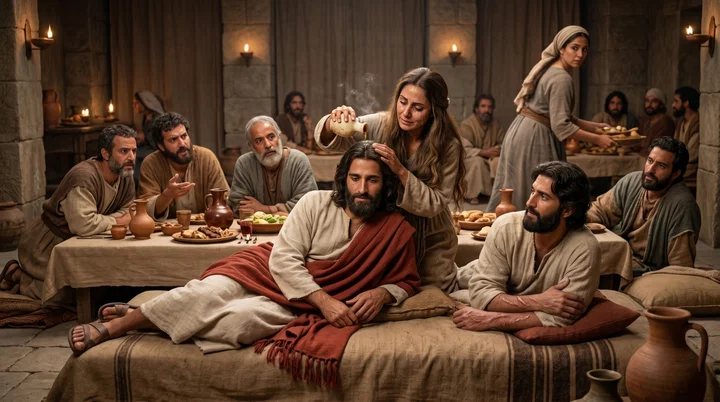
Cross-references
- Mark 14:7
For ye have the poor with you always, and whensoever ye will ye may do them good: but me ye have not always.
Jesus contrasts ongoing opportunities to help the poor with his approaching departure.
- Matthew 26:11
For ye have the poor always with you; but me ye have not always.
Jesus says the poor remain among them, but he will not always be with them.
- Deuteronomy 15:11
For the poor shall never cease out of the land: therefore I command thee, saying, Thou shalt open thine hand wide unto thy brother, to thy poor, and to thy needy, in thy land.
Says the poor will remain among the people and commands generosity toward them.
- Mark 14:8
She hath done what she could: she is come aforehand to anoint my body to the burying.
Mary anoints Jesus beforehand in preparation for his burial.
- John 12:3
Then took Mary a pound of ointment of spikenard, very costly, and anointed the feet of Jesus, and wiped his feet with her hair: and the house was filled with the odour of the ointment.
Mary anoints Jesus with costly ointment.
- Luke 7:36-50
And one of the Pharisees desired him that he would eat with him. And he went into the Pharisee’s house, and sat down to meat.
A woman anoints Jesus and shows him devotion, complementing John’s account of anointing.
- John 11:43-44
And when he thus had spoken, he cried with a loud voice, Lazarus, come forth.
Jesus raised Lazarus before Mary gave him a costly gift.
- Matthew 25:40
And the King shall answer and say unto them, Verily I say unto you, Inasmuch as ye have done it unto one of the least of these my brethren, ye have done it unto me.
Acts of care for the needy are counted as service to Christ.
- Matthew 26:8-9
But when his disciples saw it, they had indignation, saying, To what purpose is this waste?
The disciples object that the ointment could have been sold to help the poor.
- Matthew 26:14-16
Then one of the twelve, called Judas Iscariot, went unto the chief priests,
Judas sells Jesus for silver, showing selfishness and betrayal.
- Mark 14:9
Verily I say unto you, Wheresoever this gospel shall be preached throughout the whole world, this also that she hath done shall be spoken of for a memorial of her.
Mary’s deed is promised remembrance wherever the gospel is preached.
- Matthew 26:13
Verily I say unto you, Wheresoever this gospel shall be preached in the whole world, there shall also this, that this woman hath done, be told for a memorial of her.
Mary’s deed is promised remembrance wherever the gospel is preached.
- John 12:4
Then saith one of his disciples, Judas Iscariot, Simon’s son, which should betray him,
Judas is identified as the instigator of indignation over the ointment.
- Deuteronomy 15:7-8
If there be among you a poor man of one of thy brethren within any of thy gates in thy land which the LORD thy God giveth thee, thou shalt not harden thine heart, nor shut thine hand from thy poor brother:
Commands an open hand toward a poor brother.
Commentary
Each commentary is drawn from primary sources: the writings of Ellen G. White and Adventist pioneers and periodicals. Each commentary is separate. Its own words are not a quotation; follow the references to read the source passages.
Ellen G. White
45 sources
Jesus spoke these words at the Bethany supper to defend Mary's costly anointing of Him against Judas's complaint that the ointment should have been sold for three hundred pence and given to the poor.Ms 47, 1897, par. 5Lt 189, 1909, par. 2–3DA 558.4–560.14T 41.1–42.1DA 720.1 Her gift was fitting and timely because He would soon be taken away by death and burial while the poor would always remain to be helped.Ms 47, 1897, par. 5Lt 189, 1909, par. 2–3DA 558.4–560.120MR 146.5Lt 189, 1909, par. 4 Judas did not truly care for the poor but spoke from covetousness and theft, and Christ's rebuke exposed his greed and hardened him toward betraying his Lord for silver.Ms 47, 1897, par. 5Lt 167, 1897, par. 5CET 172.2–173.1SG1 44.1DA 720.1 Poverty was never to leave the world because God in wise providence appointed continuing differences in condition to test character, call out sympathy and love, and make the poor Christ's representatives to whom giving is giving to Him.4T 552.1CH 231.3–232.1RH Aug 25, 1874Ms 177, 1898, par. 14–16 Their abiding presence therefore lays a continuing obligation on every believer and church to relieve need by practical help while putting Christ and His cause first.Ms 58, 1896, par. 22DA 640.2–3Ms 4, 1895, par. 3Lt 3, 1897, par. 4–54T 550.4
Setting and Occasion
The words were spoken at a supper six days before the Passover at the house of Lazarus in Bethany, where Jesus had stopped for rest and refreshment on His way from Jericho to Jerusalem to attend the feast.ST Jul 22, 1886 The supper was made by Simon of Bethany to honor Jesus, with Jesus seated at the table between Simon, who had been cured of leprosy, and Lazarus, who had been raised from the dead, while Martha served and Mary listened to Jesus.ST Jul 22, 1886 It belonged to His last visit to Bethany, hosted by Simon after his healing, and it drew many Jews who watched Jesus amid growing excitement about His mission.DA 557.1–2 They were spoken on one occasion just before His betrayal and death.Ms 175, 1905, par. 2
Jesus accepted this loving hospitality and honor from friends at the supper held in His honor.Lt 2a, 1878, par. 8–1016MR 318.2–319.1Lt 2, 1878, par. 6–8 He used the occasion to teach and to show His generous, social character, giving those present an opportunity to know Him, though critics condemned His conduct as worldly conformity.Lt 2a, 1878, par. 8–1016MR 318.2–319.1Lt 2, 1878, par. 6–8
Mary's Anointing Justified
Jesus defended Mary's costly anointing because the poor would always remain with the disciples while He Himself would not remain long with them in person and would soon be taken from them.Ms 47, 1897, par. 5Lt 189, 1909, par. 2–3DA 558.4–560.1Lt 189, 1909, par. 4 His words distinguished her gift as fitting at that moment from ordinary care for the poor, which would still have continuing opportunity afterward.Lt 189, 1909, par. 2–3DA 558.4–560.1 Her act was kept for the day of His burial, a prophetic anticipation of and preparation for His approaching death and burial, rather than something to be condemned in favor of giving the ointment's value to the poor.Ms 47, 1897, par. 520MR 146.5Lt 189, 1909, par. 4
Its record would be repeated to the ends of the earth and told throughout the world.Ms 47, 1897, par. 520MR 146.5 She will be associated with Him and with the gospel throughout all time, her deed standing as a demonstration of love for Christ in which free and undefiled religion is knowing God and Jesus Christ whom He sent.Ms 47, 1897, par. 520MR 146.5Lt 135, 1897, par. 15–16 Her generous gift came from love and gratitude because Jesus had forgiven her many sins and had raised her much-loved brother Lazarus from the dead, so that nothing was too dear to bestow on Jesus.SG1 44.1EW 134.2
Those who have received salvation's gift do not calculate its value as Judas did, but love for Christ makes even their richest gifts seem unworthy.4T 485.1 The anointing was a good work and a timely act of love for Jesus before His death and burial, not wasteful spending.DA 558.4–560.14T 550.4 Christ is to be honored through the consecration of our best resources, and such honoring of Him did not deny the duty to care for the poor.DA 558.4–560.14T 550.4
Judas Exposed and Hardened
The saying belongs to the moment when Mary poured precious ointment and spikenard upon Jesus and Judas objected, calling it great waste and unnecessary waste that could have been sold for three hundred pence and given to the poor.4T 41.1–42.1ST May 20, 1897DA 720.1ST Mar 5, 1912Ms 100, 1897, par. 6–7 In that objection he turned the Gospel principle of mercy to the poor into an excuse for covetousness, using concern for the poor as a plea against honoring Jesus.4T 41.1–42.1ST May 20, 1897ST Mar 5, 1912 His protest arose in the feast scene where his covetousness became evident and was exposed.ST May 20, 1897DA 720.1ST Mar 5, 1912
He did not care for the poor but spoke from a close, selfish, covetous disposition that loved money.Lt 167, 1897, par. 5CET 172.2–173.1SG1 44.1SG1 181.1EW 134.2 He was a thief who took for his own use and benefit money entrusted to his care to be given to the poor, exacted to the last penny for every little essential thing he did, and had not been attentive to the comforts and wants of Jesus.Lt 167, 1897, par. 5SG1 44.1EW 134.2 His covetousness and theft had corrupted his judgment and conscience, so he used concern about money as a pretext for dishonesty and often referred to the poor to excuse his covetousness.SG1 44.1Ms 91, 1899, par. 37–38SG1 181.1 He counted a liberal offering to Jesus extravagant, prizing his Lord only enough to sell Him for a few pieces of silver, while Mary's generous gift stood as a cutting rebuke to his disposition.CET 172.2–173.1SG1 44.1
The words about the poor were a more direct reproof of Judas than he had received before, rebuking and exposing the avarice and greed that had long been controlling him.Ms 47, 1897, par. 5DA 720.120MR 146.5 Judas was vexed and annoyed by that reproof of his covetous spirit and resented it when Jesus rebuked the condemnation of the woman.Ms 47, 1897, par. 5ST Jun 27, 1878Ms 100, 1897, par. 6–7Lt 12a, 1888, par. 14 His provocation opened a door through which Satan entered to control his thoughts, while avarice poisoned the life-current of his spirituality.Ms 47, 1897, par. 520MR 146.5 That implied rebuke helped lead him to yield to the tempter, and he chose revenge and sold his Lord for a few pieces of silver.Ms 47, 1897, par. 5CET 172.2–173.120MR 146.5ST Jun 27, 1878Lt 12a, 1888, par. 14
The episode exposes covetousness and selfishness as Satan's snare, showing that some who profess to be waiting for their Lord are like Judas, controlled by Satan and not knowing it.CET 172.2–173.1 God cannot approve the least degree of covetousness or selfishness but abhors the prayers and exhortations of those who indulge them.CET 172.2–173.1 Yet in rebuking Judas Christ corrected him without forsaking him, but kept working with him still until his character could be more thoroughly developed, as He also did after rebuking Peter and John.Lt 51, 1891, par. 8–10 So one who has committed errors should not be dropped or set aside but encouraged, received, and set to work where best fitted.Lt 51, 1891, par. 8–10
Why Poverty Remains
Poverty was never to leave the world, and the poor will always be present among men.4T 552.1CH 231.3–232.1 In wise providence God did not purpose equality of social ranks or an equal share of temporal blessings and worldly possessions for all.4T 552.1CH 231.3–232.1 To place all on an equality in worldly possessions would be the greatest misfortune to mankind.CH 231.3–232.1
Continuing differences in circumstances remain because the diversity of condition between rich and poor proves and develops character.4T 552.1CH 231.3–232.1 Witnessing suffering and need tests and proves men and brings them into positions to develop Christian character.4T 552.1CH 231.3–232.1RH Aug 25, 1874 The poor are placed among us to call out Christian sympathy and love and to keep benevolent affections in exercise.RH Aug 25, 1874 God has purposely ordained need for human cooperation to prove men and reveal true character, honoring them as co-workers with Him, and He is not dependent on man's gold or silver to support His cause.RH Aug 25, 1874
Both poor and rich are redeemed by Christ and are the purchase of His blood.4T 552.1CH 231.3–232.1 Yet among His professed followers the poor in most cases serve Him with singleness of purpose and single-minded devotion.4T 552.1CH 231.3–232.1 The rich may fasten their affections on earthly treasures and forget Christ, for the cares of this life and greed for riches eclipse the glory of the eternal world.4T 552.1CH 231.3–232.1
Christ places the poor in our midst as His representatives and identifies Himself with suffering humanity, making their necessities His own.RH Aug 25, 1874 Giving to them is giving to Him.RH Aug 25, 1874 Kindness and practical help, comfort, encouragement, and love given to poor and suffering people are accepted by Christ as if done to Him, and their needs are to be relieved with compassion.RH Aug 25, 1874Ms 177, 1898, par. 14–16
Ongoing Call to Help
The poor are always present and remain continually among people and believers as God's legacy and heritage to them, and as part of the gospel Christ preached by words and works.Ms 58, 1896, par. 22DA 640.2–3Ms 4, 1895, par. 3Ms 2, 1903, par. 10Lt 3, 1897, par. 4–5 God allows poor people to be in the borders of every church and to remain among believers continually, so that all may find something to do for Christ and none need feel or say there is no place to labor for Him.Ms 58, 1896, par. 22DA 640.2–3Ms 2, 1903, par. 106T 272.2 As long as hungry people need food, naked people need clothing, and perishing souls need the bread of life, there is work to do.Ms 58, 1896, par. 22DA 640.2–3Ms 2, 1903, par. 10 That work includes a most solemn obligation, so far as lies in human power, to do for millions of perishing souls bound in ignorance and sin who have never heard Christ's love what would be desired if conditions were reversed.DA 640.2–3Ms 2, 1903, par. 10
The distressed, downtrodden, discouraged, hungry, suffering, naked, and poor are the proper objects of giving, and giving gifts to those who already have abundance is not God's plan.Ms 60, 1897, par. 12–14 Money, capabilities, influence, grace, and capital of means are talents entrusted by God to men to be His agents and faithful stewards, to be improved by constant use to relieve need, elevate sufferers, reshape character, and represent His character.Ms 60, 1897, par. 12–14Lt 3, 1897, par. 4–5 Faithful stewardship in this work determines destiny in the future life.Ms 60, 1897, par. 12–14 True riches are not houses and land but riches that endure to eternal life, secured by taking close views of God's Word and eternity, believing and acting the gospel as doers of the Word, and acting a Christlike part in society without neglecting the duties of this life.Ms 60, 1897, par. 12–14
Christians cannot pass the poor by or offer only words of concern without practical steps to provide for their needs.Ms 4, 1895, par. 3Lt 3, 1897, par. 4–5Ms 177, 1898, par. 14–16Ms 5, 1859, par. 43MR 411.5 They must provide food and clothing, and those blessed with abundance must see in a poor fellow man a needy brother and must help and encourage him so he has evidence that God has not forgotten him, that the Lord has him in mind and has given to a brother the means to supply his needs.Ms 4, 1895, par. 3Lt 3, 1897, par. 4–5Ms 177, 1898, par. 14–163MR 411.5 They must also encourage him to help himself by providing ways for him to do so.Lt 3, 1897, par. 4–5 Kindness and practical help, comfort, encouragement, and love given to the poor and suffering are accepted by Christ as if done to Him, and this duty calls for overcoming selfishness.Ms 177, 1898, par. 14–163MR 136.3Ms 5, 1859, par. 4
This places personal responsibility on the members of every church to care for their own poor, afflicted, and sick and to bear their own burdens, a responsibility not to be laid upon others.6T 272.2CH 231.3–232.1 Toward those within their own borders believers are to show the same love and sympathy Christ would show were He in their place, and this care disciplines them to work in Christ's lines.6T 272.2 The continuing presence of the poor calls for ongoing care and does not excuse neglect, for Christ was poor and knew deprivation, so helping people in need is part of the work to be done while there is time.Lt 111, 1898, par. 11–12Lt 167, 1897, par. 5CH 231.3–232.1 It forbids doing as Judas did by neglecting poor families while driving sharp bargains for self and counting the value of one's own time and seeking gain, for he was a thief who did not care for the poor but took money for his own benefit, exacting to the last penny for every little essential thing he did.Lt 167, 1897, par. 5
The verse sets the spirit in which all work for God is to be done as service to the poor, so that every comfort, every gracious gift, and every coin spent needlessly calls for help to the poor and naked.Ms 58, 1896, par. 22 Caring for the poor must not take precedence over honoring Christ and advancing His cause, for Mary's anointing was a good work and not wasteful spending, since Christ is to be honored through the consecration of our best resources.4T 550.4 Faithful stewardship can provide for both the poor and God's cause, with the cause of Christ coming first.4T 550.4 This truth is applied as a reason to establish wholesome, cheerful hospitals and health homes for the sick and poor without building them expensively, and to overcome selfishness in relieving the needs of others, even helping a poor, sick woman despite reluctance to accept payment.21MR 362.43MR 136.3Lt 137, 1898, par. 32Ms 5, 1859, par. 4
Sources
Pioneers and periodicals
56 sources
At a supper in Bethany six days before the Passover, Mary poured very costly ointment on Jesus for His burial while Martha served and Lazarus sat with Him, and Judas protested the cost as waste that should have been given to the poor.ST Jul 22, 1886ST Sep 20, 1899ST May 12, 1914ST Feb 14, 1906RH Mar 24, 1910 The poor remain always among people so they can be helped whenever anyone wills, but Jesus in bodily presence was leaving to go to His Father and would not remain always with His disciples.ST Mar 22, 1899ST Sep 24, 1912ST Mar 22, 1899 Mary's opportunity to honor Him directly before His death was therefore unique and could not be postponed.ST Apr 5, 1905ST Jun 14, 1905ST Jul 29, 1889 Her gift was not waste or loss to the poor but a good work of love, whose worth is measured by devotion and self-denial rather than by money calculation, and giving to Christ takes nothing from the poor but increases generosity toward them.ST Jun 7, 1899RH Dec 10, 1867ST Dec 10, 1894ST Mar 27, 1901RH Nov 11, 1915 The poor still continue as Christ's representatives who identify Him with suffering humanity, so they must be sought out and helped with food, drink, clothing, work, and mercy, and this proving of character by relieving them decides fitness for eternal joy.RH Aug 25, 1874RH Aug 1, 1912ST Jan 4, 1883RH Jan 16, 1900
Supper at Bethany
Six days before the Passover Jesus stopped at Bethany for rest and refreshment on His way from Jericho to Jerusalem for the feast, and a supper was made to honor Him in the house of Simon the leper.ST Jul 22, 1886ST Sep 20, 1899RH Mar 24, 1910 He sat at the table between Simon, who had been cured of leprosy, and Lazarus, who had been raised from the dead, while Martha served and Mary listened, a quiet retreat among trusted friends.ST Jul 22, 1886ST Sep 20, 1899RH Mar 24, 1910ST Mar 2, 1915 It was a gathering of trusted friends a few days before His crucifixion.RH Mar 24, 1910ST Mar 2, 1915
Mary brought an alabaster box of very precious ointment of spikenard worth above three hundred pence, the best gift she had from a heart overflowing with love for the richest blessings received.ST Sep 20, 1899RH Dec 10, 1901RH Sep 17, 1901 She broke the seal of her treasured box and poured it upon His feet and upon His head, an act of hospitality in which the accounts mention different details without contradiction.ST Feb 24, 1914ST Sep 20, 1899ST May 12, 1914 She stole unobserved behind Him as He reclined at dinner, kissed His feet and washed them with fast-falling tears and wiped them with her long flowing hair until the perfume filled the room, because she had heard He might soon be taken away and feared she would have no other opportunity to show love and gratitude.RH Dec 10, 1901RH Sep 17, 1901 The anointing of His feet joined to the anointing of His head carried the deeper meaning of preparing His body beforehand for burial.ST Mar 22, 1899ST Sep 20, 1899ST May 12, 1914ST Jan 3, 1911 That loving service was timely and not misplaced, and it is to be spoken of for a memorial of her wheresoever the Gospel shall be preached throughout the whole world.ST Mar 22, 1899ST Sep 20, 1899ST Jan 3, 1911
Judas Iscariot objected that the ointment was wasted and should have been sold and given to the poor, presenting her devotion as wasteful.ST Sep 20, 1899ST Feb 14, 1906ST Jan 3, 1911 Other disciples joined him with indignation and murmuring, yet his complaint came not because he cared for the poor but because he was a thief who took what was put in the bag.ST Sep 20, 1899RH Dec 10, 1901 Simon also doubted Him for letting so great a sinner touch Him, a woman forgiven great sins.RH Dec 10, 1901 Jesus rebuked the objection and defended Mary as having wrought a good work upon Him, saying Let her alone because she took this way of manifesting love to Him while He was still alive with them.ST Sep 20, 1899RH Dec 10, 1901ST Feb 14, 1906 After that rebuke Judas, annoyed and humiliated by the implied reproof of his covetous spirit, began contemplating betrayal and yielded toward the tempter.ST Jun 27, 1878ST Sep 20, 1899ST Feb 14, 1906ST Apr 19, 1905 He went to the chief priests and covenanted to deliver Jesus for thirty pieces of silver, and from that time sought how he might conveniently deliver Him for money and revenge for his humiliation.ST Sep 20, 1899ST Feb 14, 1906ST Apr 19, 1905 The chief priests also took counsel to put Lazarus to death, because by reason of him many Jews believed on Jesus.ST Sep 20, 1899
Contrast of Presences
The poor remain among people continually, and good can be done to them whensoever people will, so opportunities to help them do not cease.ST Mar 22, 1899ST Sep 24, 1912ST Mar 22, 1899RH Dec 10, 1867ST Jan 3, 1911 They would continue to be present after Jesus was gone, and could be helped then as well as at that moment.ST Mar 22, 1899ST Apr 5, 1905ST Jun 14, 1905ST Jun 7, 1899RH Dec 10, 1867 By contrast Jesus in person, in bodily presence, would not remain always with His disciples, for His stay with them was temporary.ST Mar 22, 1899ST Sep 24, 1912ST Mar 22, 1899ST Jun 7, 1899RH Dec 10, 1867 He was going away to His Father in heaven, leaving His place among them vacant for them to carry on without His bodily presence.ST Mar 22, 1899ST Sep 24, 1912ST Mar 22, 1899ST Apr 5, 1905ST Jun 7, 1899
Mary's chance to honor Jesus directly before His death and burial was therefore unique, timely, and fitting, and could not be postponed until after He was gone.ST Apr 5, 1905ST Jun 14, 1905ST Jul 29, 1889ST Jan 21, 1897ST Dec 10, 1894 Her anointing honored Him in view of His approaching death and burial, and that limited opportunity to honor Him in person would not come again.ST Apr 5, 1905ST Jun 14, 1905ST Jul 29, 1889ST Jan 21, 1897ST Apr 5, 1905 Her offering to the living Christ was timely because He would not always be physically present to receive such an expression of love.ST Apr 5, 1905ST Jun 14, 1905ST Jan 21, 1897ST Apr 5, 1905ST Dec 10, 1894
The verse does not dismiss the poor or forbid care for them, and concern for them must not be used as a pretext to condemn a loving gift offered to Christ.ST Dec 10, 1894RH Mar 24, 1910ST Jan 3, 1911ST Mar 27, 1901ST Jan 3, 1911 It distinguishes the continuing opportunity to care for the poor from the brief opportunity to honor Jesus while physically present, and so defends Mary's loving gift.ST Mar 22, 1899ST Mar 22, 1899RH Mar 24, 1910ST Jan 3, 1911ST Jan 3, 1911 Giving a costly gift to Christ in that moment was not wasted and did not deprive the poor of help, for they would not suffer because of gifts made to honor Him.ST Mar 22, 1899ST Jun 7, 1899RH Mar 24, 1910ST Jan 3, 1911ST Mar 27, 1901
Vindication of Mary's Gift
Mary's pouring out of the ointment was a good work, for it expressed love and respect and gratitude and affection toward Jesus in person, and it was commended because it sprang from devotion and Christian service and not from desire for praise or personal gain.RH Dec 10, 1867RH Mar 24, 1910RH Nov 9, 1911 The continuing chance to care for the poor was distinguished from the brief chance to honor Him directly before His departure, so His words defend her loving gift rather than forbid care for the poor.RH Dec 10, 1867RH Mar 24, 1910 Her act showed love sacrificing what is precious to honor Him.RH Nov 9, 1911
What is spent to honor the One who gave His life for humanity may look like needless waste to those whose affections are fixed on worldly things, but it is not misspent; it is a profitable investment.ST Jun 7, 1899ST Mar 27, 1901ST May 31, 1899RH May 29, 1855 She considered nothing too good for Jesus, pouring out the ointment instead of keeping it for herself, and believers ought to bring Him the best of everything, beginning with the best affections.ST Jun 7, 1899RH Nov 11, 1915 Giving what one has to honor God is not waste, and love may call for a costly act that money-minded people dismiss as waste, while opportunities to serve the poor remain.ST May 31, 1899RH May 29, 1855ST Jan 10, 1906 The costly gift poured out on Jesus was judged rightly by love rather than by financial calculation.ST Jan 10, 1906
An offering's value is measured by the love and self-denial prompting it, not by its outward size.ST Dec 10, 1894RH Nov 11, 1915ST Jan 10, 1906 It was timely because He would not always be physically present to receive such an expression of love, and concern for the poor must not be used as a pretext to condemn a loving gift offered to Christ.ST Dec 10, 1894 One who has received saving love gives from devotion without stopping to count the cost, unlike Judas who calculated its value.RH Feb 27, 1908ST Jan 10, 1906
Christ comes first and the poor afterward.ST Jul 15, 1886 Giving the money to the poor would have done well, but Mary's gift bestowed directly on Christ did better.ST Jul 15, 1886 Given for humanity's sake, the three hundred pence would have given three hundred souls only the temporal satisfaction of a pennyworth of bread each, but given for Christ's sake her devotion has cheered and encouraged millions who read of it.ST Jul 15, 1886 To feed the poor is humanity, but charity is Christianity, and humanity is transitory and passes away while Christianity is eternal.ST Jul 15, 1886
Loving acts for Christ must not be frozen to death by cold censure or criticism.RH Dec 10, 1901ST Sep 26, 1911RH Dec 10, 1901 Those following good promptings of the Spirit should be let alone, for God is able to guide them, and much more would be done for God if criticism did not smother such deeds.RH Dec 10, 1901RH Dec 10, 1901 The cold, unfeeling, critical spirit that smothers such deeds is not of heaven but comes from beneath.RH Dec 10, 1901RH Dec 10, 1901 Judas' objection stands as the historic example of cruelty toward an unselfish expression of love, and her loving act should not be condemned.ST Sep 26, 1911
Giving to Christ is not a waste or a taking from the poor, and those honored gifts do not cause the poor to suffer.ST Jun 14, 1905ST Apr 5, 1905ST Mar 27, 1901 Mary's offering to the living Christ did not keep her from later ministering to the poor.ST Jun 14, 1905 Greater love for Christ leads to greater generosity toward them, for the poor remain as His representatives to receive benevolence.ST Apr 5, 1905 As that love grows, poverty should diminish.ST Apr 5, 1905
Judas's Pretext and Fall
Judas used concern for the poor as a plea against what he called waste when Mary anointed Jesus with precious ointment, though he had no care for them.ST May 20, 1897ST Mar 5, 1912ST Sep 20, 1899 He turned the Gospel's call to mercy for the poor into an excuse for covetousness, for he was a thief who took what was put in the bag.ST May 20, 1897ST Mar 5, 1912ST Sep 20, 1899 The Gospel principle of mercy to the poor was thus perverted into a cover for his desire for gain.ST May 20, 1897ST Mar 5, 1912ST Sep 20, 1899
Love may call for a costly act that money-minded people dismiss as waste, and Mary's gift should not have been stopped in the name of helping the poor because opportunities to serve the poor would remain while the opportunity to honor Jesus in person was limited.ST May 31, 1899ST Jun 29, 1904 The same charge of waste once leveled at the broken alabaster box is made against missionary work, counting time, money, and life spent for black men in Africa as wasted.ST May 31, 1899ST Jun 29, 1904
Jesus rebuked the criticism of Mary's act, and that reproof annoyed Judas and, together with his covetousness, helped lead him to yield to the tempter and betray Jesus for money.ST Jun 27, 1878ST Sep 20, 1899ST Feb 14, 1906ST Apr 19, 1905 The rebuke marked the occasion when he began contemplating betrayal, seeking money and revenge for his humiliation.ST Sep 20, 1899ST Feb 14, 1906ST Apr 19, 1905 From that time he sought how he might conveniently deliver Him, covenanting with the chief priests for thirty pieces of silver.ST Sep 20, 1899ST Feb 14, 1906ST Apr 19, 1905
Continuing Call to Help Poor
Those in need will always be present and must be deliberately sought out rather than waited for.ST Oct 2, 1879ST Oct 2, 1879 Even where poverty is entangled with wastefulness or intemperance, the obligation to seek and help remains.ST Oct 2, 1879 A prosperous-looking neighborhood must not conclude it has no poor, for people needing help may be close at hand and require intentional attention to be found.ST Oct 2, 1879
Their abiding presence is a standing call to practical mercy that breaks selfishness.RH Aug 1, 1912ST Jan 4, 1883 Happiness is found in giving to those in need, and neglect has no excuse, for the needy have been left in trust to be cared for.ST Jan 4, 1883ST Jan 20, 1887 That care means feeding the hungry, giving drink to the thirsty, clothing the naked, and showing patience and mercy to sinners. It also means providing work and help fitted to their condition, and for those with means and influence it means aiding the oppressed, hungry, naked, and suffering instead of bestowing favors on the rich.ST Jul 30, 1894ST Jan 20, 1887
In wise providence the poor are kept always among men so that the sight of suffering and need tests and proves character.RH Aug 25, 1874 Their presence is meant to call forth sympathy and love and to keep benevolent affections in exercise.RH Aug 25, 1874 Support of the cause does not depend on human gold or silver, yet human cooperation has been ordained to prove men, reveal true character, and honor them as fellow workers.RH Aug 25, 1874
The poor stand as representatives with whom suffering humanity is identified, so that what is given to them is given to Him who makes their necessities His own.RH Aug 25, 1874RH Jan 16, 1900 Ministry to the hungry, the stranger, the naked, and the sick becomes the credential of discipleship by which fitness for eternal joy is decided in the last great day.RH Jan 16, 1900 Every neglect is registered as done to Him to whom men belong by creation and redemption, and every act of self-denial for the suffering is acknowledged as done to Him personally.RH Jan 16, 1900
Poverty does not disappear with advancing prosperity and civilization.ST Jul 20, 1904 Progress may even bring new forms of it and make toil and living conditions more severe.ST Jul 20, 1904 Where pauperism increases alongside growing wealth, love is waning, whereas growing love would diminish poverty.ST Apr 5, 1905
The churches have the poor continually with them as a continuing charge.RH Aug 7, 1855 They are to welcome them and treat them kindly rather than drive them away by coldness, wealth, and costly display.ST Jan 30, 1879 Building hundred-thousand-dollar houses where poor residents can neither buy nor hire a pew makes gentility and depth of purse the passport to heaven and leaves the poor to be cared for by others who are poor themselves.RH Aug 7, 1855 When cushions and carpets are counted too good for the poor to use, luxury and pride flaunted in worship over the heads of the needy drive out His presence and leave only the neglected poor, both the starving and freezing and the soul-famished shut out from fine churches.ST Jan 30, 1879RH Jan 9, 1872
Because places to do good are never lacking, present duty is to sell and give alms and lay up treasure in heaven.RH Sep 29, 1868 This is done by learning how little property can be held while still meeting duty to God, family, and fellow men, by living economically, saving in order to give, and by wisely and steadily reducing property until all is transferred above.RH Sep 29, 1868 Life is the time to dispense charities to relieve suffering and test character.RH Nov 24, 1863 Such cutting loose from the world belongs to the last watch, the last hour before day, when the coming of the Lord is nearer than expected and readiness for translation must not come too late for the kingdom.RH Sep 29, 1868
Honor the Living Timely
Love and honor and the best are to be given while a person is still present and alive, not saved for a funeral after death when they can no longer hear or receive it.ST Dec 20, 1905RH Jul 3, 1913ST Feb 15, 1905 The defense of the anointing before burial shows the value of honoring while present rather than delaying until after death, and the same lesson applies to showing affection and giving the best to loved ones during their lives instead of only honoring them after they are gone.ST Dec 20, 1905RH Jul 3, 1913 Bodily presence was temporary while the poor would remain to be helped, so the offering was timely because it came before death.ST Dec 20, 1905ST Feb 15, 1905 Comfort is to be offered to the living while they can still receive it.RH Jul 3, 1913
The box broken in loving service was the only precious box broken before death, and what was sacrificed became a lasting blessing remembered, unlike what would have followed from keeping it unused.RH Dec 10, 1901 A timid, grateful woman forgiven great sins came unobserved behind Him as He reclined at dinner, having heard rumors He might soon be taken away and fearing she would have no other opportunity to show love and gratitude.RH Dec 10, 1901 She broke the seal of her treasured alabaster box of very precious ointment upon His feet, kissing them and washing them with fast-falling tears and wiping them with her long flowing hair until the perfume filled the room.RH Dec 10, 1901 Though the gift was criticized as waste that should have been sold and given to the poor and His permitting so great a sinner to touch Him was doubted, He was unmoved and bade them let her alone because she took this way of manifesting love while He was still alive with them.RH Dec 10, 1901
The same letting alone belongs to timid promptings of the Spirit today, whether a wife longing to invite a needy one to share her home or children longing to give expression to childish love.RH Dec 10, 1901 Those who follow good promptings should be let alone, for God is able to guide them, and much more would be done if criticism did not smother such deeds.RH Dec 10, 1901 Acts of love must not be frozen to death by cold censure, for the cold, unfeeling, critical spirit that smothers them is not of heaven but from beneath.RH Dec 10, 1901RH Dec 10, 1901
Sources