Mark 15:36
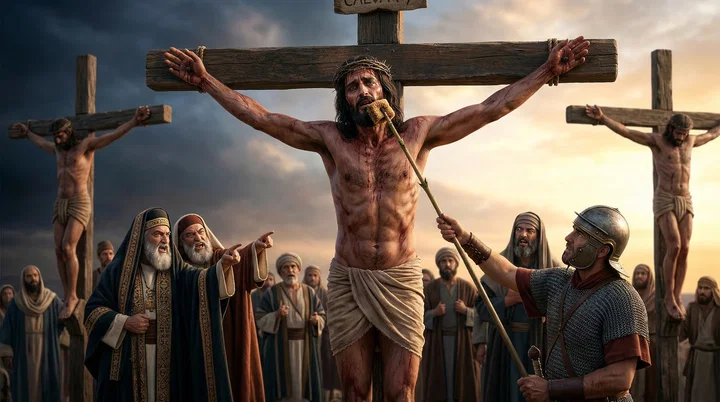
And one ran and filled a spunge full of vinegar, and put it on a reed, and gave him to drink, saying, Let alone; let us see whether Elias will come to take him down.
Translations
And one ran and filled a sponge full of vinegar, and put it on a reed, and gave him to drink, saying, Let alone; let us see whether Elias will come to take him down.
King James Version, KJV Cambridge Paragraph Bible
And one ran and filled a spunge full of vinegar, and put it on a reed, and gave him to drink, saying, Let alone; let us see whether Elias will come to take him down.
And one ran and filled a sponge full of vinegar, and put it on a reed, and gave him to drink, saying, Let alone; let us see whether Elijah will come to take him down.
Revised Version, American Standard Version
And one ran, and filling a sponge full of vinegar, put it on a reed, and gave him to drink, saying, Let be; let us see whether Elijah cometh to take him down.
and one having run, and having filled a spunge with vinegar, having put [it] also on a reed, was giving him to drink, saying, 'Let alone, let us see if Elijah doth come to take him down.'
And one, running and filling a sponge with vinegar, fixed it on a reed, and gave him to drink, saying, Let alone, let us see if Elias comes to take him down.
And one, running, filled a sponge with vinegar, and, putting it about a reed, was giving him to drink, saying—Stay! let us see whether Elijah is coming, to take him down!
Berean Standard Bible, Majority Standard Bible
And someone ran and filled a sponge with sour wine. He put it on a reed and held it up for Jesus to drink, saying, “Leave Him alone. Let us see if Elijah comes to take Him down.”
One ran, and filling a sponge full of vinegar, put it on a reed and gave it to him to drink, saying, “ Let him be. Let’s see whether Elijah comes to take him down.”
And one of them went quickly and, getting a sponge full of bitter wine, put it on a rod, and gave it to him for drink, saying, Let be; let us see if Elijah will come to take him down.
And one ranne, and filled a spondge full of vineger, and put it on a reede, and gaue him to drinke, saying, Let him alone: let vs see if Elias will come, and take him downe.
Douay-Rheims (Challoner revision)
And one running and filling a sponge with vinegar, and putting it upon a reed, gave him to drink, saying: Stay, let us see if Elias come to take him down.
Pictures
Cross-references
- Matthew 27:48-49
And straightway one of them ran, and took a spunge, and filled it with vinegar, and put it on a reed, and gave him to drink.
Describes the vinegar offered to Jesus and the onlookers’ taunt about Elijah.
- John 19:28-30
After this, Jesus knowing that all things were now accomplished, that the scripture might be fulfilled, saith, I thirst.
Jesus thirsts, receives vinegar, declares it finished, and dies.
- Luke 23:44-47
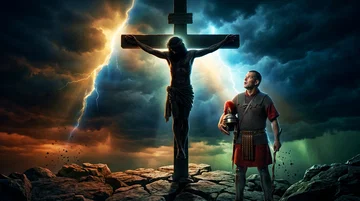
And it was about the sixth hour, and there was a darkness over all the earth until the ninth hour.
Parallel account of the darkness, Jesus’ death, and the centurion’s response.
- John 19:28-29
After this, Jesus knowing that all things were now accomplished, that the scripture might be fulfilled, saith, I thirst.
Jesus thirsts and is offered vinegar on a sponge.
- Psalms 69:21
They gave me also gall for my meat; and in my thirst they gave me vinegar to drink.
Vinegar is given to the sufferer, as foretold.
- Luke 23:36
And the soldiers also mocked him, coming to him, and offering him vinegar,
Soldiers mock Jesus by offering him sour wine.
- Matthew 27:34
They gave him vinegar to drink mingled with gall: and when he had tasted thereof, he would not drink.
Records the offer of sour wine during Jesus’ crucifixion.
- Mark 15:17-19
And they clothed him with purple, and platted a crown of thorns, and put it about his head,
same mocking with purple robe, crown, and reed
- Mark 15:25
And it was the third hour, and they crucified him.
Places Jesus’ crucifixion at the third hour.
- Psalms 22:1
My God, my God, why hast thou forsaken me? why art thou so far from helping me, and from the words of my roaring?
The cry during the suffering echoes the psalm.
Commentary
Each commentary is drawn from primary sources: the writings of Ellen G. White and Adventist pioneers and periodicals. Each commentary is separate. Its own words are not a quotation; follow the references to read the source passages.
Ellen G. White
15 sources
After three hours of darkness at the ninth hour He cried out in His forsakenness, and bystanders who misunderstood His words as a call for Elias ran to give Him vinegar on a sponge on a reed when He thirsted.ST Jun 10, 18893SP 164.3–165.1ST Dec 8, 1898DA 754.3ST Jan 27, 1914 One moved by pity for His suffering thirst offered the drink on a stalk of hyssop, while others said to leave Him alone to see whether Elijah would come to take Him down, still mocking and watching Him and refusing to relieve Him.ST Jun 10, 18893SP 164.3–165.1ST Dec 8, 1898DA 754.3ST Jan 27, 1914 After taking the vinegar and gall that added insult to His agony, He cried again with a loud voice, committed His spirit to the Father, and died sooner than crucified men commonly died.ST Jun 10, 1889ST Dec 8, 1898SG1 60.15RED 93.2–3 Outside the gate where felons were executed He suffered as substitute for the transgression that banished Adam and Eve, that He might sanctify the people with His own blood and redeem them from the curse of the law by being made a curse for them.DA 741.1–2 What He endured in humiliation in the hands of wicked men shows the depth of His sacrifice for sinners, and His piercing cry and sudden death amid darkness, earthquake and torn rocks forced many to confess Him a righteous man and truly the Son of God.ST Dec 8, 1898SG1 63.1EW 148.1ST Jul 7, 1898Lt 1a, 1861, par. 2–5
Scene and Action at Calvary
After condemnation the procession moved from Pilate's court toward Calvary, with the cross that had been prepared for Barabbas laid upon bruised and bleeding shoulders, while two companions of Barabbas also bore their crosses.DA 741.4–742.1 Since the Passover supper He had taken neither food nor drink.DA 741.4–742.1 After agony in Gethsemane in conflict with satanic agencies, the anguish of betrayal, seeing His disciples forsake Him and flee, being taken to Annas then to Caiaphas then to Pilate then to Herod then again to Pilate, insult upon insult and mockery upon mockery, and being twice tortured by the scourge, human nature could bear no more and He fell fainting twice beneath the burden.DA 741.4–742.1 The following crowd showed no compassion but taunted and reviled Him because He could not carry the heavy cross.DA 741.4–742.1 His persecutors saw it was impossible for Him to carry it farther and were puzzled to find a bearer, since the Jews themselves could not bear the humiliating load because defilement would prevent them from keeping the Passover, and none even of the mob would stoop to bear it.DA 741.4–742.1
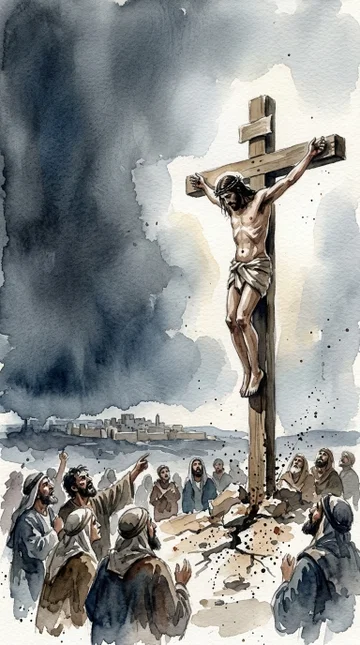
News of the condemnation had spread throughout Jerusalem, and people of all classes and all ranks flocked toward the place of crucifixion on the movement from the judgment-hall to Calvary.DA 741.3 Because the priests and rulers were bound by a promise not to molest His followers if He Himself were delivered to them, the disciples and believers from the city and the surrounding region joined the vast multitude that followed Him.DA 741.3 The crucifixion took place at the place called Calvary outside the gate, outside the boundaries of Jerusalem where felons and murderers were executed.DA 741.1–2 At the ninth hour, after three hours of darkness over the cross, Jesus cried with a loud voice, Eloi, Eloi, lama sabachthani, which some standing by misunderstood as calling for Elias.ST Dec 8, 1898DA 754.3ST Jan 27, 1914
After He said He was thirsty, a man, a bystander, ran and gave Him vinegar to drink on a sponge put on a reed.ST Jun 10, 18893SP 164.3–165.1ST Aug 1, 1878 It was a Roman soldier, moved by pity for His suffering thirst, who offered Him the vinegar on a sponge fixed to a stalk, to a stalk of hyssop.DA 754.3ST Jan 27, 1914 In His thirsty agony He was thus given vinegar and gall, adding insult to His suffering before His death.SG1 60.1 The giver said to leave Him alone and wait to see whether Elijah would come to take Him down or save Him.ST Jun 10, 18893SP 164.3–165.1ST Dec 8, 1898ST Aug 1, 1878 The priests also mocked His cry, mistaking it as a call for Elijah, and refused to relieve His suffering, telling the bystanders to wait and see whether Elijah would come to save Him.DA 754.3ST Jan 27, 1914 Their words reflected lingering fear that He might escape them, and showed He was still mocked and watched in the moments before death.ST Jun 10, 18893SP 164.3–165.1ST Aug 1, 1878
Meaning and Response to Death
Through the disgraceful farce of a trial and the mockery at the cross He bore Himself with firmness and dignity, speaking no word but what tended to glorify God.DA 741.4–742.1 He suffered silently at the vinegar and the taunt about Elijah, and did not answer His tormentors.ST Jun 10, 1889DA 741.4–742.1 The offering on the reed belongs to His descending into humiliation, into the hands of wicked men with His own nation clamoring for His blood, lifted up on the cross and dying as a malefactor.ST Jul 7, 1898 As substitute He suffered without the gate for the transgression that banished Adam and Eve from Eden, that He might sanctify the people with His own blood and redeem them from the curse of the law by being made a curse for them.DA 741.1–2
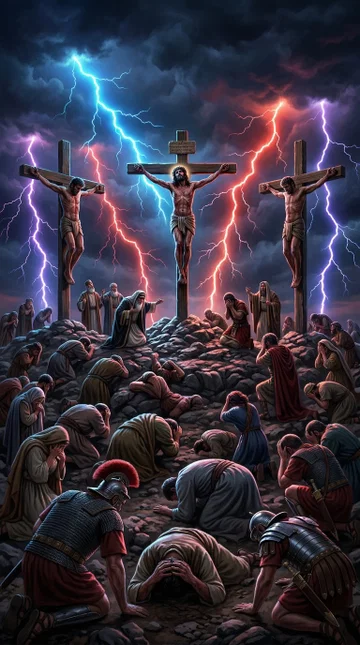
After the drink Jesus cried again with a loud voice, commended His spirit to the Father, and gave up the ghost when the mysterious darkness had passed.ST Dec 8, 1898 He died sooner than crucified people commonly did, as the centurion's report confirmed He was dead.ST Dec 8, 18985RED 93.2–3 His death was accompanied by darkness, earthquake, torn rocks, and His cry as He gave up His life, which troubled His enemies and made His murderers tremble.SG1 63.1EW 148.1 His piercing cry and sudden death with shaking earth and trembling rocks forced conviction on many already convicted at His trial and during the darkness, as seed that ripened into harvest when the disciples preached after His ascension.ST Dec 8, 1898 That conviction forced many at the cross to declare Him a righteous man and truly the Son of God, while many who had scoffed and jeered fled stumbling in awful terror lest the shaking earth and rent rocks end their lives.ST Dec 8, 1898
The sight of the Bridegroom taken away gives His disciples cause to mourn and fast.ST Jul 7, 1898 Then their faith is tried, and their hope and courage fail.ST Jul 7, 1898 The crucifixion shows the depth of what Christ endured for people when He was mocked and offered vinegar, making any sacrifice required of His followers small by comparison.Lt 1a, 1861, par. 2–5
Sources
Pioneers and periodicals
23 sources
After he spoke of his thirst near the ninth hour, sour wine mixed with a bitter drug was lifted to his lips on a sponge set upon a reed of hyssop, offered amid taunts to leave him alone and wait to see whether Elijah would come to take him down and save him, a cry misunderstood from his call upon his Father.ST Jun 10, 1889ST Jul 25, 1878RH Aug 15, 1854ST Mar 20, 1901ST Jan 24, 1911
The offering was made in mockery while he suffered without answer and found no sympathy, though those who held the other view hold that a Roman soldier moved by pity gave the drink while the priests refused relief and bade the rest wait.ST Jun 10, 1889ST Jul 25, 1878ST Jan 27, 1914ST Jan 24, 1911
He tasted the drugged cup but refused to drink it, choosing to keep clear communion with the Father and to bear the full suffering for the sins of the world.ST Mar 20, 1901
He died for human sin as the Scriptures foretold, vindicating the claims of the law and proving it could not be set aside, since the penalty of transgression is death and only his death as substitute can meet it for all who receive him by faith.ST Jun 15, 1904
In awful darkness when hope gave him no sight beyond the tomb and he feared eternal separation, he rested by faith in his Father's justice, mercy and love and came off victor, and his cry and sudden death with rent rocks and shaking earth forced many mockers to flee in terror and many witnesses to confess him righteous and truly the Son of God.ST Dec 8, 1898RH Jan 14, 1904ST Apr 11, 1911
The Scene at the Cross
The vinegar on the reed belongs to the death of Jesus at the ninth hour, about three in the afternoon.RH Apr 7, 1851RH Feb 5, 1914RH Jan 9, 1872 That hour was the hour of the evening sacrifice.RH Feb 5, 1914 The day was Friday the sixth day, the preparation day before the weekly Sabbath.RH Aug 15, 1854RH Apr 7, 1851RH Feb 5, 1914 His thirst and the vinegar came before his declaration that the work was finished and before he bowed his head and died.RH Aug 15, 1854RH Apr 7, 1851
The offering took place after three hours of midday darkness over the cross.ST Dec 8, 1898 It came after the ninth hour had passed and after the darkness ended, between the two evenings.ST Dec 8, 1898ST Jun 20, 1911 It was an awful gloomy day.RH Aug 5, 1873 Nature was affected in sympathy with its Creator.ST Feb 13, 1907 Those who witnessed the mockery, darkness and death were left in awe.ST Apr 11, 1911
The crucifixion was the saddest tragedy in human history. It was carried out by a bloodthirsty, sin-hardened mob. It took place on a skull-like hill near the city.ST Apr 8, 1903 There Jesus, a poor young man of royal blood, the purest and noblest who ever walked the earth, bore his own heavy instrument of death until he sank beneath it and another was pressed into service, having been taunted, reviled, mocked, spit upon, smitten and thorn-crowned, was nailed to the cross and died amid wonders and convulsions in heaven and earth.ST Apr 8, 1903
After Jesus said he was thirsty, sour wine was offered to him on a reed.ST Jul 25, 1878RH Aug 15, 1854 It was sour wine containing a bitter drug to dull pain.ST Mar 20, 1901 A sponge was raised to his lips on a stalk of hyssop.ST Jan 27, 1914ST Jan 24, 1911 This was before his declaration that the work was finished.RH Aug 15, 1854
A bystander gave the vinegar amid mockery and taunting.ST Jun 10, 1889ST Jul 25, 1878ST Jan 24, 1911 Those challenging him to come down from the cross watched him as he suffered silently without answer.ST Jun 10, 1889ST Aug 1, 1878ST Jan 24, 1911 He received no relief or sympathy.ST Jul 25, 1878 The terror of the onlookers had eased, but they still feared he might escape them.ST Jul 25, 1878
A Roman soldier moved by pity for his suffering offered the vinegar.ST Jan 27, 1914 The priests mocked him and refused to relieve his suffering.ST Jan 27, 1914 They told the bystanders to wait.ST Jan 27, 1914
At the ninth hour Jesus cried with a loud voice Eloi, Eloi, lama sabachthani.ST Dec 8, 1898 Some standing by misunderstood this as calling for Elias.ST Dec 8, 1898ST Jan 27, 1914ST Jan 24, 1911 One ran for the vinegar saying to leave him alone and wait to see whether Elias or Elijah would come to take him down, deliver him, or save him.ST Jun 10, 1889ST Jul 25, 1878ST Dec 8, 1898ST Jan 27, 1914ST Aug 1, 1878 This expectation became part of their mockery as he hung in darkness.ST Jun 10, 1889ST Jul 25, 1878ST Jan 24, 1911 The darkness itself was falsely claimed to be punishment for a supposed league with Beelzebub.ST Jan 24, 1911
After the vinegar he cried again with a loud voice, commended his spirit to the Father, bowed his head and gave up the ghost.ST Dec 8, 1898RH Apr 7, 1851 The surrounding account leads to his removal from the cross and burial in a new tomb.ST Jan 31, 1911 These events were at Passover when the predicted middle of the week had come.ST Jan 31, 1911
What His Death Teaches
On the cross his great heart of love was breaking as he bore the world's woe and was burdened for souls, while the Father beheld him above.RH Jan 16, 1908RH Aug 5, 1873 He descended into the depths of humiliation into the hands of wicked men, with his own nation clamoring for his blood, lifted up and dying as a malefactor for sinners.ST Jul 7, 1898RH Jan 16, 1908RH Aug 5, 1873 He died for human sins as the Scriptures foretold, magnifying the law and making it honorable by vindicating its claims and proving he did not come to abolish it as outworn.ST Jun 15, 1904 If the law could be set aside his death for those living afterward would not have been necessary, for sin is transgression of the law and the law stands so firmly that not one jot or tittle could be repealed.ST Jun 15, 1904 The penalty of sin is death and all have sinned, so all must die unless an acceptable substitute dies in their place, which Jesus did, and all who accept him by faith acknowledge the just claims of the law upon them.ST Jun 15, 1904
The atonement was finished on Friday at his death, when after his thirst and the vinegar on the reed he declared the work finished, not at the resurrection.RH Aug 15, 1854 The vinegar was sour wine containing a bitter drug offered to dull pain, which he tasted but refused to drink, choosing not to impair his communion with the Father and to endure the full suffering of the cup as the bearer of the sins of the world.ST Mar 20, 1901 The moment stands at the ninth hour when the darkness lifted from the people but still enveloped Jesus as a symbol of the agony and horror weighing on his heart.RH Jan 14, 1904 Satan wrung his heart, he could not see through the portals of the tomb, hope did not present to him his coming forth a conqueror or tell him of the Father's acceptance, and he feared sin was so offensive that separation would be eternal.RH Jan 14, 1904 No eye could pierce the gloom around the cross or the deeper gloom of his soul, and as he cried My God, my God, why hast thou forsaken me many said heaven's vengeance and wrath were upon him for claiming to be the Son of God, and many believers lost hope.RH Jan 14, 1904
Amid awful darkness apparently forsaken he drained the last dregs of human woe, yet relied on prior evidence of acceptance and on his knowledge of his Father's justice, mercy and great love, and by faith rested in him whom it had been his joy to obey, so that in submission the sense of lost favor was withdrawn and by faith he was victor holding to God when all was darkness.RH Jan 14, 1904 His piercing cry and sudden death with shaking earth and trembling and rent rocks forced conviction on many already convicted at his trial and during the darkness, as seed that ripened into harvest when the disciples preached after his ascension.ST Dec 8, 1898ST Apr 11, 1911 Many at the cross were forced to declare him a righteous man and truly the Son of God, while many who had scoffed and jeered fled stumbling in awful terror lest the shaking earth end their lives, leaving witnesses in awe at the midday darkness, mockery and death.ST Dec 8, 1898ST Apr 11, 1911 The sight of him in such hands gives his disciples cause to mourn and fast because the Bridegroom is taken away from them, when their faith is tried and their hope and courage fail.ST Jul 7, 1898
Sources