Psalms 69:21
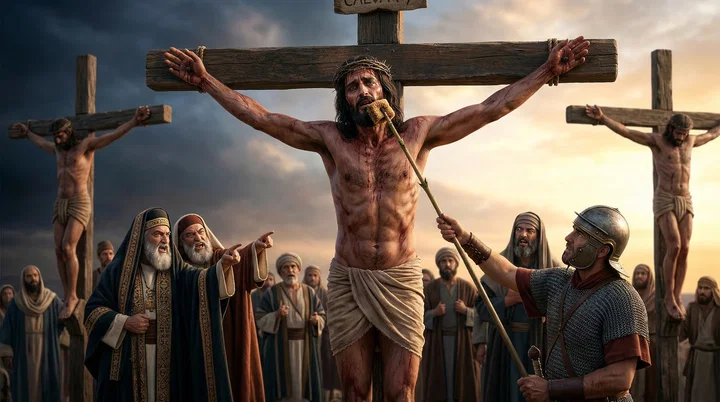
They gave me also gall for my meat; and in my thirst they gave me vinegar to drink.
Translations
American King James Version, King James Version, Revised Version
They gave me also gall for my meat; and in my thirst they gave me vinegar to drink.
They gave me also gall for my meat;
And in my thirst they gave me vinegar to drink.They gave me also gall for my food; and in my thirst they gave me vinegar to drink.
They gave me also gall for my food;
And in my thirst they gave me vinegar to drink.And they give for my food gall, And for my thirst cause me to drink vinegar.
Yea, they gave me gall for my food, and in my thirst they gave me vinegar to drink.
But they put in my food—poison! And, for my thirst, they gave for my drink—vinegar!
Berean Standard Bible, Majority Standard Bible
They poisoned my food with gall
and gave me vinegar to quench my thirst.They also gave me poison for my food.
In my thirst, they gave me vinegar to drink.They gave me poison for my food; and bitter wine for my drink.
For they gaue me gall in my meate, and in my thirst they gaue me vineger to drinke.
Douay-Rheims (Challoner revision)
And they gave me gall for my food, and in my thirst they gave me vinegar to drink.
Pictures
Cross-references 20 of 23
- John 19:28-29
After this, Jesus knowing that all things were now accomplished, that the scripture might be fulfilled, saith, I thirst.
Jesus’ thirst and the vinegar offered to him fulfill the psalm.
- Matthew 27:34
They gave him vinegar to drink mingled with gall: and when he had tasted thereof, he would not drink.
Jesus is offered vinegar mixed with gall at the crucifixion, fulfilling the bitter drink described.
- Psalms 22:16-18
For dogs have compassed me: the assembly of the wicked have inclosed me: they pierced my hands and my feet.
Both foretell Christ’s sufferings and the soldiers’ dividing his garments at the cross.
- Isaiah 53:12
Therefore will I divide him a portion with the great, and he shall divide the spoil with the strong; because he hath poured out his soul unto death: and he was numbered with the transgressors; and he bare the sin of many, and made intercession for the transgressors.
Cited alongside Psalm 69 as testimony to Christ’s suffering and death.
- John 19:29
Now there was set a vessel full of vinegar: and they filled a spunge with vinegar, and put it upon hyssop, and put it to his mouth.
Jesus is given vinegar while on the cross.
- Mark 15:23
And they gave him to drink wine mingled with myrrh: but he received it not.
Jesus is offered wine mixed with myrrh.
- Matthew 27:48
And straightway one of them ran, and took a spunge, and filled it with vinegar, and put it on a reed, and gave him to drink.
A bystander gives Jesus vinegar to drink.
- Mark 15:36
And one ran and filled a spunge full of vinegar, and put it on a reed, and gave him to drink, saying, Let alone; let us see whether Elias will come to take him down.
Vinegar is offered to Jesus on the cross.
- Isaiah 53:5
But he was wounded for our transgressions, he was bruised for our iniquities: the chastisement of our peace was upon him; and with his stripes we are healed.
Connects Christ’s stripes with healing.
- Matthew 26:39
And he went a little further, and fell on his face, and prayed, saying, O my Father, if it be possible, let this cup pass from me: nevertheless not as I will, but as thou wilt.
Jesus faces the cup of suffering before his death.
- 1 Peter 2:24
Who his own self bare our sins in his own body on the tree, that we, being dead to sins, should live unto righteousness: by whose stripes ye were healed.
Christ bore our sins in his body on the tree.
- Matthew 27:39-44
And they that passed by reviled him, wagging their heads,
People revile Jesus as he suffers on the cross.
- Luke 23:34
Then said Jesus, Father, forgive them; for they know not what they do. And they parted his raiment, and cast lots.
prayer while pierced and mocked
- Luke 24:26
Ought not Christ to have suffered these things, and to enter into his glory?
Christ had to suffer before entering his glory.
- Mark 15:34
And at the ninth hour Jesus cried with a loud voice, saying, Eloi, Eloi, lama sabachthani? which is, being interpreted, My God, my God, why hast thou forsaken me?
cry of forsakenness just before the thirst
- John 7:37-38
In the last day, that great day of the feast, Jesus stood and cried, saying, If any man thirst, let him come unto me, and drink.
The one who invited the thirsty to drink experiences thirst on the cross.
- Psalms 69:1
Save me, O God; for the waters are come in unto my soul.
Both texts are prayers from the same psalm.
- Romans 5:8
But God commendeth his love toward us, in that, while we were yet sinners, Christ died for us.
Christ dies for sinners as the expression of God’s love.
- Isaiah 53:7
He was oppressed, and he was afflicted, yet he opened not his mouth: he is brought as a lamb to the slaughter, and as a sheep before her shearers is dumb, so he openeth not his mouth.
Both texts portray the Messiah’s suffering.
- 1 Peter 3:18
For Christ also hath once suffered for sins, the just for the unjust, that he might bring us to God, being put to death in the flesh, but quickened by the Spirit:
The just suffers for the unjust to bring them to God.
Commentary
Each commentary is drawn from primary sources: the writings of Ellen G. White and Adventist pioneers and periodicals. Each commentary is separate. Its own words are not a quotation; follow the references to read the source passages.
Ellen G. White
8 sources
Centuries before the crucifixion the treatment the suffering Redeemer would receive was foretold, and it was fulfilled in His sufferings on the cross.DA 745.5–746.1PK 691.2–3PK 689.2PK 691.1SLP 277.2 The foretelling belongs to a prophecy of bitter indignity and treatment in which, while fulfilling the divine purpose, He receives no pity or comfort.PK 691.2–3PK 689.2 These details describe His treatment in suffering as part of His bearing the consequences of sin as humanity's substitute.PK 691.1
The gall for food and vinegar for thirst was the bitter, stupefying potion permitted to those dying by crucifixion to deaden the sense of pain.DA 745.5–746.1SLP 277.2 The fulfillment came near the end of His long hours of suffering, at the ninth hour when darkness lifted from the people and from His oppressed spirit and He revived to a sense of physical suffering and, parched, declared His thirst.EW 146.13SP 161.2–163.13SP 164.3–165.1 One of His persecutors ran to fill a sponge with vinegar and gall and put it on a reed to give Him to drink, while mocking that Elijah might come to take Him down.3SP 164.3–165.1 He tasted it and refused it, just before He cried aloud that His work was finished and died.EW 146.13SP 161.2–163.13SP 164.3–165.1
He refused it because He would receive nothing that could cloud His mind.DA 745.5–746.1 His faith had to keep fast hold upon God as His only strength, and to cloud His senses would give Satan an advantage.DA 745.5–746.1 This was a last opportunity for His persecutors to sympathize with and relieve Him, but when the gloom was removed their terror abated and the old dread returned that He might yet escape them, so they answered His thirst with insult instead of mercy.3SP 164.3–165.1
At that time angels veiled their faces, the sun refused to look, great darkness lay upon the earth, the veil of the temple was rent from top to bottom, and the earth shook and the rocks rent.EW 146.1 These events swept away the last hope of the disciples and filled His followers with sorrow.EW 146.1 The bitter cup was not bodily anguish or dread of death, which martyrs have faced with joy and which would place Him beneath them, but the sense of sin bringing the Father's wrath upon Him as man's substitute and surety, breaking the heart of the Son of God.3SP 161.2–163.1 As the Lord of life and glory dying a ransom for the race, the guilt of every descendant of Adam in every age pressed upon His heart, with God's wrath and displeasure against iniquity and the hiding of the Father's face, revealing the malignity of sin, its deep root in the human heart, and man's blindness to its enormity.3SP 161.2–163.1
Death is not an angel of mercy but a dissolution recoiled from by nature as the consequence of sin.3SP 161.2–163.1 Christ as prince of sufferers and sin-bearer, counted a transgressor to redeem from the curse of the law, endured judicial punishment and became sin itself.3SP 161.2–163.1 He gave His blood from head, hands, and feet and His anguish of soul to spoil death and open Paradise and immortal life.3SP 161.2–163.1
Sources
Pioneers and periodicals
45 sources
It foretold that the Messiah in his suffering would be given bitter food and sour drink when thirsty.RH Nov 18, 1862ST Oct 21, 1930ST Sep 3, 1896 That prediction was literally fulfilled while Jesus hung on the cross.ST Nov 16, 1882RH Nov 18, 1862ST Sep 13, 1905 The drink first offered was a stupefying potion to deaden pain, which after tasting he refused so nothing would cloud his mind and give Satan advantage.RH Sep 16, 1902ST May 17, 1905 Afterward in real bodily thirst he said I thirst so this Scripture might be fulfilled, received the vinegar put to his mouth upon hyssop, then said It is finished and gave up his spirit.ST May 20, 1897ST Jul 26, 1899RH Nov 25, 1873ST May 20, 1897RH Dec 2, 1909 His thirst came with death from a broken heart under the weight of human sin, as the Holy One suffered in place of the guilty to pay the penalty of the broken law, and its exact accomplishment proves Jesus of Nazareth is the promised Messiah and Son of God.ST May 5, 1909ST Jun 30, 1914ST Jan 8, 1880ST
Words in Lament
The verse belongs to the cry of one wearied while sorrows roll and deep waters come into the soul, filled with reproach and bitter shame and forsaken by those of a brother's name, and mocked even while weeping in fear.RH Apr 9, 1861 In that cry appeal is made to God's lovingkindness and mercies to turn and bid darkness flee, while waiting for His word.RH Apr 9, 1861 Trust is expressed that the Lord will save the sorrowing poor, revive the fainting, restore the sinking soul and bid the contrite live.RH Apr 9, 1861 Prayer is offered for speedy relief, with enemies not allowed to rejoice but with their pathway darkened and their joy turned to grief.RH Apr 9, 1861
The reviling words spoken against the sufferer were more bitter than the drink handed to him.RH Apr 4, 1871 The wormwood and gall recall the bitterness he endured before his crucifixion for the sake of others.RH Mar 26, 1861RH Jul 21, 1868 That gall was given to him in his suffering and thirst, marking what he bore for others.RH Mar 26, 1861RH Jul 21, 1868
Foretold Suffering of Messiah
The verse foretells the agonies of the Messiah's death as a detailed prediction of the suffering He would endure, describing the exact manner of His death and giving a plain picture of a Roman crucifixion.ST Jun 30, 1914RH Jun 22, 1911 Its broken heart under reproach and its bitter food and sour drink given to hunger and thirst show the great sin-bearer paying in behalf of sinners the penalty of God's violated law, cursed for their sake so that justice over the broken law could be satisfied.ST Jun 30, 1914 It is part of prophecy about His betrayal, condemnation and crucifixion, pointing to His suffering at the crucifixion in an offer of gall and vinegar literally fulfilled in Matthew 27:34.ST Nov 16, 1882 It foretells by the Spirit a well-known incident of the crucifixion, that Christ in His suffering on the cross would be given bitter food and sour drink in His thirst, as part of the sufferings of Christ testified beforehand and showing that every feature of Christ's ministry on earth was foretold by the prophets. It is one of the Scriptures that plainly foretold Christ's suffering before He entered into His glory.ST Apr 17, 1901
It means the long-expected Messiah would be a poor, afflicted and despised man, given vinegar to drink in His thirst, with pierced hands and feet, mocked with shooting out the lip and shaking of the head and stared upon, and brought as a lamb to the slaughter.RH Nov 25, 1873 The same expectation also holds that He would be born of a virgin and come as King meek and lowly on an ass's colt.RH Nov 25, 1873 In the days of Herod on the throne of Judea those looking only for a glorious conquering Prince to tread down foes and exalt Israel to worldly greatness took the prophecies of His glory literally and explained these suffering prophecies as bold figures of speech not to be interpreted literally.RH Nov 25, 1873 It describes what He endured in judgment and death when the sins of the world rested upon Him. Reproach broke His heart, no one pitied or comforted Him, and He was given gall for food and vinegar to drink when thirsty.ST Oct 14, 1913
It belongs to a psalm in which David foresaw and felt something of Christ's inner experience and struggles with the enemy.RH Jun 6, 1912 Reading it gives insight into how Christ felt during His trials.RH Jun 6, 1912 His suffering in that experience enables Him to help those who are tempted.RH Jun 6, 1912 It foretells that His enemies would give Him bitter food and sour drink, gall and vinegar, during His suffering.RH Nov 18, 1862ST Oct 21, 1930ST Sep 3, 1896 Jesus fulfilled this prediction while hanging on the cross, when He was offered vinegar to drink at Calvary in the events of His crucifixion.RH Nov 18, 1862ST Oct 21, 1930ST Sep 3, 1896 Its precise fulfillment is evidence that Jesus is the Son of God and strengthens faith in Him as Savior.ST Sep 3, 1896
Fulfilled on the Cross
The prediction was literally fulfilled while Jesus hung on the cross, as recorded in Matthew 27:34, when the mingling of gall with vinegar was a real historical fact.ST Nov 16, 1882RH Nov 18, 1862ST Sep 13, 1905 The drink first offered was the stupefying potion permitted to those dying by the cross to deaden pain, a bitter, stupefying drink presented in his dying agony, and after tasting the vinegar mixed with gall he refused to drink it.RH Sep 16, 1902ST May 17, 1905 He refused because he would receive nothing that could cloud his mind, since his only strength was for faith to keep fast hold upon God, and to cloud his senses would have given Satan an advantage.ST May 17, 1905
After six hours on the cross, with parched lips, Jesus said I thirst in real bodily thirst and not merely to perform a prophecy.ST Jul 26, 1899RH Nov 25, 1873 Vinegar at hand was presented, with a vessel full of vinegar set there and a sponge full of vinegar put upon hyssop and brought to his mouth, and he received it.RH Nov 25, 1873ST May 20, 1897ST May 17, 1905 Jesus knew that all other things were accomplished and knew it was necessary to say those words in order that this Scripture might be fulfilled.ST May 20, 1897ST May 20, 1897 His cry, I thirst, and the vinegar offered fulfilled the verse, and when he had received the vinegar he said, It is finished, and bowed his head and gave up his spirit.ST May 20, 1897ST May 20, 1897RH Dec 2, 1909 Those who nailed him to the tree mocked his dying thirst with gall in his first coming in poverty and shame, scorned, insulted and crucified.ST Sep 17, 1874
Saving Meaning of Suffering
His thirst and the gall and vinegar belong to his death from a broken heart under the weight of human sin, not to death caused by the spear thrust or by the pain of crucifixion, for reproach broke his heart beneath that weight.ST May 5, 1909 The great sin-bearer in that broken heart and bitter food and sour drink was paying in behalf of sinners the penalty of God's violated law, cursed for their sake so that justice over the broken law could be satisfied.ST Jun 30, 1914 The Holy and Just One suffered in the place of the guilty, paying the servant's debt and redeeming humanity from wrath.ST Jun 30, 1914ST His agony, including this bitter drink, came from bearing the sins laid upon him, and therefore shows the cost of sin and his suffering to put it away.ST Feb 25, 1889
The cup of vinegar which he only tasted was one outward suffering on the cross that can be described and painted.ST Dec 6, 1883 Set against it stands the inward, invisible suffering of the cup of wrath against sin which he drank out to the lowest dregs, namely bearing the sins of many under the curse of the law with eternal justice piercing flesh and spirit, which cannot be painted.ST Dec 6, 1883 His receiving the vinegar shows his resolve to drink the bitter cup of suffering, desertion and agony to its very dregs rather than save himself.RH Nov 25, 1873 By so finishing completely he obtained eternal redemption, fulfilling to the very letter prophecy concerning a lowly, incarnate, dying Saviour.RH Nov 25, 1873
From his bitter suffering comes honey for his people, a bitterness exchanged for sweetness and blessing for believers.RH Oct 16, 1860RH Dec 19, 1854 His agony brings their victory, his condemnation their justification, his pain their ease, his stripes their healing, his curse their blessing, and his death their life.RH Dec 19, 1854 The triumph he won through that experience was also won for his children, and insight into his inner experience and struggles with the enemy shows how his suffering enables him to help those who are tempted.ST Jul 9, 1912RH Jun 6, 1912 Its pathos is deepened by the fact that the one who offered living water endured real bodily thirst so others could come and drink freely.ST Jul 26, 1899
Proof and Interpretation
It is a prophecy of the manner and circumstances of Christ's death, foretelling reproach and broken heart with no pity or comforters and that gall would be given for food and vinegar in thirst, and it had an exact and literal accomplishment at the crucifixion where it was seen fulfilled, making it a sign of the first advent proving Jesus of Nazareth is the promised Messiah.ST Jan 8, 1880 Its precise fulfillment is evidence that Jesus is the Son of God and strengthens faith in him as Savior.ST Jan 8, 1880ST Sep 3, 1896 It leaves those who failed to recognize Jesus without excuse, and leaves people today without excuse.ST May 17, 1905 It was fulfilled literally according to the plain meaning of the words, just like birth of a virgin in Bethlehem, flight to Egypt, life in Nazareth, ride into Jerusalem on an ass, betrayal for thirty pieces of silver, spitting, thorns, stripes, nailing to the cross, dividing of the garment, death and resurrection.RH Apr 25, 1854 This literal fulfillment proves that when God speaks He means what He says in language to be understood plainly, so the second coming in clouds with lightning and fire, on the throne of David to establish the kingdom, must also be literal and not spiritual.RH Apr 25, 1854
It is one of the Old Testament predictions whose fulfillment recorded in the New Testament is to be studied, and comparison of such fulfilled predictions with their fulfillments is the surest guide to understanding prophecy still unfulfilled.RH Jun 24, 1858 It proves that prophecy concerning a lowly, incarnate, dying Saviour is fulfilled to the very letter, as when after six hours on the cross with parched lips He said I thirst and vinegar at hand was presented and He received it.RH Nov 25, 1873 Those looking only for a glorious conquering Prince to tread down foes and exalt Israel to worldly greatness took the prophecies of glory literally and explained these suffering prophecies as bold figures of speech not to be interpreted literally.RH Nov 25, 1873 Those who mocked dying thirst with gall in His first coming in poverty and shame, scorned, insulted and crucified, will see Him again when He comes in clouds as Zion's King, when every eye sees Him and every knee bows to Him.RH Nov 25, 1873ST Sep 17, 1874
The psalm relates primarily to David and finally and antitypically to Christ, with portions quoted in the New Testament as fulfilled in Christ.RH Sep 17, 1872 Not every verse applies to Christ, for Psalm 69:5 applied to Christ would make Him a sinner.RH Sep 17, 1872 A prophecy may apply partly to that which is immediately before the reader and partly to that which is remote, and the verse has literal application to Christ as the New Testament expressly states.RH May 20, 1873 Yet the whole psalm cannot be forced to be wholly literal or wholly accommodated, for a rigid method requiring that if one text is accommodated the whole context must be, or if one part is literal the whole must be, would either prove Christ a sinner or deny its literal application to Him.RH May 20, 1873 The psalm is not only direct prediction, for its words can be appropriated by others when their history runs parallel to David's, as with being eaten up by zeal for the Lord's house and taking on the reproaches of those who reproach the Lord.RH Jul 8, 1873 Both appropriated quotation and fulfillment of prediction can be called fulfillment of Scripture, but not in the same sense.RH Jul 8, 1873
The verse is a prediction about Jesus and applies to Him, proving that Psalm 69 is Messianic and not merely general to anyone.RH Jun 17, 1873 It belongs to the psalm's witness to the afflictions Christ endured in the flesh, though without explaining the specific image of gall and vinegar, and is part of a psalm prophetic of Christ describing an experience through which He passed.ST Sep 20, 1905ST Jul 9, 1912 By contrast, those who held otherwise taught that the psalm is not a prediction but a simple record of David's own experience.RH Jun 17, 1873 In that teaching it does not point specially to Jesus, and it applies to Jesus no more than to anyone in the present day whose history happens to touch David's at certain points, such as being hated without a cause.RH Jun 17, 1873
Call to Believers
His thirst met with vinegar and gall stands as a lesson in temperance, for that suffering answers directly to human intemperance.ST May 17, 1905RH May 21, 1857 Intemperance is therefore one of the sins that murdered Christ and that murders sinners still.RH May 21, 1857 The drink offered was the stupefying potion allowed to those dying by the cross to deaden pain, which after tasting He refused because He would receive nothing that could cloud His mind.ST May 17, 1905 His only strength lay in faith keeping fast hold upon God, and to cloud His senses would have given Satan an advantage.ST May 17, 1905
Gall and vinegar are images of affliction and hardship, and drinking them pictures enduring long trials before enjoying the joy of Christ's kingdom.RH May 28, 1861 Gall mingled with wine likewise pictures selfish treatment of brothers, withholding the cup of kindness and embittering what is given instead of living for others.ST Mar 23, 1888 Offering frauds as proof of contact with the dead is like giving gall and vinegar to the crucified Christ in His suffering.ST Apr 2, 1902
Sources