Matthew 27:34
They gave him vinegar to drink mingled with gall: and when he had tasted thereof, he would not drink.
Translations
American King James Version, King James Version
They gave him vinegar to drink mingled with gall: and when he had tasted thereof, he would not drink.
they gave him vinegar to drink mingled with gall: and when he had tasted thereof, he would not drink.
They gave him vinegar to drink, mingled with gall: and when he had tasted of it, he would not drink.
Revised Version, American Standard Version
they gave him wine to drink mingled with gall: and when he had tasted it, he would not drink.
they gave him to drink vinegar mixed with gall, and having tasted, he would not drink.
they gave to him to drink vinegar mingled with gall; and having tasted [ it], he would not drink.
they gave him to drink, wine, with gall, mingled, and, tasting, he would not drink.
they offered Him wine to drink, mixed with gall; but after tasting it, He refused to drink it.
they offered Him sour wine to drink, mixed with gall; but after tasting it, He refused to drink it.
they gave him sour wine to drink mixed with gall. When he had tasted it, he would not drink.
They gave him wine mixed with bitter drink: and after tasting it, he took no more.
They gaue him vineger to drinke, mingled with gall: and when he had tasted thereof, he would not drinke.
Douay-Rheims (Challoner revision)
And they gave him wine to drink mingled with gall. And when he had tasted, he would not drink.
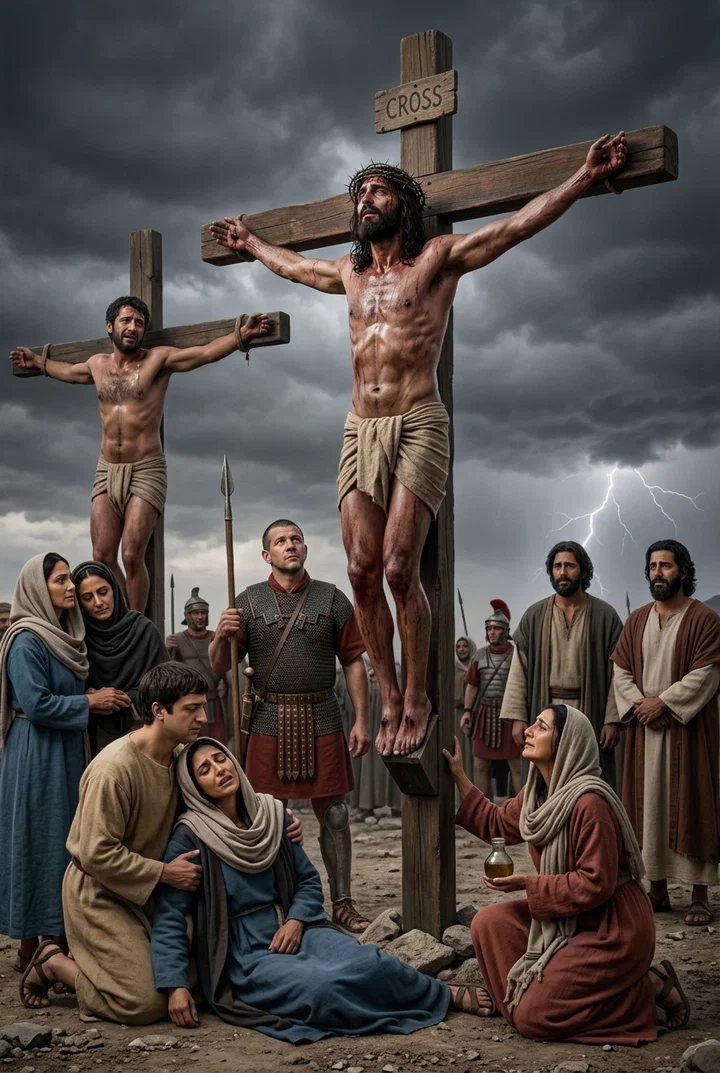
Pictures
Cross-references
- Psalms 69:21
They gave me also gall for my meat; and in my thirst they gave me vinegar to drink.
The psalm foretells gall and vinegar given to the suffering Messiah.
- John 19:28-30
After this, Jesus knowing that all things were now accomplished, that the scripture might be fulfilled, saith, I thirst.
Jesus’ thirst and the vinegar offered at the cross fulfill the predicted drink.
- Mark 15:23
And they gave him to drink wine mingled with myrrh: but he received it not.
Mark records the offered drink and Jesus’ refusal.
- Proverbs 31:6
Give strong drink unto him that is ready to perish, and wine unto those that be of heavy hearts.
The strong drink offered to Jesus illustrates drink given to ease suffering.
- John 19:28
After this, Jesus knowing that all things were now accomplished, that the scripture might be fulfilled, saith, I thirst.
thirst cry prompts the vinegar offer
- Psalms 22
My God, my God, why hast thou forsaken me? why art thou so far from helping me, and from the words of my roaring?
Read with the crucifixion account.
- John 19:18
Where they crucified him, and two other with him, on either side one, and Jesus in the midst.
Jesus is crucified after being offered vinegar mingled with gall.
- Matthew 27:26-30
Then released he Barabbas unto them: and when he had scourged Jesus, he delivered him to be crucified.
Jesus is scourged, spat upon, and mocked before Calvary.
- Isaiah 53:3-5
He is despised and rejected of men; a man of sorrows, and acquainted with grief: and we hid as it were our faces from him; he was despised, and we esteemed him not.
The suffering servant’s rejection and affliction connect with Christ’s crucifixion.
- Matthew 26:39
And he went a little further, and fell on his face, and prayed, saying, O my Father, if it be possible, let this cup pass from me: nevertheless not as I will, but as thou wilt.
The cup of suffering Christ accepted in prayer was endured for sinners.
- Matthew 27:39-40
And they that passed by reviled him, wagging their heads,
Passersby reviled Jesus while he hung on the cross.
- Luke 23:32-43
And there were also two other, malefactors, led with him to be put to death.
Jesus is crucified between two criminals, and one turns to him.
Commentary
Each commentary is drawn from primary sources: the writings of Ellen G. White and Adventist pioneers and periodicals. Each commentary is separate. Its own words are not a quotation; follow the references to read the source passages.
Ellen G. White
15 sources
On the road to and upon the cross at Calvary He had taken neither food nor drink since the Passover supper, and with parched tongue He was offered on a saturated sponge the vinegar mingled with gall, which He tasted and refused to drink.DA 741.4–742.1DA 741.1–21T 240.25RED 81.2–82.1ED 254.2–3 That draught was the stupefying potion allowed the crucified to deaden pain, offered as added insult while angels watched with no command to rescue, and in tasting and refusing He fulfilled that He would be given gall for food and vinegar for thirst, because He would take nothing to cloud His mind when His faith must hold fast to God as His only strength lest Satan gain advantage.SG1 60.1DA 745.5–746.1ST Apr 15, 1897 The bitter cup He did drink to the breaking of His heart was bearing human sin under the Father's wrath as man's substitute outside the gate to redeem from the curse, and His refusal came while bearing that sin, not from fear of death or bodily pain.DA 741.1–2STSE 45.15RED 81.2–82.13SP 161.2–163.1Lt 51, 1886, par. 4–10 His horror was not dread of dying, which would place Him beneath rejoicing martyrs, but the sense of the malignity of sin so familiar and deeply rooted in the human heart, with death itself no angel of mercy from which nature recoils as the fruit of sin.5RED 81.2–82.1 His suffering shows the great cost of what He gave for sinners and sets the measure of what His followers must be willing to give up, to humble the soul in shame unto repentance and to demand all in undivided consecration, patience under affliction, and unsparing labor for others.1T 240.2STSE 45.1Lt 1a, 1861, par. 2–5Lt 51, 1886, par. 4–10GW92 360.3
Setting and the Drink
The offering belongs to the suffering on the way to and upon the cross at Calvary outside Jerusalem, where criminals were executed, after He had taken neither food nor drink since the Passover supper with His disciples.DA 741.4–742.1DA 741.1–21T 240.2 Near the end of His earthly life His tongue was parched and He thirsted and said, I thirst.SG1 60.15RED 81.2–82.13SP 161.2–163.1 The drink was vinegar mingled with gall, offered to Him on a sponge saturated with it, which He tasted and refused to drink.5RED 81.2–82.13SP 161.2–163.1 That refusal stands as one detail in an ordeal of mocking and abuse in which even the Roman governor was forced by the Jewish priests and rulers to do their will.ED 254.2–3ST Apr 15, 1897
The vinegar mingled with gall was a stupefying potion permitted to those dying by crucifixion to deaden the sense of pain.DA 745.5–746.1 Its giving in His thirst was additional insult heaped upon Him in His agony.SG1 60.1 Heavenly angels watched Him hang on the cross, while no command was given for them to rescue Him.ST Apr 15, 1897
His tasting and refusal fulfills the prophecy that the Saviour would be given gall for meat and vinegar for thirst in His suffering.DA 745.5–746.1 He would receive nothing that could becloud His mind.DA 745.5–746.1 His faith must keep fast hold upon God, which was His only strength, and to becloud His senses would give Satan an advantage.DA 745.5–746.1
The verse belongs to His descent into humiliation to suffer at the hands of wicked people and die on the cross as a criminal.ST Jul 7, 1898 He was led away pale, weak, and fainting, stretched upon the wooden cross with nails driven through His tender hands and feet, and hung those dreadful hours in agony until angels veiled their faces and the sun hid its light.Lt 1a, 1861, par. 2–5 With this belong the garden agony, the mocking in the judgment hall, the purple robe, the coarse jests, and the crown of thorns driven into His temples until blood flowed.Lt 1a, 1861, par. 2–5 His disciples would see the One in whom their hopes of eternal life rested thus suffer, giving them cause to mourn and fast and trying their faith, hope, and courage.ST Jul 7, 1898
Substitution and the Bitter Cup
He suffered outside the gate as humanity's substitute, bearing the curse of the law to redeem people from it.DA 741.1–2 That suffering on Calvary was endured on our account, to show the way and to bring the divine help that must be had or perish.STSE 45.1 When His tongue was parched near the end of His earthly life He tasted the sponge saturated with vinegar mingled with gall and refused it, and then the Lord of life and glory died a ransom for the race.5RED 81.2–82.13SP 161.2–163.1 The bitter cup He did drink, which broke the heart of the Son of God, was the sense of sin bringing the Father's wrath upon Him as man's substitute for our sins, borne in meekness and loveliness for sinners, and His refusal came as He bore that sin, not from fear of death or bodily pain.5RED 81.2–82.13SP 161.2–163.1Lt 51, 1886, par. 4–10
His inexpressible agony was not dread of death, for to believe so would place Him beneath martyrs in courage and endurance who yielded to torture and death rejoicing to suffer for Christ.5RED 81.2–82.1 Though He was the prince of sufferers, it was not bodily anguish that filled Him with horror and despair but the sense of the malignity of sin.5RED 81.2–82.1 That included the knowledge that man had become so familiar with sin as not to realize its enormity and that sin was so deeply rooted in the human heart as to be difficult to eradicate.5RED 81.2–82.1 Death is not an angel of mercy, and nature recoils from dissolution as the consequence of sin.5RED 81.2–82.1
Example and Call to Follow
The suffering on the way to and upon the cross shows the great cost of the sacrifice made for sinners and is set as the measure of what followers should be willing to give up.1T 240.2Lt 1a, 1861, par. 2–5 Led away pale and weak and fainting to crucifixion, stretched upon the wooden cross with nails driven through tender hands and feet, and hanging those dreadful hours in agony until angels veiled their faces and the sun hid its light, together with the garden agony, the mocking in the judgment hall, the purple robe, the coarse jests, the crown of thorns driven into the temples until blood flowed, and the murderous throng crying for blood, it proves what was given up for sinners and puts anything called self-denial in the shade.Lt 1a, 1861, par. 2–5 So the narrow way is not too strait and giving up all is not too hard.Lt 1a, 1861, par. 2–5
That suffering, endured on our account to show the way and to bring the divine help that must be had or perish, stands as an example of hardship and trial in the work of overcoming that rebukes complaint.STSE 45.1 It calls youth seeking eternal life not to follow their own inclinations and not to shrink from conflict, self-denial, and every sacrifice, since the prize costs everything.STSE 45.1 With the conflict in the wilderness of temptation, a life of self-sacrificing love, the soul agony in Gethsemane, and the cruelty of the judgment hall, the agony upon the cross teaches self-sacrifice, patience under affliction, solemn consecration to God, and fitting preparation for holy work, requiring those called to sacred work to put all their energies into it and make every other consideration secondary.GW92 360.3 Joined with the sacrifice made in Gethsemane, the great sacrifice made on the cross of Calvary sets the measure for the greatest work ever given to mortals and shows the church is far behind and must give far greater consideration to missions at home and abroad.RH Apr 11, 1912
Looking at Christ crowned with thorns and nailed to the cross for sins, suffered in meekness and loveliness for sinners, should humble the sinner, break the heart, and bow the soul in the dust with shame and humiliation unto repentance and reform.Lt 1a, 1861, par. 2–5Lt 51, 1886, par. 4–10 Christ demands all, undivided affections, a whole sacrifice and entire consecration.Lt 1a, 1861, par. 2–5 This requires separation from worldly society and dead heartless professors, and transformation by the renewing of the mind.Lt 1a, 1861, par. 2–5
Sources
Pioneers and periodicals
77 sources
At Calvary he was handed sour wine mixed with bitter drugs and after touching it to his lips he turned it away without drinking.ST Apr 17, 1879RH Sep 16, 1902ST Mar 20, 1901ST The mixture was meant to deaden pain and cloud the mind of the condemned, but he refused to let his suffering be lessened or his consciousness dimmed.ST May 26, 1914ST Mar 20, 1901ST Jun 1, 1904 In this he fulfilled Psalm 69:21, with Psalm 22, Psalm 69 and Isaiah 53 finding their exact and literal meaning in his betrayal, condemnation and crucifixion.ST Nov 16, 1882RH Nov 18, 1862RH Sep 16, 1902RH Jun 24, 1858 He chose instead to endure the full penalty and wrath due to sin, bearing human guilt and the hiding of his Father's face without flinching, while tasting only the bitter draught and drinking to the dregs the cup of divine wrath.RH Feb 1, 1870ST Mar 20, 1901ST Jun 1, 1904RH Jul 19, 1864RH Nov 2, 1869 His refusal displays both the horror of sin and the depth of his love, giving his life as the ransom and sacrifice that upholds the law, ends the sacrificial system, and opens cleansing and justification to believers.RH Feb 13, 1872RH May 27, 1873ST Mar 11, 1903ST Feb 25, 1889
Words and Historical Setting
The offering took place on the cross, where sour wine mixed with gall was handed to Jesus, he put it to his lips and tasted it, and then he would not drink it.ST Apr 17, 1879RH Sep 16, 1902RH Nov 18, 1862RH Oct 16, 1860 The gall given with the drink was borne for each person.RH Jul 21, 1868
The draught was an intoxicating, powerful opiate formed by mixing wine with bitter drugs and narcotic substances.ST May 26, 1914ST Mar 20, 1901ST Apr 5, 1877 It was the stupefying liquor customarily offered to condemned sufferers facing execution to dull pain, to make them less aware of suffering as they died, and to lessen consciousness of death.ST May 26, 1914ST Jun 1, 1904STRH Dec 9, 1858ST Apr 5, 1877 After tasting the sour wine mixed with the bitter drug, he refused it as an anesthetic and a merciful relief for pain.ST Mar 20, 1901ST Jun 1, 1904ST He was offered the stupefying drink on reaching Calvary and refused to drink it.RH Dec 9, 1858ST Jul 14, 1881
The place was Calvary or Golgotha, the skull-shaped hill on the mountainside near the city outside the great city.ST Apr 8, 1903ST Sep 9, 1930ST Jul 14, 1881 He was led there in a procession half military and half mob under the sunny skies of the Orient, laden with his own heavy instrument of death, sinking wearily under the load so that a strong countryman was pressed into service, climbing the rugged ascent and falling beneath the heavy cross.ST Apr 8, 1903RH Jun 28, 1870 He went forth thorn-crowned and blood-stained at every step amid the cry of a hostile rabble, taunted, reviled, mocked, spit upon, smitten, and enduring three hours of fierce noontide heat, with darkness coming over the land.ST Apr 8, 1903RH Apr 4, 1871RH Apr 8, 1902 There he was nailed in hands and feet to the cross between two malefactors, as if vilest of the three, and died amid wonders and convulsions in heaven and earth.ST Apr 8, 1903RH Apr 8, 1902ST Jul 14, 1881 The scene of nailing him to the cross stands as a witness to the cost of humanity's redemption.ST Sep 9, 1930
The crucifixion belonged to the last Passover he attended, in A.D. 31.ST Dec 23, 1897 Nailed to the cross as the great sacrifice for the sins of humanity, his death fell in the middle of the seventieth week and brought the sacrificial system to an end. The history of trial, execution, and burial to which the offering belongs is told with minute accuracy about the customs, opinions, political events, and circumstances of the time.RH Feb 11, 1862 That includes bringing him to Pontius Pilate as governor of Judea with power of life and death, scourging before crucifixion, derision of criminals before and during execution, writing the accusation and affixing it to the instrument of punishment in three languages, bearing the cross, and giving the body for burial at the request of friends.RH Feb 11, 1862 The circumstantial manner and consistency in subordinate parts with other authors and with the manners and institutions of that period show the account was not invented, forced in to look probable, or fetched and sought for, but came in accidentally, naturally, and without design.RH Feb 11, 1862
The drink was handed to him as part of bitter treatment with no sympathy from the watchers.RH Apr 4, 1871RH Mar 27, 1900ST Feb 16, 1882 Those who watched did not sympathize with his suffering but reviled him, and their words were more bitter than the drink they handed him.RH Apr 4, 1871 He was mistreated by the people he had blessed and sought to save, crucified by poor, guilty sinners as a cruel reward for his love, amid cruel mockery and terrible suffering.RH Feb 6, 1879RH Mar 27, 1900ST Feb 16, 1882 His words were met with cruelty, and on the cross he had no friend who dared come near him, standing alone against the world.RH Apr 4, 1871RH Apr 21, 1863 He bore it all silently and submissively, without pausing to tell the gathered throng he was suffering for them, his enemies, without saying the cross was not for himself, and making no answer to cruel taunting and heartless jeers.RH Jun 28, 1870
Prophecy Fulfilled in Christ
The offering of vinegar mingled with gall to Jesus as he suffered on the cross fulfills the prediction that the Messiah would be given vinegar and gall in his sufferings, specifically Psalm 69:21.RH Nov 18, 1862RH Sep 16, 1902RH Jun 24, 1858RH Nov 18, 1862 At the crucifixion his enemies offered him vinegar mixed with gall, and he tasted it but would not drink it.RH Sep 16, 1902RH Nov 18, 1862 This is shown as the fulfillment of that prediction.RH Nov 18, 1862RH Jun 24, 1858
It is an exact, literal fulfillment belonging with Psalm 22 and Psalm 69 and Isaiah 53 in connection with the betrayal, condemnation, and crucifixion of Jesus.ST Nov 16, 1882 It shows those psalms refer to Christ, and without that reference some of their passages cannot be understood.ST Nov 16, 1882 This upholds the inspiration of the imprecatory Psalms.ST Nov 16, 1882 The scene of gall mixed with vinegar offered on the cross while bearing humanity's sins is associated with the suffering described in Psalm 69:20. The mingling of gall with vinegar is to be accepted as part of the biblical account, not dismissed as a mistake or legend.ST Sep 13, 1905
Meaning of Christ's Refusal
The sour wine mixed with a bitter drug was put to his lips, and after tasting it he refused to drink it.ST Mar 20, 1901ST Jun 1, 1904STST Apr 5, 1877ST Jul 26, 1899 It was a powerful intoxicating opiate made by mixing wine with narcotic substances to stupefy those facing execution and lessen their pain, offered as a merciful aid like an opiate given to one who is dying.ST Jun 1, 1904STRH Dec 9, 1858ST Apr 5, 1877 He would not take a stupefying draught that would dull his consciousness and lessen his suffering, though he later accepted what could briefly relieve thirst.ST Mar 20, 1901ST Jun 1, 1904ST Jul 26, 1899 He chose instead to face the suffering fully and to preserve his communion with his Father, accepting the bitter cup borne by the One carrying the world's sins.ST Mar 20, 1901 In so refusing an anesthetic, he accepted the full suffering and penalty for sin rather than having its pain diminished.ST Jun 1, 1904
His merely tasting the vinegar mixed with gall stands in contrast to the cup of divine wrath against sin, which he drank fully in bearing sin.RH Nov 2, 1869 That small outward suffering was slight beside the inward wrath he fully endured.RH Nov 2, 1869
The bitter drink was brought to his parched, thirsting lips as part of his torment.RH May 21, 1857ST Aug 5, 1897ST Sep 17, 1874 In thirsting he bore the consequence of human intemperance laid upon him.RH May 21, 1857 It was mockery of his dying thirst, and those who mocked him will see him when he returns.ST Sep 17, 1874
His vinegar and gall stand in contrast to what believers receive through his suffering.RH Oct 16, 1860RH Dec 19, 1854 His bitterness becomes their sweetness and blessing, his pain their ease, and his death their life.RH Oct 16, 1860RH Dec 19, 1854
Atonement and Doctrinal Teaching
The suffering and death to which the vinegar mingled with gall belongs show the depth of love for humanity, in giving up heavenly glory and taking human nature to endure rejection, mockery, physical pain, humiliation, shame and death on Calvary.RH Feb 1, 1870ST Jun 30, 1914RH Feb 21, 1865 On the cross he bore human sin, even the sin of the whole world as the Son of God, and endured the withdrawal of the Father's favor and the judgment due to violators of God's law.RH Feb 1, 1870RH Feb 21, 1865 While mocked he prayed for the cruel crowd, and his suffering provides the cleansing by which people are saved.ST Jun 30, 1914 That day of crucifixion, when he died for sinful humanity and bore the curse of the law, is more memorable than any other day in his history, for his death was his great act for humanity, whose memorials are the Lord's Supper and baptism rather than the setting apart of the day itself for sacred observance.RH Feb 13, 1872
As humanity's ransom and substitute he bore the guilt of human sin and the Father's wrath against iniquity, with the burden and the withdrawal of the Father's presence causing an agony far greater than bodily suffering or fear of death.ST Jul 25, 1878RH Feb 1, 1870 Even under the crushing pressure of temptation and the powers of darkness, with no one standing by him, he remained without sin.RH Jul 19, 1864 His affliction on the cross was permitted without cause, not as evidence that God had ceased to love or support his Son.RH Mar 21, 1912 Neither his love lessened nor the Father's love for him lessened in the darkness of Calvary without joyful feeling, any more than at the Jordan, the holy mount, the wilderness of temptation, or Gethsemane.ST Oct 7, 1897
He gave his life as the great sacrifice for the sins of humanity, bearing the curse and penalty of the law, and his death in the middle of the seventieth week brought the sacrificial system to an end.RH Feb 13, 1872 His sacrifice upheld the claims of the law while making it possible for God to justify those who believe in Jesus.ST Dec 6, 1883 Not for his own guilt, he bore the punishment deserved by guilty humanity, paying the servant's debt to redeem people and deliver them from wrath.ST Jul 25, 1878STST Dec 6, 1883
His suffering, including the vinegar and gall laid upon him for sins and tasted but refused, displays the cruelty of sin and the agony involved in putting sin away.ST Feb 25, 1889 It gives a still clearer discovery of the dreadful evil and exceeding sinfulness of sin than sin making angels into devils, sin driving Adam from Paradise with loss of the favor and image of God and bringing death and all woe into the world, and God in just displeasure sweeping off a whole world at one stroke.RH May 27, 1873 That last act on Calvary sealed the doom of evil and its king and forever showed what cherished thoughts of self produce when held in the heart of one endowed with glory, beauty and wisdom and familiar with the love and peace of heaven, so that seeing a cherub thus transformed into a malignant fiend warring against God inspires dread of evil and loathing and fear of transgressing the perfect law of love even by a thought, placing eternal safeguards against further experiment.ST Mar 11, 1903
His trials and death most wondrously show God's mercy seeking to win rebellious humanity, while his hatred of sin and justice remain real.RH Oct 23, 1860 The scenes of his patient endurance of wrong in the Gospels display his love and sorrow.ST Jun 30, 1914RH Sep 4, 1855 The cross on which he hung is the central event in the divine plan of redemption, whose provisions reach back to the first sin and the fall at Eden.ST Jul 22, 1886 That death on Calvary was the climax of the Saviour's earthly career and the cumulation of a life filled with cruel crosses and crowns of thorns, just as the offering of Isaac was the climax of Abraham's life of growing faith.ST Jul 22, 1908
The crucifixion was Satan's final effort to destroy Jesus through Roman power, using Pilate's authority to crucify him and the Roman seal upon the tomb, with pagan power persecuting the Master as it persecuted his disciples, yet the effort failed when he rose from death and was caught up to God and his throne.ST Oct 25, 1905ST Instead of taking the kingdom expected when he was escorted into Jerusalem in triumph, he went to the cross as his only throne and lay as a lifeless form in Joseph's new sepulcher, to the bitter disappointment of disciples who expected him crowned and seated on Israel's throne.ST Aug 13, 1902ST Jul 27, 1882ST Mar 24, 1887 Their disappointment tested whether their hearts remained steadfast with God.RH Jul 6, 1869 The heavenly angels watched the divine Sufferer amid mocking and abuse with no command given to rescue him, yet what appeared to end in defeat was success in God's measure.ST Apr 15, 1897ST Feb 4, 1913
The verse belongs to the great sacrifice of Calvary and Gethsemane, where in anguish of love and concern for burdened souls he wrestled in prayer with groans, tears and great drops of blood and the cry for the cup to pass, then endured the crown of thorns, the scourge and cruel mockings in the judgment-hall, and on Calvary's rugged heights drank the cup of anguish and suffering to the end and expired beneath the weight of woe.RH Sep 11, 1866RH Jan 16, 1908ST Aug 22, 1900 At Golgotha under an Eastern sky amid the cry of a hostile rabble, thorn-crowned and blood-stained at every step while laden with the cross, pierced in hands and feet and enduring three hours of fierce noontide heat, he went forth to die for each person personally and becomes wholly the believer's own.RH Apr 8, 1902ST Sep 9, 1930 Joined together, Gethsemane and Calvary set the measure for the greatest work ever given to mortals.RH Apr 11, 1912
Example and Christian Application
The record of suffering at the cross rebukes pride and takes away discontent from those who complain.ST Apr 17, 1879 To see him tasting the bitter draught and then refusing it teaches endurance without turning aside to an easier and sweeter way, submission of the will to God amid pain and fear, calm self-possession held up by faith in God and trust in his promises, and silent bearing of burdens by carrying them to the Lord, leaving them there, and letting him help to bear them.RH Jun 28, 1870ST Apr 1, 1889ST Dec 5, 1892ST Jul 29, 1886 The weary climb to Calvary under the heavy cross, the fall beneath it without declaring to the throng that the suffering was for his very enemies and not for himself, and the refusal to answer cruel taunting and heartless jeers belong to that same silent and submissive endurance.RH Jun 28, 1870
Long tasting of gall and vinegar makes the joy of the kingdom sweeter, as new wine is sweetest to those who have long known bitterness, and the tasting followed by refusal pictures suffering coming before glory.RH May 28, 1861ST Nov 21, 1900 The gall borne for each person calls for thankful and wholehearted surrender of heart, hopes, and life, for receiving divine grace and strength to do his will in thought and word and deed, and for following him even though the soul bleeds, since such amazing divine love demands the heart, the life, and the all.RH Sep 11, 1866RH Apr 8, 1902RH Jul 21, 1868 That suffering stretched from Gethsemane with groans and tears and drops of blood and the cry for the cup to pass, through the judgment hall with the crown of thorns, the scourge, and cruel mockings, to death on the rugged heights of Calvary beneath the weight of woe, where thorn-crowned and blood-stained at every step under a hostile cry he was pierced in hands and feet and endured three hours of fierce noontide heat, and thereby became wholly the believer's own.RH Sep 11, 1866RH Apr 8, 1902
Drinking gall pictures following Christ by sharing the path of suffering and sacrifice, while giving gall-mingled wine to others pictures failing to comfort and care for them.ST Mar 23, 1888ST Oct 10, 1900 Joined with Gethsemane, the great sacrifice of Calvary sets the measure for the greatest work ever given to mortals and shows the church far behind, needing far greater regard for missions at home and abroad.RH Apr 11, 1912 That same story displays unselfishness against self-serving and comforts the afflicted by showing his love for suffering humanity.RH Apr 10, 1900RH Dec 19, 1912 The agonies of the cross remind believers that sin caused his suffering and should move them to speak honestly with him about their sins and daily life.RH Sep 8, 1863
The silent prisoner, mocked and thorn-crowned and sacrificed on the cross, is one with the risen Christ who will appear again, so that those who have known and loved him will recognize him and need not fear to meet him.RH Mar 21, 1912 The offering of vinegar mingled with gall was mockery of his dying thirst, and those who mocked will see him when he returns.ST Sep 17, 1874 Yet even guilt for giving gall and vinegar did not place the persecutors beyond repentance, mercy, and forgiveness, for he prayed for his persecutors to be forgiven.RH Mar 27, 1900RH Jun 12, 1855 In the darkness of Calvary without joyful feeling or outward joy, with visage marred more than any man, neither his love lessened nor the Father's love for him lessened, no less than by the Jordan and on the holy mount when the voice declared pleasure in the beloved Son, and no less than in the wilderness of temptation and in Gethsemane, showing that love abides when feeling departs under suffering, weariness, and sorrow, since love is above all feeling, an eternal, abiding, life-giving principle.ST Oct 7, 1897
The arrest and crucifixion overturn the claim that evil could not come to him.ST May 8, 1879 Seeing the one in whom their hopes of eternal life rested suffer at wicked hands and die on the cross as a criminal gave the disciples cause to mourn and fast and tried their faith, hope, and courage as he approached the cross and descended into humiliation.ST Jul 7, 1898 The Pilot who faced Calvary with Gethsemane, the prison house, and the tomb and came forth conqueror is the same God who lived in Daniel's day, who directed and steadied the ark through the tempests of the deluge, and who walked upon storm-tossed Galilee, and that Pilot remains on board today, not as passenger but as pilot with his hand on the helm, driving the ship on by divine providence so long as one abides in the ship.RH Feb 4, 1915
Sources