John 19:28
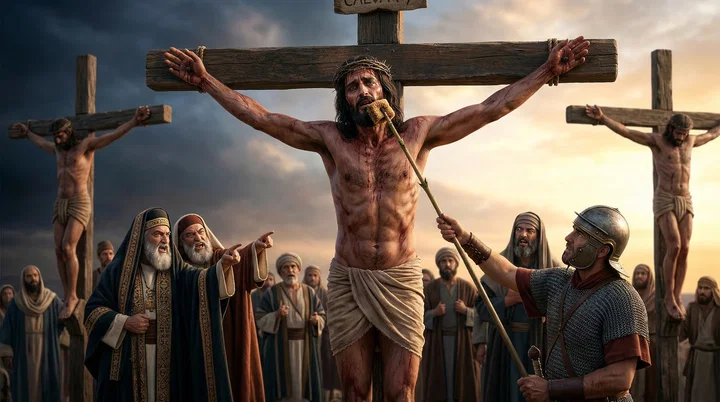
After this, Jesus knowing that all things were now accomplished, that the scripture might be fulfilled, saith, I thirst.
Translations
After this, Jesus knowing that all things were now accomplished, that the scripture might be fulfilled, says, I thirst.
King James Version, KJV Cambridge Paragraph Bible, Webster Bible
After this, Jesus knowing that all things were now accomplished, that the scripture might be fulfilled, saith, I thirst.
Revised Version, American Standard Version
After this Jesus, knowing that all things are now finished, that the scripture might be accomplished, saith, I thirst.
After this, Jesus knowing that all things now have been finished, that the Writing may be fulfilled, saith, 'I thirst;'
After this, Jesus, knowing that all things were now finished, that the scripture might be fulfilled, says, I thirst.
After this, Jesus, knowing that, already, all things, have been finished,—that the Scripture might be fulfilled, saith—I thirst!
After this, knowing that everything had now been accomplished, and to fulfill the Scripture, Jesus said, “ I am thirsty.”
After this, seeing that everything had now been accomplished, and to fulfill the Scripture, Jesus said, “ I am thirsty.”
After this, Jesus, seeing that all things were now finished, that the Scripture might be fulfilled, said, “ I am thirsty!”
After this, being conscious that all things had now been done so that the Writings might come true, Jesus said, Give me water.
After, when Iesus knew that all things were performed, that the Scripture might be fulfilled, he said, I thirst.
Douay-Rheims (Challoner revision)
Afterwards, Jesus knowing that all things were now accomplished, that the scripture might be fulfilled, said: I thirst.
Pictures
Cross-references 20 of 21
- Psalms 69:21
They gave me also gall for my meat; and in my thirst they gave me vinegar to drink.
Jesus’ thirst and the vinegar given to him fulfill the psalm’s description of the suffering Messiah.
- Matthew 27:48-49
And straightway one of them ran, and took a spunge, and filled it with vinegar, and put it on a reed, and gave him to drink.
Jesus is given vinegar while on the cross, and onlookers mention Elijah.
- Mark 15:36
And one ran and filled a spunge full of vinegar, and put it on a reed, and gave him to drink, saying, Let alone; let us see whether Elias will come to take him down.
Describes the vinegar offered to Jesus while people watched.
- Matthew 27:34
They gave him vinegar to drink mingled with gall: and when he had tasted thereof, he would not drink.
Jesus is offered a drink mixed with gall and refuses it after tasting.
- Luke 23:46
And when Jesus had cried with a loud voice, he said, Father, into thy hands I commend my spirit: and having said thus, he gave up the ghost.
Records Jesus’ final words as He dies.
- John 19:34
But one of the soldiers with a spear pierced his side, and forthwith came there out blood and water.
Jesus’ pierced side is named in the same scene as his thirst.
- Psalms 22:15
My strength is dried up like a potsherd; and my tongue cleaveth to my jaws; and thou hast brought me into the dust of death.
Jesus’ thirst at the crucifixion fulfills the psalm’s description of a parched tongue.
- John 7:37
In the last day, that great day of the feast, Jesus stood and cried, saying, If any man thirst, let him come unto me, and drink.
Jesus had invited the thirsty to come to him and drink.
- John 19:32-33
Then came the soldiers, and brake the legs of the first, and of the other which was crucified with him.
The other man’s legs were broken, but Jesus was already dead.
- Isaiah 55:1
Ho, every one that thirsteth, come ye to the waters, and he that hath no money; come ye, buy, and eat; yea, come, buy wine and milk without money and without price.
Both texts speak of thirst and receiving water freely.
- Matthew 26:54
But how then shall the scriptures be fulfilled, that thus it must be?
Jesus says his arrest and its outcome fulfill Scripture.
- Matthew 27:47
Some of them that stood there, when they heard that, said, This man calleth for Elias.
Bystanders misinterpret Jesus’ words from the cross.
- Isaiah 53:12
Therefore will I divide him a portion with the great, and he shall divide the spoil with the strong; because he hath poured out his soul unto death: and he was numbered with the transgressors; and he bare the sin of many, and made intercession for the transgressors.
Jesus’ death fulfilled Scripture about the suffering Messiah.
- Matthew 25:35
For I was an hungred, and ye gave me meat: I was thirsty, and ye gave me drink: I was a stranger, and ye took me in:
Jesus’ thirst connects his words to giving drink to the thirsty as service to him.
- Luke 24:44
And he said unto them, These are the words which I spake unto you, while I was yet with you, that all things must be fulfilled, which were written in the law of Moses, and in the prophets, and in the psalms, concerning me.
Jesus says the Scriptures concerning him must be fulfilled.
- Leviticus 23:5
In the fourteenth day of the first month at even is the LORD’s passover.
Sets the date of the Passover type fulfilled by Christ.
- Mark 15:37
And Jesus cried with a loud voice, and gave up the ghost.
Mark records Jesus’ loud cry as he dies.
- Luke 23:54
And that day was the preparation, and the sabbath drew on.
Places Jesus’ burial on the preparation day before the Sabbath.
- Luke 18:31
Then he took unto him the twelve, and said unto them, Behold, we go up to Jerusalem, and all things that are written by the prophets concerning the Son of man shall be accomplished.
Jesus says the prophets’ words about the Son of man would be accomplished.
- John 4:6
Now Jacob’s well was there. Jesus therefore, being wearied with his journey, sat thus on the well: and it was about the sixth hour.
Jesus experienced weariness during his earthly life.
Commentary
Each commentary is drawn from primary sources: the writings of Ellen G. White and Adventist pioneers and periodicals. Each commentary is separate. Its own words are not a quotation; follow the references to read the source passages.
Ellen G. White
23 sources
Near the end of his suffering on the cross outside Jerusalem, after the darkness lifted and he knew that all things were now accomplished for Scripture to be fulfilled, he again became conscious of bodily suffering with parched tongue and lips and said that he was thirsty.Ms 45, 1897, par. 16–17Ms 41, 1887, par. 15–16DA 741ST Jan 27, 1914DA 754.3 A Roman soldier in pity lifted sour wine to his lips on a sponge on a stalk of hyssop, while his persecutors were given a final opportunity for sympathy but mocked and refused relief and taunted that they should wait to see whether Elijah would come to save him.Ms 45, 1897, par. 16–17ST Jan 27, 1914DA 754.3 Those who held it as an added insult teach that what was offered was vinegar mingled with gall, which after tasting he refused to drink before declaring his work finished.SG1 60.15RED 81.2–82.13SP 161.2–163.1 His knowledge that his work was accomplished testified that his death fulfilled the purpose for which he came to save a perishing world and made eternal life available to repentant believers.Ms 111, 1897, par. 22–26 His cup was bitter not merely from fear of death or bodily pain but from bearing as substitute and ransom the sense of human sin and the Father's wrath, and his endurance to the full measure of what human beings can bear makes victory possible for those who remain united to him by faith in their struggle to control appetite.DA 741.1–25RED 81.2–82.1ST Dec 1, 1914DA 122.4–123.1ST Dec 16, 1913
Words in Crucifixion Setting
The cry of thirst belongs to the crucifixion at Calvary outside the gate of Jerusalem, the place where felons and murderers were executed.DA 741.1–2 There, as substitute, Christ suffered outside the boundaries to sanctify the people with His own blood for the transgression that banished Adam and Eve from Eden, redeeming from the curse of the law by being made a curse.DA 741.1–2 That cross stood among the great trials and works that were preceded by a night of prayer to the Father.ST Aug 31, 1915 It was the taking away of the Bridegroom in deep humiliation, when He was given into the hands of wicked men with His own nation clamoring for His blood.ST Jul 7, 1898
He was crowned with thorns upon His sacred brow, clothed in the purple robe, mocked and bowed to and struck with the reed placed in His hand.ST Jul 7, 1898 He was scourged as the worst of criminals though expected to take David's throne, rejected while the murderous Barabbas was chosen in His place, and lifted up on the cross to die as a malefactor.ST Jul 7, 1898 This was the time when the disciples had cause to mourn and fast, with their faith tried and their hope and courage failing.ST Jul 7, 1898
The words I thirst came after He knew that all things were accomplished and in connection with the fulfillment of Scripture.DA 741 After the darkness lifted from His spirit He again became conscious of bodily suffering and spoke of literal physical thirst.ST Jan 27, 1914DA 754.35RED 85.1–23SP 164.3–165.1 As His earthly mission neared completion His tongue and lips were parched while He endured the agony of crucifixion.Ms 45, 1897, par. 16–17Ms 41, 1887, par. 15–165RED 81.2–82.13SP 161.2–163.1
A Roman soldier took pity on Him and lifted vinegar to His lips on a sponge attached to a stalk of hyssop.Ms 45, 1897, par. 16–17ST Jan 27, 1914DA 754.3 His thirst gave His persecutors a final opportunity to relieve Him and show sympathy.5RED 85.1–23SP 164.3–165.1 But the priests and other mockers ridiculed Him, refused relief, and taunted that they should wait to see whether Elijah would come to save Him and take Him down.Ms 45, 1897, par. 16–17ST Jan 27, 1914DA 754.35RED 85.1–23SP 164.3–165.1
He was given vinegar and gall as an added insult.SG1 60.15RED 81.2–82.13SP 161.2–163.1EW 146.1 After tasting it He refused to drink.5RED 81.2–82.13SP 161.2–163.1EW 146.1 His suffering ended in the declaration that the work was finished.SG1 60.1
Accomplished Salvation and Response
He knew that his work was accomplished and that his death fulfilled the purpose for which he came, to save a perishing world.Ms 111, 1897, par. 22–26 His final words on the cross testified to angels and to people that he had completed this work by giving his life.Ms 111, 1897, par. 22–26 By that completed giving of life he made eternal life available to repentant believers.Ms 111, 1897, par. 22–26
At Calvary outside the gate of Jerusalem, where felons and murderers were executed, he suffered outside the boundaries to sanctify the people with his own blood for the transgression that banished Adam and Eve from Eden, redeeming from the curse of the law by being made a curse.DA 741.1–2 His suffering and death were as humanity's substitute and ransom.5RED 81.2–82.1 The bitterness of his cup came from bearing the sense of sin and the Father's wrath for humanity, not merely from fear of death or bodily pain.5RED 81.2–82.1
His suffering on the cross is the means by which he gives grace and power to people and the evidence that he is at their side to help them.Ms 8, 1886, par. 8 His blood was given as the price of redemption.Lt 122, 1901, par. 15 That sacrifice provides restoring power for the salvation of soul and body, and calls people to surrender themselves to his keeping and to bring their lives into conformity to his will.Lt 122, 1901, par. 15
The chapter to which this thirst belongs is of special importance to believers, speaking to their hearts and recording his suffering and death.Lt 100, 1910, par. 16 That record strengthens those who suffer for faith so they can keep the faith, and those who hold fast receive his righteousness.Lt 100, 1910, par. 16 Together with Gethsemane, the great sacrifice made on the cross of Calvary is so great that in comparison with it the church, despite some advance over past years, is far behind in the greatest work ever given to mortals.Ms 56, 1901, par. 8
In the agony of the cross, including thirst, his suffering reached the full measure of what human beings can bear.ST Dec 1, 1914DA 122.4–123.1 His endurance is the example for those struggling to control appetite.ST Dec 16, 1913 His victory over temptation makes victory possible for those struggling against appetite, and that victory becomes theirs when they remain united to him by faith.ST Dec 1, 1914DA 122.4–123.1ST Dec 16, 1913
This belongs to a terrible, trying hour of gloom and darkness on the cross that tested and proved the disciples.Ms 126, 1907, par. 9–10 They lost faith as they beheld him dying because they had failed to watch and pray and to share his self-sacrifice, and so had not received the light and knowledge of his sufferings and the glory that should follow.Ms 126, 1907, par. 9–10 Had they remained watching, rays of hope from that knowledge would have lighted the darkness and sustained their faith, but instead they failed to endure the proving, and Peter denied his Lord before his enemies.Ms 126, 1907, par. 9–10
Sources
Pioneers and periodicals
62 sources
Jesus knew his work was now accomplished and, feeling again his bodily suffering after the darkness lifted, declared his thirst shortly before his death.ST Jul 25, 1878ST Jan 27, 1914ST May 17, 1905ST May 27, 1897ST Jun 7, 1899 That thirst was real and intense physical need, with parched mouth and throat, fever, faintness and pain from loss of blood and pierced hands and feet.ST Jul 25, 1878ST Jul 26, 1899ST Jun 18, 1902ST Apr 11, 1878RH Mar 26, 1914 In speaking and in being given vinegar and gall he fulfilled to the letter what was written in Psalm 22:13-18 and Psalm 69:20-21, proving him the promised Messiah and the truthfulness of Scripture.ST Jul 26, 1899ST May 17, 1899ST Jan 8, 1880RH Sep 28, 1905RH Nov 25, 1873 So spoken, it belongs to the sacrifice of the Son of God made flesh for the sins of the whole world, offered as the Passover on its appointed day in fulfillment of every demand of the law.ST Jun 14, 1905RH Aug 20, 1908RH Jun 23, 1910RH Nov 10, 1863RH Apr 14, 1874 The one who invites the thirsty to receive the waters of life freely endured thirst himself, leaving believers an example of patient endurance without murmuring and a call to relieve the suffering of others.ST Jul 26, 1899ST Apr 17, 1879ST Jun 18, 1902ST Jun 16, 1898
Wording and Immediate Context
Jesus knew that all things were now accomplished and that his work was finished, and he said he thirsted so that Scripture might be fulfilled.ST May 17, 1905ST May 27, 1897ST Jun 7, 1899ST May 20, 1897 His thirst and the vinegar offered to him belong to the fulfillment of Scripture at his crucifixion, marking the moment when all things required for his work had been accomplished.ST May 17, 1905ST May 27, 1897 His words and actions in saying he thirsted were part of that fulfillment.ST Jun 7, 1899ST May 20, 1897
After the darkness lifted from his spirit, he became aware again of his physical suffering and thirst.ST Jul 25, 1878ST Jan 27, 1914 His thirst was a real bodily need, and his persecutors had a final chance to show sympathy and relieve him.ST Jul 25, 1878 Instead he was given vinegar while they continued to wait and watch, for a Roman soldier pitied him and offered vinegar on a sponge while the priests mocked him and refused to let anyone relieve his suffering, taunting that they should wait to see whether Elijah would save him.ST Jul 25, 1878ST Jan 27, 1914
After about six weary, wondrous hours of suffering, desertion and agony carrying eternal results and boundless blessings, shortly before death he faintly declared his thirst in a trembling voice telling of intense agony from parched suffering, willingly drinking the bitter cup to its very dregs instead of saving himself.RH Aug 15, 1854RH Jul 16, 1861RH Nov 25, 1873 Knowing that the events were accomplished in fulfillment of Scripture, he was given vinegar, received it exactly as foretold, then declared that it was finished and died.RH Aug 15, 1854RH Nov 25, 1873 That receiving of vinegar completes his course and leads at once to the loud cry that his work is finished, having completely and gloriously finished all and obtained eternal redemption, and this places the completion of the atonement on Friday, the sixth day of the week, when all was consummated.RH Aug 15, 1854RH Jul 16, 1861RH Nov 25, 1873
The verse belongs to his suffering and death on the cross outside a great city under sunny skies, on a skull-like hill on the mountainside near the city.ST Apr 8, 1903 He is the central figure of a procession half military and half mob, a poor young man of royal blood, the purest and noblest in character that ever walked the earth, taunted, reviled, mocked, spit upon, smitten and thorn-crowned, bearing his own heavy instrument of death until suffering and exhaustion prove too much for his physical frame and he sinks wearily under the load, so that a strong countryman is pressed into service.ST Apr 8, 1903 There the unresisting victim is nailed to the cross, the cross is set in the earth, and amid wonders and convulsions in heaven and earth he dies in the glorious triumph of the principle of eternal righteousness.ST Apr 8, 1903 His death there on Golgotha was real, chilling the heart of the mighty Nazarene, yet it was not death's final victory, for he rose victorious over the tomb and the dead will hear his voice.ST Apr 8, 1903ST Jul 30, 1912
As the day wore to its close a wealthy gentleman of his own nation came forward with another wealthy friend and begged the governor for his body, bought a linen cloth and a hundred pounds of aloes, myrrh and other aromatic substances, wrapped the body in these, and laid it in a rock-hewn tomb belonging to the rich man, closed by a great stone and officially sealed with the government seal.ST Apr 8, 1903 Weeping friends mourned him while his enemies, enemies solely because his life condemned them, rejoiced, and the night passed and the Sabbath day waned to its close until the night of the first day was well nigh gone and the morning was about to break.ST Apr 8, 1903 Then a mighty messenger cleaved the blue ether, lit the gloom with his glory, smote the strong Roman guard simply by the holiness of his presence, and by the authority of the Most High called to the young man sleeping in the tomb that as Son of God his Father called him.ST Apr 8, 1903 He who died a victim to hellish hate, to Jewish blindness and to Roman ignorance came forth the mighty conqueror over the mightiest foes of the ages, sin and death, a conqueror for every person.ST Apr 8, 1903
The crucifixion took place on Passover afternoon at three o'clock, among the great trials and works that were preceded by a night of prayer to his Father.ST Aug 31, 1915RH Sep 5, 1865 It was the taking away of the Bridegroom, when he approached the cross and descended into the depths of humiliation, given into the hands of wicked men with his own nation clamoring for his blood.ST Jul 7, 1898 Herod and his soldiers plaited the crown of thorns for his sacred brow, clothed him in the purple robe, mocked and bowed to him and struck him with the reed placed in his hand, and scourged him as the worst of criminals though he was expected to take David's throne, while the murderous Barabbas was chosen in his place and he was lifted up on the cross dying as a malefactor.ST Jul 7, 1898 This was the time when the disciples had cause to mourn and fast, with their faith tried and their hope and courage failing.ST Jul 7, 1898
Real Bodily Thirst Endured
The thirst was real bodily need, not words spoken merely to fulfill Scripture, intense and natural with parched tongue and bloodless lips and burning throat, fevered frame, faintness and quivering pain from loss of blood, pale and bleeding with pierced hands and feet.ST Jul 25, 1878ST Jul 26, 1899ST Jun 18, 1902RH Oct 4, 1870 It gathered up all bodily suffering on the cross in a single utterance.ST Jul 26, 1899 Its spiritual significance does not cancel its plain physical meaning, for the sharp bodily pain literally suffered shows true sharing in human bodily needs such as tiredness, hunger, sleepiness and need for food sustained by eating.ST Apr 11, 1878RH Mar 26, 1914
Strong will held back bodily cravings while any duty remained, and thirst was attended to only after knowing the work was accomplished.ST Jul 26, 1899 Even in final agony no other relief for self was asked except the declaration of thirst, with concern remaining chiefly directed toward serving others.ST Jul 26, 1899RH Jan 30, 1866 The small relief requested would ease the pain of parched lips and burning throat without dulling consciousness, unlike the stupefying drink refused.ST Jul 26, 1899 After tasting the vinegar and gall offered, it was refused.ST Jul 25, 1878
The thirst came to awareness again after darkness lifted from the spirit, giving persecutors a final chance to show sympathy and relieve it, yet vinegar was given while they continued to wait and watch.ST Jul 25, 1878 It was endured in saving agony to save humanity, with gall offered and hands, feet and side pierced.ST Aug 5, 1897RH Aug 29, 1865 A Roman soldier pitied and touched the lips with a sponge soaked in bitter liquid, but no loving hand or cup of cold water was offered.ST Jan 27, 1914ST Jun 18, 1902 The priests mocked and forbade relief, taunting to wait to see whether Elijah would save.ST Jan 27, 1914
That crucified thirst is made concrete by another crucified man also complaining of thirst, though the similarity does not establish that the two crucifixions unfolded in the same way.RH May 10, 1864
Prophecy Fulfilled Exactly
His words and actions on the cross occurred as foretold and fulfilled what had been written, down to specific details.ST Feb 15, 1883ST Feb 15, 1883 His dying cry of thirst was one more prophecy fulfilled in his final hours, spoken from what had been foretold long before.ST Feb 15, 1883RH Dec 2, 1909
The thirst and the giving of vinegar, together with the piercing of hands and feet and the parting of garments and casting of lots, are the exact and literal accomplishment at the crucifixion of Psalm 22:13-18 and Psalm 69:20-21.ST Jan 8, 1880 This took place before the eyes of the Jews as a sign of his first advent, to show that Jesus of Nazareth is the promised Messiah.ST Jan 8, 1880 His being given vinegar fulfilled the prediction that the Messiah would be offered vinegar and gall.RH Nov 18, 1862 On the day of his crucifixion his thirst and request led to gall and vinegar being given to him in his suffering, fulfilling an Old Testament prophecy.RH Nov 18, 1862ST Oct 21, 1930
The cry was a real cry of bodily need, not words spoken merely to fulfill Scripture, and it also fulfilled Psalm 69:21, gathering up his bodily suffering on the cross in a single utterance.ST Jul 26, 1899 The whole prophetic word passed before his mind, and in conviction that he had fulfilled all written concerning him by the Holy Spirit he spoke and then uttered that it is finished.RH Sep 28, 1905 He honored, confirmed and fulfilled Scripture in so speaking on the cross.RH Sep 28, 1905 After six weary and wondrous hours of suffering, desertion and agony carrying eternal results, his trembling voice declared thirst from parched suffering, willingly drinking the bitter cup to its very dregs instead of saving himself.RH Nov 25, 1873 When vinegar was put to his parched lips he received it exactly as the prophet said he would, proving prophecy fulfilled literally to the very letter.RH Nov 25, 1873 That literal receiving completed his course and led at once to the loud cry that his work is finished, having completely and gloriously finished all and obtained eternal redemption.RH Nov 25, 1873
He knew his work was complete and spoke of thirst so that Scripture would be fulfilled, his thirst was answered with vinegar, and after receiving it he declared his work finished.ST May 17, 1899ST May 17, 1899 This detail is one of many small scriptural prophecies fulfilled in his life, supporting his identity as the true Messiah and the truthfulness of Scripture.ST May 17, 1899
Finished Atoning Sacrifice
The thirst belongs to the crucifixion in which the sacrifice was made for the sins of the whole world, given out of love while bearing the woe of the world.ST Jun 14, 1905RH Jan 16, 1908 There on Calvary he gave himself as a sacrifice for humanity and declared his work finished.RH Jun 23, 1910 Only those who believe in him and obey the gospel receive its benefit.ST Jun 14, 1905 His death on the cross is a revelation of God's suffering for human sin.RH Aug 20, 1908
The putting to death and the shedding of blood belonged to no other person than the Word who was in the beginning as God, with God, by whom all things were made.RH Apr 14, 1874 That same Word was made flesh and dwelt among men, came from the Father and returned to him, prayed to have restored the glory he had before the world was, taught and worked miracles, was falsely accused, put to death on the cross, shed his blood, was buried and rose again.RH Apr 14, 1874 His humbling himself and becoming obedient unto death, even the death of the cross, was the act of one single person, not one person humbling himself and another becoming obedient.RH Apr 14, 1874 So his death is the death of the Son of God come from heaven giving his life as a sin-atoning sacrifice, not merely the death of a human being.RH Nov 10, 1863
He was sacrificed as the Passover on the fourteenth day of the first month as the Lamb of God, fulfilling the Passover lamb type exactly as to time on its very day.RH Oct 30, 1855 Mere preliminary and circumstantial offerings do not prevent the grand event of the day from meeting its antitype at the time pointed out in the type.RH Oct 30, 1855 That principle is proved by the spring types and is applied to the autumn Day of Atonement.RH Oct 30, 1855
In thirst and death he fulfilled every jot and tittle of the law in its precepts and its penalty, keeping all its precepts and meeting its penalty for sinners, completing its demands and bearing its penalties for humanity before he cried it is finished and gave up the ghost.RH Jul 21, 1868ST Aug 30, 1877 That fulfilling magnifies the law and makes it honorable by exalting, elevating and raising it in estimation, vindicating its claims, showing its sacredness and perpetuity, enforcing it anew and writing it in the heart to be loved and obeyed in newness of spirit.RH Jul 21, 1868 It did not abolish the law nor remove any jot or tittle from force as a rule of life and guide to conduct.RH Jul 21, 1868ST Aug 30, 1877 His dying word means his sacrifice had reached its culmination in death and the infinite price was paid, not that God's moral law was done away, and to make it mean the end of the moral law is preposterous.ST Dec 16, 1908 His sufferings on the way to death at Calvary fulfilled the law.ST Jan 13, 1881
His death at Calvary was the complete giving of life represented by a slain sacrifice, in which blood signifies given life and remission requires shedding.ST Sep 12, 1900 Because the offering stood for the one who offered it, only blood poured out and flesh consumed could represent complete consecration, while a wounded but living offering could not.ST Sep 12, 1900 His journey to the cross culminated in crucifixion and death as a step in the divine sacrifice for fallen humanity. The scene of hanging on the cross stands at the center of the history of redemption, marking the culmination of a divine plan whose provisions reach back through human history to the fall and the gates of Eden.ST Apr 3, 1884 That suffering and death, including cross and Calvary, are now past and will never be repeated.ST Dec 7, 1904
Links to Other Scripture
The saying is one of seven times spoken from the cross, belonging to the Bible pattern of seven.RH Sep 15, 1874 The hanging lasted seven hours on the cross and there were seven appearances after the resurrection.RH Sep 15, 1874 It belongs to the account of being crucified and buried, parallel to the crucifixion and burial told in Matthew, Mark, and Luke, as the way of dying for sins according to the Scriptures.ST Mar 20, 1901
The suffering at Calvary lies between followers and the throne, which the risen Lord reached with pierced hands and feet and a brow scarred by thorns.RH Feb 4, 1904 The way to God's throne is therefore the way of the cross, self-denial, and patient suffering.RH Feb 4, 1904 The mountain scene of the crucifixion revealed sorrow for lost sinners and brought sacrificial love for the world to its climax.ST Sep 10, 1902 Those trial and crucifixion scenes at Calvary were scenes of cruel mockery and suffering.ST Feb 16, 1882
The death on Golgotha was real, with Death chilling the heart of the mighty Nazarene, yet it was not Death's final victory, for there was rising victorious over the tomb and the dead will hear the voice.ST Jul 30, 1912 It was an ignominious death on the cross that founded the glorious kingdom under gloomy and most foreboding circumstances, when even the most ardent disciple had denied with cursing and swearing. Unlike the martyrdom of Stephen with its glorious manifestation shedding a halo of heavenly light on the pathway, this death was without such visible glory.
The cry was a real cry of bodily need, not words spoken merely to fulfill Scripture, yet also fulfilling Psalm 69:21, gathering up bodily suffering on the cross in a single utterance.ST Jul 26, 1899 The one who invited the thirsty to come and receive the waters of life freely endured thirst himself.ST Jul 26, 1899 Though bearing refreshment to the world, there was thirsting, with wrung heart, weary and bleeding feet, having no place to lay the head, heavier burden, bitter cup drunk long before, unuttered anguish, and hunger though feeding the hungry thousands.ST Jun 16, 1898 This proves suffering came before believers and more than they suffer, so that human grief makes a person like him.ST Jun 16, 1898
Example and Call to Endure
His sufferings subdue pride and cast out discontent, so that reading the chapter of his suffering is a remedy for the fretful, gloomy, or discontented Christian.ST Apr 17, 1879 He is a man of sorrows who suffered the bitter depths of human woe below, coming after days of toil and nights of prayer in pitying love to share every human burden and care, bearing the heavy cross, wearing the piercing crown of thorns, and enduring the nails, the spear, and the blood. Remembering this leaves no place for murmuring or complaining in grief and pain, and no place for asking a life of ease or living one hour to please self, and it makes pain sweet by bringing the sufferer lower at his feet to meet him in closer sympathy.
He bore his suffering on the way to Calvary and at the cross silently and submissively, without announcing it to the crowd or answering their taunts.RH Jun 28, 1870 He faced thirst amid hatred and danger and the flight of friends without seeking shelter, and his steadfastness teaches meeting trial with courage and continuing to serve rather than seeking shelter from hardship.ST Feb 11, 1903ST May 7, 1902 His example teaches bearing one's own burdens humbly and, when they are too heavy, taking them to the Lord and leaving them with him.RH Jun 28, 1870 His cry expressed intense, natural physical thirst, and when a soldier touched his lips with a sponge soaked in a bitter, stupefying liquid, no one offered a loving hand or a cup of cold water.ST Jun 18, 1902 That cry teaches his followers to answer the needs of suffering people rather than dismiss them, since failing to help even the least of God's children is failing to help him.ST Jun 18, 1902 His kindness in dying for people moves those who hear the account of his crucifixion to love him and to give up revenge.ST Jan 1, 1894
His suffering on the cross reached what human beings can bear, and his endurance of physical agony including thirst is an example for those struggling to control appetite.ST Dec 1, 1914ST Dec 16, 1913 His victory over temptation becomes theirs when they remain united to him by faith.ST Dec 16, 1913 The inspired account of his crucifixion is the saddest tragedy since creation, in which he was killed by a bloodthirsty, hardened mob. His compassion and affection at Calvary, with Gethsemane, is the greatest demonstration of that compassion and affection.RH Dec 23, 1873 The same compassion and affection seen in his suffering will be seen in his eyes when he is beheld in glorious majesty and beauty at his coming, making his sudden appearing transcendently joyous to the few who are watching for him.RH Dec 23, 1873
Sources