Mark 6:17
For Herod himself had sent forth and laid hold upon John, and bound him in prison for Herodias’ sake, his brother Philip’s wife: for he had married her.
Translations
For Herod himself had sent forth and laid hold on John, and bound him in prison for Herodias’ sake, his brother Philip’s wife: for he had married her.
King James Version, KJV Cambridge Paragraph Bible
For Herod himself had sent forth and laid hold upon John, and bound him in prison for Herodias’ sake, his brother Philip’s wife: for he had married her.
For Herod himself had sent forth and laid hold upon John, and bound him in prison for the sake of Herodias, his brother Philip's wife: for he had married her.
For Herod himself had sent forth and laid hold upon John, and bound him in prison for the sake of Herodias, his brother Philip’s wife: for he had married her.
For Herod himself had sent forth and laid hold upon John, and bound him in prison for the sake of Herodias, his brother Philip’s wife; for he had married her.
For Herod himself, having sent forth, did lay hold on John, and bound him in the prison, because of Herodias the wife of Philip his brother, because he married her,
For the same Herod had sent and seized John, and had bound him in prison on account of Herodias, the wife of Philip his brother, because he had married her.
For, Herod himself, had sent and secured John and bound him in prison, for the sake of Herodias the wife of Philip his brother,—for, her, had he married,
Berean Standard Bible, Majority Standard Bible
For Herod himself had ordered that John be arrested and bound and imprisoned, on account of his brother Philip’s wife Herodias, whom Herod had married.
For Herod himself had sent out and arrested John and bound him in prison for the sake of Herodias, his brother Philip’s wife, for he had married her.
For Herod himself had sent men out to take John and put him in prison, because of Herodias, his brother Philip's wife, whom he had taken for himself.
For Herod him selfe had sent forth, and had taken Iohn, and bound him in prison for Herodias sake, which was his brother Philippes wife, because he had maried her.
Douay-Rheims (Challoner revision)
For Herod himself had sent and apprehended John, and bound him in prison for the sake of Herodias the wife of Philip his brother, because he had married her.
Pictures
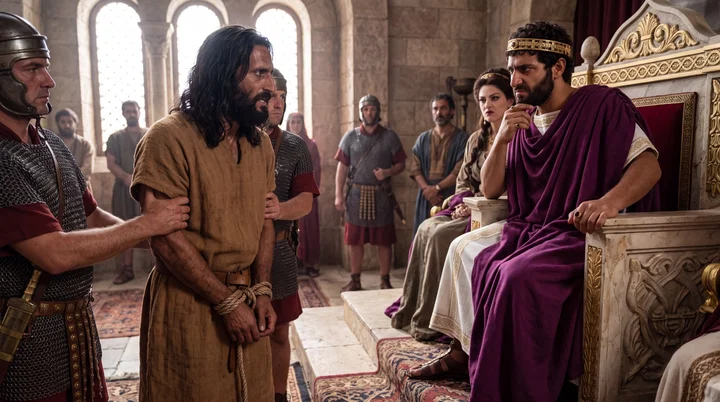

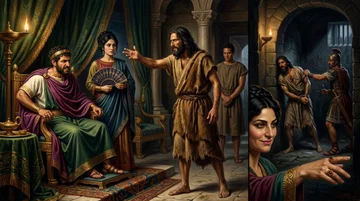
Cross-references
- Matthew 14:3-4
For Herod had laid hold on John, and bound him, and put him in prison for Herodias’ sake, his brother Philip’s wife.
Herod imprisons John after John rebukes his unlawful marriage to Herodias.
- Luke 3:19-20
But Herod the tetrarch, being reproved by him for Herodias his brother Philip’s wife, and for all the evils which Herod had done,
John rebuked Herod over Herodias and was imprisoned.
- Leviticus 20:21
And if a man shall take his brother’s wife, it is an unclean thing: he hath uncovered his brother’s nakedness; they shall be childless.
Prohibits taking a brother’s wife, the charge against Herod.
- Leviticus 18:16
Thou shalt not uncover the nakedness of thy brother’s wife: it is thy brother’s nakedness.
Forbids taking a brother’s wife.
- Luke 9:9
And Herod said, John have I beheaded: but who is this, of whom I hear such things? And he desired to see him.
Herod recalls John’s death and wonders who is performing the reported deeds.
- Matthew 11:2-6
Now when John had heard in the prison the works of Christ, he sent two of his disciples,
John sends disciples from prison to ask Jesus whether he is the coming one.
- Mark 6:21-28
And when a convenient day was come, that Herod on his birthday made a supper to his lords, high captains, and chief estates of Galilee;
Herodias arranged John’s execution at Herod’s birthday feast.
- Mark 1:14
Now after that John was put in prison, Jesus came into Galilee, preaching the gospel of the kingdom of God,
Jesus began preaching in Galilee after John was imprisoned.
- Matthew 14:1-2
At that time Herod the tetrarch heard of the fame of Jesus,
Herod identifies Jesus as John the Baptist risen from the dead after hearing of Jesus’ works.
- Romans 7:2-3
For the woman which hath an husband is bound by the law to her husband so long as he liveth; but if the husband be dead, she is loosed from the law of her husband.
widow is free, Herodias was not
- Deuteronomy 25:5
If brethren dwell together, and one of them die, and have no child, the wife of the dead shall not marry without unto a stranger: her husband’s brother shall go in unto her, and take her to him to wife, and perform the duty of an husband’s brother unto her.
contrasts lawful duty to deceased brother's widow
Commentary
Each commentary is drawn from primary sources: the writings of Ellen G. White and Adventist pioneers and periodicals. Each commentary is separate. Its own words are not a quotation; follow the references to read the source passages.
Ellen G. White
27 sources
Herod himself seized John and bound him in a dungeon cell in his fortress east of Jordan, exchanging the free air of the wilderness and the crowds who hung on his words for prison walls, so that he who first heralded Christ's kingdom was first to suffer for it.DA 214.1 He had taken Herodias, his brother Philip's wife, while her husband was still living, in a marriage contrary to God's law.2SP 76.1–77.12SP 69.2EW 124.3–125.1 John faithfully confronted him with that law, condemning the union as unlawful and warning that Herod could have no part in the Messiah's kingdom unless he broke from it and obeyed God's commandments.2SP 69.2ST Mar 1, 1883ST Nov 1, 1877 The arrest was for Herodias' sake, at her instigation in revenge for the rebuke, for she feared his repeated appeals might persuade Herod and clung to her hatred without relenting until John was imprisoned.DA 214.1ST Mar 1, 1883ST Nov 1, 1877 Herod himself was divided, for he honored and feared John as just and holy, heard him gladly and trembled under his call to repentance and at times sought to change, yet from lust and fear of displeasing Herodias he yielded to sin and let her induce him to cast John into prison.DA 214.12SP 76.1–77.1ST Nov 1, 1877
Arrest and Its Causes
Herod himself laid hold upon John and bound him in a dungeon cell in his fortress in the territory east of Jordan where much of John's ministry had been spent.DA 214.1 He who was first in heralding Christ's kingdom was thus also first in suffering for it, exchanging the free air of the wilderness and the vast throngs hung upon his words for prison walls.DA 214.1
Herod had married Herodias, his brother Philip's wife, while her husband was still living.2SP 76.1–77.1EW 124.3–125.1ST Dec 19, 1916SG1 29.2–30.1LC1 44.3 That marriage was unlawful and contrary to God's law.2SP 69.2ST Mar 1, 1883EW 124.3–125.1SG1 29.2–30.1LC1 44.3 John faithfully reproved the relationship, condemning the marriage as unlawful, bringing Herod face to face with God's law.2SP 69.2ST Mar 1, 1883ST Nov 1, 1877RH Mar 4, 1873 He warned that Herod could not share in the Messiah's kingdom while remaining in it, but must break from it and obey God's commandments.2SP 69.2ST Mar 1, 1883ST Nov 1, 1877RH Mar 4, 1873
The arrest was for Herodias' sake and at her instigation and influence as revenge for John's rebuke.DA 214.1ST Mar 1, 1883ST Nov 1, 1877RH Mar 11, 18732SP 70.1 She wanted him destroyed and feared his repeated remonstrances might persuade Herod, clinging to her grievance without relenting until he was destroyed.2SP 76.1–77.1ST Mar 1, 1883ST Nov 1, 1877RH Mar 11, 1873ST Although Herod had first been inclined to follow John's counsel and had told her he could not marry her contrary to the law, her renewed influence and hatred led to John's imprisonment.DA 214.1ST Nov 1, 18772SP 70.1 Herod himself was divided, for he honored and feared John as just and holy and a true prophet.DA 214.12SP 76.1–77.1RH Mar 11, 1873 He listened to his preaching, trembled under the call to repentance, heard him gladly and did many things he said, was convicted and inclined to follow his counsel and intended to release him, and for a time feebly sought to break the chain of lust that bound him and to change.DA 214.12SP 76.1–77.1ST Nov 1, 1877RH Mar 11, 18732SP 70.1 But he yielded to sin rather than obey, and from fear of displeasing Herodias allowed her to fasten him more firmly in her toils and induce him to cast John into prison.DA 214.12SP 76.1–77.1ST Nov 1, 18772SP 70.12SP 70.2
His later belief that Jesus was John risen from the dead suggests he had not previously heard of Jesus or known of His work despite living in Galilee.ST This is explained by how little concern people of high rank often show for religion and how ignorant of it they can remain.ST
Guilt Death and Faithful Witness
The binding of John belongs to the history of Herod's sin and to the death that afterward tormented his conscience, for he feared punishment for what he had done and his guilty thoughts gave him no rest day or night.ST He had known John to be a true prophet and had nearly become his disciple, yet at the point of decision he refused to leave his sinful, licentious life and turned from the truth.COS 144.2–33SP 135.15RED 55.1 His continued sin hardened his heart, and his licentious life dulled his conscience until his sin seemed small and his sins seemed trivial to him.COS 144.2–33SP 135.15RED 55.1
While imprisoned John later died at Herod's hand, put to death to please Herodias and to gratify her revenge.COS 144.2–3ST Dec 19, 19163SP 135.15RED 55.1 It followed the dance of Herodias's daughter and Herod's wine-dulled promise to grant her request, and the sight of John's severed head horrified the guests and was more than Herod could bear, though he had heard John preach.Ms 107, 1893, par. 1 His rash oath did not truly require him to commit murder, but he chose the real guilt of killing John rather than risk being thought to break his oath.ST A year later Herod was with Herodias observing the formal ceremonies of the Jewish Passover.Ms 107, 1893, par. 1
John remained confined and received news of Jesus' works through his disciples, while Herod intended to release him.2SP 70.2 Inactivity and delay deepened his despondency and doubt, and the words of his disciples further troubled him, for they reported Jesus' works but questioned why He did not secure John's release.DA 214.2–215.2 He expected the Messiah to claim David's throne, overthrow oppressive power, judge evil, and reveal Himself with fire, and he was perplexed by teaching and healing rather than an immediate display of kingly authority.DA 214.2–215.2
John was laid hold of, bound in prison, and left to die there at Herod's hand, and his violent death led the disciples to question why Jesus had not saved him, deepening their doubt and spiritual darkness.STDA 380.1–2 Tidings of his death reached Jesus and the disciples just after they had returned filled with joy over their success on their first missionary tour, and it brought bitter sorrow and disappointment.ST That Jesus knowingly left John to die in prison severely tested their faith.ST With pitying tenderness, with tears in His own eyes and voice, He looked on their sorrowful, tear-stained faces and called them to come apart into a desert place and rest awhile.ST
The course leading to the martyrdom shows the danger of intemperance among people in authority, for at Herod's birthday feast impaired judgment and dormant conscience helped bring about the death of an innocent prophet.2SP 80.1 The feast warns against pleasure without self-control and calls for Christian temperance.2SP 80.1 John's pointed message to Herod, becoming more and more pointed, led to his imprisonment and ultimately cost him his life.STB 55.4STB 377.2 Speaking plainly against wrongdoing can bring severe consequences, but such pointed truth-telling keeps the people from being deceived.STB 55.4STB 377.2 His imprisonment and death make him an example of God's servants who bear witness even when persecuted, whose enemies may harm their bodies but cannot take away their hope or eternal life.Ms 16, 1895, par. 18
Sources
Pioneers and periodicals
50 sources
Herod Antipas himself had John seized, bound and shut up in the fortress prison at Macherus for the sake of Herodias, his brother Philip's wife, whom he had taken while Philip was still living after putting away his own lawful wife.ST Dec 24, 1894ST Dec 24, 1894ST Mar 3, 1898ST Mar 8, 1899ST Feb 7, 1911 John had openly and repeatedly rebuked that union as unlawful adultery and incest forbidden by Lev. 18:16 and 20:21, calling Herod to break from it, restore her to Philip, and bring forth fruits of repentance to share in the Messiah's kingdom.ST Mar 1, 1883ST Dec 24, 1894RH Oct 16, 1860ST Sep 27, 1910 The arrest was pressed by Herodias in revenge for the rebuke, for she hated John as a dangerous enemy and resolved he should die, while Herod himself honored and feared him as a just man and true prophet, heard him gladly, wished to protect and release him, yet delayed from fear of her anger.ST Mar 1, 1883RH Mar 11, 1873ST Aug 2, 1910ST Dec 15, 1887 Moral standards do not change with rank, so a preacher must not excuse a ruler's cherished sin or let him claim discipleship while continuing in it, and hearing gladly while clinging to one sin and refusing reproof does not prove conversion.RH Nov 25, 1858ST Oct 2, 1893ST Mar 13, 1907ST Feb 11, 1897 John's imprisonment closed his work as forerunner as Jesus' ministry was beginning, held him about a year until his beheading at the birthday feast, and left Herod tormented with guilt and fear of punishment.STST Dec 24, 1894ST Mar 3, 1898ST Nov 5, 1912ST Dec 26, 1892
Arrest Setting and Timing
Herod Antipas, tetrarch of Galilee and Perea, himself sent forth and had John seized, bound, and imprisoned at Macherus, a fortress in Perea.ST Dec 24, 1894ST Mar 2, 1904ST Jun 7, 1899 There John was held in a cell near the palace until Herod ordered his execution and his head brought on a platter.ST Sep 13, 1910ST Sep 6, 1910 The seizure was for Herodias' sake, his brother Philip's wife, whom Herod had married after putting away his own lawful wife, the daughter of Aretas the Arabian princess, and eloping with Herodias while visiting Philip in Rome.ST Mar 3, 1898ST Mar 2, 1904ST Jun 7, 1899 Herodias was also the niece of both men and the rival of the lawful wife, and John had plainly rebuked the king for taking his brother's wife.ST Mar 2, 1904ST Sep 6, 1910 Herodias hated John for the reproof, regarded him as to be put to death, and waited for a chance to act against him while he was held nearby, whereas Herod himself did not want to put him to death.ST Mar 2, 1904ST Sep 6, 1910
The events are dated around A.D. 28, about a year before John's beheading.ST Dec 24, 1894 John had been imprisoned for a year and was about 33 years old when martyred at the fortress of Machaerus, where Herod's birthday feast was held.ST Mar 3, 1898 The verse places John's imprisonment in the story of Herod's sin and the death that later tormented his conscience, giving him no rest day or night for fear of punishment for what he had done.ST It belongs to the account in which Jesus receives news of John's death before withdrawing with His disciples, an ending presented as ghastly tragedy at the close of the king's festival.ST Sep 13, 1910
Tidings of John's death reached Jesus and the disciples just after they had returned filled with joy over success on their first missionary tour, and it brought bitter sorrow and disappointment.ST Jesus knowingly leaving John to die there at Herod's hand severely tested the faith of the disciples.ST With pitying tenderness, with tears in His own eyes and voice, He looked on their sorrowful, tear-stained faces and called them to come apart into a desert place and rest awhile.ST
John's imprisonment marked the end of his work as forerunner as Jesus' ministry was beginning.ST Nov 5, 1912 While in prison John was greatly disappointed that the kingdom was not set up, and he began to question whether Jesus was the Messiah.ST Dec 26, 1892 His disciples shared that disappointment, and seeing differences between themselves and Jesus' disciples over fasting, they were led to question Jesus.ST Dec 26, 1892 Herod's later belief that Jesus was John risen from the dead suggests he had not previously heard of Jesus or known of His work despite living in Galilee, explained by how little concern people of high rank often show for religion and how ignorant they can remain of it.ST
Unlawful Marriage Explained
Herod had married Herodias, who had been his brother Philip's wife, taking her while Philip was still living and not after his death.ST Dec 24, 1894ST Dec 24, 1894ST Mar 8, 1899ST Aug 2, 1910ST Jan 2, 1893 Herod had put away his own lawful wife, the daughter of Aretas the Arabian princess, who returned to her father, and Herodias had left Philip for Herod.ST Dec 24, 1894ST Feb 7, 1911ST Aug 2, 1910ST Mar 2, 1904 Herod became involved with her while visiting Philip in Rome and repaid his host's hospitality by eloping with her.ST Jun 7, 1899ST Mar 2, 1904ST Jun 7, 1899 Herodias was also the niece of both men and the rival of the lawful wife.ST Mar 2, 1904ST Sep 6, 1910
John called Herod to restore Herodias to Philip and also confronted him for taking her while abandoning his own wife, the daughter of Aretas.ST Feb 7, 1911 The union was incest and adultery, an unlawful indulgence of lust forbidden by the moral law of Lev. 18:16 and 20:21.RH Oct 16, 1860ST Jan 2, 1893 It was quite different from the lawful marriage to a deceased brother's wife.ST Jan 2, 1893 It is set forth as an example of a compromising matrimonial alliance that brought trouble, and scruple about keeping an oath did not excuse continuing in it.RH Oct 16, 1860ST Sep 27, 1910
Motives and Reactions
John repeatedly and openly rebuked and reproved both Herod and Herodias for the unlawful marriage, declaring that Herod's taking of his brother Philip's wife was not lawful under God's law.ST Dec 24, 1894ST Apr 20, 1882RH Nov 25, 1858RH Dec 17, 1903RH Jul 9, 1867 This was a direct application of God's law to sin in high places, and an example of courage in confronting wrongdoing even among rulers and kings.ST Apr 20, 1882RH Dec 17, 1903RH Jul 9, 1867 That boldness had been prepared by training in the wilderness with God, and the faithful reproof cost John his freedom and his life, for his open attack on a cherished and politically sensitive court sin led to imprisonment and ultimately stopped his preaching.RH Nov 25, 1858RH Dec 17, 1903RH Nov 11, 1858 Herod seized and imprisoned John because of Herodias and at her insistence and demand, after Herod had abandoned his own lawful wife and Herodias had left Philip for Herod.ST Mar 1, 1883ST Nov 1, 1877ST Dec 24, 1894ST Aug 2, 1910ST Dec 15, 1887
Herodias wanted revenge for the rebuke, regarded John as a dangerous enemy who condemned her relationship and brought the people's scorn upon her, blamed him for her dishonor, resolved that he should die, and falsely portrayed him as a criminal whose jailing served the people's good.ST Mar 1, 1883ST Nov 1, 1877RH Mar 11, 1873ST Aug 2, 1910ST Dec 15, 1887 She hated him for exposing their sin and sought his life, working to bring about his death and pressing Herod to act against the prophet even though Herod knew John was just and had done him no harm.RH Mar 11, 1873ST Aug 2, 1910RH Jul 9, 1867 Herod himself honored and feared John as a just man and true prophet, listened to him gladly, and tried to protect him from Herodias.RH Mar 11, 1873ST Mar 8, 1883ST Dec 15, 1887ST Aug 2, 1910ST Mar 2, 1904 He knew the union was sinful yet claimed he could not give her up, knew John had done him no harm and regretted his anger, did not want to put him to death, and intended to release him.RH Mar 11, 1873ST Mar 8, 1883ST Aug 2, 1910ST Mar 2, 1904
He delayed that release because he feared displeasing Herodias and feared her anger.ST Mar 8, 1883ST Dec 15, 1887 He was convicted and wanted to break free from his sin and change, but he yielded to it and allowed Herodias to regain influence over him.ST Nov 1, 1877RH Mar 4, 1873 His rage at the rebuke placed the prophet in danger, and by keeping John from Herodias's power for a time while rejecting God's reproof he became vulnerable to temptation and ultimately helped bring about John's death.ST Dec 24, 1894 Herodias clung to her grievance and would not relent until John was destroyed, fearing his repeated remonstrances might persuade Herod.ST She hated John because he had reproved her sins, waited for a chance to act while he was held in a cell near the palace, and saw Herod's favor toward John and intention to release him as a threat to her plan.STST Sep 6, 1910ST Sep 6, 1910
Herod's rash oath at the feast did not truly require him to commit murder, and his scruple about keeping an oath did not excuse continuing in sin.STRH Oct 16, 1860 He chose the real guilt of killing John rather than risk being thought to break his oath.ST
Doctrinal Moral Lessons
John brought Herod face to face with God's law over his marriage to Herodias, declaring it unlawful and telling him he could not share in the Messiah's kingdom while remaining in that relationship but must break from it and obey God's commandments.ST Mar 1, 1883ST Nov 1, 1877RH Mar 4, 1873 Forgiveness required turning from the sin and bearing fruits of repentance. Herod was convicted and wanted to break free and change, yet he yielded to sin and allowed Herodias to regain influence over him.ST Nov 1, 1877RH Mar 4, 1873 He knew the union was sinful but claimed he could not give her up and feared her anger, and his rage at the rebuke placed the prophet in danger. Herod imprisoned John because Herodias had influenced him and wanted revenge for the reproof.ST Mar 1, 1883ST Nov 1, 1877RH Mar 4, 1873
A preacher must not excuse a ruler's wrongdoing or let him claim discipleship while continuing in sin, for moral standards do not change with rank or with other rulers' practices. John's rebuke concerned a public, cherished and politically sensitive court sin, his open attack on Herod's adulterous marriage to Herodias who had been his brother's wife, and he did not avoid denouncing it to preserve his freedom to preach.RH Nov 25, 1858 That faithfulness led to his imprisonment and ultimately stopped his preaching.RH Nov 25, 1858 Though meek and humble, John did not quail before Herod, showing that meekness is not timidity or weakness but is consistent with strength of character and courage in doing right.ST Feb 11, 1897
Herod initially listened to John gladly, and preaching about the Messiah could please him, while warnings about his specific sins, especially the unlawful marriage, provoked imprisonment.ST Apr 17, 1879 John's direct call to repentance spared no sinning royalty, confronted even a king's sin, and made the king tremble.ST Mar 13, 1907 Hearing John gladly and feeling joy while still holding to one particular sin does not prove conversion but deceives the soul.ST Oct 2, 1893 Herod held to that sin in taking Herodias and refused to bear reproof for it, laying hold on John and binding him in prison to silence reproof.ST Oct 2, 1893
Herod Antipas used his authority against John the Baptist, the Lord's messenger sent to announce the Messiah, but power to imprison and ultimately slay him did not make Herod wiser or better.ST Jul 13, 1904 The imprisonment was persecution brought about by Herodias's pleasure and power, and Herod's violence against John is named among offenses against God.RH Jan 10, 1871RH Jul 22, 1873 It belongs to the events that led to John's martyrdom, in which the birthday feast and the intemperance of those in authority contributed to his death.ST Dec 15, 1887 That intemperance and pleasure-seeking warns against such conduct, especially among people entrusted with solemn responsibilities and decisions affecting others.ST Dec 15, 1887 John had gone to Herod's house to proclaim God's truth to the ruler and faced Herodias's hatred for opposing the marriage.
Death and Aftermath
John remained confined in his cell until Herod ordered his execution and his head brought on a platter.ST Mar 3, 1898ST Sep 13, 1910 He was beheaded while still in prison amid the birthday feast held at the fortress of Machaerus, and the intemperance and pleasure-seeking of those in authority at that feast contributed to his death.ST Mar 3, 1898ST Dec 15, 1887ST Jun 19, 1907 He had been imprisoned for a year and was about thirty-three years old when martyred, and indignity was done to his severed head and tongue.ST Mar 3, 1898 Herod's rash oath did not truly require him to commit murder, but he chose the real guilt of killing John rather than risk being thought to break his oath.ST
Herodias's resentment of John's brave reproof of both her and Herod grew out of the unlawful marriage into a determined plan to secure his death.ST Jun 19, 1907ST Sep 6, 1910 She regarded John as a dangerous enemy because he had condemned her relationship with Herod and blamed him for the people's scorn toward her, resolving that he should die.ST Sep 6, 1910 Because Herod tried to protect John and his favor toward John and intention to release him threatened her plan, she waited to act while he was held nearby and urged her daughter to perform and dance for the king.ST Jun 19, 1907ST Sep 6, 1910 She then used her daughter's performance and the king's promised reward to obtain John's death at the birthday party.ST Jun 19, 1907ST Sep 6, 1910ST Sep 6, 1910
Afterward Herod feared punishment for what he had done, and his guilty thoughts gave him no rest day or night as he remembered the rebuke and the feast.ST He later recognized John as a just man and feared that John would rise from the dead and condemn him, and the execution is presented as the loss of Herod's peace.ST Sep 13, 1910 In moral terms he lost his head by a woman, in contrast to John's death by the sword.ST Mar 8, 1899
John's faithful reproof of the king cost him his life, for the conflict over the marriage to his brother Philip's wife led Herod to imprison him and ultimately exposed him to death.RH Nov 11, 1858 The surrounding account links Herodias and Salome with the dance at Herod's feast.ST Apr 28, 1909 Herod had John arrested and imprisoned because John had reproved him for marrying Herodias, his brother Philip's wife, and John later died at Herod's hand while imprisoned.ST Dec 19, 1916ST Oct 11, 1899
Sources