Mark 6:25
And she came in straightway with haste unto the king, and asked, saying, I will that thou give me by and by in a charger the head of John the Baptist.
Translations
And she came in straightway with haste to the king, and asked, saying, I will that you give me by and by in a charger the head of John the Baptist.
King James Version, KJV Cambridge Paragraph Bible
And she came in straightway with haste unto the king, and asked, saying, I will that thou give me by and by in a charger the head of John the Baptist.
And she came in forthwith with haste to the king, and asked, saying, I will that thou shouldst give me, immediately, in a dish, the head of John the Baptist.
And she came in straightway with haste unto the king, and asked, saying, I will that thou forthwith give me in a charger the head of John the Baptist.
And she came in straightway with haste unto the king, and asked, saying, I will that thou forthwith give me on a platter the head of John the Baptist.
and having come in immediately with haste unto the king, she asked, saying, 'I will that thou mayest give me presently, upon a plate, the head of John the Baptist.'
And immediately going in with haste to the king, she asked saying, I desire that thou give me directly upon a dish the head of John the baptist.
And, coming in straightway, with hast, unto the king, she asked, saying—I desire, that, forthwith, thou give me, upon a charger, the head of John the Immerser.
Berean Standard Bible, Majority Standard Bible
At once the girl hurried back to the king with her request: “ I want you to give me the head of John the Baptist on a platter immediately.”
She came in immediately with haste to the king and requested, “ I want you to give me right now the head of John the Baptizer on a platter.”
And she came in quickly to the king, and said, My desire is that you give me straight away on a plate the head of John the Baptist.
Then she came in straightway with haste vnto the King, and asked, saying, I would that thou shouldest giue me euen now in a charger the head of Iohn Baptist.
Douay-Rheims (Challoner revision)
And when she was come in immediately with haste to the king, she asked, saying: I will that forthwith thou give me in a dish, the head of John the Baptist.
Pictures
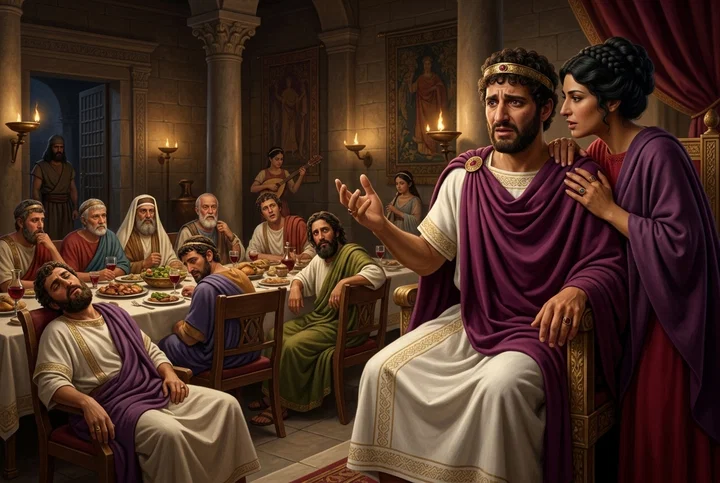
Cross-references
- Matthew 14:8-11
And she, being before instructed of her mother, said, Give me here John Baptist’s head in a charger.
Parallel account of the request for John’s head and his execution.
- Luke 9:7-9
Now Herod the tetrarch heard of all that was done by him: and he was perplexed, because that it was said of some, that John was risen from the dead;
Herod recalls beheading John and wonders whether he has risen.
- Luke 3:19-20
But Herod the tetrarch, being reproved by him for Herodias his brother Philip’s wife, and for all the evils which Herod had done,
Herod imprisoned John after John rebuked him.
- Mark 6:14-16
And king Herod heard of him; ( for his name was spread abroad:) and he said, That John the Baptist was risen from the dead, and therefore mighty works do shew forth themselves in him.
Herod hears reports of Jesus and fears John has risen from the dead.
- Matthew 11:2-6
Now when John had heard in the prison the works of Christ, he sent two of his disciples,
John questions Jesus from prison, and Jesus answers with signs of his works.
- Luke 7:28
For I say unto you, Among those that are born of women there is not a greater prophet than John the Baptist: but he that is least in the kingdom of God is greater than he.
Jesus declares John the Baptist the greatest prophet, despite his imprisonment.
- Matthew 14:10-11
And he sent, and beheaded John in the prison.
John is beheaded, and his head is delivered to the girl.
- Mark 6:21
And when a convenient day was come, that Herod on his birthday made a supper to his lords, high captains, and chief estates of Galilee;
setting of the feast where request was made
- Mark 6:20
For Herod feared John, knowing that he was a just man and an holy, and observed him; and when he heard him, he did many things, and heard him gladly.
Herod feared John and heard him gladly.
- Matthew 14:1-2
At that time Herod the tetrarch heard of the fame of Jesus,
Herod identifies Jesus as John the Baptist risen from the dead.
- Acts 12:1-3
Now about that time Herod the king stretched forth his hands to vex certain of the church.
Herod kills James and seeks to execute others, as Herodias’s daughter demands John’s death.
- Luke 1:17
And he shall go before him in the spirit and power of Elias, to turn the hearts of the fathers to the children, and the disobedient to the wisdom of the just; to make ready a people prepared for the Lord.
John’s mission is described in Elijah’s spirit and power.
Commentary
Each commentary is drawn from primary sources: the writings of Ellen G. White and Adventist pioneers and periodicals. Each commentary is separate. Its own words are not a quotation; follow the references to read the source passages.
Ellen G. White
31 sources
The verse describes Herodias's daughter hurrying back to the king right after his promise to demand that John the Baptist be beheaded at once, with his head brought immediately on a platter.STDA 220.6–221.32SP 77.2–78.2 That urgency was deliberate, pressed by her mother so Herod would act before reflection could lead him to withdraw his rash oath.RH Mar 11, 18732SP 76.1–77.1RH Mar 11, 1873 The demand itself was the revengeful mother's choice for John's faithful denunciation of her unlawful union with Herod, not the girl's own first wish, and though shocked by its cruelty she was prevailed upon to present it.RH Mar 11, 1873DA 220.6–221.32SP 76.1–77.1 The moment was made possible by wine, feasting, and sensual indulgence weakening judgment and moral restraint, and Herod wrongly treated his royal honor and fear of breaking his oath as more binding than God's command against murdering an innocent prophet.ST Mar 15, 1883ST Mar 15, 1883RH Mar 11, 1873STRH Apr 8, 1873 John's death satisfied that revenge, yet it could not silence the lasting influence of his reproofs and example.RH Apr 8, 1873STB 377.2
Setting and Urgent Request
The verse describes Herodias's daughter coming in at once with haste to the king and demanding that the head of John the Baptist be given to her immediately, without delay, served on a platter or charger.STDA 220.6–221.32SP 77.2–78.2STB 377.22SP 80.1 The demand was for the head to be brought then and there, at once after the promise, with urgent insistence that allowed no waiting.ST2SP 77.2–78.2STB 377.22SP 80.1DA 730.1–5
That haste was deliberate and directed by her mother, who pressed her to act promptly before Herod could reconsider, reflect, or withdraw his rash oath and promise.RH Mar 11, 18732SP 77.2–78.22SP 76.1–77.1RH Mar 11, 1873ST The girl therefore returned without delay and made the request immediately after the oath, so that the decision would be secured while his judgment was still weakened.RH Mar 11, 18732SP 76.1–77.1RH Mar 11, 1873ST
The choice of John's head was not the girl's original wish but the revengeful mother's choice, imposed upon her daughter.RH Mar 11, 1873DA 220.6–221.32SP 76.1–77.1 Salome did not at first understand that the demand was driven by revenge, and she was shocked by its cruelty, yet Herodias prevailed upon her to make it.RH Mar 11, 1873DA 220.6–221.32SP 76.1–77.1 That cruel request brought Herod's feast to an end in horror.RH Mar 11, 1873
The background was John's imprisonment for faithfully denouncing as unlawful Herod's alliance with Herodias, his brother's wife while her husband was still living.DA 214.1SG1 29.2–30.1EW 124.3–125.1 John had been first in heralding Christ's kingdom and was first also in suffering, taken from the free air of the wilderness and the throngs that hung upon his words and shut up in a dungeon cell in the fortress of Herod Antipas in territory east of Jordan where much of his ministry had been spent.DA 214.1 Herod feared John, knowing he was a just and holy man, did many things when he heard him, and heard him gladly.DA 214.1 For a time Herod feebly sought to break the chain of lust that bound him, but Herodias fastened him more firmly in her toils and in revenge upon the Baptist induced Herod to cast him into prison.DA 214.1SG1 29.2–30.1EW 124.3–125.1
The occasion was Herod's birthday feast of revelry, where the dancing maiden pleased and infatuated the wine-debased, drunken Herod.COS 144.2–3Ms 107, 1893, par. 114MR 122.1Ms 87, 1898, par. 18–19 Having promised her anything she asked, he was influenced by her dance and by alluring influence leading toward ruin.COS 144.2–3Ms 107, 1893, par. 114MR 122.1 In that debased condition Satan gained control of his mind and led him in a rash act to sacrifice John, one of the greatest prophets.COS 144.2–3Ms 107, 1893, par. 1Ms 87, 1898, par. 18–19
Guilt, Intemperance, and Warning
Feasting, wine and sensual indulgence at the birthday feast weakened Herod's judgment and moral restraint, and the drunkenness of his guests distorted their sense of justice and mercy.ST Mar 15, 1883RH Mar 11, 1873RH Apr 8, 1873 Reason was weakened and judgment of right and mercy was perverted by intoxication and indulgence, and Herodias exploited that degraded moment to secure through her daughter an immediate demand for the Baptist's head that cost God's prophet his life.ST Mar 15, 1883RH Mar 11, 1873RH Apr 8, 1873 At her mother's direction the girl came at once to ask for John's head on a platter, and the revenge succeeded because feasting and drinking had left the king without clear moral resistance.RH Mar 11, 1873RH Apr 8, 1873
The rash oath did not oblige Herod to violate God's commandment against murder, but he placed his royal honor and fear of seeming to break his word above justice and duty.ST Mar 15, 1883STRH Apr 8, 1873 Clear judgment would have recoiled from killing an innocent prophet, yet he chose the guilt of murder over the false charge of perjury.ST Mar 15, 1883STRH Apr 8, 1873
Herodias was driven by revenge and feared that John's repeated rebukes might change Herod's course, so she clung to her grievance and pressed it through her daughter until she secured his death.RH Apr 8, 1873ST3SP 135.15RED 55.1 John's death served that revenge to satisfy her hatred, and could not silence the lasting influence of his reproofs and example.RH Apr 8, 18733SP 135.15RED 55.1
Herod had been impressed by John's teaching, had nearly become his disciple, and knew John was a true prophet, but he did not turn from his sinful, intemperate life.COS 144.2–33SP 135.15RED 55.1 His heart grew harder, and at the point of decision he turned from the truth he knew and ordered John killed to please Herodias.COS 144.2–33SP 135.15RED 55.1
Afterward Herod felt remorse, horror and pain over the terrible act, and even the sight of John's bleeding head horrified the guests and was painful to Herod himself, who had heard John preach and could not shut his eyes to what he had done.Ms 107, 1893, par. 13SP 135.1DA 730.1–5 As he continued in sin his conscience and moral judgment grew dull and less sensitive.3SP 135.15RED 55.1DA 730.1–5
The birthday feast therefore warns against intemperance, self-indulgent pleasure, pleasure without self-control, and alluring influence, especially among people in authority, because these impair reason, lead toward ruin, and lead into grave, rash and harmful wrongdoing that is later regretted.ST Mar 15, 1883RH Apr 8, 187314MR 122.12SP 80.1 The daughter's hasty, determined demand after her dance had influenced the king illustrates how such alluring influence leads toward ruin, and John's martyrdom stands as the consequence of intemperance in high place.STB 377.214MR 122.12SP 80.1 His beheading was the cost of faithful, pointed reproof and a bold message that exposed wrongdoing, and faithful warning must become more and more pointed even at the cost of life so the people shall not be deceived.STB 55.4STB 377.2
Execution and Its Aftermath
The urgent demand was followed by beheading at the royal banquet itself, where the executioner struck off John's head to satisfy the oath made after the dance that had pleased Herod.STMs 107, 1893, par. 1 Debased by wine, Herod ordered the death he had promised to grant for anything asked, though he had heard John preach and could not shut his eyes to what he had done.Ms 107, 1893, par. 1 The sight of the bleeding head brought horror to the guests and was painful even to Herod himself.Ms 107, 1893, par. 1 Herodias exulted over the death and used the severed head to insult the prophet she hated.ST
That death accomplished Herodias's revenge, yet it could not silence the lasting influence of John's reproofs and example.RH Apr 8, 1873 His bold message that exposed wrongdoing ultimately cost him his life.RH Apr 8, 1873STB 377.2
Tidings of the death reached the disciples just after they had returned filled with joy over their success as heralds of the gospel on their first missionary tour.ST It was a bitter sorrow and disappointment to them, and the fact that Jesus had left the Baptist to die in prison severely tested their faith.ST Dec 19, 1916STDA 380.1–2 They questioned why Jesus had not saved him, making his violent death a source of grief and trial.STDA 380.1–2 With pitying tenderness, with tears in His own eyes and voice, Jesus looked upon their sorrowful, tear-stained faces and called them apart into a desert place to rest awhile.ST He took them to a lonely retreat near Bethsaida at the northern end of the Sea of Galilee.ST
John had reproved Herod for his sin, and for that was imprisoned and put to death.Ms 16, 1895, par. 18 His enemies could kill his body but could not destroy his soul, his hope, or his eternal life, so his death stood as a witness for God.Ms 16, 1895, par. 18
In the aftermath Herod showed astonishing ignorance of Jesus' earlier preaching and miracles, despite having spent much of his time in Galilee.ST His supposition that Jesus was John risen from the dead highlighted that ignorance and pointed to the general disregard for religious concerns among people of high rank.ST Later, while Jesus stood before him, Herod boasted of his punishment of John after John had reproved him, showing his pride and cruelty.3SP 136.1–2
Sources
Pioneers and periodicals
55 sources
The verse records Herodias's daughter coming promptly and hastily to the king to demand at once and without delay the head of John the Baptist on a serving platter, carrying out her mother's instruction after Herod had promised her whatever she asked.ST Dec 24, 1894ST Jun 7, 1899ST Sep 13, 1910ST May 8, 1907ST Sep 13, 1910 The demand was made at Herod's birthday feast after her dancing for a reward, and it was the outcome of John's rebuke of Herod's unlawful marriage to Herodias.ST Mar 3, 1898ST Sep 6, 1910ST Feb 7, 1911 Herodias had long hated John for reproving her sin and waited for an opportunity for revenge, and she used her daughter and Herod's rash promise to turn her own desire to kill him into a demand made by the girl before Herod could reflect and reconsider.STST Dec 24, 1894ST Dec 15, 1887ST Dec 15, 1887RH Nov 11, 1858 Herod was a weak king with a conscience but without courage who feared man more than God, and after his drunken promise he let pride and false royal honor lead him to order the execution rather than appear weak before his guests.ST Apr 20, 1882ST Dec 24, 1894ST Sep 13, 1910RH Apr 28, 1863 An oath to commit murder does not bind and such a vague promise is better broken than kept, while the whole martyrdom shows how feasting, revelry, and drunkenness weakened reason, distorted justice and mercy, and allowed the death of God's prophet to be secured.ST Mar 15, 1883ST Mar 15, 1883RH Mar 11, 1873RH Apr 8, 1873ST Oct 9, 1884
Words and Historical Setting
The expression by and by means immediately or without delay.ST Dec 24, 1894 A charger is a serving platter or tray on which the head was to be brought.ST Sep 13, 1910 Herodias's daughter came in promptly, hastily and without delay to the king and urgently demanded John the Baptist's head on a platter, carrying out her mother's request after Herod had promised her whatever she asked, invoking his oath and presenting John as an enemy of her mother and of the king.ST Jun 7, 1899ST Sep 13, 1910ST May 8, 1907ST Sep 13, 1910
The demand was made during Herod's birthday feast, after Herod had offered her a reward for dancing, and it was the outcome of John's rebuke of Herod's unlawful marriage to Herodias.ST Mar 3, 1898ST Sep 6, 1910ST Feb 7, 1911ST Aug 17, 1904 Herodias had long hated John for reproving her sins and waited for an opportunity to act against him.ST Sep 6, 1910 John was imprisoned near the palace, and his beheading took place at Machaerus.ST Sep 6, 1910
The feast was probably held at Macherus where John was imprisoned.ST Dec 24, 1894 The events leading up to it belong around the spring of A.D. 28 and John's beheading in A.D. 29.ST Dec 24, 1894 Herod's palace stood on the very summit of a hill overlooking the valley, streams, grass, fruitful mountains, and vine and olive terraces of Galilee, where he had sat looking on beauty until his heart was hardened with prosperity.RH Aug 29, 1865 The supper was for his lords, high captains, and chief estates of Galilee, and after the daughter of Herodias danced he promised with an oath to give her whatever she asked, even to half his kingdom.RH Aug 29, 1865
Salome's request for John's head was made in the midst of her dance before Herod, and she continued dancing until the soldier returned with John's head on a platter and presented it to the king.ST Sep 13, 1910
People and Their Motives
John was a brave prophet who feared God but not man, whom the king could not silence, as quick to rebuke iniquity in high places as among the lowly, and a model of daring to do right at any cost.ST Apr 20, 1882 Herod was a weak and wicked king, wicked chiefly because weak, a man with a conscience but without courage who feared God but feared man still more and his wife most of all, who desired to do right but dared not be laughed at.ST Apr 20, 1882 He was unstable in spiritual things, halting between two opinions, one day listening joyfully to John's instruction and the next listening to the demand for his death, a man convinced but not converted nor changed in heart, without decision of character.ST Apr 20, 1882RH Apr 28, 1863
Herodias was an ambitious, designing, unprincipled woman whose ambition dethroned love, a frightful illustration of worldliness in womanhood.ST Apr 20, 1882 Her hatred of John was so deep that she wanted his head and received it with fiendish joy and exultation.ST Apr 20, 1882ST Feb 10, 1881 She sought revenge for his reproof of her sins, fearing his repeated rebukes of the illicit marriage might change Herod's course.STST Dec 15, 1887RH Nov 11, 1858 She had long hated him and waited for an opportunity, clinging to her grievance until she secured his death, and she used Herod's appetite and impaired judgment to create the opportunity to accomplish her purpose.STST Dec 15, 1887ST Sep 6, 1910
Herodias used her daughter to carry out her plan to kill John, instructing and prompting her to come at once without delay and demand his head on a platter.RH Mar 11, 1873ST Mar 8, 1883ST Dec 24, 1894ST Dec 15, 1887 She pressed her to act quickly to secure the request before Herod could reflect and reconsider his rash promise and oath.RH Mar 11, 1873ST Mar 8, 1883ST Dec 15, 1887 She exploited the king's birthday celebration, the girl's vanity and desire for gold ornaments and promised wealth and status, and Herod's drunken promise, so that her own desire to kill John became a demand made by her daughter.ST Mar 8, 1883ST Sep 6, 1910ST Sep 6, 1910 The demand for the head was the revengeful mother's choice, not Salome's original wish; it shocked Salome and brought Herod's feast to an end in horror.RH Mar 11, 1873
Herod recognized John as a just and holy man and, when confronted with the demand, asked whether he could be released from his oath rather than have the prophet killed.ST Sep 13, 1910 No one else at the feast spoke up to defend John, while Chuza finally urged Herod to break his oath and spare the righteous prophet.ST Sep 13, 1910
Course of the Murder
Salome returned without delay to Herod and demanded John the Baptist's head on a platter, exactly as her mother had instructed her.RH Mar 11, 1873ST Mar 8, 1883ST Dec 15, 1887 Herodias pressed her to act quickly, before Herod could reflect and reconsider his rash promise and oath.RH Mar 11, 1873ST Mar 8, 1883ST Dec 15, 1887 The demand was the revengeful mother's choice, not Salome's original wish, and it shocked Salome and brought Herod's feast to an end in horror.RH Mar 11, 1873
The young woman came quickly during the revelry and demanded John's head on a platter at once.ST Sep 13, 1910ST Sep 13, 1910ST Sep 13, 1910 She invoked the king's oath and insisted that he keep it, carrying out her mother's murderous request.ST Sep 13, 1910ST Sep 13, 1910 She presented John as an enemy of her mother and of the king, and insisted that the head be brought to her at once on a serving platter.ST Sep 13, 1910ST Sep 13, 1910
Herod briefly hesitated when urged to break his oath, but the mocking looks of his guests led him to order John's execution rather than risk appearing weak before them.ST Sep 13, 1910 After drunkenly making the rash promise, he let pride and a false sense of dignity and royal honor lead him to grant the request, placing honor above justice and duty.ST Dec 24, 1894 Sober he would not have chosen to kill John, but his yielding to temptation step by step placed him in the enemy's power, with fatal result after rejecting God's reproof.ST Dec 24, 1894
Herod ordered that John's head be brought on a platter, and the order was carried out in the prison by the executioner despite the soldier's hesitation.STST Sep 13, 1910ST Jun 19, 1907 Herodias had prompted the request after Herod promised her daughter whatever she wanted, and granting it led directly to John's execution while he was in prison.ST Sep 13, 1910ST Jun 19, 1907 Herodias exulted over his death and insulted him through his severed head.ST
The severed head was brought in a charger to Herod and then given to the damsel, the trembling dancer, who took it to her mother.RH Aug 29, 1865ST Sep 13, 1910ST Sep 13, 1910 It was a gruesome fulfillment that left Herod disturbed.ST Sep 13, 1910 The request shows the haste and cruelty with which the execution of a righteous prophet was demanded amid the king's revelry, during Herod's birthday feast on her mother's prompting, and it led Herod to have John beheaded.ST Mar 3, 1898ST Sep 13, 1910ST May 8, 1907
Warnings and Moral Lessons
The hasty demand for the head on a platter belongs to the martyrdom that shows the deadly consequences of intemperance, for feasting, revelry, drunkenness and sensual indulgence at the birthday feast weakened the reason of Herod and his guests, distorted their sense of justice and mercy, captured Herod's good resolutions until he did another's bidding, and allowed Herodias to exploit the moment to bring about the death of God's prophet.ST Mar 15, 1883RH Mar 11, 1873RH Apr 8, 1873ST Dec 15, 1887 Herodias used her daughter to come at once and ask for the head because feasting and drinking had weakened Herod's judgment and moral restraint.RH Mar 11, 1873 Intemperance among people in authority can thus impair judgment and conscience and contribute to the death of an innocent person.ST Dec 15, 1887 Intoxication and sensual indulgence weakened reason, and treating a rash oath as more binding than the command not to kill led to the death of an innocent prophet, warning against self-indulgent pleasure that impairs judgment and leads into grave wrongdoing later regretted.ST Mar 15, 1883RH Apr 8, 1873
Lust and strong drink always go hand in hand, as seen in the indecent dance before the drunken court.ST Dec 12, 1906 Intemperance in that scene is the inspiration and fruitful cause of almost every other crime, the Bible gives more warnings against it than against any other sin and affirms its punishment more positively.ST Dec 12, 1906
The rash oath did not require violation of God's commandment against murder, for an oath to commit murder does not bind.ST Mar 15, 1883RH Apr 8, 1873ST Oct 9, 1884 Clear judgment would have recoiled from killing an innocent prophet, but Herod placed royal honor above justice and duty under the influence of feasting and revelry.ST Mar 15, 1883 If the girl had asked for Herod's own head he would not have felt obliged to keep his vow, so he could likewise have refused to take John's life.ST Oct 9, 1884
Such a bad, vague promise to give whatever is asked is better broken than kept and best never made.ST Apr 20, 1882RH Sep 11, 1860ST Jun 9, 1898 No one should put himself in another's hands pledging to do whatever he is bidden, or bind himself by vague and general obligations whose enforcement may lead into sin and temptation.ST Apr 20, 1882 Keeping a promise is not always honorable when carrying it out is worse than breaking it, and Herod's vow is an example of a vow better broken than kept.RH Sep 11, 1860ST Jun 9, 1898
Adding sin does not hide sin, for the death was sought to conceal and hide guilt but the result was the opposite, with John's rebuke heard more loudly afterward.ST Apr 20, 1882 The more sin is dissembled the more it is exposed, and sin is hidden only by repentance and confession.ST Apr 20, 1882
The feast is a warning to lovers of pleasure and an exhortation to Christian temperance.ST Dec 15, 1887 It warns against self-indulgence and against scenes and places that stimulate the animal and the sensual, impair the spiritual and the intellectual, and weaken intellect, moral sense and will, since these can lead people into grave wrongdoing they later regret.ST Dec 15, 1887ST Apr 20, 1882
The daughter of Herodias asked the king at once for the head on a platter, and her dancing led to John's death, linking her dance with the beheading.ST Feb 18, 1886ST Aug 17, 1904ST Apr 28, 1909 Her urgent demand after her dance before Herod led to the execution.ST Aug 17, 1904ST Apr 28, 1909
Herod Antipas had the power to kill the Lord's messenger sent to announce the Messiah, but holding such authority did not make him wiser or better.ST Jul 13, 1904 In beheading John he committed a grievous offense against God.ST Jul 13, 1904RH Jul 22, 1873
Aftermath and Wider Meaning
The demand that brought about John's execution served Herodias's revenge, yet it could not silence the lasting influence of his reproofs and example.RH Apr 8, 1873 The tidings of his death at Herod's hand reached the disciples just after they returned filled with joy over their success as heralds of the Gospel on their first missionary tour.ST It was a bitter sorrow and disappointment to them, and Jesus leaving the Baptist to die in prison severely tested their faith.ST Dec 19, 1916ST With pitying tenderness, with tears in His own eyes and voice, Jesus looked on their sorrowful, tear-stained faces and called them apart into a desert place to rest awhile.ST He took them to a lonely retreat near Bethsaida at the northern end of the Sea of Galilee.ST
The aftermath shows Herod was astonishingly ignorant of Jesus' earlier preaching and miracles despite spending much of his time in Galilee.ST His later belief that Jesus was John risen from the dead highlights that ignorance and points to the general disregard for religious concerns among people of high rank.ST Herod and Herodias and the lords and high captains and chief estates are gone, but the ruins of the palace with its still towering columns, broken capitals, and fragments of marble floor among grass, fig trees, and plowing, unknown by name even to the plowman working there, remain.RH Aug 29, 1865 While pilgrims from every quarter still turn aside to honor the prison of the beheaded victim, those ruins are a comment on the vanity of worldly greatness.RH Aug 29, 1865
Herodias requested John's head, and one of the very soldiers John had told to abstain from unnecessary violence and pillage cut off John's head at her request.RH Sep 30, 1862 John was in Herod's house to proclaim God's truth to a licentious ruler and to face the hatred of an adulterous woman. After his execution she further dishonored his severed head by piercing his dead tongue with a bodkin, and his martyrdom is the reward of a life of duty and self-denial. His death is a sad event within the revelation of Jesus Christ and His work for humanity, and the story of a hero who gave his life for his Master, though its graphic details can frighten very young children.ST Feb 17, 1909 In short, John lost his head by the sword because Herod had lost his head to a woman.ST Mar 8, 1899
Sources