Mark 6:26
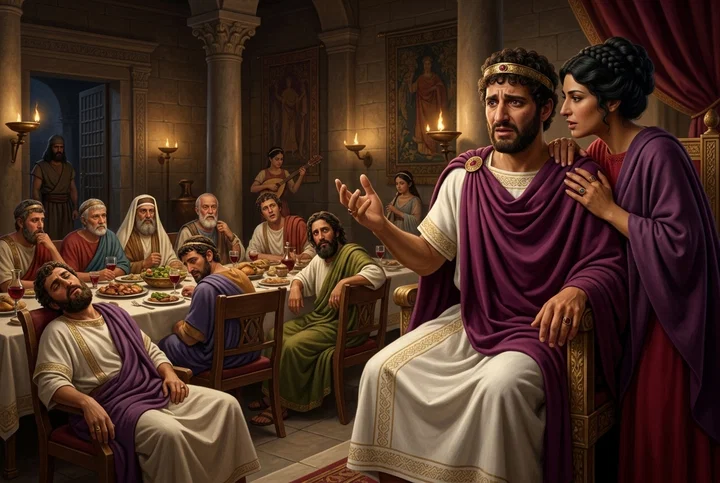
And the king was exceeding sorry; yet for his oath’s sake, and for their sakes which sat with him, he would not reject her.
Translations
American King James Version, King James Version
And the king was exceeding sorry; yet for his oath’s sake, and for their sakes which sat with him, he would not reject her.
And the king was exceeding sorry; yet for his oaths’ sake, and for their sakes which sat with him, he would not reject her.
And the king was exceeding sorry: yet for his oath's sake, and for their sakes who sat with him, he would not reject her.
Revised Version, American Standard Version
And the king was exceeding sorry; but for the sake of his oaths, and of them that sat at meat, he would not reject her.
And the king — made very sorrowful — because of the oaths and of those reclining (at meat) with him, would not put her away,
And the king, [ while] made very sorry, on account of the oaths and those lying at table with [ him] would not break his word with her.
And, though the king was, very grieved, yet, by reason of the oaths, and of them who were reclining, he would not refuse her.
Berean Standard Bible, Majority Standard Bible
The king was consumed with sorrow, but because of his oaths and his guests, he did not want to refuse her.
The king was exceedingly sorry, but for the sake of his oaths and of his dinner guests, he didn’ t wish to refuse her.
And the king was very sad; but because of his oaths, and those who were with him at table, he would not say 'No' to her.
Then the King was very sory: yet for his othes sake, and for their sakes which sate at table with him, he would not refuse her.
Douay-Rheims (Challoner revision)
And the king was struck sad. Yet because of his oath, and because of them that were with him at table, he would not displease her:
Pictures
Cross-references
- Matthew 14:9-10
And the king was sorry: nevertheless for the oath’s sake, and them which sat with him at meat, he commanded it to be given her.
Herod’s grief over his oath leads him to order John’s execution.
- Mark 6:20
For Herod feared John, knowing that he was a just man and an holy, and observed him; and when he heard him, he did many things, and heard him gladly.
Herod had protected John and gladly listened to him, yet later yielded to the banquet guests.
- Luke 3:19-20
But Herod the tetrarch, being reproved by him for Herodias his brother Philip’s wife, and for all the evils which Herod had done,
Herod imprisoned John after John rebuked him for his wrongdoing.
- Luke 9:7-9
Now Herod the tetrarch heard of all that was done by him: and he was perplexed, because that it was said of some, that John was risen from the dead;
Herod’s role in John’s death precedes his perplexity about reports of Jesus.
- Mark 6:17-18
For Herod himself had sent forth and laid hold upon John, and bound him in prison for Herodias’ sake, his brother Philip’s wife: for he had married her.
John rebukes Herod’s unlawful marriage, leading to his imprisonment.
- Matthew 14:5
And when he would have put him to death, he feared the multitude, because they counted him as a prophet.
shows fear of multitude first restrained Herod
- Mark 6:14-16
And king Herod heard of him; ( for his name was spread abroad:) and he said, That John the Baptist was risen from the dead, and therefore mighty works do shew forth themselves in him.
Herod fears that Jesus is John the Baptist risen from the dead.
- Matthew 11:1-11
And it came to pass, when Jesus had made an end of commanding his twelve disciples, he departed thence to teach and to preach in their cities.
parallel account of John's imprisonment
Commentary
Each commentary is drawn from primary sources: the writings of Ellen G. White and Adventist pioneers and periodicals. Each commentary is separate. Its own words are not a quotation; follow the references to read the source passages.
Ellen G. White
33 sources
The verse records the moment at Herod's birthday banquet when, faced with the demand for John the Baptist's head, the king was deeply distressed yet would not refuse her but ordered the beheading.STRH Mar 11, 1873DA 214.12SP 77.2–78.2ST Mar 15, 1883 John lay in prison for faithfully rebuking Herod's unlawful union with Herodias, and Herod himself was convicted by his reproof, feared him as a just and holy prophet, heard him gladly and wished to spare him.DA 214.1DA 214.2–215.22SP 76.1–77.1RH Mar 11, 1873SG1 29.2–30.1 For his oath's sake he treated a rash promise made while intoxicated as binding though it did not truly bind him to murder, and for the sake of those reclining with him he feared appearing fickle and losing standing before his guests.RH Mar 11, 18732SP 77.2–78.2ST Mar 15, 1883RH Apr 8, 1873ST Mar 15, 1883 Feasting and stimulating drink had debased his senses and weakened judgment and restraint, so in that besotted state he let concern for appearances outweigh conscience.RH Mar 11, 18732SP 77.2–78.2ST Mar 15, 18832SP 76.1–77.1ST Mar 15, 1883 By choosing the real guilt of murder over the supposed disgrace of breaking his oath he brought lasting dishonor and torment of conscience, warning that intoxication, a rash oath, and regard for reputation can lead rulers to grave injustice against the innocent.STST Mar 15, 1883RH Apr 8, 1873ST Mar 15, 18832SP 79.1–3
Setting and Sorrowful Choice
The verse belongs to the execution of John the Baptist at Herod's royal birthday banquet.STDA 214.1EW 124.3–125.1 Herod was Herod Antipas, the dissolute king ruling the territory east of Jordan from his fortress, bound by lust in an unlawful, iniquitous alliance with Herodias, his brother's wife.DA 214.1EW 124.3–125.1 John was imprisoned after faithfully denouncing and reproving that sinful marriage.DA 214.1DA 214.2–215.2SG1 29.2–30.1EW 124.3–125.1Ms 16, 1895, par. 18 In revenge Herodias fastened Herod more firmly in her toils and induced him to shut John in a dungeon cell, although Herod himself intended to release him.DA 214.1SG1 29.2–30.1
Herodias used Herod's appetite and the feast to advance her revenge.2SP 76.1–77.1 In the revelry the dance of Herodias's daughter captivated the king, whose senses were debased by wine and stimulating drink, and that infatuation, impression and besotted control of his mind led to the demand for John's head and the sacrifice of his life.2SP 76.1–77.1Ms 107, 1893, par. 114MR 122.1Ms 87, 1898, par. 18–19 The scene stood in the conflict between Herod's wish to release John and Herodias's determination to have him killed.2SP 76.1–77.1
At the demand Herod was deeply distressed, grieved and sorry, and wished to spare John.RH Mar 11, 18732SP 77.2–78.2ST Mar 15, 1883DA 220.6–221.32SP 80.2 Yet for his oath's sake and for the sake of those sitting with him he would not reject, refuse or deny her request.RH Mar 11, 18732SP 77.2–78.2ST Mar 15, 1883DA 220.6–221.32SP 80.2 He reluctantly ordered the beheading, and his choice brought about the prophet's execution and death.RH Mar 11, 18732SP 80.2DA 380.1–2
He was conflicted because John's truthful reproof had convicted him and he had trembled under the call to repentance.DA 214.12SP 76.1–77.1 He feared John as a just and holy man and believed him to be a true prophet, heard him gladly and did many things, honored and respected him, and for a time feebly sought to break the chain of lust and nearly became his disciple.DA 214.12SP 76.1–77.1RH Mar 11, 18733SP 135.1 But he delayed acting and releasing John because he feared displeasing Herodias, who was determined to kill John, and though deeply impressed by John's teaching he did not turn from his sinful life but grew harder.2SP 76.1–77.1COS 144.2–3
Oath, Honor, and Drink
For his oath's sake Herod treated a rash promise made while intoxicated as binding, letting it outweigh his judgment and conscience when he was deeply distressed by the demand for John's head.RH Mar 11, 18732SP 77.2–78.2RH Apr 8, 1873 He believed he had to keep a vow spoken under drink because his guests had heard it, though he could have been released from it, for the oath did not truly bind him to murder.2SP 77.2–78.2RH Apr 8, 1873ST His drunkenness and fear of appearing fickle led him to keep a promise that required the death of an innocent prophet.2SP 77.2–78.2ST
For the sake of those sitting with him he feared appearing fickle or dishonorable and losing standing before his guests, letting concern for appearances, reputation, and their expectations outweigh conscience and his wish to spare John.RH Mar 11, 18732SP 77.2–78.2ST Mar 15, 1883DA 220.6–221.3 He was deeply grieved yet refused to deny the request because of his sense of obligation to the rash oath and the presence of the guests, choosing not to uphold justice and God's command not to kill.ST Mar 15, 1883DA 220.6–221.3DA 221.4–222.1 He would have spared John if anyone had objected, but his guests remained silent and mentally dulled instead of speaking in John's defense.RH Apr 8, 1873DA 221.4–222.12SP 79.1–3 Their drunken silence left him without the release he sought and helped bring about the prophet's death.RH Apr 8, 1873DA 221.4–222.12SP 79.1–3
Feasting, rich food, stimulating drink, and drunken revelry had debased his senses and weakened his moral and physical powers, judgment, and restraint.2SP 77.2–78.22SP 76.1–77.1RH Mar 11, 1873RH Apr 8, 1873 Intemperance had clouded his judgment, and after it weakened his moral restraint he failed to make the right decision although he had honored and feared John and intended to release him.2SP 76.1–77.1ST Mar 15, 1883RH Mar 11, 1873 In that besotted, infatuated state, with wine having debased his senses and the dance having captivated him, he let evil control his mind and treated the rash oath as binding under concern for his standing before his guests.2SP 77.2–78.2RH Apr 8, 1873Ms 107, 1893, par. 1 By placing his oath above justice and God's command not to kill an innocent man, he chose the real guilt of murder over what he wrongly regarded as the disgrace of breaking his oath.ST Mar 15, 1883ST Mar 15, 1883STRH Apr 8, 1873 His choice to honor the oath over justice led him to order John's execution and brought him lasting dishonor and grave injustice.ST Mar 15, 1883RH Apr 8, 1873ST Mar 15, 1883RH Apr 8, 1873
The event warns that intoxication weakens judgment and conscience, and that a rash oath and concern for reputation can lead to grave injustice.2SP 79.1–32SP 80.1 It warns especially that intemperance among people in authority can impair judgment and justice and bring about the martyrdom of an innocent person.2SP 79.1–32SP 80.1
Remorse and Faithful Witness
The order to behead John and Herodias's triumph over it became sins that tormented Herod's conscience afterward.ST When the bleeding head was carried in before the banquet guests he could not shut his eyes to the sight and was horrified, for he had heard John preach.Ms 107, 1893, par. 1 He felt sharp remorse for putting to death a prophet he knew was true in order to satisfy a cruel woman's revenge.5RED 55.13SP 135.1 His sorrow did not restrain him from the wrong, for although he had been deeply impressed by John's teaching and had nearly become his disciple, he still yielded to the demand.COS 144.2–33SP 135.1 Instead of turning from his sinful life he grew harder, and his conscience and moral sense grew dull and less sensitive as he continued in sin.COS 144.2–35RED 55.13SP 135.1 His sins came to seem trivial to him, his moral perceptions became so degraded that he could even boast of punishing John for reproving him.3SP 135.1DA 730.1–5
His course stands as an example of how persons in high rank can disregard religion and remain ignorant of its concerns.ST The tidings that Herod had put John to death reached the disciples just after they returned from their first missionary tour filled with the joy of success as heralds of the gospel.ST It brought them bitter sorrow and disappointment, and the leaving of John to die in prison severely tested their faith.ST Dec 19, 1916ST Jesus looked upon their sorrowful, tear-stained faces with pitying tenderness, with tears in His own eyes and voice, and bade them come apart into a desert place and rest awhile.ST
John, one of the greatest of the prophets, had given a pointed, faithful reproof of sin even though it cost him his bodily life.STB 377.2STB 55.4Ms 87, 1898, par. 18–19Ms 16, 1895, par. 18 His enemies could take his bodily life, but they could not destroy his hope or his eternal life.Ms 16, 1895, par. 18 That faithfulness unto death is the pattern for giving a more and more pointed message even at the cost of life, so that the people shall not be deceived.STB 377.2STB 55.4
Sources
Pioneers and periodicals
53 sources
Herod was deeply grieved by the demand for John's head, yet to keep his public oath and save face before his guests he ordered the execution rather than refuse her.ST Dec 24, 1894ST Jun 7, 1899ST Dec 24, 1894 The demand came at his drunken birthday banquet, where Herodias used her daughter's dance to draw a rash promise from him and then turn it into a sentence of death upon the prophet who had reproved her.ST Sep 6, 1910ST Sep 6, 1910ST Feb 18, 1886 He had protected John as a just and holy man and heard him gladly, but being weak, intoxicated, and fearing mockery more than conscience, he let pride and concern for appearances overrule his better judgment.RH Apr 8, 1873ST Sep 6, 1910ST Apr 20, 1882ST Dec 24, 1894ST Sep 13, 1910 A rash oath never binds a man to commit murder, and such a vague promise to grant whatever is asked is dangerous, better broken than kept, and best never made.STRH Sep 11, 1860ST Apr 20, 1882ST Jun 9, 1898ST Oct 9, 1884 His choice shows how fear of men overcomes fear of God, how intemperance and yielding step by step impair judgment until they produce grave crime, and how pride makes a ruler choose real guilt rather than seeming disgrace.ST Mar 15, 1883ST Mar 15, 1883ST Dec 24, 1894ST Apr 20, 1882ST Dec 15, 1887
Banquet Setting and Plot
The verse belongs to the account of John the Baptist's execution at Herod's royal birthday banquet.STST Sep 6, 1910ST Sep 6, 1910ST Sep 6, 1910 The feast was held at his palace in Tiberias, with John imprisoned nearby.ST Sep 6, 1910 Herodias used the occasion to pursue her plot against the prophet who had reproved her.ST Sep 6, 1910ST Sep 6, 1910
Herodias worked through Salome's dance before Herod and his guests to obtain Herod's public promise.ST Sep 6, 1910ST Sep 6, 1910ST Feb 18, 1886 It was a drunken court, where lust and strong drink went together, and Salome's dance is described as indecent.ST Dec 12, 1906 Intemperance of that kind inspires and produces almost every other crime.ST Dec 12, 1906 The demand for John's head then put Herod in a position where refusal would mean breaking his oath before his company.ST Sep 6, 1910ST Sep 6, 1910ST Feb 18, 1886ST Aug 17, 1904ST Apr 28, 1909 The dancing thus led to John's death, for though deeply distressed Herod would not refuse because he had sworn before his guests.ST Feb 18, 1886ST Aug 17, 1904ST Apr 28, 1909
Herod had favored John, protected him from Herodias, and intended to release him.RH Mar 11, 1873ST Sep 6, 1910ST Dec 24, 1894 He knew John was a just and holy prophet and a righteous man, heard him often and gladly, and listened joyfully to his instruction.ST Apr 20, 1882ST May 8, 1907RH Apr 28, 1863 He had spared him because he feared the multitude who counted John as a prophet.ST Apr 20, 1882 His work was public and widely known, not secret, for the king himself listened to his preaching.ST May 8, 1907 Yet today listening gladly, tomorrow listening to the horrid proposal of Herodias's daughter, he halted between two opinions, convinced but not converted.RH Apr 28, 1863
The order was carried out by a soldier, one of Herod's soldiers marching to battle against Aretas.RH Sep 30, 1862 It was carried out while Salome continued dancing, and the soldier bringing the head to the king ended the king's revelry in ghastly tragedy.ST Sep 13, 1910ST Sep 13, 1910RH Sep 30, 1862 The soldier hesitated and the guests showed horror, yet Herod ordered the execution despite that horror.ST Sep 13, 1910 Trembling and deeply grieved, and horrified at the sight, he still kept his oath and handed over John's head to the dancer.ST Sep 13, 1910ST Sep 13, 1910ST Sep 13, 1910 The head was brought to the king and to the dancer and delivered to the banquet hall, with details of beheading and delivery that could frighten even a child.ST Sep 13, 1910ST Sep 13, 1910
Herodias dishonored the severed head by piercing John's tongue. John's imprisonment and martyrdom display his courage and self-denial in proclaiming God's truth to a licentious ruler and daring her hatred.
Herod's Grief and Motives
Herod was exceeding sorry, deeply distressed and grieved by the demand for John's head and death, yet for his oath's sake and for the sake of those who sat with him he would not reject the girl's request but ordered it done.ST Dec 24, 1894ST Jun 7, 1899ST Dec 24, 1894ST Dec 15, 1887ST Dec 24, 1894 He was deeply distressed when the girl asked for John the Baptist's head, but he refused to withdraw his promise because he had sworn it before his guests and did not want to lose face before them.ST Dec 24, 1894ST Jun 7, 1899ST Dec 24, 1894 His rash oath and concern for the guests watching him overrode his judgment, so he did not refuse Salome's demand and let the execution go forward.RH Mar 11, 1873ST Dec 15, 1887ST Dec 24, 1894
He is weak and wicked, wicked chiefly because weak, a man with a conscience but without courage.ST Apr 20, 1882ST Mar 8, 1899ST Apr 20, 1882 He feared God yet feared men more and his wife most of all, desired to do right but dared not be laughed at, and having been tricked into a foolish promise preferred to be called murderer rather than promise-breaker.ST Apr 20, 1882ST Apr 20, 1882 His weakness under a woman's influence led him to order the beheading despite his sorrow, for he was convinced but not converted nor changed in heart, halting between two opinions, without decision of character, floating loosely upon the tide like a leaf tossed upon the winds, listening joyfully to John today and to the horrid proposal of the daughter of Herodias tomorrow.ST Mar 8, 1899ST Apr 20, 1882RH Apr 28, 1863
The rash promise was made while drunk, while intoxicated and seeking to impress others at the feast.RH Apr 8, 1873ST Mar 8, 1883ST Dec 24, 1894 Feasting, drunkenness, and intemperance had clouded his judgment and weakened his moral restraint, so he failed to make the right decision although he had not intended to kill John and had honored and feared him and intended to release him.ST Mar 15, 1883ST Mar 8, 1883RH Mar 11, 1873ST Jun 19, 1907 His drunken promise and fear of dishonoring himself before the guests governed him rather than refusal, and his sorrow did not prevent the prophet's death.RH Mar 11, 1873ST Dec 24, 1894ST Jun 19, 1907
His false sense of pride and dignity, concern for appearances, public standing, and reputation before the watching guests overcame his recognition that John was righteous and his better impulse to spare him.ST Mar 8, 1883ST Dec 24, 1894ST Sep 13, 1910 Fearing their jeers and mockery more than conscience and God's judgment, and seeing their mocking expressions, he abandoned indecision and chose public approval and reckless bravado over justice and God's command not to kill an innocent man.ST Mar 15, 1883RH Aug 29, 1865ST Feb 7, 1911ST Apr 20, 1882ST Sep 13, 1910 Pride and concern for public approval led him to keep a rash oath at the cost of an innocent life, showing how concern for appearances can lead to grave wrong.ST Sep 13, 1910RH Aug 29, 1865ST Feb 7, 1911
His sorrow did not lead him to do what was right; he let the oath and the guests' expectations govern him, treated the oath as binding, and made himself a slave to his own word and to human approval at the cost of an innocent life.ST Mar 15, 1883STST Dec 15, 1887ST Sep 6, 1910 He chose public standing and a rash promise over protecting an innocent prophet, choosing the real guilt of murder rather than face what he wrongly regarded as the disgrace of breaking his oath.STST Dec 15, 1887ST Sep 13, 1910 His oath did not truly bind him to murder, yet he placed it above God's command not to kill.ST Mar 15, 1883ST
He even appealed to his guests to release him from the oath rather than kill the prophet, and he could have been released if they had spoken up.RH Apr 8, 1873ST Sep 13, 1910 Instead he ordered the execution despite their horror and a soldier's hesitation, showing the deadly consequence of pride and fear of losing face.RH Apr 8, 1873ST Sep 13, 1910 His choice to honor the oath over justice brought him lasting dishonor.RH Apr 8, 1873ST Sep 13, 1910
Oaths, Fear, and Temperance
Herod's oath did not truly bind him to murder John, for an oath must not be kept when keeping it would require a wrong act, and a rash vow does not excuse wrongdoing.STRH Sep 11, 1860ST Oct 9, 1884 He was deeply sorry yet treated the oath and the expectations of his guests as reasons not to refuse the demand, choosing the real guilt of murder rather than face what he wrongly regarded as the disgrace of breaking his oath.STRH Sep 11, 1860ST Oct 9, 1884 That the supposed obligation was false is clear, for he would not have kept the vow if she had asked for his own head.ST Oct 9, 1884 Some promises are more honorable to break than to keep, and Herod, deeply grieved, kept his oath before the guests present when he should have broken it.ST Apr 20, 1882ST Jun 9, 1898 A vague, general promise to do whatsoever is asked surrenders self-mastery and is always dangerous because its enforcement can lead into sin and temptation; given under sensual self-indulgence it captures resolution and makes a man do another's bidding, so such a bad promise is better broken than kept, and best of all is to make no promises that need the breaking.ST Apr 20, 1882ST Jun 9, 1898
The demand for John's head illustrates the danger of rash vows and of letting concern for others' approval override what is right, for though deeply grieved Herod ordered it done because he had sworn and feared losing face before his banquet guests.ST Mar 3, 1898ST Dec 24, 1894 His rash promise, made while drunk, joined with a false sense of pride and dignity to lead him to order John's death, though he had not intended to kill him and had protected him from Herodias.ST Dec 24, 1894 The same misplaced scruple exposes how concern for keeping an oath can coexist with living in incest and be used to excuse another sin.RH Oct 16, 1860 He put John to death because fear of public opinion overcame fear of God and conscience.ST Apr 20, 1882 He had spared John because he feared the multitude who counted John as a prophet and because he himself knew John was a just and holy man, guarding him from Herodias and hearing him often and gladly; yet after his rash vow he would not reject the demand, fearing the jeers of his companions at the feast more than the upbraidings of conscience and the judgments of God.ST Apr 20, 1882 Respect for human opinion may prop up a tottering virtue for a time but is a poor foundation for virtue, and only fear of God stronger than fear of man can hold a man against temptation.ST Apr 20, 1882
John's martyrdom shows the deadly result of intemperance among people entrusted with great authority, where impaired judgment and a weakened sense of right and wrong lead to an unjust decision.ST Dec 24, 1894ST Dec 15, 1887 Lust and strong drink always go hand in hand, and intemperance inspires and produces almost every other crime, standing under the Bible's many warnings against intemperance and its affirmed punishment.ST Dec 12, 1906 The event warns against pleasure-seeking and teaches Christian temperance, and it shows the danger of rejecting God's reproof, for yielding to temptation in small steps can entangle a person until he carries out grave evil.ST Dec 24, 1894ST Dec 15, 1887ST Dec 12, 1906 Under the influence of feasting and drunkenness with clouded judgment, Herod placed his oath above God's command not to kill an innocent man and refused to deny the request because of his oath and the guests present.ST Mar 15, 1883ST Mar 15, 1883RH Apr 8, 1873RH Aug 29, 1865 His sense of obligation to a rash oath and concern for standing, pride, and appearances led him to order the death of a just prophet rather than uphold justice, showing how people in high rank can disregard religion.ST Mar 15, 1883STRH Apr 8, 1873STRH Aug 29, 1865 Herod Antipas had the power to put John to death, though John was the Lord's messenger sent to announce the coming Messiah, and his brief worldly authority illustrates that worldly power does not necessarily make its holder wiser or better than others.ST Jul 13, 1904
John's Witness and Aftermath
John faithfully rebuked the crimes of those in high places, and that faithful dealing cost him his life.RH Nov 11, 1858 His work was public and widely known, not done in secret, for Herod the king himself listened to his preaching and heard him gladly, yet at last beheaded him at the request of a dissolute woman.ST May 8, 1907 The verse belongs to the account in which Herod's weakness under a woman's influence led him to order John's beheading despite his sorrow.ST Mar 8, 1899 It recounts Herod's grief and his refusal to withdraw his promise to Herodias's daughter because of his oath and the guests present, the setting for the beheading of the first Baptist minister after the girl danced, showing John losing his head for his witness.ST Mar 8, 1899ST Aug 17, 1904
Herod's command to behead John and Herodias's celebration were sins that later tormented his conscience.ST He was deeply sorry but carried out his rash vow, made while intoxicated, because of his guests and concern for his reputation, believing he had to keep it though he could have been released from it if his guests had spoken up.RH Apr 8, 1873 His choice to honor the oath over justice led him to order John's execution and brought him lasting dishonor.RH Apr 8, 1873 His decision cost him his peace, leaving him fearing that the Sadducees were wrong about there being no resurrection and that John, a just man, would rise and condemn him.ST Sep 13, 1910
The death of John at Herod's hand came just after the disciples returned from their first missionary tour filled with the joy of their success as heralds of the Gospel.ST The tidings brought bitter sorrow and disappointment, and leaving John to die in prison severely tested their faith.ST Dec 19, 1916ST Jesus looked on their sorrowful, tear-stained faces with pitying tenderness, with tears in His own eyes and voice, and bade them come apart into a desert place and rest awhile.ST
Sources