Mark 6:27
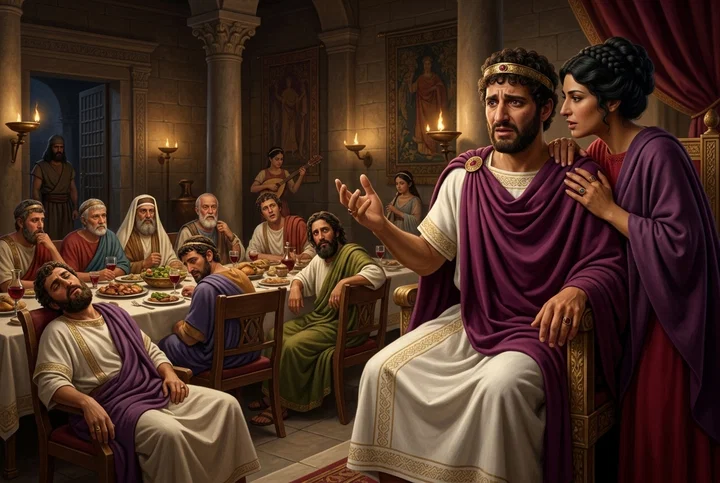
And immediately the king sent an executioner, and commanded his head to be brought: and he went and beheaded him in the prison,
Translations
American King James Version, King James Version, KJV Cambridge Paragraph Bible, Webster Bible
And immediately the king sent an executioner, and commanded his head to be brought: and he went and beheaded him in the prison,
Revised Version, American Standard Version
And straightway the king sent forth a soldier of his guard, and commanded to bring his head: and he went and beheaded him in the prison,
and immediately the king having sent a guardsman, did command his head to be brought,
And immediately the king, having sent one of the guard, ordered his head to be brought. And he went out and beheaded him in the prison,
And the king, straightway, sending off a guard, gave orders to bring his head.
Berean Standard Bible, Majority Standard Bible
So without delay, the king commanded that John’s head be brought in. He sent an executioner, who went and beheaded him in the prison.
Immediately the king sent out a soldier of his guard and commanded to bring John’s head; and he went and beheaded him in the prison,
And straight away the king sent out one of his armed men, and gave him an order to come back with the head: and he went and took off John's head in prison,
And immediatly the King sent the hangman, and gaue charge that his head shoulde be brought in. So he went and beheaded him in the prison,
Douay-Rheims (Challoner revision)
But sending an executioner, he commanded that his head should be brought in a dish.
Pictures
Cross-references
- Matthew 14:10
And he sent, and beheaded John in the prison.
Herod likewise orders John beheaded in prison.
- Luke 9:9
And Herod said, John have I beheaded: but who is this, of whom I hear such things? And he desired to see him.
Herod recalls beheading John and wonders who Jesus is.
- Luke 3:19-20
But Herod the tetrarch, being reproved by him for Herodias his brother Philip’s wife, and for all the evils which Herod had done,
Herod imprisoned John after John rebuked him.
- Matthew 11:11
Verily I say unto you, Among them that are born of women there hath not risen a greater than John the Baptist: notwithstanding he that is least in the kingdom of heaven is greater than he.
Jesus says none born of women is greater than John, yet the least in the kingdom is greater.
- Mark 6:14-16
And king Herod heard of him; ( for his name was spread abroad:) and he said, That John the Baptist was risen from the dead, and therefore mighty works do shew forth themselves in him.
Herod identifies Jesus as John, whom he had beheaded, risen from the dead.
- Luke 7:28
For I say unto you, Among those that are born of women there is not a greater prophet than John the Baptist: but he that is least in the kingdom of God is greater than he.
Both texts concern John the Baptist, whom Jesus calls the greatest prophet.
- Matthew 14:2
And said unto his servants, This is John the Baptist; he is risen from the dead; and therefore mighty works do shew forth themselves in him.
Herod fears Jesus is John the Baptist raised from the dead.
- Mark 6:17-18
For Herod himself had sent forth and laid hold upon John, and bound him in prison for Herodias’ sake, his brother Philip’s wife: for he had married her.
John rebuked Herod for taking Herodias.
- Mark 6:22-23
And when the daughter of the said Herodias came in, and danced, and pleased Herod and them that sat with him, the king said unto the damsel, Ask of me whatsoever thou wilt, and I will give it thee.
dance and oath that led to the order
- Mark 6:21
And when a convenient day was come, that Herod on his birthday made a supper to his lords, high captains, and chief estates of Galilee;
same supper where the order was given
- Matthew 14:5
And when he would have put him to death, he feared the multitude, because they counted him as a prophet.
Herod feared the crowd, who regarded John as a prophet, before ordering his execution.
- John 1:19-22
And this is the record of John, when the Jews sent priests and Levites from Jerusalem to ask him, Who art thou?
shows John's public standing before his death
Commentary
Each commentary is drawn from primary sources: the writings of Ellen G. White and Adventist pioneers and periodicals. Each commentary is separate. Its own words are not a quotation; follow the references to read the source passages.
Ellen G. White
39 sources
Immediately the king sent an executioner with command to bring John's head, and he went and beheaded him in the prison and brought his head before the king and his guests.STRH Mar 11, 1873RH Apr 8, 1873 The killing followed a night of birthday feasting and revelry in which Herod and his guests were partly intoxicated, with reason and moral sense clouded by intemperance and sensual indulgence.RH Mar 11, 1873RH Apr 8, 1873ST Mar 15, 1883 Herodias, who had held her grievance against John for condemning her unlawful marriage and sought his death, seized the moment of Herod's impaired judgment and used her daughter's enthralling dance to secure the order for his death in revenge.DA 214.1RH Apr 8, 1873ST Mar 15, 18832SP 76.1–77.1SG1 29.2–30.1 Herod kept his rash oath to the daughter rather than spare the prophet, fearing to break his word before his guests more than to break God's commandment not to kill, while the guests by their silence left the innocent without defense.DA 220.6–221.32SP 76.1–77.1ST Mar 15, 1883 The death silenced the voice that had called Herod and sinners to repentance, and it stands as proof that faithful reproof of sin may cost the messenger's life and as a warning of the deadly result of intemperance in those entrusted with authority.DA 220.6–221.32SP 80.2STB 55.4STB 377.22SP 80.1
The Prison Execution
John had been shut in prison under Herod Antipas for faithfully condemning Herod's unlawful marriage to Herodias, his brother's wife still living.DA 214.1SG1 29.2–30.1LC1 44.3 Herodias sought revenge for that rebuke and persuaded Herod to imprison him.DA 214.1SG1 29.2–30.1EW 124.3–125.1 Herod himself had intended to release John, yet through his wife's influence the prophet remained bound and was at last beheaded.SG1 29.2–30.1EW 124.3–125.1LC1 44.31RED 44.3
After a life of active labor John lay shut in gloom and inaction, with week after week passing and bringing no change until despondency and doubt crept over him.DA 214.2–215.2 His disciples did not forsake him but were allowed access, bringing tidings of the works of Jesus and how the people were flocking to Him, while questioning why if Jesus was the Messiah He did nothing to effect John's release and permitted His faithful herald to be deprived of liberty and perhaps of life.DA 214.2–215.2 Those questions suggested doubts that otherwise would never have arisen, bruising John's soul to Satan's rejoicing, showing how those who think themselves friends prove most dangerous enemies when their words depress and dishearten instead of strengthening faith.DA 214.2–215.2 Like the Saviour's disciples, John did not understand the nature of Christ's kingdom but expected Jesus to take the throne of David, and became perplexed and troubled as the Saviour made no claim to kingly authority.DA 214.2–215.2 He had declared that every valley must be filled, mountains and hills made low, crooked places straight, and rough places plain, looking for the high places of human pride and power to be cast down, pointing to the Messiah as the One whose fan was in His hand to thoroughly purge His floor, gather the wheat into His garner, and burn the chaff with unquenchable fire, and like Elijah in whose spirit and power he had come, looking for the Lord to reveal Himself by fire.DA 214.2–215.2
Immediately Herod sent an executioner and commanded John's head to be brought, and John was beheaded in prison.STRH Mar 11, 1873RH Apr 8, 1873ST Mar 15, 1883DA 220.6–221.3 The command was carried out in the prison, and his head was brought before the king and his guests.DA 220.6–221.3DA 221.4–222.12SP 80.2 The order carried out the demand made at the feast after Herod reluctantly chose to honor his pledge rather than spare John.DA 220.6–221.32SP 76.1–77.1DA 221.4–222.1
The execution followed a night of birthday feasting, frivolity, dissipation and revelry in which Herod and his guests were partly intoxicated and overindulged in food and drink.RH Mar 11, 1873RH Apr 8, 1873ST Mar 15, 1883RH Mar 11, 1873 Intemperance in eating and drinking, together with revelry and sensual pleasure, weakened reason and judgment, clouded moral sense, distorted justice and mercy, and left conscience dormant.ST Mar 15, 1883RH Mar 11, 1873RH Apr 8, 18732SP 79.1–3 The intoxicating cup and indulgence of appetite led to this terrible crime and cost the life of one of God's eminent prophets.RH Mar 11, 1873RH Mar 11, 1873
Herodias, holding her grievance until she destroyed John, secured the opportunity through Herod's indulgence and exploited his impaired judgment.2SP 76.1–77.1RH Mar 11, 1873ST By prompting her daughter, whose dance enthralled Herod, she gained her end, so that Satan gained control of his mind.ST Mar 15, 1883 Herod, hardened by sin and under the influence of wine, ordered John's death during the revel to please Herodias and gratify her revenge.RH Apr 8, 1873ST Mar 15, 1883COS 144.2–3 Herod made a rash oath and promise to the daughter and then, though reluctant and waiting in vain to escape it, honored it rather than spare John.DA 220.6–221.32SP 76.1–77.1DA 221.4–222.12SP 80.2 He feared to appear to break his oath before his guests and treated the oath as more binding than God's commandment not to kill, taking the life of an innocent prophet in violation of the commandment against murder.ST Mar 15, 1883STRH Apr 8, 1873 The guests failed to speak for John and their silence helped leave the innocent prophet without defense and without anyone to save his life.RH Apr 8, 1873DA 221.4–222.12SP 79.1–3
The death silenced the voice that had warned Herod to turn from sin and called him to reform and sinners to repentance.DA 220.6–221.32SP 80.2 John's bleeding head was brought before the guests to their horror and was more than Herod, who had heard John preach, could endure.Ms 107, 1893, par. 1 A year later Herod was with his unlawful wife observing the Passover ceremonies.Ms 107, 1893, par. 1
Herod's Guilt and Disciples' Grief
Herod afterward remembered his command and its execution with terror, and his guilty conscience troubled him with fear of punishment.ST3SP 135.1 When he heard of the works of Jesus he concluded that John had risen from the dead.ST3SP 135.1 That conclusion shows he had not known of Jesus before, and it reflects the religious ignorance common among people of high rank.ST
Herod regretted the act and was tormented by a guilty conscience and fear, regretting it for the rest of his life.ST Mar 15, 1883RH Apr 8, 1873 Yet his remorse faded as he continued in sinful living, until conscience and moral judgment grew dull and degraded.5RED 55.13SP 135.1 He had nearly become John's disciple, yet he rejected the truth and killed a prophet he knew was true.5RED 55.1 Having done so he became hardened in sin, his conscience once pierced with remorse becoming hardened and his moral sense degraded.5RED 55.1DA 730.1–5 Later he even boasted to Jesus of the punishment he had inflicted on John for reproving him.3SP 136.1–25RED 56.2–57.1DA 730.1–5
The tidings of the beheading became known to the disciples just after they returned filled with joy over their success as heralds of the gospel on their first missionary tour.ST The news brought bitter sorrow and disappointment, and the fact that Jesus had left the Baptist to die in prison severely tested their faith.ST Dec 19, 1916ST They recalled John's violent death and questioned why Jesus, despite all His power, had not saved him and had done nothing to save him.STDA 380.1–2 With pitying tenderness and tears in His own eyes and voice, Jesus met their sorrowful, tear-stained faces by calling them apart into a desert place to rest awhile.ST He took them by boat across the lake to a lonely retreat near Bethsaida for fellowship and instruction apart from the multitude and the Pharisees.ST
Warning and Faithful Witness
The beheading in prison stands as the recorded outcome of intemperance among those entrusted with great authority, warning pleasure-seekers and teaching Christian temperance.2SP 80.1 Those who enforce laws must themselves obey them in order to be fit to judge fairly.2SP 80.1 The frivolity and dissipation of that night, with the intoxicating cup and overindulgence in food and drink, led to the terrible crime that cost the life of one of God's eminent prophets.RH Mar 11, 1873 Intemperance and revelry weakened reason and judgment until Herod treated his rash oath at the drunken feast as more binding than God's commandment not to kill, and the execution resulted from sensual indulgence and failure to choose justice and duty.RH Apr 8, 1873 His decision, made to preserve his reputation, brought lasting dishonor instead, while his guests failed to speak for John and left the prophet without defense to serve Herodias's revenge.RH Apr 8, 1873 The maiden's dance so enthralled Herod that Satan gained control of his mind and led him through the rash promise to order the death of one of the greatest prophets, illustrating the destructive consequences of corrupting influence and choices that draw people toward ruin.14MR 122.1Ms 87, 1898, par. 18–19
John lost his life in prison because his message became more and more pointed in reproof of sin.STB 55.4STB 377.2 His beheading proves that faithful reproof can cost the messenger's life.STB 55.4 That same pointedness must continue and grow more pointed even though it costs life, so that the people shall not be deceived.STB 55.4STB 377.2 His imprisonment and death show that God's servants may suffer and die for their witness, yet their enemies cannot destroy their souls or take away their hope of eternal life.Ms 16, 1895, par. 18 Herod later regretted the act for the rest of his life.RH Apr 8, 1873
The ordering of an executioner to behead John the prophet in prison is recalled as the precedent for the later Herod's killing of James.3SP 334.1AA 143.1–2 Another Herod ordered John to be beheaded by an executioner, and this is presented as the pattern for Herod Agrippa's order to have James killed with the sword.RH Apr 27, 19113SP 334.1AA 143.1–2 Herod Agrippa's execution of James by the sword thus followed the earlier Herod's execution of John by beheading.RH Apr 27, 19113SP 334.1AA 143.1–2
Sources
Pioneers and periodicals
53 sources
Immediately the king sent a soldier with a command to bring John's head, and he went and beheaded John the Baptist in the prison that same day.STST Mar 8, 1883ST Dec 24, 1894 The order followed the demand made at Herod's birthday feast after the dancing pleased him, when prompted by Herodias the daughter asked for John's head and Herod would not refuse her because of his oath and those present.ST Sep 6, 1910ST Sep 6, 1910ST Jun 19, 1907 Herod was a weak and wicked king, unstable and without courage, fearing God but fearing man still more, who had protected John and meant to release him but yielded from pride and concern for reputation when no guest spoke to help him spare John.ST Mar 8, 1883RH Apr 8, 1873ST Mar 8, 1899ST Apr 20, 1882ST Sep 13, 1910 Herodias nursed long hatred and revenge against John for openly rebuking their unlawful marriage, influenced Herod to imprison him, and exploited the feast to secure his death.ST Mar 8, 1883ST Apr 20, 1882ST Sep 6, 1910ST Dec 15, 1887ST Sep 13, 1910 His rash promise shows the folly of rash vows, for a vow to do evil does not bind and keeping it violated God's commandment not to kill, while the drunken revelry that clouded reason warns against intemperance and perverted appetite and calls for Christian temperance and self-government.ST Mar 15, 1883RH Apr 8, 1873ST Mar 3, 1898ST Dec 15, 1887ST Dec 12, 1906
Execution and Setting
Immediately the king sent an executioner, soldier, or guard with command to bring John's head, and the man went and beheaded John the Baptist in the prison.STST Mar 8, 1883RH Mar 11, 1873RH Apr 8, 1873ST Dec 24, 1894 The order was carried out at once in the prison, without delay after the demand.ST Mar 8, 1883RH Mar 11, 1873ST Mar 15, 1883ST Dec 24, 1894 The beheading was done that same day in the prison, and the head was brought on a platter or in a charger to the feast and given to the damsel in the banquet hall, who received it from Herod.ST Dec 24, 1894ST Sep 13, 1910ST Sep 13, 1910ST Feb 7, 1911 Herod handed the head to Salome on a platter after it had been brought to him from the prison.ST Dec 24, 1894ST Sep 13, 1910ST Sep 13, 1910 The death came by the sword at the hands of a ruler's executioner.ST Dec 24, 1894ST Sep 13, 1910ST Dec 20, 1910
The imprisonment and feast took place at Macherus, also called Machaerus, a fortress in Perea, and the feast probably took place there.ST Dec 24, 1894ST Mar 3, 1898 Herod made a royal palace supper on the summit overlooking a beautiful valley for his lords and high captains and chief estates of Galilee.ST Dec 24, 1894RH Aug 29, 1865 There the daughter of Herodias danced before him, and the head was then brought in a charger and given to the damsel.RH Aug 29, 1865ST Feb 7, 1911 Only the ruins of the palace where they feasted remain where his plowed columns stand, while pilgrims still honor the prison of his beheaded victim.RH Aug 29, 1865
The order followed the demand made at Herod's birthday feast after dancing pleased him.ST Sep 6, 1910ST Jun 19, 1907ST Feb 18, 1886ST Aug 17, 1904 Prompted by Herodias, Salome asked for John's head, after Herodias had taken hold of her grievance against John until she would destroy him.STST Sep 6, 1910ST Sep 6, 1910ST Jun 19, 1907 Herodias persuaded Salome with offers of riches, marriage, and a palace, until the girl's horror gave way to vanity.ST Sep 6, 1910 Herod had promised with an oath to give her whatever she asked, even to half his kingdom, and because of the oath and those present he would not refuse her.STST Dec 24, 1894RH Aug 29, 1865ST Feb 7, 1911ST Jun 19, 1907 No guest spoke in remonstrance to help him spare John, and the silence of those present allowed the killing to proceed.ST Mar 8, 1883RH Apr 8, 1873ST Sep 13, 1910
John had been imprisoned for a year and was martyred at age 33 at Machaerus during Herod's birthday feast.ST Mar 3, 1898 One account names Rufas as the soldier who beheaded him while he was kneeling before he had finished praying, with Matthias witnessing in horror and rushing away distressed by the blood on his mantle.ST Sep 13, 1910ST Sep 13, 1910 The soldier hesitated to bring the head on a platter, but Herod pressed him to hurry and he obeyed.ST Sep 13, 1910ST Sep 13, 1910 Those who held the other account identified the soldier as one of Herod's soldiers on the march to battle against Aretas who had questioned John while he was baptizing, and he cut off John's head at the request of Herodias.RH Sep 30, 1862 After the execution John's disciples took his body and laid it in a tomb.ST Jun 7, 1899 While Jesus was teaching, messengers brought news that John had been killed.ST Jun 7, 1899
People and Motives
John was a brave, righteous and just prophet, the Lord's messenger sent to announce the Messiah, who feared God but not man and could not be silenced by the king.ST Apr 20, 1882ST Sep 13, 1910ST Sep 13, 1910 His work was public and drew great multitudes to hear him, so that the leading men at Jerusalem sent to inquire who he was and by what authority he taught, and Herod himself listened to his preaching and heard him gladly.ST Apr 20, 1882ST May 8, 1907 He lost his head because he faithfully delivered his message and openly condemned Herod's adultery and unlawful marriage involving Herodias, refusing to stay silent about that sin and rebuking iniquity in high places as readily as among the lowly.ST Apr 20, 1882RH Nov 25, 1858RH Nov 11, 1858RH May 11, 1869
Herod, Herod Antipas, was a weak and wicked king, wicked chiefly because he was weak.ST Mar 8, 1899ST Apr 20, 1882ST Sep 13, 1910 He was unstable in spiritual things and halting between two opinions, one day listening joyfully to John's instruction and the next listening to the deadly proposal that ended in John's death, convinced but not converted nor changed in heart.ST Sep 13, 1910RH Apr 28, 1863 He was a man with a conscience but without courage, fearing God but fearing man still more and his wife most of all, desiring to do right but unwilling to be laughed at or thought a promise-breaker, preferring to be called murderer rather than promise-breaker.ST Mar 8, 1899ST Apr 20, 1882 After a moment of wavering he ordered the execution with careless haste, and seeing the mocking expressions of his guests he turned to reckless bravado and treated the killing as lightly as an ordinary banquet request.ST Sep 13, 1910ST Sep 13, 1910
Herodias nursed long hatred and revenge against John because he had exposed their unlawful life, and she influenced Herod to imprison him.ST Mar 8, 1883ST Dec 15, 1887ST Sep 6, 1910 She took hold of her grievance and would not let it go until she had destroyed him, holding it until the birthday feast gave her opportunity.STST Sep 6, 1910ST Sep 6, 1910 She determined to kill him for condemning her conduct and exploited the feast to secure his death, portraying him as a threat to herself.ST Mar 8, 1883ST Mar 15, 1883ST Sep 6, 1910 She persuaded Salome to ask for the Baptizer's head by offering riches, marriage, and a palace with wealth and status, until the girl's horror gave way to vanity.ST Sep 6, 1910ST Sep 6, 1910
Herod had honored and feared John as a true prophet, had protected him from Herodias, and had intended to release him but kept delaying for fear of displeasing her.RH Mar 11, 1873ST Dec 24, 1894ST Dec 15, 1887ST Jun 19, 1907 The birthday revelry with music, dancing, overindulgence in food, and the intoxicating cup clouded reason, weakened minds and moral principle, and distorted the sense of justice and mercy.ST Mar 15, 1883RH Mar 11, 1873RH Apr 8, 1873 Intoxication and sensual indulgence left him unable to resist the pressure of the occasion, and Herodias exploited that impaired judgment to obtain the order.ST Mar 15, 1883RH Mar 11, 1873RH Apr 8, 1873 Drunk, he made a rash promise he would not have made sober, then from pride and false dignity let the killing proceed to preserve his reputation and honor before his guests.ST Mar 8, 1883RH Apr 8, 1873ST Dec 24, 1894 No one at the feast spoke in remonstrance to help him spare John, and with concern for reputation before mocking guests he submitted to the pressure rather than risk being thought a promise-breaker.ST Mar 8, 1883RH Apr 8, 1873ST Sep 13, 1910ST Sep 13, 1910
Warnings and Lessons
Mark 6:27 shows the deadly end of rejecting God's reproof, for Herod had not meant to kill John and had even shielded him from Herodias, yet by refusing reproof he left himself open to the enemy and was drawn step by step into greater sin.ST Dec 24, 1894 Drunk at the feast he made a promise he would never have made sober, then pride and false dignity drove him to send the executioner rather than break his word before his guests.ST Dec 24, 1894 Heeding the Lord's reproof is therefore the sure and safe course against such entanglement.ST Dec 24, 1894 That John was beheaded in prison at a coward's order did not make John the defeated one, for the real defeat belonged to the coward who ordered it.
Herod's rash vow stands as the folly of making rash promises, costing John his life after a year's imprisonment and martyrdom at age thirty-three at Machaerus during the birthday feast.ST Mar 3, 1898RH Sep 11, 1860 Made while intoxicated and caught up in revelry, the oath was carried out by taking the life of an innocent prophet in violation of God's commandment not to kill.ST Mar 15, 1883 Intemperance in eating and drinking with revelry had weakened reason and judgment until sensual indulgence prevailed over justice and duty, so that Herod treated his oath as more binding than God's commandment.ST Mar 15, 1883RH Apr 8, 1873 Yet a vow to do evil does not bind, since he would not have felt obliged to keep it if the demand had been for his own head.ST Oct 9, 1884 He regretted the act afterward and was tormented for the rest of his life by a guilty conscience and fear.ST Mar 15, 1883RH Apr 8, 1873
The beheading ordered after the birthday feast warns against pleasure and drunkenness when judgment is impaired and conscience lies dormant, especially in men entrusted with great authority, and calls for Christian temperance and self-government.ST Dec 15, 1887 The Bible gives more warnings against the sin of intemperance than against any other sin and affirms its punishment more positively.ST Dec 12, 1906 Lust and strong drink have always gone hand in hand, and intemperance is the inspiration and fruitful cause of almost every other crime.ST Dec 12, 1906
The fatal request grew out of the dancing at Herod's feast, when the daughter of Herodias danced and pleased him before the drunken court.ST Feb 18, 1886ST Aug 17, 1904 That dance, described as indecent, with Salome and Herodias and its setting, is a warning of the dangers associated with dancing.ST Dec 12, 1906ST Aug 17, 1904ST Apr 28, 1909 The order for John to be beheaded in prison followed directly upon it.ST Feb 18, 1886ST Apr 28, 1909 The beheading and the bringing of the head into the banquet hall can frighten very young children, though John's dying for his Master may inspire older boys.
Aftermath and Connections
The command and its carrying out left Herod with lasting dishonor instead of the honor and dignity he had hoped to preserve, and his perverted judgment in ordering the beheading to satisfy revenge silenced John's voice while leaving the influence of his reproofs and example alive.RH Apr 8, 1873ST Mar 8, 1883 He remembered the order and the execution afterward with regret, and his guilty conscience troubled him with fear of punishment, leaving him without peace as he feared John would rise from the dead to condemn him.STRH Apr 8, 1873ST Sep 13, 1910 When he heard of the works of Jesus he concluded that John had risen from the dead, which shows he had not known of Jesus before and reflects the religious ignorance common among people of high rank.STST His guests at the drunken feast shared the guilt, since they failed to speak up for John when the rash oath made to preserve reputation demanded his life.RH Apr 8, 1873
The tidings of the prison beheading reached the disciples just after they returned filled with joy over their success as heralds of the gospel on their first missionary tour, and the news brought bitter sorrow and disappointment.ST Dec 19, 1916ST That Jesus left the Baptist to die in prison severely tested their faith.ST With pitying tenderness and tears in His own eyes and voice, Jesus met their sorrowful, tear-stained faces by calling them apart into a desert place to rest awhile, taking them by boat across the lake to a lonely retreat near Bethsaida for fellowship and instruction apart from the multitude and the Pharisees.ST The Jewish authorities had expected this outcome, believing Herod would put John out of the way, though they had not openly condemned his mission.ST Oct 11, 1899
The execution by the sword under Herod is recalled as the precedent for Herod Agrippa's order to have James killed with the sword.RH Apr 27, 1911 It also stands beside the killing of Jesus by Pontius Pilate, since Herod Antipas murdered John the Baptizer, who was Matthias's master, while Pilate killed Jesus, who was John's Master.ST Jan 31, 1911 Both murders left their disciples heart-broken, without courage and without hope, and afraid of the Jews, so they had no reason to steal the dead body of Jesus.ST Jan 31, 1911 Herod and Herodias and his great guests are gone and only the ruins of the palace where they feasted remain, with his name forgotten where his plowed columns stand, while pilgrims still honor the prison of his beheaded victim, a comment on the vanity of worldly greatness.RH Aug 29, 1865 His power to take the life of the Lord's messenger sent to announce the Messiah did not make him wiser or better than other people.RH Aug 29, 1865ST Jul 13, 1904
Sources