Matthew 1:21
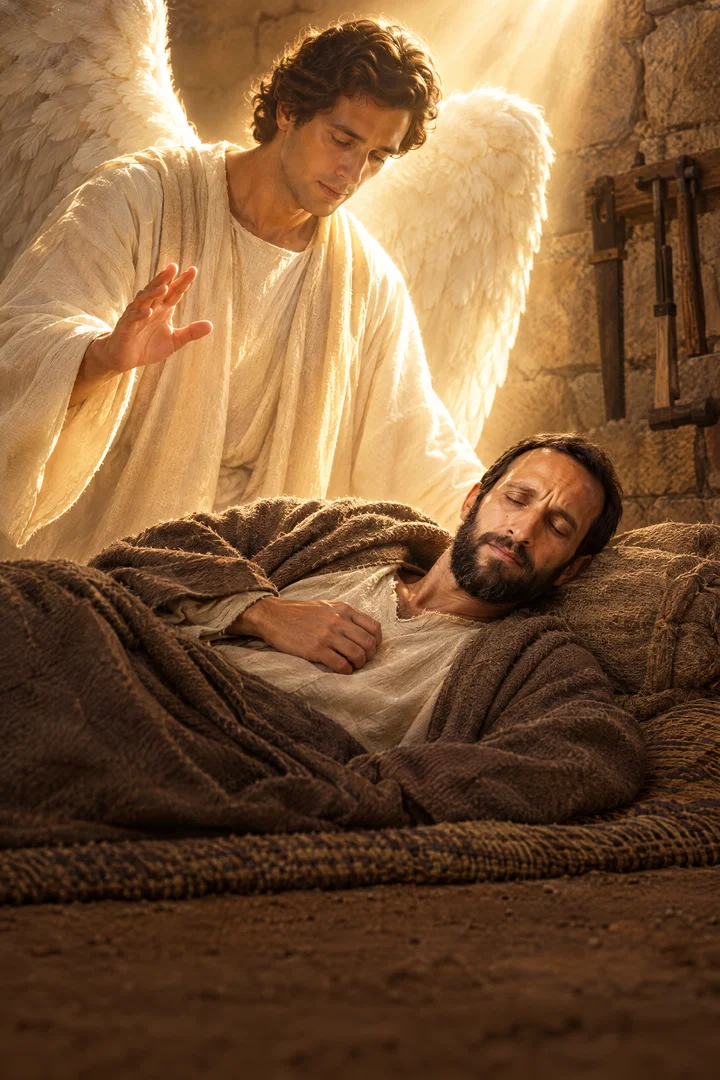
And she shall bring forth a son, and thou shalt call his name JESUS: for he shall save his people from their sins.
Translations
And she shall bring forth a son, and you shall call his name JESUS: for he shall save his people from their sins.
King James Version, KJV Cambridge Paragraph Bible, Webster Bible
And she shall bring forth a son, and thou shalt call his name JESUS: for he shall save his people from their sins.
Revised Version, American Standard Version
And she shall bring forth a son; and thou shalt call his name JESUS; for it is he that shall save his people from their sins.
and she shall bring forth a son, and thou shalt call his name Jesus, for he shall save his people from their sins.'
And she shall bring forth a son, and thou shalt call his name Jesus, for he shall save his people from their sins.
Moreover she shall bring forth a son, and thou shalt call his name Jesus,—for, he, will save his people from their sins.
Berean Standard Bible, Majority Standard Bible
She will give birth to a Son, and you are to give Him the name Jesus, because He will save His people from their sins.”
She shall give birth to a son. You shall name him Jesus, for it is he who shall save his people from their sins.”
And she will give birth to a son; and you will give him the name Jesus; for he will give his people salvation from their sins.
And she shall bring foorth a sonne, and thou shalt call his name JESUS: for hee shall saue his people from their sinnes.
Douay-Rheims (Challoner revision)
And she shall bring forth a son: and thou shalt call his name JESUS. For he shall save his people from their sins.
Pictures
Cross-references 20 of 187
- Titus 2:14
Who gave himself for us, that he might redeem us from all iniquity, and purify unto himself a peculiar people, zealous of good works.
Christ gives himself to redeem his people from iniquity and purify them.
- 1 John 3:4-5
Whosoever committeth sin transgresseth also the law: for sin is the transgression of the law.
Defines sin as lawbreaking and says Christ came to take away sins.
- John 3:16
For God so loved the world, that he gave his only begotten Son, that whosoever believeth in him should not perish, but have everlasting life.
God gives his Son so believers may be saved and have everlasting life.
- Hebrews 7:25
Wherefore he is able also to save them to the uttermost that come unto God by him, seeing he ever liveth to make intercession for them.
Jesus saves completely those who come to God through him and intercedes for them.
- Isaiah 7:14
Therefore the Lord himself shall give you a sign; Behold, a virgin shall conceive, and bear a son, and shall call his name Immanuel.
The virgin-born son called Immanuel is identified as Jesus, who saves his people.
- Romans 1:16
For I am not ashamed of the gospel of Christ: for it is the power of God unto salvation to every one that believeth; to the Jew first, and also to the Greek.
The gospel is God’s power to save from sin.
- Acts 4:12
Neither is there salvation in any other: for there is none other name under heaven given among men, whereby we must be saved.
Both passages present Jesus as the one through whom people are saved.
- Romans 8:3
For what the law could not do, in that it was weak through the flesh, God sending his own Son in the likeness of sinful flesh, and for sin, condemned sin in the flesh:
God sent his Son in human likeness to condemn sin and save from sin.
- 1 Timothy 1:15
This is a faithful saying, and worthy of all acceptation, that Christ Jesus came into the world to save sinners; of whom I am chief.
Both describe Christ’s mission as saving sinners.
- 1 John 1:9
If we confess our sins, he is faithful and just to forgive us our sins, and to cleanse us from all unrighteousness.
Confession is met with forgiveness and cleansing from unrighteousness.
- Hebrews 9:26
For then must he often have suffered since the foundation of the world: but now once in the end of the world hath he appeared to put away sin by the sacrifice of himself.
Christ puts away sin through the sacrifice of himself.
- Romans 6:23
For the wages of sin is death; but the gift of God is eternal life through Jesus Christ our Lord.
Sin brings death, from which Jesus saves.
- Romans 6:1-2
What shall we say then? Shall we continue in sin, that grace may abound?
Salvation from sin is not liberty to keep sinning.
- Luke 1:31
And, behold, thou shalt conceive in thy womb, and bring forth a son, and shalt call his name JESUS.
The angel tells Mary to name her son Jesus, the promised Saviour.
- Luke 2:10-11
And the angel said unto them, Fear not: for, behold, I bring you good tidings of great joy, which shall be to all people.
both announce Christ as Saviour
- John 1:29
The next day John seeth Jesus coming unto him, and saith, Behold the Lamb of God, which taketh away the sin of the world.
Jesus takes away the world’s sin, fulfilling his mission to save from sin.
- Romans 3:23
For all have sinned, and come short of the glory of God;
All have sinned and need the salvation Jesus brings.
- 2 Corinthians 5:21
For he hath made him to be sin for us, who knew no sin; that we might be made the righteousness of God in him.
Christ bears sin so people may become God’s righteousness in him.
- Galatians 4:4-5
But when the fulness of the time was come, God sent forth his Son, made of a woman, made under the law,
God sent his Son, born under the law, to redeem his people.
- 1 John 1:7
But if we walk in the light, as he is in the light, we have fellowship one with another, and the blood of Jesus Christ his Son cleanseth us from all sin.
Jesus’ blood cleanses from all sin.
Commentary part 1 of 3
Each commentary is drawn from primary sources: the writings of Ellen G. White and Adventist pioneers and periodicals. Each commentary is separate. Its own words are not a quotation; follow the references to read the source passages.
Ellen G. White
58 sources
His name Jesus means Saviour, declaring his mission to save his people from their sins by a power that belongs to him alone.Ms 45, 1892, par. 1–3Lt 38, 1893, par. 8–10Ms 3, 1896, par. 3Ms 41a, 1894, par. 2LS 297.1–300.1 He saves from sin, not in sin, delivering wholly from its guilt, defilement, power and bondage and bringing the fallen from death to life.CTBH 207.2–3ST Jul 29, 18864T 250.4ST Sep 23, 1889STBk 45.1 His work was not to free a nation from Roman rule or establish political dominion, though many expected a conquering ruler and so rejected him.DA 30.1SLP 256.2–257.1 To secure this rescue he took human nature, became substitute and surety, bore the penalty of broken law and overcame temptation and darkness, opening pardon to all who repent and come to him.Ms 77, 1899, par. 37–38Ms 105, 1901, par. 3–5ST Nov 15, 1899Ms 16, 1887, par. 27–28Lt 25, 1904, par. 15 Salvation is received by living faith that confesses and forsakes sin and trusts his blood and righteousness, and it issues in an obedient transformed life that keeps God's law and reflects his character.Lt 78, 1894, par. 7ST Jul 29, 1886Ms 104, 1901, par. 6Ms 25, 1897, par. 26
Name and Promised Rescue
The name Jesus means Saviour, and it expresses his mission to save his people from their sins.Ms 45, 1892, par. 1–3Ms 41a, 1894, par. 2LS 297.1–300.1 His name points to his work and signifies the only source of power that can save from sin, and he alone can save people from sin.Ms 41a, 1894, par. 2Ms 40, 1897, par. 30–33 That rescue is personal, bringing forgiveness of all sins, sanctification, purification by blood, consecration to God's will, and baptism with the Spirit, so that even a dying sinner who has confessed wrongs receives full assurance of God's love, victory, the nearness of Jesus, and triumph without fear.LS 297.1–300.1 It is received by a living faith that holds fast to him, looking to him and living as with the lifted serpent in the wilderness, rather than dwelling on sin while staying away from him.Ms 41a, 1894, par. 2
He was born of a woman and came as the promised Messiah in humble human form.Ms 45, 1892, par. 1–3SLP 256.2–257.1 He lived among the poor and sorrowful, shared their human experience, and gave his life to bring salvation.Ms 45, 1892, par. 1–3 Through him people find release from sin's bondage and the satisfaction of their deepest longings.SLP 256.2–257.1
He is a personal Saviour who saves his people from sin and transgression, and who can and will ransom them from sin.Lt 38, 1893, par. 8–10Ms 3, 1896, par. 3Ms 25, 1897, par. 26 He alone can save them, and choosing another ruler instead of Christ rejects the one who can save from sin.Ms 40, 1897, par. 30–33 His grace enables people to overcome sin and live as he lived.Lt 38, 1893, par. 8–10 Believing in him is more than a feeling; it is living faith in him.Ms 25, 1897, par. 26
His saving power reaches all who come to God through him.SC 88.3CE 57.1–3 It can ransom every soul, however fallen, and even the most guilty sinner can be saved and become a child of God by believing in Jesus Christ as the Son of God and Redeemer of the world.ST Nov 15, 1899Ms 19, 1897, par. 6–9 Even scribes and Pharisees can be saved only through faith in Jesus Christ.ST Jan 22, 1894 Reflecting on his saving mission, mercy, love, and work as Redeemer and Intercessor strengthens faith and love and awakens desire to be transformed into his pure character.SC 88.3CE 57.1–3
Expected Deliverer Rejected
His mission was to save His people from sin, not to free them from Roman rule or foreign rule and not to establish Israel's political dominion.DA 30.1SLP 256.2–257.1 He came as the promised Messiah in humble human form, and through Him is found release from sin's bondage and the satisfaction of humanity's deepest longings.SLP 256.2–257.1 He was hoped for as a deliverer from sin, the One prefigured by the symbolic service who would come and explain its meaning.DA 33.1–2
The expectation of a conquering ruler blinded people to this saving mission and prepared them to reject the Saviour.DA 30.1 Stubborn unbelief kept them from recognizing His character and understanding that He came to save His people from their sins.DA 30.1 His name points to His work that He alone can save from sin, so choosing another ruler instead of Christ is to reject the one who can save from sin.Ms 40, 1897, par. 30–33
Saved From Sin
The promise is to save his people from their sins, not in their sins, not while they remain in them, and not while they continue in them, and no one can be saved while remaining in sin.CTBH 207.2–3ST Jul 29, 18864T 250.4Ms 35, 1893, par. 35ST Oct 25, 1910 This deliverance is from transgression of God's law, from its condemnation and its practice, and it calls for leaving wrong ways, turning from disobedience, denying self, taking up the cross, obeying God at any cost, and choosing self-denial rather than slavery to appetite.CTBH 207.2–3ST Jul 29, 18864T 250.4ST Oct 25, 1910 Pardon comes only through him, through repentance for transgression of God's law and through faith that claims the merits of his blood, receiving both forgiveness and grace to live in obedience and to obey acceptably.ST Jul 29, 18864T 250.4 His saving grace is for everyday life, where truth abiding in the heart sanctifies the life.Ms 35, 1893, par. 35
He is a whole Saviour who saves from all sin.Lt 9, 1851, par. 4 This includes cleansing from all unrighteousness and defilement, deliverance from condemnation, practice, power, and bondage, and restoration to divine favor for those who believe, for he was manifested to take sin away.CTBH 207.2–3ST Sep 23, 1889STBk 45.1Ms 84, 1886, par. 8 The salvation he gives breaks sin's power rather than weakening God's law, since sin is the cause of the world's misery.STBk 45.1Lt 1f, 1890, par. 32 His life in believers enables them to will and to do what pleases God.Lt 9, 1851, par. 4 Mercy draws sinners to him, and the penitent who come with a broken and contrite heart, confessing and trusting the hope of the gospel, are received with mercy, and God does not reject such a heart, without weakening his law.STBk 45.1Lt 1f, 1890, par. 32
His saving work brings fallen people from spiritual death to spiritual life, giving them life, hope, and joy.RH Mar 31, 1904 It gives sinners hope of returning to the Father's house and walking the holy path.ST Jan 22, 1894 Through his grace they can obey acceptably and gain a home in Eden restored.ST Jul 29, 1886
Receiving his grace and practicing the virtues of his character is choosing the way of eternal life, while clinging to sin is choosing eternal death.Lt 106a, 1896, par. 17 Persistent disobedience shows that a person has chosen sin's rule.ST Jun 18, 1894 The one who comes with a broken and contrite heart and confesses sin he saves, but the one who chooses to keep sin instead faces its consequences and perishes.Ms 130, 1906, par. 46–48 Through his imputed righteousness and cooperation with divine power, believing sinners receive forgiveness and righteousness and can obey God's commandments and be pure and holy, for he took human nature and overcame temptation.ST Jun 18, 1894
How Salvation Was Secured
Humanity's fallen condition made a sacrifice necessary, and the saving work involved great sacrifice in giving His life to redeem the fallen race.Ms 105, 1901, par. 3–5MYP 18.1 The Lord of glory left His station of high command to become a man of sorrows and acquainted with grief, accepting ignominy and death to deliver people from the consequence of disobedience, without consulting His own convenience or pleasure.ST Nov 17, 1881 To do this He became humanity's substitute and surety, took human nature, and gave His life to atone for human sin, so that through His death believers receive life and an opportunity to know God and His law.Ms 77, 1899, par. 37–38Lt 25, 1904, par. 15
He took human nature and endured humanity's hardships and Satan's temptations, overcoming without turning from loyalty to God.Ms 105, 1901, par. 3–5Lt 25, 1904, par. 15 His victory over the powers of darkness makes salvation possible, for failure in even one instance would have left humanity without salvation.Ms 105, 1901, par. 3–5 That same taking of human nature and overcoming of temptation makes it possible for humanity to be pure and holy.ST Jun 18, 1894
By His suffering and death under the load of human guilt He bore the penalty for transgression of God's law, revealing sin's offensive character.ST Nov 15, 1899Ms 16, 1887, par. 27–28 This bearing of the penalty made it possible to ransom every soul, however fallen, and made pardon available to those who repent and come to Him.ST Nov 15, 1899Ms 114, 1897, par. 5–6 Salvation was thus made possible by suffering and death.Lt 78, 1894, par. 7
His blood cleanses from sin as a fountain prepared by the Redeemer to make the sinner whole and to heal sin's wounds.Ms 44, 1886, par. 13–15ST Jan 7, 18973MR 97.3–98.1 His merits as crucified and risen Saviour can be claimed.ST Jan 7, 1897 As Advocate with the Father He takes away sins and imputes His own righteousness.ST Jan 7, 1897
His perfect character and obedience to every requirement of the law are offered for the guilty and credited to them, so their efforts to obey are acceptable.Ms 8, 1888, par. 31–32Ms 75, 1886, par. 25–26 His life and death provide the merit by which believing sinners receive forgiveness and righteousness, and through that imputed righteousness they can become conquerors.ST Jun 18, 1894Ms 75, 1886, par. 25–26 The sacrifices offered at the tabernacle pointed to Him as the Lamb who would die for the sin of the world, and the gospel reveals Him in those offerings.18MR 135.5 He was manifested to take sin away, and those who believe may be cleansed from defilement and restored to divine favor through His grace as Intercessor.ST Sep 23, 1889
Receiving Salvation by Faith
Salvation was made possible by suffering and death, and it is received by faith.Lt 78, 1894, par. 7Ms 104, 1901, par. 6 That faith is genuine and living faith in the offering made for sin, a faith that holds fast and does not let go.Lt 78, 1894, par. 7Ms 104, 1901, par. 6Ms 41a, 1894, par. 2 Believing is more than feeling; it is living trust and reliance that brings rescue from sin and justifying righteousness.Ms 25, 1897, par. 26Ms 41a, 1894, par. 2Lt 106a, 1896, par. 45
Sinners must repent and turn from disobedience and from transgression of God's law, and by faith claim the merits of the blood shed for them.ST Jul 29, 1886Ms 44, 1886, par. 13–15 That repentance is for breaking the commandments, and the faith that receives pardon also receives grace to live in obedience and to obey acceptably.ST Jul 29, 1886Ms 44, 1886, par. 13–15 This rescue does not leave people in sin nor excuse continued disobedience, for true faith works by love and leads to obedience.Ms 44, 1886, par. 13–15
The one who comes with a broken and contrite heart and confesses sin is saved, and such a heart is not rejected.Ms 130, 1906, par. 46–48Lt 1f, 1890, par. 32 Mercy draws sinners and receives the penitent who confess and trust the hope of the gospel.STBk 45.1Lt 1f, 1890, par. 32 That mercy breaks the power of sin, which is the cause of the world's misery, without weakening the law.STBk 45.1Lt 1f, 1890, par. 32
The law acts as a mirror that convinces people they are transgressors and gives knowledge of sin by revealing spots and deformities of character.ST Jan 7, 1897 It cannot save from its penalty, and abolishing it would not remove the defects it exposes.ST Jan 7, 1897 When condemned by the law, people must come with humble penitent hearts to God for pardon and wash in the fountain prepared by the Redeemer to make the sinner whole.ST Jan 7, 1897
Dwelling on sin while staying away cannot save, for the name given signifies the only power that can save from sin.Ms 41a, 1894, par. 2 As with the serpent lifted in the wilderness, the call is to look and live by a living faith that holds fast.Ms 41a, 1894, par. 2
The verse means personal rescue through forgiveness of all sins, sanctification to God, purification by blood, consecration to God's will, and baptism with the Spirit.LS 297.1–300.1 Even a dying sinner who has confessed wrongs and distrust may have full assurance of being loved as a child of God.LS 297.1–300.1 That assurance brings victory over impatience, reconciliation to affliction, nearness of Jesus, a shining face, triumph without fear, and reason to praise and honor Jesus as long as breath lasts.LS 297.1–300.1
Salvation cannot be bought; receiving Christ leads to an experience in which good works follow.Ms 44, 1898, par. 35–36 Forgiveness brings joy and a free, joyful testimony.Lt 85, 1889, par. 23–25 Confessing faith in Jesus' love and confessing backsliding in faith belong together with receiving that forgiveness.Lt 85, 1889, par. 23–25
Clear conviction of sin and awareness of the need for this faith deepen love for Jesus.Ms 104, 1901, par. 6 Dependence on God for spiritual health and growth enables practicing the truth and showing gentleness.Ms 104, 1901, par. 6 Neglecting the example given and failing to do the Word is neglecting this salvation and becoming separated from God.Lt 78, 1894, par. 7
Obedient Transformed Life
Sin is transgression and violation of God's commandments, the cause of the world's misery, and rescue from it means turning from continual transgression to obedience, leaving the error of the ways, and putting sin and iniquity out of the heart. Ms 16, 1887, par. 27–28Ms 8, 1888, par. 31–32Ms 24, 1901, par. 15–183MR 97.3–98.1 Salvation is from sin, not a leaving of people in disregard of the law, for He imparts His righteousness to those who obey it, and people who cannot overcome by their own strength receive His righteousness through faith because He died and obeyed every requirement of the law they had transgressed. Ms 8, 1888, par. 31–323MR 97.3–98.1 Cleansing by His blood is received through personal repentance and faith, and turning from sin is what salvation means. Ms 24, 1901, par. 15–183MR 97.3–98.1
Salvation does not excuse continued disobedience and does not release people from obedience to God's changeless law. Ms 44, 1886, par. 13–15Ms 133, 1897, par. 3–5Ms 75, 1886, par. 25–26 His bearing sin does not remove the obligation to obey, and His suffering and death did not set aside the law but provided His perfect character to be offered for the guilty so that His righteousness is credited to them and their efforts to obey are acceptable, making them conquerors through the merits of the crucified and risen Saviour. Ms 133, 1897, par. 3–5Ms 75, 1886, par. 25–26 The salvation He gives breaks sin's power rather than weakening God's law, drawing sinners by mercy to confess and trust the gospel's hope and be received with mercy. Ms 44, 1886, par. 13–15STBk 45.1 His atonement gives every person opportunity to become a child of God, and His power enables overcoming temptation and obedience. Ms 133, 1897, par. 3–5
Those He saves are called to leave wrong ways, follow His example, deny self, take up the cross and follow Him, and obey God at any cost. 4T 250.4ST Oct 25, 1910ST Nov 17, 1881 There is no serving of two masters and no question of obeying His commandments or following temporal interests, for His death delivers from the consequence of disobedience and salvation is from sins, not in sins and not while remaining in them. CTBH 207.2–34T 250.4ST Nov 17, 1881 This deliverance includes both condemnation and practice of sin, and calls for self-denial rather than slavery to appetite. CTBH 207.2–3 Overcoming comes by doing the Lord's words. Lt 4, 1892, par. 21–24
True faith works by love and leads to obedience. Ms 44, 1886, par. 13–15 He alone provides pardon, and salvation comes through repentance for transgression of God's law and faith in Him, a faith that receives both forgiveness and grace to live in obedience. Through His imputed righteousness and cooperation with divine power, made possible because He took human nature and overcame temptation so humanity can be pure and holy, believing sinners receive forgiveness and righteousness and can obey God's commandments, while persistent disobedience shows choice of sin's rule. ST Jun 18, 1894 Clear conviction of sin and awareness of need for genuine living faith in His offering deepen love for Him, and dependence on God for spiritual health and growth enables practicing the truth and showing His gentleness. Ms 104, 1901, par. 6
His saving grace is for everyday life, and truth abiding in the heart sanctifies the life. Ms 35, 1893, par. 35 As people accept His character and spirit and know Him through communion with God, He changes their thoughts and aims so that obedience becomes the heart's own desire. RH Jul 14, 1910 Sin becomes hateful, and He gives strength for obedience and service, enabling people to overcome sin and live as He lived. RH Jul 14, 1910Lt 38, 1893, par. 8–10
Coming to Him means laying aside sin and separating from anything that would separate from God. Ms 16, 1887, par. 27–2815MR 256.1 Sins, vices, follies, pride, and worldliness are to be laid at His cross by those who come to Him. 15MR 256.1ST Sep 4, 1901Ms 44, 1901, par. 12–13 He calls for this because He loves people and desires to save them, and accepting the truth brings a longing for transformation. 15MR 256.1ST Sep 4, 1901Ms 44, 1901, par. 12–13 His death under the load of human guilt reveals sin's offensive character and presses this putting away of sin from the heart. Ms 16, 1887, par. 27–28
His ransom on the cross bears the world's iniquity and makes pardon available to those who repent and come to Him, and those who receive His grace are adopted as God's children and become obedient to Him. Ms 114, 1897, par. 5–6 His work makes it possible to develop a holy character in deliverance from transgression and a life of obedience to God's holy law, which reveals His character and expresses mercy, goodness, and love. Ms 88, 1897, par. 18HSFM 181.2 Overcoming sin and growing in love, humility, and other traits pleasing to God is a lifelong work carried forward day by day. HSFM 181.2
Reflecting on His saving mission, mercy, love, and work as Redeemer and Intercessor strengthens faith and love. SC 88.3CE 57.1–3 His saving power reaches all who come to God through Him, and meditating on Him awakens desire to be transformed into His pure character. SC 88.3CE 57.1–3
Representing Him to the world means showing Him as one who saves people from sin. Ms 198, 1898, par. 29 Trusting and relying on Him brings salvation from sin and justifying righteousness, and the resulting life bears holy works, pure thoughts and speech, and a sanctifying influence on others. Lt 106a, 1896, par. 45 His saving work involved great sacrifice, and those who follow Him care about the salvation of the people He came to save. MYP 18.1
Salvation from sin includes forgiveness and cleansing, and the saved honor God and praise Him for this deliverance. Lt 10, 1853, par. 1–5 That deliverance is to a life of obedience expressing His character of mercy, goodness, and love. Ms 88, 1897, par. 18
Sources
Pioneers and periodicals
418 sources
The angel told Joseph that Mary's son, conceived by the Holy Ghost, should be called Jesus because he would save his people from their sins.ST Dec 15, 1898ST Apr 22, 1897ST Nov 28, 1892 The name Jesus means Saviour and was given before birth because it fully expresses his character, mission and work.ST Aug 5, 1913ST Dec 15, 1898ST Dec 24, 1896RH Jul 6, 1916 He saves his people from their sins, not in their sins nor while they continue in them, giving actual deliverance from sin itself and not merely from its penalty and consequences.ST Jul 28, 1914RH Jul 31, 1900ST Oct 19, 1888 Since sin is transgression of God's law, to be saved from sin is to be saved from breaking the law into obedience, righteousness and harmony with God, with the law written in the heart.ST Apr 1, 1889ST Jun 29, 1876 This he accomplished as both Son of man and Son of God by bearing sins in his own sinless life, death, resurrection and intercession, and it is received by all who repent, believe in him as personal Saviour, and abide in him.RH Dec 5, 1907RH Jul 6, 1916STST Nov 25, 1913ST Jun 13, 1900
Name and Meaning
The name Jesus means Saviour, because he shall save his people from their sins, and it was given for that work so that the name fully expresses his mission of deliverance from sin, its pollution and its curse, without which people perish.ST Aug 5, 1913ST Dec 15, 1898ST Dec 24, 1896ST Dec 10, 1896RH May 28, 1857 The name is tied to the work itself, explaining Jesus by what he does in bringing salvation where there was no intercessor and giving eternal life instead of the death that sin earns.ST Aug 5, 1913ST Dec 15, 1898ST Dec 24, 1896ST Dec 10, 1896
The Greek Jesus corresponds to the Hebrew Joshua or Jehoshua, and both mean Saviour, rendered as Jehovah is salvation, Jehovah-Saviour, or Jehovah his help.ST Nov 12, 1912ST Apr 1, 1897ST Aug 26, 1889ST Mar 6, 1901RH Jul 20, 1869 As God with us become one of us, partaker of flesh and blood, born of woman under the law and made like his brethren with human weakness and temptation, he is Jehovah become salvation, emptied of self even to the cross and filled with the fulness of the Godhead to stand in man's place.ST Apr 1, 1897ST Mar 6, 1901 Oshea renamed Jehoshua parallels this naming, with Joshua leading into the promised land pointing to Jesus of the new covenant and the land symbolizing the heavenly Canaan.ST Nov 12, 1912ST Aug 26, 1889ST Mar 6, 1901 Jesus saves not only from past sins but from continuing to sin, redeeming from lawlessness unto zeal for good works and keeping from falling, which implies a sinless character since a sinner could not save, won by meeting temptation in fallen humanity's weakness and depending on divine power.ST Nov 12, 1912ST Aug 26, 1889ST Mar 6, 1901
The name is a divinely given title expressing character and mission rather than merely a personal name, given before birth because his work is to save, binding up the whole gospel in the name.RH Jul 6, 1916ST Mar 8, 1910ST Jul 15, 1886ST Sep 18, 1884 Names in God's plan indicate character, and as Jesus means Saviour named for his work, so Christ means Anointed.RH Jul 6, 1916ST Mar 8, 1910 To be called Jesus is to be identified as Saviour of sinners, declaring forgiveness and rescue and both power and willingness to save, displayed in coming as the Babe of Bethlehem, God among men.ST Nov 25, 1913ST Jul 15, 1886ST Sep 18, 1884
Unlike others named Jesus or Joshua, Christ perfectly manifests God's power to save, with God's presence in sinful flesh showing how divinity can live in fellowship with humanity to deliver from sin in an active, present salvation from sinning unto everlasting life.ST Apr 22, 1897RH Mar 3, 1910ST Oct 29, 1902ST Dec 8, 1909ST Nov 6, 1901 His name stands for his character, attributes, power, mercy, love, goodness, patience and compassion as Jehovah revealed in flesh, so that faith in that name brings deliverance and believers come to God relying on the merits of his sacrifice for pardon and acceptance.ST Apr 22, 1897RH Mar 3, 1910ST Jul 7, 1909ST Dec 8, 1909 Names point to character, and this name points to Christ's character as Saviour applied even to deliverance from evil habits and to freedom, pardon, cleansing, conquest through his sinless life and substitution, and restoration to God's likeness.ST Jul 7, 1909ST Dec 8, 1909ST Nov 6, 1901
Calling on the name Jesus in faith and trust has real practical saving power, for the name is above every name and means more than Michael or Christ because it declares saving from sins, calling him my Saviour opposite Satan the destroyer.RH May 9, 1912ST Oct 27, 1881ST Mar 25, 1913 When spoken in faith even out of deepest anguish, darkness and ruin and repeated with longing faith, Satan and his hosts flee in terror, sorrows are soothed, wounds healed, fear driven away, the wounded spirit made whole, the troubled heart calmed, the hungry fed and the weary given rest, as rock, shield, hiding-place and treasury of boundless grace.RH May 9, 1912ST Oct 27, 1881ST Mar 25, 1913 Peter's cry when sinking, Lord save me, is all held in the one word Jesus, the highest prayer for distress too deep for many words, a name overflowing with sweetness, light, love, life and glory, irradiating the mind, soothing anguish into peace and shedding immortal strength as answer to doubts, spring of courage, charm against foes, remedy for weakness, supply of wants, and power, righteousness, sanctification and redemption.RH May 9, 1912ST Oct 27, 1881ST Mar 25, 1913
The name is precious because it points to the Redeemer slain for believers, whose love inspires praise for humbling himself to rescue the race from sin's disgrace and give life.RH Apr 17, 1866RH Sep 17, 1857RH Mar 14, 1865ST Sep 26, 1878 It is dearer than all else on earth to those who believe, since he died to save from every sin, dispelled the terrors of the grave for those who trust, and gives eternal life from heaven, trusted even in facing death with forgiveness, cleansing and consecrated life.RH Apr 17, 1866RH Mar 14, 1865ST Sep 26, 1878 The word Saviour explains the meaning of the name Jesus but is not part of the verse's text.ST Jun 10, 1908
Birth Account Setting
The verse belongs to the angel's message to Joseph concerning Mary's child conceived by the Holy Ghost, announcing that Mary would bring forth a son to be called Jesus because he would rescue his people from sin.ST Dec 15, 1898ST Apr 22, 1897ST Nov 28, 1892ST May 24, 1905ST Aug 10, 1915 Joseph had thought to put Mary away supposing her unvirtuous, was told in a dream as son of David not to fear to take her as wife, then did as commanded, took her, knew her not till the birth, and called his name Jesus.ST Dec 15, 1898ST May 24, 1905ST Nov 1, 1899 Both Mary and Joseph received the announcement, and Joseph acted on it by marrying Mary after first deciding not to.ST Nov 1, 1899
He was begotten by the agency of the Holy Ghost, born of the virgin Mary in Bethlehem during the reign of Augustus Caesar, and laid in a manger because there was no room in the inn.ST May 24, 1905RH Nov 14, 1854ST Nov 25, 1913 The account stands in Matthew 1:20-25, with supernatural conception not disproving real humanity.RH Nov 14, 1854RH Jul 6, 1916 Joseph was informed before birth as guardian and protector, not savior, while Jesus is both Son of man sharing the nature and kinship of the redeemed and Son of God manifest in flesh through whom atonement joins humanity with Deity.RH Jul 6, 1916ST Aug 28, 1884
The birth is an essential preliminary and first step in his becoming Saviour, corroborated by the angel's message convincing Joseph of Mary's purity and confirming her account.ST Jan 23, 1912ST Jan 23, 1912ST Jan 23, 1912 Through becoming Son of man the Son of God could deliver humanity from bondage and win back dominion, which is the foundation of the true church and assurance of its endurance.RH Dec 5, 1907 He was promised and then came and carried out salvation despite united opposition, was born for the express purpose of saving, and now invites all to full and free salvation not to be met with indifference or forgotten.RH Apr 10, 1866ST Mar 13, 1907
The genealogy in Matthew traces the royal line from David through Solomon to Joseph his legal father, showing the throne of David belonged to Jesus, while Luke traces David through Nathan on Mary's side with Joseph named in Mary's place because descent was reckoned through the male line.ST Sep 19, 1911 The two lines follow distinct family courses that meet in time. The preserved lineage establishes legitimate succession as Son of Mary and claim to Abraham's promise including the whole world as fulfillment of God's promises to Abraham.
The verse is much used at Christmas when many celebrate his birth on December 25 and then forget it, but its message belongs not to a special season or feast but to every season.ST Dec 20, 1899 The customary celebration is not held on the actual day of his birth, the verse referring to the birth only as the event commemorated.ST May 9, 1906
His birth at Bethlehem was announced by a multitude of angels and spread by the shepherds, heaven thus making known his mission.RH Dec 10, 1901 An angel gave his name as Saviour before birth just as an angel afterward proclaimed the glad tidings of his birth to men. His coming as the Babe of Bethlehem displays love to the world, giving the deep meaning behind glory to God in the highest and peace and good will toward men, depths not fully fathomed until the eternal years.ST Nov 25, 1913
The birth history shows he is not simply Joseph's son but a divine Saviour miraculously conceived, uniting the divine and the human as both Son of God and Son of man.ST Jan 25, 1905RH Dec 5, 1907 His work of rescuing from sin rests on divinity, so to praise him only as the highest type of man denies that divinity and leaves evil surging through unregenerate hearts unstopped.RH Apr 9, 1914 To disregard that history denies divinity and leaves no divine Saviour, and denying miraculous conception treats him as liable to human mistakes.ST Jan 25, 1905 The verse is therefore relevant to rejecting the claim that Joseph was his father and denying his deity.RH Jun 9, 1910
Matthew's testimony stands with Luke and the rest of Scripture with the same character of evidence as for miracles, resurrection, teaching, sinless life, and his living and dying at all, though with fewer witnesses.RH Jan 1, 1914 To cut it out as gullible, ignorant, romantic, deceived or deceiving destroys the competence and credibility of Matthew and Luke as historians and makes lasting faith in the rest impossible, forcing a choice between rejecting the witnesses altogether and accepting their whole record.RH Jan 1, 1914 The Bible must be trusted altogether or not at all as authority, for disbelief here destroys confidence everywhere else and soon destroys trust in Mark, John and Paul as well.RH Jan 1, 1914 Firm faith in miraculous birth and character must be held from the first, because beginning to doubt leads on to denial of miraculous work and to general unbelief.ST Dec 22, 1881
The virgin birth is a literal event, cardinal point, foundational miracle and factual doctrine affirmed as historical rather than legendary.ST Jan 27, 1881RH Mar 8, 1906 Virgin means a literal virgin, Judah means the literal tribe not the race, and David means the literal David not any royal line, with the foretold birth to Mary wife of Joseph in her virginity fulfilled literally and explicitly as were prophecies of life and death.ST Jan 27, 1881 It is truth to be believed without qualification, sung, prayed and preached, bearing on fitness for ministry and fellowship, so that licensing doubters treats denial as trifling and raises whether deniers should resign office and leave the ranks.RH Apr 9, 1914RH May 23, 1912 It shows the real deity of Christ and the authenticity of the Scriptures.RH Jul 24, 1913
The claim of a miraculous child rejects assertions that the conception was fabulous or merely poetic, that he was only a good man, that the crucifixion was only struggle against imperfection, and any ethical Christianity without divine saving work, since such a system cannot deliver from sin or secure acceptance.RH Oct 11, 1906RH Sep 8, 1853RH Feb 24, 1859RH May 10, 1906 The account is said by modern science to be inexplicable and therefore rejected, linked with uncertainty about the incarnation.ST Dec 19, 1892 Denying its authenticity rejects the supernatural truth on which faith and mission rest and stumbles at the gospel.RH Dec 30, 1902ST Dec 19, 1892
Differing beliefs about his birth and nature are connected with the verse, in that Nazarenes accepted virgin birth by the Holy Ghost and that he was Messiah, while Ebionites regarded him as a pure man born of Mary and denied pre-existence.RH Jul 9, 1908
Prophecy and Messianic Identity
His birth fulfills what was spoken by the Lord through the prophet that a virgin would be with child and bring forth a son called Immanuel, which means God with us.ST Dec 15, 1898ST Nov 21, 1911ST Feb 17, 1881RH Jun 24, 1858 That prophecy is Isaiah 7:14, literally fulfilled in the birth of Jesus of Nazareth as a literal, personal event and presented as a sign of his first advent.ST Jan 9, 1879ST Jan 8, 1880ST Nov 21, 1911 His virgin birth is thus a sign that he was the Messiah.ST Jan 9, 1879RH Jan 11, 1870 He is Immanuel, God with us, the eternal Son and I AM in human flesh.ST Dec 15, 1898ST Feb 17, 1881
He is the Messiah promised in promise, ritual, type and prophecy, and his birth is a landmark fulfillment of Old Testament gospel promises.RH Jan 11, 1870ST Feb 17, 1881RH Jun 24, 1858 His sinless life and fulfillment of prophetic requirements establish him as the promised Deliverer.RH Jan 11, 1870ST Feb 17, 1881 He is greater than Moses, whose temporal deliverance of Israel from Egypt typified redemption guiding to the heavenly Canaan.RH Feb 19, 1861 His birth is a sign of his literal first advent.ST Jan 9, 1879ST Jan 8, 1880ST Nov 21, 1911
His being made of a woman and born of the Virgin Mary by the Holy Spirit fulfills the promise of the seed of the woman in Genesis 3:15 who crushes the serpent.ST Feb 17, 1881ST Aug 28, 1884RH Dec 27, 1870 That serpent whose head he crushes is that old serpent called the devil and Satan who in serpent form beguiled Eve and led Adam and Eve into sin.ST Feb 17, 1881RH Dec 27, 1870 His taking human sin upon himself and dying to save people from sin answers the disobedience of Adam and Eve in Eden when they ate from the tree of the knowledge of good and evil, and extends to the whole human race.RH Dec 14, 1905 The body prepared for him was the means by which he could offer an adequate atonement, since animal sacrifices could not take away sin but Christ's sacrifice could.ST Aug 28, 1884
His coming as David's Son to sit on David's throne fulfills the promise to establish David's house forever and that his seed would never cease.ST Nov 7, 1906ST Jun 11, 1902 That promise is the promise of a Saviour coming in the flesh to save humanity from sin, for sin is disobedience to God's law and causes death which prevents a house from continuing, while righteousness gives a house permanence, so saving from sin gives righteousness by faith and brings complete victory over death and the grave.ST Jun 11, 1902 His promised lineage was preserved through the line of promise back to David, Judah, Jacob, and Abraham.ST Nov 7, 1906 While the other tribes were scattered and their genealogies lost, the genealogies of Judah the ruler and Levi the priest were preserved, the tribe of Judah was held together until Jesus came, and from that time Jesus became the center of the gathering of God's people, with Matthew 1 giving the genealogy tracing Jesus through Judah on his father's side paired with Luke 3 on his mother's side.ST Feb 4, 1913
Unlike Melchizedek, who had no human birth or pedigree, Christ was born into the human family and had a traced ancestry extending back to Adam.ST Apr 12, 1905 He entered human flesh descended from a lineage whose ancestors shared humanity's sinfulness, including sinful people and people of other nations, and used divine power to conquer sin on humanity's behalf.ST Mar 23, 1915ST Dec 18, 1907 Though tempted as humans are, he lived a perfect life, showing that people can live holy lives in this world.ST Mar 23, 1915
He gives spiritual deliverance by saving from sins, not a political conquest freeing from Rome or earthly bondage.ST Dec 28, 1888RH Dec 31, 1901 He came as a spiritual deliverer, calling sinners to repentance, delivering from sin's dominion and Satan's power, from the cruel yoke of sin, the galling chains that bind, the power of guilt within, and the tyrant's fearful power.ST Dec 28, 1888ST Feb 17, 1904 Expectation of a worldly deliverer and temporal kingdom was mistaken and left people without saving benefit, for people had to recognize their need of help and receive him by faith rather than rely on their own law-based righteousness.ST Dec 28, 1888 He did not come to establish a temporal kingdom or rule as earthly monarch, nor merely to save from poverty, reproach, persecution, suffering, or political oppression, for sin is a fatal burden on the soul and salvation that does not remove it ends in death.RH Dec 31, 1901 His salvation is greater than Moses' deliverance, which was temporal and served as a type of redemption through Christ, for Christ delivers his people from Satan's tyranny and divine justice, gives them spiritual blessings, guides and sustains them, and will bring them to the heavenly Canaan through his perfect obedience and suffering unto death on the cross.RH Feb 19, 1861
The promised Saviour gave hope from patriarchal and Jewish ages to believers looking toward salvation and eternal life. The sanctuary services taught that forgiveness and cleansing come through faith in him, the promised Seed and Immanuel who takes human flesh.RH Aug 5, 1902 His saving presence may dwell within people as in a temple, sustaining their communion with God and enabling them to remain faithful.RH Aug 5, 1902
At his first advent he came to save from sins, not then to destroy sin.RH Nov 27, 1913RH Nov 27, 1913 He took human flesh and blood, veiling his glory, which would otherwise have destroyed or consumed beings in whom sin remained.RH Nov 27, 1913RH Nov 27, 1913 In this way he became the author and source of eternal salvation from sin, separating sin from the sinner in this life so that sin's final destruction need not destroy the sinner.RH Nov 27, 1913RH Nov 27, 1913
He is the true coming deliverer already come as Saviour from sin rather than a future human leader.ST Jan 14, 1913 When received individually he brings present relief from sin, while his coming again still lies in the future.ST Jan 14, 1913 Because sin brings death, Jesus also saves from death by giving life, and that life is given at the last day at his second coming, so the gospel includes Christ's return and the kingdom of God as its blessed hope and climax.ST Apr 1, 1889 This distinguishes the true Christ from false messiahs and false ideas of Christ, which leave people in sin.RH Apr 28, 1904 Salvation is not merely an inward condition or the exaltation of humanity but comes through faith in the personal Christ, whose divine power brings salvation.RH Apr 28, 1904
Saved From Sin Not In
He saves his people from their sins, not in their sins, and not while they remain in them.RH Jul 31, 1900ST Oct 19, 1888ST Oct 4, 1883 There is no provision to leave people free to sin and no permission or license to continue in it.ST Oct 19, 1888ST Oct 4, 1883RH Apr 10, 1916 To save from sin is to set free from sin and from breaking the Father's holy law, putting away transgression and restoring to allegiance and loyalty to the divine government.RH Jul 31, 1900ST Oct 19, 1888ST Oct 4, 1883RH Apr 10, 1916 This salvation is not accomplished in anyone who continues to transgress God's law, for over such sin still has dominion and they are not saved from sin.RH Jul 31, 1900ST Oct 4, 1883RH Apr 10, 1916 Sin is transgression of God's law, and he saves from it by giving a new nature in harmony with the law and the Spirit of God, so that obedience is no longer forced but delighted in and the commandments are not burdensome.RH Jul 31, 1900ST Oct 19, 1888ST Oct 4, 1883RH Apr 10, 1916 Sin brings destruction, suffering, and death, and he came to rescue from that destruction by freeing from sin, with no limit placed on the greatness or number of sins he can pardon.RH Apr 10, 1916
His saving work is actual deliverance from sin, not merely a promise or an idea.ST Sep 23, 1897RH Jun 15, 1911RH Jul 1, 1902 It is not merely improvement in earthly life, social, economic, or home life, physical welfare, or civilization, nor protection or acceptance while remaining sinful.ST Sep 23, 1897RH Jun 15, 1911ST Mar 13, 1907RH Jul 1, 1902 It requires a Saviour because humanity is fallen and cannot earn salvation by its own works or by good within or self-improvement.RH Jun 15, 1911ST Mar 13, 1907 It does not mean that Christ's obedience replaces the believer's own obedience.RH Jul 1, 1902 The gospel is God's power to reach the heart and replace unrighteousness with righteousness through Jesus Christ the Saviour of sinners.RH Jun 15, 1911
He saves from sin itself in its fullest sense, not merely from its penalty, consequences, destruction, guilt, or wrath.ST Jul 28, 1914ST Oct 19, 1888RH Apr 10, 1916ST Jan 22, 1894ST Jan 29, 1902 He was so named Saviour because he saves from sin itself, not merely from the consequences of sins already committed.ST Oct 19, 1888RH Apr 10, 1916ST Jan 22, 1894 Escape from penalty follows escape from sin, so those who refuse salvation from sin cannot expect to escape its penalty.ST Jul 28, 1914ST Oct 19, 1888RH Apr 10, 1916 This freedom from sin is the first stage of redemption, including both condemnation and practice, and its accomplishment requires action from the sinner as well as from the Redeemer.ST Sep 18, 1884ST Dec 28, 1876ST Jan 22, 1894 Salvation from sin includes deliverance from the penalty of breaking God's law, but it does not permit continued disobedience, for Christ enables believers to live in obedience.ST Oct 19, 1888RH Apr 10, 1916ST Jan 22, 1894 His saving work reaches not only guilt for sins already committed but also present sin and the habit or disposition to sin, with power to resist temptation and cleansing from unrighteousness.ST Dec 28, 1876ST Jan 22, 1894ST Jan 29, 1902
Saving from sin includes freedom from its ruling power, dominion, bondage, habit, disposition and practice, from past, present and future sins and from committing sin.ST Oct 19, 1888ST Dec 28, 1876ST Jan 22, 1894ST Jan 29, 1902ST Sep 9, 1913 He frees believers from sin and its slavery and dominion, taking away sin itself while the law that exposes sin remains, so that the righteousness of the law is fulfilled in them.ST Oct 19, 1888RH Apr 10, 1916ST Jan 22, 1894ST Sep 9, 1913 Faith does not make the law void but establishes it, and those thus saved keep the commandments of God and regain right to the tree of life.ST Oct 19, 1888ST Sep 9, 1913 This makes people new creatures who live above sin soberly, righteously and godly in this present world, brought into perfect harmony with God.ST Oct 19, 1888ST Dec 28, 1876ST Jan 22, 1894 God's power can keep people from falling and make them faultless, and people's part is to submit to God and to the righteousness he gives.ST Dec 28, 1876ST Jan 22, 1894
His salvation is present, now in this life during probation and not only after the resurrection or by future process.ST Sep 23, 1897ST Apr 7, 1914RH Apr 16, 1901RH Aug 1, 1854ST Feb 25, 1913 It can reach the lost and degraded in the present, making them pure and reliant on God and freeing them from what mars life or hinders appointed work.ST Sep 23, 1897ST Feb 25, 1913RH Mar 16, 1911 He redeems from sin and cleanses from all uncleanness including idolatry, to be accomplished in believers during probation before the time when the filthy remain filthy and the holy remain holy.ST Sep 23, 1897RH Aug 1, 1854ST Feb 25, 1913 Sin has defaced, distorted, and marred man's image as God's child and holds him in bondage longing for deliverance, but in Jesus Christ there is plenteous redemptive and mighty creative power to save, and God is a present help today to the uttermost for all who accept.ST Sep 23, 1897ST Feb 25, 1913RH Mar 16, 1911 It is one full, free, present salvation, not half now and full later, and cannot be put off to next week or the judgment.ST Apr 7, 1914RH Apr 16, 1901ST Feb 25, 1913ST Jul 9, 1896 He forgives sin, cleanses the heart from evil, keeps those he has saved and those who trust him true, and his salvation continues through eternity.ST Apr 7, 1914RH Apr 16, 1901ST Feb 25, 1913
He is able to save completely those who come to God through him and to keep them from falling.STST Jul 9, 1896 His salvation reaches beyond forgiveness of past sins to redemption from iniquity and purification for a life devoted to good works as a peculiar people zealous of good works.STST Jul 9, 1896 Half saved is not saved at all, and without full salvation a person still belongs to the devil.STST Jul 9, 1896 There is not half salvation now and full salvation later, not justification as half saved and sanctification as fully saved, and not a twofold or fourfold salvation.ST Jul 9, 1896 The Holy Spirit does not dwell where sin dwells, so every root of bitterness must be rooted out now, for Christ cannot be claimed at the judgment if he cannot be claimed now.STST Jul 9, 1896
Salvation from sin also includes deliverance from its results as first step and final completion.ST Sep 18, 1884ST Mar 20, 1893ST Mar 6, 1879ST Nov 7, 1892ST Dec 28, 1876 Through him comes remission of sins, the first step in redemption, and release from sin and its results.ST Mar 20, 1893ST Nov 7, 1892ST Dec 28, 1876 His saving work is from sin and its penalty, both from condemnation and from practice.ST Sep 18, 1884ST Nov 7, 1892ST Dec 28, 1876 It is release from guilt and penalty, salvation from wrath, from death to life, and at last from eternal death and all consequences.ST Sep 18, 1884ST Mar 6, 1879ST Nov 7, 1892ST Dec 28, 1876 It reaches completion when sins are blotted out, guilt removed, and God remembers sins no more, with the cleansed restored to lost innocence.ST Mar 6, 1879ST Nov 7, 1892ST Dec 28, 1876 He is the remedy for sin and the source of wisdom, knowledge, and purity.ST Mar 6, 1879ST Nov 7, 1892RH Aug 1, 1907
He is Saviour from sin and thereby conqueror of death which came as sin's consequence.RH Nov 12, 1903 Because sin brings death, salvation from sin also means salvation from death.RH Nov 12, 1903 He saves by giving people himself, his own life which conquers death because it is free from sin, for he is salvation in himself.RH Nov 12, 1903 Death is an enemy, not a friend.RH Nov 12, 1903
The saving rescues ruined drunkards from drink and women from a life of sin on the street, washing them clean in his blood and making them sober, pure and trustworthy unto rescuing others.ST Oct 31, 1900 It keeps the saved as long as they hold his hand, while letting go to walk alone leads back into the old life.ST Oct 31, 1900 Those who know they are down and know how they were saved before can be saved again and kept ever since, with heart and life changed to sober, cleansed, trustworthy lives given to rescuing others from the life from which they were rescued.ST Oct 31, 1900 The verse does not teach that wrongdoing is made right or excused on the ground that every action is fixed by fate, for Jesus saves from sin rather than making wrongdoing right.RH May 16, 1871
Sources