Matthew 1:25
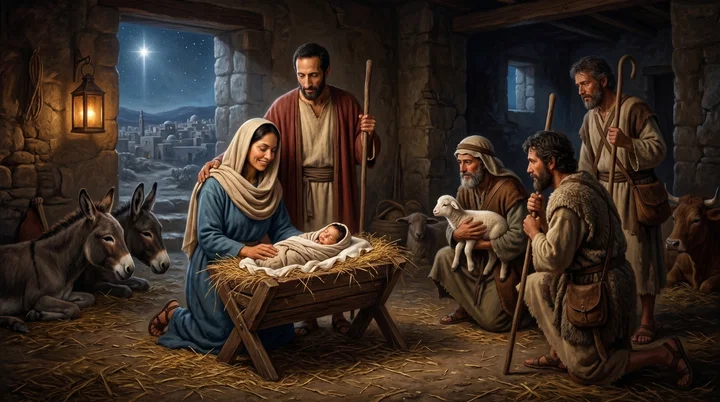
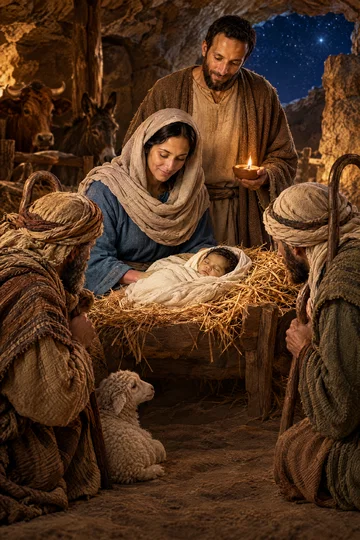
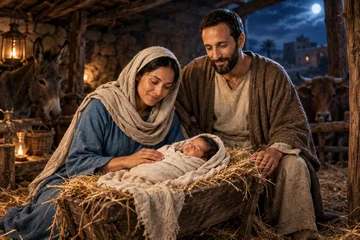
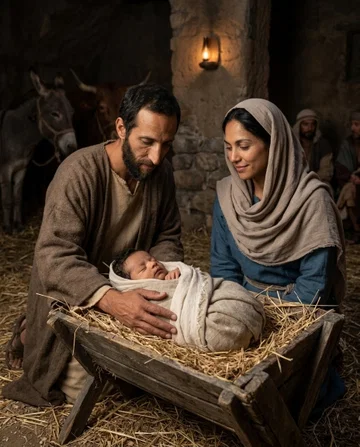
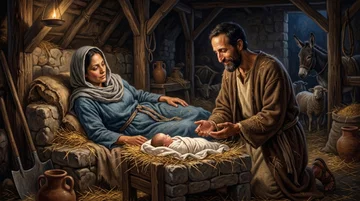
And knew her not till she had brought forth her firstborn son: and he called his name JESUS.
Translations
American King James Version, King James Version
And knew her not till she had brought forth her firstborn son: and he called his name JESUS.
and knew her not till she had brought forth her firstborn son: and he called his name JESUS.
And knew her not till she had brought forth her first-born son: and he called his name JESUS.
Revised Version, American Standard Version
and knew her not till she had brought forth a son: and he called his name JESUS.
and did not know her till she brought forth her son — the first-born, and he called his name Jesus.
and knew her not until she had brought forth her firstborn son: and he called his name Jesus.
and knew her not, until she had brought forth a son,—and he called his name Jesus.
But he had no union with her until she gave birth to a Son. And he gave Him the name Jesus.
But he had no union with her until she gave birth to her firstborn Son. And he gave Him the name Jesus.
and didn’ t know her sexually until she had given birth to her firstborn son. He named him Jesus.
And he had no connection with her till she had given birth to a son; and he gave him the name Jesus.
But he knew her not, til she had broght forth her first borne sonne, and he called his name JESUS.
Douay-Rheims (Challoner revision)
And he knew her not till she brought forth her firstborn son: and he called his name JESUS.
Pictures
Cross-references 20 of 21
- Isaiah 7:14
Therefore the Lord himself shall give you a sign; Behold, a virgin shall conceive, and bear a son, and shall call his name Immanuel.
Foretells the virgin birth fulfilled in Jesus.
- Luke 1:26-35
And in the sixth month the angel Gabriel was sent from God unto a city of Galilee, named Nazareth,
Gives the account of Jesus’ miraculous conception and birth.
- Luke 2:1-7
And it came to pass in those days, that there went out a decree from Cæsar Augustus, that all the world should be taxed.
Records Jesus’ birth in Bethlehem during the Roman reign.
- Luke 3:23-38
And Jesus himself began to be about thirty years of age, being ( as was supposed) the son of Joseph, which was the son of Heli,
Its genealogy traces Jesus’ human lineage, including his descent from David and Judah.
- Galatians 4:4
But when the fulness of the time was come, God sent forth his Son, made of a woman, made under the law,
Both describe Christ as born of a woman.
- Genesis 3:15
And I will put enmity between thee and the woman, and between thy seed and her seed; it shall bruise thy head, and thou shalt bruise his heel.
The birth of Jesus fulfils the promise of the woman’s seed.
- Matthew 1:21
And she shall bring forth a son, and thou shalt call his name JESUS: for he shall save his people from their sins.
Jesus’ name is given in connection with his mission to save his people from sin.
- Matthew 2:11
And when they were come into the house, they saw the young child with Mary his mother, and fell down, and worshipped him: and when they had opened their treasures, they presented unto him gifts; gold, and frankincense, and myrrh.
The wise men find and worship Jesus with Mary, continuing the account of his birth.
- Isaiah 9:6
For unto us a child is born, unto us a son is given: and the government shall be upon his shoulder: and his name shall be called Wonderful, Counsellor, The mighty God, The everlasting Father, The Prince of Peace.
Its prediction of a child being born is fulfilled in Jesus’ birth.
- Matthew 1:18-19
Now the birth of Jesus Christ was on this wise: When as his mother Mary was espoused to Joseph, before they came together, she was found with child of the Holy Ghost.
The passage points to Matthew’s account as evidence concerning Christ’s virgin birth.
- Luke 1:27
To a virgin espoused to a man whose name was Joseph, of the house of David; and the virgin’s name was Mary.
Both Gospels give the same birth account.
- Luke 1:35
And the angel answered and said unto her, The Holy Ghost shall come upon thee, and the power of the Highest shall overshadow thee: therefore also that holy thing which shall be born of thee shall be called the Son of God.
Both describe Christ’s birth in connection with the Holy Spirit.
- Hebrews 1:6
And again, when he bringeth in the firstbegotten into the world, he saith, And let all the angels of God worship him.
Uses the same Greek word, though translated differently there.
- Revelation 1:5
And from Jesus Christ, who is the faithful witness, and the first begotten of the dead, and the prince of the kings of the earth. Unto him that loved us, and washed us from our sins in his own blood,
Uses the same Greek word, though translated differently there.
- Romans 1:3
Concerning his Son Jesus Christ our Lord, which was made of the seed of David according to the flesh;
Both identify Jesus as born in the flesh and of David’s line.
- Colossians 1:18
And he is the head of the body, the church: who is the beginning, the firstborn from the dead; that in all things he might have the preeminence.
Uses the same Greek word, rendered “firstborn.”
- Luke 1:46-55
And Mary said, My soul doth magnify the Lord,
Mary’s praise shows her acceptance of the angel’s message.
- Romans 8:29
For whom he did foreknow, he also did predestinate to be conformed to the image of his Son, that he might be the firstborn among many brethren.
Uses the same Greek word, rendered “firstborn.”
- Colossians 1:15
Who is the image of the invisible God, the firstborn of every creature:
Uses the same Greek word, rendered “firstborn.”
- Hebrews 12:23
To the general assembly and church of the firstborn, which are written in heaven, and to God the Judge of all, and to the spirits of just men made perfect,
Uses the same Greek word, rendered “firstborn.”
Commentary
Each commentary is drawn from primary sources: the writings of Ellen G. White and Adventist pioneers and periodicals. Each commentary is separate. Its own words are not a quotation; follow the references to read the source passages.
Pioneers and periodicals
61 sources
Joseph had no marital relations with Mary before she gave birth to Jesus, and he himself gave the child the name Jesus in obedience to the angel's command.ST Dec 24, 1896RH Jun 9, 1910RH Nov 14, 1912 He stands as Jesus' legal and reputed father, not his biological father, for Jesus was born of Mary by supernatural conception while being placed legally in Joseph's family.ST Mar 28, 1906RH Sep 11, 1860ST Jan 25, 1905ST Aug 21, 1901 The virgin birth fulfills Isaiah's prophecy that a virgin shall conceive and bear a son, and confirms that the promised seed of the woman in Genesis 3:15 is the Messiah Jesus born of Mary.ST Jan 8, 1880ST Jan 9, 1879RH Jan 11, 1870ST Feb 17, 1881ST Aug 28, 1884 Conceived by the power of the Highest, He was truly Son of man in real human nature and truly Son of God, God with us whose essential deity makes Him an adequate Redeemer for a lost race.RH Nov 14, 1854ST Feb 11, 1897ST Feb 13, 1893ST Dec 2, 1889RH Apr 9, 1914 The literal virgin birth is a fundamental, cardinal landmark of Christian faith and essential doctrine, so that denial of it cannot be separated from denial of His deity and His office as Saviour.RH Oct 11, 1906RH Jan 1, 1914ST Jun 20, 1916ST Jul 20, 1904ST Oct 6, 1909
Wording and Historical Setting
Joseph had no marital relations with Mary before she gave birth to Jesus, and Mary had not been with a man before Jesus was born.ST Dec 24, 1896RH Nov 14, 1912RH Jun 17, 1915RH May 25, 1916 This abstinence affirms the virgin birth and miraculous conception described in Matthew's Gospel.RH Nov 14, 1912RH Jun 17, 1915RH May 25, 1916 Joseph himself called the child Jesus, in obedience to the angel's command and as he had been instructed.ST Dec 24, 1896ST Nov 1, 1899RH Jun 9, 1910
Joseph had first decided not to marry Mary when he learned she was pregnant, then married her after accepting the angel's message given to him in a dream about Jesus' birth.ST Nov 1, 1899RH Dec 2, 1909 The word rendered firstborn is the Greek prototokos, meaning firstborn, not firstbegotten.RH Aug 10, 1876
Jesus Christ was born of the virgin Mary as her firstborn Son, and Mary is identified as the mother of Jesus and the Mother of God whose birth is the Nativity.ST Nov 28, 1911 Jesus is identified as Mary's son, and Joseph is identified as Mary's husband, the spouse of the Blessed Virgin Mary, and the earthly guardian of Jesus.RH Jun 9, 1910ST Sep 30, 1889ST Nov 28, 1911 This guardianship does not give Joseph divine power or authority over Christ, and his origin was divine following the announcement that the Holy Ghost would come upon Mary and her child would be called the Son of God, not merely human with a separate Christ spirit connected to him after birth.ST Sep 30, 1889
The verse belongs to the account of the birth of Jesus Christ at Nazareth and Bethlehem in B.C. 5, given together with Luke 1:26-35 and Luke 2:1-7.ST Dec 15, 1898 It is included in the account of Jesus' life and birth and in the account presenting his birth as the fulfillment of the prophecies concerning him, but it gives no birth date.ST Dec 16, 1897RH Dec 2, 1909 His birth is placed in the latter part of the Jewish year 5 B.C., a little over four years before the era marked by his name.ST Dec 16, 1897
Family Line and Heirship
Matthew 1:25 places Jesus legally in Joseph's family, while his fleshly descent came through Mary.ST Mar 28, 1906RH Sep 11, 1860 Under Jewish law Joseph was regarded as Jesus' father, and as Mary's husband was treated as the son of her father.ST Mar 28, 1906 Joseph is thus Jesus' legal and reputed father, not his biological father.RH Sep 11, 1860 Jesus was born of Mary and was not simply Joseph's son by ordinary wedlock, for Mary gives birth to Jesus and Joseph is not his father in the miraculous birth.ST Jan 25, 1905ST Aug 21, 1901RH Mar 8, 1906
Matthew traces the royal line from David through Solomon to Joseph, while Luke traces a line from David through Nathan on Mary's side. Luke's genealogy gives the line through the mother Mary, with Joseph named in Mary's place because the record is reckoned through the male line.ST Sep 19, 1911 Judah's genealogy was preserved so that Jesus' lineage could be traced through his father's side as well as his mother's.ST Feb 4, 1913 Matthew's first chapter gives the royal genealogy of Christ showing that the throne of David belonged to Jesus.ST Sep 19, 1911 His parents were Jews, descended from David's family and the tribe of Judah.ST Apr 23, 1894
The birth completes the preserved line of promise, with earthly lineage traceable literally and legally through Abraham, Jacob, Judah, and David.ST Nov 7, 1906 The preserved succession establishes Mary's son as the promised heir to the material promise to Abraham, which included the whole world. The record assures believers in Christ that Abraham's promises belong to his spiritual descendants. Natural descent was privilege and opportunity, but did not by itself guarantee heirship, and through faith in Christ believers share the inheritance promised to Abraham and are joint heirs with Christ in the throne of David.
Christ entered the human family by birth with a pedigree from Adam, beginning days as an infant, and he was both born and died.ST Apr 12, 1905 This proves he was distinct from Melchizedek, who has no pedigree and no beginning of days or end of life, though both are priests of the same order.ST Apr 12, 1905 Jesus was born into a human line that included sinful people and people of other races.ST Mar 23, 1915 His human ancestors were subject to the iniquities common to humanity.ST Dec 18, 1907 He took human nature, was tempted as human beings are, and lived a perfect life, entering human flesh by divine power to conquer sin on humanity's behalf.ST Mar 23, 1915ST Dec 18, 1907
Prophecy Fulfilled at Birth
The birth to the virgin fulfills Isaiah's prophecy that a virgin shall conceive and bear a son, fulfilling the prophecy of the virgin-born Immanuel.ST Jan 8, 1880ST Jan 9, 1879RH Jan 11, 1870RH Aug 11, 1853 The account of the virgin bearing her firstborn Son is evidence of Christ's virgin birth and stands as a sign of His first advent.ST Jan 8, 1880ST Jan 9, 1879RH Jan 11, 1870RH Aug 11, 1853 That fulfillment identifies His birth as a sign that He is the true Messiah.RH Mar 17, 1859 The record of the birth is the fulfillment of the prophecies of the birth of the Messiah.ST Feb 17, 1881RH Dec 27, 1870 It confirms that the seed of the woman promised in Genesis 3:15 is the Messiah Jesus born of Mary.ST Feb 17, 1881ST Aug 28, 1884RH Dec 27, 1870 It confirms that the serpent whose head is to be bruised is Satan, the devil who deceived Eve and led Adam and Eve into sin.ST Feb 17, 1881RH Dec 27, 1870
The birth marks the fulfillment of the Gospel promises made in the Old Testament and of the prophecies concerning Him.RH Dec 2, 1909 It presents the arrival of the one foretold in prophecy and announced by angels.RH Dec 2, 1909RH Jan 11, 1915 Yet the passage gives no birth date.RH Dec 2, 1909 Christ's first coming was literal and personal in the virgin birth to a virgin at Nazareth, fulfilling Isaiah's prophecy, and was not mystical or symbolic.ST Nov 21, 1911 Therefore the equally literal predictions of His second coming must also be fulfilled literally and visibly, not by conversion, death, the Holy Spirit, or a reform movement.ST Nov 21, 1911
Humanity and Divine Sonship
Jesus was born of Mary in Bethlehem, conceived by the power of the Highest and named Jesus.RH Nov 14, 1854 His human birth followed a supernatural conception, yet that supernatural origin does not make His humanity unreal.ST Dec 2, 1889 His birth and infancy are part of the facts showing that He was a real human being who truly possessed human nature.RH Nov 14, 1854ST Dec 2, 1889 He was truly born of a woman into human life, so while truly Son of God He became truly Son of man.ST Feb 11, 1897
The birth provided the body the Father prepared for Christ when He came into the world.ST Aug 28, 1884 That body was conceived of the Holy Ghost and born of the Virgin Mary.ST Aug 28, 1884 Its blood provides an adequate atonement for sin because the blood of bulls and goats under the Mosaic law could not take away sin.ST Aug 28, 1884 Made like His brethren in all things, He became a merciful and faithful high priest.ST Feb 11, 1897
His origin was divine, announced by Gabriel that the Holy Ghost would come upon Mary and that her child would be called the Son of God. He was not merely an ordinary good man, and His conception was not fabulous.RH Sep 8, 1853 Nor was He merely human with a separate Christ spirit connected to Him after birth.
He is God with us: God was manifested in Christ, whose birth was due to the Holy Spirit.ST Feb 13, 1893 His miraculous birth confirms that He is the divine Saviour, and His essential deity makes Him an adequate Redeemer for a lost race.ST Dec 22, 1881 He is different from other men in quality and not only in quantity.RH Apr 9, 1914 The name Jesus given at birth is one of the many names applied to Christ, which express His relation to people at different times.RH Jun 12, 1879
Defense and Application of Virgin Birth
An angel's message corroborated Mary's explanation and convinced Joseph that her pregnancy was not the result of impurity but belonged to the supernatural birth of Jesus.ST Jan 23, 1912ST Jan 23, 1912 God's plan in this provided a basis for faith in her claim, so that she could stand innocent before Joseph and before the universe, covered with a spotless robe of glory.ST Jan 23, 1912 Joseph's familiarity with the prophecy of the virgin-born Immanuel enabled him to understand the angel's message, though the angel did not cite the prophecy directly.ST Nov 28, 1892 He had been praying and looking for its fulfillment, and God could trust him to become the husband of the mother of the Lord.ST Nov 28, 1892 The testimony of Matthew and Luke to the virgin birth is worthy of credence, and the evidence for it is of the same character as the evidence for Jesus' miracles, resurrection, teaching, sinless life, and existence.RH Jan 1, 1914
The birth of Christ from a virgin is a miracle, not explained by ordinary natural processes.ST May 13, 1897 It is recorded as literal, true history and part of the trustworthy record of the New Testament, an old landmark of Christian faith to be held with loyalty and not denied.ST May 10, 1910 It affirms the miraculous birth of Christ as fact, not a story that can be dismissed because of modern science.RH Oct 9, 1900 Matthew 1:18-25 with Luke's infancy narrative is the Gospel witness to the virgin birth, telling the manner of his birth.RH Jan 1, 1914 With the bodily resurrection it is one of two points in the recorded career of Jesus under special attack, and to cut out this part of the infancy narrative on critical grounds while accepting the rest of the Gospels as veracious and reliable is bad logic and flagrant inconsistency that cannot stand as a widespread and permanent faith.RH Jan 1, 1914
The truth of this delicate and important matter involving the most sacred matters of human life decides the credibility, competence, and reliability of Matthew and Luke as historians and witnesses.RH Jan 1, 1914RH Jan 1, 1914 If the account were gullibility, ignorance, romance, deception, or gross blunder, they would be discredited at once and could not be trusted at any other point.RH Jan 1, 1914RH Jan 1, 1914 The mind must finally choose between the criticism that rejects Matthew and Luke on the birth and the faith that accepts their whole remarkable record with Mark and others.RH Jan 1, 1914 The miraculous birth belongs to the truth of the Word of God and is a true part of Scripture, not legend invented by Matthew.RH Oct 11, 1906ST Aug 21, 1901 The supernatural birth is essential to Jesus' divine identity, and denial of it cannot be separated from denial of his deity and his office as Saviour.RH Jan 1, 1914ST Aug 21, 1901
The literal virgin birth is one of the most cardinal points of belief and a fundamental of Christian faith, not a dispensable detail.ST Jul 20, 1904ST Oct 6, 1909ST Jul 21, 1909 Denial of its literal truth marks apostasy and belongs to a broader tendency to disparage the Bible, minimize the miraculous, and diminish Christ.ST Jun 20, 1916ST Oct 6, 1909 Belief in the virgin birth is an essential doctrine of the gospel and of Christian teaching, part of the Bible in its entirety as divine revelation, and a proper prerequisite for fellowship in evangelical churches and for the office of a Christian minister.RH Apr 9, 1914 To deny it robs Jesus of his divinity, reduces him to only the highest type of man, puts the denier outside Christian ranks with humanistic and rationalistic fellowship, shakes the faith of hearers, and tears the Bible to pieces.RH Apr 9, 1914 Faith in the miraculous birth and character of Christ stands together with faith in the inspiration of the Bible, for doubt of inspiration leads to doubt of the miraculous birth, and doubt of the miraculous birth leads the way to general unbelief, so the first doubts are dangerous and must be put down and crushed out.ST Dec 22, 1881 Denial is part of modern unbelief by those who regard biblical miracles as incredible, including Spiritualists who dismiss the miraculous conception and birth as a fabulous tale.ST Mar 13, 1879RH May 10, 1906 Christ being born into a family shows that God wants to save families.RH Aug 11, 1903
Sources