Matthew 21:15
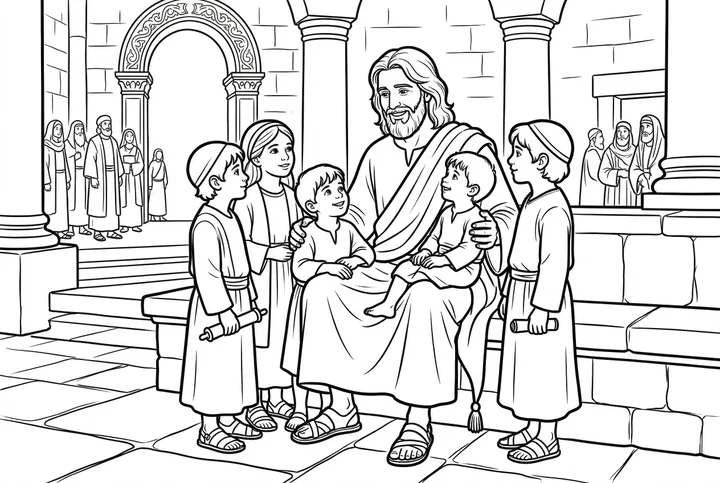
And when the chief priests and scribes saw the wonderful things that he did, and the children crying in the temple, and saying, Hosanna to the Son of David; they were sore displeased,
Translations
And when the chief priests and scribes saw the wonderful things that he did, and the children crying in the temple, and saying, Hosanna to the son of David; they were sore displeased,
King James Version, KJV Cambridge Paragraph Bible
And when the chief priests and scribes saw the wonderful things that he did, and the children crying in the temple, and saying, Hosanna to the Son of David; they were sore displeased,
And when the chief priests and scribes saw the wonderful things that he did, and the children crying in the temple, and saying, Hosanna to the son of David; they were greatly displeased,
Revised Version, American Standard Version
But when the chief priests and the scribes saw the wonderful things that he did, and the children that were crying in the temple and saying, Hosanna to the son of David; they were moved with indignation,
and the chief priests and the scribes having seen the wonderful things that he did, and the children crying in the temple, and saying, 'Hosanna to the Son of David,' were much displeased;
And when the chief priests and the scribes saw the wonders which he wrought, and the children crying in the temple and saying, Hosanna to the Son of David, they were indignant,
But the Chief-priests and the Scribes, seeing, the marvels that he wrought, and the boys who were crying aloud in the temple, and saying, Hosanna to the Son of David! were greatly displeased;
Berean Standard Bible, Majority Standard Bible
But the chief priests and scribes were indignant when they saw the wonders He performed and the children shouting in the temple courts, “ Hosanna to the Son of David!”
But when the chief priests and the scribes saw the wonderful things that he did, and the children who were crying in the temple and saying, “ Hosanna to the son of David!” they were indignant,
But when the chief priests and the scribes saw the works of power which he did, and the children crying out in the Temple, Glory to the son of David, they were angry and said to him,
But when the chiefe priestes and Scribes sawe the marueiles that hee did, and the children crying in the Temple, and saying, Hosanna to the Sonne of Dauid, they disdained,
Douay-Rheims (Challoner revision)
And the chief priests and scribes, seeing the wonderful things that he did, and the children crying in the temple, and saying: Hosanna to the son of David; were moved with indignation.
Pictures
Cross-references
- Psalms 8:2
Out of the mouth of babes and sucklings hast thou ordained strength because of thine enemies, that thou mightest still the enemy and the avenger.
Jesus cites its words about children’s praise to answer the leaders.
- Zechariah 9:9
Rejoice greatly, O daughter of Zion; shout, O daughter of Jerusalem: behold, thy King cometh unto thee: he is just, and having salvation; lowly, and riding upon an ass, and upon a colt the foal of an ass.
The children’s praise of the Son of David echoes the welcome of the coming King.
- Luke 19:39-40
And some of the Pharisees from among the multitude said unto him, Master, rebuke thy disciples.
It recounts the rulers’ demand that Jesus silence praise during his entry into Jerusalem.
- Matthew 21:9
And the multitudes that went before, and that followed, cried, saying, Hosanna to the Son of David: Blessed is he that cometh in the name of the Lord; Hosanna in the highest.
The children’s Hosanna echoes the praise and royal acclamation at Jesus’ entry into Jerusalem.
- Psalms 118:26
Blessed be he that cometh in the name of the LORD: we have blessed you out of the house of the LORD.
The children’s Hosanna echoes the blessing of the one who comes in the Lord’s name.
- Luke 19:47-48
And he taught daily in the temple. But the chief priests and the scribes and the chief of the people sought to destroy him,
The chief priests and scribes oppose Jesus as the people listen to him.
- Mark 11:9-10
And they that went before, and they that followed, cried, saying, Hosanna; Blessed is he that cometh in the name of the Lord:
Both recount praise for Jesus as he enters Jerusalem.
- Mark 11:15-19
And they come to Jerusalem: and Jesus went into the temple, and began to cast out them that sold and bought in the temple, and overthrew the tables of the moneychangers, and the seats of them that sold doves;
Parallel account of Jesus cleansing the temple.
- Matthew 22:41-46
While the Pharisees were gathered together, Jesus asked them,
Jesus’ identity as David’s son and Lord explains the children’s acclaim of him as the Son of David.
- Mark 10:14-16
But when Jesus saw it, he was much displeased, and said unto them, Suffer the little children to come unto me, and forbid them not: for of such is the kingdom of God.
Jesus welcomes children and blesses them.
- Psalms 110:1
The LORD said unto my Lord, Sit thou at my right hand, until I make thine enemies thy footstool.
David calls the Messiah his Lord, as Jesus argues in the exchange.
- John 12
Then Jesus six days before the passover came to Bethany, where Lazarus was which had been dead, whom he raised from the dead.
named as parallel account of same scene
- John 2:16
And said unto them that sold doves, Take these things hence; make not my Father’s house an house of merchandise.
Jesus commands that his Father’s house not be made a place of merchandise.
Commentary
Each commentary is drawn from primary sources: the writings of Ellen G. White and Adventist pioneers and periodicals. Each commentary is separate. Its own words are not a quotation; follow the references to read the source passages.
Ellen G. White
25 sources
After He cleansed the temple courts of trade, the blind and the lame came to Him and were healed, and the children cried Hosanna to the Son of David, which angered the chief priests and scribes so that they objected, but He upheld their praise from Scripture that praise is perfected out of the mouth of babes and sucklings.9T 75.1–2Ms 23, 1908, par. 37–38ST Mar 28, 1878ST Sep 16, 1897 The title Son of David confessed Him as the prophesied Messiah and King, whose kingly authority He exercised in healing and in confronting the corrupt priesthood.Ms 7a, 1886, par. 8–11DA 589.1–590.23SP 55.1–2ST Jan 10, 1878ST Mar 28, 1878 The rulers were displeased because prejudice, jealousy, love of gain, and unbelief blinded them to the evidence and fulfillment of prophecy, so while they had tolerated buying and selling and strife in the sacred place they treated the joyful shouts of children and healed sufferers as improper and tried to silence them.3MR 90.2–3Ms 7a, 1886, par. 8–11RH Feb 13, 19003SP 25.4–26.2COL 272.3–273.1 That praise fulfilled prophecy and could not be silenced, for when adults were pressured to be quiet the children took up the proclamation, and if they had been quiet the very stones would have cried out.3MR 90.2–3Ms 7a, 1886, par. 8–11Ms 43, 1886, par. 8GC88 367.2GC 367.1–2 So God working through children then is the pattern for the last days, when children filled with the Spirit will help give the final warning and the glory of the third angel's message will lighten the earth, which no opposition can stop.3MR 90.2–3Ms 43, 1886, par. 8Ms 117, 1899, par. 6–86T 202.25T 461.2
Temple Scene and Meaning
After driving the sellers and moneychangers from the temple, Jesus remained there where the blind and the lame came to Him and He healed them, and the children cried Hosanna to the Son of David in the temple courts.9T 75.1–2Ms 23, 1908, par. 37–38 When the chief priests and scribes saw the wonderful things He did and heard that praise they were sore displeased at both His works and the children's voices.9T 75.1–2Ms 23, 1908, par. 37–38 They objected to the children's words with the challenge, Hearest Thou what these say, and Jesus answered Yea and upheld the children by Scripture that out of the mouth of babes and sucklings praise is perfected.9T 75.1–2Ms 23, 1908, par. 37–38
The scene belongs to Christ's triumphal entry into Jerusalem and the events surrounding it, a chapter of Matthew 21 to be studied carefully together with the barren fig tree.Lt 82, 1907, par. 9ST Jan 10, 1878Ms 5, 1878, par. 19–21 The fruitless fig tree represents people who profess to serve God and belong to the church but whose lives produce no fruit to His glory.Lt 82, 1907, par. 9 The rejoicing and hosannas of the entry were Christ's final appeals of love and compassion to Jerusalem, and their rejection pointed to the city's doom.ST Jan 10, 1878
The temple court had been filled with trade and noise, but after the cleansing Jesus taught the people, healed those who came seeking mercy, and freed them from suffering.ST Mar 28, 1878ST Sep 16, 1897 The wonderful things were His healing of every disease among the poor who remained after the priests fled, so that the blind beheld their Restorer and the dumb opened lips in praise.ST Sep 16, 1897 The contrast stands between that joyful praise for mercy received and the displeasure of the religious leaders at His wonderful works and the acclamations.ST Mar 28, 1878
Parents whose children's lives had been saved put palm branches in their hands and told them to lift up voice and praise Him, and those children walked through the temple crying Hosanna and leading the rejoicing and waving palm branches.Ms 7a, 1886, par. 8–11COS 101.1–102.1ST Sep 16, 1897 Youth, fathers, mothers, friends and spectators joined them, blending thanksgiving and praise with hope and gladness and peace as those restored in soul and body told how pain, disappointed hopes, painful days and sleepless nights ended when Christ healed them when hope seemed dead.ST Sep 16, 1897 The restored sufferers vowed to devote life to His service and returned home proclaiming everywhere His matchless love.ST Sep 16, 1897 The rulers could not silence the people, who continued praising Jesus for His works.COS 101.1–102.1
The title Son of David identified the Messiah foretold by prophecy, and the praise recognized His messianic identity.3SP 55.1–2ST Jan 10, 1878 The people had used that title when Jesus healed the sick and restored the dead and during His entry into Jerusalem, and the children in the temple echoed those joyful hosannas to Jesus as the Son of David.3SP 55.1–2 The temple authorities heard the people loudly honoring Him with titles foretold by the prophets.ST Jan 10, 1878
Jesus had accepted the people's homage and the role of Israel's king, and in that kingly authority He acted in the temple to confront the corrupt priesthood.Ms 7a, 1886, par. 8–11DA 589.1–590.2ST Mar 28, 1878 He thus gave an unbelieving people evidence of His divine mission even though the effort to reform the leaders would be in vain.DA 589.1–590.2 The temple leaders were unable to explain or challenge His authority, were perplexed and disconcerted, and dared not join the praise.Ms 7a, 1886, par. 8–11ST Mar 28, 1878 His mighty works in Jerusalem and the people's enthusiasm could not be suppressed or turned aside.ST Mar 28, 1878
The chief priests and scribes and elders were displeased because prejudice and jealousy kept them from accepting the evidence of His power shown in healing the sick and dying in the temple.3MR 90.2–3RH Feb 13, 1900COL 272.3–273.1 Concern for the temple's profits left them unmoved by the joy of the healed people and the children's praise that sprang from that joy.RH Feb 13, 1900 Their understanding was so blunted by unbelief that they could not see the fulfillment of prophecy in that very act and rejected truth necessary for salvation.3MR 90.2–3
In contrast to the joyful praise of the children and healed people who acknowledged Jesus as the promised King, the leaders treated the children's joyful shouts as improper although they had tolerated buying and selling, animals and angry disputes in the sacred place, exposing intolerance and hypocrisy.3SP 25.4–26.2ST Mar 28, 1878ST Mar 28, 1878 The children's sincere praise was acceptable to Him, though the religious leaders tried to silence it and dared not join it.Ms 7a, 1886, par. 8–113SP 25.4–26.2 They reacted with astonishment and anger and threatened to exclude those who acknowledged Jesus as the Christ, yet could not stop the crowd from confessing His kingdom.ST Jan 10, 1878
Prophecy and Final Proclamation
Christ's riding into Jerusalem amid cries of Hosanna to the Son of David was the fulfillment of prophecy, and the children's crying of Hosanna in the temple was prophecy fulfilled through the children themselves.3MR 90.2–3Ms 7a, 1886, par. 8–11Ms 43, 1886, par. 8 The religious leaders were disturbed and sore displeased by the attention given to Him and by His wonderful works, yet their understanding was so blunted by unbelief that they could not see the fulfillment of prophecy in that very act and could not explain or challenge His authority.3MR 90.2–3Ms 7a, 1886, par. 8–11Ms 43, 1886, par. 8 When the people's joyful welcome had been silenced by the priests and rulers and adults stopped proclaiming Him under pressure and intimidation, the children in the temple courts took up the joyful proclamation of Jesus as the Son of David.GC88 367.2GC 367.1–2HSFM 206.4 They led the rejoicing, repeated their hosannas and waved palm branches, and the people continued praising Him for His works so that the rulers could not silence them.HSFM 206.4COS 101.1–102.15T 461.2 If the children were quiet the very stones would cry out, for prophecy must be fulfilled.3MR 90.2–35T 461.2
As opposition could not silence that praise, so opposition cannot stop the proclamation of God's message.3MR 90.2–3Ms 43, 1886, par. 85T 461.2 The crying people picture the final proclamation of the third angel assisted by a mighty angel that lights the whole earth with glory, which no man can stop any more than the voices crying Hosanna could be stopped.3MR 90.2–3 God worked through children to proclaim Christ at His first advent, and He can use children to proclaim the Saviour's coming in the proclamation of His second advent.GC88 367.2GC 367.1–2HSFM 206.4 Their voices are a pattern for children in the last days who will help give God's final warning message to a perishing world.Ms 117, 1899, par. 6–86T 202.2 When older workers are prevented from presenting the truth the Spirit of God will come upon the children and they will carry the message forward, and rightly educated children will speak with simplicity and astonish those who pride themselves on higher education.6T 202.2
Prophecy must therefore be allowed its workers, and those who serve God should not suppress willing workers merely because they do not follow the same methods, but each should work in the capacity God has given.5T 461.2 Those thus healed knew Him as Saviour from felt sympathy and wonderful power giving health of body and light to the soul.ST Sep 16, 1897 At the crucifixion they did not join the throng crying for His crucifixion but sympathized with Jesus, and afterward they listened to the preaching of the apostles until the entrance of God's words gave them understanding.ST Sep 16, 1897 In this way they became agents of God's mercy and instruments of His salvation.ST Sep 16, 1897
Sources
Pioneers and periodicals
40 sources
After driving traders and noise from its court, Jesus spent the Monday before Passover teaching and healing the blind and lame and sick in the temple, while children sang to him as the promised Son of David and the chief priests and scribes looked on with anger.ST Dec 16, 1886STST Sep 18, 1884ST Dec 23, 1886
The verse sets joyful recognition by children and the healed against hostile rejection by the authorities, who tolerated buying and selling in the sacred place yet treated innocent praise as improper.RH Feb 13, 1900ST Mar 28, 1878ST Jan 10, 1878ST Apr 14, 1898ST Mar 27, 1901
Their praise fulfilled prophecy that praise would be perfected from the mouths of babes, proclaiming Zion's King in the titles foretold by the prophets so that the word could not be silenced.ST May 3, 1910RH Oct 22, 1903
That final appeal of love, being rejected, pointed to Jerusalem's doom, with the kingdom to be taken from unfaithful rulers who bore no fruit and given to those who would keep God's law.ST Jan 10, 1878ST Jul 15, 1908ST Dec 16, 1886RH Mar 29, 1864ST Jul 15, 1908
The children's voices also foreshadow the last days, when the Spirit will move upon rightly educated children to proclaim God's final warning with simplicity after older workers are hindered.RH Nov 17, 1910RH Nov 19, 1908RH Aug 17, 1916
Setting and Wording
The verse belongs to Christ's triumphal entry into Jerusalem and to his work in the temple after that entry.STST Dec 23, 1886 The entry is told in Matthew 21 and also in Mark 11 and John 12, with the fullest account in Luke 19.ST It covers what took place on the Monday before the Passover, when Jesus taught in the temple and healed the sick there. The chief priests and scribes saw his works there and heard the children praising him.ST Dec 23, 1886
The scene follows the cleansing of the temple after he rebuked abuses in it.ST Dec 23, 1886 Its court had been filled with trade and noise, buying and selling, animals and angry disputes.ST Mar 28, 1878ST Mar 4, 1903 Jesus entered with uplifted hand and a scourge of small cords, poured out the changers' money, overthrew their tables, and commanded the dove-sellers to take these things hence and not make His Father's house a house of merchandise.ST Mar 4, 1903 After he drove this out, the temple was filled with the lame and the blind and little children singing hosannas.ST Mar 4, 1903 He taught the people there and healed those who came seeking mercy, freeing them from suffering.ST Mar 28, 1878
The wonderful things the chief priests and scribes saw were his mighty works of healing the blind and the lame and the sick.ST Dec 16, 1886 He healed every disease among the poor who remained in the temple after the priests fled, with the blind beholding their Restorer and the dumb opening lips in praise.ST Sep 16, 1897 He freed sufferers from pain and hopelessness when hope seemed dead, ending painful days and sleepless nights.ST Sep 16, 1897 Their praise came amid rejoicing over these mighty works, including healing the sick and raising the dead. The raising of Lazarus and the public presentation of Jesus as the anointed King had made his Messiahship plain even to children.ST Sep 18, 1884
The children crying in the temple were singing hosannas and acclaiming him as the Son of David with cries of Hosanna.ST Apr 14, 1898ST Oct 11, 1899 Their song was part of the Great Hallel, familiar to the Jews as referring to the Messiah.ST Oct 11, 1899 Parents put palm branches in their hands and told them to lift up voice and praise him because he had saved their lives.ST Sep 16, 1897 Youth, fathers, mothers, friends and spectators joined them, blending thanksgiving and praise with hope and gladness and peace.ST Sep 16, 1897 Restored in soul and body, they returned home proclaiming everywhere his matchless love.ST Sep 16, 1897
The Greek word used for the children crying in the temple is pais, which can mean children and does not itself mean slaves.RH Mar 24, 1863
Leaders Reject, Children Praise
The chief priests and scribes saw the remarkable deeds Jesus did and heard the children in the temple praising him as the Son of David, and instead of welcoming this they were sore displeased, indignant, astonished and angry.ST Apr 14, 1898ST Mar 27, 1901ST Nov 20, 1884RH Oct 22, 1903 Their displeasure was directed both at his works and at the children's acclaim of him as the Son of David and promised King, while the children's shout was moved by the Spirit of God so that if they had not shouted even the stones would have given voice to the triumph.ST Mar 27, 1901ST Nov 20, 1884RH Oct 22, 1903
The verse sets joyful praise by children and the people who recognized Jesus over against scorn, hostility and culpable rejection by the authorities.ST Jan 10, 1878ST Dec 16, 1886ST Jun 28, 1877 The wonderful deeds they witnessed were his healing of the blind and lame and sick, and the children understood the significance of his entry and proclaimed him Messiah, the Son of David.ST Dec 16, 1886ST Sep 18, 1884 His public presentation as the anointed King after the raising of Lazarus made his Messiahship plain even to children, which highlights the authorities' culpable rejection, and their threats to exclude those who acknowledged him as the Christ could not stop the crowd from loudly honoring him with titles foretold by the prophets and confessing his kingdom.ST Jan 10, 1878ST Sep 18, 1884
Children can recognize and honor Jesus even when religious leaders reject their testimony.RH Jun 23, 1853 When the scribes and Pharisees would not proclaim his coming, praise came from babes and sucklings according to God's purpose, confirming that Christ had come.RH Jun 23, 1853 Their indignation at the children's innocent joyful shouts exposed intolerance, hypocrisy and self-interest, for they had tolerated buying and selling, animals and angry disputes in the sacred place yet treated the joyful shouts as improper.RH Feb 13, 1900ST Mar 28, 1878 The children's praise sprang from the joy of people healed by Jesus, while concern for the temple's profits and hate in the leaders' hearts left them unmoved by that joy.RH Feb 13, 1900ST Sep 16, 1897
The wonderful things were Christ healing every disease among the poor who remained after the priests fled, the blind beholding their Restorer and the dumb opening lips in praise.ST Sep 16, 1897 Parents put palm branches in the children's hands and told them to lift up their voices and praise him because he had saved their lives, and youth, fathers, mothers, friends and spectators joined them in thanksgiving and praise with hope and gladness and peace, restored in soul and body and returning home proclaiming everywhere his matchless love.ST Sep 16, 1897 Sufferers told of pain, disappointed hopes, painful days and sleepless nights ended when Christ healed them when hope seemed dead, and vowed to devote life to his service.ST Sep 16, 1897 Those thus healed knew him as Saviour from felt sympathy and wonderful power giving health of body and light to soul, and at the crucifixion they did not join the throng crying crucify him but sympathized with Jesus, listened to the preaching of the apostles so that the entrance of God's words gave them understanding, and became agents of God's mercy and instruments of his salvation.ST Sep 16, 1897
Jesus exercised kingly authority in the temple that the religious leaders could not suppress or turn aside.ST Jan 10, 1878ST Mar 28, 1878 His mighty works in Jerusalem and the people's enthusiasm left them perplexed and disconcerted, reacting with astonishment and anger.ST Jan 10, 1878ST Mar 28, 1878
Prophecy and Judgment
The children's praise fulfilled prophecy, perfecting praise out of the mouths of babes and sucklings when the religious leaders would not proclaim his coming, so confirming that Christ had come.RH Feb 6, 1866 Both the believing children who acclaimed him as the Son of David and the hardened chief priests and scribes who opposed him played their appointed parts in the prophetic events.RH Feb 6, 1866 Their cry of Hosanna to the Son of David was part of the prophetic proclamation of Zion's King in titles foretold by the prophets, and the attempt to silence it could not prevent fulfillment.RH Oct 22, 1903RH Nov 7, 1912RH Mar 11, 1875 Prophecy had to be fulfilled and Jesus had to be honored by his people, moved by the Spirit of God to shout in triumph.RH Oct 22, 1903RH Mar 11, 1875 If the children and disciples had been silent and stopped, even the stones of the streets would have cried out and given voice.ST May 3, 1910RH Oct 22, 1903RH Mar 11, 1875
The rejoicing and hosannas of the triumphal entrance were Christ's final appeals of love and compassion to Jerusalem, but being rejected they pointed to the city's doom.ST Jan 10, 1878 The lack of fruit on the fig tree in the surrounding account likewise illustrates the judgment soon to fall on the unfaithful priests and rulers who saw his healing of the blind and lame yet were greatly displeased, in contrast with the children's praise.ST Dec 16, 1886 The kingdom would be taken from Jews who did not keep God's law and given to a nation that would keep it.RH Mar 29, 1864
The crowd's outburst showed people moved by what they saw rather than by faith, with public enthusiasm inspiring the hope that Jesus would take the position of King.ST Mar 27, 1901 After receiving public royal honors he cleansed the temple, showing that God's temple must be cleansed before he dwells in it.ST Mar 27, 1901 This cleansing also applies personally to people as God's temple.ST Mar 27, 1901
Christ's Identity and Purpose
When the Jewish nation rejected Jesus, the praise of children in the temple stood as witness to his divinity.ST May 3, 1910 Those who disbelieved wanted him to silence them, but his answer was that if they were silent the very stones would cry out.ST May 3, 1910
The account belongs to Christ longing for fruit from his own people.ST Jul 15, 1908ST Jul 15, 1908 The chapter shows the Son come to attend to his Father's business, for the Father had entrusted his vineyard to husbandmen who withheld its returns, and at last sent his Son.ST Nov 20, 1884 The chief priests and scribes were displeased at his works and at children praising him in the temple.ST Nov 20, 1884
After he entered the temple with uplifted hand and a scourge of small cords, poured out the changers' money, overthrew their tables, and commanded those who sold doves to take these things away and not make his Father's house a house of merchandise, the temple was filled with the lame and the blind and little children singing hosannas.ST Mar 4, 1903 That filling is the true use of the house of prayer in place of merchandise and mimicry.ST Mar 4, 1903 Because Jesus Christ is the same yesterday and today and forever, he would do the same if he entered modern churches that exchange spiritual power for gold and adornment and entertainment such as minstrel shows.ST Mar 4, 1903
The children in the temple praised Jesus as the Son of David and praised Christ as their Lord.ST Jan 21, 1903 Their praise honors his lowly life of teaching.ST Jan 21, 1903 It illustrates the blessing resting on the pure and lowly-minded, while those who refuse reproof are left blind.
Example for Last Days
The children's crying Hosanna to the Son of David in the temple foreshadows children proclaiming God's final message of warning in the last days.RH Apr 11, 1912RH Nov 19, 1908RH Mar 9, 1916 When older workers are prevented from presenting the truth and their way is blocked, the Spirit of God will move upon children and empower them to do work the older workers cannot do.RH Apr 11, 1912RH Nov 19, 1908RH Mar 9, 1916 Their witness raised in that time is a sign that the end is near.RH Mar 9, 1916 Rightly educated children will then speak the message with simplicity and help proclaim God's final warning to the world, astonishing people who rely on higher education.RH Nov 17, 1910RH Aug 17, 1916RH Jan 4, 1906
When religious authorities do not praise God, children can proclaim the truth in their place.RH Apr 2, 1901 They may serve as preachers when laws prevent others from preaching.RH Apr 2, 1901 Their cry was part of the prophetic proclamation of Zion's King, and the attempt to silence it could not prevent the prophecy from being fulfilled.RH Nov 7, 1912 Children's voices likewise helped proclaim the judgment-hour message in Sweden when authorities tried to suppress it.RH Nov 7, 1912
The children's praise is one way children served Jesus and remains the pattern for children's work.RH Nov 12, 1914ST Mar 22, 1899 Their singing and praise please Jesus and their angels, though they may displease the Enemy.RH Jun 23, 1853 Lifting up Jesus' name is exemplified by telling others about Jesus, as when the little girl selling a paper told a man it was about Jesus on the day he entered Jerusalem in triumph.ST Mar 22, 1899
As the disciples and children crying Hosanna to the Son of David when Christ rode into Jerusalem could not be silenced, so Jesus had to be honored by His people and prophecy had to be fulfilled even if the stones of the streets had to do it.RH Mar 11, 1875 Before Christ's second coming, which is as precious and important as His first coming, those who see the force of the doctrine will show love for Christ by loving and proclaiming His coming near and cannot be silenced, though even professors bitterly oppose positiveness about its nearness.RH Mar 11, 1875 The crowd's outburst showed people moved by what they saw rather than by faith, with hope that Jesus would take the position of King.ST Mar 27, 1901 After receiving public royal honors He cleansed the temple, showing that God's temple must be cleansed before He dwells in it, which also applies personally to people as God's temple.ST Mar 27, 1901
Sources