Matthew 21:9
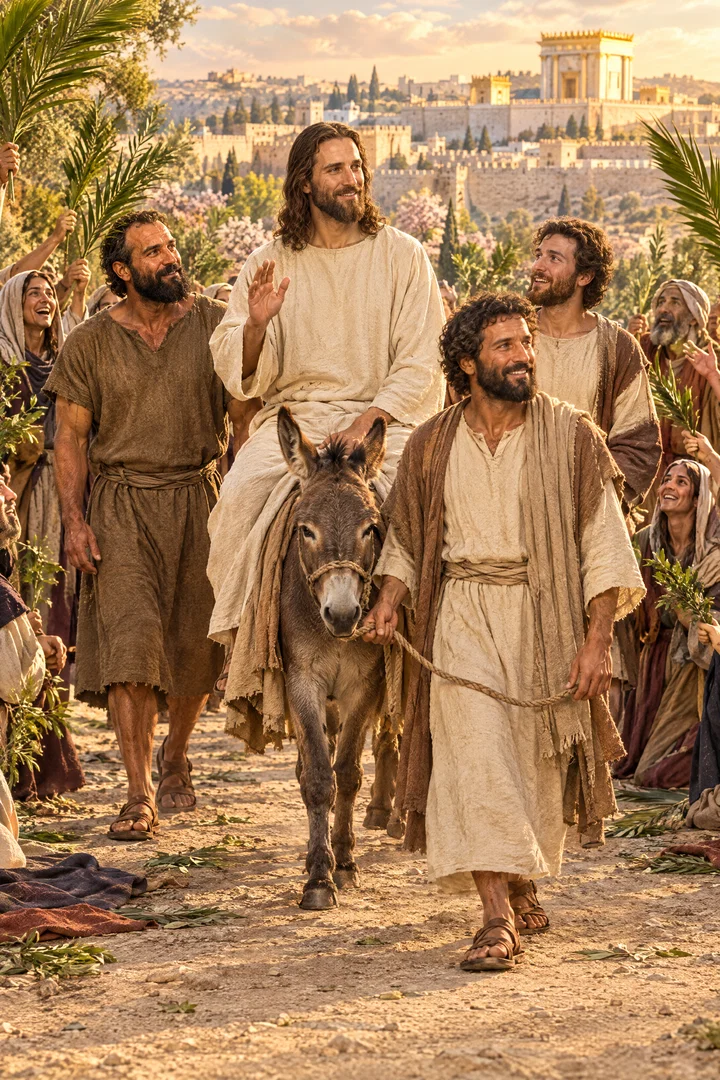
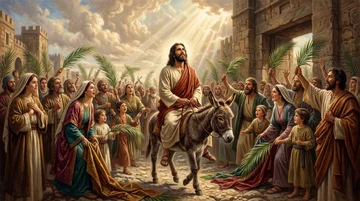
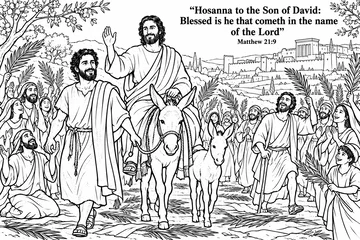
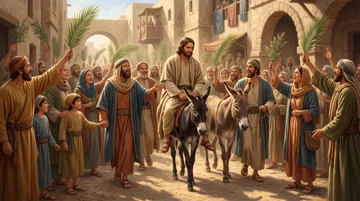
And the multitudes that went before, and that followed, cried, saying, Hosanna to the Son of David: Blessed is he that cometh in the name of the Lord; Hosanna in the highest.
Translations
And the multitudes that went before, and that followed, cried, saying, Hosanna to the son of David: Blessed is he that comes in the name of the Lord; Hosanna in the highest.
King James Version, KJV Cambridge Paragraph Bible
And the multitudes that went before, and that followed, cried, saying, Hosanna to the Son of David: Blessed is he that cometh in the name of the Lord; Hosanna in the highest.
And the multitudes that went before, and that followed, cried, saying, Hosanna to the son of David: blessed is he that cometh in the name of the Lord: Hosanna in the highest.
Revised Version, American Standard Version
And the multitudes that went before him, and that followed, cried, saying, Hosanna to the son of David: Blessed is he that cometh in the name of the Lord; Hosanna in the highest.
and the multitudes who were going before, and who were following, were crying, saying, 'Hosanna to the Son of David, blessed is he who is coming in the name of the Lord; Hosanna in the highest.'
And the crowds who went before him and who followed cried, saying, Hosanna to the Son of David; blessed [ be] he who comes in the name of [ the] Lord; hosanna in the highest.
and the multitudes, they who were going before him and they who were following after, were crying aloud, saying—Hosanna! to the Son of David, Blessed is he that is coming in the name of the Lord, Hosanna in the highest.
Berean Standard Bible, Majority Standard Bible
The crowds that went ahead of Him and those that followed were shouting:
“ Hosanna to the Son of David!”
“ Blessed is He who comes in the name of the Lord!”
“ Hosanna in the highest!”The multitudes who went in front of him, and those who followed, kept shouting, “ Hosanna to the son of David! Blessed is he who comes in the name of the Lord! Hosanna in the highest!”
And those who went before him, and those who came after, gave loud cries, saying, Glory to the Son of David: A blessing on him who comes in the name of the Lord: Glory in the highest.
Moreouer, the people that went before, and they also that followed, cried, saying, Hosanna to the Sonne of Dauid, Blessed be hee that commeth in the Name of the Lord, Hosanna thou which art in the highest heauens.
Douay-Rheims (Challoner revision)
And the multitudes that went before and that followed, cried, saying: Hosanna to the son of David: Blessed is he that cometh in the name of the Lord: Hosanna in the highest.
Pictures
Cross-references 20 of 43
- Zechariah 9:9
Rejoice greatly, O daughter of Zion; shout, O daughter of Jerusalem: behold, thy King cometh unto thee: he is just, and having salvation; lowly, and riding upon an ass, and upon a colt the foal of an ass.
Jesus’ humble entry into Jerusalem fulfills the prophecy of the coming King.
- Luke 19:39-40
And some of the Pharisees from among the multitude said unto him, Master, rebuke thy disciples.
Jesus answers the Pharisees’ demand to silence the disciples by saying the stones would cry out.
- Psalms 118:25-26
Save now, I beseech thee, O LORD: O LORD, I beseech thee, send now prosperity.
Supplies the Hosanna plea and blessing for the one who comes in the Lord’s name.
- John 12:12-13
On the next day much people that were come to the feast, when they heard that Jesus was coming to Jerusalem,
The crowd welcomes Jesus into Jerusalem with palm branches and cries of Hosanna.
- Mark 11:1-10
And when they came nigh to Jerusalem, unto Bethphage and Bethany, at the mount of Olives, he sendeth forth two of his disciples,
A parallel account of Jesus’ entry into Jerusalem.
- Luke 19:38
Saying, Blessed be the King that cometh in the name of the Lord: peace in heaven, and glory in the highest.
The crowds acclaim Jesus as King during his entry into Jerusalem.
- Matthew 21:16
And said unto him, Hearest thou what these say? And Jesus saith unto them, Yea; have ye never read, Out of the mouth of babes and sucklings thou hast perfected praise?
Jesus affirms the children’s Hosanna praise as fitting.
- Psalms 8:2
Out of the mouth of babes and sucklings hast thou ordained strength because of thine enemies, that thou mightest still the enemy and the avenger.
Jesus connects the children’s praise to praise from the mouths of children.
- Matthew 23:39
For I say unto you, Ye shall not see me henceforth, till ye shall say, Blessed is he that cometh in the name of the Lord.
Jerusalem will welcome Jesus in the Lord’s name when he comes again.
- Matthew 15:22
And, behold, a woman of Canaan came out of the same coasts, and cried unto him, saying, Have mercy on me, O Lord, thou Son of David; my daughter is grievously vexed with a devil.
Both texts address Jesus as the Son of David.
- Matthew 27:22-23
Pilate saith unto them, What shall I do then with Jesus which is called Christ? They all say unto him, Let him be crucified.
Contrasts the crowd’s earlier praise with its later demand to crucify Jesus.
- Psalms 118:22-24
The stone which the builders refused is become the head stone of the corner.
Its prophecy is fulfilled in Matthew’s account, with rejoicing over the Lord’s day.
- Luke 19:41-44
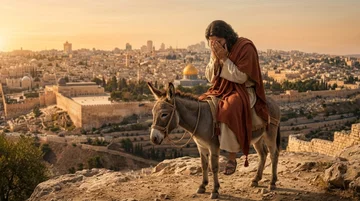
And when he was come near, he beheld the city, and wept over it,
Jesus weeps over Jerusalem and foretells its destruction during the entry.
- Luke 23:21
But they cried, saying, Crucify him, crucify him.
The crowd that praised Jesus later demanded his crucifixion.
- John 6:15
When Jesus therefore perceived that they would come and take him by force, to make him a king, he departed again into a mountain himself alone.
Both show the crowd expecting Jesus to assume earthly kingship.
- 2 Samuel 7:12-16
And when thy days be fulfilled, and thou shalt sleep with thy fathers, I will set up thy seed after thee, which shall proceed out of thy bowels, and I will establish his kingdom.
Promises David’s enduring throne, on which Christ will reign forever.
- John 12:17-18
The people therefore that was with him when he called Lazarus out of his grave, and raised him from the dead, bare record.
Witnesses to Lazarus’s raising spread the report that drew the crowd to meet Jesus.
- Luke 1:32-33
He shall be great, and shall be called the Son of the Highest: and the Lord God shall give unto him the throne of his father David:
Jesus is hailed as David’s heir, whose kingdom will endure forever.
- John 12:16
These things understood not his disciples at the first: but when Jesus was glorified, then remembered they that these things were written of him, and that they had done these things unto him.
The disciples later understood that their actions fulfilled what was written about Jesus.
- John 12:19
The Pharisees therefore said among themselves, Perceive ye how ye prevail nothing? behold, the world is gone after him.
The rulers’ alarm reflects the crowds’ enthusiastic response to Jesus.
Commentary
Each commentary is drawn from primary sources: the writings of Ellen G. White and Adventist pioneers and periodicals. Each commentary is separate. Its own words are not a quotation; follow the references to read the source passages.
Ellen G. White
74 sources
Matthew 21:9 is the shout of the multitudes at Jesus' triumphal entry into Jerusalem to keep the Passover near the close of His ministry, acclaiming Him as Messiah and King, the promised heir to David's throne come in the Lord's name, with Hosanna as praise and appeal for salvation directed to heaven.DA 569.3–4Ms 128, 1899, par. 4–5DA 569.1–2DA 572.1–2COS 90 He rode humbly on a donkey without royal pomp while the crowd spread garments and palm branches of victory before Him and honored Him for His works of mercy, including many He had healed, cleansed and raised, with children taking up the same cry in the temple.Ms 7a, 1886, par. 1–2DA 569ST Jun 8, 18824RED 120.24RED 116.1–117.2 Many who cried it expected Him then to take David's throne, free Israel from Rome and establish a prosperous earthly kingdom, and Jesus accepted the homage He had before refused, though suffering and death lay just days ahead.DA 569.3–4LSEGW 62.3Ms 128, 1899, par. 4–5ST Jun 8, 18822SP 384.1–385.1 The cry had to be uttered to fulfill prophecy of the lowly King coming to Zion, so that when rulers demanded silence Jesus answered that even the stones would cry out, and when the people fell silent children continued the praise.LSEGW 62.3CET 56.1Ms 7a, 1886, par. 1–2DA 569.1–24RED 119.1 Within days the same voices turned to demand His crucifixion when hopes were shattered, yet the words will be spoken again at His future coming in glory, when even those who rejected Him will be compelled to acknowledge His majesty.ST Nov 16, 1882ST Oct 7, 18863SP 9.1SG1 61.23SP 152.1–2
Triumphal Entry Setting
Matthew 21:9 belongs to Jesus' triumphal entry into Jerusalem as He rode in to keep the Passover, one of the closing events of His ministry when crowds joined Him on the way and welcomed Him as the promised King.DA 569.3–4Lt 82, 1907, par. 93SP 20.121MR 209.5Lt 4a, 1878, par. 8 It is part of the account of Christ riding into Jerusalem that also warns through the fruitless fig tree that professed service without a life bearing fruit brings no glory to God, while expressing the longing to see the despised and rejected Christ crowned and seated on His throne.Lt 82, 1907, par. 9 It was a deliberate public demonstration to draw attention to Him before His final sacrifice.ST Jun 8, 1882
Multitudes going before and following joined the procession on the way, with people gathered for the feast joining those escorting Him and swept up in the moment, swelling the shout welcoming Him as coming in the Lord's name.COS 93.4–5CET 56.14SP 250.3GC 402.1–403.1GC88 401.2–403.1 Their triumphant joyful shouts echoed across the hills and valleys and across the slopes of the Mount of Olives.COS 93.4–56RED 88.1 Many flocked from all the region eager to see Jesus, and the raising of Lazarus had drawn a large crowd to welcome Him triumphantly into Jerusalem.CET 56.1 Their response spread through the gathered multitude with powerful inspiration of the moment.4SP 250.3
The crowd honored Him by spreading garments and leafy branches in His path and waving palm boughs, with palm branches raised as they gathered around Him approaching on a donkey.ST Jun 8, 18824RED 116.1–117.2ST Jul 22, 1886DA 546 Those palm boughs were natural emblems of victory, used when they had no royal standards, in a joyful triumphant welcome of Him as promised King.DA 569ST Jun 8, 18824RED 116.1–117.2ST Jul 22, 1886 Yet He came humbly on a donkey without heavenly spectacle or royal pomp and costly gifts, remaining humble and bearing humanity's burden until He gave His life for the world, unlike the triumphs of earthly conquerors.DA 569ST Jun 8, 1882 Among those praising Him were His trophies rescued from Satan's power, people He had healed, cleansed, and raised from death: former cripples, those whose sight He restored, cleansed lepers, and those He raised from the dead.Ms 7a, 1886, par. 1–24RED 120.2DA 572.1–2 Their praise and hosannas celebrated His works of mercy and deliverance and made the procession a triumph unlike the victories of earthly conquerors, though they joined in fulfillment of Isaiah's prophecy without knowing it.Ms 7a, 1886, par. 1–24RED 120.2DA 572.1–2
Children took up the same hosannas, repeating in the temple what the crowd had cried and acclaiming Him as Son of David, the one who comes in the Lord's name and is their King.COS 101.1–102.13SP 55.1–23SP 25.4–26.2 Their praise filled the temple with palm branches and joy at His wonderful works, and continued there the next day where children joined in rejoicing over Jesus and His works of healing.COS 101.1–102.1ST Mar 28, 1878 The same title had been used by those seeking healing.3SP 55.1–2 The people would not be silenced by the rulers.COS 101.1–102.1 The public entry presented Himself as Redeemer, with the triumphal welcome drawing attention to His approaching sacrifice, when at Passover Jesus voluntarily set Himself apart as the antitypical Lamb whose death would be an offering for the sins of the world.ST Jun 8, 1882DA 571.2–4 The acclaim made the events leading to His death widely known, so that afterward people would connect the entry with His trial and death and search the prophecies, recognize Him as Messiah, and believe in Him.ST Jun 8, 1882DA 571.2–4
Even as thousands rejoiced around Him crying hosannas and waving palm branches and proclaiming Him king, Jesus was overwhelmed with sorrow and tears over Jerusalem.ST Jan 10, 1878GC 17.2–18.1GC88 17.1–2 His tears were final appeals of love and compassion to a city that rejected Him and did not recognize the things that would bring peace.3SP 20.1ST Jan 10, 1878GC88 17.1–2 The rejoicing surrounded those final pleas while the entrance pointed to Jerusalem's coming doom and destruction for its blindness and impenitence.3SP 20.1ST Jan 10, 1878GC 17.2–18.1
Meaning of the Shout
The shout is homage to Jesus as Messiah and King, the promised heir to David's throne coming in the Lord's name.DA 569.3–4DA 569.1–2COS 91.1–54RED 119.12SP 387.1–388.2 It belongs to His entry into Jerusalem on the way to keep the Passover, when the crowds joined Him with rising hopes of a new kingdom and the disciples expected Him to claim royal power in the capital, thinking they were escorting Him to take David's throne.DA 569.3–4COS 91.1–54RED 119.1 The repeated hosannas answered a prophetic call from Israel's past and fulfilled Zechariah's prophecy of a lowly King coming to Zion, breaking out as a public outpouring of joy that honored Him despite efforts to silence it, though the procession was in fact a prelude to His suffering and death and the disciples mistakenly took it as a sign of a coming prosperous reign.DA 569.1–24RED 119.12SP 387.1–388.2
"Son of David" is the prophetic title of the Messiah spoken by the prophets in the past, and the crowd's use of it confessed His kingdom and recognized Him as fulfilling that title.DA 608.3–609.13SP 14.1–2ST Jan 10, 18783SP 55.1–2ST Apr 25, 1878 It was the same title already used by those who had sought healing from Him, and the people now applied it publicly to Him as He rode in, to the astonishment of priests and rulers who heard the witness but refused it.3SP 14.1–2ST Jan 10, 18783SP 55.1–2 Many who used the title did not recognize that the Messiah was also the Son of God.Ms 128, 1899, par. 4–5DA 608.3–609.1 Their expectations that He would free Israel from Roman rule and restore the kingdom accompanied the joyful welcome, but did not define the homage they gave Him.Ms 128, 1899, par. 4–5
"Blessed is he that cometh in the name of the Lord" welcomes Christ as coming in the Lord's name.COS 93.4–5Ms 45, 1898, par. 33 It is the response of those who come to Him as learners, receive His teaching, and are enlightened in mind and quickened in heart to holy admiration.Ms 45, 1898, par. 33 "Hosanna" expresses both praise and appeal for salvation, and "in the highest" directs that praise to heaven.DA 572.1–2COS 90 That praise rose with the procession to heaven as the shouts grew, celebrating His works of mercy and making His triumph unlike the victories of earthly conquerors.COS 93.4–5DA 572.1–2
Hopes and Disappointment
The shout of welcome carried the expectation that Jesus would then be acknowledged as Israel's King and take David's throne, establishing a temporal, prosperous earthly kingdom.DA 569.3–4LSEGW 62.3Ms 128, 1899, par. 4–5COS 91.1–5EW 206.4 The multitude thought they were escorting Him to royal power in the capital, imagining Him driving out the Roman armies, freeing Israel from Roman rule and its oppressors, and restoring Israel as an independent nation.DA 569.3–4Ms 128, 1899, par. 4–5COS 91.1–5EW 206.4DA 570.1–571.1 Jesus accepted this public homage, though He had not previously permitted it.ST Jun 8, 18822SP 384.1–385.1ST Jul 22, 1886 The disciples took that acceptance as proof that their hopes of seeing Him crowned would be fulfilled and that deliverance was near.ST Jun 8, 18822SP 384.1–385.1ST Jul 22, 1886
They joined the celebration but forgot His repeated warnings and did not grasp that suffering, judgment, and death lay ahead.ST Jun 8, 18822SP 387.1–388.2ST Apr 1, 1889GC 404.2–405.2 They expected Him to reign prosperously on David's throne, imagining a kingdom different from the one He had described.ST Jun 8, 18822SP 387.1–388.2DA 570.1–571.1ST Apr 1, 1889GC 404.2–405.2 Only a few days before His crucifixion and trial the joyful welcome stood in stark contrast to His march to Calvary disgraced and about to die.ST Nov 16, 1882ST Oct 7, 1886SG1 57.2DA 394.2–3EW 143.3 Joyful hope turned to fear and despair as high hopes were disappointed, hopes were shattered, and the darkness of death closed about them.CET 56.1ST Nov 16, 1882ST Oct 7, 1886SG1 57.2EW 143.3
Many who praised Him then later joined the cry to crucify Him, because their praise had followed popular feeling and excitement rather than lasting loyalty.ST Nov 16, 1882ST Oct 7, 18863SP 152.1–25RED 72.1–2ST Jul 18, 1878 Some who had shouted His praise because it was popular swelled the demand for His crucifixion only days later, while those He had healed and raised from the dead still declared His works and asked what He had done to be treated as a wrongdoer.ST Nov 16, 1882ST Oct 7, 18863SP 152.1–25RED 72.1–2ST Jul 18, 1878 The same fickle multitude that had been moved to proclaim His wonderful works soon made the opposite choice for Barabbas instead, a sudden reversal that was the hour and power of darkness.ST Nov 16, 1882ST Oct 7, 1886Ms 112, 1897, par. 37–40 After His resurrection their hope revived when He appeared to them.EW 206.4SG1 149.24SP 253.2GC88 404.2–405.2GC 404.2–405.2 Only then did they understand that prophecy had also foretold His suffering and rising from the dead, showing He was true to His promises with sweet consolation and rich reward for the true and faithful.CET 56.1SG1 149.24SP 253.2GC88 404.2–405.2GC 404.2–405.2
Prophecy Fulfilled and Foreshadowed
The shout fulfilled prophecy, for the lowly King coming to Zion foretold in Zechariah 9:9 rode in as promised heir to David's throne, and the repeated hosannas answered a prophetic call from Israel's past, including Isaiah's prophecy and Isaiah 40:9-11 of God coming as a shepherd who gathers and carries His flock.Ms 7a, 1886, par. 1–2DA 569.1–24RED 119.1EW 206.4ST Apr 1, 1889 The multitude joined that memorable entry without knowing they were fulfilling Isaiah's prophecy, looking forward to His reign on David's throne as a prelude they did not understand to suffering and death.Ms 7a, 1886, par. 1–24RED 119.1ST Apr 1, 1889SG1 149.2 Their acclaim occurred while that prophecy was being fulfilled, though they expected a prosperous temporal reign and did not grasp what lay ahead.EW 206.4ST Apr 1, 1889SG1 149.2
The cry had to be uttered because God's word about the Saviour's coming must be fulfilled and served God's purpose.CET 56.1Ms 43, 1886, par. 8GC 367.1–24SP 253.2 The shouts were a prophetic witness to Jesus as Messiah and a public confession of His kingdom, and the rulers heard the testimony but refused to accept it as inspired.ST Jan 10, 18784SP 253.2 When priests and elders wanted the multitude stilled it could not be stopped.CET 56.1Ms 43, 1886, par. 8
When priests, elders, rulers, and Pharisees threatened them and sought to silence the public outpouring of joy, the praise could not be stopped, for if the people held their peace even the stones would cry out.LSEGW 62.3CET 56.1EW 206.42SP 387.1–388.21T 57.3–58.1 That unstoppable cry marked the prophetic fulfillment of the event.LSEGW 62.3Ms 43, 1886, par. 81T 57.3–58.1 The Pharisees' efforts to silence it failed to prevent honor being given to Jesus as the promised Son of David and King.2SP 387.1–388.2
When the people fell silent under pressure from the rulers at the city gates, children in the temple courts continued the Hosanna refrain, repeating the royal praise after His healings.GC88 367.2GC 367.1–2DA 592.2–4 This fulfilled the prophecy that praise would come from children.GC88 367.2GC 367.1–2 God made the children witnesses to Christ's glory when priests and rulers refused to proclaim it.GC88 367.2GC 367.1–2DA 592.2–4
The triumphal ride foreshadowed His future coming in glory, accompanied by angels and the rejoicing of the saints, and the words welcoming the One coming in the Lord's name point to that future triumph.3SP 9.1 Those same words will be spoken again when Christ returns after the thousand years and the wicked dead rise to face their doom.GC88 662.1–3 Those who rejected and mocked Him will then see Him in heavenly glory and be compelled by the force of truth to acknowledge His majesty and authority from unwilling lips, while remaining rebellious and hostile without love for Him.SG1 61.2GC88 662.1–3
Pattern for Last Days
The shout that welcomed the Son of David into Jerusalem was part of prophetic fulfillment and could not be silenced, and the proclamation of the third angel will have that same public, unstoppable character.Ms 43, 1886, par. 8
The joyful praise with palm branches fulfilled prophecy, and when the people fell silent under pressure and threats from priests, elders and rulers at the city gates, children in the temple courts took up and continued the Hosanna refrain.GC88 367.2GC 367.1–2 That continuance fulfilled the prophecy that praise would come from children, showing that God's word about the Saviour's coming must be fulfilled and that when adult messengers are silenced God makes children His witnesses to Christ's glory.GC88 367.2GC 367.1–2 The same pattern belongs to these days and to the message of Christ's second advent, for children repeating in simplicity what they have been taught will again raise their voices to give the last warning to a perishing world.GC88 367.2Ms 19, 1900, par. 136T 202.2 Children who have been rightly educated will thus make God's message known and make His saving health known to all nations.Ms 19, 1900, par. 136T 202.2
As people who had gathered for the feast joined those escorting Jesus and were swept into swelling the shout welcoming Him as coming in the Lord's name, so visitors to Adventist meetings were swept into the response.GC 402.1–403.1GC88 401.2–403.1 Even those who came from curiosity or to ridicule felt the convincing power and force of the message that the Bridegroom was coming and joined in its response.GC 402.1–403.1GC88 401.2–403.1
The disciples and the multitudes flocking from all the region welcomed Jesus triumphantly as King, expecting Him then to be crowned and to reign on David's throne as an earthly, temporal prince.CET 56.1EW 206.4SG1 149.2 The cry had to be uttered because prophecy, spoken in Zechariah 9:9, must be fulfilled, so when priests and elders wanted the multitude stilled it could not be stopped, for if the people held their peace even the stones would cry out.CET 56.1EW 206.4 Within a few days those same joyful hopes were shattered when their Master was stretched on the cruel cross above mocking Pharisees, with high hopes disappointed and the darkness of death closing about them.CET 56.1EW 206.4SG1 149.2 After His resurrection their hope revived when He appeared to them, and Christ proved true to His promises with sweet consolation and rich reward for the true and faithful.CET 56.1EW 206.4SG1 149.2 That joyful acclaim, crushing disappointment, and revived hope illustrates the Advent movement, whose later disappointment was less than the disciples' greater disappointment.CET 56.1
Call to Respond Now
Proclaiming the entry lifts Jesus up and exalts Him as the Son of God come to draw all to Himself.Lt 27, 1880, par. 8Ms 5, 1882, par. 11 That lifting up proves that honoring Christ more fully is not being saved by law, and it convicts hearers and draws them to faith, baptism, and uniting with the church.Lt 27, 1880, par. 8 The cry calls every hearer to consider Christ and to respond to the word with eternal seriousness.21MR 209.5Lt 29, 1880, par. 22–23 It is to be spoken with freedom so people listen for their lives and take hold upon it, calling each one to do his part well now so he will stand acquitted in the day of final accounts, when the judgment shall sit and the books shall be opened and every one's account is balanced.Lt 29, 1880, par. 22–23 It calls for faithfulness so that hearers will be saved through the words spoken and meet again among the saved in that great day.Lt 29, 1880, par. 22–23
His coming brings not peace but a sword, and His entry calls His followers to walk in the light of His glorious example without questioning the cost in labor, trial, and suffering.Ms 5, 1882, par. 11 They are to give themselves to maintain the truth in its purity, to push the triumphs of His cross, and to extend His kingdom.Ms 5, 1882, par. 11 Yet a person can join the crowd's excited cry of praise and still fail the test of true Christianity in ordinary life.4T 187.4–188.1 That picture of the multitude illustrates religious enthusiasm that may fade when there is no special excitement, while true faith is shown instead by doing Christ's will and obeying Him.4T 187.4–188.1
The loftiest praise springs from gladness of heart in those who, after repentance and confession with true remorse of soul, look intently and undividedly to Jesus Christ as the Lamb slain from the foundation of the world.5MR 247.2 They sense His all-sufficient sacrifice and realize the fulfillment of the promise in pardon, with the live coal from the altar of atonement touching the lips as the pledge of forgiveness.5MR 247.2 It is given in answer to prayers for the outpouring of the Holy Spirit.5MR 247.2 The chapter joined to the entry also warns through the fruitless fig tree, and through the barren fig tree, that professed service to God without a life bearing fruit brings no glory to Him.Lt 82, 1907, par. 9Ms 5, 1878, par. 19–21 It expresses the longing to see the despised and rejected Christ crowned and seated on His throne.Lt 82, 1907, par. 9
Sources
Pioneers and periodicals
111 sources
The cry went up from great crowds going before and following Jesus as He rode into Jerusalem near the close of His earthly work, spreading garments and palm branches in His path and waving them as emblems of victory and royal honor.ST Jun 8, 1882ST Apr 14, 1898ST Jun 19, 1884ST Jan 15, 1885RH Mar 8, 1906 Hosanna is a prayer for salvation turned to praise, blessed is He that cometh is taken from Psalm 118:25-26 as a hymn to the Messiah, and Hosanna in the highest is adoration of the eternal King by saints and angels.ST Apr 14, 1898ST Apr 12, 1905RH Sep 18, 1855RH Jan 13, 1874ST Jul 9, 1894 Calling Him Son of David hailed Him as the promised heir of David's throne, and He accepted that public homage as King, meek and lowly on the ass and colt, honored not by pomp but by holy character and mighty works including the raising of Lazarus.ST Apr 25, 1878ST Apr 14, 1898RH Jan 7, 1904RH Jun 18, 1914 The shout fulfilled Zechariah 9:9 and Psalm 118 by divine impulse at the appointed time, so that even if the people had held their peace the stones would have cried out, and their misunderstanding did not undo the fulfillment.ST Jun 5, 1879ST Feb 26, 1880RH Nov 18, 1862RH Mar 11, 1875 The multitude rightly owned Him as Zion's King but wrongly looked for an immediate temporal kingdom and deliverance from Rome, and within days their triumph turned to bitter disappointment at His cross and to the cry for crucifixion, yet the entry remains a type and pledge of His final glorious coming when true disciples will raise the same cry anew.ST Apr 14, 1898ST Feb 26, 1880ST Apr 8, 1875ST Jun 9, 1898RH Mar 11, 1875
Words of the Hosanna Cry
Hosanna means Save, we pray and Save now, serving at once as a plea for salvation and as praise like Hallelujah or Hail.ST Apr 14, 1898ST Apr 12, 1905ST Jul 9, 1894ST Apr 14, 1898 The verse is the Golden Text for the account of the entry.ST Apr 12, 1905
The words Blessed is he that cometh come in part from Psalm 118:25-26.ST Apr 14, 1898RH Jan 13, 1874ST Apr 14, 1898 That psalm belongs to the great Hallel, familiar as referring to the Messiah, and the people used it as a hymn applied to Jesus.ST Apr 14, 1898ST Oct 11, 1899ST Apr 14, 1898 It was associated with his future reign and triumph, and its rejoicing was fulfilled at his entry before the resurrection.RH Sep 18, 1855RH Jan 13, 1874
Hosanna in the highest is praise in the highest.ST Oct 5, 1904 It is adoration of the eternal King by saints and angels on earth and in heaven. It is a joyful song of praise and celebration belonging to Jerusalem beside the temple, sung in ecstasy because the night is over, with power to shock hardened and shamed sinners into emotion, stir better impulses in every hearer, and move authority to give kind advice and full dismissal without fine or work-house, doing more good than punishment could accomplish.ST Mar 28, 1906 The same cry of praise and celebration has been applied to a jubilee celebrating formerly enslaved people's freedom, calling their procession a hosanna to their deliverers.RH Apr 25, 1865
The verse places the cry amid the multitudes going before Jesus and following him.ST Apr 14, 1898RH Mar 8, 1906 It recounts his triumphal entry into Jerusalem as historical Gospel testimony, not legend.RH Mar 8, 1906 This was near the end of his earthly mission.ST Jan 15, 1885
The crowds spread garments and branches cut from trees in the way.ST Jun 8, 1882ST Jul 22, 1886ST Oct 5, 1904RH Sep 18, 1855 They were palm and olive boughs and leafy branches, waved as natural emblems of victory and given royal honor.ST Jun 8, 1882ST Jul 22, 1886ST Apr 1, 1889ST Jun 19, 1884 Their gifts expressed love for Christ their King, with praise and royal honor but no royal pomp or costly gifts, unlike the victories of earthly conquerors.ST Apr 1, 1889ST Jun 19, 1884 The great procession over Olivet stirred the whole city to ask who he was.ST Oct 5, 1904
The demonstration was prompted by rejoicing over mighty works witnessed. These included healings, cleansing of lepers, restored sight, and raising of the dead.ST Jan 21, 1897 In large part it was prompted by the report that he had raised Lazarus from the dead, testified by people who had witnessed the miracle, with his fulfilled prophecies, miracles, pure life and teaching giving ample evidence of his identity as Son of God and King of Israel.ST Dec 16, 1886ST Nov 8, 1883 Those around him were people he had delivered from Satan, healed, cleansed, or raised from death, praising God for deliverance and mercy, and he had often traveled those same paths on missions of love and mercy.ST Jan 17, 1878ST Jan 21, 1897
Even children joined in praising God and acclaiming him as the Son of David. The hosannas continued in the temple the next day, where children joined in rejoicing over Jesus and his works of healing.ST Mar 28, 1878 Children could recognize the fulfillment of the prophecies of his first advent while learned religious teachers failed to recognize who he was. Their shouting with believing disciples fulfilled prophecy and marks the wise, in contrast to the wicked who fulfill prophecy without understanding, and the children's song commemorating the song sung when Jesus rode in triumph has been taken up in gatherings of many peoples and languages to praise Jesus as Lord of all.RH Oct 22, 1908ST Apr 12, 1883RH Feb 6, 1866
Setting of Triumphal Entry
Jesus rode into Jerusalem in the role of King, meek on an ass and a colt, after two disciples were sent to fetch the colt and laid their garments on it for him to ride.ST Oct 5, 1904RH Nov 25, 1873 That riding was the only riding of Jesus on record except in a boat, and the only day recorded as his riding.ST Oct 5, 1904 The great procession came over Olivet with him seated on the ass, in fulfillment of the prophet's word that the King comes to the daughter of Zion.ST Oct 5, 1904RH Nov 25, 1873
He came lowly and humble, entering without heavenly spectacle and bearing humanity's burden until he gave his life.ST Jun 8, 1882RH Nov 18, 1862ST Mar 27, 1901 His entry on a donkey showed he came as the Prince of peace, not as a warlike ruler seeking display, and his triumph was marked by self-denying love in contrast with the force and display of worldly rulers.ST Mar 27, 1901ST Feb 6, 1901 The common people welcomed him in that humility, rejoicing as foretold when the Messiah should enter meekly.RH Nov 18, 1862ST Mar 27, 1901
The entry occurred near the close of his ministry, only a few days before his suffering, crucifixion and death.ST Nov 8, 1883ST Feb 14, 1878 Only a few days before the cross multitudes welcomed him into the city with joyful hosannas, while he was instead about to die, closing the account of his first advent, life and mission.ST Nov 16, 1882ST Oct 7, 1886 It was a deliberate public demonstration to draw attention to him before his final sacrifice, so that after his death people would connect the entry with his trial and death and search the prophecies confirming him as Messiah.ST Jun 8, 1882 That great public ovation showed how strongly he had influenced the people, an influence the leaders envied and resisted from hostility toward his righteousness.ST Jun 8, 1882ST Jun 16, 1898
As he approached over Olivet and passed through the city gate, joyful shouts echoed over the slopes from the vast crowd that went before and followed near the end of his earthly mission.ST Jan 4, 1883ST Mar 23, 1882ST Jan 15, 1885 When he came into Jerusalem the whole city was stirred to ask who he was, and the multitudes answered that he was the Prophet Jesus from Nazareth of Galilee.ST Oct 5, 1904RH Nov 25, 1873 The day before Gethsemane he thus passed through the gate amid hosannas, and the next day he would pass through the same gate bearing the cross, while even amid the welcome he wept in pity over the judgment and suffering awaiting sinners as he faced his own trial and death.ST Oct 18, 1899ST Mar 23, 1882
The same scene is given also in Mark 11 and John 12, and most fully in Luke 19.ST The next events of importance were the cleansing of the temple, the institution of the Lord's Supper, Gethsemane, the judgment hall and Calvary.STST Mar 27, 1901ST Mar 14, 1906 After receiving public royal honors he cleansed the temple, showing God's temple must be cleansed before he abides there, a lesson for the believer as God's temple.ST Mar 27, 1901 His followers should stay close to him in hardship as well as in the joy of triumph, following not afar off when acclaim gives way to judgment and Calvary.STST Mar 14, 1906
The entry belongs to Palm Sunday, called Fiesta de Ramos and celebrated as part of a week of observances.ST Feb 11, 1903 It provides the comparison for the emperor's passage through the German temple colonies in Palestine, whom the colonies welcomed with great joy like a triumphal entry because they believed Palestine would be literally restored, its temple rebuilt, and a temporal millennium begun.ST Jan 18, 1899
Jesus as Promised King
The cry Son of David is the prophetic title of the Messiah, and to hail Jesus by that name and bless him as coming in the Lord's name is to recognize his Davidic and messianic identity as heir to David's throne and coming King worthy of glory and praise.ST Apr 25, 1878RH Jan 7, 1904RH Jun 18, 1914
The multitudes welcomed him with joy as the promised Messiah and Israel's King, the one who comes in the Lord's name, with a hallelujah welcome cry and royal honors amid those going before and following him into Jerusalem.ST Apr 14, 1898ST Apr 14, 1898
Their rejoicing was over mighty works witnessed — healings, cleansing of lepers, restored sight, and raising of the dead — and even children joined in praising God, making a royal demonstration by those who believed he would deliver them from Roman rule shortly before his suffering and death.
Their words Hosanna mean Save, we pray, serving also as praise like Hallelujah or Hail, taken in part from Psalm 118:25-26 as a hymn applied to the Messiah.ST Apr 14, 1898
The welcome accompanied his meek arrival as king riding on an ass in fulfillment of the prophet's words, a joyful triumphant welcome amid waving palms that contrasted with his sadness over the city and that points forward to his return, when those who love his appearing will rejoice that he is their God and will save them, an entry that typified his final entry into his kingdom beside which earthly royal processions are weak.ST Apr 14, 1898ST Jun 9, 1898ST
His royal honor came not from royal pomp or costly gifts but from his holy character and good deeds, unlike the victories of earthly conquerors.ST Apr 1, 1889ST Jan 21, 1897ST Feb 8, 1899
Those around him were people he had delivered from Satan, healed, cleansed, or raised from death, who praised God for deliverance and mercy, cried hosannas, hailed him as King, and waved palm branches as emblems of victory and honor.ST Apr 1, 1889ST Jan 21, 1897
Those prophetic words about the Messiah were fulfilled in part at that entry and will be fulfilled again when those who rejected him are compelled to acknowledge him, but then too late, for the praise belongs to the true King, not to an earthly ruler.ST Feb 8, 1899
He accepted this public homage, though he had not previously permitted it, on the one occasion in his life when he allowed the multitudes full sway in their demonstrations of honor, in the striking scene before Gethsemane.ST Jun 8, 1882ST Jul 22, 1886ST Jul 22, 1886
The disciples took it as proof that their hopes would be fulfilled and he would be acknowledged as Israel's King and reign on David's throne.ST Jun 8, 1882ST Jul 22, 1886ST Apr 20, 1876
The crowd spread garments and leafy branches in his path, waving palm boughs as natural emblems of victory with loud hosannas welcoming him in the Lord's name, a praise that fulfilled prophecy yet within days gave way to bitter disappointment when his crucifixion shattered expectation of an earthly kingship.ST Jun 8, 1882ST Jul 22, 1886ST Apr 20, 1876
The shouts were a prophetic witness to him as Messiah and a public confession of his kingdom with titles given by the prophets, made despite the priests' and rulers' opposition.ST Jan 10, 1878ST Mar 27, 1901
He came on a donkey as the Prince of peace, not as a warlike ruler seeking display.ST Mar 27, 1901
The rulers heard the testimony but refused to accept it as inspired and rejected him, and the crowd's faith weakened when he did not meet their expectations.ST Jan 10, 1878ST Mar 27, 1901
Children could recognize him as the fulfillment of the prophecies of his first advent and join in acclaiming him as the Son of David, while learned religious teachers failed to recognize who he was.
Mistaken Hopes and Disappointment
The disciples and the shouting multitude rightly recognized Jesus as Zion's promised King, the Son of David blessed in the name of the Lord, as he rode humbly into Jerusalem.ST Feb 26, 1880ST Apr 8, 1875RH Mar 11, 1875RH Dec 1, 1874 They and even the twelve did not yet understand the nature of his kingdom, but verily thought he would on that occasion claim his right to the throne of David and then and there be crowned king of Israel.ST Feb 26, 1880ST Apr 8, 1875RH Mar 11, 1875RH Dec 1, 1874 They believed he would be established as a temporal king in Jerusalem, reign prosperously on David's throne, deliver Israel from Roman rule, destroy enemies, and dwell with them forever.ST Jun 8, 1882ST Apr 20, 1876ST Jun 5, 1879RH Dec 1, 1874 They forgot his repeated warnings that suffering and death lay ahead, and took his welcome as proof of an immediate prosperous reign.ST Jun 8, 1882ST Apr 20, 1876ST Apr 1, 1889 Their outburst showed they were moved by sight rather than faith, hailing him with palm branches and shouts of triumph as a king in his triumph without realizing he was going into the city to be condemned and crucified as a malefactor.ST Mar 27, 1901ST Mar 27, 1901ST Nov 27, 1879 His entry on a donkey showed he came as the Prince of peace, not as a warlike ruler seeking display, and their mistake exposed error about the time and order of events, that suffering had to come before glory.ST Mar 27, 1901ST Nov 27, 1879 The rulers rejected him, and the crowd's faith weakened when he did not meet their expectations.ST Mar 27, 1901
Within days their hopes died when they witnessed his dying agonies on the cross, for the only throne to which he then went was the cross and the only royal palace was Joseph's new sepulcher where he was laid a lifeless form.ST Jun 5, 1879ST Feb 26, 1880RH Mar 11, 1875ST Sep 30, 1880RH Jul 18, 1871 They had expected him to take David's throne immediately, but instead he was crucified at Calvary and his disciples were scattered, so triumph turned to bitterest disappointment, woeful and painful sorrow.ST Jun 5, 1879ST Feb 26, 1880RH Mar 11, 1875RH Mar 17, 1859ST Aug 13, 1902 Their disappointment was complete and in tenfold degree greater than later disappointments, overwhelming those who had cried triumphant hosannas.ST Feb 26, 1880RH Mar 11, 1875ST Sep 30, 1880RH Jul 18, 1871 Many could not reconcile his Messiahship with their hopes of an earthly king and gave up hope that he was the Messiah.RH Apr 20, 1916 Yet those who shouted were still blessed in receiving the truths they had heard, just as those who lived to proclaim his coming were blessed though disappointed in expectation.ST Jul 27, 1882ST Sep 30, 1880RH Jul 18, 1871
He will yet be established on David's throne and reign over his people forever, though his humble entry on a donkey disappointed those looking for an earthly prince.RH Apr 29, 1862 He had already entered Jerusalem meekly yet triumphantly to take David's throne, while the people who later sought to keep him out failed to recognize that he had come to his own.RH Apr 29, 1862RH Jan 20, 1863
Prophecy Fulfilled Despite Error
The shout of welcome fulfilled the prophetic command to shout in Zechariah 9:9, that the King of Zion comes just and having salvation, lowly and riding upon an ass and upon a colt, with the rejoicing foretold in Psalm 118 when crowds would welcome the Messiah entering Jerusalem meekly.ST Jun 5, 1879ST Feb 26, 1880RH Nov 18, 1862RH Mar 11, 1875ST Mar 27, 1901 The ride was meant literally and occurred at its appointed place about five hundred years after Zechariah, as the meek arrival of the promised King and Prince of peace rather than a warlike ruler seeking display.ST Feb 26, 1880ST Jun 9, 1898ST Mar 27, 1901 The multitudes accompanying him as Son of David and as he that cometh in the name of the Lord both carried out that word and pointed forward to his return, when those who love his appearing will rejoice that he is their God and will save them.RH Nov 18, 1862ST Jun 9, 1898RH Mar 11, 1875
The outcry had to be given at the appointed time by divine impulse, prompted by the Spirit according to the mind and Spirit of God, so that the people were in the line of duty in obeying the prophecy.ST Jun 5, 1879RH Jul 4, 1871RH Sep 18, 1855LDT 183.2–184.1RH Mar 17, 1859 If they had held their peace the stones would immediately have cried out, praise could not be suppressed or held back, and Christ would not rebuke it.ST Jun 5, 1879ST Feb 26, 1880RH Mar 11, 1875RH Sep 18, 1855LDT 183.2–184.1 Some may have understood its significance while others joined because they could not hold back, and even the disciples did not fully understand the event until the Holy Spirit later brought it to remembrance.RH Jul 4, 1871RH Sep 18, 1855LDT 183.2–184.1
Their error and disappointment did not undo the fulfillment or make God's work false, for God takes advantage of human misapprehension to carry out His word.ST Jun 5, 1879ST Feb 26, 1880ST Apr 8, 1875RH Jul 25, 1865 Prophecy was truly fulfilled in ardent hopes and triumphant hosannas even by people entirely incorrect on the vital point of confident expectation and soon overwhelmed with bitterest disappointment, proving that disappointment does not by itself prove a belief false.ST Feb 26, 1880ST Apr 8, 1875RH Mar 11, 1875RH Jul 25, 1865 In the same way the movement of 1840 to 1844 was divinely guided by the ending of the prophetic periods and justified in proclaiming the midnight cry and that the hour of His judgment is come, though its followers misunderstood what was to happen.ST Jun 5, 1879RH Mar 17, 1859RH Aug 24, 1869 Their proclamation was right in its central features and brought them to the time of the judgment of the righteous dead before Christ's coming, and their pang of sadness when October 22, 1844 ended without His coming was paralleled in kind by the sorrow of the disciples on the night following the crucifixion and burial as they made their way home, a disappointment as great as the crowd's yet even tenfold less than the disciples'.RH Mar 17, 1859GSAM 183.2–184.1RH Aug 24, 1869
Full understanding came only after Christ rose from the dead, was glorified in heaven, and sent the Comforter, when disappointment turned again to lively hope, followed by the resurrection and the powerful preaching of the cross, so that the gospel preached was not false nor a deception.ST Jun 5, 1879RH Jul 4, 1871RH Jul 27, 1869 The event was identifiable because it occurred at its appointed place in a chain of events and because a people were raised up to recognize and announce it, showing how a prophetic command describes what will happen.ST Apr 12, 1883RH Feb 6, 1866ST Aug 1, 1916 Both believing disciples and little children shouting Hosanna and rejecters calling for crucifixion fulfill prophecy, the former marking the wise in contrast to the wicked who fulfill it without understanding.ST Apr 12, 1883RH Feb 6, 1866ST Sep 16, 1875
Foretaste of Final Triumph
The entry was a type of the final entry into the kingdom, a prophetic sign of the victory to be achieved gloriously and permanently.ST Apr 14, 1898ST Jun 9, 1898ST Jun 14, 1905ST Apr 14, 1898ST Apr 14, 1898 That victory could come only after death, as a seed must die before it bears fruit.ST Jun 14, 1905 Earthly royal processions are weak beside its significance.ST Apr 14, 1898 The meek welcome also points forward to the return, when those who love his appearing and look for him will rejoice that he is their God and will save them.ST Jun 9, 1898
The shout will be sung again at the next triumphal procession of the Lord at his second coming.ST Jul 2, 1894ST Jan 19, 1882RH Mar 7, 1871ST Feb 8, 1899ST Oct 5, 1904 He comes again on the clouds in power and glory, and true disciples will raise that cry anew.ST Jul 2, 1894RH Mar 7, 1871 Their Spirit-filled witness to prophecy will move people throughout the world to ask who he is.ST Jul 2, 1894 Those who have made their peace and their calling and election sure will be among the waiting ones who join in that grand triumphal song, glad and rejoicing in his salvation, so now, today, is the day of salvation and the sure time to secure a place among them.ST Oct 5, 1904 His people will then greet, praise, and worship him.RH Mar 7, 1871
The same welcome will be spoken again when he appears in glory.ST Jan 19, 1882ST Feb 8, 1899ST Apr 24, 1893 Those who meet him with joy will sing hosannas to the Son of David when he appears.ST Apr 24, 1893 The praise is raised to him as his reign begins, a reign that lasts through endless days.RH Nov 26, 1857 It expresses joyful praise and expectation as the home of light draws near.RH Jan 23, 1913 It is the cry placed on the lips of the redeemed and ransomed when Christ comes again and they rejoice that he has come.RH Feb 13, 1913
The hosannas also express joy over the news that Christ has come as the Light, bringing hope and taking away the sting of death.RH Aug 14, 1900 They echo in the vision of the whole earth singing one song of praise to his grace when the world is subdued and at peace under his rule. The redeemed join angels in Eden praising Jesus face to face.RH Jan 23, 1913RH Nov 26, 1857RH Feb 13, 1913RH Aug 14, 1900ST Apr 24, 1893 Those who rejected him will then be eager to hail him as Messiah and will be compelled to acknowledge him, but their welcome will come too late.ST Jan 19, 1882ST Feb 8, 1899
The Palm Sunday welcome parallels the people who would later proclaim the news of his soon return, for the cries and actions then announced him as the promised King.ST Aug 1, 1916 The gospel of the approaching kingdom reached its crowning point when he entered Jerusalem and the people acclaimed him as the Son of David and the King who came in the Lord's name, occurring shortly before the crucifixion and not preached by the apostles afterward.ST Sep 16, 1875 That gospel of the kingdom will be proclaimed again as the immediate sign and harbinger of his return and the kingdom's glorious fullness.ST Sep 16, 1875 The cry of Hosanna, meaning Save now, becomes the joyful burden of the closing gospel message: the King is coming, deliverance from the bondage of corruption is near, the faithful will reign with him, and their exile is almost over.ST Jul 9, 1894
As the kingdom is at hand and the King draws nigh, the faithful are to arise with joy to meet the Lord most high, hastening forth to greet him and singing hosannas to him with holy ardor, since nothing else is worthy of love for him.RH Mar 15, 1860 The language of hosannas and praise to the coming King is a call to proclaim the Saviour's name and prepare for his coming.
Warning from Fickle Crowd
The joyful welcome into Jerusalem turned before another Sabbath into the mad echo for crucifixion, only a few days separating the hosannas from the cross.ST Nov 16, 1882ST Oct 7, 1886STST Oct 11, 1899 Many of the same people who spread palms and cried welcome as King soon cried for his removal from the earth and joined the demand to crucify him.ST Nov 16, 1882ST Oct 7, 1886ST Oct 11, 1899RH Jul 3, 1879 Their earlier praise had followed popular feeling and popularity rather than lasting loyalty, so it proved brief and gave way to rejection.ST Nov 16, 1882ST Oct 7, 1886RH Jul 3, 1879 The same scene is given also in Mark and John and most fully in Luke, and the next event of importance after it was the institution of the Lord's Supper.ST The fickleness holds true in human life as well, where the world casts garlands when life's cup is sweet with nectar and mocks with rejection when the cup is filled with gall and wormwood.ST
The sudden change exposes impulsive weakness and degeneracy rather than strength, for the same people honored him as king and strewed his way with garments and then, led by demagogues, became a mad mob calling for his death.ST Feb 8, 1899ST Sep 2, 1897 Crowd-conformity can masquerade as conscience, turning quickly from praise to rejection through desire to follow the crowd.ST Feb 8, 1899 True manhood is shown in self-control and remaining calm and thoughtful, not in excitement carried by the multitude.ST Sep 2, 1897 Popular feeling is fickle and no reliable standard of judgment, shown when the multitude praised him while they thought favor and prosperity were on his side and soon afterward cried for his crucifixion.RH Feb 15, 1870 Public acclaim is therefore fleeting and public approval can quickly turn, so that a triumphal welcome does not make friendship dependable and living for fame and human praise is uncertain.ST Jul 30, 1894RH Dec 2, 1862
The triumphant greeting stands in sharp contrast to his later loneliness and suffering in Gethsemane and at the cross, where hosannas give way to abandonment and mockery.ST Aug 15, 1916 He passed through the city gate amid Hosanna on one day and through the same gate bearing the cross on the next, and his suffering there exposes human guilt.ST Oct 18, 1899 Following him was joyful at the entry, but his followers should stay close to him in hardship in the judgment hall and at Calvary as well as in triumph.ST Mar 14, 1906 The city's joyful welcome made discipleship then a source of pride, yet when the welcome soon gave way to hostility Peter became reluctant to be publicly identified with him.ST Mar 14, 1906 The same crowd that hailed him as king later reviled him and called for his crucifixion, and he tested his followers while still with them so that those proving weak or unbelieving could leave before his betrayal and death, preparing the twelve for the trial ahead.ST Oct 8, 1896
Amid waving palms and rising hosannas acclaiming him as the Son of David coming in the Lord's name, the celebration was joined to sadness as he looked upon the city.ST As he approached over Olivet and neared Jerusalem he wept in pity for sinners, grieving over the judgment and suffering awaiting them even while he faced his own trial and death.ST Mar 23, 1882 Thousands rejoiced and cried hosannas at his triumphal entrance while his tears were a final plea of love and compassion.ST Jan 10, 1878 That entrance pointed to Jerusalem's coming doom.ST Jan 10, 1878
Application and Misapplied Use
The triumphal shout belongs to the fulfillment of Psalm 118:22-24, where the rejected stone becomes the cornerstone and the day the Lord has made is a day of rejoicing.RH May 10, 1860 Those who hold for a change of the Sabbath identify that made day with resurrection day and appeal to the entry account in support of commemorating the resurrection by the change.RH May 10, 1860 The entry in Matthew 21:1-12 does record the fulfillment of the prophecy about the rejected stone, but it says nothing about changing the Sabbath and therefore gives no support for a Sabbath change.RH May 10, 1860 The rejoicing foretold in Psalm 118 and expressed in the words Blessed be he that cometh in the name of the Lord was already sounding at Christ's entry into Jerusalem before the resurrection.RH Jan 13, 1874 That day of rejoicing is therefore broader than resurrection day or the first day of the week, covering the whole day of Christ seen by Abraham, rejoiced in by Simeon and by the disciples at the entry, taken away by his death and revived by his resurrection.RH Jan 13, 1874 The resurrection has its divinely appointed memorial in baptism, and gives no warrant for making resurrection day or the first day a new Sabbath or a day of special honor above other secular days.RH Jan 13, 1874
The words of welcome and praise honor Jesus Christ as the Son of David and the one who comes in the name of the Lord, and applying them to a papal legate at his reception misdirects the praise that belongs to Jesus. One who comes in the Lord's name may confront evil rather than preserve peace at all costs, condemning wrongdoing with controlled indignation while remaining an effective servant of God.ST Apr 15, 1875 The children's praise in the temple courts, singing Hosanna and blessing the one who comes in the Lord's name and acclaiming Jesus as the coming Son of David, is an example of public witness for Christ.RH Apr 11, 1912RH Aug 17, 1916RH Mar 9, 1916 In the last days children's voices, empowered by the Spirit of God, will likewise proclaim God's final warning message and gospel when older workers are prevented from presenting the truth.RH Apr 11, 1912RH Aug 17, 1916RH Mar 9, 1916 Their participation is a sign that the end is near.RH Mar 9, 1916
The rejoicing people honored Christ their King with palm and olive branches and garments spread in his path, gifts expressing love in contrast with the force and display of worldly rulers.ST Jun 19, 1884ST Feb 6, 1901 Those branches remind that acts of kindness, faithful service, and resisting temptation out of love for Christ honor him, that he notices and accepts them with pleasure, and that his way is marked by self-denying love.ST Jun 19, 1884ST Feb 6, 1901 Echoing praise to the Son of David when it is popular counts for nothing without doing the things he commands.ST Sep 4, 1879 True following means heart and life religion, following his example in self-denial and doing others good, with special interest in gathering souls through earnest active working as well as meditation and prayer rather than remaining passive receivers of blessing.ST Sep 4, 1879
The setting shows Christ teaching that the kingdom would be taken from the Jews who did not keep God's law and given to a nation that would keep it.RH Mar 29, 1864 After receiving public royal honors from masses moved by sight rather than faith and hoping he would assume the position of King, Jesus cleansed the temple, showing that God's temple must be cleansed before he takes up his abode in it, a lesson applied to the believer as God's temple.ST Mar 27, 1901 The account of crowds before and behind hailing him as the Son of David and welcoming him as the one coming in the Lord's name stands as historical Gospel testimony, not legend.RH Mar 8, 1906 The joyful song of Hosanna in the highest belonging to Jerusalem beside the temple, sung in ecstasy because the night is over, has power to shock hardened and shamed sinners into emotion, stir better impulses in every hearer, and move authority to kind advice and full dismissal without fine or workhouse, doing more good than punishment could accomplish.ST Mar 28, 1906 The disciples' loyalty shown as he rode into Jerusalem remained even after his crucifixion, unlike the opposing feelings of those who rejected him, and the public Hosanna shows that in persecution people previously reserved and timid will openly join those who suffer for Christ and his cause.RH Feb 26, 1867RH Dec 24, 1861 The same cry of Hosanna in the highest is echoed by Jews who had first called for his crucifixion as they turn from rejecting him to join the growing number of his followers, showing the irresistible progress of truth.RH Oct 15, 1861
Sources