Luke 19:39
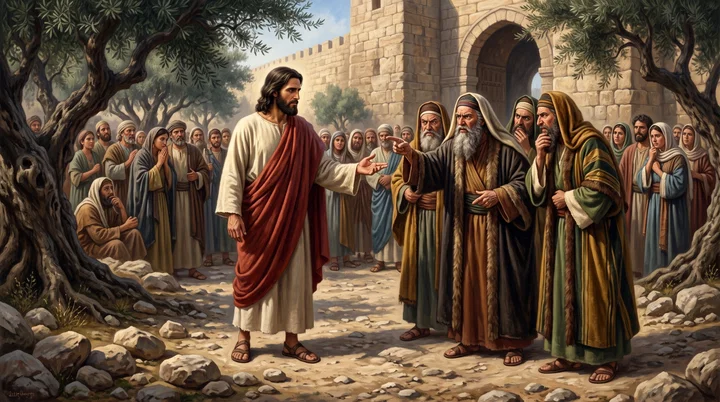
And some of the Pharisees from among the multitude said unto him, Master, rebuke thy disciples.
Translations
And some of the Pharisees from among the multitude said to him, Master, rebuke your disciples.
King James Version, KJV Cambridge Paragraph Bible
And some of the Pharisees from among the multitude said unto him, Master, rebuke thy disciples.
And some of the Pharisees from among the multitude said to him, Master, rebuke thy disciples.
And some of the Pharisees from the multitude said unto him, Master, rebuke thy disciples.
And some of the Pharisees from the multitude said unto him, Teacher, rebuke thy disciples.
And certain of the Pharisees from the multitude said unto him, 'Teacher, rebuke thy disciples;'
And some of the Pharisees from the crowd said to him, Teacher, rebuke thy disciples.
And, certain of the Pharisees from the multitude, said unto him—Teacher! rebuke thy disciples.
Berean Standard Bible, Majority Standard Bible
But some of the Pharisees in the crowd said to Him, “ Teacher, rebuke Your disciples!”
Some of the Pharisees from the multitude said to him, “ Teacher, rebuke your disciples!”
And some of the Pharisees among the people said to him, Master, make your disciples be quiet.
Then some of the Pharises of the companie sayd vnto him, Master, rebuke thy disciples.
Douay-Rheims (Challoner revision)
And some of the Pharisees, from amongst the multitude, said to him: Master, rebuke thy disciples.
Pictures
Cross-references
- Zechariah 9:9
Rejoice greatly, O daughter of Zion; shout, O daughter of Jerusalem: behold, thy King cometh unto thee: he is just, and having salvation; lowly, and riding upon an ass, and upon a colt the foal of an ass.
Jesus’ humble entry into Jerusalem fulfills the prophecy of the coming King.
- Matthew 21:1-11
And when they drew nigh unto Jerusalem, and were come to Bethphage, unto the mount of Olives, then sent Jesus two disciples,
Parallel account of Jesus’ entry into Jerusalem.
- Mark 11:9-10
And they that went before, and they that followed, cried, saying, Hosanna; Blessed is he that cometh in the name of the Lord:
The crowd’s acclamation prompts the Pharisees’ objection.
- John 12:12-16
On the next day much people that were come to the feast, when they heard that Jesus was coming to Jerusalem,
Parallel account of Jesus’ entry into Jerusalem and the crowd’s welcome.
- Matthew 21:15-16
And when the chief priests and scribes saw the wonderful things that he did, and the children crying in the temple, and saying, Hosanna to the Son of David; they were sore displeased,
Children praise Jesus at the entry, prompting religious leaders’ objection.
- Psalms 118:26
Blessed be he that cometh in the name of the LORD: we have blessed you out of the house of the LORD.
The disciples’ cries of blessing echo praise for the one who comes in the Lord’s name.
- Psalms 8:2
Out of the mouth of babes and sucklings hast thou ordained strength because of thine enemies, that thou mightest still the enemy and the avenger.
Jesus answers the objection to praise by pointing to praise from children.
- John 12:19
The Pharisees therefore said among themselves, Perceive ye how ye prevail nothing? behold, the world is gone after him.
The Pharisees react to the crowd following Jesus.
- Matthew 21:10-11
And when he was come into Jerusalem, all the city was moved, saying, Who is this?
Jerusalem asks who Jesus is as the procession enters, and the crowd identifies him.
- John 12:17-18
The people therefore that was with him when he called Lazarus out of his grave, and raised him from the dead, bare record.
The report of Lazarus’s raising helped draw the crowd to Jesus.
- Luke 19:45-46
And he went into the temple, and began to cast out them that sold therein, and them that bought;
The procession ends with Jesus casting out traffickers from the temple.
- Isaiah 40:9
O Zion, that bringest good tidings, get thee up into the high mountain; O Jerusalem, that bringest good tidings, lift up thy voice with strength; lift it up, be not afraid; say unto the cities of Judah, Behold your God!
The passage connects the entry’s public praise with the prophetic call to proclaim, “Behold your God.”
Commentary
Each commentary is drawn from primary sources: the writings of Ellen G. White and Adventist pioneers and periodicals. Each commentary is separate. Its own words are not a quotation; follow the references to read the source passages.
Ellen G. White
31 sources
The verse belongs to Christ's triumphal entry into Jerusalem, when the multitude hailed Him as Messiah and King with loud praise and royal honor and He accepted their homage, and some of the Pharisees with the priests and rulers, disturbed, envious and fearful at losing control of the people, told Him to rebuke His disciples and silence the tumult.DA 569.3–4COS 93.6–95.2Ms 36, 1897, par. 9–11DA 569SCEV 28.1–29.2 He answered that the shouting fulfilled prophecy and was appointed by God, so that if His disciples and the multitude held their peace the very stones would immediately cry out proclaiming Him.Ms 36, 1897, par. 9–114SP 496.1Ms 43, 1886, par. 83MR 90.2–3 Their threats and commands could not hinder God's work, overturn His purpose, or stop the enthusiasm, for God will receive glory and praise from some people and the proclamation could not be stopped by men.COS 93.6–95.2Ms 36, 1897, par. 9–11Ms 43, 1886, par. 8ST Jun 8, 1882DA 572.3 So God will have a people on earth who are not cold and dead but praise and glorify Him, and since the prospect of Christ coming in the glory of the Father with angels is far more glorious than the disciples' prospect, His commandment-keeping people must not hold their peace but praise God even with a loud voice and no one dare forbid them.EW 88.2–3SCEV 28.1–29.2RH Jun 10, 1852 The demand to silence joyful praise is still repeated by many professing to look for Christ who call its proclaimers fanatical and wild, but those who wanted the praise stopped were refusing Christ though He was their only hope, rejecting the very truth necessary to salvation.Ms 43, 1886, par. 83MR 90.2–3RH Jun 10, 1852EW 88.2–3SCEV 28.1–29.2
Triumphal Entry Setting
The demand to rebuke the disciples belongs to Jesus' triumphal entry into Jerusalem, when He rode in humbly amid rejoicing and the multitude hailed Him as Messiah and King.DA 569.3–4DA 569DA 570.1–571.1 They gave Him royal honor with loud praise, crying Hosanna to the Son of David, spreading garments and palm branches before Him.SCEV 28.1–29.24RED 116.1–117.2 He accepted their homage to direct attention to Himself and to His coming sacrifice.4RED 116.1–117.22SP 384.1–385.1 A large enthusiastic crowd had gathered, with many wanting to see Jesus because the raising of Lazarus had deeply affected them.Ms 128, 1899, par. 1 The acclaim of the procession prompted others to join and watch.DA 569.3–4
The disciples and multitude expected Him then to claim royal power and take an earthly kingdom on David's throne, and their hope of a new kingdom revived.DA 569.3–42SP 384.1–385.1 They took the public reception as proof that He would be acknowledged as Israel's King and be crowned king.1T 57.3–58.12SP 384.1–385.1 They were utterly mistaken, thinking He was then to be crowned when He was going to judgment and to death.4SP 496.1 The disciples praised God with blessing from their lips by loudly repeating His merciful works.Ms 128, 1899, par. 13–14Ms 123, 1909, par. 21–22 They loudly repeated His healings, His raisings of the dead, and all His other good works they could remember.Ms 123, 1909, par. 21–22
Some of the Pharisees, with the priests, rulers and elders among the multitude, were disturbed, displeased, envious and malicious at the attention paid to the Son of God.COS 93.6–95.2Ms 43, 1886, par. 83MR 90.2–3Ms 128, 1899, par. 13–14 They were losing control of the people and feared the crowd would make Jesus king.COS 93.6–95.2 So they told Him to rebuke His disciples and silence the tumult, claiming it was unlawful and would not be allowed by the rulers.COS 93.6–95.2Ms 36, 1897, par. 9–11Ms 43, 1886, par. 83MR 90.2–3RH Jun 10, 1852 Their high hopes were disappointed when in a few days they saw their Master stretched upon the cruel cross above the mocking Pharisees and the darkness of death closed about them.1T 57.3–58.1 Yet after His resurrection their hope revived, and He was true to His promises with consolation and rich reward for the true and faithful.EW 206.41T 57.3–58.1SG1 149.2
The entry account leads directly to His weeping on the crest of Olivet over the doomed city.Ms 54, 1886, par. 4–7 It shows His mercy and love rejected by the city, and His mercy and love in dying for sinful man so he might not perish in his sins.Ms 54, 1886, par. 4–7 In weeping over Jerusalem He saw beyond the destruction of Jerusalem to an impenitent world doomed to destruction.Ms 85, 1893, par. 3 Its events serve as a warning and a lesson for the last great day.Ms 122, 1909, par. 24–26
Prophecy Cannot Be Stopped
The shouting with tokens of victory as He rode into Jerusalem fulfilled prophecy, including Zechariah 9:9 of the Messiah entering Jerusalem as a humble king, and it had to be fulfilled even if the stones had to cry out.4SP 496.1Ms 43, 1886, par. 83MR 90.2–3RCOC 19.22SP 387.1–388.2 The multitude crying Hosanna to the Son of David was that fulfillment taking place before their eyes, yet the understanding of the Pharisees was so blunted by unbelief that they could not see it in the very act before them.Ms 43, 1886, par. 83MR 90.2–3 Their praise would not be stopped, for if they were silent the stones would cry out.RCOC 19.22SP 387.1–388.2
The celebration was a scene appointed by God and foretold by the prophets, with praise appointed for His Son, so no earthly power could hinder God's work.COS 93.6–95.2ST Jun 8, 1882DA 572.3 The threats, appeals and commands of the Pharisees, who called the tumult and public acclamations unlawful and claimed they would not be allowed by the rulers, could not stop the celebration, overturn God's appointed purpose, or suppress the people's enthusiasm.COS 93.6–95.2ST Jun 8, 1882DA 572.34RED 119.2–120.12SP 387.1–388.2 Envious and fearful that the crowd would make Him king, their attempt to suppress the acclaim failed.ST Jun 8, 1882DA 572.34RED 119.2–120.12SP 387.1–388.2
Jesus answered that if the disciples and multitude held their peace the stones would immediately cry out proclaiming Christ, declaring Behold your God.Ms 36, 1897, par. 9–11Ms 43, 1886, par. 83MR 90.2–3ST Dec 23, 1897SCEV 28.1–29.2 The demand to rebuke them and silence their loud praise and public honor as King could not be granted, because prophecy must be fulfilled and the acclamation had to go on.Ms 36, 1897, par. 9–11Ms 123, 1909, par. 21–22ST Dec 23, 1897 The disciples were praising God with blessing from their lips by loudly repeating His healings, His raisings of the dead, and all His other good works they could remember.Ms 123, 1909, par. 21–22 God will have a people on earth who are not cold and dead but praise and glorify Him, and He will receive glory and praise from some people, so the praise of Christ and the proclamation could not be suppressed or stopped by men.Ms 43, 1886, par. 83MR 90.2–3ST Dec 23, 1897SCEV 28.1–29.2
It was not error for the disciples to act according to their belief, for their shouting fulfilled what had to be fulfilled, and they would not have fulfilled it if they had understood His true work.4SP 496.1 They were utterly mistaken in thinking He was then to be crowned king on David's throne when He was going to judgment and to death, yet their blunted understanding contrasts with the Pharisees whose understanding was so blunted that they could not see the fulfillment.4SP 496.1Ms 43, 1886, par. 83MR 90.2–3 The same unstoppable certainty belongs to the work shown to John on Patmos for the future, the present truth of the third angel assisted by a mighty angel whose glory is to lighten the whole earth, which no man can stop any more than the Pharisees could stop the Hosanna voices.Ms 43, 1886, par. 83MR 90.2–3 When the people's voices were intimidated into silence, children took up the proclamation in the temple, as children did in Sweden when the first message was suppressed, showing God can use children to proclaim the Saviour's coming and ensure the message reaches all peoples, tongues and nations.HSFM 206.4RCOC 19.2GC88 367.2 The scene also teaches that people should not be silenced because they are less able or experienced, since God gives each person work according to ability and those with one talent can reach people whom more gifted workers cannot.RCOC 19.2
Praise and Final Warning
God will have a people on earth who are not cold and dead but who praise and glorify Him, and He will receive glory and praise from some people even if His chosen must be replaced by crying stones.EW 88.2–3SCEV 28.1–29.2RH Jun 10, 1852 When some Pharisees in the multitude told Jesus as He meekly rode into Jerusalem to rebuke His disciples for rejoicing and praising God with a loud voice, spreading garments and palm branches and crying Blessed be the King that cometh in the name of the Lord, He answered that if these should hold their peace the stones would immediately cry out.SCEV 28.1–29.2RH Jun 10, 1852 His commandment-keeping people therefore should not be so cold or silent that they withhold praise, for the disciples' loud praise at His entry is the pattern for joyful praise and not an excess to be suppressed.EW 88.2–3SCEV 28.1–29.2RH Jun 10, 1852 Since the prospect of Christ coming in the glory of the Father with the angels is far more glorious than the disciples' prospect at the first Advent, believers must not hold their peace but praise God even with a loud voice, and no one dare forbid them.SCEV 28.1–29.2
The demand to silence joyful praise is repeated by a large portion of those professing to look for Christ, who would do the same as the Pharisees.RH Jun 10, 1852SCEV 28.1–29.2 They want the joyful disciples silenced as extravagant and wild, regarding those who proclaim Him as fanatical, extravagant, wild, and under improper influence.RH Jun 10, 1852EW 88.2–3SCEV 28.1–29.2 Their cry is Fanaticism and Mesmerism against fervent praise, condemning as fanaticism what God has appointed to receive.EW 88.2–3SCEV 28.1–29.2
Such unbelief rejects the very truth necessary to salvation, for the demand to silence the disciples expressed hostility toward Christ and opposition to the messengers who rebuke wrongdoing.Ms 43, 1886, par. 83MR 90.2–3ST Dec 23, 1897 The Pharisees were disturbed at the attention paid to the Son of God while the multitude cried Hosanna to the Son of David in fulfillment of prophecy, and their understanding was so blunted by unbelief that they could not see the fulfillment in the very act before them.Ms 43, 1886, par. 83MR 90.2–3ST Dec 23, 1897 The disciples were praising God with blessing from their lips by loudly repeating His merciful works, His healings, His raisings of the dead, and all His other good works they could remember, and the acclamation had to go on because prophecy must be fulfilled and could not be stopped by men.Ms 43, 1886, par. 8Ms 123, 1909, par. 21–22ST Dec 23, 1897 Those who wanted the praise stopped were thus refusing Christ, though He was their only hope.Ms 123, 1909, par. 21–22ST Dec 23, 1897
The entry amid the acclaim of His disciples serves as a warning and a lesson for the last great day.Ms 122, 1909, par. 24–26 Those who come to hear must recognize Jesus as the One who gave His life for them and accept Him.Ms 122, 1909, par. 24–26 They must respond to the warning of coming judgments by bringing others to Him.Ms 122, 1909, par. 24–26
Sources
Pioneers and periodicals
46 sources
During his entry into Jerusalem as King shortly before his suffering and death, some of the Pharisees from among the multitude told him to rebuke his disciples and silence their shouting praises and hosannas to him as King coming in the name of the Lord.ST Jul 2, 1894ST Jun 5, 1879RH Feb 28, 1854ST Nov 8, 1883 He refused to silence them because the coming of the King lowly and riding on a donkey foretold in Zechariah 9:9 had to be fulfilled, and God had inspired the proclamation so that if they held their peace the stones would immediately cry out.ST Dec 23, 1897RH Jul 4, 1871ST May 9, 1878ST Apr 8, 1903 Their demand was driven by envy and malice and fear that the crowd would make him king, with indignation at the honor he received.ST Dec 23, 1897ST Jul 22, 1886 The disciples were right that he was the Christ and King but mistook what was about to happen, expecting him then to take David's throne and reign in Jerusalem when he was going into the city to suffer and be crucified.ST Nov 27, 1879RH Mar 26, 1867ST Sep 16, 1889ST Nov 20, 1884RH Sep 18, 1855 The scene shows that God's word and praise cannot be silenced by opposition, and the attempt to stop a shouting that God had commanded provides the pattern for the final loud cry of the coming King, which scoffers will try to stop but which must and will go with a loud cry that no opposition can stop.RH Feb 28, 1854ST Feb 7, 1911ST Jul 9, 1894RH Jul 30, 1857RH Mar 11, 1875
Triumphal Entry Setting
Luke 19:39 belongs to Jesus' entry into Jerusalem as king shortly before his suffering and death, in the last week of his life on earth, only a few days before his crucifixion and near the end of his ministry.ST Nov 8, 1883RH Dec 11, 1866ST Apr 14, 1898ST Feb 14, 1878 It took place amid ample evidence that he was the Messiah and heir to David's throne.ST Nov 8, 1883 The people rejoiced and praised God for the mighty works they had witnessed, and even children joined in the praise.
The entry went from Bethany over the Mount of Olives in full view of the city, coming by the foot-path over the summit from Bethany.ST Nov 3, 1898ST Nov 17, 1898 It was the day after his last Sabbath at Bethany, and the day after the feast at the house of Simon the leper that followed the resurrection of Lazarus.ST Dec 23, 1886ST Nov 17, 1898 It takes place at the descent of the mount, where he was met by the throng with palm branches.ST Nov 17, 1898 The procession paused on the mount, then moved with an enthusiastic throng going down through the valley and up the slope to the gate and into the city, leading to his weeping over the city and his entering the temple to cast out the traffickers.ST Jun 22, 1882ST Nov 3, 1898 In Luke it stands in Luke 19:28-44, which comes after the parable of the pounds and before the weeping over the city, within the section from Luke 18:24 through Luke 21.ST Apr 21, 1909 During the entry the disciples were shouting his praises, and some of the Pharisees in the multitude told him to stop them.ST Dec 23, 1886
The multitude rejoiced and praised God for the mighty works they had witnessed, hailing him as King and the son of David with palm branches and shouts of triumph, and even children joined.ST Nov 27, 1879 The triumphal procession was unlike the victories of earthly conquerors, for the people surrounding Jesus were those he had rescued from Satan's power, healed, or raised from the dead, and they praised God for their deliverance and his works of mercy.ST Jan 21, 1897 Yet the outward celebration with loud hosannas did not mean that the people's hearts were truly with him, and his approach also brought a warning of judgment.RH Feb 18, 1875
The celebration was joined to sorrow, for the multitude joined the hallelujah cry with joyful praises and Jesus wept over Jerusalem.STST Loud hosannas greeted him even as he wept.RH Feb 18, 1875 As the procession paused on the Mount of Olives, Jerusalem was still able to repent and be saved, but its time of mercy was nearly over, and Jesus grieved and pleaded for the city even as swift judgment approached.ST Jun 22, 1882 While his disciples welcomed him with shouts of joy, the nation rejected him, did not love his character and scorned his lowliness, so that the promised protection of the city and nation was withdrawn, and the celebration was followed by his sorrow over Jerusalem and the city's later rejection of him.ST Nov 8, 1883ST
Luke 19 gives the fullest account of this scene, with parallel accounts in Matthew 21, Mark 11, and John 12.ST It was the one occasion in his life when he let the multitudes freely show him honor, a striking moment before Gethsemane.ST Jul 22, 1886
Pharisees Demand for Silence
Some of the Pharisees from among the multitude told Jesus to rebuke His disciples and silence their shouting praises during the entry into Jerusalem.ST Jul 2, 1894ST Jun 5, 1879RH Feb 28, 1854ST Apr 8, 1903RH Mar 17, 1859 They wanted Him to stop the hosannas and the hailing of Him as King coming in the name of the Lord, with garments spread in the way and loud rejoicing as He rode in.ST Jul 2, 1894ST Jun 5, 1879RH Mar 17, 1859RH Jun 10, 1858 Their objection did not stop the prophetic fulfillment, because the disciples were obeying the prophetic command to rejoice and shout and were appointed to fulfill it without knowing it at the time.ST Jul 2, 1894ST Jun 5, 1879RH Jun 10, 1858 The crowd's expectation that Jesus would immediately take David's throne was not fulfilled, for within days He was crucified, and they understood only when Jesus was glorified and remembered that these things were written of Him and done unto Him.ST Apr 8, 1903RH Mar 17, 1859RH Jun 10, 1858
Their demand was driven by envy and malice and by fear that the crowd would make Jesus king.ST Dec 23, 1897ST Jul 22, 1886ST Jun 8, 1882 They were indignant at the honor and influence He received, and their demand expressed hostility toward Christ and opposition to the messengers who rebuke wrongdoing.ST Dec 23, 1897ST Oct 5, 1904 They claimed the noisy public celebration was unlawful and would not be allowed by the authorities.ST Jul 22, 1886ST Jun 8, 1882 Their demand arose from cold formalism and self-righteousness, which could not share the gratitude and joy of the people, and their commands could not stop the praise that God had appointed for His Son.ST Jun 8, 1882
The same demand is also described as made by priests and elders asking Him to silence the crowd praising Him, showing official religious opposition to the praise.ST May 9, 1878 Their appeal failed, for Jesus answered that if the disciples were silent the stones would cry out, showing the praise could not be suppressed.ST Dec 23, 1897ST May 9, 1878ST Jul 2, 1894ST Jul 2, 1894 This response shows that God inspired the people's proclamation, just as divine power could give voice to the stones, and because the prophecy of His entrance into Jerusalem had to be fulfilled.ST Dec 23, 1897ST Apr 8, 1903ST Jul 2, 1894 The exchange stands as an example of Scripture's truthfulness which archaeological discoveries corroborate.
Prophecy Fulfilled by Praise
The riding into Jerusalem fulfills Zechariah's prophecy of the coming King, specifically Zechariah 9:9 of the King coming lowly and riding on a donkey and a colt, just and having salvation.RH Jul 4, 1871ST May 9, 1878ST Nov 8, 1883RH Dec 11, 1866RH Jun 10, 1858 This entrance as king took place near the end of Christ's ministry, only a few days before his crucifixion, in the account recorded in Luke 19:30-40.RH Jul 4, 1871ST Nov 8, 1883RH Dec 11, 1866 It occurred amid ample evidence that he was the Messiah and heir to David's throne.ST Nov 8, 1883 The prophet's command to rejoice greatly and shout was not only a command but a prediction that such shouting would be done far in the future.RH Jul 4, 1871 It was fulfilled in its season in the shouting at Christ's entry, when the disciples with garments spread in the way shouted Hosanna to the King coming in the name of the Lord.RH Jul 4, 1871RH Jun 10, 1858
The disciples in that shouting were obeying the prophetic command to rejoice and shout.ST Jun 5, 1879 They were appointed to fulfill prophecy without knowing it at the time, understanding only when Jesus was glorified and remembering that these things were written of him and done unto him.RH Jun 10, 1858 Their objection by the Pharisees did not stop the prophetic fulfillment.ST Jun 5, 1879 The praise had to be given because prophecy had to be fulfilled.ST Dec 23, 1897ST Apr 8, 1903RH Mar 17, 1859ST Oct 2, 1893 Jesus refused to rebuke the disciples and silence their hailing of him as King because the prophetic announcement of the King's coming had to be fulfilled, with God inspiring the people's proclamation.ST Dec 23, 1897RH Jun 10, 1858
If they had held their peace the stones would immediately have cried out.ST Dec 23, 1897ST Apr 8, 1903ST Oct 2, 1893RH Jun 10, 1858 The praise and welcome belonged to an event in which God's word had to be fulfilled, arising against cold formalism and self-righteousness which could not share the gratitude and joy of the people and expressing hostility toward Christ.ST Dec 23, 1897 Their loud cry at the first advent was a fitting tribute of praise, thanksgiving, and honor to him as the coming King, and it fulfilled prophetic words and could not be suppressed.ST Jul 2, 1894RH Sep 18, 1855 Although they expected its establishment at that time, expecting him then to take David's throne and reign in Jerusalem and reign upon the throne of David, they were soon disappointed because he did not then take the throne but suffered and was crucified as deeply as those disappointed over the second advent.ST Feb 11, 1903RH Sep 18, 1855RH Mar 17, 1859ST Oct 2, 1893RH Jun 10, 1858 Their disappointment nevertheless fulfilled prophecy.ST Feb 11, 1903
Disciples Mistaken Hope Corrected
The disciples proclaimed the right message at the right time yet expected the kingdom of God to appear immediately, and the parable of the nobleman going away to receive a kingdom was spoken to correct that thought, but the impression remained and their joyful welcome of Jesus as king on entering Jerusalem shows they still did not understand.ST Nov 27, 1879ST Sep 16, 1889ST Nov 20, 1884 They did not realize he was going into the city to be condemned and crucified as a malefactor, for such triumph would not attend the steps of the lowly and the condemned.ST Nov 27, 1879ST Sep 16, 1889 Only after their disappointment did they learn that Christ had to suffer before coming in his kingdom, and their lack of that knowledge did not make their actions wrong, for their triumphant welcome fulfilled prophecy and if they had been silenced even the stones would have cried out.ST Nov 20, 1884ST Jul 19, 1883
They were right that Jesus was the Christ and King but mistook what was about to happen, expecting him then to take David's throne and reign in Jerusalem, hailing him as son of David and coming King with palm branches, garments spread in the way, and shouts of Hosanna and triumph.ST Nov 27, 1879RH Mar 26, 1867RH Sep 18, 1855RH Mar 17, 1859ST Oct 2, 1893 Their hopes were soon crushed by his death and crucifixion within days, proving they labored under mistakes about the time and order of future events, so their joining of the overthrow of the city with the coming of Christ and the end of the world does not prove those events occur at the same time.ST Nov 27, 1879RH Jun 10, 1858 Their praise was fitting and required to fulfill the prophecy of the coming King, just and having salvation, lowly and riding upon an ass and a colt, which they were appointed to fulfill without knowing it at the time, understanding only when Jesus was glorified and remembering that these things were written of him and done unto him.RH Sep 18, 1855RH Mar 17, 1859ST Oct 2, 1893RH Jun 10, 1858
The parable of the pounds connected with this entry represents Jesus as a nobleman who goes away to receive a kingdom and then returns. It teaches that he receives the kingdom from the Father after his priestly work and judgment are complete and then returns to gather his people and establish an everlasting kingdom, which is not prepared for him by human effort.ST Sep 12, 1895 Their mistaken expectation parallels the 1844 believers, who correctly expected that the prophetic periods had ended and judgment had begun but mistook what Christ would then do.RH Mar 26, 1867 As the first disciples' praise fulfilled prophecy and gave them a chance to learn the true purpose of his advent, so the seventh-month movement in 1844 was in the order of the Lord and fulfilled prophecy, and Adventists should own and not be ashamed of the experience that made them Adventists, for disappointment at the crucifixion did not mean God was absent or that prophecy had failed.RH Mar 26, 1867RH Jun 10, 1858RH Jun 9, 1851
Unstoppable Word and Witness
Some of the Pharisees objected to the disciples' cries of rejoicing as Jesus rode into Jerusalem and asked Him to silence them.RH Feb 28, 1854RH Mar 11, 1875 That opposition could not silence those who recognized and proclaimed Christ, for His reply was that if the disciples were silent even the stones would cry out instead.RH Feb 28, 1854ST Feb 7, 1911RH Mar 11, 1875 The scene shows that opposition cannot prevent God's word from being fulfilled, so that if God's professed people refuse their part He can use other means and His word will still be honored.RH Feb 28, 1854 God's message cannot be silenced, for if people refuse to proclaim it God can give voice even to stones.ST Feb 7, 1911
When the Pharisees asked Jesus to rebuke His disciples, His answer was that if they were silent the stones would cry out.ST Jul 2, 1894 Their appeal failed to silence the praise, which shows that God inspired the people's proclamation, just as divine power could give voice to the stones.ST Jul 2, 1894 Even if people are silenced, stones can cry out in praise, pointing alongside John's statement to God's power to raise up children for Abraham from stones.ST Feb 7, 1911ST Jan 18, 1899 This is an example of Scripture's truthfulness, which archaeological discoveries corroborate.
God will receive glory and praise, and if His chosen, commandment-keeping people are silent even the stones will cry out.RH Jun 10, 1852 The disciples' loud praise at Jesus' entry into Jerusalem is therefore a pattern for joyful praise.RH Jun 10, 1852 It is not something to suppress as excess.RH Jun 10, 1852
Pattern for Last Days
The demand to silence the hosanna shout will be repeated against the final loud cry of the coming King.ST Jul 9, 1894 As faithful servants proclaim the message, scoffers and dignitaries in modern Israel who say in their hearts that the Lord delays His coming will smite them.ST Jul 9, 1894 They will call them alarmists, world upsetters, disturbers of the peace, and fermenters of disloyalty and revolution, and will try by civil laws to stop the message.ST Jul 9, 1894 The more they smite, the louder the cry becomes, for if the disciples did not cry aloud and spare not and lift up their voices like a trumpet, the very stones would cry out.ST Jul 9, 1894 It is God's message and it must and will go with a loud cry, and no opposition can stop it.ST Jul 9, 1894RH Jul 30, 1857
The attempt to stop a shouting that God had prophetically commanded and therefore could not be stopped is the pattern for proclaimers of peace and safety who try to stop the alarm about the nearness of the day of the Lord.RH Jul 30, 1857 They assert that no one can know its approach, seeking to quiet sinners and strengthen their hands.RH Jul 30, 1857 Just as the demand could not stop the disciples, this opposition cannot arrest the commanded alarm, which must and will be given before the day of the Lord comes.ST Jul 9, 1894RH Jul 30, 1857 In the same way the demand shows how people who profess to look for Christ may oppose joyful praise and regard those who proclaim Him as fanatical or extravagant.RH Jun 10, 1852
Sources