Translations
American King James Version, King James Version, KJV Cambridge Paragraph Bible, Webster Bible
On these two commandments hang all the law and the prophets.
On these two commandments hangeth the whole law, and the prophets.
On these two commandments the whole law hangeth, and the prophets.
on these — the two commands — all the law and the prophets do hang.'
On these two commandments the whole law and the prophets hang.
In these two commandments, all the law, is contained, and the prophets.
Berean Standard Bible, Majority Standard Bible
All the Law and the Prophets hang on these two commandments.”
The whole law and the prophets depend on these two commandments.”
On these two rules all the law and the prophets are based.
On these two commandements hangeth the whole Lawe, and the Prophets.
Douay-Rheims (Challoner revision)
On these two commandments dependeth the whole law and the prophets.
Pictures
Cross-references 20 of 111
- Leviticus 19:18
Thou shalt not avenge, nor bear any grudge against the children of thy people, but thou shalt love thy neighbour as thyself: I am the LORD.
Commands love for one’s neighbor as oneself.
- Deuteronomy 6:5
And thou shalt love the LORD thy God with all thine heart, and with all thy soul, and with all thy might.
Commands wholehearted love for God.
- Exodus 20:1-17
And God spake all these words, saying,
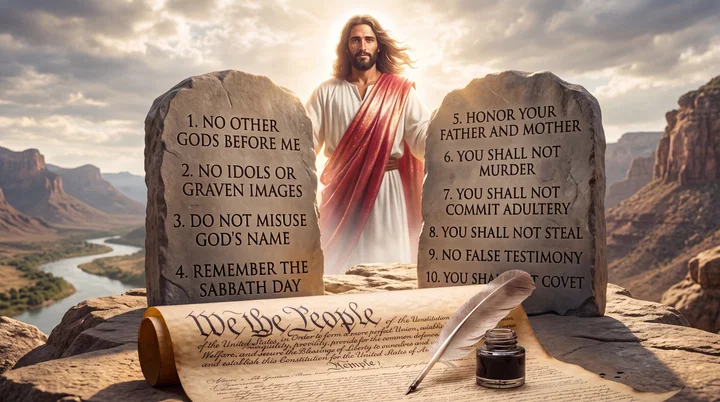
The Ten Commandments divide into duties to God and neighbor, expressing the two great commandments.
- Romans 13:10
Love worketh no ill to his neighbour: therefore love is the fulfilling of the law.
Love does no harm to a neighbor and fulfills the law.
- 1 John 5:3
For this is the love of God, that we keep his commandments: and his commandments are not grievous.
Love for God is shown by keeping his commandments.
- Luke 10:27-28
And he answering said, Thou shalt love the Lord thy God with all thy heart, and with all thy soul, and with all thy strength, and with all thy mind; and thy neighbour as thyself.
Jesus affirms the two commandments as the way to live.
- Matthew 5:17-19
Think not that I am come to destroy the law, or the prophets: I am not come to destroy, but to fulfil.
Christ’s teaching affirms the continuing force of the commandments.
- James 2:8-10
If ye fulfil the royal law according to the scripture, Thou shalt love thy neighbour as thyself, ye do well:
Neighbor-love summarizes the law, while breaking one command makes a person guilty of the whole law.
- Matthew 7:12
Therefore all things whatsoever ye would that men should do to you, do ye even so to them: for this is the law and the prophets.
The Golden Rule expresses love for others as the principle of the law and prophets.
- Mark 12:30-31
And thou shalt love the Lord thy God with all thy heart, and with all thy soul, and with all thy mind, and with all thy strength: this is the first commandment.
Jesus states the two commandments on which the law and prophets depend.
- Matthew 19:17-19
And he said unto him, Why callest thou me good? there is none good but one, that is, God: but if thou wilt enter into life, keep the commandments.
Jesus connects entering life with keeping the commandments and names several of them.
- Ecclesiastes 12:13
Let us hear the conclusion of the whole matter: Fear God, and keep his commandments: for this is the whole duty of man.
Both identify fearing God and keeping his commandments as humanity’s whole duty.
- 1 John 4:20-21
If a man say, I love God, and hateth his brother, he is a liar: for he that loveth not his brother whom he hath seen, how can he love God whom he hath not seen?
Love for God is joined to love for one’s neighbor.
- 1 John 4:8
He that loveth not knoweth not God; for God is love.
God is love, the principle beneath the commandments.
- John 13:34-35
A new commandment I give unto you, That ye love one another; as I have loved you, that ye also love one another.
Both command love as the foundation and proof of faithful discipleship.
- John 15:10
If ye keep my commandments, ye shall abide in my love; even as I have kept my Father’s commandments, and abide in his love.
Jesus kept his Father’s commandments, including the law summed up in love.
- Romans 3:31
Do we then make void the law through faith? God forbid: yea, we establish the law.
Faith establishes rather than makes void the law.
- Galatians 5:6
For in Jesus Christ neither circumcision availeth any thing, nor uncircumcision; but faith which worketh by love.
Both texts join faith and love as the basis of Christian life.
- Matthew 5:19
Whosoever therefore shall break one of these least commandments, and shall teach men so, he shall be called the least in the kingdom of heaven: but whosoever shall do and teach them, the same shall be called great in the kingdom of heaven.
Jesus warns against breaking even the least commandment and honors those who do and teach them.
- Romans 7:12
Wherefore the law is holy, and the commandment holy, and just, and good.
The law and commandment are called holy, just, and good.
Commentary part 1 of 2
Each commentary is drawn from primary sources: the writings of Ellen G. White and Adventist pioneers and periodicals. Each commentary is separate. Its own words are not a quotation; follow the references to read the source passages.
Ellen G. White
119 sources
On these two commandments of wholehearted love to God and love to neighbor as self hang, depend and rest all the law and the prophets.RH Apr 1, 1915Ms 128a, 1903, par. 19–21Ms 30, 1904, par. 6–7 The Ten Commandments express those two loves in two tables written by God, the first four defining duty to the Creator and the last six defining duty to fellow human beings.2T 42.2–43.1ST Mar 4, 18973SP 51.4 God's law is thus a law of love, harmony and holiness, an expression of His own loving character and the whole duty of humanity.ED 76.3–47T 146.2STB 176.5–177.1 That love does not set obedience aside but requires keeping the commandments, so profession, worship or sacrifice without it is hypocrisy and is not accepted.ST Apr 15, 1886ST Jan 10, 1911COL 392.1 People cannot produce this love by their own strength, but through faith in Christ who died that sinners might go free they receive power to partake of the divine nature and have the righteousness of the law fulfilled in them.Lt 58, 1911, par. 7GC 263.1Lt 32, 1906, par. 8–9 Kept in this way, the two loves govern all daily life in practical, impartial care for the needy, honest and generous dealing, and speech and conduct that unite rather than tear down.TBC1868 4.2–7.1Lt 46, 1888, par. 9–11PK 327.1–2ST Nov 7, 18782T 227.2–228.1
Setting and Wording
All the law and the prophets depend on, rest on, and hang on the two commandments to love God wholly — with all heart, soul, strength, and mind — and to love one's neighbor as oneself.RH Apr 1, 1915Ms 128a, 1903, par. 19–21Ms 30, 1904, par. 6–7Lt 22, 1899, par. 4–5Ms 66, 1897, par. 22–25 These two are the foundation of Scripture's moral teaching, calling for practical love and mercy rather than merely formal religion.RH Apr 1, 1915 They contain all the principles of the Decalogue, supreme love to God and unselfish love to others revealing the perfection of human character.Ms 128a, 1903, par. 19–21 They fulfill the law and express the obedience God requires.Ms 30, 1904, par. 6–7Ms 66, 1897, par. 22–25Ms 41, 1894, par. 4–5 They make God's will the governing question in every matter, so that doing that will is obedience to the law, and faith works through this love to purify the soul.Lt 22, 1899, par. 4–5Ms 41, 1894, par. 4–5 They answer what one must do to inherit eternal life, and divine love must be manifested in the human heart.Ms 30, 1904, par. 6–7
Christ spoke this in answer to a lawyer's question which is the great commandment in the law.3MR 66.2–67.2PK 326.1–221MR 189.4–190.1 The Pharisees prompted the question to tempt Him and trap Him in His speech, and Jesus, reading the hearts of the lawyer and the Pharisees, gave the lawyer the benefit of answering his own question.21MR 189.4–190.1 He thus drew out the summary from the lawyer — supreme love to God as the first and great commandment and love to neighbor as self as the second like unto it — affirmed it as right, and turned the right answer back upon them with the promise that doing it gives life.ST Aug 2, 1899PK 326.1–221MR 189.4–190.1 In this He gave the standard by which to form character and left nothing obscure or indefinite about the salvation of the human race, distinctly stating what must be done to render acceptable obedience and what must not be done to remain loyal.Ms 48, 1893, par. 13–14 What was spoken was spoken by God Himself with an audible voice in awful grandeur from Mount Sinai, with a living exemplification provided through the great sacrifice decided in the councils of heaven.Ms 48, 1893, par. 13–14
The two commandments repeat counsel already given to Israel through Moses before entering the promised land, to fear God, walk in His ways, love and serve Him with heart and soul, and keep His commandments and statutes for good.PK 326.1–2 They repeat the prophet's answer that the Lord requires doing justly and loving mercy and walking humbly with God rather than burnt offerings and outward rites.PK 326.1–2 From age to age this counsel urges the value of practical godliness upon those in danger of falling into formalism and forgetting to show mercy.PK 326.1–2 Christ Himself spoke these principles on Mount Sinai and spoke them again in the sermon on the mount in the beatitudes, so the teaching of Sinai and the teaching of the beatitudes are the same.ST Jun 11, 1896
To hang means to sum up, hold together, uphold, and contain: the two loves hold together the whole law, fulfill it, and contain all its principles.DA 606.3–5DA 607.1–2ST Jan 9, 19128MR 336.110MR 53.6–54.4 Supreme love to God with the wealth of affection flowing without restraint in this divine channel, and love to neighbor as self, hold all the law and the prophets together, and this love is the fulfilling of the law and the whole duty of man.8MR 336.110MR 53.6–54.4 They are not separate rules of unequal importance, and none can be broken without violating love, for every commandment expresses this principle and the commandments are a unified whole.DA 606.3–5DA 607.1–2 Giving God His rightful place in the heart leads to treating others rightly and loving them impartially, and neither kind of love can be practiced while the other is rejected.DA 607.1–2 Love for God is shown by willing obedience to all His commandments, which brings honor to God and happiness to those who do His will.DA 606.3–5DA 607.1–2ST Jan 9, 1912 When this love is perfected in the human soul it is revealed by the sanctification of soul, body, and spirit, and when this victory is achieved the Gospel is satisfied; true religion is this love revealed in deeds, shining forth in self-forgetfulness amid the activities of life and everyday contact with others, running like a thread of gold through daily experience in usefulness, lightening burdens and lessening cares.8MR 336.110MR 53.6–54.4
The fourth commandment stands in the center of the decalogue and links its two divisions together, one set of precepts specifying duty to God and another set specifying duty to fellow man.Ms 39, 1886, par. 43MR 66.2–67.2Ms 27, 1899, par. 2 Love does not set aside obedience but requires keeping the Ten Commandments, and it is impossible to love God with all the heart while breaking the fourth commandment.Ms 39, 1886, par. 43MR 66.2–67.2 To say love while disobeying shows the love of God is not perfected, which comes only in obedient children who see their duty pointed out and walk in the light in harmony with His requirements, with filial not slavish fear of God before them.Ms 39, 1886, par. 43MR 66.2–67.2 Probation is given to test obedience, which God will not compel, with reward promised to the obedient and punishment to the disobedient, and obedience fits for eternal life; to decree that God's law is not worthy to be kept makes enemies of the Lord.Ms 39, 1886, par. 43MR 66.2–67.2 Keeping that righteousness of the law before people barricades the soul against deception, while leading people to ignore the law as null and void and to preach against it, especially the fourth commandment, breaks that link and hides the exceeding sinfulness of sin.Ms 27, 1899, par. 2
Division of Decalogue
The ten commandments express the two loves in two tables written by God on stone, the first four defining duty to the Creator and supreme love to God, and the last six defining duty to fellow human beings and love to neighbor.2T 42.2–43.1ST Mar 4, 18973SP 51.4ST Jul 16, 1894ST Mar 7, 1878 These two commandments support, contain and uphold all ten and the prophets, presenting love as the foundation and guiding principle that states the whole duty of humanity and must be strictly obeyed.2T 42.2–43.1ST Mar 4, 1897ST Jul 16, 1894ST Mar 7, 18783T 511.2–3 The commandments are joined like links in a chain, so breaking one makes a person guilty of breaking the whole law and partial obedience cannot bring eternal life, while living out both principles forms the righteousness of the keeper.ST Jul 16, 18943T 511.2–3 Love for God is not mere emotion, empty belief in existence and power, or cold acknowledgment of His love, but a living principle shown by willing obedience to all His requirements.ST Apr 25, 18783SP 51.4 Love for neighbor forbids taking advantage of or wronging anyone for personal gain and requires treating believers and unbelievers as one wishes to be treated in every business dealing and other interaction, with sympathy, disinterested benevolence and practical help to widows and orphans, the blind, deaf, lame, burdened and afflicted because help is needed without questioning relationship, country or creed, as the Samaritan relieved, carried and provided for the man robbed and beaten on the road from Jerusalem to Jericho, while the indifference of the priest and Levite who passed by on the other side is commandment-breaking.2T 42.2–43.13T 511.2–3
The last six commandments are summed up in loving one's neighbor as oneself, and that neighbor-love gives the command to love one another its foundation, with Christ's self-sacrificing love revealing its fuller meaning.Ms 11, 1902, par. 12–16Lt 46, 1888, par. 9–11SG2 240.2–241.1 Keeping them requires Christlike conduct and provides a test of Christian character, including honesty, kindness, humility, patience, generosity and freedom from greed and overreaching in business and dealings with others, with interest, sympathy and charity toward the needy and unfortunate who come to notice, whoever they are, pictured by the wounded and robbed man.Lt 46, 1888, par. 9–113T 524.1Ms 27, 1891, par. 14–15 The rich young man's failure to give to the poor showed he did not love his neighbor as himself, and his supreme love of riches also kept him from loving God with all heart, soul and mind, so he failed to keep both parts of the law.SG2 240.2–241.13T 524.1 Neglecting the needy breaks the second great commandment, leaves no assurance of eternal life, and offending in one point is guilt of all, for those who do not open their hearts to the wants and sufferings of humanity will not open their hearts to God but let idols claim the heart and affections, so God is not honored and does not reign supreme.3T 524.1Ms 27, 1891, par. 14–15
All other commands found in Scripture are only specifications and amplification of what is already contained in the ten precepts, and the two great principles of love to God and love to man contain the binding force of the whole law and of all the moral precepts found in the prophets.Ms 79, 1896, par. 10–12Ms 54, 1896, par. 4–5Lt 57, 1901, par. 3–4 The moral code of the Old Testament remains in full force in the New Testament, and if these two commandments are brought into the gospel all that hangs upon them is also brought into the gospel, so it is not enough to believe but a person must be a doer of the law.Ms 79, 1896, par. 10–12Lt 57, 1901, par. 3–4 These two principles are the real essence of education and the foundation for reading the Bible intelligently and obtaining knowledge from the Word of the living God, which is Higher Education, and any education that supersedes it or dismisses it from the mind is not of God.Ms 54, 1896, par. 4–5Lt 57, 1901, par. 3–4 The Bible makes these duties, along with every obligation and privilege, plain as a rule for faith and practice, and departing from its clear instruction obscures a person's view of God.Lt 57, 1901, par. 3–4
The two principles are inseparable and neither can be kept while the other is broken, for the commandments are joined in meaning and duty so that breaking one violates one or both principles and breaks the unity of the law.ST Apr 25, 18783SP 52.13SP 52.2ST Jul 16, 189418MR 1.5–6 Supreme love for God includes loving one's neighbor, and faithfully honoring God leads to faithfully carrying out the commandments about duties to other people, because love for God includes love for people made in His image.ST Apr 25, 18783SP 52.2ST Jul 16, 1894 Disregard for the first principle makes obedience to the second impossible, and the last six cannot be kept while the first four are broken, for love for one's neighbor cannot be practiced by those who disregard them.ST Jul 16, 189418MR 1.5–6ST Sep 22, 1890 Love for God is not merely belief in His power or outward worship but giving Him the heart's highest place with undivided affection, shown in willing obedience to all His requirements, excluding other gods, idolatry, self-love, love of the world, and excessive affection for anything created or giving the heart's highest affection to self, the world or created things.ST Apr 25, 18783SP 52.1ST Sep 22, 1890 A person who hates a brother cannot truly love God, because it is impossible to love God while hating someone made in His image, and obedience to the Ten Commandments in spirit and letter shows a person's covenant relationship with God and gives Him glory, with love cultivated by doing Christ's words so that obedience exalts Christ rather than self.ST Apr 25, 1878ST Jul 16, 189418MR 1.5–6ST Sep 22, 1890
Nature of Law
On these two commandments the law is shown to be a law of love, harmony, unity and holiness, an expression of divine goodness and mercy that presents God's own loving character and will to fallen humanity.ED 76.3–47T 146.2STB 176.5–177.1GC88 466.4 It is comprehended and fulfilled by supreme love to God and love to neighbor as self, which honors God and brings peace on earth and goodwill toward people.20MR 247.1Ms 104, 1898, par. 25 Keeping its first four and last six commandments expresses these two principles and is the whole duty of humanity, the standard of character by which people are brought back to God's likeness and the divine image is restored.STB 176.5–177.1Lt 46, 1900, par. 5–8 Obedience to its enduring principles brings human happiness and undergirds the stability of society, acting as a hedge and shield preserving those who accept its principles from evil, while fidelity to God includes fidelity to others.ED 76.3–4 Such keeping displays Christlike self-denial, constant beneficence, and faith working by love purifying the soul from selfishness, giving convincing and contagious evidence that the law is love.7T 146.2STB 176.5–177.1
The law so understood is perfect, holy, just and good, a universal and unchanging rule of life that applies to all people and remains binding through every generation as the believer's rule of life and the sinner's condemnation.ST Oct 24, 1895AA 505.1–506.2SLP 323.2–324.1 It is the perfect expression of God's character and government, enduring and eternal, retaining its claim in every command both great and small and reaching beyond civil law.ST Oct 24, 1895AA 505.1–506.2GC88 466.4 Its two commands of love for God and for others are the foundation of the whole law, comprising the whole duty of humanity, and Christ magnified it in life and example.RH Jul 5, 1906AA 505.1–506.2SLP 323.2–324.1 True obedience is more than assent to truth, ceremonial worship or sacrifice, offering God whole service with goodness and compassion toward others, and keeping the commandments brings reward even in this life in a clear conscience and peace with God, while self-love and self-exaltation are unacceptable.ST Sep 22, 1898 These principles test character and show whether a person is obedient, calling for rejection of ungodliness and worldly desires to live soberly, righteously and godly.ST Sep 22, 1898SLP 323.2–324.1
The law is a divine unity in which the same principle runs through every precept, joining the commandments like links in a chain under the two principles of love and duty toward God in the first four and duty toward others in the last six.ST Jul 16, 1894COL 377.3–4DA 497.4–498.1 It cannot be ranked by importance or selectively kept, and is not set aside by those two principles but upheld by them, so a person cannot keep one commandment while breaking another.ST Jul 16, 1894COL 377.3–4ST Sep 22, 1898 Breaking one makes a person guilty of breaking the whole, and partial obedience cannot bring eternal life.ST Jul 16, 1894 Human destiny is determined by obedience to the whole law, with supreme love to God and impartial love to others lived out in the life forming the righteousness of the keeper.ST Jul 16, 1894COL 377.3–4DA 497.4–498.1
That unified law reaches beyond outward actions and civil requirements to secret thoughts, purposes, motives, judgment, will and affections, requiring love to God and neighbor rather than mere outward obedience.ST Jun 9, 1881AA 505.1–506.2SLP 323.2–324.1 Outward displays of devotion cannot replace obedience, as seen when works contradict the law and claims to holiness do not make faithful children of Abraham, a truth once set forth in the blue-ribbon reminder of central duties.ST Mar 1, 1883 It is a moral mirror by which people see defects and compare actions with God's standard, exposing transgression as sin since sin is transgression of the law.ST Mar 11, 1897Lt 19c, 1874, par. 1–3 Recognizing wrong should lead to deep repentance and earnest seeking of God's power through the Holy Spirit to show Christ's kindness and forbearance, while rejecting or replacing the law hides the knowledge of sin and leads to false claims of sinlessness.ST Mar 11, 1897Lt 19c, 1874, par. 1–3
Understood as wholehearted service to God and to man, planted in the heart and revealed in character, words and actions, the law is holy, just and good, with power to convert the soul, the foundation of God's kingdom freed from human inventions and exactions.Lt 65, 1897, par. 5–6ST Oct 29, 1896 Its principles honor God's government, reach every person, give self its proper place by recognizing each person as Christ's property valued by the price He paid, and through Christ bind people to God and develop complete, healthy Christian character marked by purity, kindness, patience and sympathy.Lt 65, 1897, par. 5–620MR 247.1 Its requirements call for obedience even in smallest matters, with faith enabling obedience and shaping life to preserve life and righteousness, and those who believe in Christ as personal Saviour have faith that works by love, manifest His Spirit and grace, reach a higher righteousness than the scribes and Pharisees, and cooperate with Him in educating souls for His kingdom.ST Oct 29, 1896ST Feb 26, 1894 It protects every person's rights and individuality, restraining both oppression by those in authority and disobedience by those under authority, and for the obedient its enduring principles are a pledge of eternal life.ED 76.3–4
Love and Obedience
Love does not set aside obedience but requires the keeping of the commandments, for the whole law and the prophets depend on supreme love for God and love for neighbor as self.ST Apr 15, 1886ST Jan 10, 1911COL 392.1Lt 6, 1885, par. 6–10STBk 80.1 Without these two loves even the highest profession of faith is hypocrisy, and outward conformity is not enough.ST Apr 15, 1886ST Jan 10, 1911COL 392.1Ms 77, 1899, par. 1–3 Religious forms, ceremonial worship, and sacrifice without practical, unselfish care for others in everyday life do not fulfill the law and are not accepted.COL 392.1Lt 6, 1885, par. 6–10 Knowing and teaching the Ten Commandments in theory is not enough, for their principles, including purity and love to God and others, must be obeyed from the heart.STBk 80.1 Claiming to keep the law while ignoring these underlying principles fails its true demands, and self-love and devotion to worldly gain violate it because they oppose this love.COL 392.1Ms 77, 1899, par. 1–3
Love for God is a living principle shown by willing obedience to all His requirements, and whoever so loves Him keeps His commandments.3SP 51.4ST Jan 9, 191220MR 283.1 It is not mere emotion, empty belief in His existence and power, or cold acknowledgment of His love, but undivided affection that excludes other gods, idolatry, and giving the heart's highest affection to self, the world, or created things.DA 606.3–53SP 51.4 The first four commandments express this duty to the Creator, while the last six express duty to other people, and they are not separate rules of unequal importance, for none can be broken without violating love.DA 606.3–5ST Jan 9, 1912Ms 163a, 1898, par. 3–4 Love for neighbor flows from giving God His rightful place in the heart, and keeping the first four follows from supreme love which includes all the other requirements.DA 606.3–5Ms 163a, 1898, par. 3–4 Willing obedience in this love brings honor to God and happiness to those who do His will.ST Jan 9, 1912
It is not enough to believe, know the truth, preach, or understand mysteries; a person must be a doer of the Word whose faith works through love.Lt 95, 1896, par. 17–19ST Jul 18, 1911 Keeping God's commandments requires laying aside selfishness, consulting God's Guidebook at every step, and practically loving neighbors and helping those in need rather than walking apart from them while cherishing self and seeking praise and recognition.Lt 95, 1896, par. 17–19 Diligent study and faithful practice of this word is necessary to endure the perils of the last day.Lt 95, 1896, par. 17–19 Other good works bear no profit if love is missing, but union with Christ produces love and its fruits in a transformed life.ST Jul 18, 1911 Obedience to the Lord's law makes people pure and holy, and love-shaped faith leads to obedience that purifies the soul from selfishness.Lt 86, 1895, par. 28–29 As malice, hatred, jealousy, and selfishness are cleansed away, kindness, patience, longsuffering, benevolence, and love take their place, so that love does no harm to a neighbor and through the Holy Spirit's influence the righteousness of the law is fulfilled in the believer.14MR 84.3–85.1Lt 11a, 1894, par. 21–24 Love and purity are the qualities valued by God and Christ, and a tender, humble, sympathetic, pitying heart is strength derived from Christ, not weakness.Lt 86, 1895, par. 28–29
Christ vindicated and honored the law of God by declaring that all the law and the prophets hang upon the principles of the Ten Commandments, so disrespect for the law proves a person has not been born again and the truth does not abide in them.ST Apr 30, 1896 To decree the law unworthy to be kept makes one an enemy of the Lord, for love to God with the whole heart and love to neighbor is the holy standard of character on which all of God's holy law hangs.Ms 26, 1899, par. 29–30 Those who mingle human wisdom with the divine, confuse minds about right and holy methods in business, and unjustly acquire means at another's expense break both commandments and prove they have not yet learned God's holy law, whose explanation is given in the pure gospel spoken upon the Mount.Ms 26, 1899, par. 29–30 The lover of self is a transgressor of the law, while those who keep these two commandments are free from selfishness and emptied of self.Ms 89, 1901, par. 1 Such are true as steel to principle, truly united to Christ, wearing His yoke and manifesting His meekness and lowliness of heart, and thus revealing the glory of God.Ms 89, 1901, par. 1
Salvation Through Christ
Jesus perfectly lived out the two great principles on which the whole law rests, showing benevolence and unselfish love in constant expression of the law and in an example of its keeping, and His character and life represented every principle of that law.Ms 19, 1894, par. 14SC 28.1–2
The law requires love, meekness, humility and holiness, but fallen people cannot produce these qualities by their own strength.GC 263.1 The gospel does not set the law aside but promises God's help, so that through faith in Christ its righteousness is fulfilled in believers and leads them to obedience.GC 263.1 This help comes because God gave His Son to bear the sword of justice and to die that sinners in their sins might go free and live, and those who come to Christ in repentance are received and recreated in His image.Lt 58, 1911, par. 7 By believing in and receiving Christ they are given power to become sons of God, to partake of the divine nature and to have God's attributes restored in them, without which love Christ cannot stamp them with the image of God.Lt 58, 1911, par. 7Lt 32, 1906, par. 8–98MR 289.1 These two principles of loving the Lord God with all heart and soul and strength and mind and loving one's neighbor as oneself are God's prescribed remedy for inheriting eternal life, comprehending the wisdom and power of God when obeyed and practiced by those who overcome satanic temptations.Lt 32, 1906, par. 8–9
The two commandments answer what one must do to inherit eternal life, for doing them gives life.ST Oct 2, 19016MR 383.1–2 Christ presents supreme love to God and love to one's neighbor as oneself as the condition of eternal life and the only hope of it, expressing the whole duty taught by the moral law so that failure to obey either in practice is disobedience to its principles.Lt 82a, 1897, par. 7–13ST Mar 18, 1886Ms 13, 1897, par. 15 Accepting them brings clearer, higher and holier understanding of God, eternity and obedience, with God becoming one's strength and portion forever.Ms 13, 1897, par. 15 Obeying and practicing them in life forms character acceptable in heaven, sanctifying through the truth, gaining fitness for heaven above, preparing for the inheritance of the saints and opening the gates into the city of God.Lt 82a, 1897, par. 7–13Lt 32, 1906, par. 8–9 This love is the greatest gift and clearest evidence of religion's power, shown in daily witness for Christ, in work for the salvation of others, in practical benevolence and care such as relieving physical distress and using what is not truly necessary for oneself to help others.Lt 82a, 1897, par. 7–13ST Mar 18, 1886ST Oct 2, 1901 It requires making God's will one's own will in smallest as well as largest matters, since obeying and hearkening is better than sacrifice and following what is good keeps one from harm.6MR 383.1–2 It is genuine medical missionary work in practice: restoring fallen brethren by showing interest in them, speaking and acting kindly, not passing a needy brother by, and helping everyone in need even when it is not inviting and costs inconvenience, care and anxiety.Ms 101, 1901, par. 42–46
Treating others as one wishes to be treated puts a person where God can reveal Himself and approve them.2T 550.3 This love is made perfect through receiving grace and truth from God and freely sharing the divine light and salvation with others, and such service bears fruit in holiness and leads to everlasting life.2T 550.3 God designed people for companionship with Himself and to become partakers of the divine nature so they are capable of this love, which sums up His commandments and the whole duty of man.Lt 115, 1896, par. 12–15 Keeping these two commandments keeps believers abiding in Christ's love as Christ kept His Father's commandments, and gives the full joy that belongs to obedience.Ms 50, 1893, par. 13–14 Sanctification consists in cheerfully performing daily duties in perfect obedience to the commandments of God, loving one another as Christ commanded and proved by laying down His life, and those who do what He commands are His friends.Ms 50, 1893, par. 13–14 That love will not let the soul in greatest peril and greatest need go unwarned, unlabored for and uncared for, and will not hold the erring off with criticism and exacting or leave them alone to plunge into further unhappiness and discouragement on Satan's battleground, for God will deal with men as they deal with their brethren and the younger members of the Lord's family.Ms 62, 1894, par. 11–12 Keeping the commandments in this wholehearted, sincere love is what inheriting eternal life requires, and failure to cooperate with Christ in redemption cannot be supplied in eternity.Ms 50, 1893, par. 13–14Ms 62, 1894, par. 11–12
Practical Loving Life
Love to neighbor is not optional or convenient but a positive duty that makes up, with love to God, the whole duty required, and it demands practical, impartial care for those in need — widows, orphans, the fatherless, the blind, the deaf, the lame, the burdened, the afflicted in many ways, and the oppressed — by relieving physical distress and suffering.TBC1868 4.2–7.1PK 327.1–23T 511.2–3 What is not truly necessary for oneself, the Lord's goods, is to be used unselfishly to help them, sacrificing personal ease and advantage and acting without hesitation when means to help are in hand, in a spirit of self-denial and beneficence.TBC1868 4.2–7.1ST Nov 7, 187818MR 231.1ST Jan 21, 1886 Help is to be given because help is needed, without questioning relationship, country, or creed, as the Samaritan relieved, carried, and provided for the man robbed and beaten on the road from Jerusalem to Jericho, while the indifference of the priest and Levite who passed by on the other side breaks the commandments.3T 511.2–3 No opportunity for deeds of mercy is to be lost, showing tender forethought and Christian courtesy to the burdened and oppressed, and where nothing more can be done speaking words of courage and hope to those unacquainted with God, who are reached most easily by sympathy and love.PK 327.1–2
Keeping this law governs every part of daily life, great and small, and gives the test of Christian character in business and dealings with others.Lt 46, 1888, par. 9–1121MR 55.2 It forbids taking advantage or wronging anyone for gain, overreaching, exorbitant charges for services, misrepresentation, greed, and every selfish, treacherous scheme, purging from the heart and from the fabric of work every thread and scheme of selfishness, since ambition to excel at others' expense and seeking selfish advantage at a neighbor's expense violate love to neighbor, and letting love of money displace devotion violates love to God.2T 227.2–228.121MR 55.2Ms 70, 1899, par. 13Lt 126, 1898, par. 17 It requires Christlike conduct — honesty, kindness, humility, patience, generosity, truthful fair dealing, and earnest work for the good of others — discharging aright the duties laid upon a person, striving lawfully in right work in any transaction and any line of service, and building up the whole work rather than robbing one part to benefit another.Lt 46, 1888, par. 9–1121MR 55.2Lt 126, 1898, par. 17 God's law is measured by love, so that even slight oppression and selfishness are sins and not only what the world condemns, and genuine love for God appears in daily life as unselfish care for others, fulfilling the law and bringing a sanctifying influence into all a person thinks, says, and does; a dishonest person who violates this in business would carry the same corrupt practices into heaven and cannot enter Christ's kingdom without honest conduct according to God's plan.ST Jan 16, 191221MR 55.2Ms 70, 1899, par. 13
The two principles bind the human family together and unite believers with Christ and with one another in order, harmony, and peace, grounding both duties to God and duties to people in love.3SP 51.3Lt 21, 1901, par. 13 Love for Christ is shown by loving one another as Christ has loved, and unselfish love for those around is bright evidence of true religion and a daily witness to the world.Lt 21, 1901, par. 13Lt 37, 1900, par. 5 Suspicion, imagining evil, fault-finding, criticism, condemnation, and speech that tears down another's reputation violate these principles and break the commandments, and those who cherish and follow such a course bring upon themselves the evils they imagine.18MR 1.7–2.1Ms 116, 1898, par. 3–4 Knowing the truth, preaching the Word, and understanding mysteries do not remedy failure to live by them; God's word must be cherished and obeyed.18MR 1.7–2.1Ms 116, 1898, par. 3–4
Cherishing these loves elevates moral taste, controls and sanctifies the passions, sanctifies soul, body, and spirit, guards from evil paths, and binds to God.Lt 69, 1897, par. 23–25Ms 107, 1901, par. 20–22Ms 62, 1886, par. 27–29 Those who follow them manifest deep, earnest sympathy and love to God and man, set forth Christ as altogether lovely and chiefest among ten thousand, and reveal in usefulness the fruit of the Spirit — love, joy, peace, longsuffering, gentleness, goodness, faith, meekness, temperance — as those who have crucified the flesh with its affections and lusts, lightening burdens and lessening cares.Ms 107, 1901, par. 20–22 Fulfilling them as the whole duty of man brings light and joy and peace and gladness, shows preparedness for the inheritance of the saints in light, makes a person a true representative of Christ in word and spirit and action and rich for all eternity.21MR 279.1 This is a personal demand for entire conformity to the will of God and the spiritual measure of a person, put by God into even the least acts and dealings: diligence in making calling and election sure, ceasing to watch others, becoming jealous over self, blessing others by godly example, cheerfulness, fortitude, courage, faith, hopefulness, joy, and perfect trust in God through sanctification by the truth, elevating, ennobling, and sanctifying heart and affection in faithfulness in the least so as to live and rule among the greatest, be entrusted with the divine cause, and build up character after the divine model in preparation for coming glory.1T 710.1Ms 62, 1886, par. 27–29 Its counterfeit is selfishness that seeks its own enjoyment, disregards the good of others, deceives for personal advantage, brings others into distress, and hates those who refuse a wrong course, while Christ's love is pure, unselfish, and sanctified.RH Jun 30, 1910 This truth is sound doctrine, wheat, while human vagaries and inventions are chaff to be treated as chaff beside it.Ms 45, 1900, par. 26
Living the verse includes restitution where possible, as the nation must make restitution to the colored race for past wrongs and even those who did not enforce slavery must make special efforts as far as possible to undo its lasting effects, since the Ten Commandments call for supreme love to God and love to neighbor as self.SW 74.1 It orders even daily choices for preserving health by God's will for the welfare of others, and all conduct by love for God and concern for people.MYP 233.4 It forbids making people into gods and calls for worshiping Him with all heart, mind, soul, and strength as essential for knowing where dependence lies and how to face the perils of the last days, with the Bible making these duties and every obligation and privilege plain as the rule for faith and practice.Ms 159, 1904, par. 5Lt 57, 1901, par. 3–4 In guiding children it requires tenderness rather than severity, for love is the governing principle of the soul and the greatest power for guiding conduct.Lt 63, 1902, par. 8–9 It is the real essence of education and the foundation for reading the Bible intelligently and obtaining knowledge from the Word, a Higher Education that no education superseding or dismissing it can replace.Ms 54, 1896, par. 4–5 It calls for warning the perishing and for subordinating selfish interests to worship, fellowship, and sympathy with brethren, lest truth lose vividness and spiritual decline follow.Ms 159, 1904, par. 5Lt 57, 1901, par. 3–4
Sources
Pioneers and periodicals
332 sources
All the law and the prophets rest on, depend on and are summed up in supreme love to God and love to neighbor as self, which is their foundation, purpose and full scope.RH Aug 3, 1869ST Feb 20, 1907ST Jun 7, 1877 The two loves divide and sum up the Ten Commandments, the first four defining duty to God and guarding love to him and the last six defining duty to fellow people and guarding love to neighbor.RH Aug 3, 1869ST Aug 27, 1885ST Dec 11, 1884 They are not a new law given by Christ to replace the Ten, but old commandments quoted from Deuteronomy 6:5 and Leviticus 19:18 that had always governed the law and teach how love is expressed in action.RH Oct 27, 1868ST Mar 3, 1914ST Mar 10, 1890 The fourth commandment and the seventh-day Sabbath hang there with the other nine and remain in force as part of duty to God and the moral law for all humanity, so that loving God includes keeping the seventh day holy.ST Jun 7, 1877ST Dec 8, 1881RH Oct 26, 1911 Love expresses and fulfills the law rather than ending or abolishing it, since keeping the commandments is how love is shown from the heart and true obedience requires love while genuine love requires obedience.RH Dec 30, 1858ST Apr 3, 1928RH Apr 2, 1867 Loving God supremely and neighbor as self is the condition and way of eternal life, with life and pardon coming through faith in Jesus who kept the law perfectly and writes the law of love on the heart by the Spirit to enable obedience.ST Jun 6, 1900ST Mar 10, 1890ST Jun 7, 1877ST Aug 19, 1897ST May 7, 1894
Words and Setting
On these two commandments of supreme love to God and love to neighbor as self hang all the law and the prophets, meaning the whole law and the prophets depend on them, rest on them, are summed up in them, comprehended in them and founded on them.RH Aug 3, 1869ST Feb 20, 1907ST Jun 7, 1877ST Oct 25, 1899RH Oct 27, 1868 They are the foundation and summary of the law and the prophets, the single principle of love that is the essence of all God commands, an impartial summary commonly called the Ten Commandments that endorses rather than abolishes that law and permits keeping no chosen part only.RH Aug 3, 1869ST Feb 20, 1907ST Jun 7, 1877ST Oct 25, 1899ST Aug 27, 1885 The first love sums duty to God and the second sums duty to other people, expressing the central purpose and foundation on which the law as explained by Christ depends, so that without them the Ten could not exist and ceremonial or judicial laws have no value if the Ten are abandoned.RH Aug 3, 1869ST Feb 20, 1907RH Oct 27, 1868ST Aug 27, 1885RH Jan 2, 1866 Love toward God and love toward people are two expressions of one governing principle, with love of neighbor testing whether love for God is real and with the Golden Rule stating it as treating others as one would wish to be treated.ST Feb 20, 1907ST Jun 7, 1877RH Oct 27, 1868ST Nov 20, 1901RH Mar 23, 1852 Jesus introduced no new precept in so speaking, for the Ten had always rested on these principles and summed up in them are the epitome of moral law, God's unchangeable standard of right and test revealing sin.RH Aug 3, 1869ST Jun 7, 1877ST Oct 25, 1899RH Oct 27, 1868ST Aug 27, 1885
The law and the prophets means all the Holy Scriptures then written.ST Nov 20, 1901RH Mar 23, 1852RH Dec 1850 The commandments remain their foundation, constitution, measure and rule of duty to God and neighbor, and without them the Bible could not be sustained.ST Nov 20, 1901RH Mar 23, 1852RH Dec 1850RH Dec 1850 Their principles remain a rule of duty for Christians, so the Old Testament commandments are not obsolete, and Jesus' command to love one another as he loved is not a replacement for earlier commandments but their fulfillment expressing the same principle as the first and great commandment.ST Nov 20, 1901RH Dec 1850RH Apr 25, 1871ST Apr 22, 1880 The prophets' teachings about caring for the needy and freeing the oppressed express neighbor love, while their call to honor God's Sabbath expresses love for God.ST Nov 20, 1901RH Jul 22, 1852RH Mar 23, 1852
Hang is figurative language clear to adults but easily misunderstood by children.ST Dec 1, 1881 These two commandments are not two large pegs, nor are the law and the prophets like long cloaks hung on them, and the word does not mean literal hanging.ST Dec 1, 1881 The verse must therefore be explained in words adapted to a child's comprehension and left with no point unexplained, rather than assumed plain because familiar to elders.ST Dec 1, 1881
The saying is Jesus' reply to a lawyer's question which is the greatest commandment of the law, known as the Great Commandment.ST Sep 3, 1912ST Mar 27, 1901ST Aug 2, 1899RH Jan 2, 1866ST Mar 23, 1888 It was asked to test and entrap him by critics trying to make him stumble, with men seeking to entrap him in his words and with one hope being that he would declare belief in himself the first requirement, into which trap he did not fall.ST Sep 3, 1912ST Mar 27, 1901ST Aug 2, 1899ST Mar 23, 1888 He did not seek controversy but was always ready and able to answer those who tried to trap him, and he answered his opponents from the Old Testament, relying on its words and principles in teaching them.ST Sep 3, 1912ST Mar 27, 1901ST Feb 15, 1883 The question matches the lawyer's question in Luke 10:25 about what he must do to inherit eternal life, and Christ gave this answer when asked which commandment was greatest.ST Aug 2, 1899RH Jan 2, 1866ST Mar 23, 1888
When asked which commandment was greatest Christ gave both loves rather than ranking one above the others.RH Jul 22, 1852RH Nov 25, 1852 The answer supports obedience to every commandment, all of which are holy, just and good.RH Jul 22, 1852RH Nov 25, 1852 The command to love neighbor as self sums up the last six commandments and belongs to the royal law without replacing or abolishing the commandments, and Christ's correction of the idea that one may hate an enemy does not oppose this commandment but rejects an addition that distorted its meaning.RH Jul 22, 1852 Mark 12:29 speaks of the first of those two great commandments, not the first of the Ten, for the two and the Ten are distinct categories, so referring to one great commandment does not show that Christ expanded or replaced one of the Ten.RH Jul 22, 1852RH Nov 25, 1852
Two Tables Summarized
On these two commandments the Ten are divided and summed into two tables, the first four defining duty to God and guarding supreme love to God and the last six defining duty to fellow people and guarding love to neighbor.RH Aug 3, 1869ST Aug 27, 1885ST Dec 11, 1884ST Nov 7, 1900ST Dec 8, 1881 The first commandment sums up the first table and the second sums up the second, briefly stating their full scope as ten expressions of the two parts of one great principle.RH Aug 3, 1869ST Aug 27, 1885ST Nov 7, 1900ST Dec 9, 1908ST Dec 8, 1881 Love for God is the foundation of the first four and love for neighbor is expressed in the last six, and all the commands growing from these principles work together without conflict.ST Dec 11, 1884ST Nov 7, 1900ST Dec 9, 1908 They do not stand apart from or replace the commandments, for the summary shows every commandment is important and none can be raised above the others, all being equally binding on everyone to the end of time as the perfect law of Christ's kingdom universally and permanently binding.ST Aug 27, 1885ST Dec 9, 1908ST Dec 8, 1881 The first duty is the greater, yet neither group of duties can be set aside for the other.ST Oct 17, 1900RH Dec 23, 1873
Duty toward God in full includes faith, fear, wholehearted love, worship, gratitude, trust, prayer, honoring His name, Sabbath and word, and faithful service, with love to God interpreted by the first four.ST Oct 17, 1900RH Apr 14, 1863ST Dec 25, 1901 Three precepts forbid dishonoring Him and the fourth positively commands reverence and worship in commemoration of His rest at creation, including keeping the seventh-day Sabbath and honoring God as Creator.ST Oct 17, 1900RH Apr 14, 1863 Duty to people includes respect for parents and for others' lives, chastity, property, character and interests, beginning with the fifth commandment defining the child's relation to father and mother and extending to avoiding harm and wrongdoing, caring for others' well-being, and showing mercy even to living creatures.RH Apr 14, 1863ST Dec 25, 1901 Love of neighbor includes every duty to other people even duties not individually listed, and love of God includes every duty to God, so the Sabbath is therefore included in the command to love God because it is part of the law.ST Aug 12, 1886 Treating a neighbor as oneself means acting as one would wish to be treated in the same circumstances.ST Jan 21, 1913
The principle is expressed as the Golden Rule of doing for others what one would wish them to do to oneself in the same circumstances, treating a neighbor as oneself, which is another way of expressing love for neighbor and by which love fulfills the law.ST Feb 20, 1907RH Oct 2, 1856RH Jun 4, 1901 Love toward God and love toward people are two expressions of the same single principle, and love of neighbor tests whether love for God is real.ST Feb 20, 1907 This love protects rights to life, chastity, property and reputation, with the last five concerning relations among people and Romans 13 applying neighbor-love to duties toward fellow citizens.ST Feb 17, 1914 It includes truthful, just and honest thinking, speaking and acting in ordinary duties and relationships, including buying and selling, so that right conduct is not a matter of choice but a religious obligation as binding as prayer or worship.ST Mar 12, 1885 It is the first principle of good manners and epitomizes the rest.RH Apr 10, 1900
In form eight precepts are negative forbidding insult to God or injury to neighbor while two are affirmative, the Sabbath positively requiring remembering to keep it holy though forbidding labor and honor to parents being the affirmative precept toward neighbor.RH Dec 23, 1873RH Jan 10, 1916 The law given at Sinai states its duties negatively, while the summary presents them positively as love, love being the law's positive principle corresponding to its commands stated as prohibitions.RH Dec 23, 1873ST Apr 8, 1875RH Dec 23, 1873 Those two commandments are the summing up or essence of the commandments, and nothing could be more positive, for the Ten look negative in form because they forbid wrong but in essence they are positive because to be against wrong is to be for right. In essence the negative thou-shalt-not form was put because selfishness disturbed the happy equilibrium, and the law of love expresses the moral law in its full depth, not as an easier rule adapted to human weakness, promoting true liberty so the soul possessing love walks at liberty.RH Jan 10, 1916RH Mar 24, 1903 The second table teaches not to injure others but to seek their good, so its spirit does not permit violating its letter.ST Oct 18, 1883
Eternal Unchanging Law
On these two commandments hang all the law and the prophets because the two are not a new law given by Christ on his own authority to replace the Ten, but old commandments quoted from Moses, the first from Deuteronomy 6:5, also given as Deuteronomy 6:4-5, and the second from Leviticus 19:18, each at least 1400 years old when repeated.ST Mar 10, 1890RH Oct 10, 1854ST Aug 10, 1882 When he spoke he was answering about law already given in the Old Testament Scriptures and books of Moses, not about a new law, and he answered without evasion by quoting those places with no commandment more comprehensive, introducing no new precept and adding nothing new.RH Oct 27, 1868ST Mar 3, 1914ST Mar 10, 1890 They already governed the law when he spoke, and the Ten had always rested on them and summed up in them are the epitome of moral law, God's standard of right and the test that reveals sin, whose character is unchangeable.RH Oct 27, 1868RH Aug 15, 1854 To hang all the law on the two means to hold it up and to keep it all, the whole ten and not nine-tenths only, and the Ten teach how to express love through action.RH Oct 10, 1854RH Aug 15, 1854
The two principles are enduring universal moral principles belonging to every age, not limited to either the Jewish or Christian age nor Jewish nor Christian in particular, but belonging to all ages and guarding eternal principles parallel with God's moral government of created intelligences.ST Mar 18, 1875RH Sep 2, 1873RH Apr 1, 1875 They existed as law before the Fall within the capacity of angels and Adam in Eden, growing out of Adam and Eve's relation to God as Creator and to each other with the Sabbath most prominent in Eden, parallel with God himself as the ruling principle over all created intelligences.ST Mar 11, 1875RH Apr 1, 1875RH Mar 25, 1875 Angels were governed by them, and they required all that angels could do and all that Adam before the fall could do and all that fallen humanity can do.ST Mar 11, 1875RH Mar 25, 1875 Cain's violation proves killing was already forbidden since sin is transgression, and Abraham, Enoch, Jacob, Joseph, and Israel proved by manna thirty days before Sinai show the law never began at Sinai and will rule as long as God and created intelligences exist, enduring parallel with the eternity of the divine existence and as changeless as the throne of Heaven.ST Mar 11, 1875RH Aug 15, 1854RH Apr 1, 1875 After the Fall the ten commandments expressed and guarded them in precepts suited to humanity's fallen condition, the first four teaching love for God and the last six teaching love for others, with none able to be abolished, changed, or amended while these principles endure and with not even one precept fallen off until the close of human probation.ST Mar 18, 1875ST Mar 11, 1875RH Apr 1, 1875
The Ten given at Sinai were not a new law but an expanded detailed application to particular conditions of the existing universal law for all created beings in all worlds, uttered from Sinai, deposited on tables of stone and more fully taught to the Hebrews.ST May 11, 1915RH Oct 18, 1853RH Dec 10, 1872 They were the ten words spoken from Sinai by the voice of God, written by the finger of God on two tables of stone, and kept by Christ as an example to be followed, with not an iota ever to be changed, for the law is perfect, represents the character of God, and embraces the whole duty of man.ST Sep 12, 1895RH Oct 18, 1853 The ten specific statutes built on the two forbid kinds of sin, the prophets' and apostles' teachings derive authority from them, the prophets give detail about them, and together the ten express and guard the two.ST May 11, 1915RH Jul 15, 1915ST Jul 13, 1915 They govern moral conduct not sacrifices or ceremonies introduced because of sin, and the Sabbath was part of the first great commandment from eternity.ST May 11, 1915RH Jul 15, 1915ST Jul 13, 1915
To hang all the law on the two means to keep it all, confirming continuing authority, perpetuity and unchangeableness under the Christian dispensation and new covenant rather than repealing, abolishing, replacing, lessening or reducing ten to two.ST Jun 7, 1877ST Aug 27, 1885RH Oct 10, 1854 The two commandments are an impartial summary of God's law commonly called the Ten Commandments, embracing the whole law rather than replacing or annulling any of it, summing up and endorsing the whole law and the prophets so that every commandment is important and people may not keep only the parts they choose.ST Jun 7, 1877ST Aug 27, 1885ST Jun 7, 1877 By contrast ceremonial ordinances of the Jewish church written by Moses in a book were abolished to make way for Christian ordinances, while the Ten written by God on stone are distinct from the handwriting of ordinances nailed to the cross and remain binding as taught by Christ and the apostles.ST Mar 3, 1914ST Mar 10, 1890RH Oct 10, 1854 The summing up does not abolish the law, and the moral law so summed up is more important than other laws from its bearings on human salvation, was written by the Creator on the conscience of man, is the offspring of love to man, requires perfect obedience, and is of universal and perpetual obligation, confirmed and enforced by Christ.ST Jun 7, 1877RH Dec 10, 1872
Because the principles are eternal the whole law drawn from them and depending on them is eternal as well.ST Oct 25, 1899RH Jan 2, 1866RH Jun 2, 1851 Particular commands may change by God's authority but people have no authority to change principles or commands, the Ten explain the two and embody whole human duty, love must be expressed in definite precepts in letter and spirit, and the summary does not replace need for a definite moral standard.RH Jan 2, 1866RH Jun 2, 1851ST May 24, 1883 The claim that love makes the Ten and all law unnecessary even in heaven is an objection to be rejected since the two themselves remain binding commandments with authority though having no penalty even for perfected beings.RH Jan 2, 1866RH Jun 2, 1851ST May 24, 1883 Love for God is the vital principle and essence of the first four commandments and love for neighbor of the last six, the two principles are within the commandments, not outside them, and without them the Ten Commandments could not exist.RH Aug 21, 1856ST Apr 8, 1875RH Jan 2, 1866 Love fulfills the law because those who truly love will not violate the commandments, and these principles and the commandments remain in force together, Christ's words not saying that the commandments were abolished at the crucifixion.RH Aug 21, 1856ST Apr 8, 1875RH Jun 2, 1851
Every requirement is contained in the two, embracing whole duty to Creator and fellow beings with no precept of Scripture extending beyond them.ST Sep 17, 1896RH Mar 25, 1875RH Aug 19, 1873 They arise from enduring relations between Creator and creatures and among creatures, and they are unchangeable, so the moral law cannot be changed.ST Sep 17, 1896RH Mar 25, 1875 They were intuitively clear to Adam's unclouded faculties, in whom the purposes and proper uses of human powers could be discerned without a written code, but needing written form as sin dulled powers and remaining necessary while transgression continues.RH Mar 25, 1875RH Aug 19, 1873ST Sep 17, 1902 They express the one religion for all people and time and the same moral law of Old and New Testaments in genuine worldwide benevolence, together expressing the full scope of human duty and the basic principle of Judaism.ST Sep 17, 1902ST Oct 7, 1897ST Oct 7, 1897 Loving one's neighbor is incompatible with breaking any of the last six commandments, and loving God with all the heart is incompatible with refusing any of the first four.ST Sep 17, 1896RH Aug 19, 1873
Sabbath Included and Binding
On these two commandments hang all the law, so the fourth commandment hangs there with the other nine and remains in force as part of the law of love belonging to duty toward God.RH Oct 26, 1911RH Mar 23, 1852 The first four commandments express supreme love and duty toward God and the last six express duty toward fellow people, with the Sabbath included under love to God as honoring His holy day.ST Dec 8, 1881ST Aug 5, 1875 The two embrace the whole law rather than replace or annul any of it, and each precept grows from and expresses one of these principles, so rejecting any undermines supreme love to God.ST Jun 7, 1877RH Mar 23, 1852ST Aug 5, 1875 This is the moral and royal law for all humanity and not for Jews alone, and loving God is shown by keeping His commandments including the seventh day, the same Sabbath kept in living form by Jesus.ST Dec 8, 1881RH Oct 26, 1911 Dishonoring the Sabbath is dishonoring God, and without love to God no form however correct or sincere can avail anything.ST Dec 8, 1881RH Oct 26, 1911
The Sabbath commandment requires setting apart one day in seven in honor of God's rest at creation, and this moral law written by God on stone to signify permanence was never repealed and defines the duties of Christians as well as ancient Israel.ST Oct 6, 1887ST Jan 25, 1910 It is intended for all people in every age and place and not a rule limited to particular local conditions or a single era, since the whole law depends on the enduring principles of love to God and love to people.ST Oct 6, 1887ST Jan 25, 1910 The Sabbath commandment stands at the close of the first table and forms the golden clasp binding both divisions of the moral law together.RH Dec 31, 1861 Though belonging to the first table, it guards the day God claims as His and follows man through the six days given for the duties of life, thus extending over the whole of human life and embracing in its grant of six days all the duties of the second table.RH Dec 31, 1861 At the bottom of that table God signed His name as Creator of the heavens and the earth in the fourth commandment, which is the memorial of the Creator's works by which He is kept in remembrance.RH May 30, 1871 Neither those two great commandments nor any other divine precept is remembered and kept with fidelity where a seventh part of time is not set apart as sacred for their consideration, for hearing the glorious gospel of Jesus Christ, and for worshiping the Father, Son, and Holy Ghost in spirit and in truth.RH Sep 27, 1853
The summary does not specifically name any of the Ten Commandments, so omission of the Sabbath cannot be used as an argument against it without also counting against every other commandment.RH Apr 13, 1869ST Jun 24, 1880ST Jun 24, 1880 The same reasoning would undermine the whole moral law and its authority, and failure to name each commandment separately does not release anyone from keeping it.RH Apr 13, 1869ST Jun 24, 1880 Because the teaching includes all ten, the Sabbath is included and remains binding and need not be separately quoted to be enforced, nor are commands made nonbinding merely because the New Testament does not quote each one directly.RH Jan 1851RH Feb 17, 1852 The law remains permanent and unchanging as the standard by which sin is known and judged, and the verse establishes all the law in the New Testament including the Sabbath rather than making unmentioned commandments optional.RH Apr 13, 1869RH Feb 17, 1852 Sabbath-breaking is no less sin than breaking others though the fourth has special place as sign of authority and creative power, its omission from Paul's list of neighbor duties in Galatians 5 and Romans 13 does not make it nonbinding, and the Bible Sabbath kept by Jesus and the apostles was the seventh day and not the first day which has no such claim and was given for labor.RH Jul 22, 1852
When Jesus spoke there was no dispute about which day was the Sabbath, since keeping the seventh day was already regarded as part of duty to God consistent with loving God wholeheartedly.ST Jun 7, 1877 The law described in Matthew 5:17-19 is the law of right and wrong and not the ceremonial law of types, and it remains in force including the fourth commandment. Christ fulfills the law by doing what it commands, and His obedience is the pattern for keeping it. Love for God and neighbor is lived out in harmony with God's commandments including the Sabbath, and the precepts cannot be set aside selectively because rejecting one undermines the rest.RH Mar 20, 1866
Keeping the commandments including the fourth to observe the seventh day as the Sabbath is an outworking of love, while Sabbath observance without love is mere ceremonialism.RH Nov 15, 1853RH Oct 4, 1906 All means all and not three-fourths or nine-tenths, so all the law must be something more than the two, with the last six growing out of human relation to one another and the first four growing out of human relation to God as Creator and Supreme Moral Governor.RH Nov 15, 1853 Keeping them manifests love and breaking any one shows want of love, and polluting the Lord's holy Sabbath violates the principle of love to God as much as profaning His holy name.RH Nov 15, 1853 The whole Decalogue including the Sabbath is founded in love and fulfilled by love, proving the fourth moral in character like the other nine and given because God loved the people.ST Mar 10, 1890 Keeping the seventh day as required of the Jews is said not to add to a person's favor if love fulfills the law.RH Mar 2, 1852
Sources