Matthew 22:6
And the remnant took his servants, and entreated them spitefully, and slew them.
Translations
American King James Version, King James Version
And the remnant took his servants, and entreated them spitefully, and slew them.
and the remnant took his servants, and entreated them spitefully, and slew them.
And the remnant took his servants, and treated them spitefully, and slew them.
and the rest laid hold on his servants, and entreated them shamefully, and killed them.
and the rest laid hold on his servants, and treated them shamefully, and killed them.
and the rest, having laid hold on his servants, did insult and slay [them].
And the rest, laying hold of his bondmen, ill-treated and slew [ them].
And, the rest, securing his servants, ill-treated and slew them.
Berean Standard Bible, Majority Standard Bible
The rest seized his servants, mistreated them, and killed them.
and the rest grabbed his servants, treated them shamefully, and killed them.
And the rest put violent hands on his servants, and did evil to them, and put them to death.
And the remnant tooke his seruants, and intreated them sharpely, and slewe them.
Douay-Rheims (Challoner revision)
And the rest laid hands on his servants, and having treated them contumeliously, put them to death.
Pictures
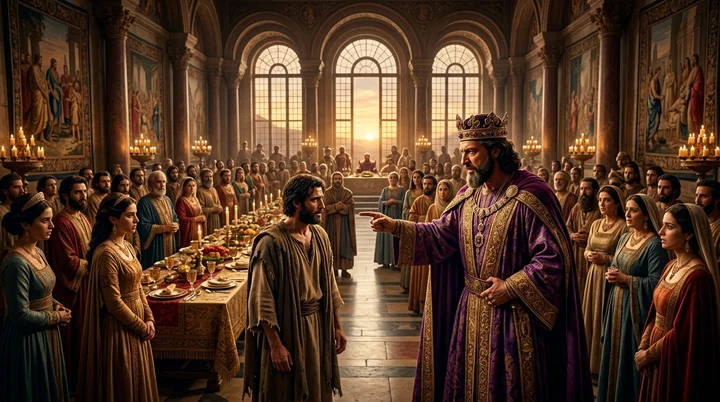
Cross-references
- Luke 14:16-24
Then said he unto him, A certain man made a great supper, and bade many:
Both parables portray invited guests refusing a feast, followed by others being called in.
- Matthew 21:33-41
Hear another parable: There was a certain householder, which planted a vineyard, and hedged it round about, and digged a winepress in it, and built a tower, and let it out to husbandmen, and went into a far country:
A companion vineyard parable portrays servants rejected and killed, followed by judgment.
- Matthew 22:11-14
And when the king came in to see the guests, he saw there a man which had not on a wedding garment:
The guest without a wedding garment is rejected at the wedding feast.
- Matthew 23:37
O Jerusalem, Jerusalem, thou that killest the prophets, and stonest them which are sent unto thee, how often would I have gathered thy children together, even as a hen gathereth her chickens under her wings, and ye would not!
Jerusalem refused Christ’s repeated desire to gather its people.
- Luke 14:17-18
And sent his servant at supper time to say to them that were bidden, Come; for all things are now ready.
The invited guests refuse the final call with excuses.
- Matthew 22:2
The kingdom of heaven is like unto a certain king, which made a marriage for his son,
The passage applies the parable’s wedding feast to Christ and his church.
- Matthew 21:43
Therefore say I unto you, The kingdom of God shall be taken from you, and given to a nation bringing forth the fruits thereof.
The kingdom is taken from one people and given to another.
- Acts 2:23
Him, being delivered by the determinate counsel and foreknowledge of God, ye have taken, and by wicked hands have crucified and slain:
Connects rejection of Christ with his being killed.
- Revelation 19:7-9
Let us be glad and rejoice, and give honour to him: for the marriage of the Lamb is come, and his wife hath made herself ready.
The passage identifies the parable’s feast with the Lamb’s marriage supper.
- Matthew 20:16
So the last shall be first, and the first last: for many be called, but few chosen.
The vineyard parable explains that many are called, but few are chosen.
- John 1:11
He came unto his own, and his own received him not.
Connects the parable’s rejected invitation with Jesus’ rejection by his own people.
Commentary
Each commentary is drawn from primary sources: the writings of Ellen G. White and Adventist pioneers and periodicals. Each commentary is separate. Its own words are not a quotation; follow the references to read the source passages.
Ellen G. White
52 sources
The verse belongs to the marriage parable where a king prepared a wedding for his son and sent servants with a second, dinner-is-ready call that was met by neglect from those drawn to farm and merchandise and by seizure, abuse and murder from the remnant.Ms 143, 1898, par. 1–3Ms 46, 1896, par. 1–2Ms 185, 1903, par. 1–3 The first-invited guests were God's chosen people given first hearing of the richest gospel banquet, and the servants were His messengers sent to carry the invitation and bring the church to see its true state.Ms 18, 1899, par. 1–4Ms 29, 1898, par. 5–7Lt 61, 1893, par. 2–3RH May 8, 1900 Their violence was more than indifference, despising the king's authority and honor with scorn, harsh words, hatred of reproving truth, and ill treatment and killing of His messengers.COL 307.2–308.1Ms 149, 1898, par. 3Ms 29, 1898, par. 5–7Lt 61, 1893, par. 2–3Ms 46, 1896, par. 11–13 The murder brought the king's wrath beyond exclusion, sending his armies to destroy the murderers and burn their city, meaning God permitted Rome to destroy Jerusalem for rejecting its only means of salvation.Ms 143, 1898, par. 1–3Ms 149, 1898, par. 3Ms 46, 1896, par. 11–13 The same parable reaches especially to the professing Christian world today, from whom just as implicit obedience is required, for the king still inspects the highway-gathered guests and accepts only those clothed in the provided wedding garment of Christ's righteousness.Ms 143, 1898, par. 1–3Lt 49, 1887, par. 5Lt 24, 1892, par. 5–7Ms 149, 1898, par. 7–8
Parable Setting and Story
The kingdom of heaven is like a certain king who made a marriage for his son and sent forth his servants to call those who were bidden to the wedding.Ms 143, 1898, par. 1–3Ms 46, 1896, par. 1–2RH May 8, 1900 Those bidden thought themselves worthy to be invited, and the king sent his servants to invite them personally so they would understand the invitation.Ms 46, 1896, par. 1–2 After the first call was refused, a second call announcing that dinner was ready and all things were now ready was given.Ms 143, 1898, par. 1–3Ms 46, 1896, par. 1–2 That final general call was refused, for those called would not come.Ms 46, 1896, par. 1–2
Some made light of the call and went their ways to farm and merchandise, wholly intent on worldly gain.Ms 18, 1899, par. 1–4Ms 143, 1898, par. 1–3Ms 46, 1896, par. 1–2 Buying and selling, planting and building, with eternity left out, was the meaning of their departure to farm and merchandise.Ms 18, 1899, par. 1–4 While they left, the remnant of those invited seized the king's servants, entreated them spitefully with abuse, and slew them.Ms 143, 1898, par. 1–3Ms 46, 1896, par. 1–2Ms 185, 1903, par. 1–3RH May 8, 1900 This was one way men answer God's gospel invitation, rejecting both the wedding invitation and the messengers who carried it.Ms 46, 1896, par. 1–2Ms 185, 1903, par. 1–3
The servants are messengers sent to carry the wedding invitation.Ms 29, 1898, par. 5–7 They are sent to bring the church to understand its true state and to come to the supper, offering the richest blessings of heaven, justification by faith and the imputed righteousness of Christ.Lt 61, 1893, par. 2–3 Their violent rejection, doing more than ignoring the invitation by mistreating and killing them, illustrates how the Jews cruelly treated the messengers of the gospel.Ms 29, 1898, par. 5–7 Those who refused did not always openly oppose but held themselves aloof from the servants, refusing close relation and harmony with their work, drinking the truth held to their lips only in part.Lt 61, 1893, par. 2–3
The first-called guests were God's chosen people, to whom the messengers were sent first.Ms 18, 1899, par. 1–4RH May 8, 1900 They were those in the higher walks of life, the higher classes, the shepherds of the flock and divinely appointed teachers, men in the higher ranks of society, in business life and positions of trust, men with large inventive faculties and scientific insight, men of genius and God-given powers of organization.Ms 18, 1899, par. 1–4Ms 18, 1899, par. 9–10 Men to whom God has entrusted many talents, with ability to look ahead and discern what needs to be done, were to be the first to hear the gospel call, hearing the truth in a manner different from the way they had heard it in the past, because they are needed in carrying forward the work for the last days as managers of institutions, leaders, captains, educators, faithful financiers, and presidents of conferences who stand solid as a rock to principle.Ms 18, 1899, par. 9–10 They had all the privileges and opportunities of the richest banquet ever presented to man, consented to come and accepted the invitation, yet as a nation divorced itself from God by rejecting the only begotten Son and refusing the garment of Christ's righteousness.Ms 149, 1898, par. 7–8
The killing brought the king's wrath, so that he sent forth his armies to destroy those murderers and burn up their cities.Ms 143, 1898, par. 1–3 After the murderers were judged, servants were sent into the highways to gather all that were found, both bad and good, so that the wedding was furnished with guests for the king to inspect.Ms 143, 1898, par. 1–3 The messengers were thus sent to call other guests when the invited guests rejected the king's invitation.Ms 6, 1897, par. 1–4 That invitation represents a lifelong call to receive Christ and live in obedience, to be offered to all, while only those who truly receive Christ and put on His righteousness are fit for the feast.Ms 6, 1897, par. 1–4
Nature of Violent Rejection
The rejection in the verse is more than indifference, for a king's authority, honor and command were despised and treated with contempt as unworthy of notice, a deeper insult than the refusal of the householder's supper invitation because the invitation came from one vested with power to command and the feast involved much.COL 307.2–308.1Ms 149, 1898, par. 3Ms 46, 1896, par. 11–13 Those first invited made light of the command by pleading circumstances and supposed duties for failing to comply, turning instead to merchandise, farming, social attractions and trust in the world and mammon.Ms 149, 1898, par. 3Ms 46, 1896, par. 11–13 Making light of the call meant being wholly intent on securing worldly gain, buying and selling, planting and building, with eternity left out.Ms 18, 1899, par. 1–4Ms 46, 1896, par. 11–13 It was driven by pride in buying and selling and getting gain, by those who thought they could not afford to lose any worldly advantage to enjoy the heavenly feast, knowing that acceptance required putting off the common citizen's dress and putting on the robe of Christ's righteousness.Ms 18, 1899, par. 1–4Ms 143, 1898, par. 5
Taking the servants spitefully meant treating the messengers with scorn and despiteful use, with ill treatment, harsh and bitter words, despising the truth that reproved sins, hating scriptural arguments that could not be met, and abusing and killing God's messengers.Ms 149, 1898, par. 3Ms 29, 1898, par. 5–7Ms 46, 1896, par. 11–13 Their violent rejection went beyond ignoring the invitation to mistreating and slaying those who carried it, and such disrespect for the servants was disrespect for the master of the feast himself.Ms 18, 1899, par. 1–4Ms 149, 1898, par. 3Ms 29, 1898, par. 5–7 Provoked at being disturbed in self-complacency because conviction stirred them, they turned contempt into persecution.Ms 46, 1896, par. 11–13 Not all refused in this open way, for some do not openly oppose but hold themselves aloof, refusing close relation and harmony with the servants' work, assenting to truth yet drinking it only in part and refusing to obey or accept the call.Lt 61, 1893, par. 2–314MR 19.1–3 By clinging to the old citizen's dress and refusing to drink fully the truth held to their lips, they reject the prepared supper itself, though the servants were sent to bring the church to understand its true state and to come and receive justification by faith and the imputed righteousness of Christ.Lt 61, 1893, par. 2–3
Those who acted so had turned back, had not sought the Lord nor inquired for Him, thought their own wisdom sufficient and spoke as though oracles of wisdom, sending refusal asking to be excused.Ms 18, 1899, par. 1–4 They listen to the voice of the wily foe and adopt the varied, foolish excuses he frames, refusing heavenly benefits because this present world is their god, refusing Him who would give real value, allegiance and His image, who would make them truly great, turn crosses to crowns and change them into obedient, loyal children by the ransom of His precious blood.Ms 18, 1899, par. 1–4Ms 46, 1896, par. 14–16 They love not the light and will not come to the light because their deeds are evil, though Christ bids souls to a banquet that will satisfy every want and God offers grace, bestows love and waits for a response, yet cannot work for a soul that does not respond.Ms 46, 1896, par. 14–16ST Mar 17, 1898 In its historical sense the verse portrays the Jewish people rejecting the gospel invitation after Christ's crucifixion and cruelly treating, persecuting and killing its messengers.COL 307.2–308.1Ms 29, 1898, par. 5–7Ms 46, 1896, par. 11–13
The setting is an invitation given for the guests' benefit yet rejected for lesser interests, and those who remain unready lose opportunity when the door is shut and seek admission too late.Lt 7, 1869, par. 6–7 Their neglect can also influence others to remain unprepared.Lt 7, 1869, par. 6–7
Wrath and Destruction Foretold
The murder of the servants brought the king's wrath upon the guilty, with a punishment more dreadful than mere exclusion from his presence and table, because the insult was deeper than the refusal in the householder's supper invitation, since this was a king's invitation from one vested with power to command and the feast involved much, making the guilt deeper for those who made light of the command while pleading circumstances and supposed duties and who treated the messengers with scorn.Ms 149, 1898, par. 3 After the first call was refused and the second call announcing dinner ready was made light of by those who left for farm and merchandise, the remnant seized, abused and murdered the servants, and in wrath the king sent forth his armies to destroy those murderers and burn up their cities, then sent servants into the highways to gather all found, both bad and good, so that the wedding would be furnished with guests for the king to inspect.Ms 143, 1898, par. 1–3Ms 149, 1898, par. 3 This destruction means God permitted the Romans to destroy those murderers and burn their city, which Jesus used to warn of the fate awaiting Jerusalem for rejecting the only means God had provided to save them, after the first-invited first treated the gracious invitation with contempt as unworthy of notice and then, provoked at being disturbed in self-complacency, used harsh words and killed God's messengers.Ms 46, 1896, par. 11–13
In the parable the Jewish nation decided its own destiny, and as a nation divorced itself from God by rejecting the only begotten Son and refusing the garment of Christ's righteousness, forever separating itself from God, although as first-invited guests it had all the privileges and opportunities of the richest banquet ever presented.Ms 149, 1898, par. 7–8 The same parable applies more especially to the Christian world today who claim to believe in Christ, from whom the Lord requires just as implicit obedience and high-principled service as from those first called, with no mistake to be made about those called to the heavenly banquet, whether newly invited guests found in the highways and hedges or those first called.Ms 149, 1898, par. 7–8 The marriage parable presents events before the wedding, and its wedding is connected with the investigative judgment in heaven.GC 428.1–2 The parable shows God is not unjust and not arbitrary when He tells the wrongdoer that he shall be separated from His presence, for the invitation is gracious and benevolent and the wedding garment has been purchased and provided as the robe of Christ's righteousness.Lt 49, 1887, par. 5
Wedding Garment Required
The feast in which this murder occurs is the gospel invitation itself, the gospel feast and marriage supper of the Lamb and banquet of God's Word, prepared by Christ's atoning death and proclaimed in the call Come, for all things are now ready.14MR 122.2–123.16T 412.2Ms 143, 1898, par. 6–8Lt 4, 1899, par. 17–18 It carries a solemn warning that God's offer of pardon and salvation must be heeded and that those bidden must be ready to enter the wedding, and that warning must not be refused.Ms 143, 1898, par. 6–8Ms 8, 1874, par. 18Ms 59, 1895, par. 34–39 The feast represents the gospel invitation, and the king's coming in to inspect the guests shows that all who are invited are judged, with only those clothed in Christ's righteousness accepted at last.COL 312.1–3COL 315.1
The wedding garment that has been purchased and provided is the robe of Christ's righteousness, the white linen of a clean pure character, spotless as the pure white lily.Lt 49, 1887, par. 5Ms 143, 1898, par. 6–8Ms 109, 1901, par. 9Ms 70, 1901, par. 6–8 It is the humility and meekness and lowliness and righteousness of Christ, and answering the final call to the supper requires being clothed in that white robe.Lt 49, 1887, par. 5Lt 24, 1892, par. 5–7Ms 109, 1901, par. 9Lt 115, 1899, par. 4–5 Partaking rightly means accepting Christ as personal Saviour and accepting truth as it is in Jesus.Lt 61, 1893, par. 2–3Ms 143, 1898, par. 6–8 It means putting off the citizen's dress of stubborn self-will and pride and the old citizen life lived in ignorance, with speech and conversation changed into altogether another line so that faith stands not in the wisdom of men but in the power of God.Lt 61, 1893, par. 2–3Lt 24, 1892, par. 5–7Ms 143, 1898, par. 6–8 That refusal was made knowing what acceptance required, to put off the common citizen's dress and put on the robe of Christ's righteousness and thereby show themselves to be His church, married to Christ as His bride.Ms 143, 1898, par. 5
To accept thinking only to benefit oneself and to partake of the provisions, while coming in one's own defiled garments as good enough to enter Christ's presence and refusing to put on the prepared dress and be like Jesus, does not honor Him.Lt 49, 1887, par. 5Ms 143, 1898, par. 6–8 It does the greatest dishonor to Him who invites and provides the robe, insults the Lord and abuses His gracious benevolence, and the one so found is cast out and separated from His presence.Lt 49, 1887, par. 5Lt 24, 1892, par. 5–7Ms 143, 1898, par. 6–8 Outward acceptance is therefore not enough, for guests must have reformation of heart and wear the garment, representing Christ in character.STMW10 4.2–5.1Lt 5, 1897, par. 7–10Lt 94, 1898, par. 10–15 They must bring truth into the inner sanctuary of the soul and not leave it in the outer court, be doers of the Word and not hearers only building on sand, and manifest the inward working of the Holy Spirit in life and practice rather than a mere form of godliness.STMW10 4.2–5.1Lt 94, 1898, par. 10–15Ms 111, 1906, par. 1–3 Those who nominally accept truth yet show love of ease and selfish indulgence, fail to return entrusted talents in faithful service, and leave wrongs unrepented and unconfessed come unsanctified without the garment and cannot share the feast with Christ unless they repent and receive forgiveness and cleansing, and though professedly circumcised they are in practice among the uncircumcised and will be destroyed with the uncircumcised.STMW10 4.2–5.16T 295.2Lt 29, 1899, par. 8–10Ms 111, 1906, par. 1–3
The parable of the wedding garment opens a lesson of highest consequence, presenting the marriage of humanity with divinity and the standard of character each must reach to be counted a fit guest, whose full import must be gathered by careful study.Ms 13, 1899, par. 1–2 Presumption in matters of eternal interest, measuring character by human ideas rather than God's given standard, and continuing in sin hinders the fulfillment of God's promise and results in loss of the soul.Ms 13, 1899, par. 1–2 What is required is a firm stand for Christ, surrender to God of what is already His own, and acceptance of the righteousness of Christ as defined in John 6, for without it there is no wedding garment on.Ms 13, 1899, par. 1–2 The time is short and all must be prepared for the marriage supper by accepting the robe and receiving Christ's peace, for Satan is working and will work in great power with the children of disobedience as agents to destroy the soul, so the devil must be resisted that he may flee.Lt 86, 1889, par. 4 The invitation and promises of the heavenly banquet prepared by sending the Son to die that believers through faith might become one with God are not made to a few but to all who will come, and no walls are built to keep any living soul from salvation.6MR 388.2 All who accept Christ as personal Saviour, return to loyalty and to perfect obedience to all the commandments, and are willing to be saved are the elect of God, the obedient predestinated from the foundation of the world unto effectual salvation as a peculiar people chosen to the praise of His grace and power and wisdom.6MR 388.2
Carrying the Invitation Forward
The gospel invitation is the call to the marriage supper, to the marriage supper of the Lamb, and it is to be carried everywhere, out into the highways and hedges to those who have not yet heard, compelling them to come in so that God's house may be full, as a final invitation before Christ's coming.STMW10 4.2–5.1Lt 5, 1897, par. 7–106T 412.2Lt 4, 1899, par. 17–18Lt 86, 1895, par. 6 The call in the highways reaches men of the world and people of high standing, of influence and wealth, including the higher classes of life with whom few can gain association and who are difficult to reach.Ms 185, 1903, par. 19–20Ms 109, 1901, par. 9Ms 74, 1900, par. 1116MR 163.2–164.2Lt 34, 1900, par. 28–31 They are not to be passed by but must be given a fair chance, sought out with tender affection and brotherly regard, urged and taken hold of and brought in, and asked whether they are prepared for immortal life.Ms 109, 1901, par. 916MR 163.2–164.2Lt 34, 1900, par. 28–31Ms 18, 1899, par. 9–10 Their talents are needed, for among them are men in the higher ranks of society, in business life and positions of trust, men with large inventive faculties and scientific insight, men of genius and God-given powers of organization, whose ability to look ahead and discern what needs to be done is needed in carrying forward the work for the last days as managers, leaders, educators, financiers, and steadfast upholders of principle.Ms 185, 1903, par. 19–20Ms 18, 1899, par. 9–10
God has given His church the opportunity to work for Him by coming to the feast and inviting others to come with them, praying and working together with God to urge people to the feast.STMW10 4.2–5.1Ms 7, 1900, par. 12–13 That work calls for giving the trumpet a certain sound of warning and keeping vital connection with the great Leader in preparation for the conflict before us.Lt 24, 1892, par. 5–7 Truth is to be set forth as a repast that holds large numbers with most earnest interest, bringing it before thousands now in vice and iniquity that they may be redeemed from dissipation and sin, without lowering God's law to gain converts.STMW10 4.2–5.1Ms 7, 1900, par. 12–13Lt 86, 1898, par. 17 The invitation itself is gracious and benevolent, prepared for the guests' benefit as a feast satisfying every need and every want, offering repose from din and confusion, and the peace and happiness and joy He longs to bestow, full of marrow and fatness.Lt 49, 1887, par. 5Ms 109, 1901, par. 9Lt 7, 1869, par. 6–7Lt 153a, 1897, par. 16–18ST Mar 17, 1898 Each may choose whether to respond to love without parallel and to love and grace, for the invitation does not force anyone, God waits for response and the issue rests wholly with those invited, and He cannot work for a soul that does not respond.Lt 153a, 1897, par. 16–18ST Mar 17, 189821MR 370.5
There are not more great men, noted men, and worldly-wise men among believers because, though Christ paid the ransom of His own precious blood to send them the invitation and by being a Sin-bearer opened the way for all who desire eternal life above every earthly consideration, they listen to the wily foe and adopt the varied, foolish excuses he frames.Ms 46, 1896, par. 14–16 They make this present world their god, refuse Him who could give real value to character and bring them back to allegiance to God and His commandments and place His own image and superscription upon them, and will not take the marriage contract and partake of the supper nor associate with Him who would make them truly great and turn their crosses into crowns, and God allows every one to choose his own Lord.Ms 46, 1896, par. 14–16 Worldly entertainments can keep people from accepting that call and receiving Christ's righteousness pictured as the white wedding robe.14MR 122.2–123.1 Those who have had every privilege of Bible truth yet show love of ease and selfish indulgence, fail to bring truth into the inner sanctuary of the soul, and fail to return entrusted talents in honest faithful service, though nominally accepting truth, will be held accountable by God.STMW10 4.2–5.1 All who follow Christ must work as He worked, by wearing the wedding garment, the robe of Christ's righteousness, and by proclaiming the knowledge of that rich repast of truth prepared by His atoning death to convey the invitation to others.Ms 139, 1898, par. 83
Sources
Pioneers and periodicals
65 sources
The verse belongs to the parable in which the kingdom is likened to a king making a marriage for his son, where after those first bidden would not come and others went to farms and merchandise, the remnant seized the servants, treated them shamefully and spitefully, and killed them.ST Aug 4, 1914ST Apr 21, 1898ST Feb 12, 1902RH Dec 23, 1862
The servants are the messengers sent to call the Jews to the gospel, including the prophets, John the Baptist, Christ and His disciples, coming in successive calls that left those called without excuse.ST Jul 27, 1882ST Jun 29, 1882ST Apr 21, 1898
That violent rejection was scornful, cruel mistreatment and killing, including the rejection and crucifixion of the Messiah, the killing of Christ and His apostles, and continued persecution of the early Christians.ST Oct 18, 1899ST Oct 18, 1899ST Apr 21, 1898
Because of that rejection the city was destroyed, as God used the Romans to destroy Jerusalem and scatter the Jewish nation in A.D. 70, and the invitation first given to the Jews was extended to the Gentiles bringing forth fruit.RH Jan 23, 1855ST Jul 27, 1882ST Oct 18, 1899ST Nov 22, 1910ST Jul 7, 1890
The fulfillment stands as warning that the gathering of good and bad to the feast faces a final examination before the marriage, where only those clothed in Christ's spotless righteousness will be found worthy to stand before the Son of man.RH Jan 8, 1857ST Jun 3, 1897ST Nov 22, 1899RH Jan 19, 1869RH Jun 29, 1916
Parable Story and Setting
The verse belongs to the parable in which the kingdom of heaven is likened to a certain king who made a marriage for his son and sent forth his servants to call those who were bidden to the wedding.RH May 8, 1900ST Apr 21, 1898RH Apr 15, 1858 The king's son is the Son of God, and his marriage is the marriage of the Lamb, also called the marriage supper.RH Dec 23, 1862ST Aug 19, 1880RH Apr 15, 1858ST Jun 29, 1882 The king's invitation pictures God's call to follow Jesus, and the right response is to listen at once when He calls and decide to follow, even if the call has only been felt that day.
After those first bidden would not come, others made light of the second call and went their ways to farm and merchandise.RH May 8, 1900ST Apr 21, 1898 Then the remnant seized the king's servants and messengers, laid hold on them, treated them shamefully and spitefully and cruelly, and slew and killed them.RH May 8, 1900ST Aug 4, 1914ST Apr 21, 1898ST Feb 12, 1902RH Jul 2, 1901 Their rejection of the invitation thus became murderous persecution of the messengers, slighting the king's invitation and bringing a fate upon them.ST Aug 4, 1914ST Feb 12, 1902
The parable was spoken by Jesus in the temple on Tuesday, the last day He taught there, during the last week of His work on earth.RH Jan 29, 1914ST Apr 21, 1898 It was given on one of the busiest days of His earthly ministry, on the last day of His public ministry as done in the temple, on the same day and occasion in the temple as the events that followed it, when He denounced the Jews for their hypocrisy.RH Jan 29, 1914ST Mar 23, 1888ST Apr 21, 1898 The whole work of Christ on that day in the temple is found in Matthew 21:23 to 23:39.ST Apr 21, 1898 The importance of that last week is shown by the space given to it in the record: seven chapters in Matthew, five in Mark, five in Luke, and eight in John.ST Apr 21, 1898
The parable is used to illustrate truth, and its depicting of the servants' violent treatment does not endorse that conduct or establish the rightfulness of the circumstances portrayed.RH Mar 24, 1863
Servants and Violent Rejection
The king's servants are the messengers sent to call the Jews to the gospel, and their violent rejection brings judgment upon the nation and its city with destruction of Jerusalem.ST Jul 27, 1882 Those messengers include the prophets and John the Baptist giving the first invitation, and Christ and His disciples giving the second call to the same people at that time.ST Jul 27, 1882ST Apr 21, 1898 They are servants of God the Father carrying the invitation to the marriage supper of His Son, the Lamb, and God has set His hand to the work so that the wedding must be furnished with guests.ST Apr 21, 1898
The calls came successively, first through John the Baptist announcing to those already bidden that dinner was ready, then through Christ, and then through the apostles still offering mercy.ST Jun 29, 1882ST Apr 21, 1898 This was a repeated message to the same people with the special call that dinner was ready, meaning the work of announcing Christ's coming, and that second message to the same people left them without excuse.ST Jun 29, 1882ST Apr 21, 1898ST Jul 27, 1882 Rejection of the first two calls meant losing the blessing of Pentecost and failing to follow Christ into the heavenly sanctuary, though some accepted and were called out. After this rejection the king turns to another people bringing forth fruit, the great body of the Jews is scattered, Jerusalem is left desolate and rejected as a nation because they did not recognize the time of their visitation, and that invitation is now going out into all the earth.ST Jun 29, 1882ST Apr 21, 1898ST Jul 27, 1882
The rejection was scornful, shameful, spiteful and cruel mistreatment and killing by the king's invited subjects in response to the call to his son's wedding.ST Oct 18, 1899ST Oct 18, 1899GSAM 134.3–4ST Jul 7, 1890 It represents the Jews' rejection and abuse of the Saviour's messengers, their scornful rejection of the Saviour and persecution of those sent to them, scoffing at the message and rejecting and crucifying the Messiah.ST Oct 18, 1899ST Oct 18, 1899 The killing of the servants represents the killing of Christ and His apostles, with some of Christ's disciples treated this way, as part of the crime for which God later used the Romans and armies to destroy Jerusalem, scatter the Jewish nation, and take away their city.ST Oct 18, 1899GSAM 134.3–4ST Jul 7, 1890ST Nov 8, 1883 It includes repeated killing of those trying to turn Israel to God and continued persecution of the early Christians, especially through Saul before his conversion.GSAM 134.3–4ST Jul 7, 1890ST Nov 8, 1883 Those sent to offer the gospel may still face such hostility and violence when they bring the wedding-feast invitation.RH Aug 11, 1863
Fulfillment in Jewish History
The rejection is the Jews rejecting God's calls through His messengers, first through John the Baptist announcing that dinner was ready to those already bidden, then through Christ, and then through the apostles still offering mercy.ST Jun 29, 1882 Their pursuit of worldly gain led God's chosen people to refuse the invitation and show disrespect for the master of the feast.RH May 8, 1900 Rejection of the first calls meant losing the blessing of Pentecost and failing to follow Christ into the heavenly sanctuary, though some accepted and were called out while the great body was scattered. Their violence toward the servants is the picture of Israel's rejection of God's appeals, which delayed the work until servants were sent to invite people from the Gentile world.ST Nov 22, 1910
That violent rejection brings the parable's destruction of the city and people, which is Jerusalem's destruction and the rejection of the Jews as a nation.RH Jan 23, 1855ST Jul 27, 1882ST Jun 29, 1882 Some of the invited subjects seized the servants, treated them shamefully and spitefully, and killed them, representing the Jews' scornful rejection and abuse of the Saviour's messengers and their persecution of those sent to them.ST Oct 18, 1899ST Oct 18, 1899ST Jun 29, 1882 The killing of the servants is the killing of Christ and His apostles.GSAM 134.3–4 The judgment that followed was the Lord's use of the Romans and armies to destroy Jerusalem and scatter the Jewish nation in A.D. 70, leaving Jerusalem desolate because they did not recognize the time of their visitation.RH Jan 23, 1855ST Jul 27, 1882GSAM 134.3–4
After the dinner call to the Jews proved fruitless, the king turned to another people bringing forth fruit.ST Jun 29, 1882RH Jan 23, 1855 The invitation first given to the Jews was extended to the Gentiles, including the blessings offered to Israel if they had accepted Jesus as Messiah, and the nation's refusal delayed the work until servants were sent into the Gentile world.ST Nov 22, 1910ST Jul 7, 1890RH Aug 20, 1872 He came to His own and His own received Him not, so the kingdom is taken from the Jews and given to those bringing forth its fruits, and from that point there is no more preaching that the kingdom of heaven is at hand.RH Apr 9, 1872 The marriage itself does not take place until all the guests have accepted the invitation, and the guests are examined before they are called to the marriage supper of the Lamb.RH Apr 9, 1872
The two calls to the marriage and their rejection, when the message that all things are now ready is given and the rest of those first bidden lay hold on the messengers and treat them shamefully and kill them, illustrate rejection and slight the king's invitation and bring a fate upon them.ST Feb 12, 1902 They hold a special and solemn meaning for those who first heard them, like the parables of the two sons and the Lord's vineyard.ST Feb 12, 1902 They also show why many are called but few are chosen, with a lesson that applies to the church today.ST Feb 12, 1902
Judgment and End-Time Meaning
The fulfillment takes place before Christ's coming, while people are still mortal.RH Jan 8, 1857RH Apr 2, 1861 It gives instruction and warning about the final decision, when people are found worthy or unworthy to stand before the Son of man and face life or death before the Lord appears.RH Jan 8, 1857RH Apr 2, 1861RH Oct 11, 1915 The wedding feast portrays God's work through Christ to save sinners together with the judgment of those unprepared to stand before the Lord, in which Judgment stands as a prominent part of Jesus' teaching.ST Aug 7, 1901ST Dec 17, 1885 Its solemn lesson is that those not found faithful are excluded from God's people.RH Oct 11, 1915
The king's coming in to see the guests pictures the judgment.RH Jan 8, 1857ST Jun 3, 1897RH Jun 29, 1916 After the Third Message has gathered both good and bad, they receive a final examination within the church before the marriage.RH Jan 8, 1857RH Apr 9, 1872 In that examination profession of religion will not pass for possession, and all who are not clothed with Christ's righteousness will be cast out.RH Jan 8, 1857ST Jun 3, 1897 The marriage is Christ's reception of His kingdom and His coronation and the reception and inauguration of the kingdom, with the Bridegroom's coming taking place before the marriage and the guests examined before they are called to the marriage supper of the Lamb.ST Jun 3, 1897RH Jun 29, 1916RH Apr 9, 1872
The sanctuary truth explains the wedding-garment parable to mean that after the 2300 days ended October 22, 1844, an indefinite period of patient waiting began reaching to the coming of the Lord with no additional time movement.RH Aug 7, 1900 During that period the heavenly court is in session with no appeal from its decisions.RH Aug 7, 1900 The decision of character fixing every man's destiny whether holy or filthy, saved or lost, is made before Christ appears, so that the sentence can be carried out in a moment in the twinkling of an eye at the last trump when He rewards every man according to his works.RH Aug 7, 1900 The wedding is Christ's induction into His everlasting kingdom, for which the guests must be prepared with the fitness Christ gives to those who are ready.ST Nov 22, 1899
The marriage feast is the final union of Christ and His people and the final feature of the gospel work.ST Jun 9, 1898 Though the invitation has gone out for centuries, people who profess to accept it may turn to other interests when all is ready, showing that they do not believe the feast is ready, and the call then goes out to invite people from the highways.ST Jun 9, 1898 The marriage-feast story, including the violent rejection and killing of the servants, is to be applied to modern times as the final gospel call before probation closes.ST Oct 3, 1900RH Oct 8, 1903 That last-days warning message is to be carried to the world, and those called to proclaim it must not turn aside from that work.RH Oct 8, 1903
The assembling to the prepared feast, made ready for the good of all ages, takes place at the sound of the last trumpet, which wakes the righteous dead.RH Jun 10, 1862 The righteous dead, the host of worthies, are now unconsciously resting, sleeping and waiting for that trumpet sound.RH Jun 10, 1862 The marriage-supper parable is supplemented by a portrayal of three special calls to be given at the close of the dispensation, represented in Revelation 14:6-9. The first is chiefly addressed to the churches, the second to people outside the churches and those weary of corruption within them, and the third is the compelling call, whose clear and forceful appeals lead honest people to obey.
Marriage Symbols and Doctrines
The king's son is the Son of God and his marriage is the marriage of the Lamb.ST Aug 19, 1880RH Apr 15, 1858 The wedding feast portrays God's work through Christ to save sinners and the judgment of those unprepared to stand before the Lord.ST Aug 7, 1901 It is given as a figure of the coronation of the king and the reception and inauguration of the kingdom, whose marriage does not take place till all the guests have accepted the invitation and have been examined before they are called to the marriage supper.RH Apr 9, 1872
The marriage shows Christ's reception of His kingdom, not the union of Christ with the church that comes through the faith of each believer.ST Jun 3, 1897 In that reception Christ is the Bridegroom and Everlasting Father, the city of the New Jerusalem standing for the entire kingdom is the bride and mother, and the people of God are the children and guests.ST Jun 3, 1897 The wedding is Christ's induction into His everlasting kingdom, and the church are guests at the marriage, not the bride.ST Nov 22, 1899RH Apr 2, 1861 The bridegroom's coming takes place before the marriage, and the king's coming in to see the guests pictures the judgment and investigative examination where profession of religion will not pass for possession.ST Jun 3, 1897RH Jun 29, 1916
The bidden guests are the elect whom angels gather with trumpet sound from the four winds to bear honored and loved to their Saviour's side.RH Sep 12, 1871 They are not the great ones, the mighty on thrones of power, warriors who wade through blood, the decked millionaire, the blind devotee of pride, those with an honored name, those praised by the crowd, or those high on the roll of fame, for those are fading earthly baubles with no value in God's sight.RH Sep 12, 1871 The guests are the jewels the Lord owns, the upright in heart, the meek and mild spirit prized by Heaven, him who is harmless and undefiled, they who wrestle with doubt and sin and never basely yield to the tempter, heroes in the stern strife within on the heart's unseen battlefield, seeking not mortal fame but mercy and goodness and truth and love, scorning earth's praise and blame and making their record right above, slighted and despised and unknown on earth but set apart for endless bliss, on whom Heaven's high honors fall, who find glory as their home, borne in triumph from land and sea.RH Sep 12, 1871
The wedding garment represents the preparation, consecration, acceptance with God, and fitness Christ gives to those who are ready, namely being clothed with Christ's spotless righteousness and purity.ST Nov 22, 1899RH Jan 19, 1869ST Jun 2, 1898 Those who enter must be arrayed in that rare royal vestment as children borne and owned by the King, through hasty, open allegiance, unfurling His seal without dread and confessing the Lord, knowing the joy of grievous sin forgiven and yearning to see His face, unto exaltation to the bliss of heaven in the fair city of glory seen through faith.RH Dec 8, 1910 All who are not so clothed will be cast out.ST Jun 3, 1897 The royal law acts as a mirror revealing defects of character and showing the need for that garment, for the law exposes sin but does not cleanse it, while the gospel provides the cleansing and removes the sins the law reveals; the parable also raises the question of who the improperly dressed guest represents.ST Mar 14, 1878RH Apr 20, 1876
The garment is examined during probationary time before Christ's second coming, and the parable illustrates that people face a final decision for life or death before the Lord appears.RH Oct 11, 1915RH Jan 19, 1869 People who once had this preparation may become impatient, lose faith and consecration, and fall away, and some are found without it at the examination.RH Jan 19, 1869 Those not found faithful are excluded from God's people.RH Oct 11, 1915 Although God calls all, not everyone accepts His call, for some reject it; the call is freely given and whether it is accepted rests with each person, and those who are not chosen are those who refuse the offered terms of salvation.ST Feb 20, 1901ST Apr 19, 1883
Gospel Call and Christian Duty
The warning belongs to the church rather than the world, for its fulfillment takes place before Christ's coming while people are still mortal, when after the Third Message has gathered both good and bad the king comes in to inspect the guests in a final examination of those within the church, who must obtain the white garment or be cast out.RH Jan 8, 1857 That rejection by the rest of those first bidden, who laid hold on the messengers when told all things are now ready and treated them shamefully and killed them, slighted the invitation and brought its fate upon them, and with the two calls to the marriage belongs like the parables of the two sons and the Lord's vineyard to a lesson that applies to the church today and shows why many are called but few are chosen.ST Feb 12, 1902 The invitation to the supper is a final call of mercy to sinners and a warning of doom, in which making excuses brings awful results while accepting the message during probationary time leads to joy and reward at the marriage supper of the Lamb.RH Mar 9, 1905ST Sep 16, 1875
The heavenly call to Christ's marriage feast goes out publicly to people in every nation and language, with opportunity to accept or reject it, and those who receive the latter rain are those who accept its preparatory message of truth and are made ready for the kingdom.ST Jun 28, 1905 The Master now pleads with every child of His to go out quickly into the streets and lanes of the city and into the highways and hedges to bid the hungry and perishing multitudes in the valley of decision to the feast, and that bidding is the promulgation of the third angel's message in a strengthened, deepened and enlarged missionary campaign.RH Oct 5, 1905RH Aug 10, 1905 That work includes bringing Christ's gracious invitation to people in high places and giving them a fair chance to receive and consider the gospel. It is the final gospel call before probation closes, whose mistreatment and killing of the servants depicts rejection of the call, and those called to carry that last-days warning to the world must not turn aside from it.RH Oct 8, 1903
The wedding call declares that all things are ready and invites people to come to the marriage and meet with Jesus, picturing God's call to follow Jesus at once even if felt only that day.ST Mar 28, 1878 Those who reject the invitation may mistreat and kill the messengers sent to them, but such rebellion is no safety from judgment, for they will ultimately face Christ's legal power in either His favor or His just punishment. The invitation can be withdrawn from those who refuse it, so hearers should accept the gospel invitation while it is still offered and seek God while mercy lasts rather than meet Him as enemies.RH Oct 16, 1913 Those invited should therefore make effort to attend rather than stay away through avoidable delay.RH Apr 4, 1865
Refusal comes because houses, lands, cattle, farms and merchandise matter more than the feast, with the first-called pursuit of worldly gain leading to refusal of the call and disrespect for the master of the feast.RH May 8, 1900ST Aug 2, 1899 Christ bids souls to the feast and sets before every want a banquet that will satisfy it, and God offers grace and bestows love and waits for response, yet He cannot work for a soul that will not respond.ST Mar 17, 1898 The reason some do not respond is that they love not the light and will not come to the light because their deeds are evil, and will not come to Jesus to be delivered from the power of evil and to have light and life, though every heart may and can respond to love without parallel if it will.ST Mar 17, 1898
Those hoping to attend must be arrayed in the rare royal vestment as children borne and owned by the King, which is Christ's spotless righteousness as the wedding garment, and those so clothed need not fear the Lord's coming but may enter the marriage supper.ST Jun 2, 1898RH Dec 8, 1910 That invitation calls for hasty, open allegiance to the King of kings, unfurling His seal and signet without dread and confessing the Lord at every chance, knowing the joy of grievous sin forgiven and yearning to see His face, unto exaltation afterward to the bliss of heaven in the fair city of glory seen through faith.RH Dec 8, 1910 It requires keeping God's commandments, including paying just debts, in preparation for the coming King.RH Jul 2, 1901 It also requires making effort to attend rather than staying away through avoidable delay.RH Apr 4, 1865
The feast represents the reception of the redeemed, who are taken to the New Jerusalem, to which all are invited but only those who accept and are ready attend.ST Oct 18, 1899 Its setting depicts the invitation to share in the feast with Christ when He appears.ST May 11, 1915 The Bridegroom is Immanuel the King, coming soon in His chariot lighting the east to save His people from the conflict and bitter strife of sin and to usher in the eternal day, whom Zion's true watchmen are to shout aloud and sing as He for whom His people wait.ST Oct 27, 1909
Sources