Translations
American King James Version, Webster Bible
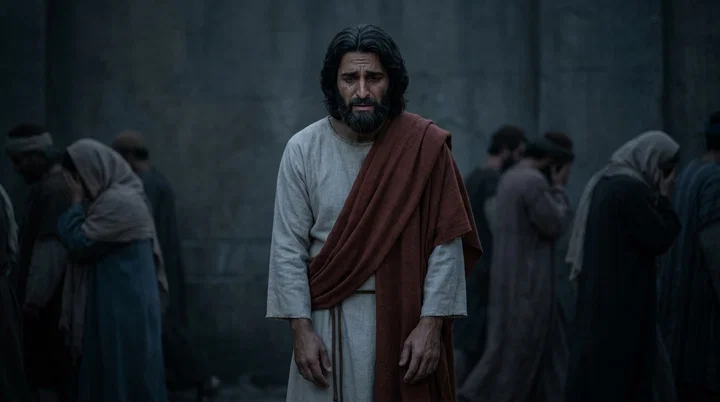
He came to his own, and his own received him not.
King James Version, KJV Cambridge Paragraph Bible, Douay-Rheims (Challoner revision)
He came unto his own, and his own received him not.
Revised Version, American Standard Version
He came unto his own, and they that were his own received him not.
to his own things he came, and his own people did not receive him;
He came to his own, and his own received him not;
Into his own possessions, he came, and, his own people, received him not home.
Berean Standard Bible, Majority Standard Bible
He came to His own, and His own did not receive Him.
He came to his own, and those who were his own didn’ t receive him.
He came to the things which were his and his people did not take him to their hearts.
He came vnto his owne, and his owne receiued him not.
Pictures
Cross-references 20 of 112
- Isaiah 53:3
He is despised and rejected of men; a man of sorrows, and acquainted with grief: and we hid as it were our faces from him; he was despised, and we esteemed him not.
The Messiah is described as despised and rejected by people.
- John 1:1-5
In the beginning was the Word, and the Word was with God, and the Word was God.
The divine Word, Creator and source of life and light, was not recognized by people.
- Matthew 23:37
O Jerusalem, Jerusalem, thou that killest the prophets, and stonest them which are sent unto thee, how often would I have gathered thy children together, even as a hen gathereth her chickens under her wings, and ye would not!
Jesus laments Jerusalem’s refusal to receive him and his gathering care.
- Luke 19:41-44
And when he was come near, he beheld the city, and wept over it,
Jesus mourns Jerusalem’s failure to recognize his visitation and foretells its destruction.
- John 1:5
And the light shineth in darkness; and the darkness comprehended it not.
The light shines in darkness, which fails to comprehend it.
- Philippians 2:7-8
But made himself of no reputation, and took upon him the form of a servant, and was made in the likeness of men:
Christ came in human form and humbled himself in obedience to death.
- Luke 4:28-30
And all they in the synagogue, when they heard these things, were filled with wrath,
Nazareth’s people reject Jesus and try to kill him.
- John 5:40
And ye will not come to me, that ye might have life.
Both describe people refusing to come to Christ for life.
- John 3:19
And this is the condemnation, that light is come into the world, and men loved darkness rather than light, because their deeds were evil.
People reject Christ, the light, because they love darkness and their deeds are evil.
- 1 John 3:1
Behold, what manner of love the Father hath bestowed upon us, that we should be called the sons of God: therefore the world knoweth us not, because it knew him not.
The world did not know Christ and does not know those who belong to him.
- Acts 3:14-15
But ye denied the Holy One and the Just, and desired a murderer to be granted unto you;
The people rejected Jesus, the Holy One and Prince of life, and killed him.
- Matthew 21:38
But when the husbandmen saw the son, they said among themselves, This is the heir; come, let us kill him, and let us seize on his inheritance.
The leaders plot to kill the heir, Christ.
- Acts 13:46
Then Paul and Barnabas waxed bold, and said, It was necessary that the word of God should first have been spoken to you: but seeing ye put it from you, and judge yourselves unworthy of everlasting life, lo, we turn to the Gentiles.
The Jews reject the message, and Paul turns to the Gentiles.
- John 3:16-17
For God so loved the world, that he gave his only begotten Son, that whosoever believeth in him should not perish, but have everlasting life.
God gave and sent his Son to save the world, though people rejected him.
- John 15:18-19
If the world hate you, ye know that it hated me before it hated you.
The world hated Christ first, and therefore hates his followers.
- John 19:15
But they cried out, Away with him, away with him, crucify him. Pilate saith unto them, Shall I crucify your King? The chief priests answered, We have no king but Cæsar.
The people reject Jesus, crying for his crucifixion and declaring Caesar their king.
- John 7:5
For neither did his brethren believe in him.
Jesus’ brothers did not believe in him.
- Luke 13:34
O Jerusalem, Jerusalem, which killest the prophets, and stonest them that are sent unto thee; how often would I have gathered thy children together, as a hen doth gather her brood under her wings, and ye would not!
Jesus laments Jerusalem’s refusal to receive his gathering call.
- Isaiah 53:1
Who hath believed our report? and to whom is the arm of the LORD revealed?
Few believed the report about the Messiah, reflecting Christ’s rejection.
- John 1:3
All things were made by him; and without him was not any thing made that was made.
The Word made the world he entered.
Commentary part 1 of 2
Each commentary is drawn from primary sources: the writings of Ellen G. White and Adventist pioneers and periodicals. Each commentary is separate. Its own words are not a quotation; follow the references to read the source passages.
Ellen G. White
132 sources
The eternal Word who was with God and was God, by whom all things were made, came in person in humble human flesh at the appointed time to save the fallen race, and came first to the Jewish nation entrusted with His oracles, law and temple service.ST Nov 12, 1912RH Nov 20, 1900Lt 22, 1900, par. 16PK 710.1Ms 191, 1905, par. 10–12 When He came to His own world and people, the light shone in darkness yet they did not know or receive Him, and the rejection was general though not universal, since His disciples and other sincere seekers gladly received Him when He was revealed.ST Nov 12, 1912Lt 329a, 1905, par. 7Lt 388, 1907, par. 1–3ST Mar 9, 1915 They rejected Him because they looked for a Saviour of majesty and temporal power and stumbled over His lowly birth and suffering life, while pride and self-righteousness, misreading of prophecy through tradition, blindness and world-love stirred by Satan, and opposition from priests and rulers kept them from discerning Him.PK 710.1Ms 191, 1905, par. 10–12Ms 72, 1895, par. 20–24LC1 35.1–21RED 35.1 In rejecting Him they separated themselves from God and were left desolate unto the destruction of Jerusalem, yet His mission did not fail, and as many as receive Him by faith and new birth from God are given power to become sons and daughters of God and to live obediently by His life.RH Nov 20, 1900Lt 329a, 1905, par. 720MR 88.3–6Ms 101, 1897, par. 13–16ST Jul 26, 1899 The same history is being repeated now when He is rejected in His messengers and truth, warning all before His second coming to repent and be converted, while His patient endurance under contempt remains the model for all who work for God.Lt 155, 1902, par. 20Lt 64, 1893, par. 8–10Lt 117, 1903, par. 11–13Lt 4, 1889, par. 25–28Ms 21a, 1895, par. 3
Christ Who Came
The verse speaks of the eternal Word who was with God and was God, the Son of God, the true Light who lights every man and the life of men, by whom all things were made and who sustains the world, coming in person into the world he had made, made flesh and dwelling among men full of grace and truth, from whose fullness all receive grace for grace.ST Nov 12, 1912RH Nov 20, 1900Lt 22, 1900, par. 16Ms 196, 1903, par. 8STMW9 22.1 He came from the heavenly courts to represent God in human form, to dwell among men in his own world and among his own people, yet the world he made did not know him and his own did not recognize, know, comprehend, or receive him.ST Nov 12, 1912STMW9 22.1ST Jun 27, 1900Ms 133, 1906, par. 8–9SSP 25.2 His coming was part of God's provision to save sinners, revealing the Father's glory, character, and kingdom, and while rejection met him, as many as receive him and believe on his name are given power and right to become sons and daughters and children of God.RH Nov 20, 1900Lt 22, 1900, par. 16Ms 196, 1903, par. 8STMW9 22.1ST Jun 27, 1900
He came in humility without outward display of heavenly power, laying aside royal state and princely character and taking human nature and human form in the likeness of sinful flesh.Ms 133, 1906, par. 8–9SSP 25.2ST Sep 27, 1877RH Jun 12, 1900 He came as one of poor parentage, sharing the life of the poor with no home except where friends offered kindness, moving through his own realm to bless and save while scarcely recognized, yet still possessing divine power and resources and speaking with commissioned authority.Ms 133, 1906, par. 8–9SSP 25.2Ms 72, 1895, par. 20–24LC1 35.1–2ST Sep 27, 1877 His divinity was veiled in human flesh as he stood before his own nation's rulers to be condemned, and he patiently endured abuse without revealing glory against them.ST Sep 27, 1877RH Jun 12, 1900 They would have received and worshiped him if he had come with majesty, power, splendor, and authority to compel Gentiles and exalt the nation, but because he came meek and lowly in humiliation and suffering they would not acknowledge him.Ms 72, 1895, par. 20–24LC1 35.1–2
He came at the first advent at the appointed time in the fullness of time, nearly two thousand years ago when evil was in unceasing activity and rebellion widespread, and people soon after his mission began wanted to be rid of him because they did not know who he was.ST Jun 27, 1900Ms 8, 1904, par. 17–19Ms 11, 1886, par. 1–2 He lived about thirty-three years including about three years of public labor, coming on a mission of mercy not condemnation to save the fallen race, to give his life to rescue sinful men and women from transgression to obedience and righteousness and to offer the richest reward of eternal life.ST Jun 27, 1900Ms 8, 1904, par. 17–19Lt 78, 1900, par. 6Ms 25, 1898, par. 12 He came to his own world and people that he made to ransom man from the power of the destroyer, breaking the power of Satan by becoming the Sin-bearer and the center of the redeemed world, taking humanity's transgression upon himself as substitute and surety and bearing sin's penalty so that people may be freed through faith.Ms 8, 1904, par. 17–19Lt 78, 1900, par. 6Ms 25, 1898, par. 12 He came to give life and to call all to behold him as the Lamb of God who takes away sin, leaving the majesty and riches of heaven and taking human nature to save fallen humanity, yet finding no rest or safety among those he came to save so that angels had to preserve his life until his saving mission was complete.ST Jun 27, 1900ST Sep 27, 1877
He knew beforehand in heaven that only a few would receive him as the Son of God and nearly all would hate and reject him, yet he left all his glory to appear on earth as a man and humble himself as a man.EW 120.2ST Jan 30, 1879SG1 23.1 He came to stand between the wrath of his Father and guilty man, bearing iniquity and scorn, and to become acquainted by his own experience with human temptations so he would know how to succor those who are tempted.EW 120.2ST Jan 30, 1879 He came to finish his work as a teacher, then to be delivered into the hands of men and suffer almost every cruelty Satan and his angels could inspire wicked men to inflict.EW 120.2ST Jan 30, 1879 He suffered dreadful mental agony greater than bodily suffering under the weight of the sins of the whole world, died the cruelest death hung between heaven and earth as a guilty sinner, rose again the third day, and ascended to his Father to intercede for wayward, guilty man as advocate.EW 120.2ST Jan 30, 1879
His Own People
His own were first the Jewish nation, the ancient Jewish church, God's chosen peculiar treasure brought out of Egypt and acknowledged as His own. They were the highly favored people delivered through the Red Sea and Jordan and at Jericho, led by the pillar of cloud with mighty miracles and light communicated through Moses, entrusted with His oracles, law, temple rites, blessings and many promises, living in God's house and daily receiving His favors.Ms 191, 1905, par. 10–12Ms 90, 1897, par. 7ST May 26, 1898LC1 35.1–21RED 35.1 No other people professed to be governed by the commandments of God, and among this people He had lived and their hopes had long centered on His coming.PK 710.1LC1 35.1–21RED 35.1 Yet when the promised Saviour, the Messiah, the Light of the world, came to them, they did not recognize, acknowledge or receive Him, and priests and rulers refused Him despite works of healing and raising the dead.PK 710.1Ms 191, 1905, par. 10–12Ms 90, 1897, par. 7Ms 69a, 1896, par. 25–27ST May 3, 1899 Their world-loving hearts and greed for money and worldly gain blinded them to the beauty of His character and mission, while pride and self-righteousness kept them from admitting their leaders' teachings needed correction and from the repentance and conversion necessary for salvation, so they counted Him an impostor and cast Him aside as worthless, to the amazement of angels and in continuance of the world's rejection of Heaven's provision since Cain lifted his hand against Abel.PK 710.1Ms 191, 1905, par. 10–12Ms 69a, 1896, par. 25–27ST May 3, 1899ST May 26, 1898
They had waited more than a thousand years for the Saviour's coming, resting their brightest hopes on that event and enshrining His name in song and prophecy and in temple rite and household prayer.DA 27.1LC1 35.1–21RED 35.1 They held many exceeding great and precious promises as a people, which were the hope and confidence of the Jewish church, wherein they trusted and believed their salvation sure, expecting His coming as the fulfillment and glory of their national hopes.LC1 35.1–21RED 35.1SG4 116.2ST Apr 7, 1914 They trusted those promises and expected their Saviour and King to come with majesty, power, splendor and authority to compel all Gentiles to obey Him and to rule over them and exalt the nation.LC1 35.1–21RED 35.11RED 35.2 His life, ministry and death fulfilled the prophetic descriptions of the promised Messiah who would have given them life, yet their confidence in favored status did not make salvation sure when they rejected Him, bringing impending ruin from which only repentance could save them.1RED 35.1SG4 116.2ST Apr 7, 1914
By creation and by redemption He holds a just claim to every human being, for the world was made through Him and He has purchased the fallen race at infinite cost.Ms 65, 1903, par. 5–6Lt 136, 1902, par. 2216MR 345.1–2 As Redeemer He has been given the deed of possession entitling Him to claim human beings as His property, so the world and above all Israel, the nation He had chosen to be His peculiar people, were His by both rights.16MR 345.1–2Lt 177, 1901, par. 6–8Lt 264, 1903, par. 1520MR 88.7–89.2 Yet the world He had made did not know Him and did not acknowledge that claim, and those who belonged to Him did not believe in Him but rejected and crucified Him.Lt 136, 1902, par. 2216MR 345.1–2Lt 264, 1903, par. 1520MR 88.7–89.2 He is the true Light and the only source of light and life for sinful men, and even the light John had came from Him as the Word made flesh dwelling among men.Ms 65, 1903, par. 5–6Lt 264, 1903, par. 15
How and Why Rejected
He came to those who were his own, yet they did not know, recognize, comprehend, or receive him, and the world he himself had made did not know him; the light shone in darkness and the darkness did not understand it.ST Nov 12, 1912Lt 388, 1907, par. 1–3Lt 155, 1902, par. 20Ms 93, 1893, par. 1–3Ms 16, 1897, par. 3–5 Coming personally into the world he had made and to the people who were his own, he brought light and offered redemption, but they rejected the light he brought.ST Nov 12, 1912Lt 388, 1907, par. 1–3Ms 16, 1897, par. 3–5 Having abundant opportunities to know the truth did not ensure welcome, for carelessness, selfishness, and choosing their own way can repeat that rejection, which stands in contrast to those who receive him and believe on his name and are made children of God.Lt 329a, 1905, par. 7Lt 155, 1902, par. 20Ms 93, 1893, par. 1–3
The rejection was general but not universal, for not all were indifferent to the gift of heaven; few showed respect while most refused.ST Mar 9, 1915Ms 99, 1894, par. 4 Among the Jews dissatisfied with formal religion and longing for what was spiritual and uplifting, including his chosen disciples and humble worshipers who studied prophecy, and among earnest thoughtful men in different nations who had sought soul treasure in literature and science and heathen religions, there were those sincerely desiring truth who had been longing and praying for light from heaven.ST Mar 9, 1915COL 116.1 When Christ was revealed to such seekers they received him with gladness, as seen in Matthew and his associates who followed, in the disciples among the Jews, and in Cornelius and the Ethiopian eunuch among the Gentiles.ST Mar 9, 1915COL 116.1 He knew beforehand that only a few would receive him as the Son of God and nearly all would hate and reject him, yet he came to learn temptation by experience to succor the tempted, finish his work as teacher, suffer dreadful mental agony greater than bodily pain under the world's sins, die hung between heaven and earth as a guilty sinner, rise the third day, and ascend to intercede.EW 120.2ST Jan 30, 1879
Those he came to save and bless met him with insult, hatred, abuse, and ingratitude rather than worship and love, giving the infant no rest or safety so that angels had to preserve his life until his saving mission was complete.Ms 101, 1897, par. 13–16ST Sep 27, 18771SP 157.2–158.2 They hunted him from place to place, expelled truth and the Prince of truth from its territory, despised his righteous self-denying work, trampled his teachings, and made light of his mighty works.Ms 31, 1889, par. 84–85Lt 43, 1895, par. 49–581SP 157.2–158.2 They scorned him as deceiver and pretender, judged him a malefactor and impostor, condemned him without cause though innocent, chose a robber and murderer before him, and at last took him by wicked hands to scourge, crown with thorns, pierce, and crucify him.Ms 31, 1889, par. 84–85ST Sep 27, 18771SP 157.2–158.2 Under Satan's control and enmity against the Champion of truth, priests and rulers and the mob rose against him and shouted for him to be taken away and crucified, and sought opportunity to kill him.9T 228.3–229.2Ms 31, 1889, par. 84–85Lt 43, 1895, par. 49–58
Rejection came even from those nearest him, for his brethren judged him by human standards, misunderstood his motives and work, and tried to conform him to their ideas, while his relatives and former followers turned from him with bitter prejudiced unbelief that wounded his heart.RH Feb 24, 1916DA 326.1–3 In Nazareth they saw only a carpenter's son despite his wisdom, miracles, and power, clinging to prejudice, pride, and earlier decision, refusing evidence he was Messiah and Redeemer and trying to keep others from hearing him until rejection hardened into hatred and jealousy.LC1 57.21RED 57.2 Demons recognized and yielded to him while his own refused to know him, a Roman centurion without Israel's privileges showed greater faith and appreciation than Israel did, and Samaritans who received no sign accepted him as Redeemer while the proud nation refused, leaving Samaritans in a more favorable position.Lt 114, 1895, par. 11–15LC1 57.2DA 326.1–3
They rejected him because they expected their Saviour and King to come with majesty, power, splendor, and authority to compel Gentiles to obey and exalt the nation, and would have received and worshiped such a king.LC1 35.1–21RED 35.22SP 40.3 They would not acknowledge a meek and lowly Saviour of humiliation and suffering, stumbling over his poor childbirth, humble obscure origin as peasant and carpenter, and life without worldly honor.LC1 35.1–21RED 35.22T 142.1 Had he appeared in splendor and assumed the authority of the world's great men instead of taking the form of a servant, they would have received and worshiped him, but his humble impoverished appearance disappointed pride and blinded them to the one who came to give life.1RED 35.22T 142.12SP 40.2
Pride, self-righteousness, self-sufficiency, and love of station with world-loving hearts kept them from seeing the beauty of his character and mission and their need of his righteousness and of repentance and conversion.PK 710.1Ms 69a, 1896, par. 25–27ST Jun 18, 1896 Trusting their own standard and opinions, unwilling to admit their religious leaders' teachings needed correction and remodeling, they counted him an impostor because his teachings conflicted with their own.Ms 69a, 1896, par. 25–27Ms 105, 1894, par. 14–15ST Jun 18, 1896 His lessons of humility, compassion, and love rebuked their selfishness, vanity, and show of piety, and his purity and sinless devotion exposing pride and sensuality called forth hatred, not chiefly for lack of wealth since his power more than supplied it.Ms 105, 1894, par. 14–15ST Jul 22, 18971SP 157.2–158.2 For his sake he lived self-denial, poverty, and suffering, unappreciated, unacknowledged, despised, and rejected, often weary and hungry and filled with sorrow in consciousness of unrequited love.12MR 234.4ST Jul 22, 1897
They misread Scripture and prophecy, studying to support ambition rather than seeking truth, applying to the first coming the glory foretold for the second and expecting a temporal prince, so their understanding of the prophecies was blinded.Ms 72, 1895, par. 20–24Ms 85, 1906, par. 6–13LC1 126.1 Estranged from the pure spirituality formed by obedience to God's law, neglecting to study and contemplate the Bible, they had lost sight of the character he would reveal and the manner of his coming though plainly described in Scripture.Ms 72, 1895, par. 20–24Ms 85, 1906, par. 6–13IRCUP 9.3 Reading through maxims and traditions and human commandments, sitting in Moses' seat yet turning from truth to traditions and teaching human commandments as doctrine, they could not discern his manner of coming and treated evidence for divinity as evidence against him.Ms 85, 1906, par. 6–13Ms 50, 1897, par. 7–8IRCUP 9.3 They did not receive him because he did not learn teaching from their authorities and because he exposed corruption of law by human traditions and forms, yet he knew the scriptural meaning of law, prophets, types and symbols; they continued sacrifices after the Messiah had come and held false theories as doctrine while mistaking the Spirit's work for fanaticism.Ms 50, 1897, par. 7–8Lt 86, 1907, par. 3–5IRCUP 9.3
Satan blinded minds and filled hearts with unbelief, envy, jealousy, hatred, and prejudice to make his life bitter and oppose his mission, manifesting in spite of overwhelming evidence an unbelief inspired only by Satan and choosing Satan's side of the question.9T 228.3–229.2Lt 78, 1900, par. 6Ms 77, 1899, par. 21–23 Depravity, moral darkness, world-love, greed for money and gain, ambition, love of display, carelessness, selfishness, choosing their own way, attention to temporal things, and a carnal heart that does not love Christian graces kept them from comprehending the greatest blessing offered.Ms 191, 1905, par. 10–12Lt 117, 1903, par. 11–13Ms 77, 1899, par. 21–23 Their greed for money and worldly gain blinded them though he had led them out of Egypt in the pillar of cloud with mighty miracles and light to Moses, and fear of leaders and love of human praise kept even convinced believers from confessing him.Ms 191, 1905, par. 10–12Lt 4, 1889, par. 25–28ST Jun 20, 1900
Priests, rulers, scribes, and Pharisees opposed him, denied his works of healing and raising the dead, distorted his words, and treated joy over healings as a slight to themselves.ST May 3, 1899ST Jun 20, 1900ST Sep 26, 1911 With hatred kindled by convicted refusal of light they sought to kill him, saying This is the heir; come, let us kill him, bearing false witness while thinking they did God service.ST Jun 20, 1900ST Sep 26, 19114SP 414.1 Because the Jews sought to kill him he left Judea to walk in Galilee until the appointed time, going from city to city and place to place to preserve his life until his work was done.1RED 57.2ST Jun 20, 1900ST Sep 26, 1911 The common people heard him gladly and would have listened and stood with him, but were kept back by fear of what leaders might do, having been taught from childhood to revere them and defer to their authority.ST Jun 20, 1900ST Sep 26, 19114SP 414.1
Results of Rejection
In rejecting him the rulers and nation separated themselves from God, and the removal of the candlestick signified they were becoming a people no longer acknowledged as his church.Ms 101, 1897, par. 13–1612MR 391.3–5 The old temple order came to an end and its glory departed when they put away heaven's gift.Ms 101, 1897, par. 13–16GC88 22.2 Because they did not recognize him as the true sacrifice and only mediator, they could not receive the benefits of his mediation when he entered the heavenly sanctuary after his ascension, and the former system of sacrifices and offerings could no longer give them access to God.GC88 430.2–3 The vineyard's privileges and work were entrusted to others, and the word of life rejected by them was taken to the Gentiles.Ms 16, 1894, par. 24–26COL 295.3–296.1
Their refusal brought darkness like midnight and the foretold ruin they could have averted by receiving the Light and Life.PK 712.3COL 295.3–296.1 His presence among them was the nation's final test, and having rejected it and repaid good with evil and love with hatred, they were left desolate.ST Jul 26, 1899RH Nov 13, 19003SP 19.1 Jerusalem was destroyed and the temple laid in ruins with its site plowed like a field, the children of Judah perished by the most horrible forms of death, and millions were sold to serve as bondmen in heathen lands through their own uncontrolled passions, rebellious stubborn pride, and the wrath of their Roman conquerors.PK 712.3COL 295.3–296.1 Only repentance could have saved them from this destruction, and their history warns those living before the second advent not to reject great light and opportunities.PK 712.36T 145.3
His rejection did not give him cause to fail or be discouraged, nor did it prove his mission a failure, destroy his truth, or make him a false teacher or impostor.Lt 64, 1893, par. 8–10RH Feb 24, 1916 Though ever touched by woe, often weary and hungry and filled with sorrow in consciousness of unrequited love, weeping over Jerusalem he loved, he lived self-denial, poverty, and suffering unappreciated and despised.Ms 20, 1897, par. 12–13ST Jul 22, 1897 He patiently bore abuse without revealing his glory against them and continued his suffering self-sacrifice until redemption was finished.Ms 101, 1897, par. 13–1612MR 391.3–5 He was made Redeemer and ruler of the world, rose, ascended with all power, and still freely pardons all who come repentant, to exalt them to his throne.20MR 88.3–6Lt 9, 1900, par. 9–10
His rejection fulfilled prophecy and type, fulfilling the bruising of the heel of the seed of the woman.Ms 111, 1894, par. 9–13ST Dec 23, 1886 For a time success appeared to be with the majority while Satan with evil angels conspiring with evil men concentrated all the energy of apostasy against him.Ms 111, 1894, par. 9–13 The sacrificial types and ceremonies that pointed forward to him as the Lamb met their antitype in the sinless spotless sacrifice bearing the world's iniquities, led to be killed like a lamb going to slaughter.ST Jul 15, 1880LC1 60.1 Had he committed even one sin the serpent's head would have been bruised instead, and by rejecting the Messiah to whom their sacrifices pointed and continuing offerings after he had come, the leaders unconsciously fulfilled prophecy.ST Dec 23, 1886ST Mar 14, 1878LC1 59.2
Heaven regards the rejection with amazement.ST May 26, 1898ST Nov 25, 18893MR 107.3–108.1 The heavenly host had rejoiced when the plan for redemption was devised, and they were astonished when he came and was cast aside as worthless even by those living in God's house and daily receiving his favors.ST May 26, 18983MR 107.3–108.1 It is a marvel to angels that humans hold to the worldly standard instead of the Bible standard and remain so unconcerned about spiritual interests, continuing the course of the world ever since Cain lifted his hand against Abel.ST May 26, 18983MR 107.3–108.1 Angels watched as a conflict at every step the hunting of Christ from place to place by priests and rulers who stayed on his track and misrepresented his mission, instigated by the fallen one who had once been second to him in power and glory, looking with amazement on the spirit and devices of the enemy against the divine Son.ST Nov 25, 1889
Receiving Becomes Divine Sonship
Against the refusal stands the promise to all who welcome him and trust his name, that they are granted authority and ability to become sons and daughters of God, receiving from his fullness grace for grace, with redemption, eternal life and inheritance as the richest reward.RH Nov 20, 1900Lt 22, 1900, par. 16Ms 196, 1903, par. 8Lt 388, 1907, par. 1–3ST Jun 27, 1900 He who made the world and entered it as the true Light and Word made flesh, dwelling among men full of grace and truth, was not known by the world he had made, yet those who receive him enter the work of overcoming that is understood and worked out in him.Lt 329a, 1905, par. 7Lt 22, 1900, par. 16ST Jun 27, 1900 His coming was God's provision to save sinners, and acceptance by faith is the response by which that redemption is made personal.RH Nov 20, 1900Lt 388, 1907, par. 1–3ST Jun 27, 1900
That sonship is a birth from God, not of blood nor of the will of the flesh nor of the will of man.3MR 370.1–2Ms 9, 1868, par. 4–5Lt 108, 1899, par. 6–820MR 195.3–196.5 Grace is neither inherent in people nor inherited by descent, and it is received by faith in Christ under the covenant of grace.Ms 9, 1868, par. 4–5Lt 108, 1899, par. 6–8Lt 16, 1892, par. 8–12 Hence a very bad father may have a godly son, and a Christian father may have a profligate, wayward child.3MR 370.1–2Ms 9, 1868, par. 4–5 For a mother with a godless husband this makes her work plain, to let her light shine where the adversary works through the father to secure the children, to hold her children as the purchase of Christ's blood though they have a godless father, to seek the Lord in faith and humility for their salvation and her husband's repentance, and to win them not by talking and pleading for sympathy but by living the life of Christ in words, spirit, character, meekness, patience, forbearance and cheerfulness as a signpost pointing the heavenward path.3MR 370.1–2 Steadfastness in truth and growth in grace may thus lead even spouse and children to follow Christ.Lt 317a, 1904, par. 20–22
To receive him is to come to Christ as the only hope, laying open the inmost soul to him who owns every person by creation and by redemption, and trusting his pardoning love as Saviour, a strong inducement to believe.Ms 65, 1903, par. 5–64MR 165.2–167.3 It is no surface, casual acceptance, but emptying the soul temple of all defilement to make room for Jesus that he may be all and in all, with the mind's eye seeing only Jesus the crucified One and every word of praise turned away from self.Ms 65, 1903, par. 5–6Lt 33, 1890, par. 14–16 Such reception must continue day by day by receiving and confessing Christ as personal Saviour, being kept by God's power in humility, acknowledging lack of sufficiency in self and depending on the Holy Spirit alone for guidance into truth.20MR 323.1–3 Those who believe are no more of the world but chosen out of it, and the world does not know them because it did not know him.2MR 123.2–127.2 Looking to Jesus to copy his purity and goodness, they condescend with him who clothed divinity with humanity in the likeness of men.2MR 123.2–127.2
This gift proves that no command is given without furnishing power to obey, so that the command to be perfect even as the Father in heaven is perfect is not impossible, and every lesson God gives can be brought into life practice through the holy privilege and high dignity conferred.Lt 329a, 1905, par. 7Ms 25, 1903, par. 9–11 Under the Abrahamic covenant, which is the covenant of grace where salvation is by grace, to become sons of God is to become obedient children, obedient to all his commandments, proving that grace makes commandment-keeping possible and makes obedience the proof of love.1MR 110.1Lt 16, 1892, par. 8–12 Receiving by faith therefore does not mean remaining disobedient, for God's children can keep all his commandments.Lt 16, 1892, par. 8–12 Adoption into his family brings transformation by the Spirit, changing self-love into self-denial and supreme love for God, and Israel's responsibility was especially great because, having the light of the world, the people needed not only to receive the light but to live by it in belief and obedience to truth.Ms 76, 1903, par. 32–33Ms 105, 1893, par. 1–2
Those who receive are quickened with his life, for all spiritual light is also spiritual life and both gifts come together from him alone as the true Light, the source of life and strength.20MR 88.3–6Ms 42, 1902, par. 6–9 They are called out of darkness into marvelous light to show his praises, given eternal life, hope, strength and joy in contrast to those who, refusing to accept and walk in the light, remain dead in trespasses and sins, spiritually ignorant, depraved and wretched, choosing darkness because deeds are evil.Lt 31, 1898, par. 33–3520MR 88.3–6 Christ as Substitute and Surety suffered the penalty of sin to enlighten and give life to such sinners, shedding his bright rays upon them, yet refusal brings sadness to his heart and leaves men dependent on him for light and life.20MR 88.3–6Lt 324, 1907, par. 3–5 Studying this rejection with the promise melts and subdues the heart under every fresh manifestation of rich grace, producing sincere sanctified love for the saints as the purchase of his blood and objects of his tenderest care, knitting believers more closely as members of Christ's body, of his flesh and bones, with one Spirit animating the whole while each keeps individuality in united faith.Lt 7, 1900, par. 28–34 Grace in the soul thus flows out to others while more grace flows in to be given back to God in willing offerings, revealing his happiness, love, justice and mercy so others are drawn, enabling believers to overcome Satan's assaults, escape corruption, and overcome as he overcame through union with him, pointing away from human wisdom to Jesus the Lamb of God who takes away the sin of the world.Ms 14, 1900, par. 13–14Lt 324, 1907, par. 3–5
Warning and Example Today
The same history that left him unreceived is being repeated now and will be repeated again and again before he comes in the clouds of heaven.Lt 155, 1902, par. 20Lt 117, 1903, par. 11–13Ms 59, 1902, par. 6 When that time comes deceptions will cover the earth and the enemy will claim to be Christ, deceiving all except those who are steadfast and true to God.Lt 117, 1903, par. 11–13 Carelessness and selfishness and choosing one's own way, with pride, prejudice, and unbelief and moral darkness, close the heart so he cannot enter and leave men failing to recognize and receive him.Lt 155, 1902, par. 20Lt 4, 1889, par. 25–28Lt 19d, 1892, par. 1–2 After a first rejection a second opportunity by the Divine Messenger may be hardened against, and those who close their hearts while supposing they preserve dignity and freedom place themselves in bondage and perish like the despisers in apostolic times.Lt 4, 1889, par. 25–28 Modern rejecters are less excusable than the Jews because they have before them the example of the Jews rejecting Christ and his apostles and the warning not to fall after the same example of unbelief.Lt 4, 1889, par. 25–28
People now reject him in the person of his delegated messengers, refusing the gracious light of truth sent for salvation, messages sent from God, the reproof of the Holy Spirit of sin and righteousness and judgment even through agents God uses, and truth sent from heaven.Lt 4, 1889, par. 25–28Lt 19d, 1892, par. 1–216MR 100.1–101.1Lt 83, 1896, par. 14–16Ms 37, 1899, par. 3–4 They do this because it conflicts with accepted errors, hereditary prejudice, and exalted self, hardening the heart in prejudice and pride and encasing self in pride.Lt 4, 1889, par. 25–28 That refusal leaves the soul surrounded in darkness as the Jews were left, and the same spirit of refusing to recognize and acknowledge light is not extinct in the last days.16MR 100.1–101.1Ms 37, 1899, par. 3–4 It includes rejecting the law and the Sabbath as the Jews rejected Christ, mistaking the work of the Spirit for fanaticism, resisting truth at Minneapolis despite scriptural evidence, and the course of First Day Adventists and Battle Creek believers and professed Christians who honor a historic Christ yet turn from the living Christ present in the poor, the suffering, and righteous causes.Lt 4, 1889, par. 25–28Lt 19d, 1892, par. 1–216MR 100.1–101.1Lt 83, 1896, par. 14–16Ms 37, 1899, par. 3–4
Their history warns those living before the second advent not to reject the great light and opportunities God has given, lest destruction follow as it followed refusal of the salvation message sent from heaven.6T 145.3 The people especially favored were not ready because pride and expectation of royal display blinded them when he came at the appointed time in the manner foretold as a poor child without worldly honor, and churches in every age can reject him for the same reason if he should come again in the same humble manner.Ms 56, 1902, par. 2HL 280.3JIOKP 25.3–26.1 Pride and self-glorification and self-exaltation with rigid rules and ceremonies turned minds from God and obscured mercy and love, leaving men no better prepared for the second advent than Israel was for the first.HL 280.3JIOKP 25.3–26.1 The same danger applies to those who profess to look for the Messiah yet refuse the one who could heal and save from ruin, choosing their own course unto ruin.Lt 16, 1895, par. 12 Only radical repentance and confession and conversion, cutting away selfishness and receiving the Holy Spirit with changed life-practice, will prepare the way; without it men who claim exalted righteousness and pray for his presence yet will not have sins pointed out when he sends messages keep working by principles condemned by his word and hinder the outpouring of his Spirit and the conversion of souls.Ms 24, 1901, par. 29–30
His perseverance under rejection is the model for missionaries and all who obey God.Lt 64, 1893, par. 8–10Ms 21a, 1895, par. 3SW 20.1–21.12T 31.2 His rejection gave him no cause to fail or be discouraged, and did not turn him away from fallen humanity, so rejection should not stop faithful work but teach continuance in doing good though many efforts meet contempt, ingratitude, and even killing.Lt 64, 1893, par. 8–102T 31.2 Those sent to save men from ruin are to arm themselves with his mind, expecting no more favorable reception than he received, since he came to give life and was met with contempt and death.SW 20.1–21.12T 31.2 They are to bear ingratitude without resentment trusting God for peace, work cheerfully without depending on approval, and be willing to suffer opposition even from closest family, remembering that obedience does not escape trials and that he was tempted in all points and understands.Lt 64, 1893, par. 8–10Ms 21a, 1895, par. 3SW 20.1–21.12T 31.2GW92 108.2 The world that knew him not will not know those chosen out of the world, and God's people may likewise reject help when it comes in unexpected humble form, as his own rejected him because his humble impoverished appearance did not match expectation, calling the church to humility and correction before God.2T 142.1
Neither God nor heaven nor Christ as the image of the Father can be truly represented by man's art, so the world is summoned to listen while he speaks in John's words and to receive every word he utters as law and life, for he in human form spoke with commissioned authority from the Excellent Glory full of grace and truth.15MR 105.6–106.1 He came in human form to represent God, yet his own did not receive him, and rejecting him leaves men vulnerable to counterfeit claims that humanity is God and shows the world's beliefs and practices are no safe guide.Lt 55, 1895, par. 18–21Lt 35a, 1877, par. 7–8 He who came to his own is the same Creator who in the beginning gave Eve to Adam and made marriage and the Sabbath, and he came to rectify mistakes, restore God's moral image, correct wrong sentiments that voided marriage sanctity, and give decided sanction to the marriage sanctioned in Eden.10MR 197.1–201.5 By beginning public ministry at the marriage festival and witnessing there he announced that marriage kept pure and undefiled is sacred and among the greatest blessings to the family, and that he will not refuse his presence on marriage occasions.10MR 197.1–201.5 His coming to his own place is also to be recognized in his appointed instrumentalities, where his Spirit is to imbue every worker serving him.Lt 150, 1899, par. 5
Sources