Matthew 3:13
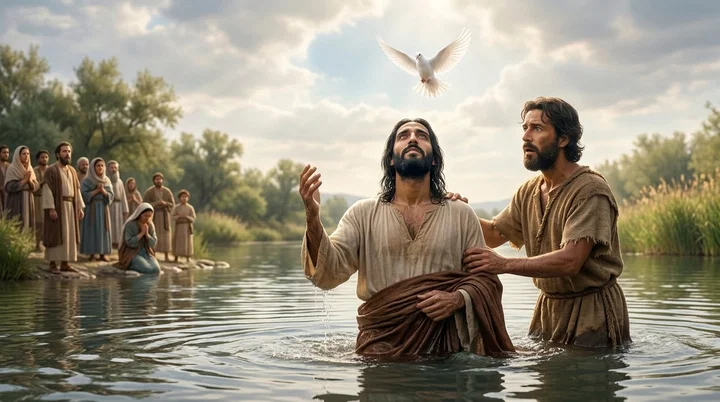
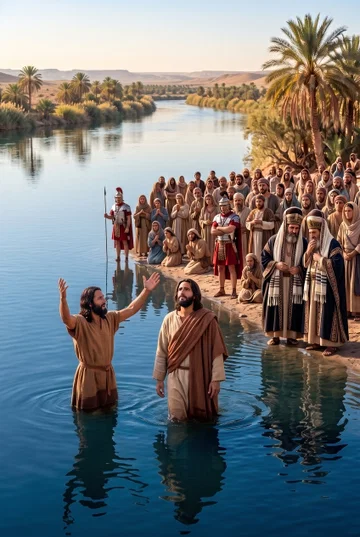
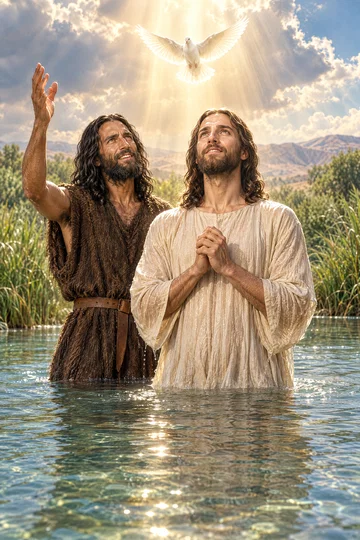
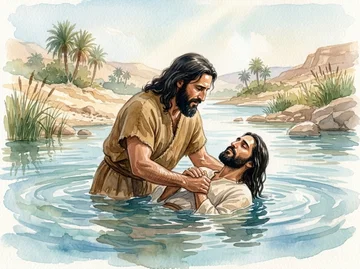
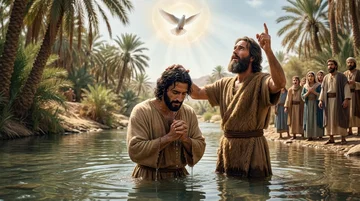
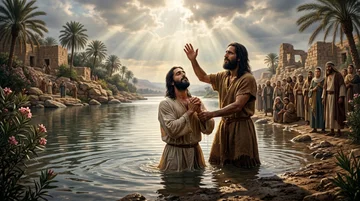
Then cometh Jesus from Galilee to Jordan unto John, to be baptized of him.
Translations
Then comes Jesus from Galilee to Jordan to John, to be baptized of him.
King James Version, KJV Cambridge Paragraph Bible
Then cometh Jesus from Galilee to Jordan unto John, to be baptized of him.
Then cometh Jesus from Galilee to Jordan to John, to be baptized by him.
Revised Version, American Standard Version
Then cometh Jesus from Galilee to the Jordan unto John, to be baptized of him.
Then cometh Jesus from Galilee upon the Jordan, unto John to be baptized by him,
Then comes Jesus from Galilee to the Jordan to John, to be baptised of him;
Then, cometh Jesus, from Galilee to the Jordan, unto John,—to be immersed by him.
Berean Standard Bible, Majority Standard Bible
At that time Jesus came from Galilee to the Jordan to be baptized by John.
Then Jesus came from Galilee to the Jordan to John, to be baptized by him.
Then Jesus came from Galilee to John at the Jordan, to be given baptism by him.
Then came Iesus from Galile to Iordan vnto Iohn, to be baptized of him.
Douay-Rheims (Challoner revision)
Then cometh Jesus from Galilee to the Jordan, unto John, to be baptized by him.
Pictures
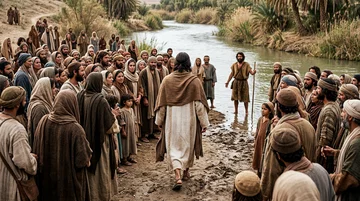
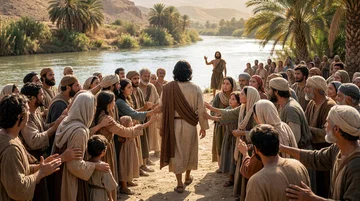
Cross-references 20 of 39
- Romans 6:4
Therefore we are buried with him by baptism into death: that like as Christ was raised up from the dead by the glory of the Father, even so we also should walk in newness of life.
Baptism pictures being buried with Christ and rising to new life.
- Mark 1:9
And it came to pass in those days, that Jesus came from Nazareth of Galilee, and was baptized of John in Jordan.
Jesus comes from Galilee and is baptized by John in the Jordan.
- Luke 3:21-22
Now when all the people were baptized, it came to pass, that Jesus also being baptized, and praying, the heaven was opened,
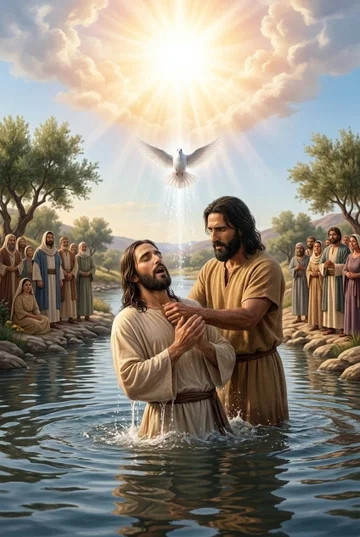
Describes Jesus’ baptism and the Spirit’s descent, with a voice from heaven.
- Matthew 4:1-11
Then was Jesus led up of the Spirit into the wilderness to be tempted of the devil.
Jesus’ wilderness temptation and victory follow his baptism.
- John 1:29-34
The next day John seeth Jesus coming unto him, and saith, Behold the Lamb of God, which taketh away the sin of the world.
John identifies Jesus as the Lamb who takes away sin and bears witness to his identity.
- Matthew 28:19
Go ye therefore, and teach all nations, baptizing them in the name of the Father, and of the Son, and of the Holy Ghost:
Jesus commands his disciples to baptize all nations.
- Matthew 3:17
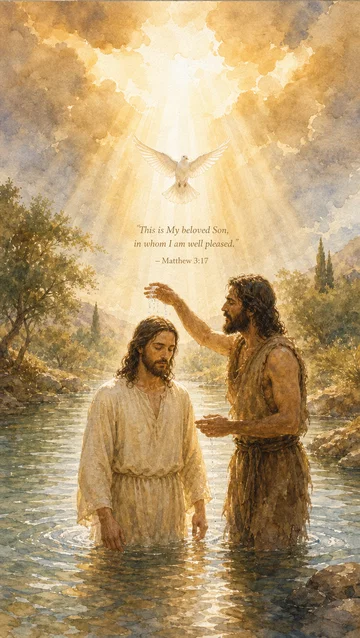
And lo a voice from heaven, saying, This is my beloved Son, in whom I am well pleased.
The Father’s voice at Jesus’ baptism confirms him as the beloved Son.
- Isaiah 40:3
The voice of him that crieth in the wilderness, Prepare ye the way of the LORD, make straight in the desert a highway for our God.
The wilderness voice foretells John’s work preparing the Lord’s way.
- Acts 8:38-39
And he commanded the chariot to stand still: and they went down both into the water, both Philip and the eunuch; and he baptized him.
Philip baptizes the eunuch, who comes up from the water and rejoices.
- Mark 1:4
John did baptize in the wilderness, and preach the baptism of repentance for the remission of sins.
John’s wilderness ministry includes baptizing with a baptism of repentance for remission of sins.
- John 1:33
And I knew him not: but he that sent me to baptize with water, the same said unto me, Upon whom thou shalt see the Spirit descending, and remaining on him, the same is he which baptizeth with the Holy Ghost.
The Spirit’s descent identifies Jesus to John as the one who baptizes with the Holy Ghost.
- Colossians 2:12
Buried with him in baptism, where in also ye are risen with him through the faith of the operation of God, who hath raised him from the dead.
Baptism is described as burial with Christ and rising with him.
- John 3:23
And John also was baptizing in Ænon near to Salim, because there was much water there: and they came, and were baptized.
John baptized where there was much water.
- Luke 3:3
And he came into all the country about Jordan, preaching the baptism of repentance for the remission of sins;
John preached baptism of repentance for remission of sins before Jesus came to be baptized.
- John 4:1-2
When therefore the Lord knew how the Pharisees had heard that Jesus made and baptized more disciples than John,
Jesus’ disciples baptized under his ministry, though Jesus did not baptize personally.
- John 3:5
Jesus answered, Verily, verily, I say unto thee, Except a man be born of water and of the Spirit, he can not enter into the kingdom of God.
Jesus connects baptism with being born of water and the Spirit.
- Malachi 3:1
Behold, I will send my messenger, and he shall prepare the way before me: and the Lord, whom ye seek, shall suddenly come to his temple, even the messenger of the covenant, whom ye delight in: behold, he shall come, saith the LORD of hosts.
John prepares the way for Christ as the promised messenger.
- Luke 1:17
And he shall go before him in the spirit and power of Elias, to turn the hearts of the fathers to the children, and the disobedient to the wisdom of the just; to make ready a people prepared for the Lord.
John prepares people for Christ in Elijah’s spirit and power.
- John 1:23
He said, I am the voice of one crying in the wilderness, Make straight the way of the Lord, as said the prophet Esaias.
John identifies himself as the voice preparing the Lord’s way.
- Matthew 11:3
And said unto him, Art thou he that should come, or do we look for another?
John later asks whether Jesus is the coming one.
Commentary
Each commentary is drawn from primary sources: the writings of Ellen G. White and Adventist pioneers and periodicals. Each commentary is separate. Its own words are not a quotation; follow the references to read the source passages.
Ellen G. White
31 sources
Then Jesus left His secluded life and work in Nazareth of Galilee and came to John at the Jordan with the gathering people to present Himself for baptism.ST Jul 7, 1887Ms 141, 1909, par. 1–2DA 109.1–3 His coming at age thirty marked the beginning of His public ministry, His inauguration and anointing for His mission as God's beloved Son and divine representative.Ms 141, 1909, par. 1–2COS 44.1Ms 52, 1890, par. 3–5 Though wholly sinless with no guilt to confess and no need of repentance, He insisted on being immersed to fulfill all righteousness.Ms 115, 1909, par. 12–14ST Oct 25, 1877DA 110.1–111.2RH Jan 21, 18734T 40.2–4 By that act He identified Himself with sinners as the head, substitute, representative and surety of the human race, meeting in perfect human obedience all God's requirements of repentance, faith and baptism and magnifying the law rather than ending it.10MR 292.1–421MR 196.2–3ST Oct 25, 1877DA 110.1–111.2RH Jan 21, 1873 As He prayed after rising from the water the heavens were opened, the Holy Spirit descended like a dove in brightness, and the Father declared Him His beloved Son in whom He was well pleased, giving the promised sign to John and the pattern of repentance, faith and baptism that every believer must follow.Ms 144, 1901, par. 16–18Ms 147, 1906, par. 21–22Ms 112, 1901, par. 14–15DA 109.1–3Ms 115, 1909, par. 1
Coming to the Jordan
Jesus left His secluded life and work at Nazareth in Galilee and came to the Jordan unto John, going with the gathering people who were coming there.ST Jul 7, 1887DA 109.1–3 His coming marked that the time for His public ministry to begin had arrived.COS 44.1Ms 52, 1890, par. 3–5 His first act at that time, when He was thirty years old, was to present Himself to John for baptism.COS 44.1Ms 63, 1910, par. 7 That baptism was His inauguration and anointing for His mission.Ms 141, 1909, par. 1–2Ms 52, 1890, par. 3–5Ms 63, 1910, par. 7 His dedication was not by any human agency, for the Father's voice and the Spirit's descent publicly confirmed Him as God's beloved Son and divine representative.Ms 52, 1890, par. 3–5
John had prepared the way for Christ's first ministry and directed the people's faith away from himself toward Jesus who was to come.DA 108.2Ms 170, 1897, par. 5–7 Though John believed Jesus was the promised One, he did not personally know Him as the Messiah.ST Jul 7, 1887 He had been told that the Messiah would seek baptism from him and that a distinct sign of divine character would then be given.ST Jul 7, 1887DA 109.1–3 By that sign he would be enabled to present Him to the world as the Lamb who takes away sin.ST Jul 7, 1887DA 109.1–3RH Jan 21, 1873
John recognized Jesus' purity and superiority and objected that he himself needed baptism from Jesus.DA 110.1–111.2RH Jan 21, 18736MR 29.2 Jesus gently insisted that it was fitting for them to fulfill all righteousness.Ms 115, 1909, par. 12–14DA 110.1–111.2RH Jan 21, 18736MR 29.2 John then yielded and baptized Him by immersing Him in the water.Ms 115, 1909, par. 12–14ST Oct 25, 1877 After rising from the water Jesus prayed for support and strength as He began His public work as Messiah.ST Oct 25, 1877RH Jan 21, 1873
The baptism in the Jordan came before His Spirit-led journey into the wilderness for forty days of fasting, temptation and victory.Ms 63, 1910, par. 7Ms 55, 1893, par. 5–6LC1 45.11RED 45.1 It also came before He attended the marriage feast at Cana, which His disciples witnessed after having seen the baptism.ST Apr 8, 1886 Report of the public manifestation at the Jordan reached Mary and renewed her hope that He was the Messiah.DA 144.3–145.1 It joined John's mission with Jesus' mission.DA 144.3–145.1
Fulfilling All Righteousness
Though wholly righteous and sinless, having never committed sin, Jesus had no personal guilt to confess and no need of repentance for Himself, yet He submitted to baptism. DA 110.1–111.2RH Jan 21, 18734T 40.2–4Ms 192, 1905, par. 25–26 His baptism was not a confession of personal sin but a taking of the steps He requires sinners to take in conversion. DA 110.1–111.2RH Jan 21, 18734T 40.2–4
By receiving baptism He identified Himself with sinners and with humanity on behalf of the human race, as its head, substitute, representative and surety, taking the steps required of sinners. ST Oct 25, 1877DA 110.1–111.2RH Jan 21, 1873Ms 192, 1905, par. 25–26 He underwent baptism on behalf of humanity and thereby set the example for every person to follow. 4T 40.2–4Ms 192, 1905, par. 25–26
His baptism fulfilled all righteousness by meeting all God's requirements in repentance, faith, and baptism, the steps of genuine conversion and the steps in grace for entering covenant relation with God. 10MR 292.1–4Ms 144, 1901, par. 16–1821MR 196.2–3Ms 145, 1897, par. 17–197MR 125.1–2 In His humanity He filled up the full measure of the law's requirements in perfect and entire obedience, giving the example of perfect conformity to the law required from Adam to the last man and honoring the ordinance. 10MR 292.1–421MR 196.2–3Ms 145, 1897, par. 17–19RH Jan 21, 1873 He had taken the necessary steps of repentance, conversion, and faith to fulfill all righteousness. Ms 144, 1901, par. 16–187MR 125.1–2
This fulfilling did not bring righteousness or God's law to an end, lessen its claims, or release anyone from obedience. 10MR 292.1–421MR 196.2–3Ms 145, 1897, par. 17–19 It magnified the law and made it honorable, demonstrating its spiritual, unchanging and far-reaching character and principles to heavenly beings, unfallen worlds, and a disobedient world. 10MR 292.1–421MR 196.2–3 He came to show perfect obedience to God's law, not to end its authority or lessen people's duty to obey it. 10MR 292.1–421MR 196.2–3Ms 145, 1897, par. 17–19
As humanity's substitute and surety, His perfect obedience showed that human beings, by uniting their weakness to His divine nature by living faith and partaking of His character, can keep all God's commandments. 10MR 292.1–421MR 196.2–3Ms 145, 1897, par. 17–19 His example and work open the way for people to obey the law. 10MR 292.1–4Ms 144, 1901, par. 16–18
Heaven's Witness and Believers' Pattern
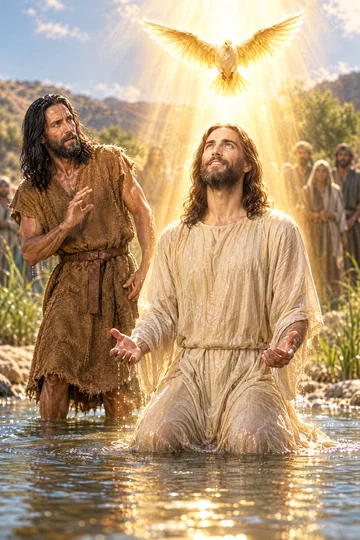
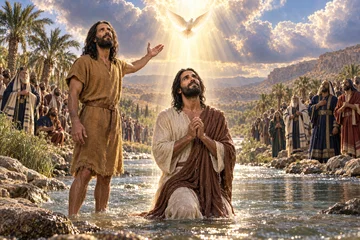
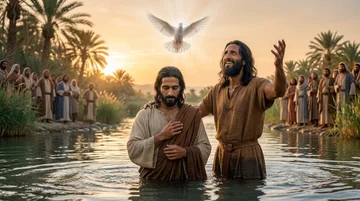
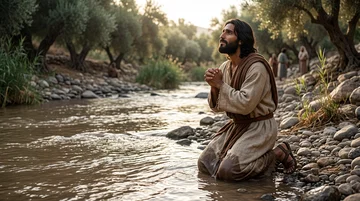
Coming up out of the water He knelt on the banks of the Jordan and prayed for support and strength as He began His public work as Messiah, depending on His Father as He faced the trials and suffering before Him.Ms 144, 1901, par. 16–18ST Oct 25, 1877RH Jan 21, 1873 While He prayed the heavens were opened, showing heaven more directly accessible to man, the Holy Spirit descended upon Him like a dove of burnished gold with flashing light and the overshadowing brightness of the Father's glory, and the Father signified acceptance of the Son by declaring Him His beloved Son and the long-awaited Deliverer in whom He was well pleased.Ms 144, 1901, par. 16–18Ms 147, 1906, par. 21–22Ms 112, 1901, par. 14–15Ms 49, 1894, par. 9–12 His prayer on that occasion was such as had never before entered heaven, and it reached God as shown by the opening heaven, the dove, and the Father's words.Ms 144, 1901, par. 16–18Ms 49, 1894, par. 9–12
The dove-like sign and the Father's voice were the promised token to John, confirming Jesus' sonship and divine character as Messiah and Son of God.DA 109.1–3ST Oct 25, 1877RH Jan 21, 1873 They helped inspire faith in those who witnessed the scene, and led John to proclaim Him to the people as the Lamb who takes away the world's sin.ST Oct 25, 1877RH Jan 21, 1873 John had been told that the Messiah would seek baptism from him and that a sign of divine character would then be given so he could present Him to the world.DA 109.1–3RH Jan 21, 1873
In coming to the Jordan He had left the royal courts of heaven where He held the position of honor as the Son of God, the beloved of the Father.ST Feb 25, 1913 Satan was on the ground and witnessed the circumstances, hearing the majestic voice of Jehovah resounding through heaven and earth like thunder declaring This is My beloved Son in whom I am well pleased, seeing lightnings flash from cloudless heavens and the brightness of the Father's glory overshadowing the form of Jesus and pointing Him out in the crowd with unmistakable assurance as God's acknowledged Son.ST Feb 25, 1913 This opening of the heavens with the voice of God addressing His Son was contrary to Satan's hope that God's abhorrence of sin after he led man to sin would forever separate God from man and break the link between heaven and earth, for it signified that God would unite man more fully to Himself and give power to overcome Satan's devices.ST Feb 25, 1913 The scene aroused Satan's most intense hatred and fear like a death-knell, giving him certain knowledge that unless he could overcome Christ there would thenceforth be a limitation of his power and a contesting of his empire, a benevolence and love from the Prince of Heaven in leaving heaven's inestimable value to come as a man to a world marred with sin and seared with the curse for the benefit of the fallen race that he as a selfish rebel who had lost heaven's riches, peace, holiness, joy and God's approval through rebellion could not comprehend.ST Feb 25, 1913
In accepting Christ the Father gave a pledge to all the human family that they through Christ may also be accepted.Ms 144, 1901, par. 16–18Ms 147, 1906, par. 21–22 His prayer embraces every believer, so that three great infinite powers are unitedly pledged to work in their behalf as they cooperate with them, and Christ there pledged Himself to keep all who look to Him and trust in Him with abiding faith.Ms 144, 1901, par. 16–18Ms 144, 1901, par. 20 Through Christ the way is open for fallen people's prayers to reach God, for Christ advocates for them and presents their petitions while the Holy Spirit works within them, and through the dark shadow Satan has thrown athwart the pathway Christ has cleaved the way to the throne of the infinite God and laid hold of almighty power.Ms 144, 1901, par. 16–18Ms 49, 1894, par. 9–12 All who believe in Him and obey His commandments are accepted in the Beloved, in whom is the only hope of salvation, and because of that prayer believers should expect large things from God and commit the keeping of their souls to Him as a faithful Creator.Ms 144, 1901, par. 16–18Ms 112, 1901, par. 14–15Ms 144, 1901, par. 20 Those who intelligently and understandingly receive His Word will certainly see the salvation of God.Ms 147, 1906, par. 21–22
His baptism gives the pattern that every son and daughter of Adam who will believe in Christ as a personal Saviour must follow by taking the same requisite steps of repentance, conversion, faith, and baptism in the name of the Father and of the Son and of the Holy Ghost, identifying with Jesus Christ and entering covenant relation with God.Ms 144, 1901, par. 16–18Ms 115, 1909, par. 17MR 125.1–2 Those baptized are buried with Christ in baptism as an emblem of His death and raised from the water as an emblem of His resurrection to live as newborn souls with life hid with Christ in God, dead to self and seeking things above where Christ sits at the right hand of God, to be raised at the last great day, showing faith in His atonement.Ms 144, 1901, par. 16–184T 40.2–4 His life of suffering and patient endurance after baptism also serves as an example, and His mission to give humanity another trial and His victory over temptation in the wilderness give moral power through His merits to overcome temptation, including enslaving habits and perverted appetite.DA 110.1–111.24T 40.2–4 Baptism itself begins earnest work for God and does not mean that the work is finished.Ms 49, 1894, par. 9–12
Sources
Pioneers and periodicals
111 sources
Then Jesus came from Galilee to the Jordan to John to be baptized by him.ST Mar 16, 1904ST Jan 25, 1899
His baptism was by immersion, going down into the water and coming up out of it as a burial and rising.ST Dec 11, 1879ST Jan 3, 1884ST Mar 3, 1881RH Jan 28, 1858ST Mar 7, 1878
Though holy and sinless with no sin to confess or wash away, he was baptized in the place of sinners to fulfill all righteousness by perfect obedience.RH Jan 21, 1873RH Jan 8, 1867ST Jun 3, 1880ST Jul 3, 1884
At about thirty years old in the autumn of A.D. 27 his baptism was his first public act, anointing him as Messiah the Prince in fulfillment of the sixty-nine weeks, when the Spirit descended like a dove and the Father declared him the beloved Son.ST Jan 25, 1899RH Nov 12, 1914ST Sep 16, 1886RH Feb 13, 1872ST Jan 17, 1906
His baptism is the pattern believers follow, going to the waters in obedience to be buried with him and rise to newness of life.RH Jul 1, 1873RH Jun 25, 1872RH Jul 7, 1910ST Sep 27, 1877RH Feb 3, 1863
Words and Geography
Jesus came from Galilee to the Jordan unto John to be baptized by him.ST Mar 16, 1904ST Jan 25, 1899ST Oct 22, 1912RH Nov 18, 1862 He came from Galilee to John at the Jordan in the setting of John's ministry of calling people to repentance, baptizing them after they confessed their sins, as the forerunner who preached in the wilderness and prepared the people for the Messiah.ST Oct 22, 1912RH Nov 18, 1862ST Jan 17, 1906 The word from expresses departure from Galilee without specifying the precise manner of leaving.RH Feb 10, 1910
The word baptized means to dip, to immerse, to cover wholly with fluid, to overwhelm, and to make fully wet.RH Jan 23, 1855ST Jan 23, 1896ST May 20, 1908ST Jul 19, 1883ST Sep 20, 1899 It means to dip in or under water, and its use and symbolism fit only immersion.ST Jan 23, 1896ST Mar 18, 1903 Jesus going to John at the Jordan to receive baptism uses baptized for dipping or immersing, and His coming to John at the Jordan shows that He Himself was immersed.RH Jan 23, 1855ST Jul 19, 1883 His baptism was an immersion, not sprinkling, because baptism means burial and the Greek word baptizo means to immerse.ST Sep 20, 1899ST Mar 18, 1903 He was immersed in the Jordan and came up out of the water after His immersion, as the early Christians practiced immersion.ST Jan 23, 1896
The baptism took place in the Jordan River near Jericho.ST Jan 25, 1899ST May 7, 1885ST Mar 19, 1885ST Mar 23, 1904 The river where He came to John to be baptized is memorable and gives reason to reverence it, visit it, and bathe in it, with the traditional bathing place identified as Bethabara.ST May 7, 1885ST Mar 23, 1904 The ford associated with that baptism was reported as having been identified by surveyors.ST Aug 17, 1876 The Jordan is the place whose first baptism gave authority to Christian baptism.ST Dec 4, 1879
Historical Setting and Timing
Jesus was about thirty years old when he was baptized in the autumn of A.D. 27, after the people had been baptized.ST Jan 25, 1899ST Sep 16, 1886 John began baptizing in the fifteenth year of Tiberius, dated to A.D. 26, and was six months older than Jesus.ST Sep 16, 1886 His coming from Galilee to the Jordan to begin his ministry fulfilled the 483-year period counted from Artaxerxes' decree to restore and rebuild Jerusalem in 457 B.C., the first part of the 2,300-year prophecy, showing the appointed time had come and the kingdom of heaven was at hand.RH Nov 12, 1914ST Jun 26, 1907 At that baptism the Holy Spirit descended upon him and he began his public preaching, being manifested and anointed as Messiah the Prince.ST Jun 26, 1907RH Oct 27, 1904 Messiah means the Anointed One, and the baptism was that anointing, occurring seven years before the end of the seventy weeks in the autumn of A.D. 34 and three and one-half years before the cutting off of the Messiah at the crucifixion in the spring of A.D. 31.ST Mar 3, 1909
The baptism took place during John's ministry of calling people to repentance and baptizing them after they confessed their sins, preparing the way for Christ, with God's witness at that time affirming Jesus' Messiahship.ST Oct 22, 1912ST Mar 10, 1898 John was warning people that the Messiah's coming was near, and his message was a warning of an event about to take place.ST Mar 8, 1883 His work was the preaching of repentance, turning people to God's law, faith in the coming Christ, and rejection of trust in man, fulfilling the work foretold for Elijah of turning hearts and preparing a people for the Lord.ST Aug 28, 1901 Jesus submitted to baptism near the close of John's ministry to set an example and affirm the excellence of John's baptism, and John's baptism and the baptism later administered by Jesus' disciples while John was still baptizing were the same in nature, with Jesus directing the work while his apostles baptized those converted through his ministry.ST Dec 11, 1879 John baptized the Saviour at a point within his public ministry after preaching a coming Saviour before his manifestation, joined to seeing the Holy Ghost rest upon Christ in bodily shape like a dove.RH Dec 29, 1859
After Jesus' secluded life at Nazareth, John did not personally know him as the Messiah, though he believed he was the promised One.ST Jul 7, 1887 God had told John that a distinct sign would identify the Messiah, so John could then present Jesus to the world as the Lamb of God who takes away the sin of the world.ST Jul 7, 1887RH Jan 21, 1873 At his baptism heavenly light and glory descended on him in the form of a dove, and a voice from heaven proclaimed him the Son of the Infinite Father, identifying him as the promised Messiah of Israel.RH Jan 21, 1873ST Dec 30, 1880
The baptism was the beginning of the account of Jesus' baptism joined with his wilderness temptations, and in his greatest temptation he drew strength from the Father's loving words declaring him the beloved Son in whom the Father was pleased.RH May 20, 1909 It marks the event immediately before he began his public teaching.ST Sep 16, 1886 It places his baptism before his anointing by the Holy Spirit as Messiah and his being led into the wilderness to face temptation, marking the beginning of his work as the example of a human life lived in obedience to God.ST Jun 16, 1898 He was baptized with water and with the Spirit as the starting point of his mission undertaken single-handed, and immediately after, before calling a single follower, he personally met and overcame Satan, thereby establishing his right to the dominion and his ability to maintain it by the power of the Spirit through the Word.ST Oct 4, 1899 This baptism marked his public appearance as the Messiah and the beginning of his ministry in that role, the baptismal anointing that began his public ministry.RH Apr 9, 1908RH Oct 1, 1903
As Jesus came up from the water the Spirit descended upon him like a dove and a voice from heaven declared him God's beloved Son, affirming his identity and mission, after John had objected because he needed baptism from Jesus and Jesus had said the baptism was fitting to fulfill all righteousness.ST Jan 17, 1906 After rising from the water Jesus prayed for support and strength as he began his public work as Messiah and example for believers, identifying with humanity and depending on his Father as he faced the trials and suffering of his mission.ST Oct 25, 1877 The day was marked by the Holy Spirit descending in bodily form like a dove and the Father speaking audibly from heaven at the end of the sixty-nine weeks, when Jesus was anointed and manifested to Israel.RH Feb 13, 1872 God thereby consecrated Jesus for his work, anointed him with the Spirit, and gave him authority and divine attributes for his mission to reveal the Father and oppose Satan's power.ST Jun 9, 1890
Satan was on the ground at the baptism and witnessed its circumstances, hearing the majestic voice of Jehovah resounding through heaven and earth like thunder saying This is My beloved Son in whom I am well pleased, seeing lightnings flash from cloudless heavens and the brightness of the Father's glory overshadowing the form of Jesus and pointing him out in the crowd with unmistakable assurance as God's acknowledged Son.ST Feb 25, 1913 The opening heavens with the voice of God addressing his Son signified that heaven was more directly accessible to man and that God would unite man more fully to himself and give power to overcome Satan's devices, contrary to Satan's hope that God's abhorrence of sin after he led man to sin would forever separate God from man and break the link between heaven and earth.ST Feb 25, 1913 The scene aroused Satan's most intense hatred and fear like a death-knell, giving him certain knowledge that unless he could overcome Christ there would thenceforth be a limitation of his power contesting his empire.ST Feb 25, 1913 As a selfish being who had lost heaven's riches, peace, holiness, joy and God's approval through rebellion he could not comprehend the benevolence and love that would induce the Prince of Heaven, who held the position of honor as the Son of God the beloved of the Father and left the royal courts of heaven, to come as a man to a world marred with sin and seared with the curse for the benefit of the fallen race.ST Feb 25, 1913
Judas Iscariot and Matthias were at the Jordan when John baptized Jesus, and both witnessed the baptism and heard the voice from heaven identifying Jesus as the Father's Beloved Son.ST Sep 27, 1910 His disciples had witnessed the baptism before he attended the marriage feast at Cana.ST Apr 8, 1886 His baptism belongs with the descent of the Holy Spirit in the form of a dove and the voice from heaven declaring him to be the Son of God, among the principal facts of the gospel history showing he really lived and came to John to be baptized.RH Sep 11, 1860 At his baptism he entered the water, the Father publicly acknowledged him as his Son, and the Holy Spirit showed approval, presenting Jesus as a real human being who experienced hunger after leaving the water.ST Dec 21, 1915 He went from Nazareth to the Jordan before entering the wilderness, and his baptism and subsequent victory over temptation display his triumph over evil and human weakness.RH Dec 2, 1873 The Jesus who will come again is the same Jesus who was baptized by John in the Jordan.ST Oct 19, 1888
Meaning of Jesus' Baptism
Though holy and sinless, Jesus had no sin of his own to confess and needed no repentance or washing, and he was not baptized for the same purpose as sinners who are baptized for remission of sins.RH Jan 21, 1873ST Mar 12, 1912ST Jun 3, 1880ST Jul 3, 1884 His baptism was more than example, for John's baptism was for repentance and remission, while Jesus' baptism expressed another work.ST Jun 3, 1880ST Jul 3, 1884 To treat baptism lightly is to esteem lightly his suffering, sacrifice and example.ST Jun 3, 1880
He was baptized in the place of the sinners he represented, as their substitute, representative and example, taking their condemned condition and counting himself a sinner for their sake in order to pass through what was necessary to become their Saviour.RH Jan 21, 1873ST Jun 3, 1880ST Jul 3, 1884ST Jan 17, 1878 Human iniquity was laid upon him as the Lamb of God who takes away the sin of the world, and in that character he confessed the sins of his people.RH Aug 5, 1902ST Jun 3, 1880 As substitute he suffered throughout his life and bore those sins unto death, so his baptism has significance in connection with his suffering and the cross.ST Jun 3, 1880 His baptism fulfilled all righteousness through perfect obedience to God's law, for to fulfil means fully to preach and practise the law and to exalt, honor, magnify and establish it, living, suffering, dying and rising again in order to fulfil it.RH Jan 21, 1873ST Feb 21, 1906 By submitting to it he honored and sanctioned baptism as a new ordinance for the gospel age, gave his assent to it, set an example for disciples, and helped establish every ordinance.RH Jan 21, 1873RH Jan 8, 1867ST May 20, 1913 Fulfilling righteousness at his baptism did not abolish righteousness, just as fulfilling the law does not abolish the law.ST Mar 9, 1915ST Mar 9, 1915
As representative of the human family and a sample of what all humanity may become through union with him, he did this as man for us and witnessed by faith to the power of his sacrifice to cleanse the whole world of sin.RH Aug 5, 1902 The Spirit bore witness to the acceptance of that cleansed humanity with God, and each individual may by faith receive the full virtue of this act as though he had done it himself.RH Aug 5, 1902 Sharing in him, believers share the opened heavens, the descending Spirit and the approval of the Father, who purged sins and justified humanity.RH Aug 5, 1902 Though superior to John and recognized by him as such, Jesus as God's Son submitted meekly and gently insisted on being baptized then for righteousness.RH Jan 21, 1873RH Feb 11, 1873 Because he intended to take every step his disciples were required to take, he took the steps of conversion, repentance and baptism that sinners must take, doing what he calls them to do.ST Mar 12, 1912ST May 27, 1897ST Apr 10, 1893
His baptism was a genuine surrender of himself to God's will and work and the crowning act of his preparation for his special work and mission and the path of suffering ahead.ST May 27, 1897RH Aug 21, 1913 After rising from the water he prayed for support and strength to begin his public work as Messiah and to meet its trials and responsibilities, identifying with humanity and depending on his Father.ST Oct 25, 1877RH Jan 21, 1873 Through that perfect surrender the Holy Spirit came upon him without measure, with the heavenly sign and the Father's words confirming his sonship as Son and Saviour of the world and helping inspire faith in witnesses.ST Oct 25, 1877RH Aug 21, 1913 The account belongs to Christ beginning his work as a man, overcoming Satan's attempts to implant sin in him and beginning his work of destroying the devil's works, undertaken single-handed as the starting point of his mission before calling a single follower.ST Dec 13, 1905ST Oct 4, 1899 His baptism did not end the troubles and temptations that followed, for immediately after he personally met and overcame Satan, thereby establishing his right to the dominion and his ability to maintain it by no other aid than the power of the Spirit through the Word, and then he began the work of expansion.ST Mar 16, 1904ST Oct 4, 1899 The tempted can receive grace to overcome through the obedience of faith, and in his greatest temptation Jesus drew strength from the Father's loving words declaring him the beloved Son in whom the Father was pleased.ST Mar 16, 1904RH May 20, 1909 Baptism is a marriage ceremony that connects people with the Lord.
Prophecy and Messianic Anointing
Jesus came from Galilee to the Jordan to be baptized by John in A.D. 27, at the close of the sixty-nine prophetic weeks, fulfilling 483 years counted from Artaxerxes' decree to restore and rebuild Jerusalem in 457 B.C. as the first part of the 2,300-year prophecy.RH Nov 12, 1914ST Jun 26, 1907ST Mar 3, 1909STST May 6, 1880 That coming and baptism manifested Him as Messiah the Prince, when He was anointed with the Holy Spirit descending upon Him in bodily form like a dove with the Father speaking audibly from heaven, and He began His public preaching.ST Jun 26, 1907RH Feb 13, 1872RH Oct 27, 1904STST Mar 2, 1915 His declaration that the time was fulfilled referred to Daniel's prophecy, showing the appointed time had come and the kingdom of heaven was at hand.RH Nov 12, 1914STST May 6, 1880 Messiah means the Anointed One, and the baptism in the Jordan was that anointing, the baptismal anointing that began His three-and-a-half-year earthly ministry.ST Mar 3, 1909RH Oct 27, 1904RH Oct 1, 1903ST Mar 2, 1915 It took place in the autumn of A.D. 27, seven years before the end of the seventy weeks in the autumn of A.D. 34 and three and one-half years before the cutting off of the Messiah at the crucifixion in the spring of A.D. 31.ST Mar 3, 1909
John's ministry prepared Israel for the Son of God by preaching repentance, turning people to God's law, to faith in the coming Christ, and away from trust in man.ST Aug 28, 1901ST Mar 17, 1914ST Mar 11, 1886 That work fulfilled what was foretold for Elijah in turning hearts and preparing a people for the Lord, as the forerunner restoration of downtrodden truth before the greater restoration accomplished by Christ.ST Aug 28, 1901 John knew his work was to prepare the way of the Lord, knew the time for fulfillment of the prophecies had come, and knew he himself was the messenger spoken of by Malachi and Isaiah.ST Mar 11, 1886 John and his message were the living evidence given to the people that the Messiah was at hand, and Jesus coming to him for baptism while he was preaching repentance in the wilderness of Judea proved it.ST Mar 17, 1914ST Mar 11, 1886 John's message was a warning of an event about to take place at the first advent, that the Messiah's coming was near.ST Mar 8, 1883 His course was fulfilled when Jesus came and was baptized by John in the Jordan.ST Mar 8, 1883RH Sep 1, 1874
The coming to the Jordan was Jesus' second miraculous manifestation as Messiah, about thirty years after His birth, which thirty-year interval is one prophetic month.ST Sep 20, 1910 At His anointing He began His work as prophet, He became Priest after His ascension, and He will become King at the second advent.ST Sep 20, 1910 That anointing also began the process that would remove from Israel the three human shepherds of prophets, priests, and kings.ST Sep 20, 1910 The fire spoken of in the related context of Matthew 3 tests and burns up the chaff, and does not purify people's sins in purgatory.RH May 26, 1874
Doctrine of Baptismal Mode
Jesus came from Galilee to the Jordan to be baptized by John, and his submission is the example disciples follow in the mode of baptism.ST Mar 3, 1881RH Jan 28, 1858ST Mar 7, 1878RH Jan 16, 1908ST Mar 2, 1904 That baptism sanctioned the baptism John introduced, and its practice was immersion—not sprinkling.RH Jan 28, 1858ST Mar 7, 1878RH Jan 16, 1908RH May 15, 1855ST Mar 2, 1904 He was baptized in the Jordan River as the pattern for baptism in water, in contrast to a ceremony using only a little water.ST Mar 7, 1878RH Jan 16, 1908ST Mar 2, 1904 He went down into the water and came up out of it, and his going to the Jordan is evidence that he was not sprinkled.RH May 15, 1855ST Mar 2, 1904 The river setting would not be needed merely to sprinkle or pour, and stepping into the water excludes pouring over the head.RH May 15, 1855ST Mar 2, 1904
Going under the water pictured burial with Christ, and rising from the water pictured new life and walking in newness of life.ST Dec 11, 1879ST Jan 3, 1884ST Sep 14, 1882ST Jan 23, 1896ST Sep 9, 1913 His baptism was a literal act and an example of observing an ordinance, in the form Paul describes: a burial and rising that memorializes Christ's burial and resurrection.ST Jan 3, 1884ST Sep 14, 1882ST Jan 23, 1896 This baptism is distinct from sprinkling water on the face, for the word baptized means to dip, to cover wholly with fluid, to make fully wet, to dip in or under water, and its use and symbolism fit only immersion.ST Sep 14, 1882ST Jan 23, 1896 Jesus was immersed in the Jordan and came up out of the water after his immersion, as the early Christians practiced immersion.ST Jan 23, 1896ST Sep 9, 1913RH Jun 25, 1872 His submission involved entering and bowing beneath the waters, making immersion the pattern; rising from the water preceded the Father's approval and the Spirit's descent, and the waters served as an emblem of his future grave.ST Sep 9, 1913RH Jun 25, 1872
His baptism was immersion and symbolized his death, burial, and resurrection, as part of the chain of redemption connected with the Father's approval shown by the Holy Spirit's presence.ST Sep 9, 1913RH Jun 25, 1872 It expresses death to transgression and burial with him in his death, including being buried in the watery grave upon professing faith and passing through the watery grave reflecting Calvary toward resurrection power.ST Jan 3, 1884ST Sep 9, 1913RH Jun 25, 1872 Water baptism is the outward expression of faith and a sign, to some extent, of baptism into God's Spirit; the outward act itself does not save.ST May 20, 1908 His baptism gives his assent to baptism as a new ordinance for the gospel age, and sets an example for his disciples to follow.RH Jan 8, 1867ST Jan 3, 1884ST Jul 29, 1880RH Mar 24, 1874 Baptism helps establish every ordinance and fulfill all righteousness.RH Jan 8, 1867
Baptism is an ordinance he appointed, honored by his own example, and following him in it expresses death to transgression and burial with him.RH Jan 8, 1867ST Jul 29, 1880RH Mar 24, 1874 His own baptism demonstrates that baptism was important to him and was not an indifferent rite.RH Mar 26, 1914RH Mar 26, 1914 His own baptism makes baptism a sacred and important act, not a matter of indifference or personal preference, and his example and word are to be followed.RH Mar 26, 1914RH Mar 26, 1914 A sense of personal unworthiness should not keep a repentant believer from publicly professing Christ and following his requirements, for Christ's worthiness, not the believer's, is the reason to obey.RH Mar 24, 1874 John's baptism called people to repent because Christ's coming was near, for remission of sins and faith in Christ, representing burial with Christ and new life; Christ and his apostles received it.ST Dec 11, 1879ST Dec 11, 1879RH Dec 29, 1859
By receiving baptism at John's hands near the close of John's ministry to set an example for others, Jesus affirmed the excellence of John's baptism.ST Dec 11, 1879ST Dec 11, 1879 John's baptism and the baptism later administered by Jesus' disciples while John was still baptizing were the same in nature and character, Jesus directing the work while his apostles baptized those converted through his ministry.ST Dec 11, 1879 John baptized the Saviour at a point within John's public ministry after John had preached a coming Saviour before his manifestation, joined to John seeing the Holy Ghost rest upon Christ in bodily shape like a dove.RH Dec 29, 1859 His baptism was not for the same purpose as the baptism John administered to others for the remission of sins; therefore Jesus' baptism does not show that baptism for remission of sins is unnecessary for sinners.RH Sep 30, 1862 Jesus was baptized when he was grown up, not as an infant child, which means baptism is for believers, so children are not to be baptized, and even adults are not to be baptized before they believe.RH Aug 20, 1908
His baptism did not make him a member of a church organized by John, because John organized no church.ST Mar 16, 1915 John was called the Baptist because he baptized people who accepted his message, and Jesus was the Founder of the Christian church.ST Mar 16, 1915 The event rejects the claim that John inducted Jesus into the priesthood by sprinkling, and argues that the baptism account supports immersion.ST Jun 13, 1878 The Jordan is the place of his baptism, and the verse distinguishes one baptism from the idea that baptism requires three immersions.ST Jun 13, 1878ST Mar 19, 1885 Jesus, acting as substitute and example, was immersed and raised from the water, and the Holy Spirit descended upon him afterward, showing that God's blessing may witness an act of obedience after baptism though the Spirit's manifestation is not always the same.ST Jan 17, 1878
The dove did not identify Jesus to John before or during the baptism, although John later questioned whether Jesus was the coming one.ST Jan 17, 1878 The rite as John performed it in the waters of the Jordan was immersion in quiet waters done one by one before a watching crowd singing hymns, a beautiful and harmonious sacrament that brings happiness to penitents and gathers a harvest for gospel work.ST Oct 4, 1899 Jesus being baptized on a particular day did not make that day holy, for a day is made sacred only by divine decree, not by an event or human custom.ST Oct 18, 1905 Christ being baptized in the Jordan provides his example for the ordinance of baptism, in contrast to the absence of an example or instruction establishing the first day as a new Sabbath.RH Jul 8, 1875ST Nov 7, 1878 His example and instructions establish baptism as an ordinance he taught his disciples to practice and later commanded them to administer.RH Jul 8, 1875ST Nov 7, 1878
John's baptism of Jesus stands against the false claim that Jesus appeared to Ann Lee and baptized her into the Christ Spirit.RH Apr 14, 1874 John the Baptist is identified as the one who baptized Jesus, and the verse is connected with the claim that authority to baptize came from John, who was said to have appeared as an angel.ST Mar 14, 1906
Example for Believers' Lives
Jesus coming from Galilee to the Jordan to be baptized by John is the pattern believers imitate when they are baptized in obedience to the Lord's command.RH Jul 1, 1873RH Jul 7, 1910RH Feb 3, 1863 His baptism is the example to follow, the model for the baptism believers desire to receive.RH Feb 3, 1863RH Dec 16, 1909 The Son of God gave that example in being baptized, and following it means going to the waterside to be buried in baptism.RH Jul 1, 1873RH Dec 16, 1909RH Jun 25, 1861 Following the Lord to the waters to be buried in baptism is obedience to His command.RH Jul 7, 1910RH Jun 25, 1861
He voluntarily traveled from Galilee to the Jordan to John to be baptized, and the inconvenience of that journey is no reason to avoid baptism.ST Sep 9, 1913ST Sep 16, 1913ST May 20, 1913 His baptism was a divine act to fulfill all righteousness, performed by thorough immersion in the waters of the Jordan.ST Sep 9, 1913ST Sep 16, 1913ST May 20, 1913 It was appreciated by God the Father and God the Holy Spirit, whose presence showed the Father's approval.ST Sep 9, 1913ST Sep 16, 1913ST May 20, 1913 It symbolized His death, burial, and resurrection and stands as an example worthy of consideration and imitation.ST Sep 9, 1913ST Sep 16, 1913ST May 20, 1913 Baptism belongs to the chain of redemption and is linked with salvation.ST Sep 9, 1913ST Sep 16, 1913
His coming to John to be baptized was the first public act of His life.ST Jan 25, 1899 His retiring and modest manner on that occasion is a standing model for every professed Christian.ST Jan 25, 1899 Becoming the same demonstrates worthiness to be counted His follower.ST Jan 25, 1899
Being baptized in following His example is a public witness and confession of faith in Christ, not mere theory to agree with but an ordinance to be formally practiced.RH Mar 24, 1874RH Dec 24, 1908ST Dec 4, 1901 Baptism is an ordinance appointed by Christ and a duty for those who trust in Him, part of the pathway of obedience in which those baptized enlist in the Lord's cause and take a stand for the truth.RH Mar 24, 1874RH Sep 20, 1864 It solemnly sets forth the great truth of the gospel, gives an inspiring and helpful object-lesson to all who witness it, brings blessing, and is witnessed by God.RH Dec 24, 1908RH Oct 15, 1872 Following the Great Head of the church in that example means going to the water to be baptized by the preacher in open day, with others witnessing, without fee and without anything strange, as obedience to God and to all His commandments.RH Oct 15, 1872 Such obedience brings joy and unity of hearts under the gracious power of the Holy Spirit through the gospel and the efficacy of Christ's blood.RH Oct 15, 1872 A sense of personal unworthiness should not keep a repentant believer from publicly professing Christ and following His requirements, for Christ's worthiness, not the believer's, is the reason to obey.RH Mar 24, 1874
His submission to baptism involved entering and bowing beneath the waters, making immersion the pattern of baptism, and rising from the water preceded the Father's approval and the Spirit's descent.RH Jun 25, 1872 The waters also served as an emblem of His future grave, and following Jesus' example means walking in His footsteps.RH Jun 25, 1872RH Feb 2, 1905 Those baptized are pictured as planted in the likeness of Christ's death so that henceforth they rise to walk in newness of life.ST Sep 27, 1877RH Jun 30, 1859 His baptism teaches the need for baptism and for being born again.RH Sep 11, 1913 His baptism was by plunging, submerging, immersing in water, the ancient bath established by divine wisdom and judgment, commanded in the likeness of His own resurrection to teach that the Christian life must begin with death to sin and resurrection by the power of the Holy Spirit.ST Jul 28, 1914 Following the Lord Jesus Christ to Jordan's waters through the watery grave reflects Calvary and opens the way to resurrection power.RH Feb 2, 1905 Following Him in this baptism is part of God's call in the last days to reform from error and apostasy, and those who follow His example find the blessing that attends loving obedience to the divine precepts.ST Jul 28, 1914
His coming to be baptized in Jordan as founder of the church marks the day the work of the church began.ST Oct 23, 1901 From that point He devised and pointed out the methods, ways, and instruments for establishing His kingdom and carrying out God's plan for man's redemption.ST Oct 23, 1901 Those God-given ways are efficacious and complete, so to add the inventions of the world declares God's power and foresight inadequate and His work unable to be completed as He designed.ST Oct 23, 1901 His baptism by John is why tracing a church's origin to Christ also connects it to John the Baptist.ST Dec 24, 1912
Sources