Matthew 11:3
And said unto him, Art thou he that should come, or do we look for another?
Translations
And said to him, Are you he that should come, or do we look for another?
And said unto him, Art thou he that should come, or do we look for another?
and said unto him, Art thou he that should come, or do we look for another?
And said to him, Art thou he that should come, or do we look for another?
Revised Version, American Standard Version
and said unto him, Art thou he that cometh, or look we for another?
said to him, 'Art thou He who is coming, or for another do we look?'
and said to him, Art thou the coming [ one]? or are we to wait for another?
said unto him, Art, thou, the coming one? or, a different one, are we to expect?
Berean Standard Bible, Majority Standard Bible
to ask Him, “ Are You the One who was to come, or should we look for someone else?”
and said to him, “ Are you he who comes, or should we look for another?”
To say to him, Are you he who is to come, or are we waiting for another?
Art thou he that shoulde come, or shall we looke for another?
Douay-Rheims (Challoner revision)
Art thou he that art to come, or look we for another?
Pictures

Cross-references 20 of 26
- Isaiah 61:1
The Spirit of the Lord GOD is upon me; because the LORD hath anointed me to preach good tidings unto the meek; he hath sent me to bind up the brokenhearted, to proclaim liberty to the captives, and the opening of the prison to them that are bound;
Good news preached to the poor identifies the Messiah’s promised mission.
- Luke 7:18-23
And the disciples of John shewed him of all these things.
Parallel account of John’s question and Jesus’ answer through his works.
- Isaiah 35:5-6
Then the eyes of the blind shall be opened, and the ears of the deaf shall be unstopped.
Its promised healings match the signs Jesus named.
- Malachi 3:1
Behold, I will send my messenger, and he shall prepare the way before me: and the Lord, whom ye seek, shall suddenly come to his temple, even the messenger of the covenant, whom ye delight in: behold, he shall come, saith the LORD of hosts.
Foretells the messenger who prepares the way before Messiah.
- Matthew 14:3-12
For Herod had laid hold on John, and bound him, and put him in prison for Herodias’ sake, his brother Philip’s wife.
John was imprisoned and executed after reproving Herod.
- John 1:29
The next day John seeth Jesus coming unto him, and saith, Behold the Lamb of God, which taketh away the sin of the world.
John had earlier identified Jesus as the Lamb of God who takes away sin.
- John 1:27
He it is, who coming after me is preferred before me, whose shoe’s latchet I am not worthy to unloose.
John declared Jesus greater than himself.
- Isaiah 40:3
The voice of him that crieth in the wilderness, Prepare ye the way of the LORD, make straight in the desert a highway for our God.
Foretells the wilderness voice who prepared the way for Messiah.
- John 1:19-23
And this is the record of John, when the Jews sent priests and Levites from Jerusalem to ask him, Who art thou?
John identifies himself as the wilderness voice foretold by Isaiah.
- Matthew 3:3
For this is he that was spoken of by the prophet Esaias, saying, The voice of one crying in the wilderness, Prepare ye the way of the Lord, make his paths straight.
John’s mission prepared the way for Jesus.
- Matthew 11:11
Verily I say unto you, Among them that are born of women there hath not risen a greater than John the Baptist: notwithstanding he that is least in the kingdom of heaven is greater than he.
identifies the questioner in prison
- John 3:30
He must increase, but I must decrease.
John rejoices as Christ increases and he decreases.
- Luke 24:25-27
Then he said unto them, O fools, and slow of heart to believe all that the prophets have spoken:
Christ shown in prophecy as proof He is Messiah
- Luke 7:22
Then Jesus answering said unto them, Go your way, and tell John what things ye have seen and heard; how that the blind see, the lame walk, the lepers are cleansed, the deaf hear, the dead are raised, to the poor the gospel is preached.
Jesus answers John’s messengers by pointing to his works.
- John 1:34
And I saw, and bare record that this is the Son of God.
John identifies Jesus as the Son of God by the sign he witnessed.
- 2 Samuel 7:12-16
And when thy days be fulfilled, and thou shalt sleep with thy fathers, I will set up thy seed after thee, which shall proceed out of thy bowels, and I will establish his kingdom.
John expected Jesus to take the throne promised to David’s line.
- John 4:25-26
The woman saith unto him, I know that Messias cometh, which is called Christ: when he is come, he will tell us all things.
Jesus directly identifies himself as the Messiah.
- Matthew 14:10
And he sent, and beheaded John in the prison.
John is beheaded after his imprisonment.
- Mark 14:61-62
But he held his peace, and answered nothing. Again the high priest asked him, and said unto him, Art thou the Christ, the Son of the Blessed?
Jesus affirms that he is the Christ before the high priest.
- Mark 6:17-28
For Herod himself had sent forth and laid hold upon John, and bound him in prison for Herodias’ sake, his brother Philip’s wife: for he had married her.
Herod imprisons and executes John the Baptist.
Commentary
Each commentary is drawn from primary sources: the writings of Ellen G. White and Adventist pioneers and periodicals. Each commentary is separate. Its own words are not a quotation; follow the references to read the source passages.
Ellen G. White
21 sources
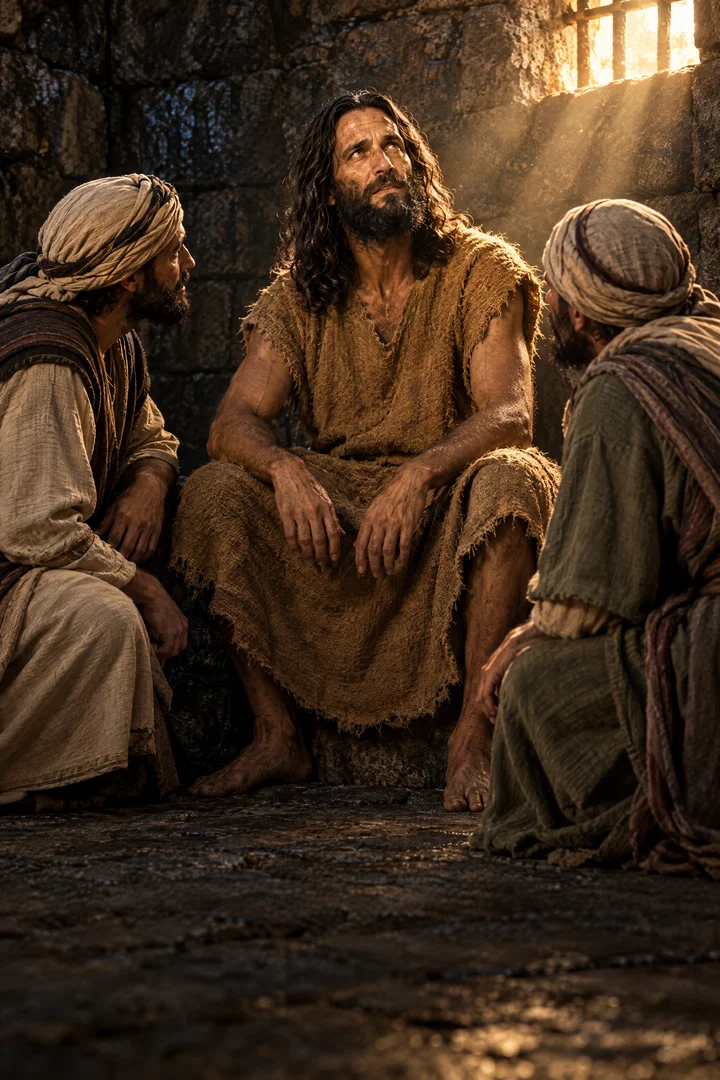
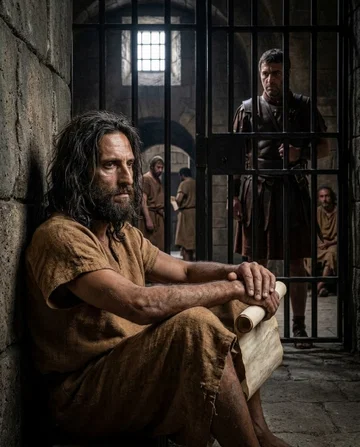
From his prison cell John sent two of his followers to ask Jesus whether he was truly the promised Deliverer or whether they should keep waiting for someone else.DA 214MH 34.1–35.1COS 88.1–3DA 214.1DA 216.3–4 He asked after heralding Christ and being imprisoned for condemning Herod's unlawful marriage, unable himself to hear Christ's teaching or see his miracles and troubled by reports that Christ had not freed him.MH 34.1–35.1Ms 96, 1897, par. 152SP 70.3ST Sep 17, 1896EW 124.3–125.1 His doubt grew from expecting the Messiah to openly claim David's throne, overthrow Rome, judge the wicked, establish an earthly kingdom, and deliver him, so that Christ's quiet work of teaching and healing without kingly power perplexed him.DA 214.2–215.22SP 70.3ST Mar 1, 1883ST Nov 1, 1877ST Mar 15, 1883 Jesus answered not at once with claims but by letting the messengers watch through the day as the blind saw, the deaf heard, the lame walked, lepers were cleansed, the sick and demon-possessed were restored, and the poor heard the good news, proving his divine mission by his works.Lt 24b, 1896, par. 25–27MH 34.1–35.1Lt 24, 1896, par. 17–182SP 71.2ST Sep 17, 1896 He added that blessing rests on the one who is not offended in him, a gentle correction John received with submissive faith, and the same Saviour is as willing to show his power for believers now who, when hedged in by difficulties, remember his past kindness and trust him rather than murmur.Lt 24b, 1896, par. 25–27MH 34.1–35.12SP 71.2ST Mar 1, 1883ST Nov 1, 1877
Setting of John's Question
The inquiry asks whether Jesus is the promised Messiah who was to come or whether another is still to be expected.DA 214COS 88.1–3 It was sent by John the Baptist through two of his disciples from Herod's dungeon near the close of his work.MH 34.1–35.1DA 216.3–4EW 124.3–125.1 John had heralded Christ's kingdom and had then been imprisoned for faithfully denouncing Herod's unlawful marriage.DA 214.1DA 216.3–4 He sought a direct word from Christ to strengthen his own assurance and to confirm his disciples in faith that Jesus was the promised One.MH 34.1–35.1DA 216.3–4
Shut in his lonely dungeon, John could not himself hear Jesus' gracious teaching nor witness the miracles.ST Sep 17, 1896EW 124.3–125.11RED 44.3 What he knew of Jesus' mighty works came through the reports his disciples brought him.2SP 70.3EW 124.3–125.11RED 44.3 Those reports comforted him, yet in imprisonment he remained troubled.2SP 70.3ST Sep 17, 1896EW 124.3–125.11RED 44.3
His disciples were offended that Jesus did not deliver John from prison.Ms 96, 1897, par. 15 They brought their painful doubts about Christ to John.Ms 96, 1897, par. 15 The question thus expresses the trial of faith caused by Christ's apparent failure to rescue His servant.Ms 96, 1897, par. 15
Reasons for John's Doubt
In disappointment, perplexity, discouragement and impatience, while watching and waiting in prison, John questioned the Saviour's work.Lt 24b, 1896, par. 25–27MH 34.1–35.1Lt 24, 1896, par. 17–18ST Sep 17, 1896 His discouragement in the lonely dungeon moved him to send to Jesus to ask whether He was the promised one or whether another was to be looked for.Lt 24b, 1896, par. 25–27MH 34.1–35.1Lt 24, 1896, par. 17–18ST Sep 17, 1896
He expected the Messiah to proclaim Himself publicly as the Saviour of the world, to take David's throne in Jerusalem, to assume kingly authority, to bring down human pride and power, to judge the wicked, to reveal Himself with fiery power, to subdue the Romans and defeat Rome, promptly to establish a temporal earthly kingdom, and to free John from prison.DA 214.2–215.22SP 70.3ST Mar 1, 1883ST Nov 1, 1877RH Mar 4, 1873 He reasoned that if Jesus was the Son of God with power to do all things He would set him free, and when those expectations were not fulfilled he grew impatient and fell into doubt.ST Mar 1, 1883ST Nov 1, 1877RH Mar 4, 1873ST Mar 15, 1883 Because Jesus was teaching and healing without publicly claiming kingly authority, acting as a political ruler, or freeing John, John doubted whether the expected Deliverer had come.DA 214.2–215.2ST Nov 1, 1877
The doubt came from misunderstanding the nature and character of Christ's kingdom and the future immortal life through Christ.DA 214.2–215.2ST Mar 15, 1883RH Apr 8, 1873 John had an indistinct understanding and failed to discern Christ's mission.DA 214.2–215.2ST Nov 1, 1877DA 216.5 Christ's first advent was to dispel the moral darkness and blindness caused by sin, but even John did not see the full light of His work and teachings.RH Apr 8, 1873DA 216.5
The question was bitter and disappointing because John had recently identified Jesus as the Lamb who takes away the sin of the world and as one greater than himself.DA 216.5 He had already identified Jesus as the promised Messiah and had taught his disciples to look to Jesus and follow Him.DA 216.5EW 124.3–125.1 If even the faithful forerunner struggled to recognize the mission, the self-seeking multitude could be expected to do no better.DA 216.5
Answer and Faith Lesson
Jesus did not answer at once but kept John's two disciples with Him through the day to see and hear His work.MH 34.1–35.12SP 71.2COS 87.3–6 At His word the deaf heard, blind eyes were opened to light and faces and the Deliverer, the lame walked, lepers were cleansed, and the dead were raised.MH 34.1–35.12SP 71.2COS 87.3–6 The dying were raised to health and vigor, fever left at His touch, and paralyzed demoniacs were freed and fell at His feet worshiping Him.MH 34.1–35.1ST Sep 17, 1896 Poor peasants and laborers shunned as unclean gathered and heard the gospel and words of eternal life.MH 34.1–35.12SP 71.2COS 87.3–6
He knew their errand before they spoke and answered by that mighty demonstration of power, giving unmistakable evidence of His divinity.Lt 24b, 1896, par. 25–27Lt 24, 1896, par. 17–18ST Sep 17, 1896 Those works identified His mission as the one foretold, so the question was answered by the evidence of His ministry rather than by an immediate display of kingly power.2SP 71.2ST Mar 1, 1883COS 87.3–6 That report of what was seen and heard was enough, and He charged them to go and tell John again and show John the things they had seen and heard.MH 34.1–35.12SP 71.2ST Sep 17, 1896
He added that blessed is he who shall not be offended in Him, gently correcting John's misunderstanding, impatience, and indistinct view of His mission.MH 34.1–35.12SP 71.2ST Mar 1, 1883ST Nov 1, 1877RH Mar 4, 1873 John understood the correction and accepted the reproof with submission and faith.ST Mar 1, 1883ST Nov 1, 1877RH Mar 4, 1873 He yielded to God's will whether he lived or died and left his life or death in God's hands.ST Nov 1, 1877RH Mar 4, 1873
That same Jesus is Saviour today and is as willing to manifest His power on behalf of believers now as on behalf of John.Lt 24b, 1896, par. 25–27Lt 24, 1896, par. 17–18ST Sep 17, 1896 When hedged about by adverse circumstances and seemingly impossible difficulties that cloud faith, believers are not to murmur or yield to unbelief.Lt 24b, 1896, par. 25–27Lt 24, 1896, par. 17–18ST Sep 17, 1896 They are to remember the Lord's past loving-kindnesses and, looking unto Jesus the Author and Finisher of faith, endure as seeing Him who is invisible.Lt 24b, 1896, par. 25–27Lt 24, 1896, par. 17–18ST Sep 17, 1896 In this way the mind is kept from being clouded, trusting His willingness to show His power and help.Lt 24b, 1896, par. 25–27Lt 24, 1896, par. 17–18ST Sep 17, 1896
Sources
Pioneers and periodicals
46 sources
From his prison John sent two of his disciples to ask Jesus whether He was the promised Messiah or whether another was still to be expected.ST Jul 18, 1916ST Oct 10, 1911 He asked because the kingdom had not been set up as he expected, leaving him troubled and perplexed in lonely confinement until his faith trembled with discouragement and momentary doubt.ST Jul 18, 1916ST Nov 19, 1894ST Dec 12, 1892RH May 6, 1909RH Dec 9, 1852 Jesus answered not by words alone but by healing the sick, giving sight to the blind, cleansing lepers, raising the dead and preaching the gospel to the poor before the messengers, bidding them report what they had seen and heard.ST Oct 10, 1911ST Nov 19, 1894RH Sep 24, 1914 Those works were the tokens foretold in Isaiah and the prophets, giving unmistakable evidence of His divine mission and identity as the Christ who was to come.ST Dec 12, 1892ST Sep 13, 1905ST Dec 22, 1898 His reply gently corrected John's expectation of immediate political deliverance, and sustained his faith in prison unto a martyr's death with promise of more than his brightest hopes at the resurrection.ST Mar 1, 1883ST Nov 1, 1877ST Dec 12, 1892ST Jun 2, 1881ST Mar 2, 1904
Setting and Wording
The question was sent by John the Baptist from prison through two of his disciples as messengers to Jesus.ST Oct 10, 1911RH Mar 23, 1869 That prison was Herod's dungeon at Machaerus, where after long confinement the severity had been relaxed enough to allow visitors, and where John heard of Jesus' doings through the general report of His wonderful works brought by his own disciples.ST Jul 18, 1916ST Oct 10, 1911 Though he had seen the Holy Spirit descend upon Jesus in bodily form like a dove, his imprisonment raised the question of what led him to inquire.RH Dec 29, 1859 He stood near the close of his ministry and at the end of his career as forerunner, cast into a prison from which he never came out alive, and the question came under great trial of faith brought by humility, disappointment, and perplexity about Jesus' work.ST Jul 18, 1916RH Mar 23, 1869
The inquiry asked whether Jesus was He that should come or whether another was still to be looked for and expected.ST Jul 18, 1916ST Oct 10, 1911 By He that should come was meant the Coming One, the promised Messiah foretold as the Star to arise and as the Anointed One to come at the predicted time, whom John himself had previously pointed out. It was the same question whether the promised Deliverer who would restore Israel and re-establish David's throne had come, or whether Israel should still wait for another amid long delay.RH Aug 11, 1859 The question is considered in connection with Jesus' work and the message His disciples were to take back to John.
The phrase He that should come is ho erchomenos, meaning He who is coming, a title for the expected Messiah.ST Mar 10, 1890ST Jan 14, 1913 The verb erchomai itself simply means coming, going, or passing, a general word not limited to the Lord's coming, with any further sense coming from the words connected or joined with it.ST Mar 10, 1890ST Jan 14, 1913 It is used in many other instances and is translated go, went, appear, brought, come, coming, enter, pass, and in other ways.ST Jan 14, 1913 The verse belongs to the whole story of John's message and Jesus' discourse about John in Matthew 11:2-19, which is the same account given in Luke 7:18-35. In that discourse Jesus asks the crowds what they went out into the wilderness to see, declares John to be more than a prophet fulfilling the promise to send a messenger to prepare the way, and declares that among those born of women none is greater than John yet the least in the kingdom of God is greater than he.
John had been imprisoned for reproving Herod for taking his brother's wife, and while there he became greatly disappointed because the kingdom was not set up, a disappointment his disciples shared.ST Dec 26, 1892 His imprisonment came near the close of his ministry and was connected with that disappointment.ST Mar 24, 1887 As Christ's messenger he had done a marvelous and glorious work in the spirit and power of Elijah with multitudes listening to him, yet he was destined to see the One he had predicted come and His work grow greater and greater while his own work waned until his sun set seemingly in utter darkness.ST Jun 23, 1909 After the great work he had done, he needed time and space to reflect upon his own weakness and to humble himself in the dust before God.RH Mar 23, 1869
Why John Asked
John asked because events unfolded differently from what he expected, leaving him troubled, confused, disappointed and perplexed in prison when public expectation was not realized, the kingdom was not set up, and his work was cut short at its close.ST Jul 18, 1916ST Dec 12, 1892RH Dec 9, 1852GSAM 63.1RH Jul 6, 1869 His disappointment as Christ's forerunner near the close of his ministry reveals how God's servants may face bitter disappointment that tests whether their hearts remain steadfast with God.ST Dec 12, 1892RH Jul 6, 1869ST Mar 24, 1887
He expected the Messiah to publicly claim kingly authority, establish a temporal kingdom and pure theocracy on earth on David's throne, overthrow Roman rule, and set him free.ST Mar 1, 1883ST Nov 1, 1877RH Mar 4, 1873ST Jun 2, 1881 Because Jesus delayed publicly claiming kingship and had not subdued the Romans as anticipated, it was natural to wonder why He left His forerunner to languish forgotten in prison and let his work drop.ST Nov 1, 1877RH Mar 4, 1873ST Jun 2, 1881 His impatience and indistinct understanding of Christ's mission grew out of that unfulfilled expectation of prompt earthly rule and release.ST Mar 1, 1883ST Nov 1, 1877RH Mar 4, 1873ST Mar 15, 1883
In lonely confinement, deprived of privileges, forsaken, suffering and under terrible trial and pressure, his faith trembled and faltered and the human supports of his faith trembled.ST Nov 19, 1894RH May 6, 1909ST Jul 20, 1915RH Jun 16, 1904ST Apr 20, 1882 That condition brought discouragement, spiritual depression, despondency and momentary doubt, even though he had heard of Christ's doings but had not witnessed them and heard nothing of how the work was progressing.ST Nov 19, 1894ST Jul 20, 1915ST Jan 30, 1896RH Jun 16, 1904ST Apr 20, 1882 Because Christ brought him no help and no immediate deliverance, he wondered whether Jesus was truly the Messiah.RH May 6, 1909ST Apr 20, 1882
This doubt came though he was greater than all born of women, who had baptized Jesus, pointed Him out as the Lamb of God, declared He must increase but he must decrease, rejoiced to see Christ's work move forward even while his own waned, and had seen the Holy Spirit descend in bodily form like a dove.RH May 6, 1909RH Dec 29, 1859ST Jun 23, 1909 His question was whether Jesus was the one his message had announced, not whether his own message was true.ST Aug 26, 1913RH May 6, 1909ST Apr 28, 1898 Discouraged in prison with sorrow and limited privileges, and destined to see the One he predicted come and His work grow greater while his own work waned until his sun set seemingly in darkness, he was still so severely tempted as briefly to question whether another should be awaited.ST Aug 26, 1913ST Apr 28, 1898ST Jun 23, 1909
The weight of teaching holds that in prison he recalled the sign at Jesus' baptism, the dove and the voice from heaven identifying Jesus as the Father's beloved Son, and his doubt was stilled so he trusted Jesus was the Anointed One even if he died without seeing Him again.ST Sep 27, 1910 Those who held the other position taught that his mind was not clear that Jesus was the Son of God when he baptized Him and his prison question proves his uncertainty, since the dove came only after Jesus had been plunged into the water and raised up, not while Jesus stood on the bank asking for baptism nor while the two stood together in the water.ST Jan 17, 1878
He did not clearly understand the character of Christ's kingdom or the future immortal life through Christ, whose first advent was to dispel the moral darkness and blindness caused by sin, and he held the thought that the Messiah would surely release His faithful messenger.ST Mar 15, 1883RH Apr 8, 1873ST Mar 2, 1904 Even he did not see the full light of Christ's work and teachings.ST Mar 15, 1883RH Apr 8, 1873 After his great work at the end of his career as forerunner, cast into a prison from which he never came out alive, his great trial of faith brought by humility and disappointment meant he needed time and space to reflect upon his own weakness and to humble himself in the dust before God.RH Mar 23, 1869
He sent two disciples after his disciples told him the general report of Christ's wonderful works, which he had heard but not witnessed, to settle the question in his own mind and seek information and assurance from the evidence.ST Jul 20, 1915RH Jul 3, 1913RH Oct 13, 1859 He was comforted by hearing a good report of Jesus' work, though God had already borne witness to Jesus at his baptism.ST Jul 20, 1915RH Jul 3, 1913 His own testimony about Jesus was not enough to settle the question, and needed the greater twofold witness of God's testimony to assure him of the divine mission, for he had preached for three years from prophecy before knowing Jesus as the Son of God.ST Jul 8, 1913RH Oct 13, 1859
How Jesus Answered
Jesus did not answer in words alone but performed miracles before John's messengers and bade them report what they had seen and heard.ST Oct 10, 1911ST Sep 17, 1896ST Nov 19, 1894 At His word the deaf heard and blind eyes were opened to see, at His touch fever left the afflicted, and at His command demoniacs were healed.ST Oct 10, 1911ST Sep 17, 1896 He gave sight to the blind, made the lame walk, cleansed lepers, made the deaf hear, cast out evil spirits, raised the dead, and preached the gospel to the poor.ST Oct 10, 1911ST May 3, 1899RH Sep 24, 1914 That mighty demonstration gave unmistakable evidence of divinity.ST Sep 17, 1896ST Nov 19, 1894
These works were those foretold in Isaiah and the prophets concerning Him and His work, including the suffering Saviour bearing the iniquity of all.ST Nov 19, 1894ST Dec 12, 1892ST Sep 13, 1905 They were the predicted, convincing tokens of His divine power, mission, and identity as the Christ who was to come, the Son of God sent by God.ST Dec 22, 1898RH Oct 28, 1915RH Jan 12, 1911ST Mar 31, 1887 By directing the messengers to His works rather than answering directly, He gave reliable evidence of messiahship through exact fulfillment of prophecy.ST Sep 13, 1905RH Oct 28, 1915RH Jan 12, 1911ST Mar 31, 1887
The reply gently corrected John's impatience and indistinct understanding.ST Mar 1, 1883ST Nov 1, 1877RH Mar 4, 1873ST Jun 2, 1881 It helped him understand that Christ's mission was not the immediate political deliverance he expected, and corrected his view of its character.ST Mar 1, 1883ST Nov 1, 1877RH Mar 4, 1873ST Jun 2, 1881
Jesus did not tell the messengers that John would soon be executed but gave John reason to hope while in prison.ST Dec 12, 1892ST Mar 2, 1904 Knowing that God's Word was being fulfilled was enough to sustain his faith.ST Dec 12, 1892ST Mar 2, 1904 John understood the correction and responded with submission and faith, entrusting whether he lived or died to God.ST Mar 1, 1883ST Nov 1, 1877RH Mar 4, 1873ST Jun 2, 1881
John was beheaded, sealing his testimony with his death as Christ's forerunner privileged to suffer with Him with the faithful martyrs who would follow.ST Dec 12, 1892ST Mar 2, 1904 But at the resurrection he would receive more than his brightest hopes.ST Dec 12, 1892
Messiahship and Mission
When asked whether he was the one who should come or whether another was to be looked for, Jesus answered by telling the messengers to show John what they heard and saw, that the blind receive sight, the lame walk, the lepers are cleansed, the deaf hear, the dead are raised, and the poor have the gospel preached to them.RH Sep 24, 1914 That answer presented his works among the suffering, oppressed and lost as his divine credentials and commission.RH Sep 24, 1914 Those works fulfilled the prophecy of his life work.RH Sep 24, 1914 They revealed God's disposition toward men, that God hates oppression and longs to relieve suffering, elevate the downtrodden and save the lost.RH Sep 24, 1914
The preaching of the gospel to the poor was given as one important, though not the only, evidence of his divine identity.ST Sep 23, 1886ST Jan 18, 1899 His religion meets suffering people in their low estate, and a teacher called by God teaches so that even the poor and unlearned can understand and benefit from the gospel.ST May 3, 1899ST Sep 23, 1886 The gospel is revealed to the humble and contrite, not to the spiritually proud who think they need nothing.ST May 3, 1899 The fountain for sin and the water of life are freely offered to all who thirst.ST May 3, 1899
The question belongs to the whole story of John's message and Jesus' discourse about John in Matthew 11:2-19, which is the same account given in Luke 7:18-35. In that discourse Jesus asks the crowds what they went out into the wilderness to see, declares John to be more than a prophet who fulfills the promise to send a messenger to prepare the way, and declares that among those born of women none is greater than John yet the least in the kingdom of God is greater than he. The truth summed up from the account of John's question and Jesus' discourse about John is that he hath done all things well.
Lessons for Believers
John's question shows honest doubt that goes directly to Jesus and to God with doubts for light and deliverance, which is the fair and right course for settling any question.RH May 6, 1909 Though greater than all born of women, who had baptized Jesus, pointed Him out as the Lamb of God, declared He must increase but he must decrease, and rejoiced to see Christ's work move forward even while his own work decreased, John in prison, forsaken and deprived of privileges with his work cut short, came under terrible trial and pressure until his faith trembled and for the moment doubt came in.RH May 6, 1909 That honest doubt did not oppose the work of Christ, show a fighting spirit, try to tear down the work, or circulate evil reports claiming all is going wrong, and it held nothing underhanded or calculated to undermine the work.RH May 6, 1909 It receives according to faith and need and accepts the evidence without being offended.RH May 6, 1909
Jesus' message to John is help for spiritual depression, for John in prison in spiritual depression asked whether He was the expected one or whether another should be awaited.ST Jan 30, 1896 The doubt that brought despondency grew in part from the common expectation that the Messiah would establish a pure theocracy on earth and assume the throne of David, making it natural to wonder why Jesus left His forerunner to languish forgotten in prison and let his work drop. That despondency is met by remembering that Moses and Elijah had gone over the same ground before him, showing that even faithful workers have temporary seasons of depression when looking at themselves and the seeming lack of appreciation along their pathway.
That same Jesus who wrought those works is Saviour today and is as willing to manifest His power on behalf of believers now as He was on behalf of John.ST Sep 17, 1896 When He knew the errand of John's disciples He answered by a mighty demonstration of His power giving unmistakable evidence of His divinity, so that at His word the deaf heard and the blind were opened to see, at His touch fever left the afflicted, and at His command demoniacs were healed and fell at His feet worshiping Him, after which He told them to go and show John again the things they saw and heard.ST Sep 17, 1896 Therefore when hedged about by adverse circumstances and difficulties that seem impossible to surmount believers are not to murmur but to remember the past loving-kindnesses of the Lord and, looking unto Jesus the Author and Finisher of faith, endure as seeing Him who is invisible and keep the mind from being clouded by unbelief.ST Sep 17, 1896
John's imprisonment and trial did not prevent him from serving as a faithful witness, and his steadfastness under adversity, like Job's and Daniel's, could testify to God's truth and expose Satan's charges as false.RH Jun 15, 1916 His disappointment at the close of his work as Christ's forerunner when he was imprisoned illustrates that God's servants may face bitter disappointment, which reveals whether their hearts remain steadfast with God.RH Jul 6, 1869 The same kind of ministry that answered John, healing the sick and afflicted, raising the dead, and preaching the gospel to the poor, was reliable and convincing evidence that He was sent by God and of His identity as the Son of God.RH Oct 28, 1915RH Jan 12, 1911 That same kind of ministry is to carry conviction wherever the third angel's message is proclaimed, for ministry to the sick can bear witness to Christ and help people accept the gospel.RH Oct 28, 1915RH Jan 12, 1911 John's doubt is also a warning against doubting despite strong evidence, since Christ's earthly mission fulfilled Scripture as a sign of God's hand at work, illustrating how people may still doubt the Lord's coming even when the evidence is clear.RH Jan 1, 1861
Sources