Matthew 7:28
And it came to pass, when Jesus had ended these sayings, the people were astonished at his doctrine:
Translations
American King James Version, King James Version, KJV Cambridge Paragraph Bible
And it came to pass, when Jesus had ended these sayings, the people were astonished at his doctrine:
And it came to pass when Jesus had ended these sayings, the people were astonished at his doctrine.
And it came to pass, when Jesus ended these words, the multitudes were astonished at his teaching:
And it came to pass, when Jesus had finished these words, the multitudes were astonished at his teaching:
And it came to pass, when Jesus ended these words, the multitudes were astonished at his teaching,
And it came to pass, when Jesus had finished these words, the crowds were astonished at his doctrine,
And it came to pass, when Jesus ended these words, with astonishment were the multitudes being struck at his teaching;
Berean Standard Bible, Majority Standard Bible
When Jesus had finished saying these things, the crowds were astonished at His teaching,
When Jesus had finished saying these things, the multitudes were astonished at his teaching,
And it came about, when Jesus had come to the end of these words, that the people were surprised at his teaching,
And it came to passe, when Iesus had ended these wordes, the people were astonied at his doctrine.
Douay-Rheims (Challoner revision)
And it came to pass when Jesus had fully ended these words, the people were in admiration at his doctrine.
Pictures
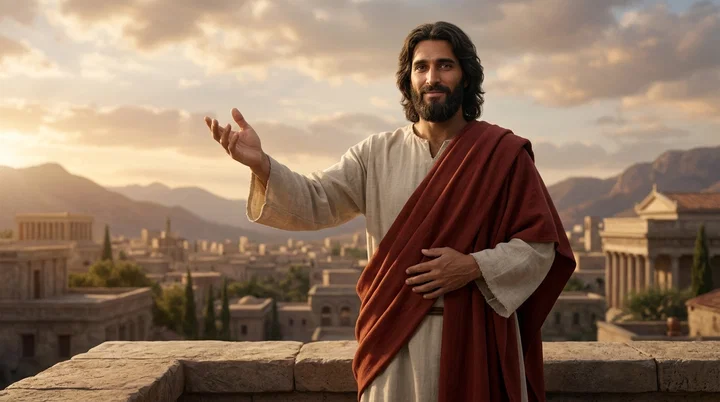
Cross-references
- Matthew 5:1-2
And seeing the multitudes, he went up into a mountain: and when he was set, his disciples came unto him:
Introduces the sermon whose teaching astonished the people when Jesus finished.
- John 7:46
The officers answered, Never man spake like this man.
Both accounts describe listeners struck by Jesus’ unmatched teaching.
- Matthew 5:17-20
Think not that I am come to destroy the law, or the prophets: I am not come to destroy, but to fulfil.
The sermon explains the law’s claims and expands on its commandments.
- Luke 6:17-31
And he came down with them, and stood in the plain, and the company of his disciples, and a great multitude of people out of all Judæa and Jerusalem, and from the sea coast of Tyre and Sidon, which came to hear him, and to be healed of their diseases;
The passage distinguishes Luke’s discourse from Matthew’s while noting that they share the same truths.
- Luke 4:32
And they were astonished at his doctrine: for his word was with power.
Jesus’ teaching astonished people because his word had power.
- Matthew 13:54
And when he was come into his own country, he taught them in their synagogue, insomuch that they were astonished, and said, Whence hath this man this wisdom, and these mighty works?
People marvel at Jesus’ wisdom and teaching.
- Matthew 8:1
When he was come down from the mountain, great multitudes followed him.
The crowds follow Jesus after hearing his astonishing teaching.
- Exodus 20:1-17
And God spake all these words, saying,
Christ expounds the commandments given at Sinai in the Sermon on the Mount.
- Mark 1:22
And they were astonished at his doctrine: for he taught them as one that had authority, and not as the scribes.
Jesus’ teaching astonished those who heard Him.
- Luke 6:47-49
Whosoever cometh to me, and heareth my sayings, and doeth them, I will shew you to whom he is like:
Gives the parallel teaching about the two classes of hearers before the people’s response.
- Luke 2:47
And all that heard him were astonished at his understanding and answers.
People hearing Jesus were astonished by his understanding and answers.
- John 7:16
Jesus answered them, and said, My doctrine is not mine, but his that sent me.
Jesus says his teaching comes from the Father.
- Matthew 5:3-12
Blessed are the poor in spirit: for theirs is the kingdom of heaven.
The sermon opens with the Beatitudes.
- Luke 4:22
And all bare him witness, and wondered at the gracious words which proceeded out of his mouth. And they said, Is not this Joseph’s son?
The people wondered at Jesus’ gracious words.
Commentary
Each commentary is drawn from primary sources: the writings of Ellen G. White and Adventist pioneers and periodicals. Each commentary is separate. Its own words are not a quotation; follow the references to read the source passages.
Ellen G. White
45 sources
This verse marks the close of the Sermon on the Mount, the open-air discourse to the great multitude gathered from many regions.7T 269.4–5Ms 139, 1906, par. 1–5DA 298DA 298.2–3DA 298.1
The people were astonished because He taught as one having authority and not as the scribes, with clear, simple, solemn and convincing speech that all could understand.Ms 115, 1906, par. 2–5Lt 96, 1902, par. 12–147T 269.4–5Lt 170, 1901, par. 14GW92 309.1
He set forth the principles of God's kingdom of grace and opened the law of God in its spirit and far-reaching claims, in contrast to worldly hopes and the traditions of the scribes and Pharisees.DA 299.32SP 204.1FE 237.1SCE 6.3Lt 7, 1886, par. 34
His words awakened conviction and hope, yet following them required changed thought and conduct, so while many were inwardly moved few accepted them as the guide of life.ST Apr 26, 18774RED 62.2AA 364.2–365.12SP 210.2–3
The closing call is to study these sayings again and again for personal enlightenment and to do the Father's will like the wise builder on the rock rather than hearing only.Ms 5, 1885, par. 1–3Lt 8, 1910, par. 14Ms 157, 1907, par. 14Ms 7, 1898, par. 17–20Lt 19a, 1892, par. 14–15
Words and Setting
Matthew 7:28 marks the close of the Sermon on the Mount recorded in Matthew 5-7, the discourse begun in Matthew 5.7T 269.4–5Ms 139, 1906, par. 1–5DA 298 That discourse was preached in the open air to a very large congregation.Ms 139, 1906, par. 1–5 When Jesus finished it the people were astonished at His teaching.7T 269.4–55T 253.2–254.16T 472.1
The verse is also described as marking the close of the words recorded in Matthew 4-7, which contain many precious and important lessons.Lt 8, 1910, par. 4–8
More particularly it closes the sayings of Matthew 7 to enter in at the strait gate, to beware of false prophets known by their fruits, to do the will of the Father to enter the kingdom of heaven, and to hear and do His words like a wise man who built his house upon a rock.Ms 115, 1906, par. 2–5Ms 157, 1907, par. 14 These were orders that it is safe to follow by placing the feet in His footsteps instead of listening to one's own ideas and plans.Ms 115, 1906, par. 2–5 The conclusion in Matthew 7:25-29 follows His warning that professed workers of wonders may be rejected for practicing iniquity.Lt 19a, 1892, par. 14–15
The sermon was spoken especially to the disciples but within hearing of the assembled multitude.DA 298.2–32SP 204.1 The crowd included people from Galilee and many other regions who had come to hear Jesus and be healed.DA 298.2–3 Its lessons of truth were given so they could reach multitudes, including people in ignorance and error.DA 298.1
Manner of Teaching
The astonishment came because the teaching carried authority unlike that of the scribes, set apart from their traditions, dogmas, formal instruction, doubt and hesitancy by its clear, emphatic, solemn and convincing character.Ms 115, 1906, par. 2–57T 269.4–5GW92 309.1SCE 6.2AA 364.2–365.1 The words were fresh and full of life, reaching minds with clarity and power, while rabbinical explanations of the law had become obscure and unintelligible.GW92 309.1SCE 6.2 In contrast to traditions and doctrines that left hearers uncertain, the earnest, convicting power brought hope to those who listened.ST Jan 13, 1914AA 364.2–365.1 The instruction made mysteries plain in clear, simple truths with solemn, convincing force, so that no word could not be understood.Lt 96, 1902, par. 12–14Lt 170, 1901, par. 14 Discourses were unlike any the people had heard, with words and principles clear, simple, wise and authoritative.ST Feb 8, 1899 The sermon was so clear that old and young, ignorant and learned could catch its full meaning, and even a child could study it without being misled.STE 10.1CE 126.1–3ST Feb 8, 1899
He met the people on their own ground as one acquainted with their perplexities, making truth beautiful in direct, simple language that was pure and refined, clear as a running stream and as music compared with the monotonous, spiritless tones of the rabbis.ST Jan 13, 1914CE 126.1–3 The rabbis spoke with doubt and hesitancy as if the Scriptures might mean one thing or exactly the opposite, leaving hearers daily involved in greater uncertainty, while He spoke with power as if His words could not be controverted and with the Scriptures as unquestionable authority.ST Jan 13, 1914 He spoke slowly and impressively in a slow, clear, distinct manner with a musical voice, emphasizing the words to be heard and pausing between sentences instead of speaking in a nervous, hurried way or rushing sentence upon sentence.CE 126.1–3 His manner was beautiful and attractive and ever characterized by simplicity, unfolding the mysteries of the kingdom of heaven by familiar figures and symbols and by earthly experiences and occurrences, using no high-sounding words and drawing familiar illustrations from nature and repeating familiar truths to help people grasp divine teaching.CE 126.1–31MR 21.4–22.2 In compassionate love and tenderness He cheered, comforted and instructed all who heard, so the common people heard gladly, were very attentive, and could comprehend His words.CE 126.1–3
His words carried vital power and certainty, with power as if every sentence came from God, because He knew the truth He taught and understood it fully.ST Sep 11, 1893STE 10.1SCE 6.3 He opened the Scriptures like a new revelation after false teaching had confused understanding of divine truth, restoring familiar truths that had been obscured or distorted by placing them in their proper light in original clarity and beauty.ST Sep 11, 1893SCE 6.3 Essential truths were presented with certainty, not speculation or human opinion, making God's unchanging principles clear in practical forms people could understand and live by.8T 201.2–4 The teaching met the soul's need, awakening thought, kindling aspiration, and stirring every capacity of body, mind and soul.SCE 6.2ED 81.1–3 It focused not on abstract theories or curiosity but on truths essential to character, knowing God, doing good, and living in relation to eternity.ED 81.1–3
Truths It Taught
The sermon that closes here challenged worldly hopes of greatness by teaching the principles of God's kingdom of divine grace.DA 299.32SP 204.1 It gave a right understanding of His character and kingdom and explained the conditions for entering it without directly attacking mistaken ideas, leaving hearers to infer for themselves what the kingdom was like.DA 299.3 Its opening beatitudes set out those governing principles rather than promising the earthly glory and political deliverance many expected.2SP 204.1 Its doctrine was at variance with the precepts and example of the scribes and Pharisees, who had taught that happiness consists in possession of the things of this world and in fame and the honor of men.ST Apr 26, 18774RED 62.22SP 210.2–3 They had taught that it is pleasing to be called Rabbi and to be extolled as wise and religious, with virtues paraded before the public as the crown of happiness.ST Apr 26, 1877 Before that vast throng it was declared that earthly gain and honor is all the reward such persons will ever receive.ST Apr 26, 18774RED 62.2
That teaching opposed the doctrines and practices of the self-righteous scribes and Pharisees, exposed their misrepresentation of God, and presented God's character through Christ as compassionate, merciful and loving.FE 309.1 It defined the law of God and revealed its far-reaching claims, correcting the distorted picture given by those leaders.FE 237.1Lt 7, 1886, par. 34SCE 7.1 It showed that the spirit of the law must be in the heart, and that the state of the heart regulates a person's life and character.Lt 7, 1886, par. 34 Its words were not new, but they came with the force of revelation because familiar truths obscured or distorted by human traditions were presented in their proper light and original clarity and beauty.FE 237.1SCE 6.3SCE 7.1 So presented, they opened the hearers' understanding to the law's glory, dignity and majesty as the enduring standard of righteousness.FE 237.1SCE 7.1
He could teach in this way because He had spoken the law at Sinai and knew its meaning fully, and His teaching opened the Scriptures like a new revelation in contrast to false teaching that had confused divine truth.ST Sep 11, 1893SCE 7.1 The sermon thereby revealed that the Jewish people were separated from God by failing to walk in the light given them, with darkness coming upon them in proportion to the light they had allowed to shine on their path.ST Mar 26, 1896 Its pure gospel explains God's holy law as the standard of loving God and neighbor, so that unjustly acquiring wealth at another's expense shows a person has not learned the law or met its standard.Ms 26, 1899, par. 29–30
The closing section warns hearers not to rely on claims or works but to do the Father's will.Lt 162, 1909, par. 1–3 It contrasts doers who hear and do His words and build on the rock with hearers who do not obey and build on sand.Ms 5, 1885, par. 1–3 It connects professed workers of wonders rejected for practicing iniquity with the need for genuine faith that gives the heart to God and bears righteous fruit.Lt 19a, 1892, par. 14–15 The question is thus brought home to each person how he is building, for the foundation must be deep enough to withstand the flood, and the life built on it must stand the test of God's law and the judgment, in contrast to trusting one's own works while transgressing God's law.Ms 5, 1885, par. 1–3
Response of Hearers
The close of the Sermon on the Mount found the people listening with intense interest because they expected something extraordinary, and His plain, simple teaching spoken with authority gave them a sure foundation for faith and practice.5T 253.2–254.1 They were amazed because His doctrine stood at variance with the precepts and example of the scribes and Pharisees, who had taught them that happiness consists in possession of the things of this world and in fame and the honor of men, in being called Rabbi and being extolled as wise and religious with virtues paraded before the public as the crown of happiness, while before that vast throng He declared that earthly gain and honor was all the reward such persons would ever receive.ST Apr 26, 18774RED 62.22SP 210.2–3 He spoke with certainty and a convincing power that silenced the people and brought a feeling of fear over them, so that they looked at one another doubtfully and asked who of them would be saved if His teachings were true.ST Apr 26, 18774RED 62.22SP 210.2–3
Many were deeply convinced that He was actuated by the Spirit of God and that the sentiments He uttered were divine.ST Apr 26, 18774RED 62.22SP 210.2–3 Its truth and beauty attracted them, and unlike the traditions and doctrines of the rabbis it carried earnest, convicting power, with warnings that spoke to their hearts and brought hope to those who listened.AA 364.2–365.1 His words challenged their former beliefs and opinions, so that to follow them would require a change in thought and conduct and would bring conflict with religious teachers whose traditions they would have to reject.
Though many responded inwardly, few accepted His teaching as their guide for life. His wise teaching held thousands spellbound, yet even words that deeply impressed the people could not reach hearts blinded by prejudice and hatred, which resolutely rejected the light.2SP 370.3
Study and Obedience
The instruction closed by this verse, together with Matthew 5 and Matthew 7:12-20 and Matthew 7:26-29, is to be studied by every person for individual benefit, and ministers and church members must study Matthew 7 most critically again and again for their own enlightenment and not to prove supposed faults they discern in others.Lt 8, 1910, par. 14Ms 157, 1907, par. 14 Every word of the seventh chapter of Matthew must be studied as for life.Ms 7, 1898, par. 17–20 That study does the work in the heart that prepares for the work assigned in these last days to reach lost souls, so that instruction about the course of action will not be labor in vain.Ms 7, 1898, par. 17–20
Its conclusion calls the question home to each person how they are building, contrasting hearers who do the word and build on the rock with hearers who do not obey and build on sand.Ms 5, 1885, par. 1–3 The firm foundation must be deep enough to withstand the flood, and the life built on it must stand the test of God's law and the judgment, in contrast to trusting one's own works while transgressing God's law.Ms 5, 1885, par. 1–3 Following these principles means learning humbly from Christ, asking Him to cleanse the heart and remove faults of character, surrendering self to Him, and living in a way that leads others to Him.Ms 115, 1905, par. 7–9 The lessons of that sermon are to be lived out, and doing so makes a deeper impression and has a more lasting influence than preaching from the pulpit.6T 472.1
The sayings closed here, especially Matthew 7:24-29, warn those living near the close of earth's history when everything will be in confusion.Lt 248, 1907, par. 6–8 Christ's doctrine exposes the misleading sentiments by which Satan stealthily works to confuse the minds of those who know the truth, and it calls those living divided lives, professedly serving the Lord while scheming to carry out their own plans that retard the work Christ gave His life to accomplish, to repent and be converted lest they be deceived by the enemy of souls.Lt 248, 1907, par. 6–8 The warning is applied as a call to seek the conversion of unbelieving friends and neighbors, for hearers are not to rely on claims or works but to do the Father's will.Lt 162, 1909, par. 1–3 The defects pointed out in those whose thoughts are absorbed with the faults of others are very serious, and unless there are decided conversions, many who think that they are lights will prove to be stumbling blocks.Lt 8, 1910, par. 14
His vivid and compelling way of bringing truths from God's word is the model for ministry, for His words were fresh and full of life, unlike the traditions and dogmas of the rabbis, and reached minds with clarity and power so that the people were captivated.GW92 309.1 He preached few sermons but taught in different lines as one having authority because He knew He was teaching the truth, speaking as never man spoke and drawing crowds wherever He went, and camp meetings are to follow that model by laboring to teach in different lines as Christ did.Ms 11, 1891, par. 3 As the greatest Teacher the world ever knew, all who have placed themselves on His side are to learn from Him the art of conversation.Ms 74, 1897, par. 3 Conversation is a science in which practice makes perfect, so that when placed in company where a flood of foolish talk bears all before it, His followers are if possible to change the conversation, by the help of the grace of God quietly dropping words or introducing a subject that will direct the conversation into a profitable channel.Ms 74, 1897, par. 3
Sources
Pioneers and periodicals
80 sources
When Jesus had finished these sayings the Sermon on the Mount in Matthew 5-7 was ended, and the multitudes listening were astonished and amazed at his doctrine.ST Jun 20, 1900ST Jun 20, 1900RH Jul 23, 1872RH Jan 21, 1875RH Jul 26, 1870 He taught them as one having authority, and not as their scribes and rabbis.ST Jun 20, 1900RH Jul 20, 1905ST Jul 4, 1906 The scribes taught speculatively from human opinions, traditions, ceremonies and doubtful disputing that left hearers in uncertainty, while his teaching rested on the Scriptures, rejected false tradition, restored the clear meaning of the law, and was spoken directly and simply with the authority of a lawgiver.ST Jun 7, 1899ST Mar 23, 1915ST Jul 8, 1897ST Oct 23, 1901 His words carried certainty and convincing power because he was filled with God's Word energized by the Holy Spirit, and because he lived fully what he taught, embodying the way, the truth, and the life.ST Jun 20, 1900RH Jul 20, 1905RH Dec 4, 1900RH Nov 22, 1906RH Oct 4, 1906 That doctrine vindicates rather than abolishes the Ten Commandments, expanding their spiritual reach to thoughts and desires, and requires doing the Father's will expressed in his law, since profession alone does not qualify for heaven and hearing without doing leaves hope on sand that cannot stand the storm.RH Jul 23, 1872ST Feb 21, 1906RH Jul 26, 1870RH Nov 15, 1853ST Nov 25, 1889
Closing Words and Setting
The close comes when Jesus had ended these sayings, finishing the Sermon on the Mount in Matthew 5-7 and its final part in chapter 7 after hours of teaching.RH Jul 23, 1872RH Jan 21, 1875RH Jul 26, 1870ST Sep 12, 1911ST Oct 30, 1907 That ending is marked by the people's astonishment at his teaching, showing that professing faith or making promises is not enough since entering the kingdom requires doing the Father's will and living out faith.RH Jul 23, 1872ST Nov 21, 1900 The sermon vindicates the law rather than setting Jesus' teaching against the Ten Commandments, explaining the law's full reach over thoughts and desires without abolishing or weakening it.RH Jul 26, 1870 Its teaching includes the spirituality of the law, the Lord's Prayer, the Beatitudes, the true motive of service, and the call not merely to judge but to do, and his word carried power that reached hearts.ST Nov 21, 1900ST Oct 30, 1907
The closing belongs to Matthew 7:13-29, taken as a lesson in its own right.ST May 3, 1899
The sermon is Christ's inaugural address laying out work for the church and the principles of his administration and kingdom.ST Aug 30, 1877ST Its detailed instructions show his kingdom is spiritual while earthly civil governments continue alongside it.ST Apr 9, 1896 Entry requires doing the Father's will, for hearing his sayings without doing leaves hope on a foundation unable to withstand the coming storm.ST Aug 30, 1877
The sermon is Jesus' longest discourse and Matthew's great discourse, whose emphasis is righteousness and whose great subject is law.ST Mar 9, 1888ST Jun 14, 1883RH Mar 14, 1871 It is his fullest verbal declaration of the law's underlying principles, presenting the law as God's standard of righteousness with the opening Beatitudes setting out blessings for those who seek and develop God-like character.ST Aug 6, 1912 It is a full portrait of the Bible Christian and one of his most delightful discourses.RH Jan 21, 1875RH Oct 11, 1870
The sermon in Matthew 5-7 presents the same blessed truths as Luke 6, though spoken on different occasions.ST Nov 5, 1894 Some hold that Luke's Sermon on the Plain was given at a different time, while the astonishment of the people followed the finishing of the Sermon on the Mount.ST Jan 23, 1896 In it Jesus taught by simple declaration before enforcing kingdom truths more strongly through parables.ST Nov 26, 1894
The sermon was given on another mount nearly fifteen centuries after Sinai by the selfsame voice that spoke the law at Sinai.ST Sep 22, 1909 It did not retract or nullify any portion of that law.ST Sep 22, 1909 Its gracious words are to be read, meditated upon, and fed upon.ST Sep 22, 1909
The verse is included among passages describing scenes at the close of the last days, marking the people's astonishment after he had finished the sayings in the Sermon on the Mount.ST Oct 31, 1878
Astonished Hearers
When Jesus had finished, the people and the multitudes were astonished and amazed at his doctrine.ST Jun 20, 1900ST Jun 20, 1900ST Jun 7, 1899RH Jul 20, 1905RH Dec 4, 1900 Their response was not chiefly admiration for its beauty but amazement at its profound instruction and authority.ST Feb 5, 1885 His discourses were unlike any they had heard, startlingly new, clear, simple, wise, authoritative, and wonderful, unlike ordinary human teaching.ST Feb 8, 1899ST Mar 3, 1881RH Dec 11, 1900
His teaching stirred souls and reached consciences and hearts.ST Oct 30, 1907ST Jun 14, 1899 His Spirit-filled word carried power that convicted hearers.RH Nov 22, 1906 Their amazement extended beyond novelty to the power revealed in connection with it.ST Mar 3, 1881
He spoke with certainty and a convincing power that silenced the people and brought a feeling of fear over them.ST Apr 26, 1877 They looked at each other doubtfully and asked who of them would be saved if his teachings were true.ST Apr 26, 1877 Many were deeply convinced he was actuated by the Spirit of God and that the sentiments he uttered were divine.ST Apr 26, 1877 His doctrine was at variance with the precepts and example of the scribes and Pharisees, from whom they had learned that happiness consists in possession of the things of this world and in fame and the honor of men, that it is pleasing to be called Rabbi and to be extolled as wise and religious with virtues paraded before the public as the crown of happiness, yet before that vast throng he declared that earthly gain and honor was all the reward such persons would ever receive.ST Apr 26, 1877
The same astonished response was given by the officers sent to arrest Jesus at the Feast of Tabernacles.ST Feb 22, 1905 A like astonishment met him as a boy in the temple.ST Jan 11, 1899
Authority Unlike Scribes
He taught them as one having authority and not as their scribes and rabbis, and the multitudes were astonished when he finished these sayings because his teaching carried that authority.ST Jun 20, 1900RH Jul 20, 1905ST Jul 4, 1906ST May 3, 1899ST Feb 22, 1905 The question of their astonishment at the close of the Sermon on the Mount is linked to the authority of his teaching.ST May 3, 1899 His authority came from living fully what he taught, for he not only taught the way, the truth, and the life but was the way, the truth, and the life.RH Jul 20, 1905 The same astonished response was given by the officers sent to arrest him at the Feast of Tabernacles.ST Feb 22, 1905
The scribes' teaching was speculative and focused on forms, traditions, and ceremonies instead of the life-giving truth of God, lacking the power and conviction of his teaching.ST Jun 7, 1899ST Feb 17, 1904 It rested on human opinions, councils, and traditions rather than on the Scriptures, and had obscured the blessings of the Gospel with dry, burdensome human traditions.ST Mar 23, 1915ST Jul 8, 1897 Unlike his appeal to God's Word, rejection of false traditions, and restoration of the law's clear meaning, theirs was intricate argument and tradition, with emphasis on forms and ceremonies rather than principles of righteousness and true holiness.ST May 3, 1899ST Feb 17, 1904 The rabbis engaged in traditional arguments and verbal hair-splitting and minute disputes that neglected religion and morals, speaking with doubt and hesitancy as if Scripture might mean one thing or the opposite and leaving hearers daily in greater uncertainty, with monotonous tones and repeated traditions.ST Jan 13, 1914
His teaching differed because it rested on the Scriptures rather than on human opinions, councils, and traditions.ST Mar 23, 1915 It carried authority because it came from thorough knowledge of Scripture and presented its plain truths without the traditions and ideas of the scribes and Pharisees.ST Oct 23, 1901 He knew the truth and taught the Old Testament Scriptures which he had inspired the prophets to write. He opened the Scriptures like a new revelation, though false teaching had confused understanding of divine truth, and presented primary, faultless, eternal truths rather than speculation or arguments against opponents.ST Sep 11, 1893ST Sep 16, 1886
He met the people on their own ground as one acquainted with their perplexities, making truth beautiful in direct and simple language pure, refined and clear as a running stream and as music compared with the monotonous tones of the rabbis.ST Jan 13, 1914 He stirred souls and reached consciences, speaking with power as if his words could not be controverted and with the Scriptures as unquestionable authority, in contrast with all others.ST Jan 13, 1914 His teaching carried the authority of a lawgiver greater than Moses. His teaching stood in direct opposition to the teachings of his time and showed he was not molded by the customs and thought of the world.ST Jul 4, 1906RH Aug 8, 1912 That authority rested in the truth and righteousness of what he taught, not in social standing or official position, which the religious leaders missed when they judged him by his humble background. At variance with the precepts and example of the scribes and Pharisees, who had taught that happiness consists in possession of worldly things and in fame and honor of men and in being called Rabbi and extolled as wise and religious with virtues paraded as the crown of happiness, he declared before the vast throng that earthly gain and honor was all the reward such persons would ever receive.ST Apr 26, 1877 This opposition stirred hatred among the scribes and Pharisees and led to persecution of him and his followers, which conformity to the customs and teachings of the time could have spared.ST Jul 4, 1906
Source of Authority
His words carried certainty and authority because He was filled with God's Word and spoke out of its fullness, teaching God's Word energized by the Holy Spirit.ST Jun 20, 1900RH Dec 4, 1900 That Spirit-filled word bore power that convicted hearers, coming from personal knowledge and conviction of divine truth and expressing God's love and unmerited favor.RH Dec 4, 1900RH Nov 22, 1906ST Jun 7, 1899 He knew the truth He taught and opened the Scriptures as a new revelation, and its power has not failed, though people lose that power when they leave the Gospel aside.ST Sep 11, 1893ST Jun 7, 1899 Many were deeply convinced He was actuated by the Spirit of God and that the sentiments He uttered were divine.ST Apr 26, 1877
His authority came from fully living what He taught, for He not only taught the way, the truth, and the life but was the way, the truth, and the life.RH Jul 20, 1905 The difference from others was not the form of the message but that His teaching came from inward conviction and experience, with His life matching His words. Teaching truth in a life shaped by it gives the word power to reach and change receptive hearers, making Him the example for teachers whose lives should reflect what they teach.RH Oct 4, 1906 The wisdom that astonished did not come from any special natural advantage or inherited knowledge, for having emptied Himself and been made like His brethren He had no advantages over them and no closed sources of wisdom, so the same wisdom is open and available to His followers.ST Aug 12, 1897
Though ranked as unlearned by popular standards, He was confessed to have wonderful power in teaching.RH Jul 2, 1908 That power and authority came from education highly developed under divine principles rather than human wisdom or pride of intellect, developing mind, body, and soul naturally with none overgrown and none dwarfed but all in perfect balance, taking reasonable time and preparing thoroughly for His life work.RH Jul 2, 1908 His wisdom and understanding were exceptional, speaking as no other had spoken doctrine purer and more excellent than had been received before.RH Nov 18, 1862
Sermon Doctrine and Law
The sayings that close here vindicate the law rather than setting Jesus' teaching against the Ten Commandments, explaining its full reach to thoughts and desires without abolishing or weakening any part of it.RH Jul 26, 1870 The Ten Commandments are reproduced and spiritually expanded in this sermon in continuity with the Old Testament, and the hearers recognized the teaching about the law as referring to the law already written in their Scriptures.RH Nov 15, 1853ST Nov 25, 1889 That recognition rests on quotations from the Decalogue and on the warning that breaking even the least commandment bears on place in the kingdom of heaven.RH Nov 15, 1853
The discourse presents the law as God's standard of righteousness, with the opening Beatitudes setting out the blessings given to those who seek and develop God-like character.ST Aug 6, 1912 Its teaching includes the spirituality of the law, the Lord's Prayer, the Beatitudes, the true motive of service, and the call not merely to judge but to do.ST Nov 21, 1900ST Jul 18, 1911 Its words are applicable to all time and remain full of spirit and life.ST May 13, 1897
It is a Gospel sermon, for the promises, commands, and blessings of God all belong to the Gospel. It is spiritually rich in faith, devotion, purity, and consecration.ST May 13, 1897 It lays down rules for spiritual growth and presents a moral code superior to any the world had known before or has known since.RH Jan 11, 1915
Its doctrine forbids deliberately hunting and killing fellow men in war and requires resisting not evil, turning the other cheek when struck, and praying for enemies, so no one living out those principles can go into battle with deadly weapons.ST Jun 6, 1900 Soldiers who heeded them would never use their rifles and would be counted traitors by their governments, and carrying Bibles into war has no softening effect while animosity and killing continue.ST Jun 6, 1900 The same teaching stands against justifying violence or setting human wishes above law, upholding respect for law rather than encouraging murder or lawlessness.RH Feb 28, 1907
The sayings make up the law of the mount, the very ideal the world hungers for and the very law needed for economic problems.RH Jul 24, 1900 Its doctrine is the spirit of Christ and requires meekness, which is as truly a fruit of the Spirit as faith or love and an essential element of spiritual attainment and true Christian experience that cannot be dispensed with.ST Apr 6, 1882 An angry temper, retaliation in kind, harshness, sarcasm, and spitting, fizzing, fuming, boiling over and exploding with fits of anger are not excused by impulsive nature or sanguine temperament but are sin from remaining carnality and proof of an unsanctified nature, a disgrace to the Christian name.ST Apr 6, 1882 Want of meekness blurs the whole character, blasts usefulness, and puts doubt about the power of grace and the reality of religion into the minds of sinners, especially when even amiable sinners restrain their passions by resolution for the sake of good manners.ST Apr 6, 1882
Its teaching does not contradict the Psalms, for God is both loving Father and just Judge, with justice and love both parts of his character though one may predominate in one Testament and the other in the other.RH Apr 4, 1871 Nor is it contrary to Christ's role as ruler and judge who punishes sin in individuals and nations, since divine mercy and justice both belong to his character.RH Apr 4, 1871
It teaches that a life must be built on the rock to stand, where the rock is Christ and the house is character founded on him. The sinner finds this foundation through humility and repentance, with Christ's death making him the basis of salvation, so those who build on him endure while those built on sand fall. Likewise human peace-making by resolutions, agreements, laws, treaties, and conferences without a changed heart is a house that will fall when the storm comes and a wall daubed with untempered mortar that overflowing shower, great hailstones, and stormy wind will rend, for war is inherent in the natural heart and only the Creator who made all things through Christ can create the heart anew.ST Aug 2, 1899
Its teaching tests whether religious teaching can withstand God's Word, and what fails this test cannot be the teaching of Christ's church.RH Nov 7, 1907 Its simple yet profound lessons brought the truth home to children and benefited everyone who heard them.RH Aug 20, 1908 Its words were full of spiritual life and hold deeper lessons that become clearer in the setting of Jesus speaking to his disciples and the gathered multitudes, and its counsel and encouragement benefit both saints and sinners.ST May 17, 1905RH Jul 14, 1904 It is priceless instruction for people of every age, to be read often in family life and practiced each day in conduct toward others, though it is regarded by some as too exacting and discounted before the people.ST May 25, 1882ST Dec 5, 1916
Its teachings call disciples to seek perfection of Christian character and live as lights in the world.RH Oct 29, 1903
Call to Obey and Teach
Mere profession and promise-making do not qualify anyone for heaven, for entrance into the kingdom turns on doing the Father's will and living out faith in obedience to God's word.RH Jul 23, 1872ST Feb 21, 1906ST Aug 30, 1877RH Dec 9, 1915 To hear the sayings and not do them is to rest hope on a foundation that cannot stand when the storm comes.RH Jul 23, 1872ST Aug 30, 1877 Hearing God's promises profits nothing unless their condition is met, and that condition is faith shown through obedience.ST Mar 16, 1904 That will of the Father is expressed in His law, so rightly hearing the Lord's word means obeying it, and such obedient hearing brings blessing and guidance, crowns effort with success, and establishes the way.ST Mar 16, 1904ST Oct 1, 1902 To receive His testimony is to receive the Father's word, with obedience as the rule of self-examination and the means by which people are gathered to Him.RH Dec 13, 1853
The same warning reaches persistent sin, for continuance in disobedience leads to death and cannot be excused, since grace to overcome it has been provided.ST Feb 21, 1906 He would have His followers filled with that same Word, with God's law woven into their lives, and with the principles of the sermon shaping life and guiding preaching and teaching.ST Jun 20, 1900ST Oct 4, 1899 Yet its meaning is not mastered by study alone, for spiritual truth must be known by personal experience in order to be taught with success.ST Oct 4, 1899 Gospel teachers formed after His model teach only truth received through personal communion with Him.RH May 19, 1903
Those who speak for Him are to present truth with authority, sincerity, earnestness, and conviction, embodying in life what they teach as He did.RH Mar 17, 1904RH Oct 4, 1906 His authority lay in living what He taught from inward conviction and experience, with life matching words, and teaching truth in a life shaped by it gives the word power to reach and change receptive hearers.RH Oct 4, 1906ST Jun 7, 1899 That power has not failed, but people lose it when they leave the Gospel aside.ST Jun 7, 1899 The sermon exposed the separation of the Jewish people from God through failure to walk in given light, with darkness coming upon them in proportion to the light they neglected.ST Mar 26, 1896 That astonishment is a pattern for the future, for when the advent message is embodied in the lives of its hearers and spoken through them, multitudes will again be astonished at the doctrine, and its power will be seen in making new people and preparing for the new heaven and the new earth.RH Jan 6, 1903
Sources