Luke 4:22
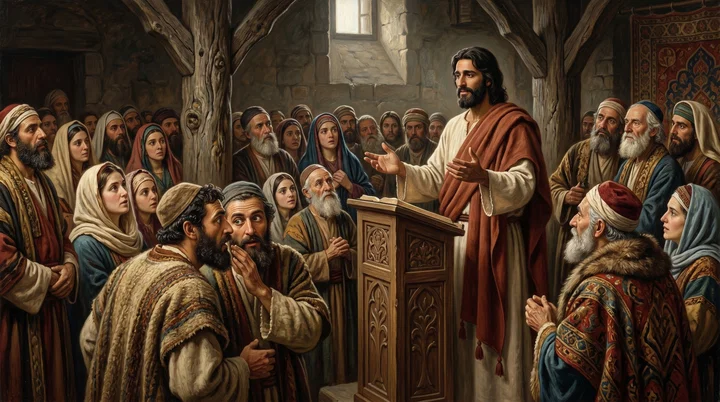
And all bare him witness, and wondered at the gracious words which proceeded out of his mouth. And they said, Is not this Joseph’s son?
Translations
And all bore him witness, and wondered at the gracious words which proceeded out of his mouth. And they said, Is not this Joseph’s son?
King James Version, KJV Cambridge Paragraph Bible
And all bare him witness, and wondered at the gracious words which proceeded out of his mouth. And they said, Is not this Joseph’s son?
And all bore him testimony, and wondered at the gracious words which proceeded out of his mouth. And they said, Is not this Joseph's son?
Revised Version, American Standard Version
And all bare him witness, and wondered at the words of grace which proceeded out of his mouth: and they said, Is not this Joseph’s son?
and all were bearing testimony to him, and were wondering at the gracious words that are coming forth out of his mouth, and they said, 'Is not this the son of Joseph?'
And all bore witness to him, and wondered at the words of grace which were coming out of his mouth. And they said, Is not this the son of Joseph?
And, all, were bearing witness to him, and marvelling at the words of favour which were proceeding out of his mouth; and they were saying—Is not, this, the, son of Joseph?
Berean Standard Bible, Majority Standard Bible
All spoke well of Him and marveled at the gracious words that came from His lips. “Isn’ t this the son of Joseph?” they asked.
All testified about him and wondered at the gracious words which proceeded out of his mouth; and they said, “Isn’ t this Joseph’s son?”
And they were all giving witness, with wonder, to the words of grace which came from his mouth: and they said, Is not this the son of Joseph?
And all bare him witnes, and wondered at the gracious wordes, which proceeded out of his mouth, and said, Is not this Iosephs sonne?
Douay-Rheims (Challoner revision)
And all gave testimony to him: and they wondered at the words of grace that proceeded from his mouth, and they said: Is not this the son of Joseph?
Pictures
Cross-references
- Isaiah 61:1-2
The Spirit of the Lord GOD is upon me; because the LORD hath anointed me to preach good tidings unto the meek; he hath sent me to bind up the brokenhearted, to proclaim liberty to the captives, and the opening of the prison to them that are bound;
Jesus applies this prophecy of the Messiah’s mission to himself, prompting wonder at his gracious words.
- Luke 4:28-30
And all they in the synagogue, when they heard these things, were filled with wrath,
The hearers’ rejection of Jesus turns to rage and an attempt to kill him, but he passes safely through them.
- John 7:46
The officers answered, Never man spake like this man.
Both texts affirm that no one spoke as Jesus did.
- Matthew 13:54
And when he was come into his own country, he taught them in their synagogue, insomuch that they were astonished, and said, Whence hath this man this wisdom, and these mighty works?
Both describe astonishment at Jesus’ teaching and wisdom in his hometown.
- John 4:44
For Jesus himself testified, that a prophet hath no honour in his own country.
A prophet has no honor in his own country, explaining the Nazarenes’ response to Jesus.
- Matthew 13:57
And they were offended in him. But Jesus said unto them, A prophet is not without honour, save in his own country, and in his own house.
Jesus applies the saying that a prophet lacks honor in his own country.
- Mark 6:4
But Jesus said unto them, A prophet is not without honour, but in his own country, and among his own kin, and in his own house.
Jesus says a prophet is dishonored in his hometown.
- Mark 6:3
Is not this the carpenter, the son of Mary, the brother of James, and Joses, and of Juda, and Simon? and are not his sisters here with us? And they were offended at him.
The people question Jesus because they know his family and ordinary trade.
- Luke 4:18
The Spirit of the Lord is upon me, because he hath anointed me to preach the gospel to the poor; he hath sent me to heal the brokenhearted, to preach deliverance to the captives, and recovering of sight to the blind, to set at liberty them that are bruised,
Jesus says the Spirit anointed him to preach.
- John 6:42
And they said, Is not this Jesus, the son of Joseph, whose father and mother we know? how is it then that he saith, I came down from heaven?
Both question Jesus’ claims by appealing to his humble, familiar origins.
- John 1:46
And Nathanael said unto him, Can there any good thing come out of Nazareth? Philip saith unto him, Come and see.
shares bad reputation of Nazareth
- 1 Kings 17:8-16
And the word of the LORD came unto him, saying,
Elijah is sent to a widow in Sidon, an example Jesus gives after the crowd questions him.
- Colossians 4:6
Let your speech be alway with grace, seasoned with salt, that ye may know how ye ought to answer every man.
Both describe speech marked by grace.
Commentary
Each commentary is drawn from primary sources: the writings of Ellen G. White and Adventist pioneers and periodicals. Each commentary is separate. Its own words are not a quotation; follow the references to read the source passages.
Ellen G. White
49 sources
In the Nazareth synagogue on the Sabbath He read the Messianic prophecy of Isaiah and declared it fulfilled that day in their hearing, announcing good news to the poor, healing to the brokenhearted, freedom to captives, sight to the blind, and the acceptable year of the Lord.ST Jun 23, 1909Lt 51a, 1895, par. 5–84RED 3.2–4.2 His hearers at first bore Him witness and wondered with joy and praise, for the Holy Spirit broke down prejudice and pressed upon their hearts a nearly irresistible conviction that He was the promised Messiah.1RED 53.2–57.1LC1 53.2–54.1ST Jun 23, 1909Ms 12b, 1896, par. 5–72SP 110.2–111.2 They stumbled because He was known among them only as the carpenter's son raised in poverty, which they could not reconcile with a Messiah expected to come in earthly splendor to free Israel from Rome and reign on David's throne.1RED 53.2–57.1LC1 53.2–54.1DA 236.1–2Ms 40, 1887, par. 5–7Lt 4, 1889, par. 17–24 Yielding to unbelief they lost the good impression, refused truth that exposed their condition, and turned from wonder to anger, driving Him from the synagogue and attempting to cast Him from the precipice until divine power delivered Him.STMW6 20.1–21.2Ms 12b, 1896, par. 5–7Ms 62, 1886, par. 60–64Ms 55, 1886, par. 26–27ST Sep 14, 1882 The same danger remains when plain truth comes in an unwelcome way, for entertaining the first doubt quenches the Spirit and can turn offered light into final rejection.Ms 12b, 1896, par. 5–7Ms 7, 1884, par. 1–212MR 182.2–183.2Ms 15, 1888, par. 38–40
Synagogue Setting and Message
The scene is the Sabbath service in the synagogue at Nazareth.ST Jun 23, 1909Lt 51a, 1895, par. 5–84RED 3.2–4.2LC1 55.1 Jesus stood before the congregation as a living expositor of the Messianic prophecy from Isaiah which He had just read.ST Jun 23, 1909Lt 51a, 1895, par. 5–84RED 3.2–4.2LC1 55.1 He explained it as describing the Messiah and declared it fulfilled that day in their hearing.Lt 51a, 1895, par. 5–84RED 3.2–4.2LC1 55.1Lt 32, 1895, par. 3
The gracious words were His announcement that the Spirit of the Lord was upon Him to preach good news to the poor.ST Jun 23, 1909Ms 105, 1898, par. 15–17Lt 51a, 1895, par. 5–82SP 110.2–111.2Lt 32, 1895, par. 3 They proclaimed healing for the brokenhearted and afflicted, freedom for captives, liberty and release for the bruised and oppressed, and recovering of sight for the blind.ST Jun 23, 1909Lt 51a, 1895, par. 5–82SP 110.2–111.2Ms 40, 1887, par. 5–7Lt 32, 1895, par. 3 They proclaimed the acceptable year of the Lord, comfort and blessing and salvation for the sorrowing and sinful, deliverance rather than leading an army to deliver Israel, and the revealing of the light of truth to the world.ST Jun 23, 1909Lt 51a, 1895, par. 5–82SP 110.2–111.2Ms 40, 1887, par. 5–7DA 236.3–4
His speech was gracious and wise and powerful, plain and full of meaning so that even the weakest could understand, with divinity shining through humanity.Lt 4, 1889, par. 17–244RED 3.2–4.2ST Feb 17, 1881LC1 55.1ST Sep 14, 1882 Its impressive manner and wonderful import gave a thrill of power never felt before, as the tide of divine influence broke every barrier down and, like Moses beholding the Invisible, they beheld the Invisible.ST Jun 23, 1909ST Feb 17, 1881ST Sep 14, 1882 It held thousands entranced with wisdom and power and authority, stirring them and awakening discernment.2SP 110.2–111.24RED 3.2–4.2ST Feb 17, 1881LC1 55.1ST Sep 14, 1882
First Wonder and Conviction
All bore him witness and wondered at the graciousness, authority and power of his words, thoroughly awakened and stirred with the knowledge that their Redeemer addressed them.1RED 53.2–57.1LC1 53.2–54.12SP 110.2–111.24RED 3.2–4.2LC1 55.1 Their wonder broke out in joy and thrill, in praise to God and fervent amens, in joyful shouts and hearty agreement at the wisdom and power with which he explained the prophecy and declared it fulfilled that day.1RED 53.2–57.12SP 110.2–111.24RED 3.2–4.2ST Feb 17, 1881LC1 55.1 The gracious words that moved them were his unfolding of the Messiah's work of bringing good news to the poor, freedom to captives, healing to the afflicted, and truth to the world.2SP 110.2–111.24RED 3.2–4.2ST Feb 17, 1881
That wonder was the work of God in heaven upon their hearts by the Holy Spirit, breaking down prejudice, sweeping away barriers with a tide of divine influence, awakening discernment, and bringing a thrill of power never felt before from his impressive manner and wonderful import, as when Moses beheld the Invisible.ST Jun 23, 1909Ms 7, 1884, par. 1–2Ms 55, 1886, par. 26–27SLP 229.1–230.2ST Sep 14, 1882 With hearts so moved they felt peace and grace and hope, and a nearly irresistible and overpowering conviction that he was the promised Messiah and the Son of God, and all that Scripture claimed, responding with hearty testimony, fervent amens and praises to the Lord.ST Jun 23, 1909Ms 12b, 1896, par. 5–7Ms 7, 1884, par. 1–2ST Sep 14, 1882 The Spirit powerfully witnessed to his claims, and those who held this saw that the hearers failed to recognize that God had been working on their hearts to produce that conviction.Ms 7, 1884, par. 1–2SLP 229.1–230.2ST Sep 14, 1882
For a moment they recognized God's presence in him, divinity shining through humanity, and considered his claim to be the Messiah, acknowledging the truth God impressed on their hearts.Ms 12b, 1896, par. 5–72SP 110.2–111.2Lt 4, 1889, par. 17–24
Stumbling Over Familiar Origin
The question, is not this Joseph's son, stumbled over His lowly family origin and humble life well known to those present.1RED 53.2–57.1LC1 53.2–54.1DA 236.1–2Ms 40, 1887, par. 5–7Ms 2, 1889, par. 1–2 They knew Him as Joseph the carpenter's son, with Mary and His brethren, having worked at His trade among the poor and lowly from childhood and youth into early manhood.1RED 53.2–57.1LC1 53.2–54.1DA 236.1–2Ms 40, 1887, par. 5–7Ms 2, 1889, par. 1–2 Because they had seen that humble life, they could not accept Him as the Messiah, and their first joy and wonder at His gracious words gave way to doubt about His identity and authority.1RED 53.2–57.1LC1 53.2–54.1Ms 62, 1886, par. 60–64Ms 40, 1887, par. 5–7Ms 2, 1889, par. 1–2 Satan's unbelief prompted the change, and when His claim exposed their condition their attitude turned toward rage and the attempt to kill Him.Ms 62, 1886, par. 60–64Ms 2, 1889, par. 1–2 Pride and unbelief led them to doubt that one of ordinary family who had worked as a carpenter could be Israel's promised Deliverer.Ms 40, 1887, par. 5–7Lt 4, 1889, par. 17–24
Familiarity made them reluctant to honor Him as the Anointed One and to acknowledge His remarkable gifts and development.ST Feb 3, 18813RED 14.2–15.1ST Feb 1, 18772SP 151.1 This illustrates that a prophet has no honor in his own country, since those who had known Him intimately from childhood and seen Him live unostentatiously in their midst would not recognize the wonderful development before them.ST Feb 3, 18813RED 14.2–15.1ST Feb 1, 18772SP 151.1 The same people could become wildly excited by the claims of a stranger and adventurer while rejecting one who had grown up among them.3RED 14.2–15.1ST Feb 1, 18772SP 151.1
By contrast Galilee later received Him cordially, and after two days with the Samaritans He made no stop at Nazareth but sought more fruitful fields where ears would listen and hearts would receive His message.ST Feb 1, 1877 The way there had been opened by the miracle performed at Cana and by reports brought back from the Passover of His driving the desecrators from the temple and healing the sick and restoring sight to the blind and hearing to the deaf.ST Feb 1, 1877 Sorrow over the abuse of the temple and the arrogance of the priests, together with the judgment of the temple dignitaries against His acts, had also opened His way there.ST Feb 1, 1877 His humility, foretold in Scripture as part of His divine character and mission, with divinity shining through humanity, should have commended Him to them, but pride and unbelief turned it into an offense that led them to reject Him.Lt 4, 1889, par. 17–24
Expecting an Earthly Messiah
The first joy gave way to doubt because those who heard could not fit the carpenter's son they knew into the Redeemer they wanted, a Messiah to come with earthly power, riches, splendor, honor and glory.1RED 53.2–57.1LC1 53.2–54.1LC1 55.1 They looked for one who would rule from an earthly throne, set up David's throne by power of arms, defeat Israel's enemies, free Israel from Rome, and exalt their nation.1RED 53.2–57.1LC1 53.2–54.1Ms 39, 1889, par. 4–5LC1 55.1 His humble upbringing and ordinary family made His claim an offense to pride, so wonder and praise turned to questioning whether Joseph's son could be Israel's promised Deliverer.Ms 40, 1887, par. 5–7Lt 4, 1889, par. 17–24Ms 39, 1889, par. 4–5 His humility belonged to His divine character and mission as foretold in Scripture and should have commended Him, yet pride turned it into a stumbling block.Lt 4, 1889, par. 17–24
What displeased them was the very mission He preached, deliverance, healing and sight for the poor, brokenhearted, captive, bruised, blind and oppressed, rather than leading an army to deliver Israel.DA 236.3–4Ms 39, 1889, par. 4–54RED 5.1–2 Instead of trusting the evidence already given to their hearts, they demanded mighty evidence, a marked and special sign, a miracle, with prejudice blinding their judgment.Ms 40, 1887, par. 5–74RED 5.1–22SP 111.3–112.1ST Feb 17, 1881 At Satan's suggestion thorough awakening and thrill of joy turned to murmuring rejection and unbelief over His humble life at His trade among the poor and lowly, in marked contrast to an expected Messiah coming with honor and glory.4RED 5.1–22SP 111.3–112.1ST Feb 17, 1881
He answered by reminding them that God had turned from unbelieving and rebellious Israel to show favor to people in heathen lands who had not rejected heaven's light.SLP 229.1–230.2AA 416.2–417.1 The widow of Sarepta and Naaman the Syrian had lived up to the light they received and were counted more righteous than God's backslidden chosen people who had sacrificed principle for convenience and worldly honor.AA 416.2–417.1 They could admire gracious words while refusing truth that exposed their own hearts, and He warned that a backslidden people guided away from obedience and God's protection by their leaders would neither recognize God's faithful messenger nor value his work.SLP 229.1–230.2AA 416.2–417.1
His work remained confined to a small circumference among the Jews rather than extended to the heathen nations, because the heathen were not prepared and turning to the Gentiles would have closed the door to the Jewish nation.ST Dec 16, 1897 That one discourse so enraged strong Jewish prejudice that the mob drove Him from the synagogue, pushed Him hither and thither while quarreling how to stop His voice entirely, and would have killed Him if divine power had not saved Him until He was gone they knew not whither.ST Dec 16, 1897 They were displeased because He had not received instruction from the nation's religious teachers, yet He showed perfect knowledge of the Jewish economy as represented in the Scriptures, truth did not languish on His tongue, and still He came unto His own and His own received Him not.ST Dec 16, 1897
From Doubt to Violent Rejection
Unbelief prompted by Satan entered through questioning identity and authority as Joseph's son, and the gracious words faded from minds.STMW6 20.1–21.2Ms 12b, 1896, par. 5–7Ms 62, 1886, par. 60–64Lt 6, 1896, par. 8–10Ms 7, 1884, par. 1–2 At first all witnessed and wondered at graciousness, deeply impressed with peace and grace and hope and the conviction that the promised Messiah stood among them, but doubt caused that good impression and overpowering conviction to be lost.STMW6 20.1–21.2Ms 12b, 1896, par. 5–7Lt 6, 1896, par. 8–10Ms 7, 1884, par. 1–212MR 182.2–183.2 By yielding to temptation they placed themselves in the enemy's power and rejected the Holy Spirit's influence, failing to recognize that God in heaven had been working on their hearts.Ms 12b, 1896, par. 5–7Ms 62, 1886, par. 60–64Ms 7, 1884, par. 1–2 That rejection prepared them to reject the message and become angry at the teaching, and began a course leading to Calvary.STMW6 20.1–21.2Ms 12b, 1896, par. 5–712MR 182.2–183.2 Even experience of the Spirit's influence did not keep them when He did not agree with their ideas, and their response is compared with rage against Him.Ms 62, 1886, par. 60–6412MR 182.2–183.2
They could admire the words while refusing the truth that exposed spiritual apostasy, lack of piety and loyalty, and their true condition.Ms 62, 1886, par. 60–64Lt 51a, 1895, par. 5–8Ms 55, 1886, par. 26–27SLP 229.1–230.2Ms 15, 1888, par. 38–40 When He rebuked pride and unbelief and recalled favor shown to those of other nations, favorable response did not last and feelings turned to anger.Ms 55, 1886, par. 26–27SLP 229.1–230.2Lt 33a, 1888, par. 3–4 That unbelief was willful spiritual blindness closing eyes and ears and darkening understanding so as not to be convinced by manifestations of the Spirit of God.Lt 51a, 1895, par. 5–8Ms 15, 1888, par. 38–40 It is dangerous because it calls the work of the Spirit of God the work of Satan, quenches the Spirit, and turns offered light into a stumbling block leading to opposition to further evidence.Lt 51a, 1895, par. 5–8Ms 15, 1888, par. 38–40 In this He is presented as not only comfort but one who restores and reproves.Lt 81, 1896, par. 2–3SLP 229.1–230.2
Wonder gave way to murmuring rejection, doubt, prejudice, anger and violent hostility, marking a turning point after discernment had been awakened to nearly irresistible conviction that He was the Son of God.Ms 62, 1886, par. 60–64Ms 55, 1886, par. 26–27ST Sep 14, 1882Lt 49, 1899, par. 6–10Lt 33a, 1888, par. 3–4 They could not endure plain pointed truth exposing their spiritual condition, hardened their hearts, and unbelief displaced the Spirit's influence.Ms 7, 1884, par. 1–2ST Sep 14, 1882Lt 33a, 1888, par. 3–4 They drove Him from the synagogue, pushed Him hither and thither while quarreling among themselves how to stop His voice entirely.Ms 62, 1886, par. 60–64ST Dec 16, 1897 They tried to kill Him by casting Him from the precipice and hill and height, but divine power and divine agencies and angels saved Him until He escaped their notice and was gone they knew not whither.Ms 62, 1886, par. 60–64ST Sep 14, 1882ST Dec 16, 1897Lt 49, 1899, par. 6–10Lt 33a, 1888, par. 3–4
Though He labored to save His own people by healing the sick, feeding the hungry and comforting the sorrowful, and held thousands entranced by words of wisdom, prejudice and blindness and insane hatred and enmity kept His gracious words proclaiming salvation from reaching their hearts.Ms 62, 1886, par. 60–642SP 370.31RED 57.23RED 112.2DA 541.2–3 He explained the prophecies about Himself plainly and meekly, yet they saw Him only as a carpenter's son and refused to listen and receive the blessing that comes through receiving Christ.2SP 370.31RED 57.23RED 112.2 He was driven away from those He came to help and driven from those He labored to save, in a life of persecution and insult, because they resolutely and stubbornly rejected the light.2SP 370.33RED 112.2DA 541.2–3 Their course illustrates the enmity that leads persecutors to oppose those seeking religious freedom, and their rejection of the Holy Spirit's influence began a course leading to Calvary.Ms 12b, 1896, par. 5–7Ms 62, 1886, par. 60–64
Warning for Later Believers
The same moment at Nazareth repeats whenever Christ comes by His Word and in the person of His servants, and is rejected because the truth He brings is plain, so that everyone is left to take a position either for or against Jesus.Ms 7, 1884, par. 1–2 Resisting truth because it comes in an unwelcome way can turn offered light into a stumbling block and lead people to oppose further evidence.Ms 15, 1888, par. 38–40 The good impression made by gracious words is soon lost when unbelief enters through questioning identity and lowly origin, for the hearers fail to recognize that God in heaven has been working on their hearts, and by yielding to temptation they place themselves in the enemy's power until those ready to accept Him seek His death.Ms 7, 1884, par. 1–2
The warning is against entertaining the first doubt and turning from light to unbelief.Lt 33a, 1888, par. 3–4 At first there is overpowering conviction and hearty response, with peace, grace, hope, and recognition of God's presence and of the promised Messiah, but the question of origin marks the onset of unbelief.Ms 12b, 1896, par. 5–7Ms 7, 1884, par. 1–2 When doubt is admitted the Spirit's influence is displaced and quenched, the earlier witness to divine influence loses its weight, and hearts close to Christ.Lt 33a, 1888, par. 3–4Ms 24, 1888, par. 11–15 Experience of the Spirit's influence does not then keep people from rejection when what is said does not agree with their ideas, and pride and prejudice turn an opportunity to accept saving truth into caviling, anger at pointed exposure of spiritual condition, shutting out heavenly light, attributing Christ's work to Satan, and final rejection on a course leading to Calvary and to rage seeking to cast Him from the precipice.Ms 12b, 1896, par. 5–712MR 182.2–183.2Lt 33a, 1888, par. 3–4Ms 24, 1888, par. 11–1511MR 283.3–284.2
That rejection parallels rejection of God's present message.FE 472.1 The messengers God sends may not be the ones expected, but God chooses whom to send and His word will accomplish its purpose.FE 472.1 People can first acknowledge truth and its gracious power and then close their hearts to Christ when He speaks through messengers or challenges the belief that they alone are favored by heaven.RH Sep 25, 190011MR 283.3–284.2
His followers are to carry on the work He announced, restoring God's moral image in people as co-workers with God.Ms 105, 1898, par. 15–17 Teachers must study and understand God's Word and recognize the eternal importance of its teachings, or they are not prepared to teach others.Ms 12b, 1896, par. 9 Familiarity and prejudice feeding on one's own ideas can make people resist divine light even after conviction that He is the Anointed One, and refusing a divine message while trusting one's own opinions and judgment is rejecting Christ.Ms 4, 1890, par. 13–16Lt 4, 1889, par. 29 Admiration for Christ that depends on self-interest or self-righteousness and fails when self is challenged is not true love.RH Sep 25, 1900
Sources
Pioneers and periodicals
62 sources
On the Sabbath in the Nazareth synagogue where He had been brought up, Jesus read the Messianic prophecy and announced its fulfillment that day while all eyes were fastened upon Him.ST Jan 9, 1896ST Jan 9, 1896 His gracious words were words of God's love and unmerited favor, bringing the gospel of hope to those bound by sin and proclaiming His mission of mercy, love, truth and life with life-giving power.RH Dec 4, 1900ST Oct 23, 1893ST Mar 12, 1896 At first the whole assembly marveled at the grace of His speech and bore Him witness with joy, thrilled by His wisdom and power and understanding His meaning as those looking for the Messiah.ST Feb 17, 1881ST Jun 16, 1887ST Feb 12, 1894ST Jan 9, 1896 Yet they stumbled over His familiar humble origin as Joseph's son, the carpenter who had worked among them, questioning how one so lowly and well known could be the Anointed One, because they expected a Messiah who would come in glory and establish David's throne by military power.ST Feb 17, 1881ST Feb 19, 1894ST Mar 22, 1899ST Jan 9, 1896 Their wonder turned to doubt, unbelief and wrath until they thrust Him out to cast Him down, showing that cherishing doubt after hearts have burned loses the blessing received, while focusing on the messenger rather than the truth grieves away the Spirit and shuts out light.ST May 19, 1898ST Feb 19, 1894ST Oct 9, 1893ST Feb 19, 1894RH Aug 17, 1876
Sabbath Setting at Nazareth
The scene is the Sabbath in the synagogue at Nazareth where He had been brought up, in regular customary attendance at Sabbath worship.ST Jan 9, 1896 There He taught from the Old Testament as the basis of His teaching and interpreted it with unusual quality. After reading the prophecy of the acceptable year of the Lord He announced its fulfillment that day, while all eyes were fastened on Him, and the assembly bore witness and marveled at the grace of His speech.ST Jan 9, 1896ST Jan 9, 1896
It belongs to the early ministry after baptism and forty days of temptation in the wilderness, followed by early Galilean work accompanied by John, Andrew, Simon, Philip and Nathanael, a first Passover at Jerusalem, several months preaching in Judea, and a journey north again through Samaria including the talk with the woman at the well, upon return into Galilee in the power of the Spirit.ST Jan 9, 1896ST Mar 12, 1896 That work took place in the second year of ministry, A.D. 28, when Jesus was between 31 and 32 years old.ST Dec 23, 1897 It was about six months after the temptation, standing at the close of Luke's unusually full record of the birth of John the Baptist and of Jesus and the early history of His mission.ST Mar 17, 1909 The account in Luke 4:16-31 shows how His work had led up to the preaching, calling of disciples, teaching, and healing recorded in Matthew 4:17-25.ST Dec 23, 1897
His beginning ministry in the synagogue at Nazareth and entering upon His office there marks the beginning of an uninterrupted life of controversy lasting until death on the cross.ST Apr 1, 1889ST May 27, 1913 That entrance shows strenuous opposition to what is wrong is consistent with Christian meekness.ST May 27, 1913 His work there includes censure directed not only at false doctrines but at the supporters of false principles themselves.ST May 27, 1913
Meaning of Gracious Words
The gracious words were words of God's love and unmerited favor to men, spoken with authority but not with dictatorial authority.RH Dec 4, 1900 After reading Isaiah's message of hope and declaring it fulfilled in their hearing, He brought the gospel of hope to people bound by sin.ST Oct 23, 1893 They proclaimed His mission of mercy and love.ST Mar 12, 1896 They were words of truth and life and warning and encouragement, and the present truth still speaks with that same life-giving power in the last days.RH Apr 11, 1871
He stood before them as a living expositor of the Messianic prophecy He had just read, explaining the Messiah as a reliever of the oppressed, a liberator of captives, a healer of the afflicted, one who restores sight to the blind and reveals to the world the light of truth.ST Jun 23, 1909ST Feb 17, 1881 The wonder at His words was a thrill of power never felt before, coming from His impressive manner and the wonderful import of His teaching.ST Jun 23, 1909ST Feb 17, 1881 The tide of divine influence broke every barrier down, and like Moses they beheld the Invisible.ST Jun 23, 1909 The phrase for proceeding out of His mouth expresses actual motion from within a place, using the Greek for out of twice, once compounded with the verb and once governing the noun.ST May 17, 1883
The gracious words from His mouth carried power then, and that power has never left His word through the centuries.ST Mar 12, 1896 They remain living and powerful in the Bible, so the same message comes with the same power today to be read and believed and appropriated.ST Mar 12, 1896ST Sep 18, 1893 When spoken in the Spirit of Christ they can still draw hearers to Him.ST Sep 18, 1893 On earth His personal influence and personal attention in speaking pardon and health and life was limited to one place at a time, so those elsewhere could not hear His voice and enjoy the benefits of His power kindly exercised upon all.ST Jul 21, 1898 His words and works revealed Him as He is, giving a perfect lived lesson of His surpassing character and inestimable worth to draw love, and the Holy Spirit now brings that same personal influence and attention of Jesus the Saviour to each one.ST Jul 21, 1898
Initial Wonder and Testimony
At first the people received His remarks with wonder because they were gracious, marveling at the grace of His speech and at His strange exposition of Scripture.ST Feb 12, 1894ST Aug 12, 1897 They bore witness to His preaching and wondered at the gracious words He spoke, and their response shows the effectiveness of preaching empowered by the Holy Spirit.ST Mar 22, 1899RH Jul 20, 1911 They witnessed to His teaching and were amazed by the gracious words, even as they began to question His claim because they knew Him as Joseph's son.ST Mar 22, 1899
The whole assembly bore witness to Him and to His teaching, testifying with fervent amens and praises to God.ST Feb 17, 1881 They involuntarily answered with the amen customary among the Jews, for the simple word of God melted their hearts before they hardened them through unbelieving questions.ST Feb 12, 1894 They were thrilled by His wisdom and power and were filled with joy at the gracious news, speaking to one another about His words and understanding their meaning as people looking with more or less interest for the Messiah.ST Feb 17, 1881ST Jan 9, 1896 They gave close attention as He sat to teach after reading, curious to hear what He would say because He had read an unusual text they did not understand and had stopped abruptly in the middle of it. Their wondering had good reason, for although they had heard Him speak with wisdom in times past, He had since received an added baptism of the Spirit and had gained a decisive victory over Satan, which had greatly added to His power and wisdom in speaking.
His preaching had irresistible power, and at Nazareth the congregation was for a time deeply moved by His gracious speaking, even though before His discourse was ended they were ready to kill Him.ST Mar 3, 1890 It was different from the cold formality of the rabbis, marked by warmth and love and true sympathy with the needs of all classes, together with unmistakable authority in teaching that even the rulers could not successfully gainsay.ST Mar 3, 1890 That same power drew the people at Capernaum to follow Him even into solitary places where He had gone apart for prayer.ST Mar 3, 1890 His gracious preaching won the hearers' testimony and wonder and encouraged the disciples in their work.RH Jun 16, 1903 His gracious words drew wonder and attention and drew crowds, and those He healed stirred others to come and hear, as crowds gathered around Him to hear and seek help.RH Oct 19, 1916
Offense at Familiar Origin
They said, Is not this Joseph's son, for they knew Him as one of their own from a humble and familiar family, a carpenter who had worked among them, and they stumbled over that familiar origin while He declared Isaiah's prophecy fulfilled in Himself.ST Feb 19, 1894ST Mar 22, 1899ST Sep 24, 1894ST Sep 24, 1894 They joined admiration of His gracious words with doubt that someone from their own community could be the one in whom the prophecy was fulfilled, and so questioned His authority, identity and claim.ST Mar 22, 1899ST Sep 24, 1894ST Sep 24, 1894ST Mar 22, 1899 Their familiarity with His family became part of their rejection when He confronted their expectation that He perform in His own country the works heard of in Capernaum.ST Feb 19, 1894
This proves that people in all ages are slow to believe that one long known has been specially called of the Lord to some exalted position or to some great work.ST Mar 16, 1904 There is a natural reluctance to acknowledge wonderful development in one who has lived unostentatiously in their midst and been intimately known from childhood, while the same people can become wildly excited over the claims of a stranger and adventurer.ST Feb 1, 1877ST Feb 1, 1905 Those who had known Jesus from childhood were reluctant to recognize His admirable qualities and remarkable gifts, and their question reflects the lack of honor often shown to a prophet in his own country.ST Feb 3, 1881ST Feb 1, 1905
They were looking with interest for the Messiah, yet they expected a Messiah who would come in glory and establish David's throne by military power.ST Feb 17, 1881ST Jan 9, 1896 The enemy put unbelief into their minds over His humble origin as the carpenter who had worked among them, and though the manner of Christ's coming was plainly foretold they could not accept one of their own number.ST Jan 9, 1896 They doubted that one so familiar and lowly could be the Anointed One or a prophet or the Christ, demanded a special sign, and let prejudice blind them to evidence already felt.ST Feb 17, 1881ST Feb 3, 1881ST Aug 12, 1897
Their question expressed the prejudice that treated Him as merely one of their own, someone whose family and upbringing they knew.ST Oct 4, 1899 Selfish envy, pride and unbelief let that prejudice close their hearts to the gospel, turning attention from the message to the Messenger.ST Jan 10, 1900ST Jan 10, 1900ST Oct 4, 1899 Their deepest longings had testified to the truth, and they had recognized the power and graciousness of His words, yet initial witness turned to rejection when they refused the truth about their true condition and resisted its exposure.ST Jan 10, 1900ST Jan 10, 1900ST Oct 4, 1899 The title Son of Joseph, the carpenter of Nazareth, identifies Jesus as the one credited with restoring a dead young man to life, while His opponents use His association with Nazareth to deny His claim to be the Messiah and call Him an impostor.ST Sep 20, 1910
Rejection and Its Lessons
Wonder turned to doubt, unbelief and wrath, so that they thrust Him out and drove Him from the synagogue and took Him to the brow of the hill to cast Him down headlong and throw Him from a cliff.ST Jan 10, 1900ST May 19, 1898RH Aug 17, 1876ST Jan 9, 1896 The mob pushed Him hither and thither and quarreled among themselves over how to stop His voice entirely, until by divine power He passed from their midst and was gone they knew not whither.ST Dec 16, 1897ST Jan 9, 1896 The congregation was ready to kill Him before His discourse was ended, and the same sudden change from admiration to violence proves the turbulent, tempestuous disposition of Nazareth.ST Dec 16, 1897ST May 19, 1898
When He confronted their expectation that He perform in His own country the works heard of in Capernaum, He showed through Elijah and Elisha that God could more safely give healing to people outside Israel than to His own in sinful unbelief.ST Feb 19, 1894ST Jun 20, 1900 He thereby challenged their belief that they alone were favored by heaven, and this so enraged them that they would have killed Him.RH Sep 25, 1900ST Feb 19, 1894ST Jun 20, 1900 Unbelief can thus make a community unfit to receive God's gifts, and admiration for Christ that depends on self-interest or self-righteousness is not true love.RH Sep 25, 1900ST Jun 20, 1900
They first responded and their hearts burned as He explained Scripture, but began to question and doubt and so lost the blessing received.ST Feb 19, 1894ST Feb 19, 1894 That blessing was evidence His claim was true, and if cherished it would have brought more light and mighty miracles, but unbelief shut out the light.ST Feb 19, 1894ST Feb 19, 1894 Others whom they despised could then receive the salvation they refused, for faith enables understanding.ST Feb 19, 1894ST Feb 19, 1894 The Spirit had powerfully witnessed to His claims, awakening discernment and nearly irresistible conviction that He was the Son of God, marking a turning point where yielding to doubt, unbelief and pride hardened hearts into violent hostility.ST Sep 14, 1882ST Oct 9, 1893ST Apr 26, 1910 Focusing on the messenger rather than the truth grieved away the Spirit and darkened understanding.ST Oct 9, 1893ST Apr 26, 1910
The discourse shows why His work was confined to a small circumference among the Jews instead of being extended to the heathen nations, since the heathen were not prepared and turning to the Gentiles would have closed the door to the Jewish nation.ST Dec 16, 1897 Strong Jewish prejudice was displeased because He had not received instruction from the nation's religious teachers, yet He showed perfect knowledge of the Jewish economy in the Scriptures.ST Dec 16, 1897 After being received so unfavorably where He spent youth and early manhood, on a later journey to Galilee after two days with the Samaritans He made no stop at Nazareth but sought more fruitful fields for ears that would listen.ST Feb 1, 1877 By contrast Galilee received Him cordially because the miracle at Cana and reports from the Passover of driving desecrators from the temple, healing the sick, restoring sight and hearing, sorrow over temple abuse and priestly arrogance, and judgment of dignitaries against His acts had opened His way there.ST Feb 1, 1877
Against the background of a town with a bad reputation and a tempestuous people, He took human nature and developed a meek and lowly and mild disposition in sinful flesh.ST May 19, 1898 His character formed under such unfavorable surroundings gives encouragement to all, especially those placed under peculiarly unfavorable circumstances, and His path of being opposed by His own people while seeking God's will continues.ST May 19, 1898ST Mar 2, 1915 The crowds were often drawn chiefly by miracles rather than the more important spiritual truth preached, and interest in miracles did not mean receiving His teaching.RH Sep 25, 1900ST Feb 8, 1905 Many resisted spiritual truth and turned away when challenged.RH Sep 25, 1900ST Feb 8, 1905 His steadfast refusal to work miracles to prove His Messiahship to Satan and to gratify idle curiosity or satisfy those putting Him to the test is an example showing God's people are not obligated to notice what scoffers require when they demand proof that they are God's people.RH Jun 27, 1871
Model and Warning for Hearers
The gracious words were spoken after prayer as the result of being filled with the power of the Holy Spirit.RH May 20, 1909 Their wondering response demonstrates the effectiveness of Spirit-empowered preaching, for His speech was inspired and empowered by the Holy Spirit.RH Jul 20, 1911ST Oct 9, 1907 They gave Him close attention as He sat to teach after reading, curious to hear what He would say because He had read an unusual text they did not understand and had stopped abruptly in the middle of it. Their wondering had good reason, for although they had heard Him speak with wisdom in times past, He had since received an added baptism of the Spirit and had gained a decisive victory over Satan, which had greatly added to His power and wisdom in speaking.
His gracious manner of speaking drew people to listen and is a model for Christian preachers, whose words should draw people and lead them toward virtue, holiness, and peace.ST Aug 7, 1893 His speech ranged from forceful rebuke to delicate silence, suited to the time and circumstances in which He spoke and powerful in relation to eternal truth.ST Sep 1, 1881 That fitting speech shows grace should permeate conversation, keeping it from both foolishness and empty religious talk.ST Sep 1, 1881
His speech is the example believers must follow, with words gracious and edifying to one another and marked by kindness and unmatched purity.RH Apr 3, 1866ST Jan 3, 1911RH Feb 14, 1871 They are not to be idle words for which men must give account in judgment and by which they are justified or condemned, and not words that eat like a canker.RH Apr 3, 1866 Instead of robbing time with unprofitable talk — telling fabulous and filthy stories, discoursing of parties and opinions, talking of the faults and miscarriages of other men, or talking about the times and inquiring after news — Christians should speak gracious words like their Lord.RH Sep 16, 1873 His example is the image Christians are to reflect as grace gradually transforms their natural character, and His voice still calls the thirsty so that choosing His word leads to knowing His life.ST Jan 3, 1911RH Feb 14, 1871
The verse warns against letting familiarity with a humble origin turn hearers against the message.ST Oct 9, 1893ST Apr 26, 1910 By asking whether He was Joseph's son, they focused on the messenger rather than the truth He bore, attending to His parentage, station, speech, and appearance, doubting that someone from their own community could teach with authority and claim to be the Messiah.ST Oct 9, 1893ST Oct 4, 1899ST Apr 26, 1910 That reasoning rejected a gracious, life-giving message sent to save them, grieved away the Spirit and darkened their understanding.ST Oct 9, 1893ST Apr 26, 1910 Selfish envy let prejudice that treated Him as merely one of their own, a carpenter who had worked among them whose family and upbringing they knew, close their hearts to the Gospel, for the enemy put unbelief into their minds over His humble origin even though the manner of His coming was plainly foretold.ST Oct 4, 1899ST Jan 9, 1896 Yet God's truth is truth nevertheless no matter how humble the instrument who brings it, so people must take heed how they hear and judge.ST Oct 9, 1893ST Jan 9, 1896
He proclaimed glad tidings of mercy and love in the synagogue at Nazareth where He was brought up, yet His own town did not want Him and not a village in the country wanted Him then, just as not a town or village wants Him now.RH Aug 17, 1876 He had no place to live in love and sympathy among His brethren, growing up, living, laboring and dying out of His place, rejected of men and wounded in the house of His friends, misunderstood even by His own mother, and dying at last of a broken heart outside the chosen city. He dwelt at Nazareth among sinful men, sorrowful, forlorn and hated yet hating no one in return, wandering through crowded cities, climbing mountains and walking waters to bless, comfort, save and love.RH Nov 12, 1872 He spoke words of truth and did deeds of kindness and miracles of grace and might.RH Nov 12, 1872
Sources