Nehemiah 1:2
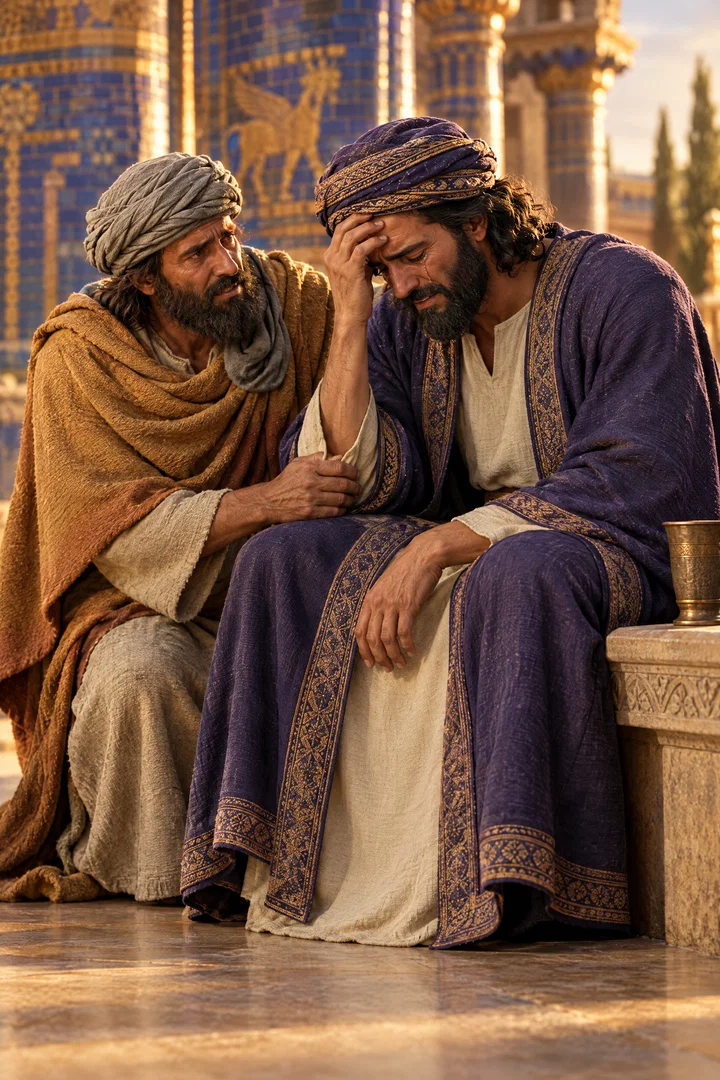
That Hanani, one of my brethren, came, he and certain men of Judah; and I asked them concerning the Jews that had escaped, which were left of the captivity, and concerning Jerusalem.
Translations
That Hanani, one of my brothers, came, he and certain men of Judah; and I asked them concerning the Jews that had escaped, which were left of the captivity, and concerning Jerusalem.
That Hanani, one of my brethren, came, he and certain men of Judah; and I asked them concerning the Jews that had escaped, which were left of the captivity, and concerning Jerusalem.
that Hanani, one of my brethren, came, he and certain men of Judah; and I asked them concerning the Jews that had escaped, which were left of the captivity, and concerning Jerusalem.
That Hanani, one of my brethren, came, he and certain men of Judah; and I asked them concerning the Jews that had escaped, who were left of the captivity, and concerning Jerusalem.
that Hanani, one of my brethren, came, he and certain men out of Judah; and I asked them concerning the Jews that had escaped, which were left of the captivity, and concerning Jerusalem.
that Hanani, one of my brethren, came, he and certain men out of Judah; and I asked them concerning the Jews that had escaped, that were left of the captivity, and concerning Jerusalem.
and come in doth Hanani, one of my brethren, he and men of Judah, and I ask them concerning the Jews, the escaped part that have been left of the captivity, and concerning Jerusalem;
that Hanani, one of my brethren, came, he and [ certain] men of Judah. And I asked them concerning the Jews that had escaped, who were left of the captivity, and concerning Jerusalem.
that Hanani one of my brethren came, he and certain men out of Judah,—so I asked them concerning the Jews who had escaped, who were left of the captivity, and concerning Jerusalem.
Berean Standard Bible, Majority Standard Bible
Hanani, one of my brothers, arrived with men from Judah. So I questioned them about the remnant of the Jews who had survived the exile, and also about Jerusalem.
Hanani, one of my brothers, came, he and certain men out of Judah; and I asked them about the Jews who had escaped, who were left of the captivity, and concerning Jerusalem.
That Hanani, one of my brothers, came with certain men from Judah; and in answer to my request for news of the Jews who had been prisoners and had got away, and of Jerusalem,
Came Hanam, one of my brethren, he and the men of Iudah, and I asked them concerning the Iewes that were deliuered, which were of the residue of the captiuitie, and concerning Ierusalem.
Douay-Rheims (Challoner revision)
That Hanani one of my brethren came, he and some men of Juda; and I asked them concerning the Jews, that remained and were left of the captivity, and concerning Jerusalem.
Pictures
Cross-references
- Nehemiah 2:4-8
Then the king said unto me, For what dost thou make request? So I prayed to the God of heaven.
Nehemiah asks the king for permission and practical help to rebuild Jerusalem.
- Ezra 4:21-23
Give ye now commandment to cause these men to cease, and that this city be not builded, until another commandment shall be given from me.
The king’s decree halts the rebuilding of Jerusalem by force.
- Nehemiah 2:13
And I went out by night by the gate of the valley, even before the dragon well, and to the dung port, and viewed the walls of Jerusalem, which were broken down, and the gates thereof were consumed with fire.
Nehemiah’s later inspection confirms that the walls were broken and the gates burned.
- 2 Chronicles 36:17-19
Therefore he brought upon them the king of the Chaldees, who slew their young men with the sword in the house of their sanctuary, and had no compassion upon young man or maiden, old man, or him that stooped for age: he gave them all into his hand.
Describes Jerusalem’s earlier destruction as judgment for sin.
- Nehemiah 2:17-18
Then said I unto them, Ye see the distress that we are in, how Jerusalem lieth waste, and the gates thereof are burned with fire: come, and let us build up the wall of Jerusalem, that we be no more a reproach.
Nehemiah urges the people to rise and rebuild Jerusalem’s wall.
- Nehemiah 6:15-16
So the wall was finished in the twenty and fifth day of the month Elul, in fifty and two days.
Reports the rebuilding of Jerusalem’s wall.
- Daniel 9:25
Know therefore and understand, that from the going forth of the commandment to restore and to build Jerusalem unto the Messiah the Prince shall be seven weeks, and threescore and two weeks: the street shall be built again, and the wall, even in troublous times.
The report about Jerusalem’s damaged walls bears on which decree began the prophetic period.
Commentary
Each commentary is drawn from primary sources: the writings of Ellen G. White and Adventist pioneers and periodicals. Each commentary is separate. Its own words are not a quotation; follow the references to read the source passages.
Ellen G. White
6 sources
Nehemiah was in a distant land, holding influence and honor as cupbearer and counselor in the Persian court.ST May 13, 1913ST Dec 6, 1883 He was seated in its ornate chamber at a small table with his cup nearby and attendants behind him.PK 628 Hanani, one of his brethren, came with certain men from Judah as messengers, plainly dressed in contrast to the rich surroundings.PK 628.1PK 628.2PK 628 Nehemiah earnestly asked them about the Jews who had escaped and were left of the captivity, meaning those who had returned, and about Jerusalem, because his heart was turned toward the city and the people entrusted with the holy oracles, showing his deep concern for their welfare.PK 628.1PK 628.2ST May 13, 1913
They brought an urgent report of peculiar trial and affliction.PK 628ST May 13, 1913 Though the second temple had been reared and portions of the city rebuilt, the place of his fathers' sepulchers lay waste with its buildings damaged, its walls still in ruins and its gates burned with fire, so the capital was fast becoming desolate.PK 628ST May 13, 1913 The ruin meant prosperity was impeded, the temple services were disturbed, and the people were kept in constant alarm.ST May 13, 1913 The few inhabitants remaining were daily embittered by the taunts of idolatrous assailants asking where their God was.ST May 13, 1913
The captivity and affliction had come because the people's sins in turning from God separated them from Him, and He would not serve with their sins but permitted them to come under the control of heathen nations and be taken into captivity.Ms 121, 1898, par. 7–8 The evil tidings overwhelmed Nehemiah with sorrow so that he leaned forward in distress, could not eat or drink, but wept and mourned for days and fasted before turning in affliction to prayer before the God of heaven to seek His favor for his people.PK 628ST May 13, 1913ST Dec 6, 1883 While praying he formed the plan to ask the king for permission and help to go to Jerusalem.ST Dec 6, 1883 God did not work through those who refused to serve Him with singleness of purpose and had corrupted their ways before Him, but worked through Nehemiah because he honored God, was registered in heaven as a man, was true as steel to principle, put down false principles and restored heaven-born principles, and God therefore honored him.Ms 121, 1898, par. 7–8
Sources
Pioneers and periodicals
24 sources
In the twentieth year of Artaxerxes, about December 444 B.C. and thirteen years after Ezra went up, Nehemiah son of Hachaliah was at Shushan the winter palace holding high honor as the king's cupbearer when Hanani his kinsman came with men of Judah and he asked them about the escaped remnant and about Jerusalem because his heart was burdened for the people and the city.ST Dec 20, 1899ST Feb 18, 1886RH Jun 18, 1901RH Sep 21, 1916RH Dec 23, 1852
They told him the remnant were in great affliction and reproach and that though the temple had been rebuilt the wall of Jerusalem was broken down and its gates burned with fire, leaving the city impeded, disturbed in its service, and fast becoming desolate.ST Dec 20, 1899ST Apr 22, 1880RH Sep 13, 1870
That ruin was a fresh and recent overthrow of walls and gates built through the work Ezra and his associates had begun, so Nehemiah's later commission to the king was to repair and continue a restoration already authorized and started rather than to begin it.ST Apr 22, 1880RH Jun 18, 1901RH Dec 29, 1859RH Jan 14, 1858RH Dec 23, 1852
Those who held otherwise taught that Ezra's work had been confined to moral and ecclesiastical reform and nothing had yet been done on wall or city.ST May 14, 1902
On hearing the tidings Nehemiah wept and mourned days without eating, fasting and confessing his sins and his people's sins and seeking mercy from God, which was the sadness he afterward showed before the king.ST Dec 20, 1899RH Sep 21, 1916RH Apr 25, 1854ST Mar 13, 1893ST Mar 8, 1883
As he sought God he formed the purpose to ask the king for leave and help to go to Jerusalem for its restoration, and so the verse opens his burden as governor and teaches earnest prayer and confession for the prosperity of God's work when humanly everything is going to pieces, especially in the last days.ST Dec 6, 1883RH Sep 21, 1916RH Apr 25, 1854ST Jun 2, 1909
Setting and Inquiry at Susa
The inquiry belongs to the month Chisleu in the twentieth year of Artaxerxes Longimanus, about December 444 B.C., thirteen years after Ezra went up to Jerusalem.ST Dec 20, 1899ST Feb 18, 1886ST May 14, 1902ST Oct 18, 1899 At that time Artaxerxes, son of Xerxes who was the Ahasuerus of Esther, was ruling Persia.ST Oct 18, 1899 Nehemiah was at Shushan, also called Susa, the Persian king's winter palace and capital whose name means lily, lying near a branch of the Tigris, south of Ecbatana and east of Babylon.ST Feb 18, 1886ST May 14, 1902ST Oct 18, 1899
Nehemiah was the son of Hachaliah and presumably of the tribe of Judah.RH Sep 21, 1916 Though a captive in Persia, he then held high office with influence and honor in the court as the king's cup-bearer and counselor.ST May 13, 1913RH Jun 18, 1901RH Sep 21, 1916 Hanani, Nehemiah's brother and kinsman and one of his brethren, came to him with certain men and messengers of Judah.ST Feb 18, 1886RH Jun 18, 1901ST Apr 23, 1902 Nehemiah asked them concerning the Jews that had escaped, survived the captivity, were left and remained, and concerning Jerusalem.ST Feb 18, 1886RH Jun 18, 1901ST Mar 8, 1883ST Apr 23, 1902
He asked because his heart was turned toward the city and the people entrusted with the holy oracles, and he carried concern and a burden for the scattered people and the ruined city.ST May 13, 1913RH Jun 18, 1901RH Sep 21, 1916ST Apr 23, 1902 They reported peculiar trial and affliction for the remnant in the province, who were in great distress, suffering, shame and reproach.ST May 13, 1913ST Dec 20, 1899RH Sep 13, 1870ST Mar 8, 1883 The people were kept in constant alarm and were daily embittered by the taunts of idolatrous assailants, and the returned people had little knowledge of God's commandments and statutes.ST May 13, 1913ST Feb 4, 1897
Though the temple, the second temple, had been completed and reared and portions of the city rebuilt, Jerusalem's wall was broken down and its gates burned with fire.ST May 13, 1913ST Dec 20, 1899ST Apr 22, 1880ST Feb 18, 1886RH Sep 13, 1870 Prosperity was therefore impeded, the temple services were disturbed, and the capital was fast becoming desolate with few inhabitants remaining.ST May 13, 1913
Prophetic Bearing on Rebuilding
Hanani's report of a wall broken down and gates burned with fire was fresh news of a recent misfortune, not a telling of the destruction wrought by Nebuchadnezzar 144 years before.ST Apr 22, 1880RH Dec 23, 1852RH Jul 28, 1863RH Sep 13, 1870ST Feb 23, 1882 That old devastation could not have been brought as news, could not have caused surprise, and could not have been wept over as a fresh ruin.RH Dec 29, 1859RH Sep 13, 1870 The surprise itself shows that walls and gates had been built up again after the earlier destruction and then had been damaged anew.ST Apr 22, 1880RH Dec 29, 1859RH Jul 28, 1863
The walls and gates so broken and burned were the work Ezra and his associates had begun, afterward overthrown in the period of opposition to the work at Jerusalem.ST Apr 22, 1880RH Jan 14, 1858RH Dec 23, 1852RH Jul 28, 1863RH Sep 13, 1870 A decree authorizing their construction had therefore already gone forth, and building had already begun, before the verbal permission afterward given to Nehemiah.ST Apr 22, 1880RH Dec 23, 1852RH Jul 28, 1863RH Sep 13, 1870ST Feb 23, 1882 Nehemiah's later work was to repair and continue that restoration rather than to begin restoring the city from its devastation, completing what Ezra had been hindered from doing.ST Apr 22, 1880RH Jun 18, 1901RH Jan 14, 1858RH Jul 28, 1863RH Feb 17, 1853
By a different reckoning, held by others, Ezra's work had been confined to moral and ecclesiastical reforms and nothing had been done toward rebuilding the wall and city of Jerusalem.ST May 14, 1902 On that reckoning the place was still a ruin, and that unmet need stirred Nehemiah to determine to go himself.ST May 14, 1902 In this setting the city wall was not permanently restored until Nehemiah's time, seventy-three years after Zechariah's vision, when the Jews faced surrounding enemies.ST Apr 19, 1883
Prayerful Response and Example
The evil tidings overwhelmed Nehemiah with sorrow so that he could not eat or drink but wept and mourned certain days.ST May 13, 1913 Hearing that the remnant was in affliction and reproach and that the wall was broken down and the gates burned with fire moved him to mourn and fast and pray for his people and for an opportunity to help them.ST Mar 13, 1893ST Mar 8, 1883ST Apr 23, 1902 He humbled himself before God, confessed the sins of himself and his people, and sought mercy, favor and help from God for them.ST Dec 6, 1883ST Dec 20, 1899ST Mar 13, 1893 His burdened concern for their condition and for Jerusalem produced the sadness of countenance that he later explained to the king.ST Aug 22, 1911
While seeking God and praying for the prosperity of His work he formed the plan to ask the king for permission and help to go to Jerusalem.ST Dec 6, 1883RH Sep 21, 1916 The report that the remnant was suffering and the city wall was broken led him to seek leave to go and help rebuild it.RH Apr 25, 1854 He obtained a commission with promise to return to the court at a set time, that he might go to Jerusalem and enter immediately upon his labors for restoration.RH Sep 21, 1916
The verse stands at the opening of the book written by Nehemiah, a governor appointed of the Lord with the burden of restoring Jerusalem.ST Jun 2, 1909 It introduces the concerns that led him to act for the restoration of Jerusalem. It begins the story of ups and downs, battles and conflicts, defeats and victories of the Jews at Jerusalem under the last reformation, which is typical of God's work in other ages, especially in the last days.ST Jun 2, 1909 It belongs to the record of his earnest prayer and confession, teaching earnest prayer and confession when the Lord's great work has come to a place where from a human standpoint everything is going to pieces.RH Sep 21, 1916
Sources