Nehemiah 1:3
And they said unto me, The remnant that are left of the captivity there in the province are in great affliction and reproach: the wall of Jerusalem also is broken down, and the gates thereof are burned with fire.
Translations
And they said to me, The remnant that are left of the captivity there in the province are in great affliction and reproach: the wall of Jerusalem also is broken down, and the gates thereof are burned with fire.
King James Version, Revised Version, American Standard Version
And they said unto me, The remnant that are left of the captivity there in the province are in great affliction and reproach: the wall of Jerusalem also is broken down, and the gates thereof are burned with fire.
And they said unto me, The remnant that are left of the captivity there in the province are in great affliction and reproach: the wall of Jerusalem also is broken down, and the gates thereof are burnt with fire.
And they said to me, The remnant that are left of the captivity there in the province are in great affliction and reproach: the wall of Jerusalem also is broken down, and its gates are burned with fire.
and they say to me, 'Those left, who have been left of the captivity there in the province, [are] in great evil, and in reproach, and the wall of Jerusalem is broken down, and its gates have been burnt with fire.'
And they said to me, Those who remain, that are left of the captivity there in the province, are in great affliction and reproach; and the wall of Jerusalem is in ruins, and its gates are burned with fire.
And they said unto me, The remnant who are left of the captivity, there in the province, are in great misfortune and reproach, the wall of Jerusalem, is broken down, and, the gates thereof, are burned with fire.
And they told me, “ The remnant who survived the exile are there in the province, in great trouble and disgrace. The wall of Jerusalem is broken down, and its gates are burned with fire.”
And they told me, “ The remnant who survived the exile are there in the province, in great trouble and disgrace. The wall of Jerusalem is broken down, and its gates have been burned with fire.”
They said to me, “ The remnant who are left of the captivity there in the province are in great affliction and reproach. The wall of Jerusalem is also broken down, and its gates are burned with fire.”
They said to me, The small band of Jews now living there in the land are in great trouble and shame: the wall of Jerusalem has been broken down, and its doorways burned with fire.
And they sayde vnto me, The residue that are left of the captiuitie there in the prouince, are in great affliction and in reproche, and the wall of Ierusalem is broken downe, and the gates thereof are burnt with fire.
Douay-Rheims (Challoner revision)
And they said to me: They that have remained, and are left of the captivity there in the province, are in great affliction, and reproach: and the wall of Jerusalem is broken down, and the gates thereof are burnt with fire.
Pictures
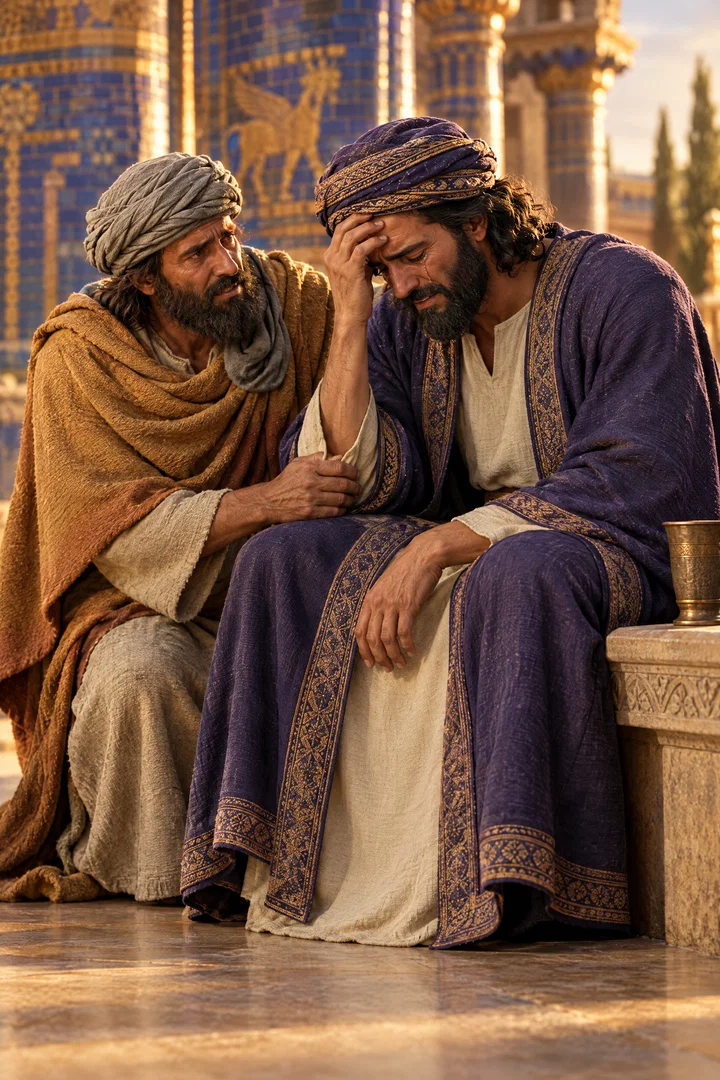


Cross-references 20 of 21
- Nehemiah 2:1-8
And it came to pass in the month Nisan, in the twentieth year of Artaxerxes the king, that wine was before him: and I took up the wine, and gave it unto the king. Now I had not been beforetime sad in his presence.
Jerusalem’s distress prompts Nehemiah’s request, and the king authorizes his journey to rebuild.
- Daniel 9:25
Know therefore and understand, that from the going forth of the commandment to restore and to build Jerusalem unto the Messiah the Prince shall be seven weeks, and threescore and two weeks: the street shall be built again, and the wall, even in troublous times.
Nehemiah’s report identifies the decree to restore and rebuild Jerusalem that begins the prophecy.
- Nehemiah 2:17
Then said I unto them, Ye see the distress that we are in, how Jerusalem lieth waste, and the gates thereof are burned with fire: come, and let us build up the wall of Jerusalem, that we be no more a reproach.
Nehemiah calls the people to rebuild Jerusalem’s broken wall.
- Ezra 9:9
For we were bondmen; yet our God hath not forsaken us in our bondage, but hath extended mercy unto us in the sight of the kings of Persia, to give us a reviving, to set up the house of our God, and to repair the desolations thereof, and to give us a wall in Judah and in Jerusalem.
Describes the Jewish community’s restoration and the rebuilding of Jerusalem’s wall.
- Nehemiah 6:15
So the wall was finished in the twenty and fifth day of the month Elul, in fifty and two days.
Nehemiah completed the rebuilding of Jerusalem’s wall in fifty-two days.
- Nehemiah 4:1-3
But it came to pass, that when Sanballat heard that we builded the wall, he was wroth, and took great indignation, and mocked the Jews.
Enemies ridicule the effort to rebuild Jerusalem’s wall.
- Ezra 7:21-26
And I, even I Artaxerxes the king, do make a decree to all the treasurers which are beyond the river, that whatsoever Ezra the priest, the scribe of the law of the God of heaven, shall require of you, it be done speedily,
Artaxerxes’ decree authorizes support and governance for Jerusalem’s restoration.
- Nehemiah 2:13
And I went out by night by the gate of the valley, even before the dragon well, and to the dung port, and viewed the walls of Jerusalem, which were broken down, and the gates thereof were consumed with fire.
Records Nehemiah’s inspection of the damaged walls and gates.
- 2 Chronicles 36:19
And they burnt the house of God, and brake down the wall of Jerusalem, and burnt all the palaces thereof with fire, and destroyed all the goodly vessels thereof.
Describes Jerusalem’s destruction, including the broken wall and burning, for sin.
- Nehemiah 2:3
And said unto the king, Let the king live for ever: why should not my countenance be sad, when the city, the place of my fathers’ sepulchres, lieth waste, and the gates thereof are consumed with fire?
Nehemiah tells the king that Jerusalem and its gates are ruined.
- Jeremiah 52:13-14
And burned the house of the LORD, and the king’s house; and all the houses of Jerusalem, and all the houses of the great men, burned he with fire:
Jerusalem’s burned buildings and broken walls contrast with Nehemiah’s later repairs.
- Nehemiah 2:8
And a letter unto Asaph the keeper of the king’s forest, that he may give me timber to make beams for the gates of the palace which appertained to the house, and for the wall of the city, and for the house that I shall enter into. And the king granted me, according to the good hand of my God upon me.
Nehemiah receives timber to rebuild Jerusalem’s wall and gates.
- Nehemiah 2:1-2
And it came to pass in the month Nisan, in the twentieth year of Artaxerxes the king, that wine was before him: and I took up the wine, and gave it unto the king. Now I had not been beforetime sad in his presence.
sorrow over Jerusalem showed in face before king
- Zechariah 2:4-5
And said unto him, Run, speak to this young man, saying, Jerusalem shall be inhabited as towns without walls for the multitude of men and cattle therein:
Promises Jerusalem restoration and divine protection.
- Ezra 4:21-23
Give ye now commandment to cause these men to cease, and that this city be not builded, until another commandment shall be given from me.
The passage disputes what the earlier order to stop building prohibited.
- Nehemiah 3
Then Eliashib the high priest rose up with his brethren the priests, and they builded the sheep gate; they sanctified it, and set up the doors of it; even unto the tower of Meah they sanctified it, unto the tower of Hananeel.
Records Nehemiah’s work to restore Jerusalem’s wall.
- Ezra 4:12
Be it known unto the king, that the Jews which came up from thee to us are come unto Jerusalem, building the rebellious and the bad city, and have set up the walls thereof, and joined the foundations.
Reports Jerusalem’s walls being rebuilt after their destruction.
- Nehemiah 4:6
So built we the wall; and all the wall was joined together unto the half thereof: for the people had a mind to work.
The people rebuild much of the wall because they are ready to work.
- Deuteronomy 30:3
That then the LORD thy God will turn thy captivity, and have compassion upon thee, and will return and gather thee from all the nations, whither the LORD thy God hath scattered thee.
Promises Israel’s return from captivity and God’s compassion.
- Nehemiah 1:9
But if ye turn unto me, and keep my commandments, and do them; though there were of you cast out unto the uttermost part of the heaven, yet will I gather them from thence, and will bring them unto the place that I have chosen to set my name there.
God promises to gather his people when they turn back to him.
Commentary
Each commentary is drawn from primary sources: the writings of Ellen G. White and Adventist pioneers and periodicals. Each commentary is separate. Its own words are not a quotation; follow the references to read the source passages.
Ellen G. White
7 sources
Messengers from Judah came to Nehemiah in Persia in a distant land with news that Jerusalem, the chosen city, had entered days of severe and special trial and affliction.PK 628.2ST May 13, 1913Ms 58, 1903, par. 4ST Dec 6, 1883 The remnant left of the captivity are the exiles who had returned, the few inhabitants still left in the province, living in deep suffering and shameful humiliation, in great distress and reproach.PK 628.2PK 628ST May 13, 1913Ms 58, 1903, par. 4 Although the second temple had been rebuilt and portions of the city restored, the city wall still lay largely broken down in ruins and the gates remained destroyed by fire, leaving the capital fast becoming a desolate place.PK 628.2PK 628ST Dec 6, 1883ST May 13, 1913Ms 58, 1903, par. 4
Without defenses the people lived in constant alarm, prosperity and the work of restoration were hindered and impeded, and even the temple services were disturbed.PK 628.2ST May 13, 1913Ms 58, 1903, par. 4 The few remaining inhabitants were daily embittered by idolatrous attackers who taunted and mocked them by questioning where their God was.ST May 13, 1913Ms 58, 1903, par. 4 This ruin came because the sins and transgressions of Israel had separated them from God.Ms 121, 1898, par. 7–8ST May 13, 1913 Unwilling to aid them in sin, He let them become powerless and confused under heathen control and captivity, and He would not work through those who refused wholehearted service with singleness of purpose and corrupted their ways.Ms 121, 1898, par. 7–8
God worked through Nehemiah because he honored God and held unwaveringly to principle, true as steel, making him fit to oppose false principles and restore God-given, heaven-born principles that had been displaced and supplanted.Ms 121, 1898, par. 7–8 The grievous and evil tidings overwhelmed Nehemiah with sorrow and moved him to pray for favor.ST May 13, 1913ST Dec 6, 1883 As he prayed he formed a plan to seek the king's permission, authority and practical help, and the answered prayer showed the rebuilding work to be divinely directed, leading him to urge the people to seize the opportunity and rebuild the wall the broken defenses required.ST May 13, 1913ST Dec 6, 1883
The broken walls and burned gates also portray a church grown accustomed to uncorrected evils, whose damaged condition is recognized only with divinely enlightened and illuminated discernment.ST Dec 6, 1883
Sources
Pioneers and periodicals
33 sources
Hanani and the messengers from Judah brought word to Nehemiah in his high office in the Persian court that the survivors left of the captivity in the province were in deep suffering and shame, with the wall of Jerusalem broken down and its gates burned with fire.ST Dec 20, 1899ST Feb 18, 1886RH Dec 26, 1907RH Sep 21, 1916ST Mar 8, 1883 Though the temple had been rebuilt, the capital lay nearly desolate with few inhabitants, its ruined defenses leaving it exposed to enemies, hindering prosperity, disturbing its worship, and dishonoring the name of God through Israel's transgression.ST May 13, 1913RH Dec 26, 1907RH Apr 8, 1902ST Apr 19, 1883ST Feb 4, 1897 The walls had lain in ruin since Nebuchadnezzar's destruction, still broken about ninety years after the temple's foundation was laid and thirteen years after Ezra's decree until Nehemiah restored them, while those who held the hurt to be recent taught that walls rebuilt by Ezra and his associates had been thrown down again by neighboring peoples between the seventh and twentieth years of Artaxerxes.ST Feb 18, 1886ST Apr 22, 1880RH Dec 26, 1907RH Feb 17, 1853ST Apr 19, 1883 A decree authorizing the building of the city had therefore already gone forth before Nehemiah's grant to go to Jerusalem, with rebuilding begun after the decree of Artaxerxes in 457 B.C. amid opposition, in fulfillment of the prophecy that its street and wall would be rebuilt in troublous times.ST Apr 22, 1880RH Dec 23, 1852RH Jul 28, 1863 The evil tidings overwhelmed Nehemiah so that he sat down and wept and mourned, fasted and prayed for mercy and confession, and formed the purpose to seek the king's commission and help to rebuild the wall and set things in order, teaching that human crisis and weakness must drive to united, constant dependence on God's almighty power and that the ruined defenses call the church in every age, especially the last days, to repentance, reformation, and restoration to glorious success.ST Dec 20, 1899RH Dec 26, 1907RH Jun 18, 1901RH Sep 21, 1916RH Apr 25, 1854
Report's Historical Setting
Hanani's report was that the remnant left of the captivity in the province were in great affliction and reproach, and that the wall of Jerusalem was broken down and its gates burned with fire.ST Dec 20, 1899ST Feb 18, 1886ST Apr 22, 1880RH Dec 26, 1907RH Jun 18, 1901 Those who had returned from captivity to Jerusalem were in great distress and disgrace, suffering and facing shame while the city wall lay in ruins and its gates had been destroyed by burning.ST Dec 20, 1899ST Feb 18, 1886ST Apr 22, 1880RH Dec 29, 1859RH Jun 18, 1901 The tidings told of the affliction of the remnant and the ruined walls and burned gates twelve years after the reform movement that closed with the great separation, and the need it revealed led Nehemiah to humble himself before God, plead for mercy for his people, and bring their condition before God in prayer.ST Dec 20, 1899RH Dec 26, 1907RH Jun 18, 1901
The report was brought to Nehemiah while he held a high office in the king's court in Persia.RH Sep 21, 1916RH Jul 2, 1908 His brethren of Judah came to him and messengers from Judah told him news of his fathers' city, and he met them eagerly asking about the suffering remnant and Jerusalem.ST May 13, 1913ST Dec 6, 1883ST Mar 8, 1883 Their answer about the wasted city in days of peculiar trial and affliction for the chosen city filled his soul with darkness and sorrow.ST May 13, 1913ST Mar 8, 1883 News of their affliction reached him in a distant land, bringing him face to face with whether he loved God's cause more than his good position, and moving him to pray for God's favor and for the prosperity of God's work.ST Dec 6, 1883RH Sep 21, 1916RH Jul 2, 1908
Though the second temple had been rebuilt and portions of the city rebuilt, the walls lay in ruins and the gates destroyed by burning.ST May 13, 1913 The capital was fast becoming a desolate place, with few inhabitants remaining in deep suffering and shame.ST May 13, 1913 The broken walls left the city vulnerable and surrounded by enemies, hindering prosperity, disturbing the temple services, and keeping the people in constant alarm.ST May 13, 1913ST Apr 19, 1883ST Apr 23, 1902 Their suffering was embittered daily by the taunts of idolatrous assailants, and the ruined, unprosperous city dishonored the name of God.ST May 13, 1913RH Apr 8, 1902
The ruin had come because of the transgressions and apostasy of Israel, when Satan was again allowed to triumph.ST May 13, 1913RH Dec 26, 1907RH Dec 3, 1914 The calamities of great affliction and broken wall were brought upon Israel by apostasy.RH Dec 3, 1914 The returned people were ignorant of God's commandments and statutes after the captivity, having had little instruction beyond the prophets' oral teaching, and their condition made the work of reform difficult.ST Feb 4, 1897 The verse belongs to the Bible narrative of Babylonian life in the days of Ezra and Nehemiah, a narrative confirmed by discoveries in ancient lands that had dealings with Israel, with archaeology giving information about that life.ST Mar 10, 1909
Chronology Prophecy and Decree
The broken wall and burned gates were a fresh, recent misfortune brought as news and mourned as such, not tidings of Jerusalem's destruction by Nebuchadnezzar 144 years earlier.ST Apr 22, 1880RH Jan 14, 1858RH Dec 23, 1852RH Jul 28, 1863RH Sep 13, 1870 What moved grief was present distress and disgrace among the remnant left in the province, with the city's defenses cast down and consumed by fire.ST Apr 22, 1880RH Jan 14, 1858RH Mar 21, 1854 Such ruin could not have been reported as news if it were only the old desolation left long before.RH Sep 13, 1870RH Mar 21, 1854
The same condition is also described as a long-continuing ruin, with the walls lying waste since Nebuchadnezzar's destruction and still broken about ninety years after the temple's foundation was laid and after the temple itself was completed.ST Feb 18, 1886 Thirteen years after Ezra's decree the walls and gates were still broken down and the people still in affliction and reproach, so that Nehemiah's later work was to rebuild those walls and gates rather than to begin the broader restoration of Jerusalem from desolation.RH Feb 17, 1853 The wall was not permanently restored until Nehemiah's time, seventy-three years after Zechariah's vision, the city meanwhile remaining in need and ringed by enemies.ST Apr 19, 1883
The damaged walls and gates were the work of Ezra and his associates and companions, previously undertaken and then hindered by opposition in the years after Ezra's commission.ST Apr 22, 1880RH Jan 14, 1858RH Dec 23, 1852RH Jul 28, 1863 After they had been rebuilt they were attacked and plundered by neighboring peoples between the seventh and twentieth years of Artaxerxes.RH Dec 29, 1859 Hanani's report came twelve years after Ezra's reform movement that closed with the great separation involving all classes.RH Dec 26, 1907
A decree authorizing the building of the city had therefore already gone forth before the verbal grant giving Nehemiah permission to go to Jerusalem.ST Apr 22, 1880RH Dec 23, 1852RH Jul 28, 1863RH Sep 13, 1870ST Feb 23, 1882 Rebuilding of the wall began after Artaxerxes' decree in 457 B.C.GSAM 160.4–5 It went forward amid continuing opposition, in keeping with the prophecy that its street and wall would be rebuilt in troublous times.RH Mar 21, 1854
Prayer Revival and Application
The evil report overwhelmed Nehemiah with grief, so that he sat down and wept and mourned certain days over the suffering remnant and the wasted city of his fathers.ST Dec 20, 1899RH Dec 26, 1907ST Mar 8, 1883 With his soul filled with darkness and sorrow he fasted for days, humbled himself before God, and brought the affliction and reproach of the people and the broken wall and burned gates before the Lord in prayer.ST Dec 20, 1899RH Jun 18, 1901ST Mar 8, 1883 That turning explains his pleading for mercy, confession of sin, and asking for relief and help, teaching that grief should drive to God.ST Dec 20, 1899RH Dec 26, 1907ST Mar 13, 1893 The broken condition meant that from a human standpoint God's great work was going to pieces and His cause had reached a crisis, and that setting became the occasion for earnest prayer and confession.
While praying he formed the plan to obtain a commission from the king and to ask permission, authority, letters, and practical help to be sent to Jerusalem to rebuild the wall, restore the gates, begin rebuilding, and set things in order.ST Dec 6, 1883RH Sep 21, 1916RH Apr 25, 1854ST May 14, 1902 The need of the remnant left in the province in affliction and reproach, with the city wall broken and the gates burned, stirred his heart while he held high office in the court of Persia and calls for praying for the prosperity of God's work.RH Sep 21, 1916ST May 14, 1902 The answer to his prayer showed that the work was directed by God, and he then urged the people to seize the opportunity and rebuild.ST Dec 6, 1883 Those who held that the damaged walls and gates were the work of Ezra and his associates understood this request as following an earlier authorization for rebuilding, since such ruin could be reported as fresh news and mourned as a recent misfortune rather than as destruction wrought 144 years before.RH Sep 13, 1870ST Feb 23, 1882
That downtrodden condition awakened his patriotism and love, moving him to cast in his lot with his people.RH Oct 8, 1908 It brought him face to face with whether he loved God's cause more than the good position he held in the king's court.RH Jul 2, 1908 He offered many earnest prayers before becoming willing to attempt what seemed an almost hopeless task amid countless difficulties, and the inward struggle of his soul showed in his face and was noticed by the king.RH Jul 2, 1908 In that choice he exchanged a position of ease, wealth, and dignity for one of ceaseless toil, danger, and exposure to scorn and reproach.RH Oct 8, 1908RH Jul 2, 1908
The fervent prayer that followed the report availed much and was the foundation stone of the restoration of the broken wall, because it began a reformation movement that coupled Israel's weakness in captivity with God's almighty power for the restoration of their city, government, and nation.RH Dec 3, 1914 That restoration teaches united, constant looking to the Lord for divine guidance, including silent prayer before acting in a moment when much depends on the right answer, because God's work succeeds when His people pray earnestly and depend wholly upon Him and would fail without it. Like Moses bowing low and pleading his own insufficiency to lead Israel from apostasy in Egypt to Canaan, and like Daniel confessing his own sin and the sin of Israel and seeking the Lord by prayer and supplications with fasting and sackcloth and ashes for deliverance from Babylonian captivity, such humility and devotion showed a high estimate of the Lord's work and a low estimate of self.RH Dec 3, 1914 It is the opposite of self-sufficiency, independence, and lack of humility and devotion.RH Dec 3, 1914
The ruined defenses also picture Zion's desolation and a church whose evils have become familiar and go uncorrected, though a divinely illuminated view recognizes its damaged condition.ST Dec 6, 1883ST Feb 17, 1890 Restoring what is described means awakening Israel to repentance and restoring them to their inheritance and to allegiance to God.RH Dec 3, 1914 The verse is applied as a challenge to repair the church's condition by faithfully tending one's own spiritual life and home.ST Feb 17, 1890 It opens the story of the ups and downs, battles and conflicts, defeats and victories of the Jews at Jerusalem under the last reformation, which is typical of God's work in other ages, especially in the last days.ST Jun 2, 1909 It belongs to the quiet time after a great epoch when few pages of history are written, as after the 1844 advent cry, when Satan was again allowed to triumph, yet where adversaries put forth every possible effort to hinder the work God carries it on to glorious success, closing with reform upon the better observance of the Sabbath.RH Dec 26, 1907ST Jun 2, 1909
Sources