Nehemiah 8:9
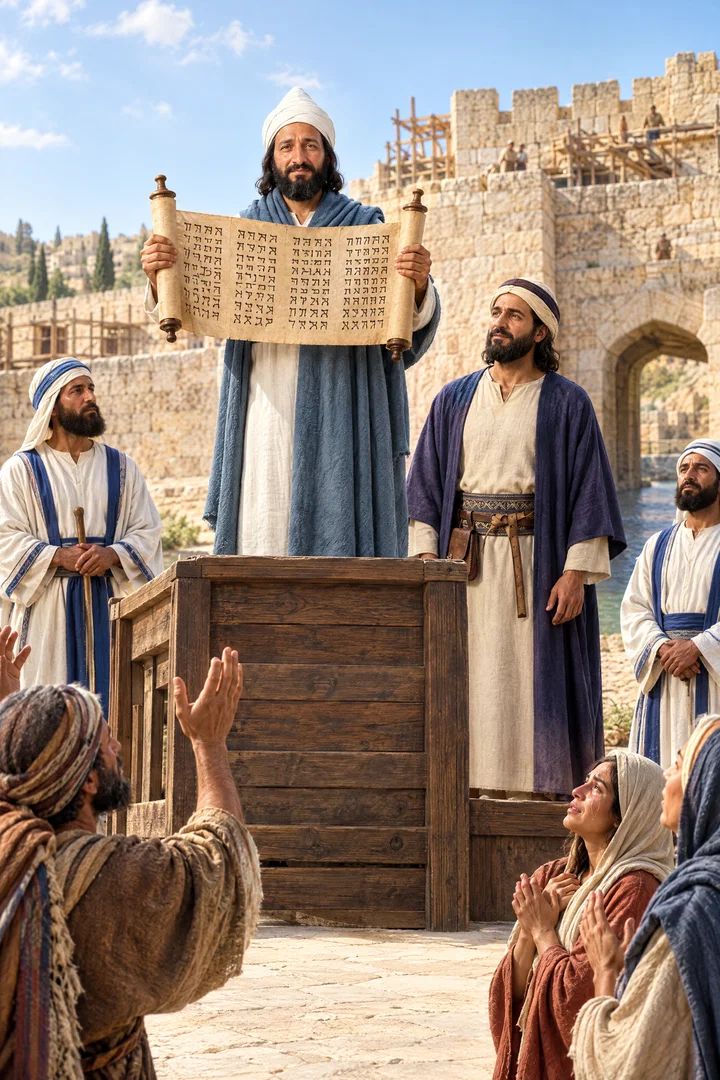
And Nehemiah, which is the Tirshatha, and Ezra the priest the scribe, and the Levites that taught the people, said unto all the people, This day is holy unto the LORD your God; mourn not, nor weep. For all the people wept, when they heard the words of the law.
Translations
And Nehemiah, which is the Tirshatha, and Ezra the priest the scribe, and the Levites that taught the people, said to all the people, This day is holy to the LORD your God; mourn not, nor weep. For all the people wept, when they heard the words of the law.
And Nehemiah, which is the Tirshatha, and Ezra the priest the scribe, and the Levites that taught the people, said unto all the people, This day is holy unto the LORD your God; mourn not, nor weep. For all the people wept, when they heard the words of the law.
And Nehemiah, which is the Tirshatha, and Ezra the priest the scribe, and the Levites that taught the people, said unto all the people, This day is holy unto the Lord your God; mourn not, nor weep. For all the people wept, when they heard the words of the law.
And Nehemiah, who is the Tirshatha, and Ezra the priest, the scribe, and the Levites that taught the people, said to all the people, This day is holy to the LORD your God; mourn not, nor weep. For all the people wept, when they heard the words of the law.
And Nehemiah, which was the Tirshatha, and Ezra the priest the scribe, and the Levites that taught the people, said unto all the people, This day is holy unto the LORD your God; mourn not, nor weep. For all the people wept, when they heard the words of the law.
And Nehemiah, who was the governor, and Ezra the priest the scribe, and the Levites that taught the people, said unto all the people, This day is holy unto Jehovah your God; mourn not, nor weep. For all the people wept, when they heard the words of the law.
And Nehemiah — he [is] the Tirshatha — saith (and Ezra the priest, the scribe, and the Levites who are instructing the people) to all the people, 'To-day is holy to Jehovah your God, do not mourn, nor weep:' for all the people are weeping at their hearing the words of the law.
And Nehemiah, that is, the Tirshatha, and Ezra the priest the scribe, and the Levites that explained to the people, said to all the people, This day is holy to Jehovah your God: mourn not, nor weep. For all the people wept when they heard the words of the law.
Then Nehemiah—he, was the governor—and Ezra the priest the scribe, and the Levites who were causing the people to understand, said unto all the people, To-day, is, holy, unto Yahweh your God, do not mourn, nor weep,—for, weeping, were all the people, when they heard the words of the law.
Berean Standard Bible, Majority Standard Bible
Nehemiah the governor, Ezra the priest and scribe, and the Levites who were instructing the people said to all of them, “ This day is holy to the LORD your God. Do not mourn or weep.”For all the people were weeping as they heard the words of the Law.
Nehemiah, who was the governor, Ezra the priest and scribe, and the Levites who taught the people said to all the people, “ Today is holy to the LORD your God. Don’t mourn, nor weep.” For all the people wept when they heard the words of the law.
And Nehemiah, who was the Tirshatha, and Ezra, the priest and scribe, and the Levites who were the teachers of the people, said to all the people, This day is holy to the Lord your God; let there be no sorrow or weeping; for all the people were weeping on hearing the words of the law.
Then Nehemiah (which is Tirshatha) and Ezra the Priest and scribe, and the Leuites that instructed the people, saide vnto all the people, This day is holie vnto ye Lord your God: mourne not, neither weepe: for all the people wept, whe they heard the words of the Lawe.
Douay-Rheims (Challoner revision)
And Nehemias ( he is Athersatha) and Esdras the priest and scribe, and the Levites who interpreted to all the people, said: This is a holy day to the Lord our God: do not mourn, nor weep: for all the people wept, when they heard the words of the law.
Pictures
Cross-references
- Nehemiah 9:1-3
Now in the twenty and fourth day of this month the children of Israel were assembled with fasting, and with sackclothes, and earth upon them.
The people confess sin and worship after hearing the law.
- Nehemiah 8:14-18
And they found written in the law which the LORD had commanded by Moses, that the children of Israel should dwell in booths in the feast of the seventh month:
The people observe the Feast of Tabernacles according to what they discover written in the law.
- Ezra 7:10
For Ezra had prepared his heart to seek the law of the LORD, and to do it, and to teach in Israel statutes and judgments.
Ezra prepared to seek, obey, and teach the law, a purpose carried out in Nehemiah.
- Nehemiah 8:2
And Ezra the priest brought the law before the congregation both of men and women, and all that could hear with understanding, upon the first day of the seventh month.
Records the people assembled to hear the Law.
- Leviticus 23:23-25
And the LORD spake unto Moses, saying,
The seventh-month festival was a holy day set apart for worship and rejoicing.
- 2 Chronicles 34:29-33
Then the king sent and gathered together all the elders of Judah and Jerusalem.
Josiah gathers the people to hear the law, leading them to renew their covenant and serve God.
- Nehemiah 8:3
And he read therein before the street that was before the water gate from the morning until midday, before the men and the women, and those that could understand; and the ears of all the people were attentive unto the book of the law.
The people attentively heard the law read at the same meeting.
- Leviticus 23:34-43
Speak unto the children of Israel, saying, The fifteenth day of this seventh month shall be the feast of tabernacles for seven days unto the LORD.
Sets out the Feast of Tabernacles and its observance.
- Joshua 8:34
And afterward he read all the words of the law, the blessings and cursings, according to all that is written in the book of the law.
Joshua also publicly read the law.
- Deuteronomy 31:9
And Moses wrote this law, and delivered it unto the priests the sons of Levi, which bare the ark of the covenant of the LORD, and unto all the elders of Israel.
The law was to be read every seven years.
Commentary
Each commentary is drawn from primary sources: the writings of Ellen G. White and Adventist pioneers and periodicals. Each commentary is separate. Its own words are not a quotation; follow the references to read the source passages.
Ellen G. White
9 sources
The gathering belonged to the Feast of Trumpets at Jerusalem, when people came in from the surrounding country and assembled amid the ruins of the city to hear God's law and have it explained to them in worship and instruction.PK 661.1–2 It stood in a broad street in Jerusalem among partly ruined buildings, where Ezra stood on a raised wooden platform and held open the Book of the Law of Moses before a large assembly of men who listened attentively, and the law that moved them included the Ten Commandments.PK 661 All the people wept when they heard the law, once its meaning was made clear and they understood it.PK 661.3Ms 121, 1898, par. 7–8PK 662.1–2
Their weeping was conviction over transgression, for they recognized their guilt in not having lived according to God's commandments.MH 281.5–6PK 662.1–2 They saw that they were under God's displeasure for failing to live by His commandments, even though they had sinned ignorantly.Ms 156, 1902, par. 17–20 The reading brought to mind their sins and the blessings they had lost through disobedience.Ms 41, 1900, par. 37–39
Nehemiah the Tirshatha, Ezra the priest the scribe, and the Levites who taught the people told all the people not to mourn or weep, because that day was holy to the Lord their God.MH 281.5–6Ms 156, 1902, par. 17–20PK 661.3Ms 121, 1898, par. 7–8Ms 41, 1900, par. 37–39 Their grief over sin was to be held back because the day was a holy festival appointed for rejoicing and a reminder of God's mercy, so their sorrow was turned toward rejoicing in the Lord.MH 281.5–6PK 661.3PK 662.1–2 To hear Scripture again after the exile was itself a privilege and a reason for joy and for praise for God's mercy.Ms 41, 1900, par. 37–39 The response when the law was read in Ezra's day is the kind of deep repentance and return to the Lord later expected from preaching.DA 215.3–216.1
Sources
Pioneers and periodicals
25 sources
After the return from Babylon the people gathered to hear the law read at length, distinctly and clearly explained so they could fully understand what God required of them, and when they understood they wept while Nehemiah the Tirshatha with Ezra and the Levites who taught them told them not to mourn or weep because the day was holy to the Lord.RH Apr 22, 1902ST Feb 13, 1893ST Feb 13, 1893ST Aug 19, 1897ST Jun 5, 1901 Their weeping was conviction and repentance, for believing the plain teaching exposed the contrast between their transgressions and God's pure and elevated standard, warned them of danger and awakened conscience.ST Nov 1, 1899ST Feb 13, 1893 They were not to let sorrow become an end in itself but to receive the holy day with joy and reassurance, rejoicing, sharing food, thanking God for mercy, doing good and obeying what they had newly understood.ST May 21, 1896ST Feb 12, 1885ST Jun 12, 1879ST Jun 12, 1879 This was revival and great reformation wrought through the Word, not by might nor by army but by the Spirit of God working with His word, as they confessed sin, put revealed sins away, worshiped God and recognized their duty to support His house.RH Apr 22, 1902ST Aug 19, 1897RH Jul 9, 1908 Making the meaning of the law fully understood remains the duty of religious teachers in every age, and the returned Jews rightly determined on strict observance after remembering that neglect had caused their exile, though those who so held pushed that determination into fanatical over-observance loaded with human restrictions.ST Dec 20, 1899STST Sep 26, 1895
Hearing the Law Together
The verse belongs to a public meeting after the return from Babylonian captivity in which the law was read at length to an attentive people, read distinctly and clearly, and explained so they could fully understand what God required of them.ST Dec 20, 1899ST Aug 19, 1897ST Jun 5, 1901RH Jan 14, 1915 Their response depended on understanding what they heard, which was made possible by that clear reading, and the reading stirred their hearts because its meaning was given and care was taken that they understood it.ST Jun 5, 1901RH Jan 14, 1915 The gathering took place in the restoration at Jerusalem when affliction and captivity had turned the people's minds to the Lord and His word after a time when little regard was paid to the word of God.RH Oct 16, 1900 In Ezra's time copies of Scripture were rare and no commentaries on the law and prophets yet existed, so access to such teaching was a great privilege that brought overwhelming joy.ST Aug 12, 1897RH Oct 16, 1900
The reading covers the last reform on Nehemiah's return to Jerusalem, about 446-408, and belongs to the Babylonian-era life of Ezra and Nehemiah.ST Aug 23, 1910ST Mar 10, 1909 When the people heard and understood the words of the law they wept, and Nehemiah, who is the Tirshatha, with Ezra the priest the scribe and the Levites who taught the people, said to all the people that this day is holy unto the Lord their God and that they should mourn not nor weep.RH Apr 22, 1902ST Feb 13, 1893ST Aug 22, 1911ST May 28, 1902 Hearing God's law brought them to conviction and repentance expressed in weeping, and hearing and understanding its plain teaching led them to mourn because it revealed how far their lives differed from its pure and elevated standard.ST Feb 13, 1893ST May 28, 1902 Nehemiah and the others reminded them that the day was holy to the Lord and told them not to mourn or weep, calling them to observe the holy day without weeping and to receive the day with joy rather than sorrow.ST Feb 13, 1893ST Feb 13, 1893ST May 28, 1902
Instead of sorrow they were to be reassured and to rejoice, to share food, to thank God for His mercy, and to go about doing good.ST May 21, 1896ST Jun 12, 1879ST Jun 12, 1879 Their teachers comforted them with the meaning of God's promises, and after receiving that comfort the people became joyful.ST Jun 12, 1879ST Jun 12, 1879 In the chapter's account the people then obey the law they have newly understood, without using their ancestors' failure to keep it as an excuse.ST Feb 12, 1885 The account is a recorded observance of the seventh-month festivals, including the people's gathering to hear the law and the keeping of the Feast of Tabernacles as a festival of rejoicing before the Lord, while the observance of the Day of Atonement is unrecorded.RH Jan 14, 1862RH Dec 10, 1861RH Oct 31, 1854
Conviction, Revival and Covenant
Hearing and believing God's word brought conviction and repentance expressed in weeping, for the plain teaching of the law exposed the contrast between sinful lives and transgressions and God's pure and elevated standard.ST Nov 1, 1899ST Feb 13, 1893ST May 21, 1896ST May 28, 1902 That hearing convinced of sin, warned of danger, and awakened conscience, and the weeping depended on understanding what was heard.ST Nov 1, 1899ST May 28, 1902 The grief was over many sins and how far their lives differed from what was required.ST May 28, 1902ST Jun 12, 1879ST Jun 12, 1879 Their teachers did not let that intense sorrow become an end in itself but calmed it and comforted the people with the meaning of God's promises.ST May 21, 1896ST Jun 12, 1879ST Jun 12, 1879 They were told not to mourn or weep because the day was holy to the Lord, but to be reassured and rejoice, so that grief turned to joy and thankfulness for mercy and doing good.ST May 21, 1896ST Jun 12, 1879ST Jun 12, 1879
The verse belongs to a revival and great reformation wrought through the Word of God, in which the people listened to the law, were convicted by Ezra's reading and explanation, confessed sin, put revealed sins away, and worshiped God.RH Apr 22, 1902ST Aug 19, 1897ST Dec 30, 1913 Those meetings also led them to recognize their duty to support the worship of God's house.RH Jul 9, 1908 That work was not done by might nor by army but by the Spirit of God working in connection with His word, bringing great spiritual uplift.ST Aug 19, 1897ST Dec 30, 1913 Explaining the meaning of the law so people fully understand its requirements is the duty of religious teachers in every age.ST Dec 20, 1899
Ezra completely succeeded in leading the people back to the practice of the laws and forms of worship commanded in the writings of Moses after the law had fallen into disuse during the exile.ST Sep 26, 1895 The people entered into a solemn covenant to keep the law of Moses that Ezra had brought from Babylon, and that covenant established the Pentateuch as the canonical and authoritative book of the Jews, a standing it has kept without question to the present time.ST Sep 26, 1895 Remembering that neglect of God's law had caused their exile, the returned Jews determined on rigid observance of God's law.ST That determination began as a right response but was pushed into fanatical over-observance, with the law loaded with fanciful rabbinical opinions and oppressive ceremonial restrictions, so that when Jesus came as the embodiment of the true Sabbath idea He was persecuted for not keeping those human rules.ST
The verse belongs to the Nehemiah 8-10 reading covering about 446-408, the last reform on his return to Jerusalem, and shows Nehemiah and the work he did always with the highest good of Jerusalem in mind.ST Aug 23, 1910 He was impatient toward the people for slackness in God's work and indignant toward those sinning by uniting with heathen peoples and bringing them into the temple itself.ST Aug 23, 1910 His manner as a zealous reformer is not always one to copy, yet with all the surrounding circumstances he is not to be condemned, for he was there for God, the city was the Lord's city, and the people were the Lord's people.ST Aug 23, 1910
Sources