Translations
American King James Version, Webster Bible
And the LORD spoke to Moses, saying,
King James Version, Revised Version
And the LORD spake unto Moses, saying,
And the Lord spake unto Moses, saying,
And Jehovah spake unto Moses, saying,
And Jehovah speaketh unto Moses, saying,
And Jehovah spoke to Moses, saying,
Then spake Yahweh unto Moses, saying:
Berean Standard Bible, Majority Standard Bible
And the LORD said to Moses,
The LORD spoke to Moses, saying,
And the Lord said to Moses,
And the Lord spake vnto Moses, saying,
Douay-Rheims (Challoner revision)
And the Lord spoke to Moses, saying:
Pictures
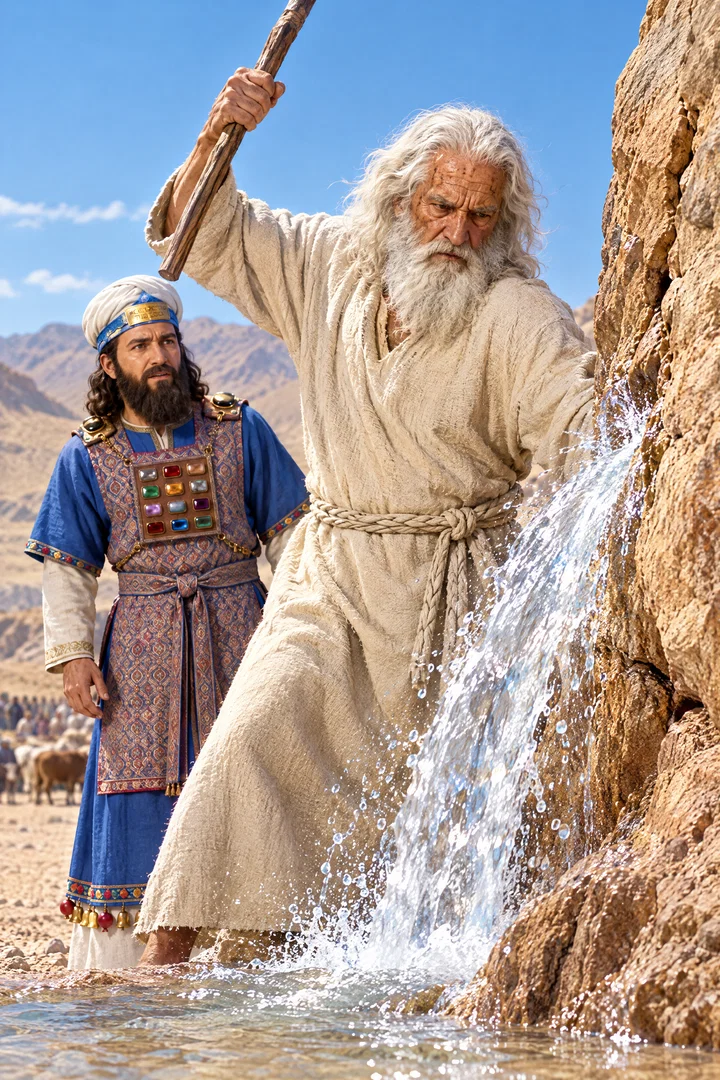
Cross-references
- Exodus 17:6
Behold, I will stand before thee there upon the rock in Horeb; and thou shalt smite the rock, and there shall come water out of it, that the people may drink. And Moses did so in the sight of the elders of Israel.
God provides water from a rock for Israel in the wilderness.
- Numbers 20:12
And the LORD spake unto Moses and Aaron, Because ye believed me not, to sanctify me in the eyes of the children of Israel, therefore ye shall not bring this congregation into the land which I have given them.
Moses and Aaron are barred from the land for failing to sanctify God.
- Deuteronomy 32:51-52
Because ye trespassed against me among the children of Israel at the waters of Meribah-Kadesh, in the wilderness of Zin; because ye sanctified me not in the midst of the children of Israel.
Moses’ failure at Meribah led to his being barred from Canaan.
- Psalms 106:33
Because they provoked his spirit, so that he spake unadvisedly with his lips.
The people provoked Moses until he spoke rashly.
- 1 Corinthians 10:4
And did all drink the same spiritual drink: for they drank of that spiritual Rock that followed them: and that Rock was Christ.
The water-giving Rock is identified as Christ.
- Numbers 20:11
And Moses lifted up his hand, and with his rod he smote the rock twice: and the water came out abundantly, and the congregation drank, and their beasts also.
Moses smote the rock twice instead of speaking to it.
- Genesis 14:7
And they returned, and came to En-mishpat, which is Kadesh, and smote all the country of the Amalekites, and also the Amorites, that dwelt in Hazezon-tamar.
identifies the springs as En-Mishpat
- Deuteronomy 1:37
Also the LORD was angry with me for your sakes, saying, Thou also shalt not go in thither.
Moses recalls that the Lord was angry with him because of Israel.
Commentary
Each commentary is drawn from primary sources: the writings of Ellen G. White and Adventist pioneers and periodicals. Each commentary is separate. Its own words are not a quotation; follow the references to read the source passages.
Ellen G. White
23 sources
At Kadesh on the borders of the promised land, after Moses and Aaron left the murmuring congregation, fell on their faces at the door of the tabernacle, and the glory of the Lord appeared, the Lord spoke to Moses directing him to take the rod and gather the assembly with Aaron and speak to the rock before their eyes with the promise that it would give water for the people and their beasts.Ms 169, 1903, par. 9–10Ms 69, 1912, par. 10–12ST Sep 30, 1880RH Dec 31, 1903 The living stream that had followed Israel for years had been deliberately stopped just before Canaan as a test of whether they would trust God's providence and walk by faith, and should have been read as a token that the wandering was ended.Ms 169, 1903, par. 9–10PP 414.1–2RH Dec 31, 1903 The direction was a merciful display of God's long-suffering and tender pity, for He often brings His people into strait places and then delivers them that they may remember His love and glorify Him, while their murmuring against Moses and Aaron was really sin against God their invisible leader.EW 132.3–133.1SG1 41.1–42.1RH Jul 29, 1873 Wearied and provoked, Moses failed to sanctify God before Israel but struck the rock twice in passion and claimed its power to himself, and because he believed not and dishonored God at this golden opportunity he was judged not to bring the congregation into the land.Ms 69, 1912, par. 10–12EW 132.3–133.1RH Aug 23, 1906PP 417.1–3RH Jul 29, 1873 The fall exposes Satan's policy of assailing in weakness to break the hold on God, warns all and especially those in responsibility to give God alone the glory, and yet encourages desponding hearts, for Moses repented in humility and faith in the Promised One and shows that through grace the fallen may rise and conquer.RH Aug 23, 1906Ms 15, 1908, par. 610MR 151.310MR 159.3–6ST May 31, 1910
Setting and Command
The Lord spoke to Moses at the door of the tabernacle after Moses and Aaron had left the congregation that was murmuring for lack of water, had fallen on their faces, and had seen the glory of the Lord appear in answer to their intercession.Ms 169, 1903, par. 9–10ST Sep 30, 1880RH Dec 31, 19031SP 309.2–3 The thirst had come upon Israel when the stream failed, and the leaders withdrew from the angry people to seek God where His glory was revealed.ST Sep 30, 1880RH Dec 31, 19031SP 309.2–3
The place was Kadesh, called the waters of Meribah, on the borders of the promised land in sight of the hills of Canaan, only a few days' march away and a little distance from Edom, after forty years of wandering.Ms 169, 1903, par. 9–10PP 414.1–2RH Aug 23, 1906PP 413.3–4 It was the same place where Israel had been proved soon after leaving Egypt nearly forty years before, now reached again at the close of the wilderness journey.1SP 309.2–31SP 309.1 The congregation stood just before entering Canaan, with the appointed route lying through Edom under God's promise of unmolested passage.PP 414.1–2PP 413.3–4
For many years a living stream had flowed wherever Israel encamped and had gushed beside them, but it had suddenly ceased just before entering Canaan.Ms 169, 1903, par. 9–10RH Dec 31, 19031SP 309.2–31SP 309.1PP 413.3–4 Its deliberate cessation was God's test to prove whether they would trust His providence, believe His promise, and walk by faith instead of sight.PP 414.1–2RH Dec 31, 1903RH Aug 23, 19061SP 309.1PP 413.3–4 The ending of the miraculous flow should have been understood as a token that the wilderness wandering was ended and a cause for rejoicing in the fulfillment of the promise, with opportunity before them to buy food and water for money in a fertile, well-watered country.PP 413.3–4
Instead of trusting, the thirsty people forgot the hand that had supplied their wants for years, gave up hope of possessing Canaan, and murmured with the same turbulent, unthankful unbelief as their fathers.PP 414.1–2RH Dec 31, 19031SP 309.2–3RH Aug 23, 1906PP 413.3–4 They murmured against God and against Moses and Aaron, accusing them of bringing them from Egypt into an evil wilderness place with no seed, figs, vines, pomegranates, or water, to perish with their children and cattle.Ms 169, 1903, par. 9–10PP 414.1–2EW 132.3–133.1RH Aug 23, 1906 They wished they had died with their brethren who died before the Lord in the rebellion of Korah, Dathan and Abiram, and clamored for the blessings of the wilderness.PP 414.1–21SP 309.2–3EW 132.3–133.1
The speaking gave God's direction to take the rod and gather the assembly together with Aaron and to speak to the rock before the eyes of the people.Ms 169, 1903, par. 9–10Ms 69, 1912, par. 10–12RH Dec 31, 19031SP 309.2–3SG4 38.1–2 The promise joined to the command was that the rock would give forth its water and bring forth water out of the rock for them.Ms 169, 1903, par. 9–10Ms 69, 1912, par. 10–12RH Dec 31, 19031SP 309.2–3SG4 38.1–2 That water was to provide drink for the congregation and their beasts.Ms 69, 1912, par. 10–121SP 309.2–3SG4 38.1–2PP 425.4
Purpose, Failure, and Judgment
The word spoken to Moses was a merciful direction to meet Israel's need by a display of divine glory that would honor and magnify God before the people, showing His long-suffering and tender pity in order to soften and subdue their hearts and lead them to repentance.EW 132.3–133.1SG1 41.1–42.1RH Jul 29, 1873 It belonged to God's plan often to bring His people into strait places and then in their necessity to prove them and exhibit His power in deliverance, that they might realize His love and care, keep Him in memory, and be led to serve, honor, and glorify Him.EW 132.3–133.1SG1 41.1–42.1RH Jul 29, 1873 The people's murmuring for water and charging their calamities upon Moses and Aaron was not against men appointed to carry out His purpose but was grieving, sinning against, dishonoring, and murmuring at God and His providence.EW 132.3–133.1SG1 41.1–42.1RH Jul 29, 1873 They were insulting their best Friend and invisible leader, for Christ was Israel's invisible leader, and He felt the full depth of their transgression against Himself, suffered most intensely from it, and would bear their iniquities.RH Jul 29, 187310MR 151.3PP 418.3
Wearied, perplexed, and provoked by continual complaining, Moses and Aaron took the murmurings as a trial and dishonor to themselves instead of remembering how much the Lord had borne with Israel and showing the people their guilt before God.EW 132.3–133.1SG1 41.1–42.1RH Jul 29, 1873PP 418.3 Moses was wearied by unceasing murmuring over lack of water, and for the moment his faith let go its hold upon infinite power, so that when strength failed and will power weakened and faith ceased to repose in God, he who had stood long and valiantly for the right was overcome just upon the borders of the promised land.Ms 69, 1912, par. 10–12RH Aug 23, 1906Ms 15, 1908, par. 6 In thus focusing on their own grievance they failed to sanctify, honor, and magnify God as His representatives before the people at this golden opportunity.RH Aug 23, 1906RH Jul 29, 1873PP 418.3 Instead of speaking to the rock before the eyes of the people as directed, Moses struck it twice in wrath, irritation, and anger, and spoke in human passion rather than holy indignation, crying, Hear now, ye rebels; must we fetch you water out of this rock.EW 132.3–133.1RH Aug 23, 1906PP 417.1–3 In doing so he gave prominence to self and claimed the power of opening the rock for the people, appropriating to himself the glory that belonged to God and taking to himself murmuring that was really against God.EW 132.3–133.1RH Aug 23, 1906RH Jul 29, 187310MR 159.3–6PP 425.4
His sin was not premeditated but a surprise of yielding to the natural feelings of the heart, thinking only of himself, how deeply he was wronged, and how little gratitude they manifested for his deep love for them after their continual waywardness had caused him keenest sorrow.EW 132.3–133.1SG1 41.1–42.110MR 159.3–6 Even a true accusation must not be spoken in passion or impatience, and his irritated words grieved the Spirit of God, harmed the people, and gave them an excuse to question his past leadership and reject God's reproofs.PP 417.1–3 Because they believed God not and did not sanctify Him in the eyes of Israel, God's reproof fell on these greatly exalted and honored leaders, whose sin was great though their lives might otherwise have been illustrious to the close.EW 132.3–133.1RH Aug 23, 1906RH Jul 29, 1873PP 418.3 They were judged not to bring the congregation into the land He had given them but to die with rebellious Israel before crossing the Jordan, for that yielding to natural feeling and taking to himself the honor due to God brought the Lord's displeasure and barred Moses from Canaan, showing that God does not excuse sin in exalted position any sooner than in the humble, and their disobedient act offended the Lord.EW 132.3–133.1RH Aug 23, 1906RH Jul 29, 187310MR 151.3PP 425.4 Moses mourned his deviation from the right and felt he had caused Israel to sin, though their murmuring was their own sin that led him to sin, and he confessed his sin in humility and faith and asked pardon in the name of Jesus, for repentance, humility, and faith in the Promised One who would die as humanity's sacrifice were what God required.10MR 151.3ST Mar 31, 1881
Though God provided water abundantly despite the complaints, Israel's unbelief brought punishment on the people as well, for they had to continue through the desert and depend on the miraculous spring they would no longer have needed had they trusted Him.PP 424.2 Their later hardship in journeying around Edom followed from their own sin in murmuring at Kadesh when the water stopped, though they blamed God for it.PP 428.1–2
Warning and Encouragement Today
The word spoken to Moses on the borders of the promised land after the forty years' wandering exposes how the adversary prevails by assailing in the time of greatest weakness.Ms 15, 1908, par. 6 When strength failed and will power weakened and faith ceased to repose in God, he who had stood long and valiantly for the right was overcome and failed just upon the borders of the land, his faith for the moment letting go its hold upon infinite power.Ms 15, 1908, par. 6 It is his policy to attack weak points of character, seeking to shake confidence in God and break the hold upon Him, and he gains advantage whenever the soul parleys instead of meeting him as Jesus did.Ms 15, 1908, par. 6 In this case he stirred the hosts of Israel to murmur and rebel against God until Moses lost command of himself, transgressed the instruction by appropriating to himself the glory that belonged to God, and took to himself murmuring that was really against God.10MR 159.3–6 His sin was not premeditated but a surprise, yet by yielding to temptation in this way he placed himself on Satan's side and in Satan's dominion and power, giving Satan a claim to control him and to contend earnestly for his body.10MR 159.3–6
From this, those in positions of responsibility must learn not to do what gives prominence to self.RH Aug 23, 1906 The supply of water had ceased so Israel must show they believed God's promise and walk by faith instead of by sight, but they forgot the hand that had supplied their wants for years and murmured against Moses and Aaron for bringing them from Egypt into a wilderness with no seed, figs, vines, pomegranates, or water to drink.RH Aug 23, 1906 Moses, though very meek above all men and long patient with rebellion, let patience give way and instead of speaking to the rock as directed smote the rock angrily, crying, Hear now, ye rebels; must we fetch you water out of this rock, giving prominence to self.RH Aug 23, 1906 Because they believed God not, to sanctify Him in the eyes of the children of Israel, Moses and Aaron were judged not to bring the congregation into the land God had given them, but to die with rebellious Israel before crossing the Jordan.RH Aug 23, 1906 When those entrusted, especially presidents of schools, do what gives prominence to self God's work is neglected and He is dishonored, God will work counter to those who work counter to Him, and His name and His alone is to be magnified on the earth.RH Aug 23, 1906
The faithful narration of his fall, even though he was favored of God and entrusted with great responsibility, is given for the benefit and warning of all who read it.ST May 31, 1910 It shows that great men strive, waver, and fall into error even as people do now, and its record shows divine justice in telling the truth about human frailty.ST May 31, 1910 It is given to teach obedience to the law of God and avoidance of unbelief and disobedience.ST May 31, 1910 In the matter of the water from the rock he sinned by deviating from the right when Israel murmured and complained, committing a wrong act that marred his life and kept him out of the Promised Land.10MR 151.3ST Mar 31, 1881 He mourned his sin and felt he had caused Israel to sin, but the murmuring and complaining was their own sin and it led him to sin, for Christ was Israel's invisible leader so their transgression was against Christ, not Moses, and Christ felt the full depth of their sin, suffered most intensely from it, and would bear their iniquities.10MR 151.3
He confessed his sin in humility and faith and asked pardon in the name of Jesus, and repentance, humility, and faith in the Promised One, who would die as humanity's sacrifice, were what God required.ST Mar 31, 1881 The same record encourages desponding hearts by showing that through God's grace those who fall can gain fresh vigor, rise above their evil nature, take heart again, and conquer.ST May 31, 1910 Lest those who see such faultless lives would despair of ever reaching excellence, the fall is told to lift the fallen to hope again.ST May 31, 1910
Sources
Pioneers and periodicals
21 sources
The verse opens God's answer to Moses and Aaron at Kadesh after they left the murmuring congregation over the ceased water supply, fell on their faces at the door of the tabernacle, and saw His glory appear, directing Moses to take the rod, gather the assembly with Aaron, and speak to the rock before their eyes to bring water for the people and their beasts.ST Sep 30, 1880RH Dec 31, 1903STST May 27, 1889ST Jul 14, 1914 The direction required speaking to the rock, not striking it, the rock to be smitten in meaning only once.ST Jan 13, 1914ST Apr 25, 1906RH Dec 9, 1909 Provoked by continual complaining, Moses in an unguarded moment angrily struck the rock twice and spoke as if he and Aaron must fetch the water, giving prominence to self and failing to trust, sanctify, honor, and glorify God before Israel.STST Jan 13, 1914ST Apr 25, 1906ST Sep 10, 1902RH Dec 9, 1909 The rock was a symbol of Christ, and the ceremony meant the Rock of Ages smitten once for all, so the added stroke spoiled that meaning and was no unimportant detail.ST Jan 13, 1914ST Jul 23, 1912 Because they did not believe God to sanctify Him at that merciful display of His glory and pity, Moses and Aaron were judged not to bring the congregation into the promised land but to die before the Jordan, teaching that God's instructions must be followed exactly, that disobedience brings serious consequence even after long faithfulness and under provocation, and that the faithful record stands to warn against unbelief and to encourage the fallen that through grace they can rise and conquer.RH Jul 29, 1873ST May 31, 1910ST Apr 25, 1906ST Sep 10, 1902RH Dec 9, 1909
Setting and Divine Instruction
The Lord's word to Moses was spoken at Kadesh in the wilderness of Zin, also called Kadesh-Barnea and En-Mishpat, during Israel's water crisis on the borders of the promised land just before entering Canaan.ST Sep 30, 1880RH Aug 23, 1906STST Jul 14, 1914RH Mar 25, 1873 Moses and Aaron had left the murmuring assembly, gone to the door of the tabernacle, fallen on their faces, and the glory of the Lord had appeared to them, and the speaking came in answer to their intercession.ST Sep 30, 1880RH Dec 31, 1903ST May 27, 1889 The speaking gave God's directions in that extremity for supplying water despite Israel's exceeding great sin of forgetting God their Saviour.ST May 27, 1889
The lack of water had come because the stream that had supplied Israel for years had ceased to flow, to test whether they would trust God's providence, believe His promise, and walk by faith rather than sight.RH Dec 31, 1903RH Aug 23, 1906 The people forgot the hand that had supplied their wants for years and murmured against Moses and Aaron for bringing them from Egypt into a wilderness with no seed, figs, vines, pomegranates, or water to drink.RH Dec 31, 1903RH Aug 23, 1906 Crazed with thirst, the assembled hosts cried out against Moses and Jehovah when the original upper fountain near the cliff had dried up.ST Jul 14, 1914
The direction was that Moses was to take the rod, gather the assembly with Aaron, speak to the rock before their eyes, and bring water from the rock for the congregation and their beasts to drink.RH Dec 31, 1903ST May 27, 1889RH Mar 25, 1873 It was a direct command to speak to the rock before them so that it would give forth water for the people and cattle.RH Mar 25, 1873 The verse belongs to the narrative of Numbers 20 and 21, which records Miriam's death and Israel's journeying around Edom and the enemies met in the way.ST Feb 20, 1912
That journey included Edom, the descendants of Esau, refusing Israel passage through their land despite Israel's request to pass through from Egypt to Canaan, reflecting lasting enmity grown from the family conflict of Jacob and Esau.ST Oct 1, 1902 The place at Kadesh-Barnea had three springs with ten other places where water bubbles from the earth centering in head living fountains near the surface of perpetual strength, not wells.ST Jul 14, 1914 The two most prominent were six feet deep and stoned from the bottom with time-worn rocks, near where the original upper fountain by the cliff had dried up, and Kadesh-Barnea is En-Mishpat, the spring of judgment, by the side of which Moses administered justice.ST Jul 14, 1914
Disobedience and Divine Judgment
God's direction introduced here was to speak to the rock, not to strike it, for the rock in meaning was to be struck only once.ST Jan 13, 1914ST Apr 25, 1906RH Dec 9, 1909ST Jul 23, 1912 Moses instead in anger struck the rock twice, and that added stroke was disobedience, not an unimportant detail.ST Jan 13, 1914ST Apr 25, 1906RH Dec 9, 1909 Worn by continual complaining, in an unguarded moment when his long patience gave way, he let pride take the place of humility and meekness.RH Aug 23, 1906RH Mar 25, 1873 He smote the rock angrily, crying in effect, Hear now, ye rebels, must we fetch you water out of this rock, giving prominence to self and to Aaron without even mentioning the Lord's name.RH Aug 23, 1906ST Jul 23, 1912RH Mar 25, 1873
Though water came forth, he and Aaron in weariness took the murmurings as trial and dishonor to themselves and claimed the power of opening the rock.RH Jul 29, 1873RH Dec 9, 1909ST Jul 23, 1912 They spoke rashly and took glory to themselves instead of giving it to God, failing to trust Him, to sanctify Him, to honor Him, and to give Him glory before Israel.RH Jul 29, 1873STST Sep 10, 1902RH Dec 9, 1909 They forgot that Israel in murmuring for water and charging calamity upon them was not murmuring against men appointed to carry out His purpose but was grieving, sinning against, dishonoring, murmuring at, and insulting God and His providence, their best Friend.RH Jul 29, 1873
The rock was a symbol of Christ, and the ceremony meant the Rock of Ages smitten once for all, which the second stroke spoiled.ST Jan 13, 1914ST Jul 23, 1912 The direction had been meant as a merciful display of God's glory, long-suffering, and tender pity to soften and subdue Israel's hearts and lead them to repentance.RH Jul 29, 1873 Failure to sanctify the Lord at that golden opportunity was therefore great sin in greatly exalted and honored leaders, even though their lives might otherwise have been illustrious to the close.RH Jul 29, 1873
Because they believed God not, to sanctify Him in the eyes of the children of Israel, Moses and Aaron were judged not to bring the congregation into the land God had given them, but to die with rebellious Israel before crossing the Jordan.RH Aug 23, 1906ST Apr 25, 1906RH Dec 9, 1909ST Jul 23, 1912RH Mar 25, 1873 Moses' death followed his failure when provoked by the people to obey exactly what the Lord commanded and to give God glory.RH Aug 23, 1906ST Sep 10, 1902RH Dec 9, 1909 The episode teaches that God's instructions must be followed exactly and that disobedience by a leader cannot be treated lightly even after a long record of faithfulness, for disobedience has serious consequences.ST Apr 25, 1906RH Dec 9, 1909ST Jun 17, 1889
God has no favorites and does not excuse sin in those in exalted position any sooner than in the more humble, nor does He excuse it because of provocation, for even a great leader is accountable and sin has its root in the human heart.RH Jul 29, 1873RH Jan 12, 1869ST Jun 17, 1889 Moses' closeness to God did not exempt him from judgment, for the nearer God comes to a person by His presence the more serious it is to speak or act wrongly before Him, and those dear to Him cannot assume He will overlook their sin.RH Jan 12, 1869 The wrong act in the matter of the water marred Moses' life and barred him from the promised land, but he confessed his sin in humility and faith and asked pardon in the name of Jesus.ST Mar 31, 1881 Repentance, humility, and faith in the Promised One who would die as humanity's sacrifice were what God required.ST Mar 31, 1881
Symbolism and Present Application
The faithful telling of Moses' fall, though he was favored of God and entrusted with great responsibility, is given for the benefit and warning of all who read it to teach obedience to the law of God and avoidance of unbelief and disobedience.ST May 31, 1910 It shows divine justice in telling the truth about human frailty, that great men strive, waver, and fall into error even as people do now.ST May 31, 1910 The same record encourages desponding hearts by showing that through God's grace those who fall can gain fresh vigor, rise above their evil nature, take heart again, and conquer, lest those who see only faultless lives despair of ever reaching excellence.ST May 31, 1910
The incident shows that God's people must recognize their dependence on Him in everything as the provider of the water in the wilderness, and Moses' failure to give God the glory as that provider kept him from being permitted to enter the promised land.ST Sep 17, 1902 From this those in positions of responsibility, especially presidents of schools, must learn not to do what gives prominence to self, for then God's work is neglected and He is dishonored.RH Aug 23, 1906 God will work counter to those who work counter to Him, and His name and His alone is to be magnified on the earth.RH Aug 23, 1906
God's word that brought forth the waters of Meribah pictures the water of life obtained by searching the Scriptures.RH Dec 7, 1916 Responsive to the touch of faith, without a bucket bound by creeds and traditions, this water springs forth in copious streams to quench the thirst of perishing souls.RH Dec 7, 1916
Sources