Exodus 17:6
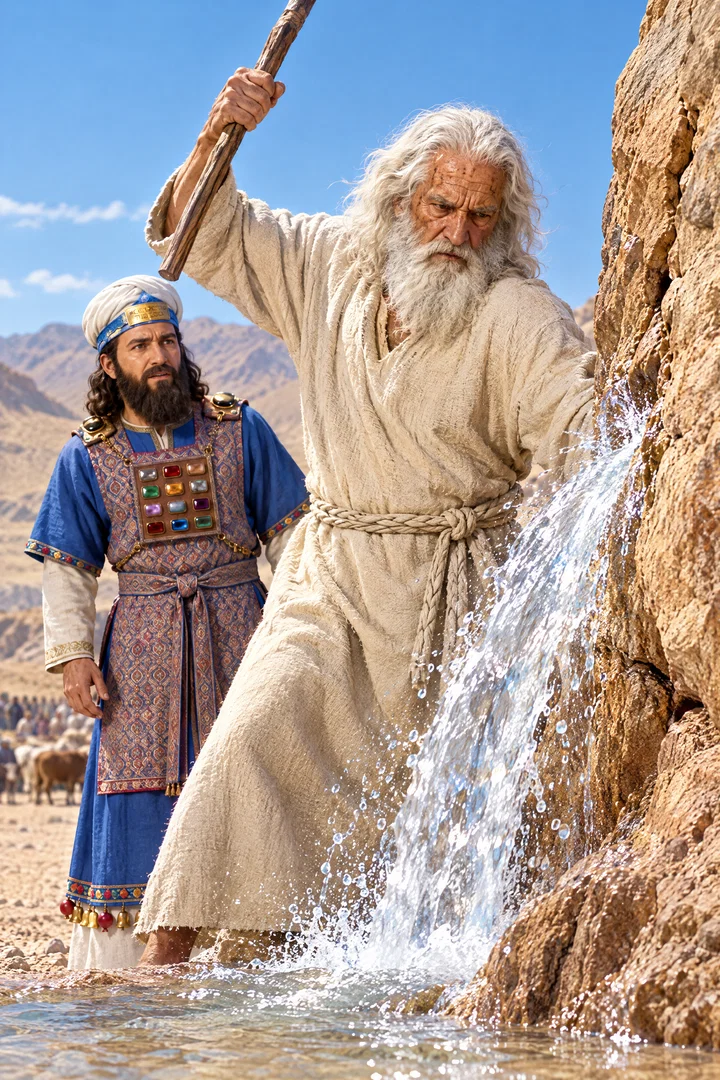
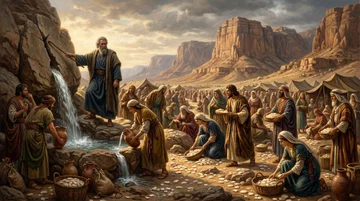
Behold, I will stand before thee there upon the rock in Horeb; and thou shalt smite the rock, and there shall come water out of it, that the people may drink. And Moses did so in the sight of the elders of Israel.
Translations
Behold, I will stand before you there on the rock in Horeb; and you shall smite the rock, and there shall come water out of it, that the people may drink. And Moses did so in the sight of the elders of Israel.
King James Version, KJV Cambridge Paragraph Bible, Revised Version, American Standard Version
Behold, I will stand before thee there upon the rock in Horeb; and thou shalt smite the rock, and there shall come water out of it, that the people may drink. And Moses did so in the sight of the elders of Israel.
Behold, I will stand before thee there on the rock in Horeb; and thou shalt smite the rock, and water shall come out of it, that the people may drink. And Moses did so in the sight of the elders of Israel.
Lo, I am standing before thee there on the rock in Horeb, and thou hast smitten on the rock, and waters have come out from it, and the people have drunk.' And Moses doth so before the eyes of the elders of Israel,
Behold, I will stand before thee there upon the rock on Horeb; and thou shalt strike the rock, and there shall come water out of it, that the people may drink. And Moses did so before the eyes of the elders of Israel.
Behold me! standing before thee, there upon the rock in Horeb, then shalt thou smite the rock and there shall come forth therefrom water, and the people shall drink. And Moses did so, in the sight of the elders of Israel.
Berean Standard Bible, Majority Standard Bible
Behold, I will stand there before you by the rock at Horeb. And when you strike the rock, water will come out of it for the people to drink.”So Moses did this in the sight of the elders of Israel.
Behold, I will stand before you there on the rock in Horeb. You shall strike the rock, and water will come out of it, that the people may drink.” Moses did so in the sight of the elders of Israel.
See, I will take my place before you on the rock in Horeb; and when you give the rock a blow, water will come out of it, and the people will have drink. And Moses did so before the eyes of the chiefs of Israel.
Behold, I will stand there before thee vpon the rocke in Horeb, and thou shalt smite on the rocke, and water shall come out of it, that the people may drinke. And Moses did so in the sight of the Elders of Israel.
Douay-Rheims (Challoner revision)
Behold I will stand there before thee, upon the rock Horeb: and thou shalt strike the rock, and water shall come out of it that the people may drink. Moses did so before the ancients of Israel:
Pictures
Cross-references 20 of 35
- 1 Corinthians 10:4
And did all drink the same spiritual drink: for they drank of that spiritual Rock that followed them: and that Rock was Christ.
Identifies the spiritual Rock that supplied Israel’s drink as Christ.
- John 7:37-38
In the last day, that great day of the feast, Jesus stood and cried, saying, If any man thirst, let him come unto me, and drink.
Jesus offers living water to the thirsty, fulfilling the water from the smitten rock.
- John 4:14
But whosoever drinketh of the water that I shall give him shall never thirst; but the water that I shall give him shall be in him a well of water springing up into everlasting life.
Water from the smitten rock is connected with Christ’s living water, which springs up to everlasting life.
- Psalms 78:15-16
He clave the rocks in the wilderness, and gave them drink as out of the great depths.
Both describe God bringing water from the rock in the wilderness.
- Numbers 20:8-11
Take the rod, and gather thou the assembly together, thou, and Aaron thy brother, and speak ye unto the rock before their eyes; and it shall give forth his water, and thou shalt bring forth to them water out of the rock: so thou shalt give the congregation and their beasts drink.
God again provided water from a rock, but Moses struck it instead of speaking to it.
- Exodus 15:23-25
And when they came to Marah, they could not drink of the waters of Marah, for they were bitter: therefore the name of it was called Marah.
God sweetens bitter water at Marah, as He provides water from the rock.
- 1 Corinthians 10:11
Now all these things happened unto them for ensamples: and they are written for our admonition, upon whom the ends of the world are come.
Israel’s wilderness experience was recorded as an example and admonition for later believers.
- Isaiah 32:2
And a man shall be as an hiding place from the wind, and a covert from the tempest; as rivers of water in a dry place, as the shadow of a great rock in a weary land.
The great Rock’s shadow offers shelter and refreshment in a weary land.
- Psalms 105:41
He opened the rock, and the waters gushed out; they ran in the dry places like a river.
Water gushes from the rock for Israel in the wilderness.
- Isaiah 12:3
Therefore with joy shall ye draw water out of the wells of salvation.
The people draw water with joy from the wells of salvation.
- John 4:15
The woman saith unto him, Sir, give me this water, that I thirst not, neither come hither to draw.
The Samaritan woman asks Jesus for this water.
- Isaiah 48:21
And they thirsted not when he led them through the deserts: he caused the waters to flow out of the rock for them: he clave the rock also, and the waters gushed out.
God brought water from the rock as he led Israel through the desert.
- John 4:10
Jesus answered and said unto her, If thou knewest the gift of God, and who it is that saith to thee, Give me to drink; thou wouldest have asked of him, and he would have given thee living water.
Horeb streams likened to living water
- John 19:34
But one of the soldiers with a spear pierced his side, and forthwith came there out blood and water.
Water flows from Christ’s pierced side as it did from the smitten rock.
- Revelation 22:17
And the Spirit and the bride say, Come. And let him that heareth say, Come. And let him that is athirst come. And whosoever will, let him take the water of life freely.
The living water from the Rock is linked with the freely offered water of life.
- John 7:38-39
He that believeth on me, as the scripture hath said, out of his belly shall flow rivers of living water.
Living water is connected with spiritual life through the Spirit.
- Isaiah 53:5
But he was wounded for our transgressions, he was bruised for our iniquities: the chastisement of our peace was upon him; and with his stripes we are healed.
The smitten Rock points to Christ’s suffering for human transgressions.
- Jeremiah 2:13
For my people have committed two evils; they have forsaken me the fountain of living waters, and hewed them out cisterns, broken cisterns, that can hold no water.
The Lord is the fountain of living waters, unlike broken cisterns that cannot hold water.
- Deuteronomy 32:31
For their rock is not as our Rock, even our enemies themselves being judges.
Israel’s Rock is unlike the enemies’ rock.
- Psalms 114:8
Which turned the rock into a standing water, the flint into a fountain of waters.
Celebrates God turning rock into abundant water.
Commentary
Each commentary is drawn from primary sources: the writings of Ellen G. White and Adventist pioneers and periodicals. Each commentary is separate. Its own words are not a quotation; follow the references to read the source passages.
Ellen G. White
59 sources
God himself stood upon the rock in Horeb, enshrouded in the cloud, and commanded Moses to smite it with his rod in the sight of the elders of Israel.Lt 24, 1896, par. 4–6Lt 52, 1907, par. 16–19Lt 24b, 1896, par. 8–12 When Moses obeyed, pure cooling water came out in a living stream that abundantly supplied the camp.Lt 52, 1907, par. 16–19ST Sep 10, 1896SG3 255.1 The smitten rock typified Christ, set apart to be wounded for transgressions and smitten in death.ST Sep 23, 1897SLP 168.1–2ST Jul 23, 1896 From his death flow living streams of salvation, the water of life that satisfies the thirsting soul and becomes in the receiver a well springing up into everlasting life.ST Sep 23, 1897SLP 168.1–2LC1 91.4ST Jun 3, 1886Lt 97, 1895, par. 18–19 God had led Israel by express command to waterless Rephidim to test their faith and prove whether he was among them, and everyone who takes up the cross still comes to such a Rephidim where, if they look to him in trusting faith instead of murmuring, he opens the flinty rock in the hour of need.Lt 24, 1896, par. 4–6Lt 24b, 1896, par. 8–12ST Sep 10, 1896Lt 24, 1896, par. 7–9Lt 24b, 1896, par. 13–19
Setting and Miracle at Horeb
God himself stood before Moses there upon the rock in Horeb, enshrouded in the pillar of cloud as leader and General of the armies of heaven.Lt 24, 1896, par. 4–6Lt 24b, 1896, par. 8–12 He commanded Moses to take the rod with which he had smitten the river and smite the rock in the sight of the elders of Israel.Lt 24, 1896, par. 4–6Lt 52, 1907, par. 16–19Lt 24b, 1896, par. 8–12ST Sep 10, 1896SG3 255.1 When Moses obeyed and struck, water came out for the people to drink.Lt 52, 1907, par. 16–19ST Sep 10, 1896SG3 255.1PP 297.3–298.1RH Aug 7, 1913 It came as a living stream that abundantly supplied the camp with pure, cooling, life-giving water.PP 297.3–298.1RH Aug 7, 1913SG4 121.3–122.1
Christ stood beside Moses and caused the water to flow.SG3 255.11SP 226.2–227.1SG3 256.1 As the spiritual Rock and Coming One guiding Israel, greater than Moses, he accompanied them through the wanderings, providing both temporal and spiritual blessings.PP 411.1–2Lt 112, 1909, par. 18–19Ms 114, 1899, par. 1–3 That provision was evidence that God was leading and protecting them.Lt 112, 1909, par. 18–19Ms 114, 1899, par. 1–3 The water then continued to flow and followed Israel, gushing from rock beside their encampments wherever they needed it.ST Sep 30, 1880PP 411.1–2 It flowed until shortly before they returned to the rock, when God stopped it at Kadesh to test whether they would trust him or murmur again.ST Sep 30, 18801SP 309.1
The place was called Massah and Meribah because they quarreled and tested the Lord.1SP 226.2–227.1 Moses is presented as striking in anger and taking the glory to himself instead of honoring God before the people, thereby failing to magnify God's name and incurring displeasure.EW 132.3–133.1 The rod thus became an instrument of deliverance, for instead of bringing judgment on the people for murmuring, God mercifully met their need.PP 297.3–298.1
God's Testing Purpose at Rephidim
By express command the Lord led Israel to pitch at waterless Rephidim, knowing beforehand that there was no water there, to test their faith, faithfulness, loyalty and trust and to prove whether he could trust them and whether the Lord was among them.Lt 24, 1896, par. 4–6Lt 24b, 1896, par. 8–12ST Sep 10, 1896RH Apr 7, 190310MR 115.2 Their emergency was his chosen opportunity to manifest himself as helper, not accident or abandonment or failure of love.Lt 24b, 1896, par. 8–12RH Apr 7, 1903ST Dec 12, 1906ST Dec 12, 1906ST Sep 10, 1896 He would reveal abundant supply independent of surroundings and matchless love by miracle of grace, turning the flinty granite rock into cooling, life-giving, refreshing streams.Lt 24b, 1896, par. 8–12RH Apr 7, 1903ST Dec 12, 1906ST Dec 12, 1906ST Sep 10, 1896 In this he showed he can supply need in difficult surroundings and has power to bring a river from rock in the desert.RH Apr 7, 190310MR 115.2ST Dec 12, 1906ST Dec 12, 1906ST Sep 10, 1896
Instead of waiting patiently, reviving faith, recounting great goodness and wonderful works of deliverance, feeding with angels' food and promise to bring them to the promised land, and kneeling to ask God for water with childlike trust, Israel showed criminal unbelief.Lt 24b, 1896, par. 8–121SP 226.2–227.1SG3 256.1ST Dec 12, 1906ST Sep 10, 1896 They rebelled, distrusted, murmured and complained against Moses, dishonored God, vented wrath and bitterness, and demanded water and questioned whether the Lord was among them.Lt 52, 1907, par. 16–19Lt 24b, 1896, par. 8–12SG3 255.1Ms 125, 1909, par. 2–51SP 226.2–227.1 The place was therefore called Massah and Meribah because they quarreled and tested the Lord.1SP 226.2–227.1
The miraculous bringing of water from the flinty rock demonstrated the power of the great Ruler of the universe to sustain his people in the wilderness.SG4 17.1ST Oct 28, 1880ST Mar 7, 187815MR 291.1–2Lt 136, 1908, par. 8–10 It was one of his repeated signs of merciful care alongside deliverance from Pharaoh and provision of food, teaching trust in his power.ST Oct 28, 1880ST Mar 7, 187815MR 291.1–2Lt 136, 1908, par. 8–10 It was meant to remind Moses that God could also supply meat for the host, a wonder he was reproved for forgetting when he doubted.1SP 283.1SG4 17.1
The Rephidim experience is a trying process God permits to reveal true steadfast principles and gold of character and faith in his instrumentalities in contrast with selfish ambitious sentiments.Lt 129, 1896, par. 25–27Lt 129a, 1896, par. 6–8Lt 193, 1898, par. 7 It tries the hearts of all connected with his work in the church and institutions, and exposes how easily souls are deceived and misled by temptation, how little faith professed believers have in God and how much confidence in themselves, and those unfit for leading positions without thorough conversion of heart, mind and strength.Lt 129, 1896, par. 25–27Lt 129a, 1896, par. 6–8 That trial proves a blessing by leading to self-examination, conviction by the Holy Spirit, and thorough conversion.Lt 129, 1896, par. 25–27Lt 129a, 1896, par. 6–8Lt 193, 1898, par. 7 It establishes faith on better principles, prompts striving for higher moral perception and better preparation for work, gives walking in clearer light with lasting lessons never forgotten for sincere earnest God-fearing souls, and sets wrongly biased minds right.Lt 129, 1896, par. 25–27Lt 129a, 1896, par. 6–8Lt 193, 1898, par. 7
Christ the Smitten Rock
The rock smitten at Horeb was a type of Christ, the living Rock set apart to be smitten.ST Sep 23, 1897SLP 168.1–2ST Jul 23, 1896Ms 60, 1902, par. 43–44AA 315.2–316.1 Struck by Moses' rod, He was wounded for transgressions and smitten in death.ST Sep 23, 1897SLP 168.1–2ST Jul 23, 1896AA 315.2–316.1 As the only-begotten Son of the Father He is that Rock from which pure water flowed for the people.ST Jul 23, 1896Lt 97, 1895, par. 18–19 As that pure water flowed from the rock for Israel to drink, so His death causes living streams of salvation and the water of life to flow to the world.ST Sep 23, 1897SLP 168.1–2Ms 60, 1902, par. 43–44AA 315.2–316.1DA 453.3–454.1 They flow to all who thirst and to sin-sick souls.ST Sep 23, 1897Lt 97, 1895, par. 18–19Ms 60, 1902, par. 43–44AA 315.2–316.1DA 453.3–454.1
That water is His words, the water of life, carrying life-giving power and the fountain of life.LC1 91.4ST Jun 3, 1886ST Jun 14, 18771RED 91.2–32SP 345.2–346.1 It satisfies the thirst of the soul for that which perishes not and brings everlasting life.ST Jun 3, 1886ST Jun 14, 18771RED 91.2–3ST Apr 15, 1875 Received within, it becomes a well of water springing up into everlasting life.ST Jun 3, 1886ST Jun 14, 1877 It was a spiritual blessing given even amid murmuring and rebellion.ST Apr 15, 1875 Those who receive His love impart it to others through good works, right example, and Christian counsel.ST Jun 3, 1886
He is both that Rock and that water, the living water Himself inviting thirsty souls to come to Him and drink of the fountain of life.Ms 60, 1902, par. 43–44ST Jun 14, 1877ST Apr 15, 1875Lt 219, 1901, par. 3 What began as invitation to one thirsty Samaritan woman He widened into an invitation to any who thirst.Ms 60, 1902, par. 43–44 Though Satan intended by that smiting to destroy Him, His death brought life to the world.ST Sep 23, 1897DA 453.3–454.1 From His death flows life-giving water to the world.ST Sep 23, 1897DA 453.3–454.1
Feast of Tabernacles Memorial
The yearly rejoicing water-pouring ceremony at the Feast of Tabernacles commemorated and represented the God-given provision of water from the rock in the wilderness.2SP 344.1–2DA 448.4–449.1ST Sep 23, 1897Ms 60, 1902, par. 42DA 448.3 At God's command Moses struck the rock at Horeb and water flowed from it, even from granite rock, to quench Israel's thirst and refresh the Hebrews.2SP 344.1–2DA 448.4–449.1ST Sep 23, 1897 The water poured out in the temple represented that fountain, recalling God's provision for the people and the fountain of salvation from which people draw with joy.2SP 344.1–2ST Sep 23, 1897DA 448.3 While the water was poured the worshipers' songs celebrated God as their strength and salvation.ST Sep 23, 1897
At the first dawn of day the priest dipped a flagon of water from the flowing waters of the Kedron, lifted it on high before the people, ascended the broad steps of the temple into the court of the priests, and poured the water out before the altar.Ms 60, 1902, par. 42 That action represented the striking of the rock and the bringing out of water in the wilderness.2SP 345.2–346.1Ms 60, 1902, par. 42
In that ceremony the smitten rock and the flowing water point to Christ, for the rock was a figure of Christ and the living Rock.ST Jun 3, 1886Ms 60, 1902, par. 43–442SP 345.2–346.1 The water signifies the life-giving power of his words, the water of life that satisfies the soul's thirst and brings everlasting life.ST Jun 3, 18862SP 345.2–346.1 The smiting of the rock points to his death, by which he set himself apart to be smitten so that living streams would flow to the world and to all who are athirst.Ms 60, 1902, par. 43–44 In the last year of his ministry Christ witnessed the water-pouring ceremony that commemorated that smiting and declared himself to be its fulfillment, offering himself as the source of spiritual life and widening his earlier invitation to one thirsty Samaritan into an invitation to any who thirst.ST Jun 3, 1886Ms 60, 1902, par. 43–44 Those who receive his love share it with others through good works, right example, and Christian counsel.ST Jun 3, 1886
Trust and Obedience in Trial
Everyone who takes up the cross comes to a Rephidim in experience, meeting disappointment, privation, want, grievous trials and difficult rough places in the narrow way.Lt 24, 1896, par. 7–9Lt 24b, 1896, par. 13–19RH Apr 7, 1903Lt 24, 1896, par. 20–22Lt 24b, 1896, par. 31–34 Christ himself leads there because he sees it is for their good and for his name's glory, knows all about their trials, is as willing to help in present need as in times past, and no tribulation there can separate them from him.Lt 24, 1896, par. 7–9Lt 24b, 1896, par. 13–19RH Apr 7, 1903Lt 24, 1896, par. 20–22Lt 24b, 1896, par. 31–34 In mercy he does not always place his people in the easiest places, lest in self-sufficiency they forget the Lord is helper in time of necessity.Lt 24, 1896, par. 7–9Lt 24b, 1896, par. 13–19 Disappointment and trial are permitted to break self-sufficiency, reveal helplessness, and teach the needy to call upon the Lord for aid as a hungry and thirsty child calls upon its father, with burdens borne that will only be fully known when face to face with God.Lt 24, 1896, par. 7–9Lt 24b, 1896, par. 13–19
If they look to him in trusting faith, he in his own time in the hour of need opens the flinty rock and causes cooling, life-giving and refreshing streams to flow forth for them to drink.Lt 24b, 1896, par. 13–19ST Sep 17, 1896Lt 24, 1896, par. 20–2210MR 117.4Lt 24b, 1896, par. 31–34 He longs to manifest himself in emergency and reveal abundant supplies at his disposal independent of surroundings, turning trial and crisis into opportunity and blessing for the people and glory for his name.Lt 24, 1896, par. 7–9Lt 24b, 1896, par. 13–1910MR 117.4 Remembering his past dealings and his love and power shown in times past ever strengthens and upholds faith, overcoming discouragement and unbelief and proving him an ever-present Saviour and ever-present help in time of trouble.RH Apr 7, 1903ST Sep 17, 1896Lt 24, 1896, par. 20–22Lt 24b, 1896, par. 31–34 That remembrance gives reason to lift voices in praise and thanksgiving for past mercies and to go forward with full assurance and confidence, led forward in rough ways to go up and possess the promised land.RH Apr 7, 1903ST Sep 17, 1896Lt 24, 1896, par. 20–22Lt 24b, 1896, par. 31–34
Instead of imitating Israel by rebelling, distrusting, murmuring, magnifying difficulties, and venting wrath and bitterness upon his instrumentalities and dishonoring God, which lengthens the test, they should wait patiently, kneel and ask with childlike trust, and recognize helplessness.Lt 24b, 1896, par. 8–12ST Dec 12, 1906ST Sep 10, 1896Lt 24b, 1896, par. 13–19RH Apr 7, 1903 They should revive faith by recounting his great goodness and wonderful works of deliverance, feeding with angels' food, promise to bring them to the promised land, and his help in time of trouble.Lt 24b, 1896, par. 8–12ST Dec 12, 1906ST Sep 10, 1896Lt 24, 1896, par. 20–22 Looking to him in trusting faith instead of magnifying difficulties brings deliverance, turning bitterness like Marah into sweetness.RH Apr 7, 1903ST Sep 17, 1896Lt 24, 1896, par. 20–22 Patient faith strengthened by remembering God's past goodness would have shortened Israel's test, and stands as warning not to respond to hardship with unbelief.Lt 24b, 1896, par. 8–12ST Dec 12, 1906RH Apr 7, 1903
The provision of water from the rock was a great act of deliverance to be remembered and recounted to children as evidence of God's power and care.Lt 8a, 1896, par. 8–9 That same power to bring a river from rock in the desert and provide water in a dry place applies to the discovery of water in Paradise Valley.STB 112.3
Sources
Pioneers and periodicals
122 sources
At Rephidim on the way from Egypt to Sinai there was no water, and God told Moses to go before the people with the elders and strike the rock in Horeb with his rod, bringing forth abundant streams for about a million to three million people with their children and livestock.ST Jan 17, 1884ST Feb 25, 1889ST May 17, 1883ST May 26, 1914 God himself stood upon the rock with Moses and made the water flow, showing his presence, patience and faithful care for a murmuring people who questioned whether he was among them.ST Apr 15, 1880RH Jun 29, 1916RH Oct 1, 1908RH May 29, 1913RH Jul 18, 1907 The rock was Christ, the living Rock and invisible leader of Israel, and its being struck once portrays his being smitten once for all in death so that salvation flows to all who thirst.ST Sep 23, 1897ST Feb 25, 1889RH Nov 21, 1912ST Jan 13, 1914 That water is living water and the water of life, signifying Christ's life-giving words and the rich gift of the Holy Spirit received by faith, becoming in the receiver a well springing up into everlasting life.ST Sep 23, 1897ST Feb 25, 1889ST Mar 7, 1906RH Nov 30, 1911 God led Israel to the waterless place to test and train their faith, and their murmuring stands as a warning to trust and pray with childlike faith in hardship rather than complain against his appointed means.ST Sep 10, 1896RH Apr 7, 1903ST Dec 12, 1906ST Jan 17, 1884RH Oct 1, 1908
Setting and Circumstances
The event belongs to Israel's wilderness journey from Egypt toward Sinai and on to the promised land, when the people encamped at Rephidim where there was no water in a barren land.RH Jan 20, 1916ST Jan 20, 1909 It stands between the first giving of manna in the Wilderness of Sin and the arrival at Mount Sinai, as part of the historical section of Exodus 1-18 recounting deliverance from Egypt and miraculous provision for sustenance on the way.ST May 17, 1883RH Jan 20, 1916ST Jan 20, 1909 It took place before Israel saw Sinai, about thirty days before they came to the mount from which the Ten Commandments were proclaimed.ST May 17, 1883ST Mar 11, 1875 With Exodus 16-19 it shows that the Sabbath was already understood and binding, that its obligations were already known, and that its violation was already rebuked by God before Sinai, so it was not first instituted or first made known at Sinai for the Jews alone.ST May 17, 1883ST Mar 11, 1875RH Jan 12, 1860 After temporarily conforming to God's command about the Sabbath, the Israelites soon returned to murmuring and complaining, in another instance of repeated refusal to recognize the authority of God's word.ST Mar 7, 1906
God promised to stand before Moses upon the rock in Horeb, and told Moses to go on before the people with the elders of Israel and with the rod he had used to strike the river.ST Jan 17, 1884ST Feb 25, 1889ST Oct 6, 1887 He was to strike the rock so that water would come out of it for the people to drink, and Moses did so in the sight of the elders of Israel while the congregation beheld the glory from a distance veiled by the cloud.ST Sep 10, 1896ST Jan 17, 1884ST Feb 25, 1889ST Oct 6, 1887 The elders witnessed the act as God stood at the rock and Moses struck it at Horeb at God's command.ST Sep 10, 1896ST Feb 25, 1889ST May 26, 1914 The stroke clove the flinty, dry rock and gave abundant drink as out of the great depths, bringing streams out of the rock and causing waters to run down like rivers.ST Feb 25, 1889ST May 26, 1914ST May 30, 1895 The water gushed forth in cool, flashing streams and refreshed the people for their journey, where there was neither rain nor stream and no other source of drink.ST May 26, 1914RH Jun 29, 1916ST Jan 30, 1907
The supply was abundant enough to meet the needs of the people and their livestock, satisfying the thirst of Israel with their little ones, flocks, herds and animals.RH Jun 29, 1916AUST Jun 21, 1920 The host is reckoned at about a million to about three million souls, with their cattle and beasts, all drinking and filled from the rock.ST Feb 25, 1889RH Jun 29, 1916ST Jun 7, 1899 The first gush of water from the dry rock was no greater miracle than the stream's continued flow, for its ongoing supply also depended on God's work.ST May 30, 1895ST May 30, 1895 The water continued to flow and followed Israel throughout the wilderness journey so they drank and were filled, though they grew used to it, treated it as ordinary, forgot its source, and rebelled when going even one day without it.ST Sep 30, 1880ST May 30, 1895ST Jun 7, 1899ST May 30, 1895 Its later cessation at Kadesh tested whether they would trust God's provision.ST Sep 30, 1880
The place was named Massah and Meribah, meaning Temptation and Strife, or Chiding.ST Feb 25, 1889 The names were to remind the people of their failure and keep them humble rather than letting them credit their own goodness for the miracle.ST Feb 25, 1889 Horeb is identified with Sinai, so that Sinai appears both as the embodiment of God's law, before which people could not approach without death, and as the source of living water they could drink, with the water linked to the righteousness described in the Ten Commandments.ST Mar 26, 1896 Those who locate the event at Kadesh-Barnea teach that the thirst came because the original upper spring nearest the cliff, now dry but sometimes still holding water, had dried up, and that the blow brought to light the two other most prominent living springs, six feet deep and stoned up from the bottom with time-worn rocks, one being En-Mishpat, the spring of judgment, beside which Moses administered justice.ST Jul 14, 1914
Provision and Presence
The rock struck at Horeb gave abundant water in a dry wilderness where there was no other drink, and the supply met the need of the people and showed that God was present among them and caring for them.RH Jun 29, 1916RH Oct 1, 1908RH Jul 18, 1907 When thirst made them complain against Moses and ask whether the Lord was among them or not, challenging his leadership and even threatening to stone him, the Lord patiently instructed Moses what to do and gave drink, thereby showing care and forgiveness despite distrust and publicly affirming Moses as his chosen leader and messenger.RH Oct 1, 1908RH Jul 18, 1907RH Sep 2, 1862RH Oct 31, 1907 God stood with Moses beside the smitten rock to bring the water, and the act stands as a shining memorial of his faithfulness and the constancy of his almighty arm.RH Jun 21, 1864 He interposes for his church to deliver from danger, console grief, supply necessity, dispel fear, preserve life, and bring gladness to eyes ready to fail through wakefulness and tears.RH Jun 21, 1864
The water was a further sign and repeated evidence of his power and love, given when the people complained that they would die of thirst and accused Moses of bringing them out to perish.RH Apr 3, 1879ST Feb 25, 1886 It met their need despite distrust, sustained them in the wilderness by miracle, and was one of the repeated signs of his merciful care and lovingkindness.ST Oct 28, 1880RH Apr 3, 1879ST Feb 25, 1886 In obedience to the command the rock yielded living water for them to drink, proving his ability and willingness to do all he had promised after bringing them out with a mighty hand.RH Aug 7, 1913RH Jan 27, 1916RH Apr 3, 1879
God may lead his people into hardship where there is neither rain nor stream in order to test loyalty and faith and reveal dependence on him, and then the trial becomes the opportunity for him to reveal his help.RH Apr 7, 1903ST Dec 12, 1906ST Jan 30, 1907 The flinty rock yielding cooling streams shows that he is a helper who can supply abundantly in emergencies whatever the surrounding circumstances, for he has abundant supplies and controls circumstances so that he can provide even when outward conditions are unfavorable.RH Apr 7, 1903ST Dec 12, 1906ST Sep 10, 1896RH Aug 13, 1908 He leads and cares for his people through difficult and changing circumstances, delighting to give water from the rock when none is in sight and turning apparent obstacles into means of help, so that outward hindrances become opportunities for great success.RH Apr 7, 1903ST Apr 13, 1882RH Aug 13, 1908
The drink from the flinty rock belongs with guidance by the cloudy pillar, food by manna from heaven, quails when they craved flesh, and the overthrow of enemies that came against them on the way to the promised rest.ST Aug 31, 1888RH Apr 2, 1861RH May 5, 1874 Together they prove that God could protect and supply his people in any emergency, so that no force or enchantment, even Balak's with Balaam, could vanquish them.RH Apr 2, 1861 The report of this supply, with the plagues on Egypt and the overthrow in the Red Sea wrought with the rod of Moses, struck sorrow on Palestine, amazed the dukes of Edom, made the mighty men of Moab tremble, and melted away all the inhabitants of the land.RH Apr 2, 1861 He had brought about three million souls, elsewhere reckoned as a mighty host of about a million led out of servile toil, out of the house of bondage with only two or three days of food and led them for about sixteen months toward the land promised for inheritance with his power manifested every day for their preservation, with the sea not impeding their way and the bread of heaven hushing their clamors when they seemed death's helpless prey.ST Aug 31, 1888 With deliverance at the Red Sea, bread in the wilderness, water in the desert, and the promise to drive out enemies and give Canaan as further proof of the power and faithfulness of the same divine being who led them with a mighty hand and outstretched arm, their terror at the false report of the ten faithless spies and their fear that they were not strong enough to take it was strange unbelief and failure of confidence.ST Aug 31, 1888ST Aug 31, 1888 Even those walking the narrow way to Mount Zion are thus supplied in a desert, with water bursting from rocks and manna and fresh bread from heaven as often as needed, so that they carry no burdens and lack nothing, yet rebellious hearts perversely turned from him who sustained them until fierce anger threatened to consume them and left them terrified and guilty until their faithful guide's fervent persistent pleading brought a promise that warmed their grief-chilled hearts.RH May 5, 1874
Moses acted at the command to strike the rock, and his calm faith that the God who held up the sea in walls could also feed and quench thirst illustrates living by faith in God's word and trusting the invisible Leader to supply need and bring them safely through.AUST Jun 21, 1920ST Sep 22, 1914RH Nov 25, 1873 The provision taught that life depends on every word from God. The water satisfied the sterner demands of nature and quenched thirst for the people with their flocks and herds on the journey, yet it quieted the mixed multitude stirred by homesickness and unbelief only for a time.AUST Jun 21, 1920RH Nov 25, 1873 Viewed with carnal eyes and weighed by human probabilities it left the carnal heart unsubdued with no soul-converting power, so renewed murmuring at each new trial grieved Moses and insulted God until Moses grew impatient and sinned against God.RH Nov 25, 1873
Testing Faith and Unbelief
God deliberately brought Israel to Rephidim where there was no water in order to test their faith and loyalty and to train them after long slavery for later challenges among the nations.ST Sep 10, 1896RH Apr 7, 1903RH Nov 12, 1908 He held back the water until they thirsted and feared that they, their little ones, and their cattle would die of thirst.ST Dec 12, 1906RH Aug 11, 1863 Affliction was allowed to do its work first so they could appreciate the blessing, giving Him opportunity to work for them and to prove Himself the true God by a miracle of the smitten rock they could not deny.ST Sep 10, 1896RH Aug 11, 1863 The flinty rock yielding cooling streams showed He could supply what they lacked when they depended on Him, turning crisis into opportunity to reveal His help and abundant provision.RH Apr 7, 1903ST Dec 12, 1906ST Dec 12, 1906
Their question, Is the Lord among us or not, was unbelief and failure of confidence.ST Jan 17, 1884ST Nov 7, 1895 Instead of looking to God for help they murmured against Moses and blamed their human leaders, even though they did not deny His past deliverance or His power to help.ST Nov 7, 1895ST Jul 7, 1898 That deliverance from Egypt and through the sea had already given clear evidence of His presence and protection, and they should have trusted Him when trial came.ST Jan 17, 1884ST Aug 31, 1888 Yet they could witness even so extraordinary a provision as water from the rock and remain unmoved and indifferent, with unbelief dulling their response and treating the gift as the work of Moses or of human effort rather than receiving it from above by faith.RH Aug 3, 1869RH Aug 3, 1869ST Jul 7, 1898 After about sixteen months of daily preservation by manna, quails, water, and overthrow of enemies, their terror at the false report of the ten faithless spies was therefore strange unbelief.ST Aug 31, 1888
Their murmuring and failure to trust stand as a warning and example for later believers, recorded for admonition to those living at the end of the world not to desire evil, commit idolatry or immorality, test Christ, or complain.ST Dec 12, 1906ST Aug 13, 1912ST May 31, 1899 Patient faith strengthened by remembering God's past love, goodness, and power would have shortened the test.ST Dec 12, 1906RH Apr 7, 1903 Looking to Him in trusting faith instead of magnifying difficulties brings deliverance, turning bitterness like Marah into sweetness, with His word in the strait that He is with His people always even to the end of the world, leading them forward in rough ways to go up and possess the promised land.RH Apr 7, 1903
The smiting of the rock and the water that came from it served as their first object lesson of God's power to save them from their murmurings, though they could not yet understand its meaning because they had not learned the sinfulness of sin.ST Jun 6, 1906 The water continued to flow during the wilderness journey so that the people drank and were filled, and this provision was meant to teach them to depend on God by faith rather than on what they could see.ST Jun 7, 1899 Going without it even for one day brought rebellion.ST Jun 7, 1899
Want and difficulty on the journey did not mean abandonment.RH Apr 7, 1903RH Nov 12, 1908 Rephidim was a place where Christ proves Himself an all-powerful helper who knows all about trials and is as willing to help in present need as in times past, where no tribulation can separate from Him.RH Apr 7, 1903 God chooses the longer wilderness way because the short road would breed independence, self-exaltation, and ignoring God, leading His people to the very point of despair where water and food fail in order to see that He can and will provide.ST Sep 9, 1913 There the mind learns it is not sufficient unto itself but dependent upon God, with stability and sufficiency in daily life coming only by gradual, painstaking growth through the discipline of defeat, deferred hope, faith, and perseverance.ST Sep 9, 1913
Christ the Smitten Rock
The rock that supplied Israel with spiritual drink was Christ himself, the living Rock, the sure foundation and refuge for fainting pilgrims.ST Feb 25, 1889RH Nov 17, 1859ST Aug 13, 1902ST Jul 23, 1912 That identification shows Jesus lived and acted long before Bethlehem as Israel's invisible leader, full of goodness and mercy and forbearance even while they murmured.RH Nov 21, 1912ST Jul 23, 1912ST Jun 10, 1908 From the smitten Rock's heart flowed abundant living water, and in its shelter the weary, oppressed and persecuted find rest, safety and comfort.ST Aug 13, 1902ST Jul 23, 1912 Their drinking was an emblem of drinking spiritual drink from the spiritual Rock that followed them, living water that becomes in the drinker a well springing up into everlasting life so that whoever drinks shall never thirst and none who comes is cast out.ST Feb 25, 1889
Christ himself stood before and beside and upon the rock with Moses at Horeb, veiled by the cloud of glory whose brightness would otherwise have overwhelmed the people, though the congregation could see the Lord's glory from a distance.ST Apr 15, 1880ST Jul 23, 1912RH Jun 21, 1864 Moses struck the flinty rock with the rod as commanded, but he did not provide the water; Christ standing by him caused the life-giving water to flow and supplied the people's need.ST Apr 15, 1880RH May 29, 1913ST Jun 10, 1908 The miracle delivered them from thirst despite distrust and murmuring, and it stands as a shining memorial of God's faithfulness and the constancy of his almighty arm to interpose for his church to deliver from danger, console grief, supply necessity, dispel fear, preserve life, and bring gladness to eyes ready to fail through wakefulness and tears.ST Apr 15, 1880RH Jun 21, 1864
The striking of the rock once at God's command symbolized the smiting of the Rock of Ages once for all in death, the crucified Christ slain from the foundation of the world from whom living waters gush in streams of salvation to all who thirst.ST Sep 23, 1897ST Jan 13, 1914ST Sep 12, 1900 His words are the water of life, and though Satan intended to destroy him, his death brought life to the world with healing and life-giving water for all who come and believe.ST Sep 23, 1897ST Sep 12, 1900ST Dec 23, 1903 To strike again later altered the ceremony and obscured its meaning, for after the rock was smitten once water is thereafter brought forth by speaking.ST Jan 13, 1914RH Feb 11, 1915 That order illustrates that the Spirit's power is now received without needing another outward manifestation like the one at Pentecost.RH Feb 11, 1915
The smitten rock and its flowing water were commemorated in the water ceremony of the Feast of Tabernacles, where the pouring of water in the temple represented the provision from the granite rock at God's command.ST Sep 23, 1897RH Oct 31, 1912ST May 22, 1901 The songs of the worshipers celebrated God as strength and salvation, and the water signified the life-giving power of his words offering himself as the source of spiritual life to satisfy the soul's thirst unto everlasting life.ST Jun 3, 1886ST Sep 23, 1897 Those who receive his love share it with others through good works, right example and Christian counsel.ST Jun 3, 1886 When Christ invited the thirsty in the temple, he revealed that the very One they celebrated as giver of the wilderness water was present among them.RH Oct 31, 1912
The water from the riven rock is a type and prophecy of Christ, the smitten Son of God, the only-begotten Son of the Father struck by Moses' rod from whom pure water and the water of life flow.ST Jul 23, 1896ST Jun 1, 1904 As at Lehi water came from dry ground to give life, so in the desert water came from rock to give life to the people, a life-giving stream pointing forward to Christ the spiritual Rock.ST Jun 1, 1904 The event stands among the types and shadows that illuminate the Guide-book.ST Mar 16, 1904
Living Water Meaning
The water that came from the smitten rock is living water and the water of life flowing from Christ, the living Rock and Rock of Ages, who gives life and refreshment to the weary and spiritually thirsty.ST Feb 25, 1889RH Nov 18, 1915ST Aug 13, 1902RH Feb 4, 1909 Whoever drinks of it shall never thirst, for it becomes in the drinker a well of water springing up into everlasting life.ST Feb 25, 1889RH Jun 26, 1855 Its streams impart everlasting life even to the most parched tongue that laps them, proving the welcome broad and that no one who comes is cast out.RH Jun 26, 1855 The riven rock represents Christ and the water represents life flowing from him to meet wilderness need, while its shelter gives fainting pilgrims refuge, rest, comfort and joy along difficult paths.RH Nov 18, 1915RH Feb 4, 1909 From the heart of the Rock flowed abundant living water sufficient to satisfy appetite and thirst for millions.ST Feb 25, 1889
The water signifies the life-giving power of his words, which satisfy the soul's thirst for that which perishes not.ST Sep 23, 1897ST Jun 3, 1886ST Jun 14, 1877 Christ smitten in death so that living streams of salvation could flow to all who thirst offers himself as the source of spiritual life and invites thirsty souls to come and drink of the fountain of life.ST Sep 23, 1897ST Jun 3, 1886ST Jun 14, 1877 Received, his love and life become in the receiver a well springing up into everlasting life and sustain the soul through the pilgrimage in this world.ST Jun 3, 1886ST Jun 14, 1877ST Mar 7, 1906RH Nov 14, 1912 Those filled with this life overflow to others, sharing it through good works, right example and Christian counsel to bring spiritual life and light.ST Jun 3, 1886ST Mar 7, 1906
The same provision pictures the Holy Spirit richly given to every longing soul.RH Nov 30, 1911 The water that quenched thirst points to the Savior as the fountain of living waters and to the Spirit of life.RH Dec 21, 1905 The smitten rock illustrates the Spirit's constant, abundant supply, which believers need only receive and drink by faith as they take the promised blessing.RH Nov 30, 1911RH Apr 24, 1913
The stream also illustrates salvation through the blood of the stricken Saviour applied by faith, providing for Christian pilgrims on their spiritual journey.ST May 25, 1904 The smitten rock is Christ crucified, from whom the living waters gush, bringing healing and life-giving water to those who come and believe through his self-giving.ST Dec 23, 1903 The river of spiritual life flows from God's throne in the sanctuary throughout the universe and into the sinful world, which would otherwise be a moral desert. Christians are like trees rooted beside this river, drawing its life, bearing fruit continually, and sending out life that heals the barrenness of others and leads people to God.
The rock also pictures God as secure refuge and source of life, a clefted Rock offering shelter, safety, rest and refreshing life-giving water in a parched land.ST Oct 23, 1893RH Oct 19, 1869ST May 3, 1899 Those who stand on it are protected from danger, and those who flee to him in every trouble of life receive sweet refreshing streams of love gushing out to them.ST Oct 23, 1893RH Sep 23, 1858 His salvation supplies the spirit's deepest needs like life-giving streams, giving sure refuge and sustaining strength.RH Oct 19, 1869RH Mar 17, 1859 Refreshed like water in a dry desert, the spirit is enabled to go forward with joy.RH Mar 17, 1859
The water first bursting from the rock is the fountain-head of spiritual life sought directly from God, the pure, holy influence of the Spirit fresh from the most holy place where Jesus pleads.RH Aug 25, 1859 There the waters of life are sweet, wholesome and invigorating, and when first bursting from the rock have miraculous power to renovate the man and restore health, clearing the sight, sharpening the spiritual senses, giving ears to hear, eyes to see and a heart to feel, and correcting the taste.RH Aug 25, 1859 Seeking water afar from its source after it has wandered by a circuitous channel beneath the burning sun until tepid and unfit pictures depending on human aid, which comes mixed with weakness and imperfection and perhaps error and other impurities.RH Aug 25, 1859 That course leaves the inmost life dying and sinking in lukewarm formality while snares are woven for the feet, whereas the struggling, praying Christian treats human aid only as a means and a spur to action and with labor and perseverance goes early and late directly to the fountain-head, however difficult the way though hill and valley and mountain intervene.RH Aug 25, 1859
Trust and Daily Living
Exodus 17:6 calls those in hardship to recognize helplessness and call on God with childlike trust and prayer rather than murmur against him, for he knows need and has given his Son, and it teaches that outward hindrances when all is against them are his opportunity to give great success, so his people are to triumph over difficulties instead of being frightened by them and learn the secret of his power, with trusting through trouble giving reason to praise for past mercies and go forward with confidence.ST Sep 10, 1896ST Sep 17, 1896RH Oct 1, 1908RH Jan 28, 1902 The dry barren rock shows how prayer in faith can bring joy and consolation where circumstances appear hopeless, meeting physical need when called upon.RH Feb 6, 1913ST Jan 2, 1907 Prayer made the flinty rock gush into fountains that the people might drink, and the same is set forth in the word of God giving waters in the desert from the smitten rock, proving all God's power is in his word to do what is commanded or promised when rightly used by living faith, as the sword of the Spirit by which Jesus strengthened his soul and defeated Satan in temptation on appetite, by which the weakest clothed with God's armor is more than a match for the strongest foe.RH Aug 28, 1856ST Jul 8, 1913RH Nov 27, 1913RH Aug 7, 1855ST Feb 20, 1896
God teaches trust in himself alone by choosing means worst fitted to the end, riving the rock in Horeb not by lightning from above nor earthquake from below but by a rod more likely to be shivered on the rock than to shiver it, the stream coming through his power by a simple instrument to meet the thirsty camp's need.RH Apr 2, 1861ST Jul 29, 1886 The water from the rock with manna was simple natural non-irritating provision replacing the stimulating irritating foods and drinks of Egypt and set in contrast with Babylon's rich food and wine, crystal-pure water helping supply conditions for physical regeneration to fulfill the promise to put none of Egypt's diseases upon them and enable long well living, a purpose hindered only by failure to cooperate, proving simple living, high thinking and long life belong together.ST May 5, 1914ST Oct 31, 1911ST May 4, 1915 Israel thus drank only purest water and lived as total abstainers by necessity, and this long discipline of temperance gave hardihood, fortitude and bravery to swiftly drive out peoples of Palestine whose energies wasted by intemperate riotous living left them easily vanquished despite strong walls and fortresses.ST May 10, 1877
The rock's water applies to God's suffering people in final distress, whose thirst will be slaked by the Lord's provision even when water is unavailable elsewhere, teaching to look above to him for life rather than treating provision as work of Moses or human effort, since failure to receive his gifts by faith leaves spiritual blindness and unbelief.ST Oct 17, 1878ST Jul 7, 1898 Remembering this provision strengthened Elijah's faith and holy purpose traveling through drought-stricken land, a spring from solid apparently dry clay reminded thirsty prisoners of God's goodness and mercy, and Rephidim stands as a difficult uncertain stage on life's journey.RH Jul 9, 1867RH Oct 7, 1909RH Sep 15, 1859 The smitten rock images a life given in self-sacrificing service bringing life and blessing to others as streams came from the struck rock, and gospel liberty flowing like water from a riven rock to free the soul even under oppressive human laws.RH Oct 31, 1912ST Jan 28, 1897ST Jul 6, 1904 The same image shows the law to be proclaimed not only that people recognize sin but that they see the river of life flowing from the rock, while urgent needs of the work are likened to the rod that would bring abundant streams of revenue from resources to meet publication demands, spread truth and hasten final victory.RH Apr 1, 1902ST Feb 8, 1892
The rock pictures God as Rock to flee to in every trouble, with sweet refreshing streams of love gushing like water from the smitten rock, and as firm golden standard where feet do not slide, picturing the Bible keeping believers safe from tradition and delusion.RH Sep 23, 1858 Waters locked in Horeb gushing beneath the prophet's blow picture the hard heart that must be smitten before the spring of life can flow, with hope that God will break it into tears of penitence, and the rock is an image of a heart that opens and gives when struck.RH Apr 29, 1862RH Dec 10, 1872ST Sep 4, 1901 The granite inveterate obdurate heart of the Jews struck by the Rod of Jesus broke into springs of beneficence, love and sympathy, so only divine power could melt Hebrew prejudice that thousands upon thousands were converted in a single day, turning from crying crucify him to crying hosanna and becoming most successful preachers of the Christ they and their fathers crucified.RH Oct 15, 1861 Water flowing from the rock illustrates God's unperverted way, pure healing water spreading through desert refreshing thirsty people and animals and carrying blessing outward wherever it goes, and cool waters cleft to leap into man's brimming cup prove God has not been hard nor stinted man's board nor left him on short allowance, so one fed by him who owns all harvests should thank and praise him and not stand neck-deep in blessing looking for famine or expecting to starve.RH Sep 26, 1871ST Sep 23, 1897
Moses striking the rock at Meribah to bring water for thirsty murmuring people is the unusual exception to his otherwise consistent self-forgetfulness, and the water was real as the tree of knowledge was literal, becoming symbolic only as serving as a test foreshadowing other tests.ST Sep 29, 1898 Water from rock is a real miracle yet a human impossibility not to be prayed for or expected in ordinary life, for faith prays in faith only with warrant in the word and to pray for such miracle without warrant is not of faith and therefore sin, daily wants being believed for through common providence by the same liberal hand rather than expecting miraculous working when ordinary provision can bestow need, and only when shut up where nothing less than miracle can deliver is faith to believe the miracle rather than doubt promise or distrust power as if anything were too hard.RH Jun 12, 1855 The gushing water raises whence and why, pointing beyond itself to the unseen Giver and calling for soaring far-sighted faith that anticipates, sees him who is invisible and reposes under shadow of his wings unmindful of wilderness and unalarmed by foes, unlike the worldly spirit dealing only with present bounded by horizon of time, without wings, of the earth earthy, never asking.RH Nov 14, 1854
Sources