Numbers 28:3
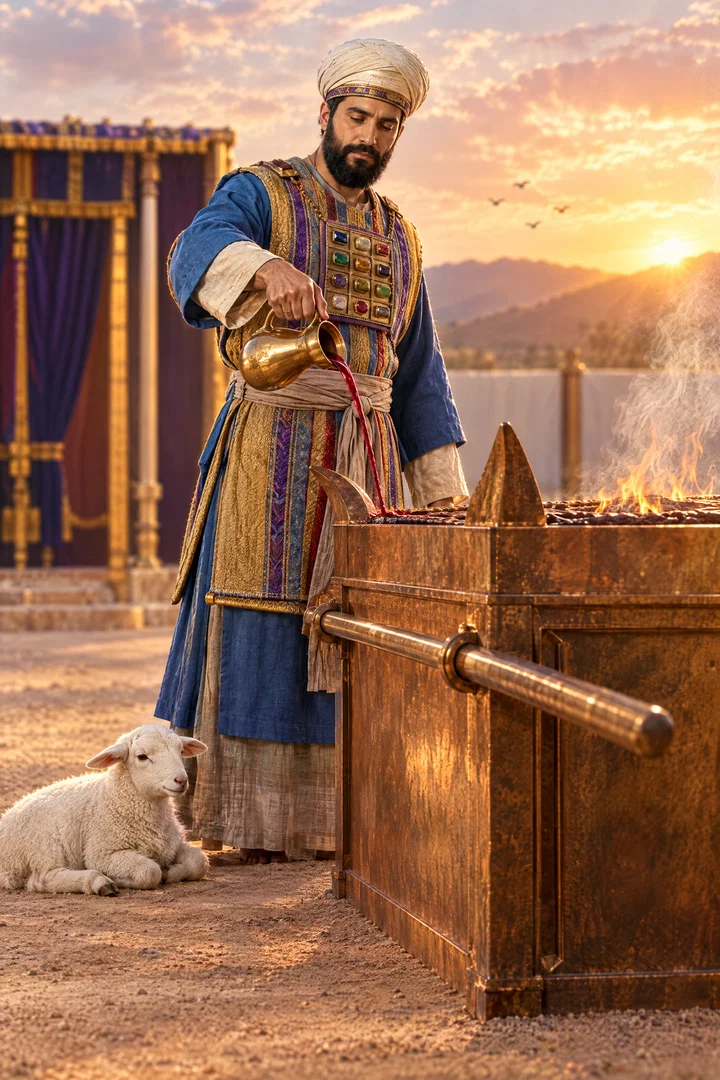
And thou shalt say unto them, This is the offering made by fire which ye shall offer unto the LORD; two lambs of the first year without spot day by day, for a continual burnt offering.
Translations
And you shall say to them, This is the offering made by fire which you shall offer to the LORD; two lambs of the first year without spot day by day, for a continual burnt offering.
And thou shalt say unto them, This is the offering made by fire which ye shall offer unto the LORD; two lambs of the first year without spot day by day, for a continual burnt offering.
And thou shalt say unto them, This is the offering made by fire which ye shall offer unto the Lord; two lambs of the first year without spot day by day, for a continual burnt offering.
And thou shalt say to them, This is the offering made by fire which ye shall offer to the LORD; two lambs of the first year without spot day by day, for a continual burnt-offering.
And thou shalt say unto them, This is the offering made by fire which ye shall offer unto the LORD; he-lambs of the first year without blemish, two day by day, for a continual burnt offering.
And thou shalt say unto them, This is the offering made by fire which ye shall offer unto Jehovah: he-lambs a year old without blemish, two day by day, for a continual burnt-offering.
'And thou hast said to them, This [is] the fire-offering which ye bring near to Jehovah: two lambs, sons of a year, perfect ones, daily, a continual burnt-offering;
And say unto them, This is the offering by fire which ye shall present to Jehovah: two yearling lambs without blemish, day by day, as a continual burnt-offering.
Therefore shalt thou say to them. This, is the altar-flame, which ye shall offer unto Yahweh,—he-lambs a year old, without defect, two daily, as a continual ascending-sacrifice.
And tell them that this is the offering made by fire you are to present to the LORD as a regular burnt offering each day: two unblemished year-old male lambs.
And tell them that this is the food offering you are to present to the LORD as a regular burnt offering each day: two unblemished year-old male lambs.
You shall tell them, ‘ This is the offering made by fire which you shall offer to the LORD: male lambs a year old without defect, two day by day, for a continual burnt offering.
Say to them, This is the offering made by fire which you are to give to the Lord; he-lambs of the first year without any mark, two every day as a regular burned offering.
Also thou shalt say vnto them, This is the offring made by fire which ye shall offer vnto the Lord, two lambes of a yeere olde without spot, daily, for a continuall burnt offring.
Douay-Rheims (Challoner revision)
These are the sacrifices which you shall offer: Two lambs of a year old without blemish every day for the perpetual holocaust:
Pictures
Cross-references
- Exodus 29:38-42
Now this is that which thou shalt offer upon the altar; two lambs of the first year day by day continually.
Both prescribe the regular morning and evening burnt offering.
- Numbers 28:9-10
And on the sabbath day two lambs of the first year without spot, and two tenth deals of flour for a meat offering, mingled with oil, and the drink offering thereof:
The Sabbath offering is additional to the continual daily offering.
- Numbers 29
And in the seventh month, on the first day of the month, ye shall have an holy convocation; ye shall do no servile work: it is a day of blowing the trumpets unto you.
Sets out additional offerings for the annual feasts, alongside the regular offerings.
- Hebrews 10:3-4
But in those sacrifices there is a remembrance again made of sins every year.
Sacrifices recalled sins but could not take them away, pointing to Christ’s death.
- 2 Chronicles 2:4
Behold, I build an house to the name of the LORD my God, to dedicate it to him, and to burn before him sweet incense, and for the continual shewbread, and for the burnt offerings morning and evening, on the sabbaths, and on the new moons, and on the solemn feasts of the LORD our God. This is an ordinance for ever to Israel.
Daily burnt offerings are part of regular service at the Temple.
- Romans 12:1
I beseech you therefore, brethren, by the mercies of God, that ye present your bodies a living sacrifice, holy, acceptable unto God, which is your reasonable service.
The daily lamb offering typified presenting oneself to God as a living sacrifice.
- Hebrews 8:4-5
For if he were on earth, he should not be a priest, seeing that there are priests that offer gifts according to the law:
Earthly sanctuary services follow the pattern of heavenly things.
- 1 Kings 18:36
And it came to pass at the time of the offering of the evening sacrifice, that Elijah the prophet came near, and said, LORD God of Abraham, Isaac, and of Israel, let it be known this day that thou art God in Israel, and that I am thy servant, and that I have done all these things at thy word.
Elijah’s prayer takes place at the time of the evening offering.
- Numbers 28:24
After this manner ye shall offer daily, throughout the seven days, the meat of the sacrifice made by fire, of a sweet savour unto the LORD: it shall be offered beside the continual burnt offering, and his drink offering.
Both describe offerings made alongside the continual burnt offering.
- Hebrews 10:14
For by one offering he hath perfected for ever them that are sanctified.
The passage contrasts the old sacrifices with Christ’s one offering.
- Numbers 28:23
Ye shall offer these beside the burnt offering in the morning, which is for a continual burnt offering.
Prescribes the daily lamb offering alongside the continual morning burnt offering.
- John 1:29
The next day John seeth Jesus coming unto him, and saith, Behold the Lamb of God, which taketh away the sin of the world.
Jesus is identified as the Lamb who takes away sin.
- Hebrews 9:23-26
It was therefore necessary that the patterns of things in the heavens should be purified with these; but the heavenly things themselves with better sacrifices than these.
Sanctuary cleansing and sacrifice point to Christ’s ministry and sacrifice.
- Leviticus 6:13
The fire shall ever be burning upon the altar; it shall never go out.
The altar fire is another element of the enduring service.
- Ezekiel 43:27
And when these days are expired, it shall be, that upon the eighth day, and so forward, the priests shall make your burnt offerings upon the altar, and your peace offerings; and I will accept you, saith the Lord GOD.
The altar is prepared before regular burnt offerings begin.
- Hebrews 9:11-12
But Christ being come an high priest of good things to come, by a greater and more perfect tabernacle, not made with hands, that is to say, not of this building;
Contrasts continual earthly ministry with Christ’s once-for-all priestly work.
- Numbers 4:7
And upon the table of shewbread they shall spread a cloth of blue, and put thereon the dishes, and the spoons, and the bowls, and covers to cover withal: and the continual bread shall be thereon:
Both describe something as continual in the sanctuary service.
- Leviticus 17:11
For the life of the flesh is in the blood: and I have given it to you upon the altar to make an atonement for your souls: for it is the blood that maketh an atonement for the soul.
Blood is given on the altar to make atonement for sin.
- Ezekiel 46:4
And the burnt offering that the prince shall offer unto the LORD in the sabbath day shall be six lambs without blemish, and a ram without blemish.
Describes the offerings made on the Sabbath.
Commentary
Each commentary is drawn from primary sources: the writings of Ellen G. White and Adventist pioneers and periodicals. Each commentary is separate. Its own words are not a quotation; follow the references to read the source passages.
Ellen G. White
3 sources
The law required two lambs in their first year and free from any defect to be presented day after day as an unbroken burnt offering to the Lord.ST Apr 17, 18844T 477.1 The lamb slain in the morning and again in the evening was a sign of the death the Saviour would undergo, for He was Himself the Lamb of God appointed to die for the sins of mankind.COS 32.1–2 Its never-ceasing repetition declared that gratitude and allegiance are due to God without end.4T 477.1
The morning and evening sacrifices establish the model for worship in the home, where the father offers the family's devotion to God and wife and children unite with him in prayer and praise.ST Apr 17, 1884 The same continual principle extends to earnings, requiring God's share to be separated first before any part is used for personal desires.4T 477.1 What is left after that first portion is set apart is blessed for use.4T 477.1
Sources
Pioneers and periodicals
32 sources
The verse commands two unblemished year-old lambs to be offered to the Lord every day, one in the morning and one in the evening, as a continual burnt offering with its grain offering of meal and oil and its drink offering poured in the holy place.RH Jan 26, 1905ST Oct 31, 1906RH Jan 22, 1914RH Sep 16, 1852ST Apr 2, 1912 It was offered for the whole congregation every day and never omitted, making atonement for sin committed by the people even when they did not know of it, and not as an individual offering over which personal sin was confessed.ST Oct 13, 1909ST Sep 6, 1910 This daily ministration in the first apartment was the first of the two grand divisions of the earthly service, distinct from the yearly work of cleansing the sanctuary, and was the shadow and pattern of Christ's ministry in the true heavenly tabernacle.RH Mar 8, 1870RH Mar 28, 1854RH Feb 25, 1858 The Sabbath offering was twice as great as the daily offering through the week, yet the priests performing this sanctuary service on the Sabbath were blameless, showing that work done for God and religious service on that day is not unlawful.ST Oct 31, 1906ST Nov 11, 1889ST Apr 2, 1912ST Sep 23, 1913 It kept the remembrance of sin before the people in repentance and faith in the coming Redeemer, typified daily consecration and complete dependence upon God in the merit of Christ, and marked the morning and evening hours of prayer as a pattern for regular household worship.RH Jan 26, 1905ST Apr 2, 1912RH Sep 12, 1871RH Feb 2, 1911ST Sep 12, 1900
Daily Offering Described
The command is for two lambs of the first year without spot to be offered by fire to the Lord day by day as a continual burnt offering, one lamb in the morning and one in the evening.RH Jan 26, 1905ST Oct 31, 1906RH Jan 22, 1914RH Sep 16, 1852ST Apr 2, 1912 The morning sacrifice and the afternoon or evening sacrifice together make the regular daily burnt offering appointed for every day through the week.ST Oct 31, 1906RH Jan 22, 1914RH Sep 16, 1852ST Apr 2, 1912ST Aug 30, 1905 On the Sabbath the offering was doubled, being twice as great as on other days, so that two lambs were offered instead of one and the service required twice as much labor.ST Oct 31, 1906ST Apr 2, 1912ST Aug 30, 1905 These daily sacrifices continued throughout the year, keeping the remembrance of sin before the people.ST Apr 2, 1912
Each lamb was accompanied by a grain or meat offering of meal and oil and by a drink offering.RH Jan 22, 1914RH Sep 16, 1852ST Apr 2, 1912 The grain was burned with the lamb, and the drink offering was poured out in the Holy Place.RH Sep 16, 1852 This provision for meal and oil with the morning and evening lamb belongs to the nation's daily sanctuary offering.RH Jan 22, 1914ST Apr 2, 1912
The two lambs day by day belong to the daily ministration carried on continually throughout the year in the holy place, the first apartment and first tabernacle of the earthly sanctuary.RH Feb 3, 1853RH Mar 8, 1870ST Oct 25, 1905ST That ministration was accomplished by the Levitical priesthood as part of the priests' continual ministry, including the regular morning and evening burnt offerings.RH Feb 3, 1853RH Mar 8, 1870RH Feb 25, 1858 This daily service is the first of the two grand divisions of the earthly ministration, distinct from the yearly work in the most holy place for the sins of the people and for the cleansing of the sanctuary.RH Mar 8, 1870RH Feb 25, 1858 The earthly ministration with its continual services was the example and shadow, pattern and figure of Christ's more excellent ministry in the true and heavenly tabernacle.RH Mar 8, 1870RH Mar 28, 1854ST Oct 13, 1909
The regular morning and evening sacrifices formed part of a continual round of general worship and general sanctuary offerings alongside additional offerings appointed for Sabbaths, annual sabbaths, new moons and feasts.RH Mar 28, 1854ST Nov 28, 1892RH Feb 25, 1858 With them stood the morning-evening burning of sweet incense and the particular work for individuals presenting offerings through the year.RH Feb 25, 1858ST Aug 26, 1913ST These daily sacrifices were distinct from the individual sin offerings through which penitents sought pardon.ST Nov 28, 1892 The morning and evening sacrifices were offered for the whole congregation every day and were never omitted because other offerings were made.ST Oct 13, 1909ST Sep 6, 1910
The appointed time of the regular daily evening sacrifice is the time of the offering of the evening oblation when Elijah prayed on Carmel.ST Jun 30, 1898 After the destruction of the dwelling-place that offering with its sacrifices and meat-offerings ceased and was discontinued, leaving no sin and trespass offering to make atonement and wash away filth and shame.ST May 27, 1897 In its place Jewish custom put fasting to diminish blood and fat in lieu of blood sprinkled on the altar, two supplications in lieu of the morning and evening lamb, and bowing the head and stretching out the neck in lieu of killing and receiving the blood.ST May 27, 1897
Sabbath Service Clarified
The Sabbath offering was twice as great as the daily offering through the week, for the regular daily pattern of one lamb in the morning and one in the evening for a continual burnt offering, with meal and oil, was doubled on the Sabbath so that the temple service required more service and twice as much labor on the Sabbath as on other days.ST Oct 31, 1906ST Nov 11, 1889ST Apr 2, 1912ST Sep 23, 1913ST Aug 30, 1905 This daily offering of two unblemished year-old lambs was part of the priests' service continued throughout the year, and the Sabbath included additional sacrifices with it.ST Apr 2, 1912ST Jan 31, 1911 In one account the pattern is stated as a lamb offered in the morning and evening, while two lambs were offered on the Sabbath instead of one.RH Feb 2, 1911
Priests performing sanctuary service on the Sabbath, including the continual burnt offering, were blameless because they worked for God and not for themselves.ST Oct 31, 1906ST Nov 11, 1889ST Sep 23, 1913 Therefore the Sabbath commandment does not forbid work done for God, and religious service on that day is not unlawful.ST Oct 31, 1906ST Nov 11, 1889ST Sep 23, 1913 With its additional sacrifices the Sabbath was a day of worship and service rather than idleness.ST Jan 31, 1911 The daily lambs did not make the days on which they were offered sacred nor change the Sabbath's character, and when the sacrifices ceased the days remained what they had been before.RH Jan 13, 1852 Holding the ordinances of feet-washing and the Lord's Supper on the Sabbath does not transgress God's command.ST Oct 31, 1906
Meaning For Worship Today
The daily sanctuary offering was one lamb with meal and oil in the morning and another in the evening, with the Sabbath offerings doubled, continuing throughout the year.ST Apr 2, 1912RH Feb 2, 1911 These daily sacrifices kept the remembrance of sin before the people and expressed repentance and faith in the coming Redeemer.ST Apr 2, 1912RH Feb 2, 1911 Together they looked forward to their future antitype.ST Apr 2, 1912
The morning and evening sacrifice was never omitted and made atonement for sin committed by the whole congregation even when they did not know of it.ST Sep 6, 1910 It was not an individual offering over which any Israelite confessed personal sin, but the priest alone handled it.ST Sep 6, 1910 This daily offering typified daily consecration, presenting oneself to God as a living sacrifice.RH Jan 26, 1905 The morning and evening sacrifices represented renewed consecration to God offered in the merit of Christ, whose life implanted in the people makes them able to offer their lives to God, expressing complete dependence upon him.ST Sep 12, 1900ST Apr 1, 1913
As a continual sacrifice offered morning and evening, it illustrates that surrender to God is a daily act and not a once-for-all decision.RH Oct 23, 1913 That daily surrender is applied to offering the body as a living sacrifice through self-denial.RH Oct 23, 1913 The daily sacrifice marked the morning and evening hours of prayer, when the people prayed while the priests offered sacrifices and incense on their behalf.RH Sep 12, 1871
The daily morning and evening sacrifices serve as a pattern for household worship in which the father presents the family's worship to God while wife and children join in prayer and praise morning and evening.ST Apr 17, 1884 Students' morning and evening worship is equally regular as that continual offering.ST Aug 16, 1883 The daily church services are compared to the slaying and offering of the lambs, and presenting the symbols of Christ's body and blood signifies that worship is offered to God only in reliance on Christ's sacrifice.RH Apr 17, 1879
The morning and evening lambs are part of the continual service of worship.ST Mar 12, 1912 The daily sacrifice is one example of what is permanent in temple worship, but the broader idea of the continual service also includes other enduring acts of worship.ST Mar 12, 1912 The church laws regulating Israel's assembling and worship are not binding as laws today, though their underlying principles remain.RH Nov 12, 1908
Sources