Hebrews 9:11
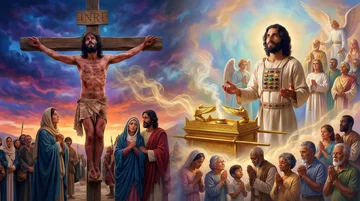
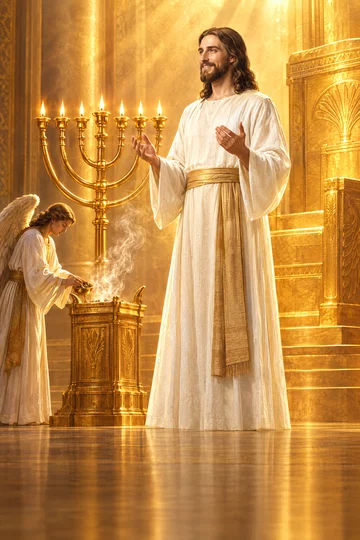
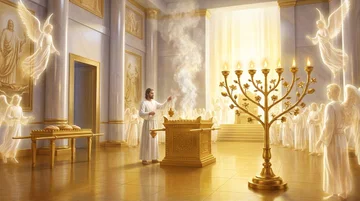
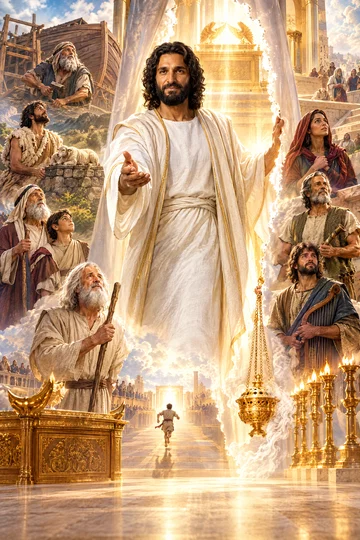
But Christ being come an high priest of good things to come, by a greater and more perfect tabernacle, not made with hands, that is to say, not of this building;
Translations
American King James Version, King James Version
But Christ being come an high priest of good things to come, by a greater and more perfect tabernacle, not made with hands, that is to say, not of this building;
But Christ being come a high priest of good things to come, by a greater and more perfect tabernacle, not made with hands, that is to say, not of this building,
But Christ being come a high priest of good things to come, by a greater and more perfect tabernacle, not made with hands, that is to say, not of this building;
Revised Version, American Standard Version
But Christ having come a high priest of the good things to come, through the greater and more perfect tabernacle, not made with hands, that is to say, not of this creation,
And Christ being come, chief priest of the coming good things, through the greater and more perfect tabernacle not made with hands — that is, not of this creation —
But Christ being come high priest of the good things to come, by the better and more perfect tabernacle not made with hand, ( that is, not of this creation,)
But, when Christ approached, as high-priest of the coming good things, through the greater and more perfect tent, not made by hand, that is, not of this creation,—
But when Christ came as high priest of the good things that have come, He went through the greater and more perfect tabernacle that is not made by hands and is not a part of this creation.
But when Christ came as high priest of the good things to come, He went through the greater and more perfect tabernacle that is not made by hands and is not a part of this creation.
But Christ having come as a high priest of the coming good things, through the greater and more perfect tabernacle, not made with hands, that is to say, not of this creation,
But now Christ has come as the high priest of the good things of the future, through this greater and better Tent, not made with hands, that is to say, not of this world,
But Christ being come an high Priest of good things to come, by a greater and a more perfect Tabernacle, not made with handes, that is, not of this building,
Douay-Rheims (Challoner revision)
But Christ, being come an high priest of the good things to come, by a greater and more perfect tabernacle not made with hand, that is, not of this creation:
Pictures
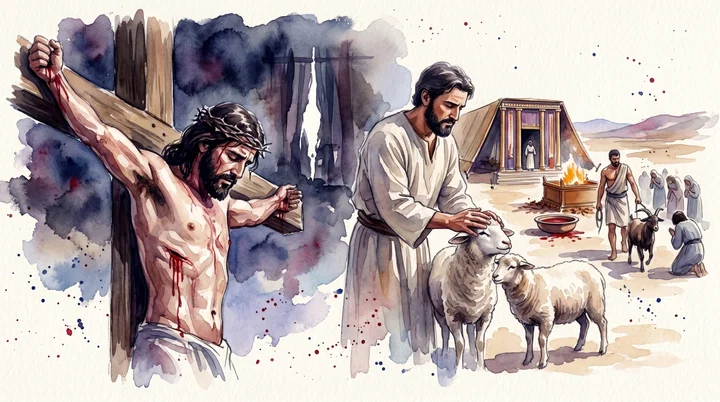
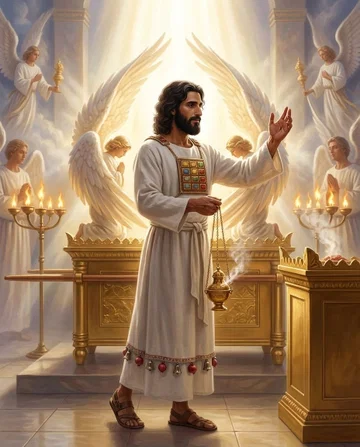
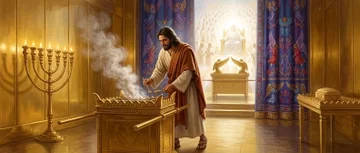
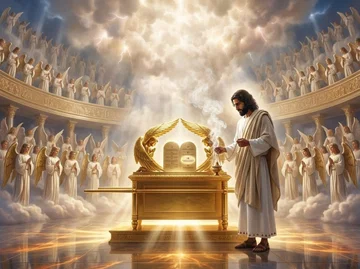
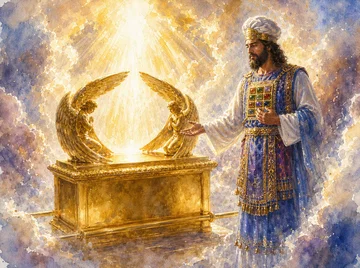
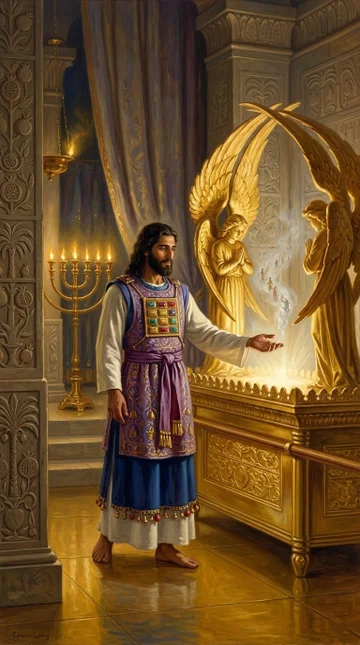
Cross-references 20 of 134
- Hebrews 8:1-2
Now of the things which we have spoken this is the sum: We have such an high priest, who is set on the right hand of the throne of the Majesty in the heavens;
Christ serves as High Priest in the true heavenly tabernacle.
- Hebrews 9:24
For Christ is not entered into the holy places made with hands, which are the figures of the true; but into heaven itself, now to appear in the presence of God for us:
Christ enters heaven itself to appear in God’s presence for us.
- Hebrews 10:1-14
For the law having a shadow of good things to come, and not the very image of the things, can never with those sacrifices which they offered year by year continually make the comers thereunto perfect.
The law’s sacrifices foreshadow good things to come, fulfilled by Christ’s once-for-all offering.
- Leviticus 16:15-16
Then shall he kill the goat of the sin offering, that is for the people, and bring his blood within the vail, and do with that blood as he did with the blood of the bullock, and sprinkle it upon the mercy seat, and before the mercy seat:
The high priest’s blood cleanses the earthly sanctuary, typifying Christ’s work.
- Hebrews 8:5
Who serve unto the example and shadow of heavenly things, as Moses was admonished of God when he was about to make the tabernacle: for, See, saith he, that thou make all things according to the pattern shewed to thee in the mount.
Earthly priestly service is a pattern and shadow of heavenly things.
- Revelation 11:19
And the temple of God was opened in heaven, and there was seen in his temple the ark of his testament: and there were lightnings, and voices, and thunderings, and an earthquake, and great hail.
Shows the heavenly temple and the ark of God’s testament.
- Hebrews 7:25
Wherefore he is able also to save them to the uttermost that come unto God by him, seeing he ever liveth to make intercession for them.
Christ lives continually to intercede and save those who come to God through him.
- Hebrews 9:23
It was therefore necessary that the patterns of things in the heavens should be purified with these; but the heavenly things themselves with better sacrifices than these.
Earthly sanctuary patterns are cleansed with animal blood, but heavenly things require Christ’s better sacrifice.
- Hebrews 9:1-7
Then verily the first covenant had also ordinances of divine service, and a worldly sanctuary.
Contrasts the first covenant’s earthly sanctuary and priestly service with Christ’s heavenly ministry.
- Exodus 25:40
And look that thou make them after their pattern, which was shewed thee in the mount.
Moses was instructed to make the earthly sanctuary according to the heavenly pattern shown him.
- Colossians 2:17
Which are a shadow of things to come; but the body is of Christ.
Ceremonial observances were shadows whose substance is Christ.
- Hebrews 10:10-14
By the which will we are sanctified through the offering of the body of Jesus Christ once for all.
Christ’s one offering accomplishes what repeated sacrifices could not.
- Exodus 25:8-9
And let them make me a sanctuary; that I may dwell among them.
The earthly sanctuary was made according to a pattern of God’s true sanctuary.
- Revelation 8:3
And another angel came and stood at the altar, having a golden censer; and there was given unto him much incense, that he should offer it with the prayers of all saints upon the golden altar which was before the throne.
The golden altar and incense show ministry in the heavenly sanctuary.
- Hebrews 10:4
For it is not possible that the blood of bulls and of goats should take away sins.
Animal blood cannot take away sins, unlike Christ’s effective offering.
- Hebrews 9:26
For then must he often have suffered since the foundation of the world: but now once in the end of the world hath he appeared to put away sin by the sacrifice of himself.
Christ puts away sin through his once-for-all self-sacrifice.
- Matthew 27:51
And, behold, the veil of the temple was rent in twain from the top to the bottom; and the earth did quake, and the rocks rent;
The torn temple veil marked the end of the earthly sanctuary’s services.
- Leviticus 16:29-30
And this shall be a statute for ever unto you: that in the seventh month, on the tenth day of the month, ye shall afflict your souls, and do no work at all, whether it be one of your own country, or a stranger that sojourneth among you:
earthly cleansing typifies heavenly entry
- Hebrews 8:6
But now hath he obtained a more excellent ministry, by how much also he is the mediator of a better covenant, which was established upon better promises.
Christ mediates the better covenant through his more excellent ministry.
- Leviticus 16:20-22
And when he hath made an end of reconciling the holy place, and the tabernacle of the congregation, and the altar, he shall bring the live goat:
The live goat bears Israel’s sins away after the sanctuary service, foreshadowing Christ’s work.
Commentary part 1 of 2
Each commentary is drawn from primary sources: the writings of Ellen G. White and Adventist pioneers and periodicals. Each commentary is separate. Its own words are not a quotation; follow the references to read the source passages.
Ellen G. White
48 sources
Christ has come as High Priest of the good things to come, ministering in heaven for humanity after offering His own life as the once-for-all atonement.DA 165.5–166.3ST Aug 4, 1909Lt 62, 1907, par. 5–6 The greater and more perfect tabernacle not made with hands is the true heavenly sanctuary made by God, with its Holy Place and Most Holy Place, not of this earthly building or order.DA 165.5–166.3ST Aug 4, 1909WLF 18.3–4SG1 160.1EW 214.2–215.1 The earthly sanctuary, priesthood and animal sacrifices were only types and shadows pointing to Him, and when He died as the perfect Offering type met antitype so that the veil was torn and those sacrifices lost all value.DA 165.5–166.3ST Aug 4, 1909Lt 128, 1909, par. 12SG1 160.1 By His own blood He entered the holy place once and obtained eternal redemption, for His sinless, voluntary offering alone satisfies the law, purges the conscience from dead works, and reconciles repentant sinners to God at the mercy seat where justice and mercy unite.DA 165.5–166.3ST Aug 4, 1909Lt 62, 1907, par. 5–62SP 10.3–11.1RH Dec 17, 1872 At the close of the 2300 days in 1844 He entered the most holy place of the heavenly sanctuary for the closing work of atonement, the antitypical Day of Atonement and investigative judgment in which the sins of His faithful people are blotted out.ST May 17, 1883SG1 161.1EW 206.14SP 499.3–500.1GC 433.1–434.1 Through Him believers may now by faith enter the true tabernacle and approach God, confessing and repenting of sin while He pleads His blood for them, living in holiness, obedience and unity until the work is finished.Lt 62, 1907, par. 5–6ST May 17, 1883ST Oct 7, 19134SP 271.27MR 93.3–94.2
The Greater Tabernacle
The greater and more perfect tabernacle not made with hands is the true heavenly sanctuary and temple, made by God and not of this earthly building or order.DA 165.5–166.3ST Aug 4, 1909SG1 160.1EW 214.2–215.110MR 157.2–3 Through His death and resurrection Christ has come as High Priest of good things to come to minister there, and unlike mortal earthly priests He is priest forever.DA 165.5–166.3ST Aug 4, 1909SG1 160.1 The earthly tabernacle and temple with their sacrificial services and priesthood were types and figures of that sanctuary, pointing forward to Christ and teaching Israel to look to the coming Saviour.DA 165.5–166.3ST Aug 4, 1909SG1 160.1 When He came as the true sacrifice for the sins of the world, the earthly priesthood and its services gave way and passed away before His ministry.DA 165.5–166.3ST Aug 4, 1909 By offering His own blood He entered the holy place once and obtained eternal redemption.DA 165.5–166.3ST Aug 4, 1909SG1 160.1EW 214.2–215.1
That heavenly sanctuary has two apartments, the Holy Place and the Most Holy Place, the first and the second apartment within the second veil.WLF 18.3–4EW 214.2–215.1EW 213.1 Christ ministers in both apartments in priestly garments, offering the saints' prayers to the Father with incense.WLF 18.3–4EW 214.2–215.1 His work has distinct stages, for when He entered the holy of holies for the closing work of atonement His ministration in the first apartment ended and His ministration in the second began, while He continued to present His blood before the Father for repentant sinners.EW 213.1GC 428.3 At the close of the prophetic periods, at the end of the 2300 days in 1844, He passed within the second veil and entered the second apartment to begin the investigative judgment and make the final atonement to cleanse the sanctuary.ST May 17, 1883EW 214.2–215.1EW 213.1
The first earthly tabernacle was built according to God's directions and blessed by Him, and its careful preparation and assembly illustrate preparation for the heavenly temple.Ms 49, 1886, par. 6 It was a pattern that prepared God's people to worship in that real temple not made with human hands where they are preparing to worship.Ms 49, 1886, par. 63MR 231.3–232.2 God is now fitting His people for a place there, and like stones prepared for Solomon's Temple probationers must have the roughness of defective character removed and become living stones reflecting Christ.3MR 231.3–232.2 Their hearts must be brought into harmony with God's plans, for merely joining worshipers is not enough.3MR 231.3–232.2
Christ the High Priest
Christ has come as High Priest of good things to come by entering the greater and more perfect tabernacle not made with hands, ministering in the true heavenly sanctuary after offering His own life as the once-for-all atonement for sin.DA 165.5–166.3ST Aug 4, 1909AA 246.2–247.1 Through His death and resurrection He became the minister of that heavenly sanctuary, of which the earthly tabernacle and temple with their sacrificial services were types pointing to Him.DA 165.5–166.3ST Aug 4, 1909SG1 169.1 Having risen from the dead and ascended to heaven, He entered the holy place once by His own blood and obtained eternal redemption, and the earthly priesthood and its services gave way to His ministry.DA 165.5–166.3ST Aug 4, 1909Ms 69, 1912, par. 46–47 His blood, offered without spot to God through the eternal Spirit, does far more than the blood of bulls and goats and the ashes of a heifer for purifying the flesh, purging the conscience from dead works to serve the living God.Lt 62, 1907, par. 5–6 At Pentecost the Holy Spirit directed minds to this heavenly sanctuary, while those who rejected His first advent missed this light and could not benefit from His mediation.SG1 169.1
He is mankind's great High Priest, the true Sacrifice to whom the eyes of the world are turned from earthly types, and unlike mortal earthly priests who entered with animal blood He entered by offering His own blood and serves as priest forever.Lt 128, 1909, par. 12AA 246.2–247.1SG1 160.1 With His death the earthly priesthood ceased and the sacrificial service that pointed to Him passed away, and He ministers in both apartments of the heavenly sanctuary, entering its most holy place at the end of the 2300 days in 1844 to make the final atonement and cleanse the sanctuary.Lt 128, 1909, par. 12EW 214.2–215.1 Appointed by God, He humbled Himself in human flesh to represent humanity in heaven, and through suffering and death as Sin-bearer opened a new and living way to serve forever as High Priest for the whole world.12MR 399.2–400.1 Still bearing humanity, He ascended as the victorious Priest, the Man whose name is the Branch who bears the glory and sits and rules as priest upon His throne.Lt 128, 1909, par. 12ST Apr 19, 1905
In that ministry He first entered the holy place and through His own sacrifice presented His people's prayers, repentance, and faith before God, purified by His merits and made acceptable through His sacrifice.Ms 69, 1912, par. 46–4710MR 157.2–311MR 54.1–2 In the heavenly temple of the Holy Place and the Holy of Holies He offers the saints' prayers to the Father with incense.WLF 18.3–4 His work has distinct stages: when He entered the holy of holies for the closing work of atonement His ministration in the first apartment ended and His ministration in the second began, having completed one part of His work as intercessor.GC 428.3 Yet He continued to present His blood before the Father for repentant sinners, and in 1844 He entered the most holy place to begin the closing work of atonement, pleading His blood for sinners before the ark of God's enduring law.GC 428.3GC 433.1–434.1
Having taken His own atoning blood into heaven's holiest place, into the heavenly Most Holy Place, He sprinkled it on the mercy seat and on His own garments and blessed His people.ST Apr 19, 1905Lt 90, 1898, par. 30 His humanity, hidden in sorrow during His earthly life, will appear in glory when He descends from heaven.Lt 90, 1898, par. 30 At His second appearing in glory, at His second coming, He will declare that no further sacrifice for sin is needed.ST Apr 19, 1905Lt 90, 1898, par. 30
Type Meets Antitype
The earthly sanctuary with its priesthood and animal sacrifices was a system of types and shadows pointing forward to Christ, His crucifixion, and His priestly ministry in a greater heavenly sanctuary.DA 165.5–166.3ST Aug 4, 1909SLP 103.2–104.1 Those earthly tabernacle and temple services were figures given to teach Israel to look forward to the Saviour, keeping faith alive in the coming Redeemer and helping people understand His work.DA 165.5–166.3ST Aug 4, 1909SG1 160.1 They taught the great lesson that sin had separated humanity from God and that access to Him required a mediator.2SP 10.3–11.1RH Dec 17, 1872 Unlike the mortal earthly priests, Christ came through death and resurrection as the promised Messiah, the true and eternal High Priest and Mediator, the reality to which the Jewish rites pointed.DA 165.5–166.3ST Aug 4, 1909SG1 160.1SLP 103.2–104.1 By His own blood He entered the holy place once and obtained eternal redemption, and through Him the separation caused by Adam's transgression was overcome so guilty sinners could approach God and have communication with Him restored.DA 165.5–166.3ST Aug 4, 19092SP 10.3–11.1RH Dec 17, 1872
When Christ died as the perfect Offering, type met antitype and its fulfillment.ST Apr 8, 18752SP 122.2–123.2 The temple veil was torn, signifying that the sacrificial system had ended because the one final sacrifice had been made.2SP 122.2–123.2 With His death the earthly priesthood ceased, the sacrificial service that pointed to Him passed away, and animal sacrifices and ceremonial offerings became valueless and could no longer provide access to God.Lt 128, 1909, par. 12GC88 430.2–3ST Apr 8, 18752SP 122.2–123.2 The eyes of the world are thus turned from earthly types to Him as the true Sacrifice, the Man whose name is the Branch who bears the glory and sits and rules as priest upon His throne, ministering in the greater and more perfect heavenly dwelling.Lt 128, 1909, par. 12 At His ascension He entered by His own blood to bring the blessings of His mediation, and His heavenly ministry replaced the earthly service of types and shadows.DA 165.5–166.3ST Aug 4, 1909GC88 430.2–3
The blood of beasts could not satisfy the demands of God in atoning for transgression of His perfect law, because the life of a beast is of less value than the life of the offending sinner and therefore could not be a ransom for sin.LC1 4.1 The Jewish sacrifices and ceremonies had no saving virtue and no power to save apart from Him, continuing only until His perfect offering took their place.2SP 10.3–11.1RH Dec 17, 1872 They were acceptable with God only as figures representing the perfect Offering.2SP 10.3–11.1LC1 4.1 That Offering was Christ Himself, voluntarily offered, perfect and sinless and of infinite worth, meeting the demands of God's law and opening the way for guilty sinners.2SP 10.3–11.1RH Dec 17, 1872
Blood and Eternal Redemption
By His own blood Christ entered the holy place once and obtained eternal redemption, for through His death and resurrection He became the minister of the true heavenly sanctuary and the true sacrifice for the sins of the world, so that the earthly sacrificial service and priesthood passed away.DA 165.5–166.3ST Aug 4, 1909Lt 62, 1907, par. 5–6 Blood is sacred and must be kept distinct from what is common, because atonement comes only through the shedding of the blood of the Son of God, and the cleansing of the sanctuary with blood pointed to Christ's blood alone as cleansing from sin.ST Jul 15, 1880 His blood, offered without spot to God through the eternal Spirit, does far more than the blood of bulls and goats and the ashes of a heifer for purifying the flesh, purging the conscience from dead works to serve the living God.Lt 62, 1907, par. 5–6
Christ is Himself both High Priest and victim, clothed in His own spotless robes of righteousness, and after shedding His precious blood on Calvary outside the city He enters into the holy place to cleanse the sanctuary.4T 121.2–122.14MR 243.3 His self-emptying in taking the form of a servant is pictured by the high priest laying aside his splendid robes to serve in the plain linen clothing of a common priest, and His sacrifice exposed Satan's character and made his destruction unavoidable.18MR 362.1–3 His offering is cast as a crimson current in the direction of the Holy Place for the service of reconciling God to man, fulfilling the type in which the high priest clothed in white caught the blood of the slain sacrifice and cast it seven times toward the tabernacle or temple as an expression of perfection.4MR 243.3 That same work is fulfilled in the red heifer slain without the camp and burned to ashes as a whole and ample sacrifice, a divinely commanded ceremony with deep significance that has not lost its application to the present time.4T 121.2–122.1
As Sin-bearer, substitute, and surety He bore the punishment for sin so that through faith sins may be pardoned and sinners may return to allegiance to God, and by His suffering and death He opened a new and living way and entered the holy place to serve forever as High Priest for the whole world.12MR 399.2–400.1Lt 60, 1895, par. 6–7 His sacrifice satisfies justice and vindicates the honor of God's law, making Him the only hope of salvation and the means of reconciliation with God.Lt 60, 1895, par. 6–7 At the mercy seat over the law God's justice and mercy unite, so that God can justly forgive and justify the repentant sinner, renew humanity's relationship with Him, and clothe the redeemed in Christ's righteousness.GC88 415.2
Through His mediation the separation caused by Adam's transgression is overcome and the way is opened for guilty sinners to approach God.2SP 10.3–11.1RH Dec 17, 1872 By voluntarily offering Himself as the perfect and sinless sacrifice, He restores the communication with God that Adam's transgression had cut off.2SP 10.3–11.1RH Dec 17, 1872
The 1844 Cleansing Judgment
At the close of the prophetic periods, at the end of the 2300 days, on the tenth day of the seventh month in 1844, Christ as High Priest of the greater and more perfect sanctuary entered its most holy place to cleanse the sanctuary and make the final atonement.ST May 17, 1883SG1 161.1EW 206.1EW 214.2–215.1EW 213.1 What the Day of Atonement type led believers to expect was thus accomplished in heaven, for He ended His ministration in the first apartment and passed within the second veil into the second apartment in priestly garments.EW 214.2–215.1EW 213.1LS 116.1 His ministry there is that of the enduring High Priest who entered not with animal blood but by His own blood, ministering in both apartments for those who can benefit from His mediation.SG1 161.1EW 214.2–215.1
The sanctuary so cleansed is in heaven, not the earth, and its cleansing is not the earth's purification by fire.EW 206.116MR 177.3 The event was not Christ's visible return and not the end of the world, but His entering the most holy place of the heavenly sanctuary to finish the atonement for human sin.LS 116.116MR 177.3LS 204.1–3
His work has distinct stages: after rising and ascending He first entered the holy place, presenting His people's prayers, repentance, and faith before God purified by His merits through His own sacrifice.Ms 69, 1912, par. 46–4710MR 157.2–311MR 54.1–2 Then His ministration in the first apartment ended and His ministration in the second began for the closing work of atonement, completing one part of His work as intercessor while He continued to present His blood before the Father for repentant sinners.Ms 69, 1912, par. 46–4710MR 157.2–3GC 428.3 In 1844 He entered the most holy place to begin that closing work, pleading His blood for sinners before the ark of God's enduring law, and this final atonement completes the divine plan of redemption and cleanses the sanctuary.11MR 54.1–2GC 428.3GC 433.1–434.1
That closing ministry is the antitypical Day of Atonement and the investigative judgment, in which the sins of His faithful people from Abel onward are atoned for and blotted out.ST May 17, 18834SP 499.3–500.1GC 433.1–434.1 It began in 1844 with the review of the cases of the righteous dead, beginning with the dead, before judgment passes to the living.ST May 17, 188316MR 177.3
Living by His Ministry
Through Christ believers may by faith enter the true tabernacle and approach God, with Christ as their Head and themselves as His household, for His ministry takes place in a greater and more perfect sanctuary not made by human hands and not belonging to this earthly order.7MR 93.3–94.2 After 1844 He entered upon another work of ministration there, and following Him by faith led believers to understand the closing work of the church and to give the third angel's warning.4SP 271.2
While He pleads, each person must confess and repent of sin as Israel did on the earthly Day of Atonement, so that sin may be atoned for and blotted out, for in 1844 He entered the most holy place of the heavenly sanctuary to begin the investigative judgment, reviewing the cases of the righteous dead before judgment is pronounced on the living.ST May 17, 1883 That service also teaches duty, for the sacrifices to be accepted and God's presence to remain, those serving had to maintain holiness of heart, purity of life, reverence for God, and obedience to His requirements, since the sacrifices prefigured His sacrifice and kept faith alive in the coming Redeemer while teaching the plan of salvation.ST Oct 7, 1913
At Pentecost the Holy Spirit directed the disciples' minds to this heavenly Sanctuary where Christ entered as High Priest after offering Himself as the great Sacrifice, whose atonement brings its benefits to His people when the earthly sanctuary and its sacrifices gave way to the heavenly ministry.SG1 169.1 The first and second angels' messages, followed by the midnight cry, were to prepare people to enter by faith with Jesus into the most holy place.EW 221.1 Those who rejected Jesus' first advent and the message preparing the way for Him, and those who rejected these messages, missed and lost this light about His ministry there and could not benefit from His mediation and intercession, directing their prayers to the wrong place like worshipers offering sacrifices to the sanctuary Jesus had left, like offerings to a forsaken sanctuary.SG1 169.1EW 221.1
Understanding His position and work, involving atoning sacrifice and mediation for humanity, is essential to exercising faith and sharing in the benefits of His mediation, which calls for earnest study of the truth and a life devoted to holiness.4SP 312.2–3 The sanctuary question is an important truth identifying His ministration with the heavenly sanctuary and its holy place, and understanding it rightly matters.4MR 249.1–2 It gives a clear conception of sanctuary truth about heavenly things, instruction given by the Holy Spirit for the last days to be repeated to God's people.Ms 75, 1905, par. 4
His present work is now in the sanctuary as interceding High Priest, making an atoning sacrifice and pleading in behalf of His people the efficacy of His blood.STE 227.1 This present priestly work is to be represented to children and youth to establish in their minds the plan of salvation.STE 227.1 By His own blood He entered once into the holy place to obtain eternal redemption, and His blood offered without spot to God through the eternal Spirit does far more than the blood of bulls and goats and the ashes of a heifer for purifying the flesh, purging the conscience from dead works to serve the living God, which is the converting power that subdues faultfinding and makes believers of one mind and usable in His work.Lt 62, 1907, par. 5–6
God is fitting His people for a place in the real heavenly temple not made with human hands, for the first tabernacle built according to God's directions prepared the people to worship in that heavenly temple.3MR 231.3–232.2 Like stones prepared for Solomon's Temple, probationers must have the roughness of defective character removed and become living stones that reflect Christ.3MR 231.3–232.2 Their hearts must be brought into harmony with God's plans, for merely joining worshipers is not enough.3MR 231.3–232.2
Sources
Pioneers and periodicals
318 sources
The greater and more perfect tabernacle not made with hands is the true, real, literal heavenly sanctuary pitched by the Lord and not man.RH Nov 11, 1909ST Jun 19, 1907RH Sep 30, 1852 The earthly tabernacle with its two apartments, priesthood, sacrifices and services was its genuine figure, shadow, type, pattern and parable, pointing forward to Christ and his mediatorial work but unable in itself to take away sins.ST Jun 19, 1907LDT 179.2ST Feb 7, 1906 Christ has come as High Priest of good things to come, and by his own blood rather than the blood of animals he entered heaven itself once for all to appear before the Father and obtain eternal redemption.RH Sep 30, 1852RH Jul 18, 1854RH Aug 22, 1854RH Dec 3, 1867RH Dec 21, 1869 After ascending he began his priestly work in the first apartment of the heavenly sanctuary, and in 1844 at the end of the 2,300 days he advanced to the most holy place to begin the antitypical Day of Atonement.ST Jan 3, 1911RH Jan 1851RH Mar 8, 1870ST Dec 24, 1894ST Sep 21, 1915 That closing work is the cleansing of the heavenly sanctuary with his better blood, the final blotting out of confessed sins in the investigative judgment before he comes again.ST Apr 2, 1912RH Apr 5, 1864ST Dec 12, 1916RH Mar 10, 1874
Greater Tabernacle Identified
The greater and more perfect tabernacle not made with hands, not of this building or creation, is the true, real, literal heavenly sanctuary, temple and tabernacle pitched by the Lord and not man, the Father's house and God's holy habitation, not a human-made earthly structure.RH Nov 11, 1909ST Jun 19, 1907RH Sep 30, 1852LDT 179.2RH Jul 18, 1854 Christ has come as High Priest of the good things to come, holy heavenly realities in heaven itself, and ministers through that greater perfect heavenly tabernacle by his own blood once for all to obtain eternal redemption and mediate the new covenant with remission that animal sacrifices could not give.RH Nov 11, 1909ST Jun 19, 1907RH Sep 30, 1852RH Jul 18, 1854ST May 29, 1901 The earthly tabernacle and its services in two apartments with their varied services are a genuine figure, shadow, pattern and copy prefiguring his actual work as High Priest, and the verse is read in light of those two apartments as concerning his high-priestly work in both rather than only a special ministry in the most holy place from the ascension.RH Nov 11, 1909ST Jun 19, 1907RH Sep 30, 1852LDT 179.2ST May 29, 1901
The sanctuary now being cleansed is that greater heavenly tabernacle, not the people of God, not the earth or any part of it, and not the restoration of the Jewish people to favor.RH Dec 11, 1855ST Sep 21, 1915ST Apr 1, 1875RH Jun 20, 1854ST Feb 26, 1880 The earth is not that sanctuary and is not sacred, having been under Satan and death since the fall, so the cleansing of the 2300 days is not the earth to be cleansed by the fires of the last day but Christ's heavenly ministry applying the saving value of his own life, removing his people's sins in the judgment that determines who belongs to God and began in 1844 before the resurrection.ST Sep 21, 1915RH Aug 28, 1853ST Apr 1, 1875RH Jun 20, 1854ST Feb 26, 1880 The heavenly tabernacle corresponds to the two holy places of the earthly pattern, yet the verse does not establish that Christ began ministering in both heavenly apartments at the same time.RH Nov 11, 1909RH Sep 30, 1852RH Aug 28, 1853
The true tabernacle in heaven which the Lord pitched is heaven itself, distinct from the holy places made with hands which are only figures of the true.ST Oct 25, 1883 There Christ ministers as High Priest making atonement by purifying or cleansing the heavenly sanctuary from sin, while the work of earthly priests in the earthly tabernacle serves unto the shadow and example of that heavenly ministry.ST Oct 25, 1883
Those who held a different identification taught that the greater and more perfect tabernacle consists of earth and heaven with a veil between them.RH Jan 24, 1856 On that understanding earth is the first room or sanctuary, the downtrodden place of worship and offering wherever the host worships from a sincere heart, where Christ after the order of the daily ministration offered himself a sacrifice for sins once for all.RH Jan 24, 1856 Heaven itself is the second room or holy of holies containing the mercy seat, into which Christ has gone within the veil to carry and present his own blood, and the cleansing is the earthly sanctuary thus trodden under foot by wicked kingdoms and governments being cleansed of those oppressing powers and restored to Christ and his rightful heirs.RH Jan 24, 1856
The greater and more perfect tabernacle is Christ himself come in the flesh as the meeting place between God and humanity, the foundation and builder of the true temple which is his church and body, through whom fallen humanity may become God's temple.ST May 7, 1902ST May 14, 1902ST May 14, 1902ST May 7, 1902 The earthly tabernacle and its services, with patriarchal altars before them, pointed to his mediatorship and incarnation and provided salvation in the present, while prophesying the divine-human temple in which God's glory would be revealed.ST May 7, 1902ST May 14, 1902ST May 14, 1902ST May 7, 1902 Through his divine-human life and ministry in human flesh, not a structure made by human hands, he lived God's law for humanity and made its life-giving power available within the heart to save from sin.ST May 7, 1902ST May 14, 1902ST May 14, 1902 The same Greek word rendered building in the verse is rendered creature in 1 Timothy 4:4.RH Nov 17, 1874
Earthly Sanctuary Foreshadowed
The earthly tabernacle and temple with its priesthood, sacrifices, ordinances and services in both apartments were a genuine figure, shadow, type, pattern, example, copy, object-lesson and parable of the heavenly sanctuary and of Christ's mediatorial work, pointing forward to him and instructing about him.ST Jun 19, 1907LDT 179.2ST Feb 7, 1906ST Oct 22, 1874RH Aug 28, 1853 Earthly things could not fully represent heavenly realities and could not take away sins, but prefigured his actual work as High Priest in the greater and more perfect tabernacle in heaven made by God and not by human hands, bringing the good things to come.ST Jun 19, 1907LDT 179.2ST Feb 7, 1906ST Oct 22, 1874RH Mar 28, 1854 Through the earthly patterns people looked forward to the coming Saviour, while believers are taught to look to his continuing ministry in heaven by his own blood.ST Jun 19, 1907LDT 179.2RH Mar 28, 1854
The verse belongs to Paul's discussion of the covenants showing the superiority of the new covenant mediated by Jesus and ratified by his death over the old.ST Jun 4, 1902ST Mar 29, 1883 It plainly states the meaning of the extraordinary arrangement of the sanctuary and its services, what the building itself teaches, what its priests served unto, and what its continual sacrifices pointed forward to.ST Jan 16, 1907RH Nov 3, 1863 Chapters eight and nine present the sanctuary and its cleansing concisely without contradicting the Old Testament at length, describing the earthly sanctuary and ark and the relation of old and new dispensations that Jewish converts knew but did not always apply.ST Jun 4, 1902ST Jan 16, 1907RH Nov 3, 1863ST Mar 29, 1883
The sanctuary where earthly priests ministered had two apartments whose furnishings, services and order indicate the order of Christ's ministry.RH Nov 11, 1909RH Sep 21, 1905RH Sep 30, 1852ST Oct 22, 1874RH Aug 28, 1853 The first apartment contained the seven-branched golden candlestick, the table for the showbread, and the altar of incense.RH Nov 11, 1909RH Sep 21, 1905RH Sep 30, 1852 The second apartment contained the gold-overlaid ark of the covenant holding the two tables of stone with the ten commandments, where priests offered blood for themselves and for the errors of the people.RH Nov 11, 1909RH Sep 21, 1905 The sanctuary so described includes Solomon's temple and Zerubbabel's rebuilt temple continuing the same first-covenant pattern, in contrast to the greater perfect tabernacle not made with hands and not of this building.RH Sep 30, 1852RH Jul 7, 1853RH Nov 3, 1863
While the first tabernacle stood the way into the holiest was not yet revealed, but with Christ's coming the way was opened and manifested.RH Nov 11, 1909RH Sep 30, 1852ST Oct 22, 1874 Christ alone is that Way, and the earthly sanctuary was a parable for the time then present of which he is the object and meaning.RH Nov 11, 1909RH Sep 30, 1852RH Aug 28, 1853 His coming as High Priest of good things to come through the greater perfect heavenly tabernacle points to his ministry in the heavenly sanctuary as a whole in light of the two apartments and their varied services, rather than only to a special ministry in the most holy place.RH Nov 11, 1909RH Sep 30, 1852RH Jul 7, 1853
The sanctuary rites taught that access to God's presence and the cure for sin, healing of conscience, peace with God and safety from judgment came through a victim's blood, as the Passover lamb taught safety from judgment through its blood.RH Jun 26, 1855 The yearly atonement with blood and incense, the Passover lamb, sprinkled blood, required perfection, removal of leaven and Levitical regulations pointed beyond animals to a greater atonement by a richer sacrifice and more precious blood, distinctly symbolizing Christ's advent, sufferings, death and perfect final offering.ST May 28, 1885ST May 17, 1910ST Aug 1, 1911 Believing Israelites learned through these symbols how salvation and justification would be provided, and the typical system fitted to them as a nation kept in memory the blood that could atone until the great antitypical sacrifice was slain and kept faith alive in the coming Redeemer.ST May 28, 1885RH Jun 26, 1855ST May 17, 1910
The earthly service was only an example of Christ and his actual service, given with the Levitical priesthood to instruct about the true heavenly sanctuary where he has come as High Priest after the order of Melchisedec, not to be regarded in itself or trusted in as salvation by works.RH Jan 16, 1900GSAM 45.1–2ST Feb 25, 1897 Israel perverted this purpose by making the earthly service final and expecting salvation and perfection by that service instead of being led by it to the faith of the covenant with Abraham.RH Jan 16, 1900GSAM 45.1–2 The Hebrews lost sight of the thing typified and wrongly attributed all remedial virtue to the types themselves, though the daily and yearly work had no power in itself, could not forgive sin, and only the sacrifice Christ was to make on Calvary is effectual to take away sin.ST Oct 7, 1913ST Feb 25, 1897RH Sep 17, 1901 For acceptance those serving had to maintain holiness of heart, purity of life, reverence and obedience, and the services taught the plan of salvation and duty while keeping faith alive.ST Oct 7, 1913ST Feb 25, 1897
Its small earthly dimensions and instruments could symbolize the vastness of the real, enduring heavenly sanctuary, made as pattern and shadow of the heavenly sanctuary and priesthood.ST Aug 23, 1910RH Sep 19, 1912 The court represents work done on earth, while work in its first and second apartments represents work done in heaven where God and Christ abide.RH Sep 19, 1912RH Jan 12, 1864 As a child Jesus came to recognize he had a part in the deeper meaning of the temple rites and ceremonies on which human destiny depended.ST Aug 23, 1910ST May 17, 1910
The offering and work of Christ as High Priest of good things to come by the greater and more perfect tabernacle is explained by the meaning of the Old Testament sacrifices and sanctuary.ST Jan 10, 1878ST Jul 28, 1914 The sanctuary reveals the purpose of sacrifice and of his priesthood, the wilderness sanctuary as object lesson and type pointed to Christ and his work as the living realities of the new covenant, with its two-part ministry and shed blood.RH Apr 24, 1913ST Feb 7, 1906ST Jan 10, 1878ST Jul 28, 1914 The sanctuary was needed because sin is transgression of God's law, and its sacrifices pointed to the One whose blood alone could save humanity from extinction.RH Apr 24, 1913ST Jan 10, 1878
The solemn temple service typified grand truths about Christ to be revealed through successive generations.ST Jun 3, 1886 The bleeding victim pointed to him as true sacrifice and promised Messiah, and the holy of holies with its visible token of divine presence pointed to his work before God.ST Jun 3, 1886 Now come, his shedding of blood for remission and presenting it before the Father gives clearer understanding of redemption as working out the divine will in salvation, without despising the beginning that kept hope shining through idolatry and apostasy until his advent.ST Jun 3, 1886
Heavenly Sanctuary Described
The greater and more perfect tabernacle not made with hands is a real, literal heavenly temple pitched by the Lord and not man, where Christ as great High Priest ministers by His own blood after ascending, and the earthly sanctuary was only its type, figure, pattern and model made according to it.ST Oct 22, 1874RH Aug 28, 1853RH Jul 7, 1853ST Jun 3, 1880 It is not a metaphor and not heaven itself, but a true temple with corresponding holy places whose two-apartment services indicate the order of Christ's ministry fulfilling what Levitical priests represented.ST Oct 22, 1874RH Aug 28, 1853RH Jul 7, 1853 The earthly and the heavenly together make up the whole sanctuary of the Bible covering both dispensations, the earthly embodied in the tabernacle of Moses and the temples of Solomon, Zerubbabel and Herod being replaced by the heavenly when the typical dispensation gave place to the true, so that every present statement about the sanctuary refers to heaven and no other object is recognized as the Lord's sanctuary. The heavenly sanctuary is a real sanctuary with Holy and Most Holy apartments and furniture, and Christ first ministered in the Holy Place before moving in prophetic vision into the Most Holy where the ark with the Ten Commandments was seen, cleansing it at the end of the 2300 days in 1844 through His blood.RH Jan 1851
That heavenly sanctuary where Christ ministers is in the temple above, in the city of God, the New Jerusalem, the glorious antitype and real dwelling place of God to be believed and reverenced.ST Apr 17, 1901RH Sep 19, 1912RH Jan 12, 1864 The earth is not this sanctuary, for the court represents work done on earth while work in the first and second apartments represents work done in heaven where God and Christ abide.RH Apr 30, 1857RH Sep 19, 1912 It is the center of gospel truth containing God the Father, Christ, the mercy seat, the ark, God's law and holy angels, toward which believers are to look by faith, with its cleansing at the end of the 2300 days a subject for special attention.RH Dec 5, 1854RH Apr 30, 1857
The heavenly sanctuary has two distinct holy places, a holy place and a most holy place, even as the earthly figure, example and pattern made with hands contained two holy places.RH Feb 3, 1853RH Feb 3, 1853 It is the temple of God in heaven, God's holy habitation, the sanctuary and true tabernacle which the Lord pitched and not man.RH Feb 3, 1853RH Mar 8, 1870 It contains the true heavenly vessels of which earthly vessels were patterns, the originals including the ark of God's testament with the cherubim containing the Ten Commandments, the golden altar of incense, the candlestick with the seven lamps of fire, and the golden censer.RH Mar 15, 1870RH Mar 8, 1870ST Sep 7, 1915 The likeness is not size or outward appearance but having two apartments each appointed for a distinct priestly ministry, and Christ ministers in each once for all and not repeatedly as earthly priests did.RH Feb 3, 1853RH Mar 15, 1870 He commenced ministration in the first apartment, the place of the seven lamps and golden altar where John and Isaiah saw Him before the throne, and must continue there until the time arrives for ministration within the second veil before the ark.RH Feb 3, 1853RH Mar 15, 1870
His continual intercession in the holy place lasted more than 1800 years until the autumn of 1844, when at the tenth day of the seventh month He closed mediation for all the world in the holy place and passed within the second veil into the most holy, the tabernacle of the testimony containing the ten commandments, to make atonement for cleansing because of transgressions and sins just as the earthly was cleansed.RH Jun 9, 1851 His priesthood is unchangeable and does not pass to another, but His position and ministration changed from the holy to the most holy.RH Jun 9, 1851 The earthly tabernacle and its services were an example and shadow framed from His then-future heavenly services, not the very image, and Christ entered the heavenly holy place once for all through His own blood and obtained eternal redemption.RH Jun 9, 1851ST Sep 7, 1915
The great central temple where Christ ministers His own blood for a sinful race is next in importance to Christ Himself and His work, as the place where redemption is carried forward.ST Aug 23, 1910RH Nov 8, 1915 The first earthly sanctuary with its object-lessons was merged into that heavenly sanctuary, and His ministration over a broken law makes salvation through Christ and His sacrifice the central harmony of Scripture.ST Aug 23, 1910 It unites all parts of revelation into one harmonious whole and unites Mosaic and Christian dispensations by showing their relation, explaining the purpose and work of Jesus and illuminating the whole Mosaic economy so that the books of Moses with offerings, sacrifices and details of rites are full of life, consistency and beauty.RH Nov 8, 1915
The central object in that sanctuary is the ark containing the law of God that man has broken, whose cover is called the mercy-seat because mercy comes to those who broke the law beneath it when the High Priest sprinkles sin-offering blood upon it for those who accompany His work with repentance and faith.ST Aug 8, 1878 The mercy-seat stood between the sinner and the broken law and pictured Christ, who paid at Calvary the penalty for breaking God's law, teaching that sin against the law is offense against God's throne while mercy and justice meet in God as both ruler and loving Father.RH Apr 24, 1913 The foundation of His government is thus shown by the law beneath the mercy seat from which mercy is extended to lawbreakers.ST Oct 29, 1902 The closing work is the cleansing of the sanctuary, when the High Priest by blood removes from the sanctuary the sins borne into it by priestly ministration before God.ST Aug 8, 1878
With that light the temple of God is opened in heaven and there is seen in His temple the ark of His testament containing the law of God, including the fourth commandment requiring the seventh-day Sabbath, and its cleansing or justifying is the closing up of Christ's mediatorial work and finishing of the mystery of God typified by the tenth day of the seventh month atonement for the sanctuary and for Israel's sins through the year, especially sins of ignorance.RH Feb 26, 1867 The heavenly tabernacle where Christ ministers contains the ark of God's testament, proving the tables of the testament remain the foundation of divine government and that the law is distinct from its ministration, while earthly services meet their antitype in Christ so the glory of the shadow is swallowed up in substance and only the typical service of condemnation and its veil are abolished.RH Mar 8, 1906 The earthly sanctuary made according to the pattern shown Moses helps explain the heavenly, whose Temple contains the Ark of the Testimony holding the Ten Commandments, which the Holy Spirit writes in minds and hearts, while the ceremonial system surrounding the earthly ark provided a way to approach the broken law through atonement typifying restoration of the pardoned and destruction of the impenitent.ST Aug 10, 1882RH Apr 21, 1851 God's law is right but condemns sinners and cannot justify them, making atonement necessary, and it is the law and not the covenant or ministration of the Spirit that is written on the heart, the Spirit's ministration having begun at Pentecost and also given to Gentile believers who heard Peter preach.ST Sep 21, 1876RH Jan 13, 1852
As the earthly high priest served before the ark containing the law the people transgressed, Christ ministers to remove their transgressions and uphold its authority.ST Jun 12, 1879 Christ is the antitype of the priests who sprinkled blood on the mercy-seat, not the mercy-seat itself, and by merit of His own blood He makes atonement on the heavenly mercy-seat above God's broken law.ST Jan 14, 1875 He presents His own blood before the ark for cleansing, the ark being associated with God's covenant law, so that forgiveness makes it possible to leave sin behind, and pardon is sought through His blood sprinkled on the mercy seat above the ark of God's covenant.RH Mar 2, 1852RH Sep 29, 1863 As earthly priests figuratively transferred the penitent's sins to the earthly sanctuary, Christ actually transfers them to the heavenly sanctuary, being both offering whose blood provides sacrifice and Priest who ministers it, and denying this heavenly ministry denies the relation between ancient priestly service and His work.ST May 17, 1877 Through Him as new Priest with a new victim offered, those who broke God's commandments receive mercy and remission in the new way of approaching God in the greater heavenly sanctuary not made with hands.RH Apr 29, 1862
Sacrifice Once Offered
Christ has come as High Priest of good things to come and minister of the sanctuary and of the new or second covenant, with a more excellent ministry mediating a better covenant upon better promises, entering heaven itself to appear before the Father and pleading the merits of his sacrificial death and his own blood and sacrifice for penitent people to obtain eternal redemption.RH Aug 22, 1854RH Dec 3, 1867RH Dec 21, 1869RH Jul 7, 1874RH Dec 15, 1868
The heavenly tabernacle where he ministers contains the ark of God's testament, proving the tables of the testament remain the foundation of divine government distinct from its ministration, while earthly services meet their antitype in his ministration so that only the typical service of condemnation and its veil are abolished.RH Mar 8, 1906
His priestly work secures redemption through his blood beginning at his ascension presentation to the Father, covering Old Testament people as well as those coming to God through him, presenting each case and obtaining blotting out for overcomers until finished in the investigative judgment when he lays down the priestly office and returns to bring salvation.RH Dec 21, 1869ST Apr 18, 1878
Both covenants were dedicated with blood, his death ratified the new covenant of which his blood is the covenant blood, and its cleansing by his better sacrifice is the concluding High Priestly work before he leaves God's sanctuary, bearing there the people's sins.RH Jul 7, 1874RH Dec 15, 1868
By his own blood rather than the blood of goats, calves or other animals, Christ entered the holy place once for all and obtained eternal redemption, his self-offering being made once.RH Sep 30, 1852RH Jul 18, 1854ST May 29, 1901RH Jul 7, 1853RH Jun 21, 1864
Entering by his own blood describes not his personal condition as flesh and blood but the offering he presents, as Aaron entered not by blood in his veins but by blood of the offering slain outside, blood being necessary for atonement.RH Apr 14, 1874
The good things are holy heavenly realities in heaven itself connected with his heavenly sanctuary as the holy things of the first covenant were connected with its tabernacle, and his high-priestly work concerns both apartments rather than only the Most Holy Place from the moment of ascension.RH Sep 30, 1852
His entry into the heavenly holy place fulfilled what the inner apartment signified, at his death and ascension the way into God's presence was made manifest, accomplishing what the high priest's yearly service foreshadowed.RH Jul 7, 1853
He puts away sin, truly takes away sins, brings remission, and his once-for-all offering of his body and life as the one great offering fulfills what animal sacrifices foreshadowed.ST Apr 8, 1875RH Apr 14, 1874ST Mar 25, 1889RH Aug 3, 1876
The following verse links his heavenly work to his people on earth, and faith in his sacrifice gives victory over Satan.
The sanctuary of the new covenant is in heaven where he continually offers his own blood, the earthly wilderness tabernacle and Jerusalem temple with bulls and goats being only typical, and the remaining portion of the 2300 years after the 490 allotted to the Jews belongs to the true tabernacle which the Lord pitched so its cleansing is heavenly.ST Mar 25, 1889
His ministry uses one offering and because he lives forever is once for all rather than repeated, its merits applying to sins past and future, as animal blood symbolically carried sins into the earthly sanctuary so his blood really carries them into the heavenly sanctuary.RH Aug 3, 1876
His blood and entry purge the conscience from dead works so people can serve the living God and be made perfect as touching the conscience, which animal sacrifices and carnal ordinances of meats and drinks and washings, a parable for the present time, could not do.RH Jun 21, 1864RH Jul 15, 1902RH Jun 21, 1864
Sins are taken away through his blood and purging of conscience, not merely carried into the wilderness on the live goat, and through his own blood and the eternal Spirit the conscience is purged.RH Jul 15, 1902RH Jun 21, 1864
His sacrifice securing eternal redemption had to precede his ministry in the sanctuary.RH Aug 3, 1916
After dying as sacrifice he rose and entered the greater heavenly sanctuary with his own blood to plead it and intercede as Mediator, giving faith firm foundation, as the earthly priest entered with sin-offering blood shed in the court after it was shed, the sacrifice alone able to take away sin, his heavenly ministry beginning after Calvary.RH Aug 3, 1916ST Nov 1, 1899ST Dec 3, 1912ST Apr 22, 1913
He is called the Forerunner specifically when he enters within the veil, like a herald riding ahead of a royal carriage turning attention toward those who follow.ST Dec 3, 1912
His priesthood is forever after the order of Melchizedek, superior to and taking the place of the Levitical and Aaronic priesthood.ST Jun 26, 1907ST Sep 16, 1886RH Jan 20, 1853RH Sep 16, 1852
Unlike yearly-repeated earthly service with beasts' blood, his service with his own blood is once for all, and each year's Aaronic service represented in main features his whole priesthood from ascension to his coming.ST Sep 16, 1886
He is antitype fulfilling both Levitical and Melchizedek patterns, the one Priest who lives to intercede, proving the exalted Divine One himself shed blood.RH Apr 14, 1874ST Dec 9, 1908
The earthly sanctuary made with hands and pitched by man was a figure of the gospel sanctuary in heaven made without hands and pitched by the Lord, and its last work of cleansing answers to the Day of Atonement cleansing as the last work forever in the very last days of the gospel when the mystery of God is finished.ST Sep 16, 1886
As High Priest after the order of Melchisedec he is King of Peace on his Father's throne, reconciling by the cross.RH Apr 14, 1874
As the exalted Divine One he shed his blood and laid down his life, and by himself put away sin, purged by his own blood and saved his people.RH Apr 14, 1874
His descent from Judah also links him to prophecies of garments associated with wine and blood, his blood being the antitype of Israel's sacrificial rites and center of hope for all past ages.RH Apr 14, 1874RH Jan 27, 1910
His superior ministry brings the higher sacrifice making atonement for human sin of which animal victims were types, more effective than Aaron and his sons, serving in a greater perfect sanctuary not made by human hands.ST Mar 2, 1915ST Oct 8, 1902
His greater atonement replaces Aaron's priesthood and sacrifices so they need not be taken as atonement, while the eternal law remains, Christ magnifying the law and writing the ten words including the Sabbath in the heart, identified with his more excellent ministry in the heavenly sanctuary.ST Dec 5, 1878ST Sep 2, 1913
His sacrifice is the true and effective fulfillment of Levitical sacrifices, providing real atonement and putting away sin by himself once for all.RH Feb 25, 1858ST Oct 10, 1906RH Aug 22, 1854RH Feb 9, 1911
Atoning-day sacrifices do not require him to return to die again and cannot be replaced by renewed animal sacrifices, the typical offerings finding fulfillment in his Calvary offering and old covenant services being only typical unable to make perfect or save apart from his mediatorship and covenant blood.RH Feb 25, 1858ST Oct 10, 1906RH Feb 21, 1856
The Father prepared a body for him, born of the Virgin Mary and conceived of the Holy Ghost in fulfillment of the seed promise, because animal blood and Mosaic sacrifices not desired as sufficient cannot take away sins, and his blood alone is adequate atonement.ST Aug 28, 1884
His real atonement answers the demand of God's broken law and removes the transgressor's guilt, not the law itself.RH Dec 17, 1872RH Dec 31, 1861
He is the perfect sinless Offering and Mediator surpassing the Jewish system powerless apart from him, whose voluntary sacrifice meets God's law, opens the way for guilty sinners and restores communication cut off by Adam's transgression.RH Dec 17, 1872
Blood is sacred and distinct from what is common, because atonement comes only through shedding of the Son of God's blood.ST Jul 15, 1880
The cleansing with blood pointed to his blood alone cleansing from sin.ST Jul 15, 1880
The priest's eating of the sin-offering pictured Christ bearing sins in his own body to appear for us, entering the heavenly sanctuary in that same body.RH Jun 27, 1912
After resurrection he carried his own blood into the heavenly sanctuary where it remains fresh and free from corruption, his heavenly priestly work requiring blood to offer.ST Sep 18, 1884
Those who offered animal sacrifices in faith looked forward to him as Saviour even without knowing him by name, and his foreknown death opened the way to life for every believing sinner from the beginning.RH Jun 4, 1914
The ceremonies were types of what he did once for all, with sprinkled blood prefiguring his offering and the bleeding victim pointing to him as true sacrifice and promised Messiah, though animal blood could not remove sin but pointed to his offering throughout all ages including for Sabbath-breaking.ST Jun 3, 1886ST Jun 3, 1913ST Dec 13, 1883ST Mar 21, 1878ST Dec 16, 1880
The solemn temple service typified grand truths to be revealed through successive generations, keeping hope shining through idolatry and apostasy until his advent, and now he has shed his blood for remission and presents it before the Father giving clearer understanding of redemption as working out the divine will.ST Jun 3, 1886
His ministry uses one offering, his own blood, and because he lives forever is once for all rather than repeated, applying to past and future sins.RH Aug 3, 1876
As animal blood symbolically carried sins into the earthly sanctuary, his blood really carries them into the heavenly sanctuary, and he pleads its merits before the mercy seat over the ark containing the law for pardon.RH Aug 3, 1876RH Mar 10, 1874RH Jul 8, 1852ST Oct 22, 1874
The sanctuary is the place where the High Priest offers blood before God for those who come through him, mercy granted to breakers of God's law with repentance and faith before the ark with the mercy seat above the broken law, later cleansed when he removes by blood the sins brought in through priestly ministry.RH Jul 7, 1853RH Mar 10, 1874ST Oct 22, 1874
His priestly work includes presenting his blood before the Father for pardon as Jewish priests offered blood in symbol, salvation available while he carries it out and ending when he takes the kingly office and comes in glory, his intercession ending when he leaves the sanctuary.RH Jul 8, 1852RH Jul 15, 1873
His entry into the heavenly holy place at ascension fulfilled what the inner apartment represented, the earthly sanctuary and services being figures of salvation and his work for sinners.RH Jul 7, 1853
Jesus is both Son of God and Son of man, and his priestly work typified in the earthly sanctuary and now carried forward in the heavenly temple is an essential fundamental principle of Bible truth to be held fast.RH Jun 8, 1916
He is both of Melchizedek's order and fulfillment of the Levitical priesthood.ST Dec 9, 1908
The sacrifices of the past pointed to him and found fulfillment in him, his sacrifice the antitype, his priesthood preeminent, wonderfully fitted to redeem.ST Dec 9, 1908
He is the eternal Priest serving in the greater temple not made with hands, the effective Sin-bearer giving himself for the world and able to save completely, through whom faithful people before him looked forward by faith to righteousness and hope.ST
Sources