Proverbs 11:1
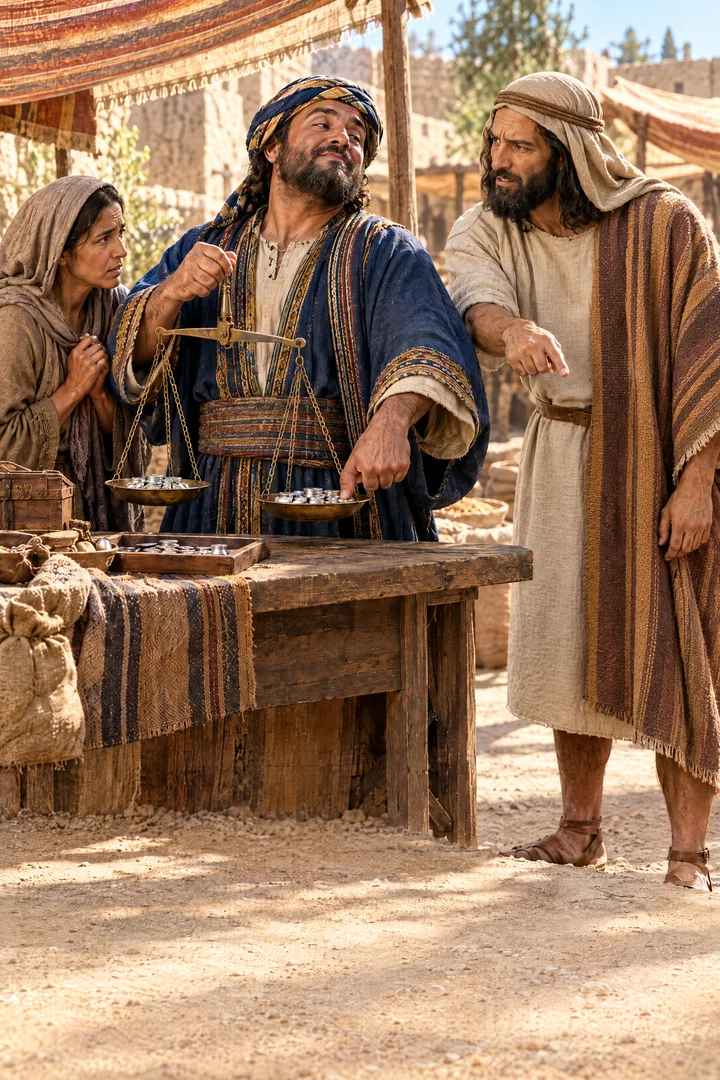
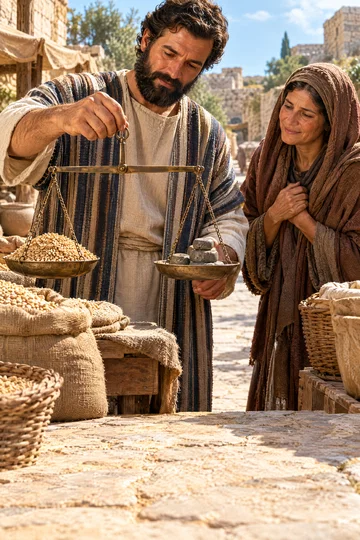
A false balance is abomination to the LORD: but a just weight is his delight.
Translations
American King James Version, King James Version, Webster Bible
A false balance is abomination to the LORD: but a just weight is his delight.
A false balance is abomination to the Lord:
But a just weight is his delight.A FALSE balance is an abomination to the LORD: but a just weight is his delight.
A false balance is an abomination to Jehovah;
But a just weight is his delight.Balances of deceit [are] an abomination to Jehovah, And a perfect weight [is] His delight.
A false balance is an abomination to Jehovah; but a just weight is his delight.
A deceptive balance, is an abomination to Yahweh, but, a full weight, is his delight.
Berean Standard Bible, Majority Standard Bible
Dishonest scales are an abomination to the LORD,
but an accurate weight is His delight.A false balance is an abomination to the LORD,
but accurate weights are his delight.Scales of deceit are hated by the Lord, but a true weight is his delight.
False balances are an abomination vnto the Lord: but a perfite weight pleaseth him.
Douay-Rheims (Challoner revision)
A deceitful balance is an abomination before the Lord: and a just weight is his will.
Pictures
Cross-references
- Leviticus 19:35-36
Ye shall do no unrighteousness in judgment, in meteyard, in weight, or in measure.
Both condemn dishonest measures and command just weights.
- Deuteronomy 25:13-16
Thou shalt not have in thy bag divers weights, a great and a small.
Forbids unequal weights and requires a just standard.
- Micah 6:11
Shall I count them pure with the wicked balances, and with the bag of deceitful weights?
Both condemn dishonest weights and measures.
- Luke 16:10
He that is faithful in that which is least is faithful also in much: and he that is unjust in the least is unjust also in much.
Faithfulness in small matters supports strict fairness in business.
- Proverbs 20:10
Divers weights, and divers measures, both of them are alike abomination to the LORD.
Also condemns differing weights and measures.
- Amos 8:5
Saying, When will the new moon be gone, that we may sell corn? and the sabbath, that we may set forth wheat, making the ephah small, and the shekel great, and falsifying the balances by deceit?
Both condemn cheating measures and exploiting the poor for gain.
- Hosea 12:7
He is a merchant, the balances of deceit are in his hand: he loveth to oppress.
Both describe merchants using deceitful balances, condemned as dishonest business.
Commentary
Each commentary is drawn from primary sources: the writings of Ellen G. White and Adventist pioneers and periodicals. Each commentary is separate. Its own words are not a quotation; follow the references to read the source passages.
Ellen G. White
11 sources
Dishonest weights and measures are hateful and an abomination to the Lord, while just, honest and fair dealing is His delight.ST Dec 24, 18964T 310.2–311.1ST Mar 27, 1879Ms 43, 1901, par. 41Lt 8, 1901, par. 23 Using deceitful measures to gain wealth is a failure of integrity and shows that God's word is not ruling a person's life.ST Dec 24, 1896 A false balance stands for every kind of unfair dealing, including a scant measure, a deceitful balance, trade tricks, schemes that hide selfishness and injustice behind an appearance of fairness, and selfish spending of the Lord's money.Lt 20a, 1893, par. 15–17Lt 8, 1901, par. 23Lt 21, 1901, par. 38Ms 147, 1899, par. 17 God abhors such practices and will not favor them, for selfishness, covetousness and merciless treatment bring His judgment.Lt 20a, 1893, par. 15–17 Christ's followers reject deceitful weights and trade tricks and conduct their work with fairness and integrity.Ms 147, 1899, par. 17
Every business transaction is done under God's eye, and He weighs what people do.ST Mar 27, 1879Lt 3, 1878, par. 7 God's people are tested and weighed in the balances of the sanctuary in all their business transactions.4T 310.2–311.1 Honesty in ordinary business reveals integrity and true obedience to God's law, and even small transactions disclose character, for faithfulness in little things goes with faithfulness in greater things.4T 310.2–311.1ST Mar 27, 1879 The size of a dishonest act does not make it less wrong.ST Mar 27, 1879 Fair dealing means not trading honor for profit but accepting a fair price, paying workers what they have earned, disclosing defects even when honesty costs money, and never exploiting another person's weakness or hardship for gain.4T 310.2–311.1Lt 3, 1878, par. 7
Honest earnings may prosper, but gain made through selfish, deceitful practices brings condemnation and carries God's curse, becoming a curse to its receiver.Lt 20a, 1893, par. 15–17ST Mar 27, 1879 Those who practice such fraud will be brought to confusion.Lt 8, 1901, par. 23 Daily business conduct tests whether people are fit to be called God's children and whether God's word rules their life.ST Dec 24, 1896 Dishonest dealing reveals bad character incompatible with serving God or entering His kingdom, and the way people treat others reflects how they will deal with God.ST Dec 24, 18964T 310.2–311.1 Unjust weights and measures are contrary to love for one's neighbor and disregard the principle of treating others as one would wish to be treated.Lt 21, 1901, par. 38 Since goods belong to God to be used for His glory, those who handle sacred work and all Christ's followers must reject fraud and act fairly in a Christlike way.Lt 20a, 1893, par. 15–17Lt 8, 1901, par. 23Ms 147, 1899, par. 17 The verse applies to how people treat one another: they must deal honestly, justly and truthfully, abandon wrongdoing and live in unity, rather than focusing on others' wrongs as a means of reform or to conceal their own.Ms 43, 1901, par. 41Ms 43c, 1901, par. 22–236MR 311.3–312.1
Sources
Pioneers and periodicals
25 sources
A false balance with dishonest weights and measures is hateful to the Lord as an abomination, while a just weight with honest measures is His delight and what He requires.RH May 18, 1916ST Oct 5, 1904ST Nov 20, 1884 A just weight means giving what is fair and full, weighing goods fairly and giving equivalent value for value received even when gain could be had by doing otherwise.ST Feb 7, 1900RH May 18, 1869ST Mar 9, 1888 The condemnation reaches far beyond literal scales to every form of cheating in trade, including short count and short weight, adulterating and misrepresenting goods, misleading customers for profit, and cheating in price and in building work.ST Mar 23, 1882RH Dec 6, 1864ST Oct 25, 1899 The rule binds buyers as well as sellers, for getting far more than is given or profiting from another's ignorance or trust is theft, and wealth can rightly come only by making it or by gift.RH May 18, 1869RH Aug 3, 1869RH Sep 4, 1855ST Oct 6, 1881 Honesty in ordinary business is the expression of true Christlike piety and the test of fitness to be called God's children, so following Christ requires correcting dishonest dealing as the outward token of conversion, and every deed will be weighed in true balances in judgment.ST Dec 24, 1896ST Feb 7, 1900ST Mar 23, 1882ST Feb 15, 1899RH Aug 31, 1869
Honest Weights in Trade
A false balance with dishonest weights and measures is an abomination hateful to the Lord, while a just weight with honest measures is His delight and is required, and this is a practical rule for everyday moral and business life in ordinary dealings, including weighing materials when buying them.RH May 18, 1916ST Oct 5, 1904ST Nov 20, 1884ST Jun 24, 1913ST Mar 9, 1888 The principle condemns false balances and weights as dishonest and wrong and approves just measures in everyday trade, where using honest measures protects buyers and can save a community substantial money.ST Aug 23, 1910ST Mar 9, 1888 A just weight means giving what is fair and full, weighing goods fairly, giving full measure even when one could gain by taking more or less, and giving equivalent value for value received.ST Feb 7, 1900RH May 18, 1869ST Mar 9, 1888RH Sep 25, 1860 God delights in full, honest measure and abhors short measure even by only a few pieces of wood in cords sold, so a seller must give full measure and fully make up any lack even when the buyer says the shortage is all right. Selling milk, butter, grain and other goods requires giving full weight and measure in ordinary sales as well as major transactions.RH Sep 25, 1860
The condemnation covers far more than literal scales, including short counts, underweight goods, short measure and short weight at the counter and stall and in work.ST Mar 23, 1882ST Feb 15, 1899RH Jun 24, 1873ST Jul 23, 1874 It includes selling milk, butter, grain and other goods without full weight and measure, selling short cords of wood even by only a few pieces, and selling ten yards of velvet for twelve and fourteen and a half yards of silk thread for twenty.ST Mar 23, 1882RH Sep 25, 1860 It includes adulterating goods with pebbles in cotton, clay in paper, sand in sugar, chicory in coffee, alum in bread and water in milk, mixing cotton into goods sold as all wool or all linen, and selling pressed-rag coats as broadcloth.ST Mar 23, 1882RH Dec 6, 1864RH Jun 24, 1873ST Jul 23, 1874 It includes misrepresenting goods by putting big strawberries on top and little ones below, making one half of a pair of shoes of good leather and the other of poor, counterfeiting trademarks on gloves and bonnets, misrepresenting an inferior article, and making false claims about quality, quantity or character of goods.ST Mar 23, 1882RH Dec 6, 1864ST Oct 25, 1899RH Jun 24, 1873ST Jul 23, 1874 It includes giving customers untruthful information to mislead them for profit, cheating in price while calling it necessary business habit and competition, and cheating in building by using five-dollar bricks where seven-dollar material was contracted, substituting white pine for hard pine, and leaving bad joints, plaster, blinds, paint and fastenings.ST Mar 23, 1882ST Oct 25, 1899RH Jun 24, 1873 Genuine repentance must be accompanied by honest conduct in giving truthful information and refusing to mislead for profit.ST Oct 25, 1899ST Feb 15, 1899
The rule binds buyers as well as sellers, so getting far more than is given is theft and abomination.RH May 18, 1869 A buyer who hunts for a bargain by paying far less than a thing is worth steals all the difference between the price and the worth and God will judge him for it.RH May 18, 1869 Merchants who practice systematic deceit are often corrupted by such buyers, whose demand and pride in getting five times as much as they give perverts honest trade.RH May 18, 1869 Wealth can only rightly come by making it or by gift, and getting money in any other way is theft, and giving true value received in honest business with a fair bargain for money paid is His delight.ST Oct 6, 1881 Lying and trickery in a deal to gain money, even when called sharpness or ordinary business shrewdness, is stealing hateful to God just as much as stealing from a pocketbook.RH Sep 4, 1855ST Oct 6, 1881 This condemns taking advantage in a bargain, profiting from others' ignorance, misrepresenting an inferior article, and taking advantage of another person's trust for gain.RH Aug 3, 1869RH Sep 4, 1855ST May 4, 1882
The verse requires honesty with one's neighbor, keeping commitments, weighing actions by justice, and keeping accounts as before God.RH Apr 30, 1867 One's dealings should be honest and free even from the appearance of evil.RH Sep 25, 1860 It requires paying debts in full, rejects settling forty cents for a hundred cents as gospel honesty, and counts a man who fails in business yet keeps living in luxury a thief.ST Mar 23, 1882RH Jun 24, 1873ST Jul 23, 1874
Character, Conversion, and Judgment
True religion is humble, Christlike piety expressed in ordinary business, condemning all lying and stealing and demanding honesty in trade, manufacture, building and debt.ST Feb 7, 1900ST Mar 23, 1882RH Dec 6, 1864RH Jun 24, 1873 It forbids short measure and short weight at counter and stall, selling ten yards of velvet for twelve and fourteen and a half yards of silk thread for twenty, adulterating goods with pebbles in cotton, clay in paper, sand in sugar, chicory in coffee, alum in bread and water in milk, mixing cotton into goods sold as all wool or all linen, misrepresenting goods by putting big strawberries on top and little ones below, making one half of a pair of shoes of good leather and the other of poor, counterfeiting trademarks on gloves and bonnets, selling pressed-rag coats as broadcloth, making false claims about quality, quantity or character of goods, and failing to keep promises.ST Mar 23, 1882RH Dec 6, 1864RH Jun 24, 1873 It likewise condemns cheating in building by using five-dollar bricks where seven-dollar material was contracted, substituting white pine for hard pine, and leaving bad joints, plaster, blinds, paint and fastenings, and it requires paying debts in full, rejects settling forty cents for a hundred cents as gospel honesty, and counts a man who fails in business yet keeps living in luxury a thief.ST Mar 23, 1882RH Jun 24, 1873 Such fairness in giving what is fair even when gain could be had by taking more or less is what pleases God, while unfair dealing is hateful to Him.ST Feb 7, 1900RH Dec 6, 1864
Daily conduct in business tests fitness to be called God's children and shows whether God's word rules the life, for dishonest dealings reveal bad character.ST Dec 24, 1896 Honesty in ordinary business reveals integrity and obedience, even small transactions disclose character and God weighs them, and the size of a dishonest act does not make it less wrong.ST Dec 24, 1896ST Mar 27, 1879 Using deceitful measures to gain wealth is a failure of integrity incompatible with serving God or entering His kingdom.ST Dec 24, 1896 Deceitful gain brings condemnation and becomes a curse to its receiver.ST Mar 27, 1879
A change of heart in deciding to follow Christ requires correcting dishonest scales as first-fruits and an outward token of conversion.ST Oct 5, 1904ST Feb 8, 1905 At the voice speaking in the heart, buying eighteen ounces to the pound must be changed to sixteen ounces to the pound, because the former is false balance and an abomination while a just weight is His delight.ST Feb 8, 1905 The principle reaches weighing materials when buying them and all ordinary dealings, including short counts, underweight goods, and false measures in trade and work.ST Oct 5, 1904ST Feb 15, 1899 Correcting such petty cheating can do more to remove troubles of conscience than mourning over sin without changed behavior.ST Feb 15, 1899 One who prays for success in business must not pursue it by dishonest or improper means, for genuine prayer leads to work in harmony with God.ST Jun 26, 1884
A seller must give full, honest measure and fully make up any lack even when the buyer says the shortage is all right, even by only a few pieces of wood in cords sold, because short measure will meet the seller in heaven in judgment. Cheating in price or in character and quality of goods while calling it necessary business habit and competition is the abomination of the false balance and loves to oppress for dishonest gain.RH Aug 31, 1869 Such dealing makes customers think the trader honest and at last makes him think himself honest, so he deceives others and deceives his own soul, but he does not deceive God.RH Aug 31, 1869 Every deed is weighed by the angel of God in true balances that expose the smallest grain of dishonesty, and the self-deceived trader will be surprised by the verdict of the Judgment.RH Aug 31, 1869 Using honest measures protects buyers and can save a community substantial money.ST Aug 23, 1910
Sources