Amos 8:5
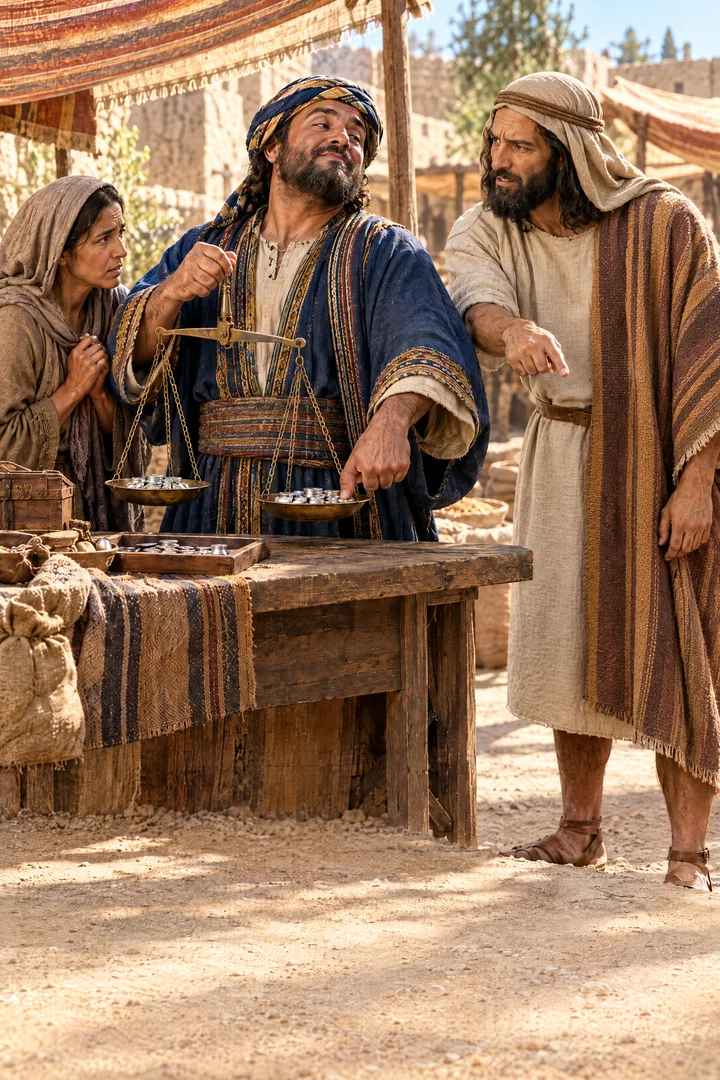
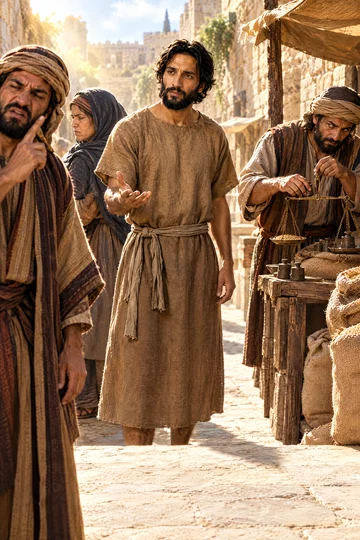
Saying, When will the new moon be gone, that we may sell corn? and the sabbath, that we may set forth wheat, making the ephah small, and the shekel great, and falsifying the balances by deceit?
Translations
American King James Version, King James Version, Webster Bible
Saying, When will the new moon be gone, that we may sell corn? and the sabbath, that we may set forth wheat, making the ephah small, and the shekel great, and falsifying the balances by deceit?
Saying, When will the new moon be gone, that we may sell corn?
And the sabbath, that we may set forth wheat,
Making the ephah small, and the shekel great,
And falsifying the balances by deceit?saying, When will the new moon be gone, that we may sell corn? and the sabbath, that we may set forth wheat? making the ephah small, and the shekel great, and dealing falsely with balances of deceit;
saying, When will the new moon be gone, that we may sell grain? and the sabbath, that we may set forth wheat, making the ephah small, and the shekel great, and dealing falsely with balances of deceit;
Saying, When doth the new moon pass, And we sell ground corn? And the sabbath, and we open out pure corn? To make little the ephah, And to make great the shekel, And to use perversely balances of deceit.
saying, When will the new moon be gone, that we may sell corn? and the sabbath, that we may set forth wheat? making the ephah small and the shekel great, and falsifying the balances for deceit:
Who say, When will the new moon, pass away, that we may sell corn? and the sabbath that we may open grain? who diminish the ephah, and increase the shekel, and who falsify by deceitful weights:
Berean Standard Bible, Majority Standard Bible
asking, “ When will the New Moon be over,
that we may sell grain?
When will the Sabbath end,
that we may market wheat?
Let us reduce the ephah and increase the shekel;
let us cheat with dishonest scales.saying, ‘ When will the new moon be gone, that we may sell grain?
And the Sabbath, that we may market wheat,
making the ephah small, and the shekel large,
and dealing falsely with balances of deceit;Saying, When will the new moon be gone, so that we may do trade in grain? and the Sabbath, so that we may put out in the market the produce of our fields? making the measure small and the price great, and trading falsely with scales of deceit;
Saying, When will the newe moneth bee gone, that we may sell corne? and the Sabbath, that we may set forth wheate, and make the Ephah small, and the shekel great, and falsifie the weights by deceit?
Douay-Rheims (Challoner revision)
Saying: When will the month be over, and we shall sell our wares: and the sabbath, and we shall open the corn: that we may lessen the measure, and increase the sicle, and may convey in deceitful balances,
Pictures
Cross-references 20 of 26
- Isaiah 58:13
If thou turn away thy foot from the sabbath, from doing thy pleasure on my holy day; and call the sabbath a delight, the holy of the LORD, honourable; and shalt honour him, not doing thine own ways, nor finding thine own pleasure, nor speaking thine own words:
Calls for honoring the Sabbath rather than pursuing one’s own business.
- James 5:4
Behold, the hire of the labourers who have reaped down your fields, which is of you kept back by fraud, crieth: and the cries of them which have reaped are entered into the ears of the Lord of sabaoth.
Both condemn rich oppressors who defraud workers and warn of judgment.
- Exodus 20:8-10
Remember the sabbath day, to keep it holy.
The traders resent observing the Sabbath and long to resume business.
- Nehemiah 13:15-22
In those days saw I in Judah some treading wine presses on the sabbath, and bringing in sheaves, and lading asses; as also wine, grapes, and figs, and all manner of burdens, which they brought into Jerusalem on the sabbath day: and I testified against them in the day wherein they sold victuals.
last effort to restore allegiance by Sabbath reformation
- Proverbs 11:1
A false balance is abomination to the LORD: but a just weight is his delight.
Both condemn dishonest trade using false measures.
- Deuteronomy 25:13-16
Thou shalt not have in thy bag divers weights, a great and a small.
Both condemn using false measures in trade.
- Exodus 31:16-17
Wherefore the children of Israel shall keep the sabbath, to observe the sabbath throughout their generations, for a perpetual covenant.
The Sabbath is God’s enduring sign and memorial, contrasted with Amos’s desire to end it for trade.
- Nehemiah 10:31
And if the people of the land bring ware or any victuals on the sabbath day to sell, that we would not buy it of them on the sabbath, or on the holy day: and that we would leave the seventh year, and the exaction of every debt.
The people pledge not to buy goods on the Sabbath.
- Exodus 16:29
See, for that the LORD hath given you the sabbath, therefore he giveth you on the sixth day the bread of two days; abide ye every man in his place, let no man go out of his place on the seventh day.
Its command about remaining in place is applied to Sabbath observance.
- Isaiah 66:23
And it shall come to pass, that from one new moon to another, and from one sabbath to another, shall all flesh come to worship before me, saith the LORD.
Both texts pair the Sabbath with the new moon.
- 2 Kings 4:23
And he said, Wherefore wilt thou go to him to day? it is neither new moon, nor sabbath. And she said, It shall be well.
Both mention the Sabbath alongside the new moon.
- Leviticus 19:35-36
Ye shall do no unrighteousness in judgment, in meteyard, in weight, or in measure.
God forbids false measures and requires just weights.
- Ezekiel 45:10
Ye shall have just balances, and a just ephah, and a just bath.
Commands the use of just weights and measures.
- Micah 6:11
Shall I count them pure with the wicked balances, and with the bag of deceitful weights?
Condemns deceitful weights and measures.
- Nehemiah 13:17
Then I contended with the nobles of Judah, and said unto them, What evil thing is this that ye do, and profane the sabbath day?
Nehemiah rebukes Sabbath desecration.
- Genesis 2:2
And on the seventh day God ended his work which he had made; and he rested on the seventh day from all his work which he had made.
Listed alongside Amos 8:5 as a Sabbath reference.
- Ezekiel 20:20
And hallow my sabbaths; and they shall be a sign between me and you, that ye may know that I am the LORD your God.
The Sabbath is a sign between God and his people.
- Isaiah 56:2
Blessed is the man that doeth this, and the son of man that layeth hold on it; that keepeth the sabbath from polluting it, and keepeth his hand from doing any evil.
Keeping the Sabbath guards against doing evil.
- Jeremiah 17:21-22
Thus saith the LORD; Take heed to yourselves, and bear no burden on the sabbath day, nor bring it in by the gates of Jerusalem;
Both forbid commerce and burdens on the Sabbath.
- Numbers 28:9
And on the sabbath day two lambs of the first year without spot, and two tenth deals of flour for a meat offering, mingled with oil, and the drink offering thereof:
Sabbath offerings are part of the Lord’s work.
Commentary
Each commentary is drawn from primary sources: the writings of Ellen G. White and Adventist pioneers and periodicals. Each commentary is separate. Its own words are not a quotation; follow the references to read the source passages.
Ellen G. White
3 sources
The verse portrays traders who resent the new moon and the Sabbath because those sacred pauses stop their selling of grain, leaving them impatient for the holy time to end so that trade can resume.ST Dec 24, 1896Ms 2, 1897, par. 21–23 Their eagerness is not neutral waiting but a greedy desire to get back to profit at the buyers' expense.ST Dec 24, 1896Ms 2, 1897, par. 21–23
Their cheating takes three related forms: making the ephah small to give short measure, making the shekel great to inflate the price, and falsifying the balances to deceive buyers of corn and wheat.ST Dec 24, 1896Ms 2, 1897, par. 21–23 The setting is ordinary business dealings in grain turned into exploitation of the poor, exposing greed and deceit and disregard for the needy.ST Dec 24, 1896Ms 2, 1897, par. 21–23 Keeping religious observances while failing to practice justice stands condemned, since outward regard for new moon and Sabbath is worthless without honest dealing.Ms 2, 1897, par. 21–23
Christ hates false weights and measures and knows every person concerned in such dishonesty.13MR 205.2–4 He calls His people to unify and to love one another and to deal honestly and justly and truly with one another.13MR 205.2–4 That call means coming into close connection with Him and giving Him room among them, instead of trying to reform by pointing at the wrongs of someone else, manifesting hatred, and speaking unjust sayings.13MR 205.2–4
Sources
Pioneers and periodicals
39 sources
Amos speaks to the ten tribes in their apostasy just before their overthrow, exposing merchants who resent the new moon and Sabbath as interruptions to trade and wait impatiently for them to end so they can sell corn and set forth wheat.RH Jan 21, 1862ST Sep 29, 1898ST Aug 24, 1915ST Oct 20, 1898ST Nov 29, 1899 When trade resumes they cheat by making the measure of grain too small and the weight for money too large and by falsifying balances, even selling the refuse of wheat while swallowing up the needy and making the poor of the land fail.ST Mar 31, 1914ST May 24, 1883ST Sep 16, 1897ST Sep 8, 1909RH Jan 27, 1916 The Sabbath they despise is the weekly seventh-day Sabbath of the Lord, then a recognized day for refraining from ordinary trade, not Sunday and not a ceremonial sabbath.RH Oct 12, 1916ST Apr 11, 1900RH Jan 21, 1862RH Mar 19, 1857 Such impatience for sacred time to pass shows hearts bound to worldly gain rather than delight in God's holy day, for outward observance joined with greed and worldly planning is not faithful obedience.RH Jan 8, 1857RH Dec 5, 1871ST Aug 26, 1880RH Aug 7, 1866RH Feb 5, 1857 That ancient corruption is a type and warning for the last days, when covetousness, hoarding, and oppression of labor will again prevail, but God sees and will not forget, and selfishness will be swept away in trembling, mourning, and judgment upon the oppressor.ST Sep 29, 1898ST Oct 20, 1898ST Mar 31, 1914ST Sep 17, 1896ST Oct 29, 1896
Words and Historical Setting
The words concern the ten tribes in an apostate condition that soon led to their overthrow, exposing the corruption that preceded the fall of the ten-tribe kingdom.RH Jan 21, 1862ST Sep 29, 1898 They applied in part just before the fall of that kingdom, describing traders impatient for sacred pauses to end so they could resume selling grain with reduced measure, inflated price, and false scales.RH Jan 21, 1862ST Sep 29, 1898ST Oct 20, 1898 The same corruption stands as a pattern for later times, when the poor oppressed by such practices may rise in anger against their oppressors.ST Sep 29, 1898
They stand in the prophecy of Amos, meaning burdened, a shepherd of Tekoa in Judea burdened for his people.ST Dec 8, 1909 He prophesied at Bethel in the reigns of Uzziah king of Judah and Jeroboam II king of Israel, speaking especially to the northern kingdom.ST Dec 8, 1909 The priests of that kingdom accused him of treason and expelled him.ST Dec 8, 1909 His foretelling of the downfall of apostasy points forward to the last days when there shall be a famine of the Word, given in striking illustrations from shepherd life having striking coincidences with the predictions of Joel.ST Dec 8, 1909
The Sabbath stands alongside the new moon as a recognized day on which people refrained from ordinary trade, though the covetous waited impatiently for those observances to end so they could sell corn and set forth wheat.RH Jan 21, 1862ST Sep 29, 1898ST Oct 20, 1898RH Jan 21, 1862 Its mention in this setting supports its use as a time for seeking divine instruction.RH Jan 21, 1862 It was then known and guarded on every hand by the strictest laws and regulations through more than 800 years as a great settled nation in the promised land. It was kept through Samuel, David, Solomon, Hezekiah and all the noted kings, so that losing track of the day and forgetting which day it was was impossible and absurd.
Making the ephah small means making the measure of quantity used to sell grain too small, and making the shekel great means making the measure of weight used to receive money too large.ST May 24, 1883ST Sep 16, 1897 Falsifying the balances by deceit cheated in both parts of the transaction, defrauding in selling and in receiving payment.ST May 24, 1883RH Jan 27, 1916 The commerce thus gave short measure, charged too much, and used dishonest scales, swallowing up the needy and bringing the poor to ruin.ST Sep 16, 1897RH Jan 27, 1916 The fraud went further in selling the refuse of the wheat as food for men.ST Mar 31, 1914ST Sep 8, 1909 It went with swallowing up the needy and making the poor of the land to fail, buying the poor for silver and the needy for shoes.ST Sep 8, 1909
The sabbaths linked with new moons and feasts in this impatient waiting for observances to end are observances that prophecy says will cease, unlike the Lord's holy Sabbath, which remains perpetual.RH Mar 14, 1854 Those who held the other view identified the Sabbath named in the verse as the weekly Sabbath, called the Sabbath of the Lord, rather than a ceremonial Sabbath.RH Mar 19, 1857
Greed and Oppression Exposed
The traders chafe at the new moon and the Sabbath as unwelcome breaks in business and wait impatiently for those days to pass so they can sell corn and set forth wheat.RH Jan 21, 1862ST Aug 24, 1915ST Nov 29, 1899RH May 1, 1913RH Jan 8, 1857 Their impatience springs from greed and love of gain that can scarcely tolerate sacred time interrupting trade, with hearts bound to worldly gain rather than delight in the holy day.ST Dec 24, 1896ST Sep 29, 1898ST May 10, 1905RH Jan 8, 1857RH Dec 5, 1871 Even outward observance is thus hollow, for they long to evade the day and resume their own work and plans the moment it ends.RH Jan 21, 1862ST Aug 24, 1915ST Nov 29, 1899RH May 1, 1913RH Dec 5, 1871
Once trade resumes they cheat buyers by making the ephah small and the shekel great and falsifying the balances by deceit.ST Dec 24, 1896RH Jan 21, 1862RH Jun 22, 1916ST Sep 29, 1898 That is, they give short measure of grain, charge too much in money, and use dishonest scales, shrinking what is sold while enlarging what is demanded in payment.RH Jun 22, 1916ST Sep 29, 1898ST May 10, 1905ST Nov 29, 1899ST Feb 7, 1906 The fraud touches both sides of the transaction, reducing quantity and inflating price through rigged weights and measures.ST Dec 24, 1896ST Feb 7, 1906ST Sep 16, 1897ST
This commerce swallows up the needy and makes the poor of the land to fail.ST Sep 29, 1898ST Aug 24, 1915ST Sep 16, 1897ST It deprives the farmer and the laborer of his hire in order to advance the rich men's own interests, exalting the thing above the man through hoarding of riches, unequal laws, and conflict between labor and capital.RH Jun 22, 1916ST Sep 29, 1898ST Oct 29, 1896ST Religious observance joined to such dealing is worthless, for dishonest gain and oppression of the needy mark a corrupt social order ripe for the downfall of nations.ST Sep 29, 1898ST Aug 24, 1915ST May 10, 1905ST
The oppression need not arise from a deliberate intent to oppress, but comes as an incidental result of self-interest regarded with indifference. Yet God regards the injustice and remembers His children, counting what is done to His least and humblest ones as done to Himself. In this way profession of godliness and keeping of sacred days stand joined with greed, disregard for those days, and exploitation of the poor in ordinary business dealings, a pattern present in both ancient and modern times.ST Dec 24, 1896ST Sep 29, 1898ST May 10, 1905ST Feb 7, 1906
Sabbath Attitude and Meaning
Impatience for the Sabbath to end so selling and trading can resume reveals hearts bound to worldly gain rather than delight in God's holy day.RH Jan 8, 1857RH Dec 5, 1871RH Feb 5, 1857RH Nov 5, 1861 The greed and love of gain could scarcely tolerate the Sabbath's interruption of trade, resenting sacred time as a hindrance to business and longing for it to be over.RH Jan 8, 1857RH Feb 5, 1857RH Nov 5, 1861 Such outward observance joined to longing to resume one's own work and plans is unacceptable, for keeping worldly plans in mind during holy time violates the Sabbath's sacredness and sanctity.RH Dec 5, 1871RH Feb 5, 1857RH Nov 5, 1861 This avaricious attitude is contrary to keeping the day holy.RH Feb 5, 1857
Keeping the Sabbath outwardly while longing to evade it is not faithful obedience, and grudging obedience or trying to evade God's commands is warned against by the resentful, dishonest attitude toward sacred days joined to cheating with false measures and weights.ST Aug 26, 1880RH Aug 7, 1866 The Sabbath and all the commandments are to be obeyed willingly and cheerfully, and to be a delight rather than a burden impatiently endured.ST Aug 26, 1880RH Aug 7, 1866 By contrast with wishing the Sabbath would end to return to buying and selling, the day is to be welcomed with joy and its close hallowed with prayer.ST Feb 16, 1915
The verse warns against treating sacred time as an unwelcome interruption to business, connecting disregard for the Sabbath with dishonest conduct in measures and weights.RH May 1, 1913 It is a warning that Sabbath observance can grow lax when ordinary work and preparations intrude on the day.RH May 1, 1913 The Sabbath is to be distinguished from common time and kept faithfully.RH May 1, 1913
Surrounded by a great heathen commercial world, love for wealth and worldly aggrandizement led Israel astray into swallowing up the needy and making the poor of the land to fail, grudging new moon and Sabbath as hindrances to selling corn and setting forth wheat with small ephah and great shekel and false balances by deceit, buying the poor for silver and the needy for shoes and selling the refuse of the wheat.ST Sep 8, 1909 In that condition they stubbornly refused the living touch with God that true Sabbath-keeping would give.ST Sep 8, 1909 Sabbath-breaking was the open door to all heathen influences and customs, and return to Sabbath truth would close and bar that door and form the basis of lasting reform.ST Sep 8, 1909
Neglect of the Sabbath connects with idolatry, for turning to idols showed neglect of the Sabbath as God's memorial and protection against idolatry, joined to impatience for new moon and Sabbath to end and cheating with false measures and balances.ST The Sabbath observance in view is the seventh-day Sabbath, not Sunday, condemned when resented as interrupting trade and joined to exploiting buyers by short measure, unfair prices, and falsified scales.ST Apr 11, 1900 While the people adopted false sabbaths, they treated the true Sabbath as a burden.RH Oct 12, 1916
Prophecy Judgment and Last Days
The dishonest gain and oppression of the needy exposed in the verse were the corruption that preceded the fall of the ten-tribe kingdom, and they stand as a pattern for later times and a warning of the downfall of nations.ST Sep 29, 1898ST Aug 24, 1915 The same disregard for sacred observances joined with exploitation of the poor and dishonest business practice is present in both ancient and modern times.ST May 10, 1905 Such commercial fraud and oppression of the poor are signs of a corrupt social order, with direct relevance to concentrated wealth and commercial injustice.ST Aug 24, 1915ST Jan 28, 1897
What applied in part just before the fall of the ten-tribe kingdom serves as a type of the covetousness and oppression of the last days.ST Oct 20, 1898 That last-day oppression comes by exalting the thing above the man, through hoarding of riches and unequal laws, cheating with measures and prices to deprive the farmer and laborer of his hire.ST Oct 29, 1896 It is part of a prophecy about oppression of the poor by the wealthy amid conflict between labor and capital and concentrated wealth.STST Jan 28, 1897 Its place in a last-day prophecy is proved by the sun going down at noon and darkening the earth in a clear day in the same chapter.ST Aug 10, 1904 It points forward to the last days when there shall be a famine of the Word.ST Dec 8, 1909
God sees and remembers such acts of commercial fraud and oppression of the poor, and declares He will not forget them, so that judgment will come upon those who commit them.ST Mar 31, 1914ST Sep 17, 1896 The land will tremble and the people mourn as their selfishness is swept away like a flood.ST Mar 31, 1914 The storms and tempests of the last days call people to turn from greed, lust, and crime.ST Mar 31, 1914 The warning is given in mercy so that both rich and poor may be saved, forewarning coming dangers and perils. Then the songs of the palace where the rich dwell shall become howlings, feasts shall be turned into mourning and songs into lamentation, and dead bodies shall be many in every place.ST Aug 10, 1904 There will be awful retribution upon wealthy devotees of luxurious pleasure at the hands of their infuriated victims, with the poor they oppressed rising in anger against their oppressors.ST Sep 29, 1898ST Aug 10, 1904 The verse is thus part of a prophetic warning about oppression and the eventual woe of the oppressor.ST Aug 19, 1897
Doctrine Connections and Application
Religious observance is worthless when joined to greed and oppression. Resentment of the new moon and Sabbath because they interrupt trading exposes a commerce that exploits the poor by giving short measure, charging unfair prices, and cheating with dishonest scales.RH Dec 6, 1864ST May 22, 1884 The eagerness to resume selling grain is joined to falsifying measures, weights, and balances.RH Dec 6, 1864ST May 22, 1884 Sabbath-breaking in this way belongs to a wider pattern of unethical conduct and not merely to ceremonial failure. True religion stands opposed to commercial fraud and theft as violations of moral and religious duty.RH Dec 6, 1864ST May 22, 1884
Making the ephah small and the shekel great condemns self-favoritism and moral dishonesty that minimizes one's own faults while judging others or excusing oneself.RH Mar 19, 1861 Such distortions and the motives they conceal are recorded in heaven as evidence for judgment.RH Mar 19, 1861 The growing shekel and shrinking ephah portray economic inequality and the power of wealth to exploit and control people.ST Apr 12, 1899 Using a small measure for grain sold, an inflated weight for payment received, and false balances to cheat customers continues when legal restraints are removed, though it remains wrong.RH Jan 27, 1916
Sources