Leviticus 19:35
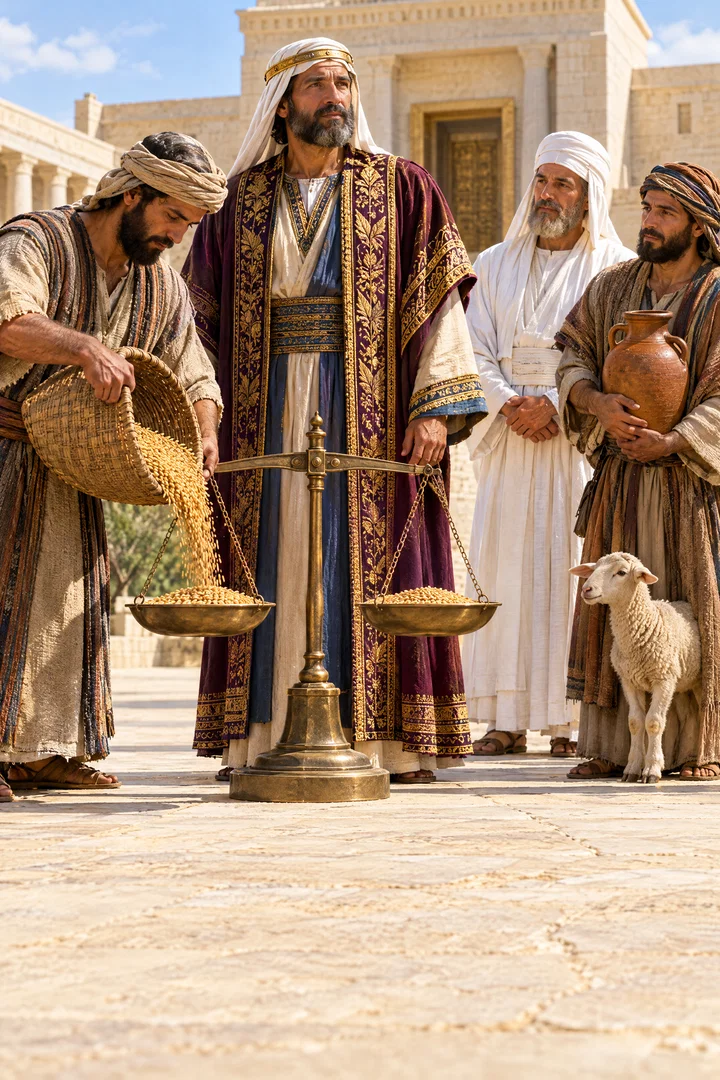
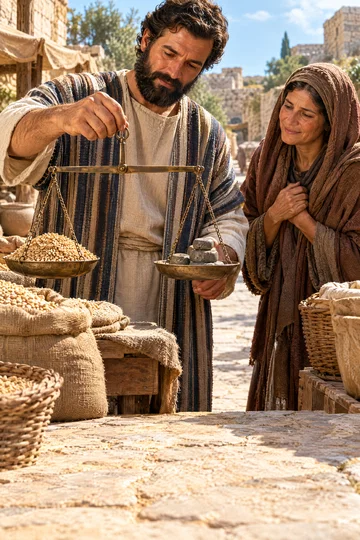
Ye shall do no unrighteousness in judgment, in meteyard, in weight, or in measure.
Translations
You shall do no unrighteousness in judgment, in length, in weight, or in measure.
King James Version, KJV Cambridge Paragraph Bible, Revised Version
Ye shall do no unrighteousness in judgment, in meteyard, in weight, or in measure.
Ye shall do no unrighteousness in judgment, in weight, in measure of length or of capacity.
Ye shall do no unrighteousness in judgment, in measures of length, of weight, or of quantity.
'Ye do not do perversity in judgment, in mete-yard, in weight, or in liquid measure;
Ye shall do no unrighteousness in judgment, in measure of length, in weight, and in measure of capacity:
Ye shall not act perversely in giving judgment,—in measures of extent, in weights in measures of capacity:
Berean Standard Bible, Majority Standard Bible
You must not use dishonest measures of length, weight, or volume.
“‘ You shall do no unrighteousness in judgment, in measures of length, of weight, or of quantity.
Do not make false decisions in questions of yard-sticks and weights and measures.
Ye shall not doe vniustly in iudgement, in line, in weight, or in measure.
Douay-Rheims (Challoner revision)
Do not any unjust thing in judgment, in rule, in weight, or in measure.
Pictures
Cross-references
- Deuteronomy 25:13-16
Thou shalt not have in thy bag divers weights, a great and a small.
Forbids dishonest weights and measures, calling such practices an abomination to God.
- Proverbs 20:23
Divers weights are an abomination unto the LORD; and a false balance is not good.
Both condemn dishonest weights as an abomination.
- Leviticus 19:13
Thou shalt not defraud thy neighbour, neither rob him: the wages of him that is hired shall not abide with thee all night until the morning.
Both forbid defrauding a neighbor in business.
- Deuteronomy 25:15
But thou shalt have a perfect and just weight, a perfect and just measure shalt thou have: that thy days may be lengthened in the land which the LORD thy God giveth thee.
Both require just weights and measures; obedience is linked with prolonged days.
- Proverbs 11:1
A false balance is abomination to the LORD: but a just weight is his delight.
Condemns false balances and commends a just weight.
- Ezekiel 45:10
Ye shall have just balances, and a just ephah, and a just bath.
both command honest weights and measures
- Amos 8:5
Saying, When will the new moon be gone, that we may sell corn? and the sabbath, that we may set forth wheat, making the ephah small, and the shekel great, and falsifying the balances by deceit?
Condemns falsifying measures and balances through a small ephah and inflated shekel.
- Leviticus 19:11
Ye shall not steal, neither deal falsely, neither lie one to another.
both forbid false dealing in transactions
- Romans 13:10
Love worketh no ill to his neighbour: therefore love is the fulfilling of the law.
Both present honest dealing with one’s neighbor as an expression of love.
Commentary
Each commentary is drawn from primary sources: the writings of Ellen G. White and Adventist pioneers and periodicals. Each commentary is separate. Its own words are not a quotation; follow the references to read the source passages.
Ellen G. White
15 sources
It forbids all unrighteousness in judgment and in measuring length, weight, and quantity or capacity, including judgment over land, forbidding false, dishonest or manipulated measures and requiring fair dealing with one another.Ms 60, 1902, par. 36Ms 86, 1905, par. 9–14Ms 115, 1905, par. 12–13 Judgment covers both legal decisions and business judgment of value, with the standard defined as just balances, just weights, and just standard containers for dry and liquid measure.Ms 60, 1902, par. 36Lt 41a, 1888, par. 8–11Ms 86, 1905, par. 9–14 The command rests on the authority of the Lord God who brought Israel out of Egypt, obliging observance of all His statutes and judgments.Ms 60, 1902, par. 36Lt 41a, 1888, par. 8–1113MR 234.2–5 It requires strict, complete honesty in every business transaction and reckoning, without partiality, fraud, deception or selfish advantage, especially in buying and selling land, forbidding concealment of defects, exaggeration of benefits, and taking advantage to make a sale or make money.Lt 41a, 1888, par. 8–1113MR 234.2–5Lt 4, 1895, par. 16–19 Oppressing the poor, withholding what is due, depriving any person of his right, and every scheme to gain by injustice is actual robbery that God marks as abhorred and will in no case tolerate, for holiness is justice in dealing with others in agreement with loving one's neighbor and treating others as one wishes to be treated.Lt 4, 1895, par. 16–1918MR 87.3–416MR 186.1
Meaning and Authority
No unrighteousness is to be done in judgment, in meteyard — measurement of length — in weight, or in measure of quantity or capacity, including judgment over land measurement.Ms 60, 1902, par. 36Lt 41a, 1888, par. 8–11Ms 86, 1905, par. 9–14Ms 115, 1905, par. 12–13MH 188.1 False, dishonest, or manipulated measures of length, weight, and capacity must not be used to cheat anyone, but all are to deal fairly with one another.Ms 60, 1902, par. 36Ms 86, 1905, par. 9–14Ms 115, 1905, par. 12–13MH 188.1 Balances and weights must be accurate, and measures must be standard and true.Ms 60, 1902, par. 36Ms 86, 1905, par. 9–14
Judgment here covers both legal decisions and business judgment of value, so fairness in trade is part of observing and doing God's statutes and judgments.Ms 60, 1902, par. 36Ms 86, 1905, par. 9–14Lt 41, 1888, par. 7–11 The next verse defines the standard as just balances, just weights, a just ephah, and a just hin.Ms 60, 1902, par. 36Lt 41a, 1888, par. 8–1113MR 234.2–5Ms 26, 1896, par. 9Lt 41, 1888, par. 7–11 That means accurate balances and weights and standard containers for dry and liquid measure, the ephah for dry measure and the hin for liquid measure.Ms 60, 1902, par. 36Lt 41, 1888, par. 7–11
The command rests on the authority of the Lord God who brought Israel out of Egypt.Ms 60, 1902, par. 36Lt 41a, 1888, par. 8–1113MR 234.2–5Lt 41, 1888, par. 7–11 For that reason Israel is to observe and practice, to observe and do, all His statutes and judgments.Ms 60, 1902, par. 36Lt 41a, 1888, par. 8–1113MR 234.2–5Lt 41, 1888, par. 7–11
The requirement expresses holiness as justice in dealing with others.18MR 87.3–4 It stands in perfect agreement with the New Testament command to love one's neighbor and to owe no one anything but love, binding all in God's work to do business on principles of justice and equity without oppression.Lt 4, 1895, par. 16–19 Its principle is that God's workers are to treat others as they themselves wish to be treated and to live as representatives of truth and righteousness.16MR 186.1
Honest Dealing Required
Strict, complete honesty is required in every business transaction and reckoning, without partiality, fraud, deception, or selfish advantage.Lt 41a, 1888, par. 8–1113MR 234.2–5Lt 4, 1895, par. 16–19Lt 41, 1888, par. 7–11 This applies especially to buying and selling real estate and land, forbidding concealment of defects and unfavorable facts, exaggeration of benefits, presenting property in a deceptively favorable light, uttering guile about it, and taking advantage of occasions and uncertain claims that value will rise in order to make a sale or make money.Lt 41a, 1888, par. 8–1113MR 234.2–5Lt 41, 1888, par. 7–11 Oppressing the poor, withholding money from those to whom it is due, depriving any person of his right, and every scheme to gain by injustice is unrighteousness and actual robbery.Lt 4, 1895, par. 16–19 Such oppression may be punished by human courts only in extreme cases, but God marks it as an abhorred practice He will in no case tolerate, and He condemns injustice wherever and in whomever it appears.Lt 4, 1895, par. 16–19
Oppressing brethren in any way is forbidden, and God's gifts are to be shared, with the gleanings of harvest field, orchard, and vineyard regarded as the Lord's portion to relieve the necessities of the poor and the stranger.18MR 87.3–4 The requirement applies to transactions in councils and board meetings of God's institutions, forbidding all cheating, oppression, and unrighteous dealing and the use of position and great light to deal unfairly.17MR 231.4–232.1Ms 66, 1898, par. 35 God's eye reads every dishonest transaction, and trampling His precepts incurs certain punishment, especially for those who have betrayed great light.17MR 231.4–232.1Ms 66, 1898, par. 35 God will strike a blow to deliver His oppressed people and raise up humble men to do His will, while proud control that seeks prosperity by building on the ruins of truth, righteousness, justice, and purity stands condemned.17MR 231.4–232.1
The command protests the greed of the natural heart and forbids hasting to be rich, speculation, and thirst for gain by unrighteous dealing.15MR 74.2Ms 26a, 1890, par. 9 Such dealing is not innocent, and God records those who practice it as guilty of fraud and transgression.15MR 74.2Ms 26a, 1890, par. 9 Instead the call is to trust not in uncertain riches but in the living God who gives richly all things to enjoy, being without covetousness and content with what is had.15MR 74.2Ms 26a, 1890, par. 9 By humility and the fear of the Lord are riches and honor and life, since loving silver and abundance never satisfies, confidence in gold pierces with many sorrows, and gaining the whole world profits nothing if the soul is lost.Ms 26a, 1890, par. 9
Sources
Pioneers and periodicals
34 sources
It forbids cheating in court decisions and in measuring length, weight, and amount, requiring honest scales, honest weights, and honest dry and liquid measures in obedience to all of God's statutes.ST Oct 14, 1889RH May 13, 1873ST Mar 23, 1915 Its measuring words belong to ordinary life, with the yard-measure meaning a length or yardstick and the ephah being the common Jewish measure of quantity of about a bushel.ST May 24, 1883ST May 28, 1885RH Oct 29, 1872 The duty is moral in itself and stays binding in every circumstance, not a temporary rule tied to Israel's national or sanctuary setting.RH May 6, 1873ST Jun 26, 1893ST May 20, 1875 It binds Jew and Gentile from creation whether or not they were brought out of Egypt, with Israel's deliverance serving as a motive of gratitude and a renewed reason to obey rather than the origin of the duty.ST Oct 14, 1889RH Sep 24, 1872RH May 13, 1873ST Mar 23, 1915ST Nov 4, 1889 It is what loving the neighbor as oneself means in practice, doing exact justice with mercy by treating others as one would wish to be treated, giving full quantity owed with no false measure, short weight, misrepresentation, or adulteration.RH Feb 10, 1916ST May 3, 1910ST Mar 31, 1914RH Dec 6, 1864ST Mar 9, 1888
Meaning and Historical Setting
The command forbids all cheating and injustice in court decisions and in measuring length, weight and quantity, demanding honest trading with just balances, just weights, a just ephah and a just hin, together with observance of all statutes and judgments.ST Oct 14, 1889RH May 13, 1873ST Mar 23, 1915ST Feb 28, 1906 Its requirement is a moral obligation in itself and not a rule created only for Israel after the exodus, with Israel's deliverance from Egypt and the declaration of divine redemption serving as an added and renewed motive of gratitude urging obedience rather than the origin of the duty or proof that it began then.ST Oct 14, 1889RH May 13, 1873ST Feb 28, 1906ST Jun 26, 1893 That connection to the exodus does not limit the duty to those who came out of Egypt or to becoming a holy people only for them.RH May 13, 1873ST Mar 23, 1915
Its terms concern everyday measuring, with meteyard meaning length or yardstick and with yard-measure, weight and measure covering honesty in business dealings.ST Feb 28, 1906ST May 28, 1885RH Oct 29, 1872 The ephah singled out for special protection against falsifying was the common measure of quantity in use among the Jews, containing about one bushel or thirty-five litres.ST May 24, 1883 The precept was spoken less than one year after Israel left Egypt, before Israel left Sinai, and it belongs to the law given at Sinai and not to a different new law given nearly forty years later in Deuteronomy.RH Aug 2, 1870
It stands among the laws given to Israel in fair comparison and contrast with the customs of the nations around them.ST Feb 7, 1911 Those nations whom the Lord cast out of the Holy Land before Israel had given themselves up to pagan abominations, with Satan ruling absolutely through the flesh.ST Feb 7, 1911 God in mercy had extended hope to them for four hundred years, sending His servants to sojourn among them to win them to the right way, but they at last filled up their cup with iniquity, so that it was a blessing to future generations to blot them from the earth.ST Feb 7, 1911
Universal Moral Obligation
The command to do no wrong in judgment and in measures of length, weight, and quantity is a moral obligation in itself, grounded in primary law and reflecting God's moral law. ST Jun 26, 1893ST May 20, 1875RH Jul 30, 1861 It remains binding under all circumstances rather than being a temporary requirement tied to Israel's national or sanctuary setting, though it was given to the Jews as a moral principle stated as though it were a positive or circumstantial duty. RH May 6, 1873RH Jul 30, 1861 Israel's redemption gave a renewed reason to obey God's requirements, but did not create the duty. ST Jun 26, 1893ST May 20, 1875
The declaration that He is the Lord God who brought Israel out of Egypt, with the charge to keep His statutes, enforces the requirement of honest trading and just judgment by appealing to gratitude. RH Sep 24, 1872RH May 13, 1873ST Jun 14, 1877 That deliverance is a motive urged for obedience and an added reason of gratitude to keep the commands, not the origin of the duty. ST Oct 14, 1889ST Nov 4, 1889 Its association with the Exodus does not prove honesty, justice, generosity, or righteousness began then, were created only for Israel after the exodus, or bind only Jews. ST Oct 14, 1889RH May 13, 1873ST Jun 14, 1877ST Apr 30, 1894
The duty to deal justly in judgment, length, weight, and measure applies to everyone, Jew and Gentile, whether or not delivered from Egypt, and is not limited to those who came out of Egypt or made binding only by that deliverance. RH Sep 24, 1872ST Mar 23, 1915ST Nov 4, 1889ST Apr 30, 1894 To argue otherwise would wrongly make righteousness a duty only for Israel. RH Sep 24, 1872 The Canaanite and Egyptian nations were held accountable for violating God's law, including the tenth commandment, and their violations were among the reasons they were cast out, showing the law applied to Gentiles as well as Israel. ST Dec 27, 1905
Moses frequently enforces universal obligations with local reasons, as religious teachers often do, so giving a local reason does not make the duty local or newly instituted. ST Jan 17, 1884 A local reason for urging obedience is distinct from the origin and lasting obligation of the duty. ST Jan 17, 1884ST May 28, 1885 The deliverance from Egypt is given as a reason for enforcing obedience to this precept, just as it is given for the Sabbath, because in rigorous servitude in Egypt Israel could not keep it. ST May 28, 1885 That enforcement reason does not make honesty in business a memorial of the deliverance from Egypt and does not lie at its foundation. ST May 28, 1885
These duties of just and merciful treatment and keeping God's commandments existed before Israel's deliverance from Egypt, so they are not memorials of that deliverance. ST May 31, 1905 No moral principle can ever be commemorative, so the therefore attached to the precepts does not make honesty in weights and measures commemorative of the Exodus. RH Oct 29, 1872 It only places an old moral obligation on a new positive or legal basis for Israel, presenting it as if new in that concrete form to train a people who no longer treated sin standing merely on a moral basis. RH Oct 29, 1872
The verse shows what it really means to love the neighbor as oneself. RH Feb 10, 1916 Having exact honest balances, weights and measures and doing no wrong in judging between people is part of duty to fellow people and one expression of the teaching of the law and the prophets. ST Mar 31, 1914 It means treating a neighbor with the justice, mercy and compassion one would want for oneself in the same trying and unfortunate place, loving the neighbor as oneself and doing to others whatever one would have them do, since love fulfills the law and seeks not its own. ST Mar 31, 1914
Honest Practice in Daily Life
Fairness must govern all balances, weights and measures, requiring no cheating by false measures, by short weights when selling or by long weights when buying, but giving the full quantity owed in every judgment between people.ST May 3, 1910ST Mar 31, 1914ST Mar 9, 1888 Exact and honest balances, weights and measures belong to duty toward fellow people, treating a neighbor with the justice, mercy and compassion one would want for oneself in the same trying place.ST Mar 31, 1914 The farmer's practice of giving more than the required measure illustrates this standard and the desire to avoid wrongdoing that could not be made right later.ST Jun 5, 1884
The command applies to ordinary trade and forbids tricks of trade, requiring sellers not to give short measure, misrepresent quantity or quality, adulterate goods, or sell inferior materials as better ones.RH Dec 6, 1864ST Mar 23, 1882ST Jul 23, 1874 A seller must give customers the exact truth rather than use vague wording to conceal a short length or width when goods are shorter or narrower than represented.ST Oct 25, 1899 Dealings must be honest even in small transactions such as selling milk or butter, avoiding conduct that dishonors God or gives the appearance of wrongdoing, and Christians should avoid such tricks and be examples of fairness in every transaction.RH Sep 25, 1860RH Jun 12, 1855 True religion requires this honesty in every transaction, forbidding cheating through short measures, false weights or adulterated goods, as well as breaking promises and leaving debts unpaid.RH Dec 6, 1864RH Jun 12, 1855ST Jul 23, 1874
Its rule reaches everyday work and small transactions, requiring accurate counting of yarn, an honest day's work, and fair measures when selling cloth, corn, apples or butter.ST Feb 15, 1899 The same honesty is required in selling milk or butter and in measuring cords of wood, giving full weight and measure.RH Sep 25, 1860 A short measure is an injustice even when the customer says it is acceptable, and making up the shortage reflects integrity and concern for standing right before God.
Christ forbids all dishonest dealing under this rule, including deceitful weights, false balances, extortion, injustice and scant measure.ST May 20, 1908 Petty cheating conflicts with genuine repentance, while honest conduct is a practical fruit of turning from sin.ST Feb 15, 1899 Israel's experience of oppression in Egypt, where rights were trampled and unjust measures were used against them, gave added reason for gratitude and obedience after deliverance.ST Oct 14, 1889
Sources