Psalms 114:1
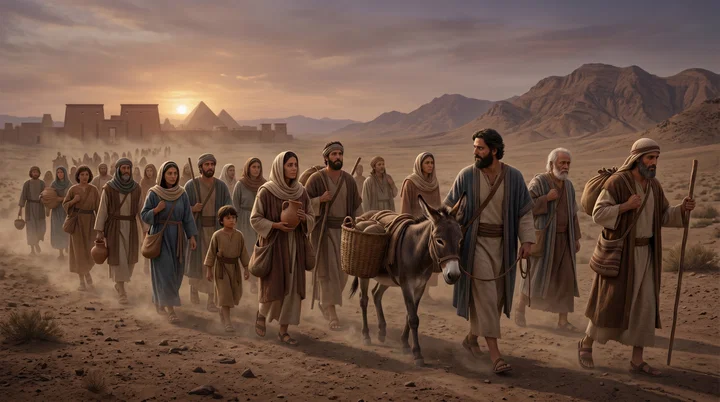
When Israel went out of Egypt, the house of Jacob from a people of strange language;
Translations
American King James Version, King James Version
When Israel went out of Egypt, the house of Jacob from a people of strange language;
When Israel went out of Egypt,
The house of Jacob from a people of strange language;When Israel went out of Egypt, the house of Jacob from a people of a foreign language;
When Israel went forth out of Egypt, the house of Jacob from a people of strange language;
When Israel went forth out of Egypt,
The house of Jacob from a people of strange language;In the going out of Israel from Egypt, The house of Jacob from a strange people,
When Israel went out of Egypt, the house of Jacob from a people of strange language,
When Israel came forth out of Egypt, The house of Jacob from among a people of strange tongue,
Berean Standard Bible, Majority Standard Bible
When Israel departed from Egypt,
the house of Jacob from a people of foreign tongue,When Israel went out of Egypt,
the house of Jacob from a people of foreign language,When Israel came out of Egypt, the children of Jacob from a people whose language was strange to them;
When Israel went out of Egypt, and the house of Iaakob from the barbarous people,
Douay-Rheims (Challoner revision)
When Israel went out of Egypt, the house of Jacob from a barbarous people:
Pictures
Cross-references
- Exodus 14:21-22
And Moses stretched out his hand over the sea; and the LORD caused the sea to go back by a strong east wind all that night, and made the sea dry land, and the waters were divided.
Israel’s departure from Egypt recalls the sea crossing.
- Exodus 12:1-14
And the LORD spake unto Moses and Aaron in the land of Egypt, saying,
The Passover was instituted in Egypt to recall Israel’s deliverance from Egypt.
- Exodus 13:21-22
And the LORD went before them by day in a pillar of a cloud, to lead them the way; and by night in a pillar of fire, to give them light; to go by day and night:
God’s pillar of cloud and fire leads Israel after their departure from Egypt.
- Hosea 11:1
When Israel was a child, then I loved him, and called my son out of Egypt.
Both describe God bringing Israel out of Egypt.
- Joshua 3:14-17
And it came to pass, when the people removed from their tents, to pass over Jordan, and the priests bearing the ark of the covenant before the people;
Both recount Israel crossing waters on dry ground by divine power.
- Exodus 14:13
And Moses said unto the people, Fear ye not, stand still, and see the salvation of the LORD, which he will shew to you to day: for the Egyptians whom ye have seen to day, ye shall see them again no more for ever.
Israel could only watch as the LORD brought salvation from Egypt.
- Deuteronomy 16:1-6
Observe the month of Abib, and keep the passover unto the LORD thy God: for in the month of Abib the LORD thy God brought thee forth out of Egypt by night.
Describes later Passover observance.
- Psalms 106:8
Nevertheless he saved them for his name’s sake, that he might make his mighty power to be known.
God saved Israel from Egypt to make his mighty power known.
- Revelation 15:3
And they sing the song of Moses the servant of God, and the song of the Lamb, saying, Great and marvellous are thy works, Lord God Almighty; just and true are thy ways, thou King of saints.
Israel’s deliverance from Egypt anticipates the final redemption celebrated in the song of Moses.
- Mark 14:26
And when they had sung an hymn, they went out into the mount of Olives.
Psalm 114 belongs to the Hallel sung at Passover.
- Psalms 105
O give thanks unto the LORD; call upon his name: make known his deeds among the people.
Grouped with Psalm 114 as a historical psalm.
- Matthew 26:30
And when they had sung an hymn, they went out into the mount of Olives.
Psalm 114 belongs to the Hallel sung at Passover.
- Psalms 78
Give ear, O my people, to my law: incline your ears to the words of my mouth.
Grouped with Psalm 114 as a historical psalm.
- Psalms 113
Praise ye the LORD. Praise, O ye servants of the LORD, praise the name of the LORD.
Chanted with Psalm 114 as the first part of the Hallelujah.
Commentary
Each commentary is drawn from primary sources: the writings of Ellen G. White and Adventist pioneers and periodicals. Each commentary is separate. Its own words are not a quotation; follow the references to read the source passages.
Pioneers and periodicals
15 sources
When Israel went out of Egypt, the house of Jacob means Jacob's family leaving the foreign-speaking Egyptians.ST Jan 7, 1889 It opens a historical psalm recounting God's providential deliverance, sung as part of Psalms 113-118 on Passover to recall the departure from Egypt.RH Apr 14, 1903ST Jan 7, 1889ST Apr 21, 1881ST Jun 11, 1894 The departure was no triumph of man, for Israel was utterly helpless with no escape and God saved them for His name's sake to make His mighty power known.RH Dec 9, 1902ST Dec 8, 1887 Its poetic sequel that Judah became His sanctuary and Israel His dominion means God took them as His nation to rule as King and dwell among them, with His sanctuary located within Judah's territory at Jerusalem which He chose.RH Jan 6, 1853ST May 27, 1880ST Dec 8, 1881 The going out of Egypt became the symbol of the soul's deliverance from sin and death, so Egypt represents the sinful world God's people are now called to come out of, trusting the same wonder-working God in every daily strait.RH May 4, 1911ST Dec 8, 1887
Words and Worship Setting
The house of Jacob is Jacob's family, and the people of strange language are the foreign-speaking Egyptians whom they left when Israel went out of Egypt.ST Jan 7, 1889 The verse opens a poetic stanza describing that departure. That stanza belongs to a psalm arranged in strophes and antistrophes, forms used in worship through recitation or song by leaders and groups, with instrumental music.
The psalm uses personification, attributing life and action to an inanimate object.RH Dec 23, 1862 It is one of four historical psalms, a class that recounts in detail the ancient history of the Hebrew people.RH Apr 14, 1903 Among those recounted events is the leading out of the Hebrew people from Egypt, and in this the psalm stands as a witness to God's providential deliverance of Israel.RH Apr 14, 1903ST Jun 11, 1894
The psalm belongs to Psalms 113-118 sung on Passover occasions.ST Jan 7, 1889 It was chanted as part of the first portion of the great Hallelujah at the Passover feast, recalling Israel's deliverance from Egypt.ST Jan 7, 1889ST Apr 21, 1881 It was among the praise songs sung just before the betrayal.ST Jan 7, 1889 The psalm is also associated with the return from Babylonian captivity.RH Sep 7, 1916 In that association it belongs with psalms reflecting the returning exiles' mingled joy, sorrow, and anxiety, and referring to the building and dedication of the second temple and the triumphs connected with it.RH Sep 7, 1916
Deliverance and Divine Kingdom
The going out from a foreign-speaking people is remembered as God's deliverance, the beginning of a history of deliverance that includes the retreat of the sea and the turning back of the Jordan as wonderful acts before the Lord.RH Dec 9, 1902 At the going out the people were shut in by mountains and sea with pursuers behind and no escape, utterly helpless with nothing to do but stand still and see the salvation of the Lord, so the deliverance was no triumph of man.ST Dec 8, 1887 God saved them for His name's sake to make His mighty power known, and that deed reveals what God is like.ST Dec 8, 1887
The departure began a journey through the wilderness under God's guidance, as He led His people safely from bondage toward Canaan with His presence accompanying them by the pillar of cloud and fire.ST Nov 15, 1905 In poetic language the same statement continues that Judah became His sanctuary and Israel His dominion, meaning God regarded Israel as His nation and ruled as its King whether or not the people had an earthly ruler. This proves the Lord has always had a kingdom on earth even though Satan has ruled since the fall only as a usurper, with some always loyal to God.ST May 1, 1901 So far as civil duties were concerned, that kingdom was given to Saul, then to David, to Solomon, and on down to Zedekiah.ST May 1, 1901
Judah being called God's sanctuary does not mean the tribe itself or the whole church was the sanctuary, for read literally it would confine the sanctuary to one of the twelve tribes, only a portion of Israel and not the whole.RH Jan 6, 1853ST May 27, 1880ST Dec 8, 1881RH Jul 12, 1870 It is a figure of speech meaning the sanctuary was located within Judah's territory, because God chose Jerusalem in Judah, Mount Zion which He loved, as the place where His sanctuary would be located and built like high palaces, as Psalm 78:68-69 explains.RH Jan 6, 1853ST May 27, 1880ST Dec 8, 1881RH Jul 12, 1870 Even if the church were called the sanctuary elsewhere, that would not decide the sanctuary of Daniel 8:13-14, where the sanctuary and the host, the church, are spoken of as two different objects given to be trodden under foot.RH Jul 12, 1870 The deliverance from Egypt was joined to God's purpose to dwell among His people, with Judah becoming His sanctuary and Israel His dominion, and the sanctuary and its services witnessed to His purpose to make humanity His dwelling place through His Son taking human flesh.
Symbol and Present Call
The going out from Egypt became the standing symbol of the deliverance of the soul from sin and death.ST Dec 8, 1887 The great words Saviour and redemption took their place in Scripture in connection with that deliverance and with the return from captivity that continually recalled it.ST Dec 8, 1887 They reach their fullest meaning in the victorious host standing by the glassy sea singing the song of Moses and the song of the Lamb.ST Dec 8, 1887
Egypt represents the sinful world.RH May 4, 1911 The exodus therefore points to the present call for God's people to come out of the world, which they must answer rather than go down with the world.RH May 4, 1911 The same God who opened the sea and who redeems through the sacrifice of His Son those enslaved by sin is the God of daily life.ST Dec 8, 1887 He is to be appealed to in every strait for a plain path because of enemies, for He is faithful and with temptation will make a way to escape.ST Dec 8, 1887 He gives through the wonder-working Spirit a more powerful instrument for impassable waters than Elijah's mantle.ST Dec 8, 1887
Sources